


Skip to content
Flash Notes
Home / Notes

Flash Notes

Flash Notes is InkX Tattoo’s editorial space for straightforward supply knowledge and studio organisation ideas. Articles cover generic product understanding only and readers should always follow local health regulations.

Black Ink Basics

Black Ink Basics

A simple overview of how studios group black inks for lining and general use.

Greywash Basics

Greywash Basics

An introduction to greywash groupings and tonal planning in studio stock.

Colour Palette Planning

Colour Palette Planning

Ways to organise a working colour range without overloading shelf space.

Liner Needle Groups

Liner Needle Groups

How round liner groupings are commonly understood in tattoo supply ordering.

Shader Needle Groups

Shader Needle Groups

A practical look at common shader needle categories in studio buying.

Magnum Needle Groups

Magnum Needle Groups

A quick guide to magnum needle categories and broad-coverage setups.

Cartridge Basics

Cartridge Basics

An editorial introduction to cartridge styles and why studios separate them by task.

Pen Machine Overview

Pen Machine Overview

A plain-language overview of pen-style tattoo machine layouts and supply needs.

Coil Machine Overview

Coil Machine Overview

A general look at coil machine setups and common accessory pairings.

Rotary Machine Overview

Rotary Machine Overview

A simple editorial guide to rotary machine use in modern supply setups.

Power Supply Layouts

Power Supply Layouts

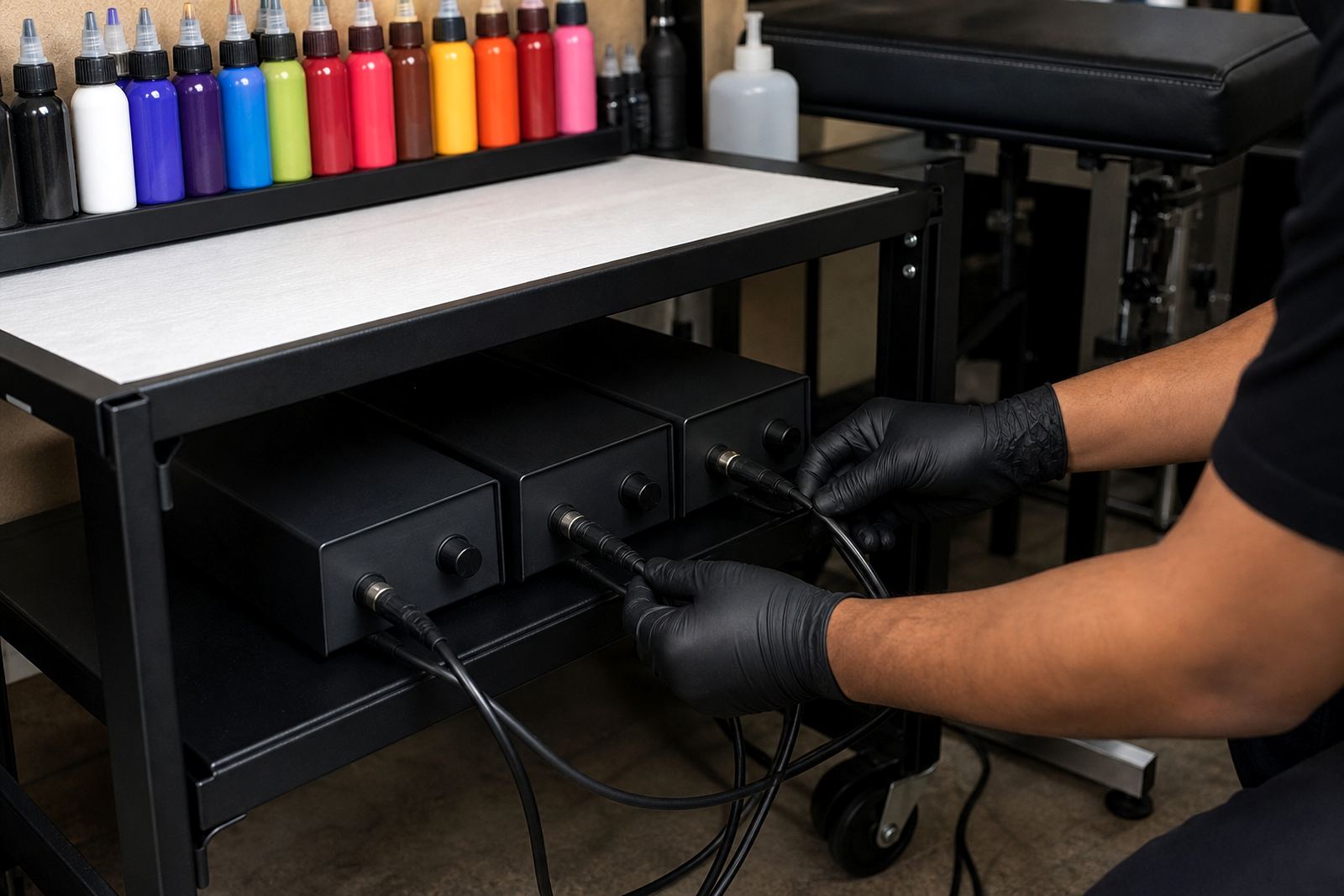
How studios commonly place and organise power units at their stations.

Wireless Workstations

Wireless Workstations

A look at cable-free machine layouts and the storage changes they bring.

Ink Cap Organisation

Ink Cap Organisation

Ideas for keeping caps, holders and small dispensables tidy during sessions.

Barrier Film Uses

Barrier Film Uses

Common studio contact points where barrier film is included in setup routines.

Machine Cover Routines

Machine Cover Routines

How studios include machine covers in single-use station preparation.

Cord Cover Routines

Cord Cover Routines

A short note on including cord sleeves in wired station setups.

Bottle Cover Routines

Bottle Cover Routines

An overview of bottle sleeve use in practical workstation prep.

Glove Stock Planning

Glove Stock Planning

Ways studios plan glove quantities and size mixes for regular use.

Wipe Station Basics

Wipe Station Basics

How wipe tubs and cloth supplies are commonly grouped within a room.

Wash Bottle Zones

Wash Bottle Zones

Simple ways to position bottles within a tidy and repeatable station layout.

Mixing Cup Notes

Mixing Cup Notes

A practical editorial on small cup use for organised blend prep.

Stencil Paper Storage

Stencil Paper Storage

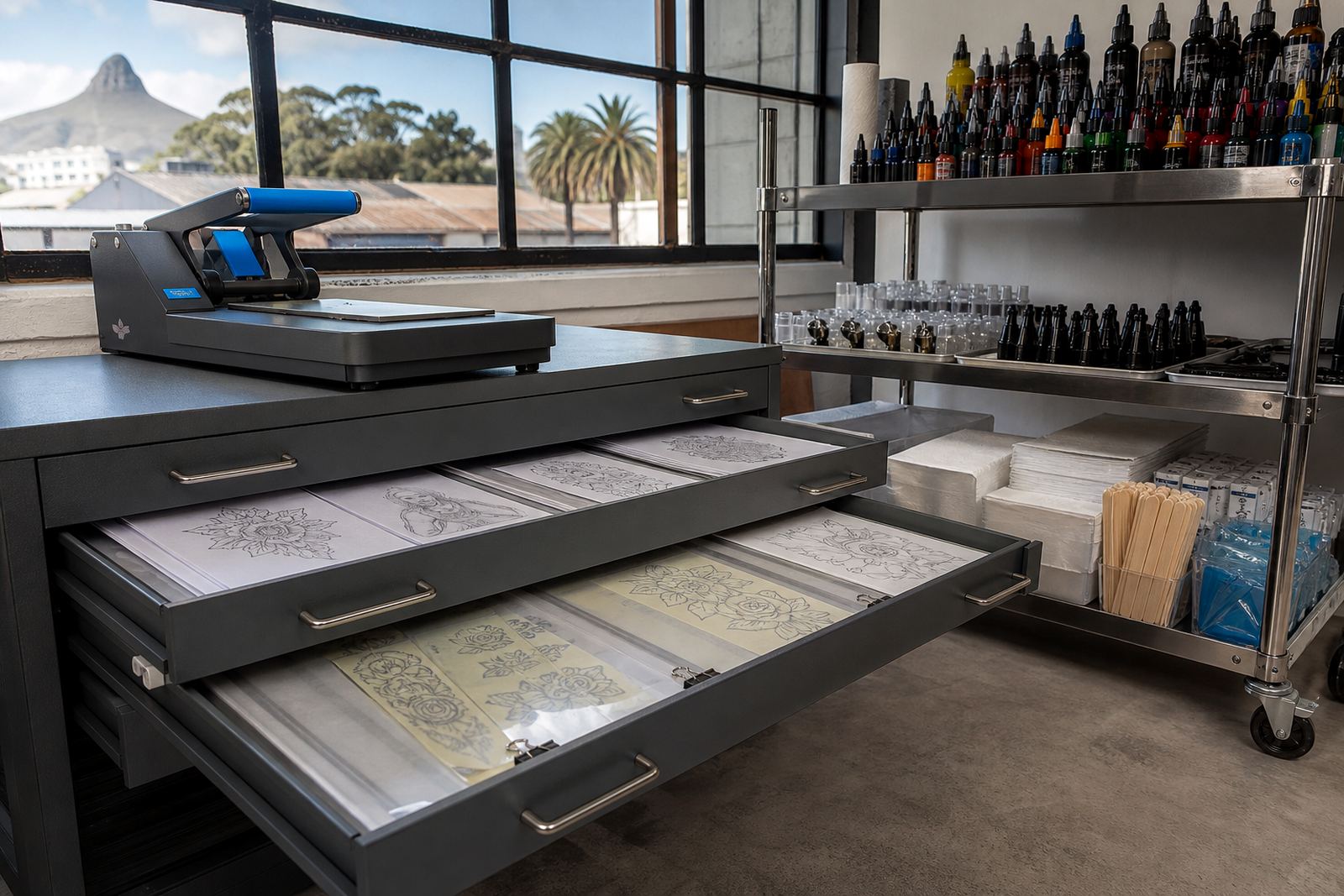
Storage ideas for keeping stencil paper flat, clean and easy to access.

Transfer Prep Stocks

Transfer Prep Stocks

Keeping transfer prep items grouped with design and stencil materials.

Single-Use Supplies

Single-Use Supplies

A broad overview of disposable items commonly ordered for tattoo workstations.

Shelf Zoning Ideas

Shelf Zoning Ideas

Ways to separate inks, cartridges, machines and consumables in storage.

Small Room Storage

Small Room Storage

Simple organisation notes for tattoo rooms with limited shelving and drawer space.

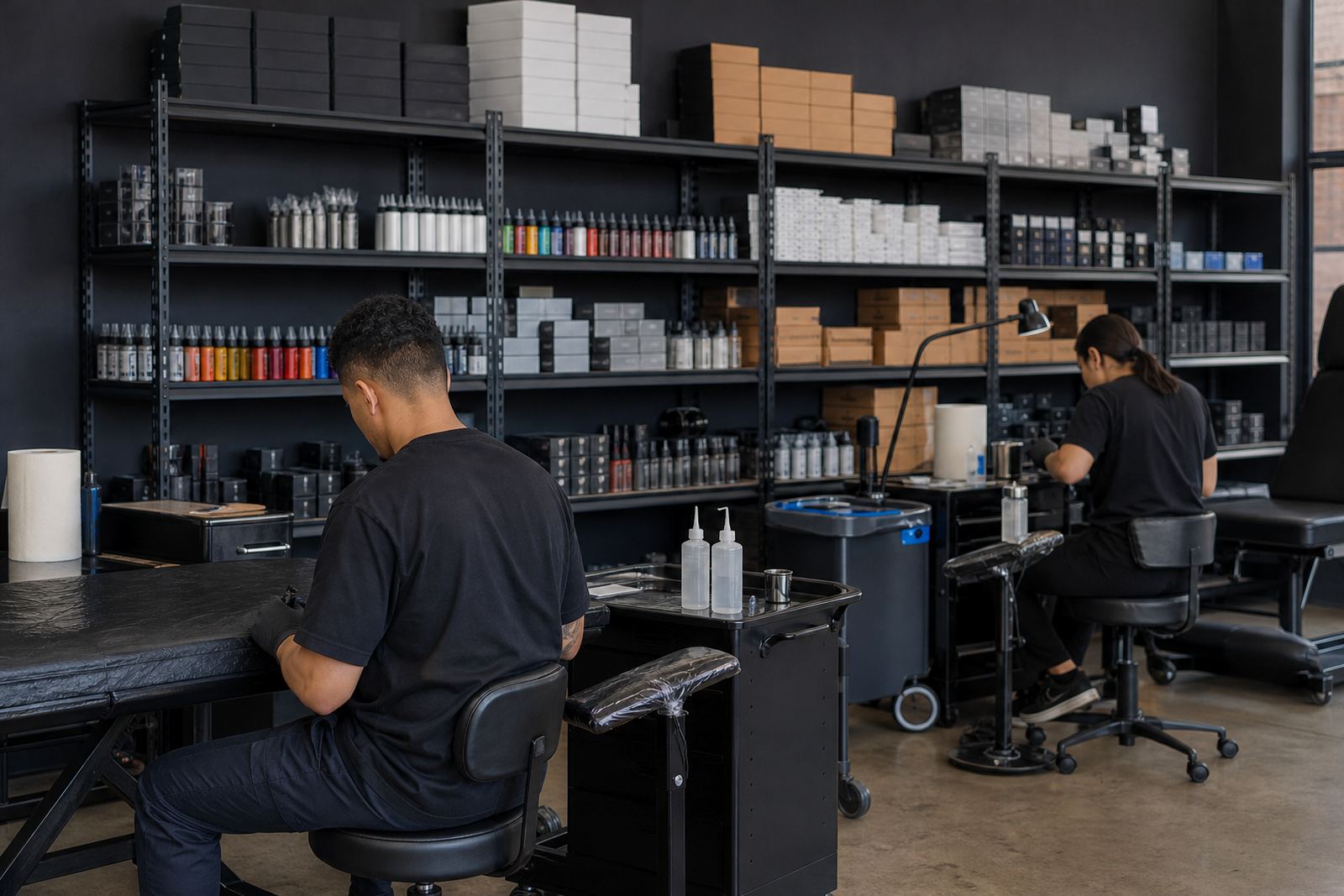
Multi-Artist Restocks

Multi-Artist Restocks

Editorial tips on handling shared stock across several active artists.

Guest Kit Packing

Guest Kit Packing

A practical article on preparing portable supply kits for visiting artists.

Flash Day Stock

Flash Day Stock

How studios often prepare consumables and machine supplies for busy flash days.

Appointment Day Flow

Appointment Day Flow

Supply organisation ideas for studios working mainly from scheduled bookings.

Opening Order Basics

Opening Order Basics

Core supply categories many new studios consider when planning first orders.

Reorder Timing Notes

Reorder Timing Notes

Editorial guidance on setting reorder points for frequently used consumables.

Cartridge Size Sorting

Cartridge Size Sorting

A quick note on arranging cartridges by grouping and session purpose.

Ink Bottle Labelling

Ink Bottle Labelling

Storage and shelf identification ideas for keeping bottle rows easy to scan.

Machine Case Setups

Machine Case Setups

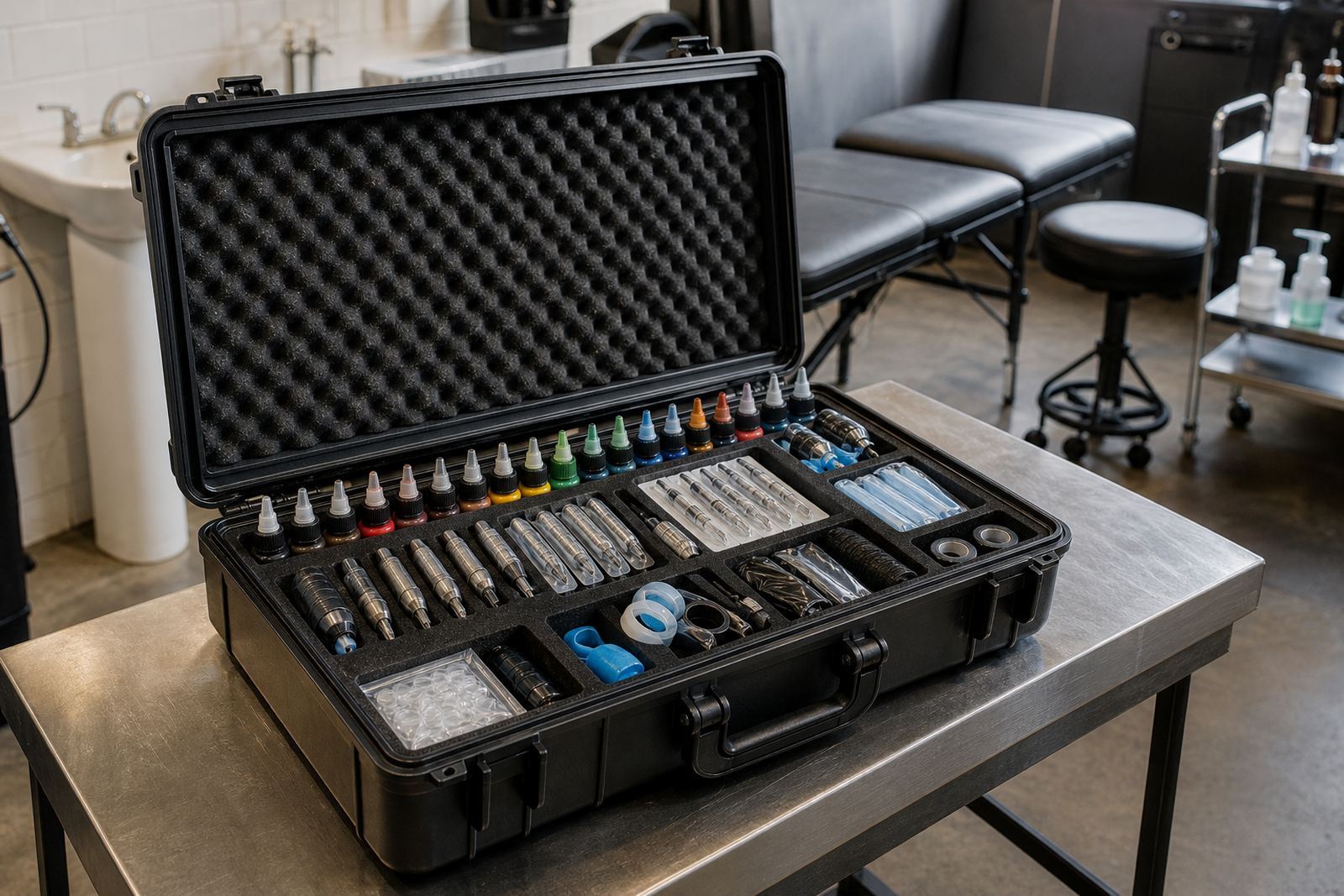
How artists often pack machine cases for neat transport and quick station starts.

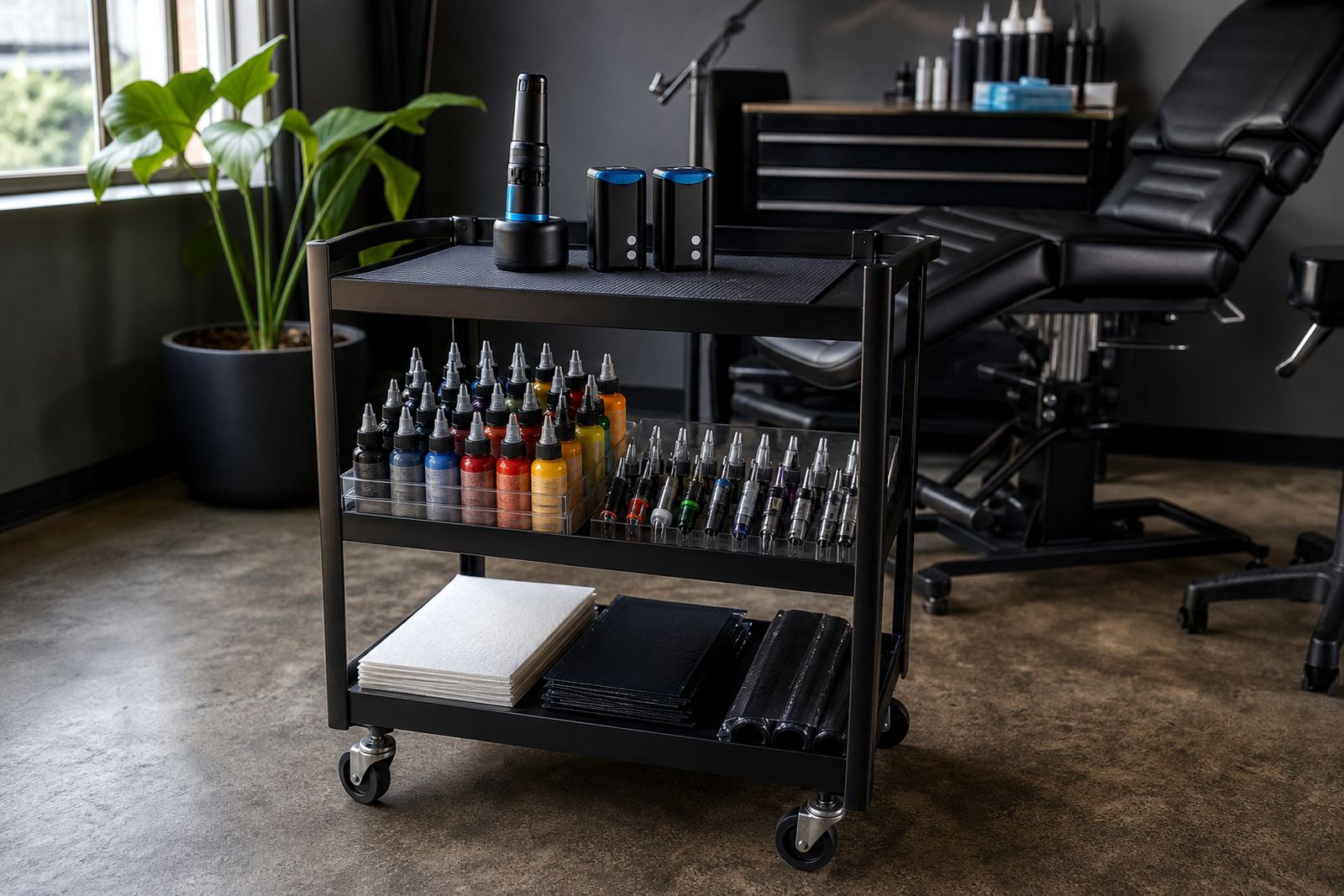
Utility Cart Layouts

Utility Cart Layouts

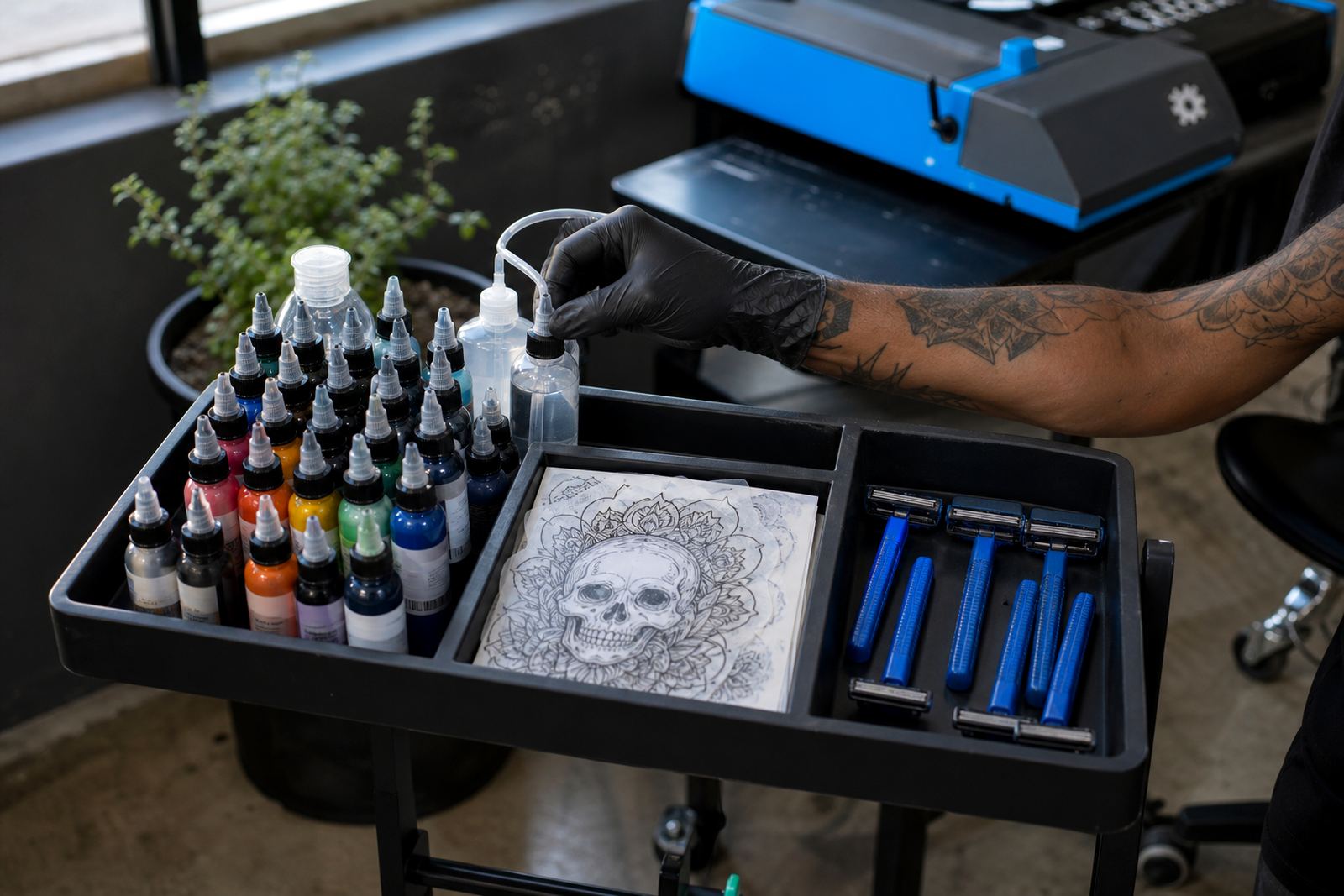
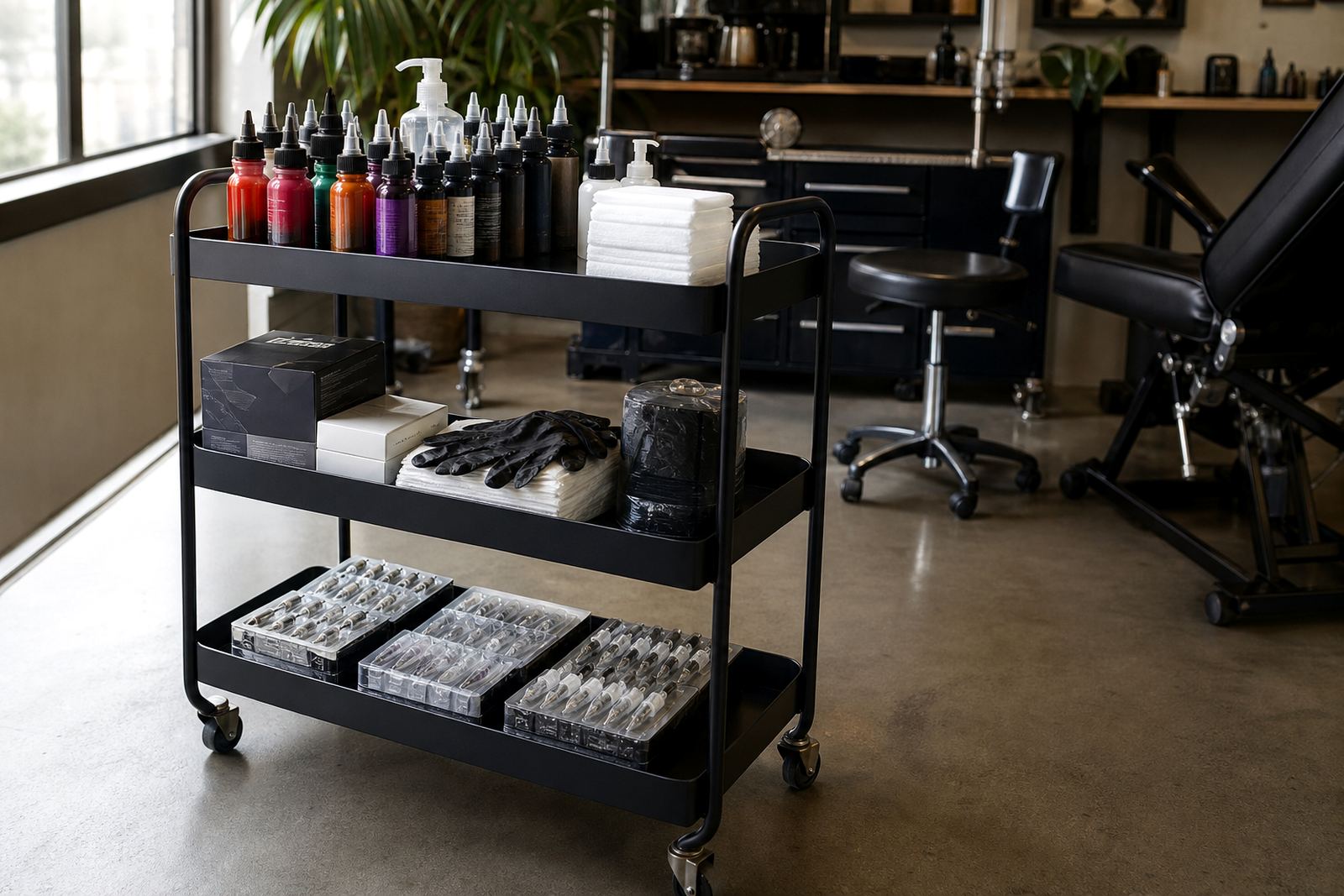
Examples of arranging a mobile trolley around supplies used most often.

Back Room Counts

Back Room Counts

A simple stock-count routine for keeping storage areas easy to manage.

Local Regulation Reminder

Local Regulation Reminder

A reminder that studios must follow local health regulations when setting up and operating.

Online Order Checklists

Online Order Checklists

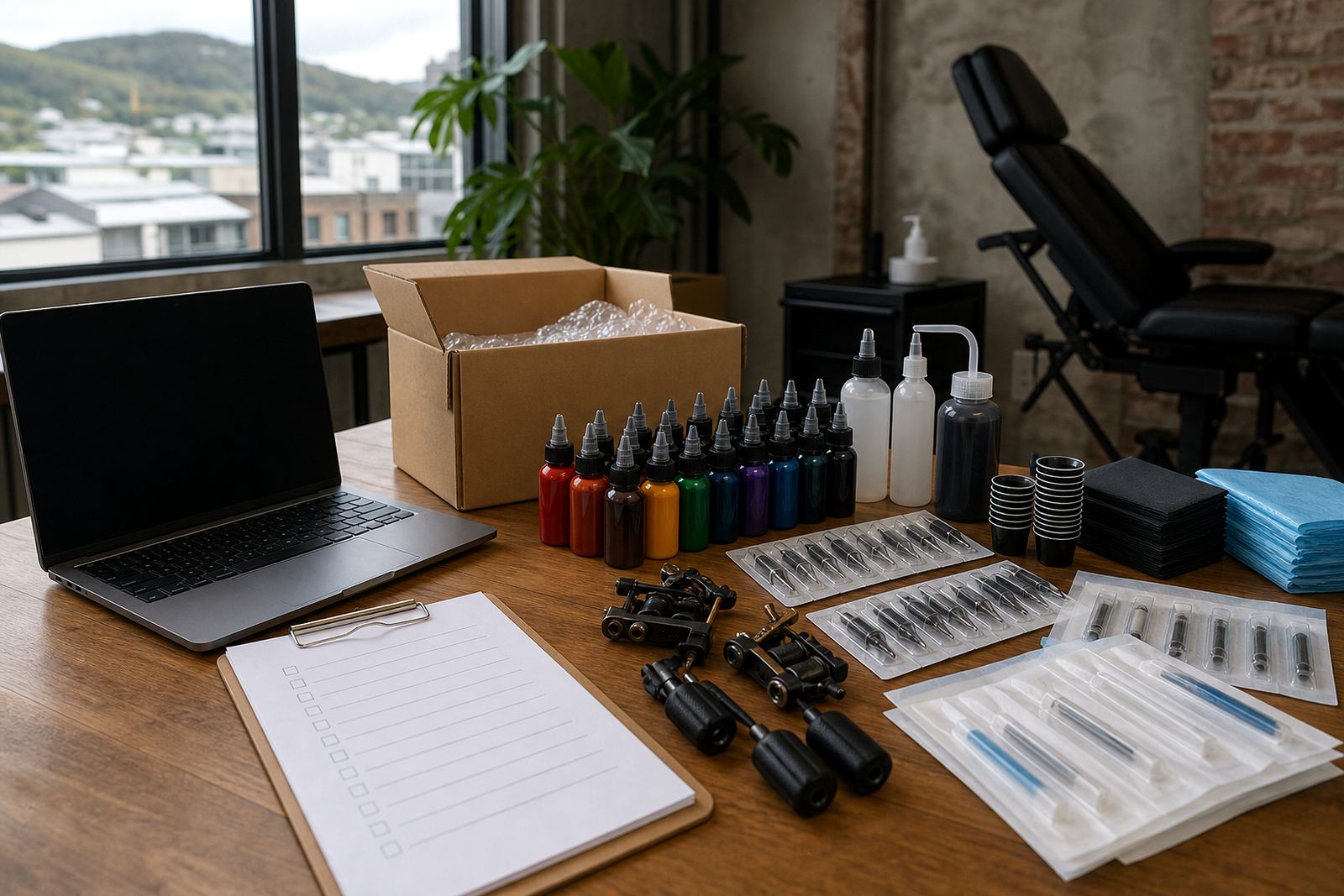
A practical checklist for reviewing tattoo supply orders before checkout.

Ink, line work, fill work and colour packing

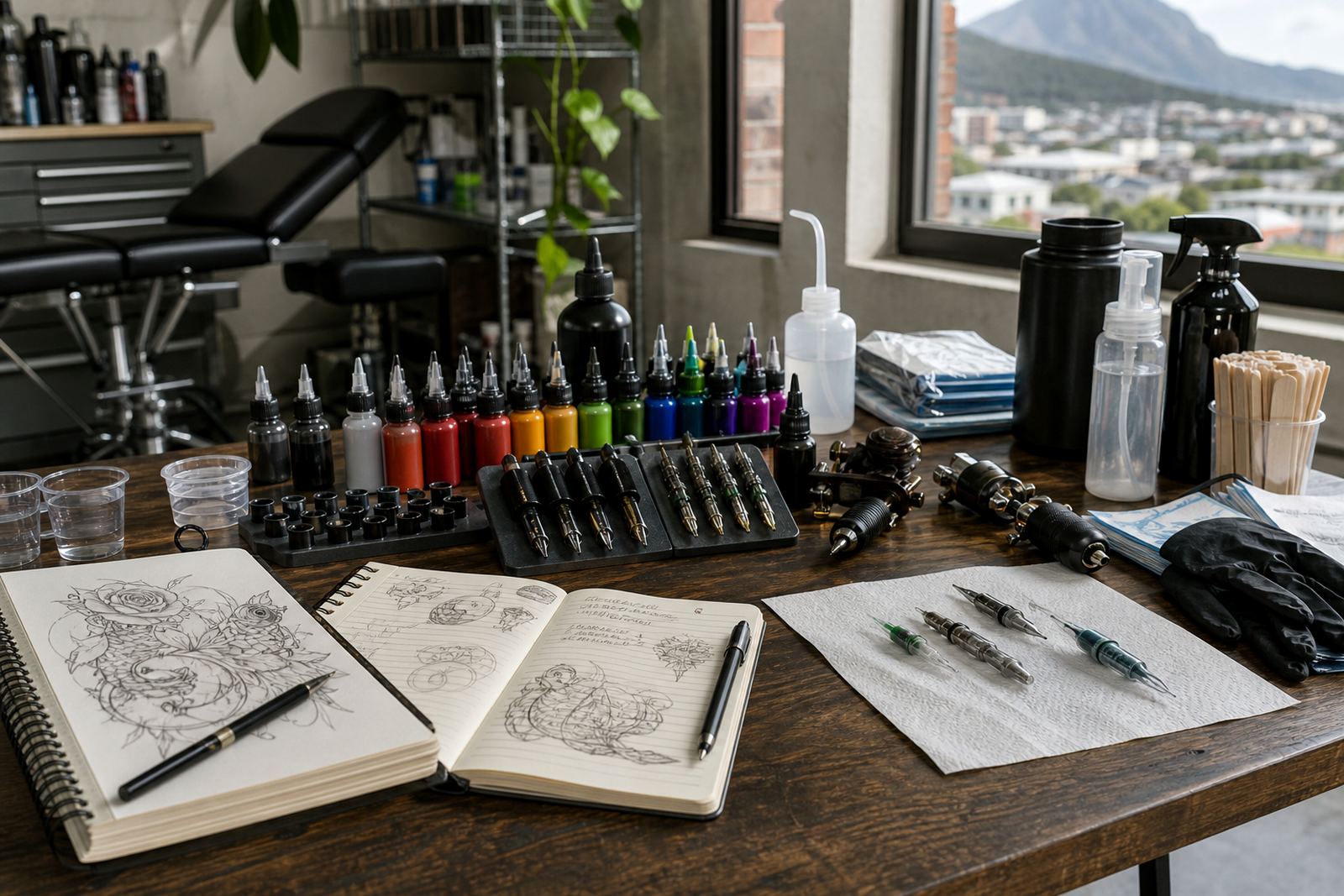
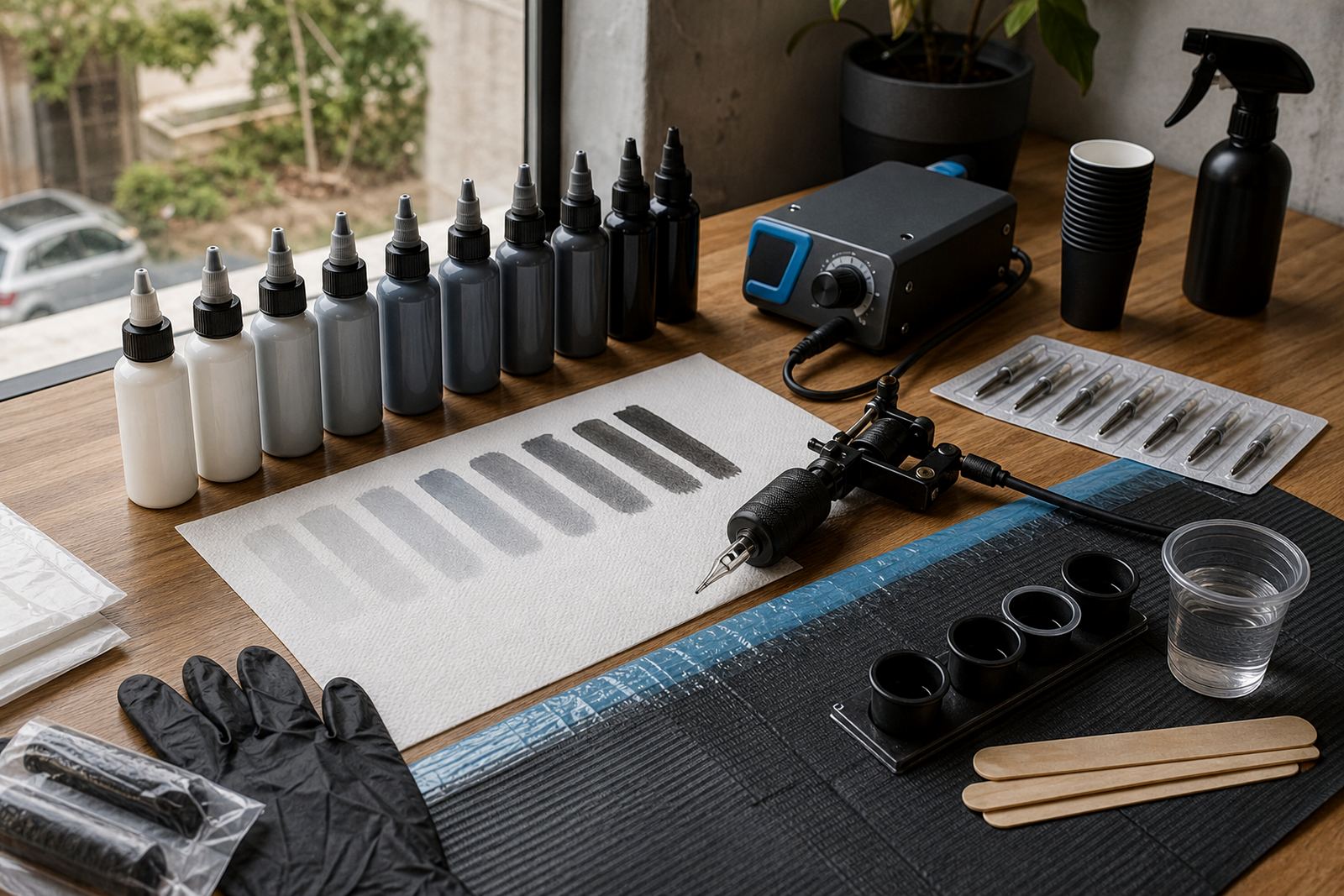
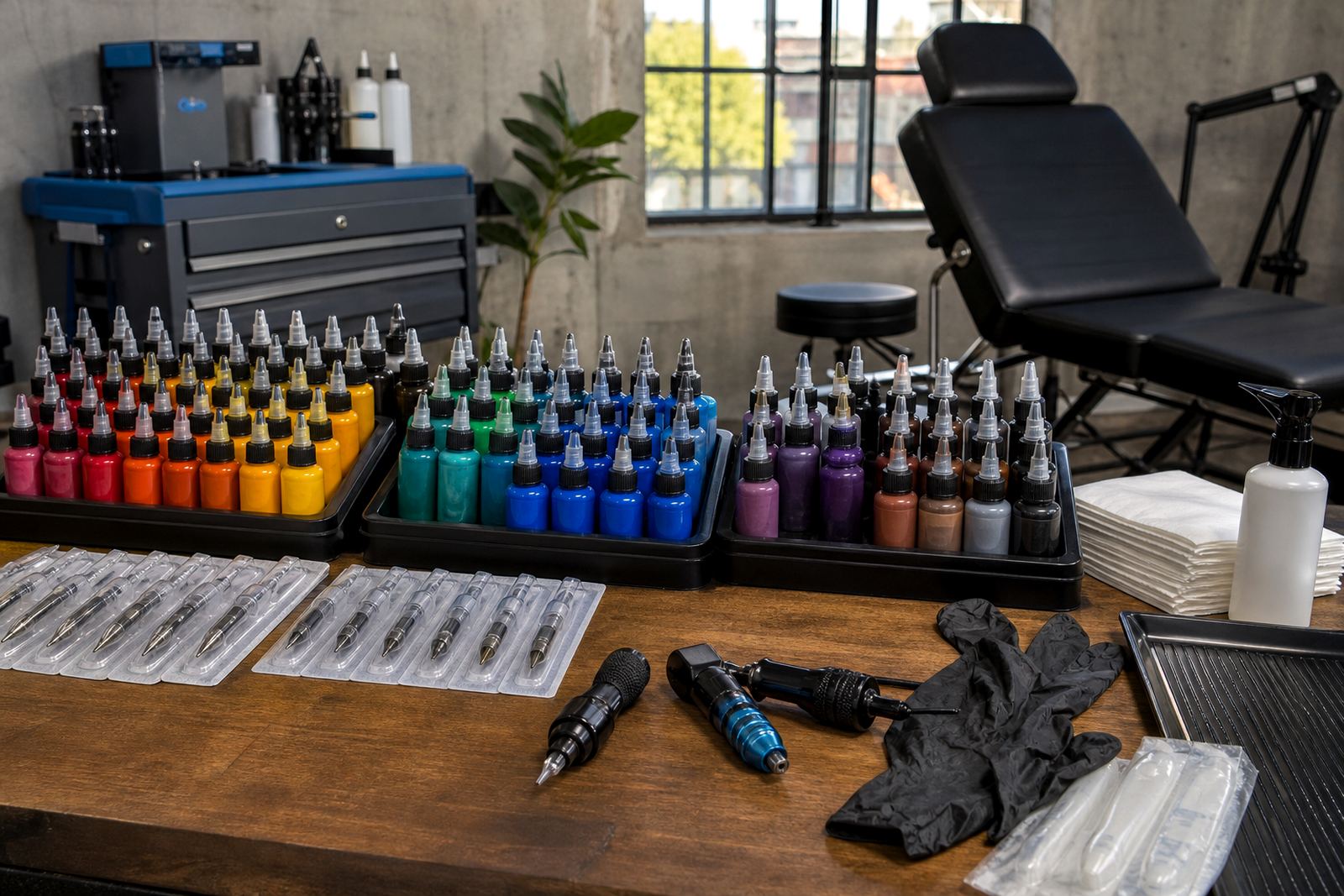
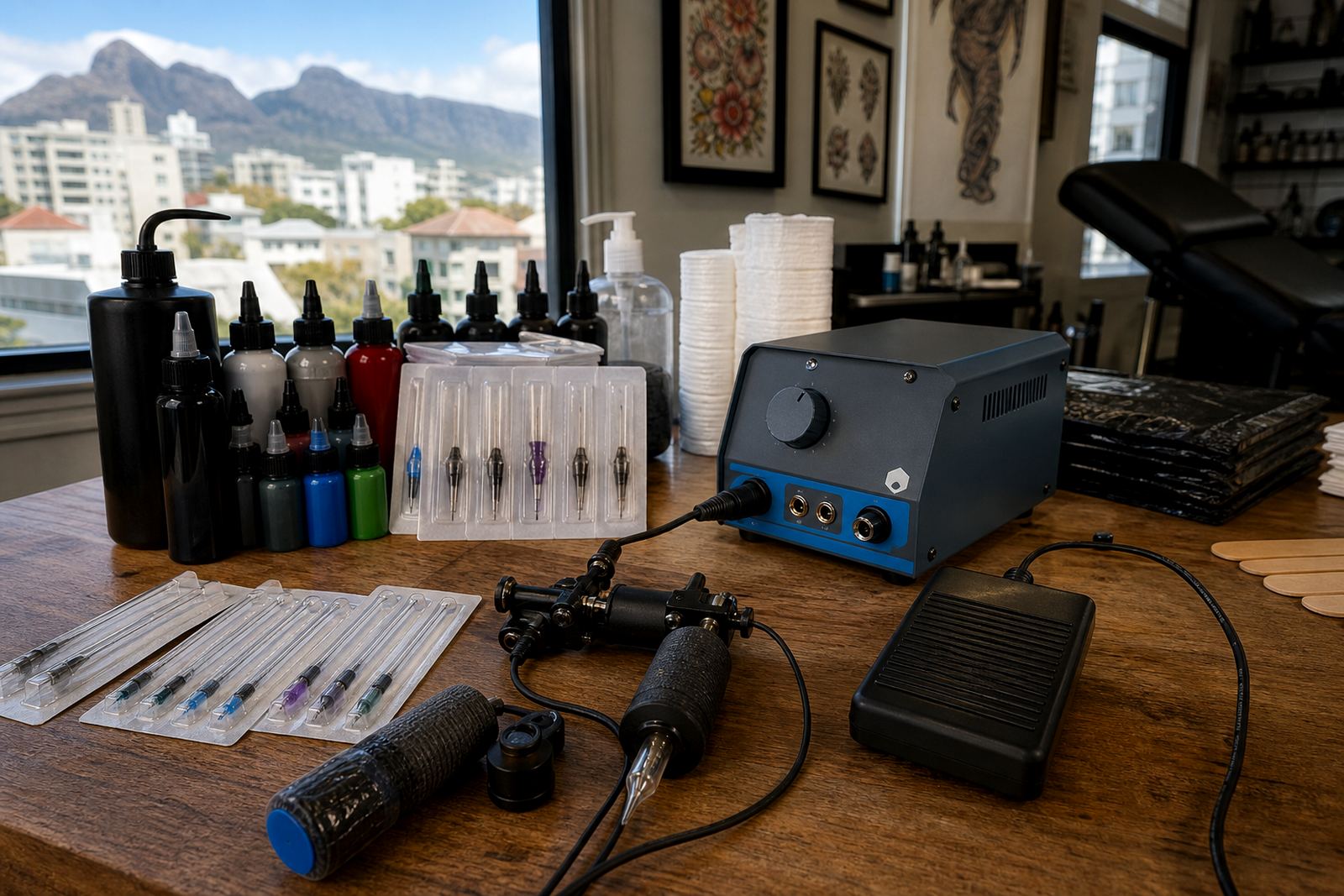
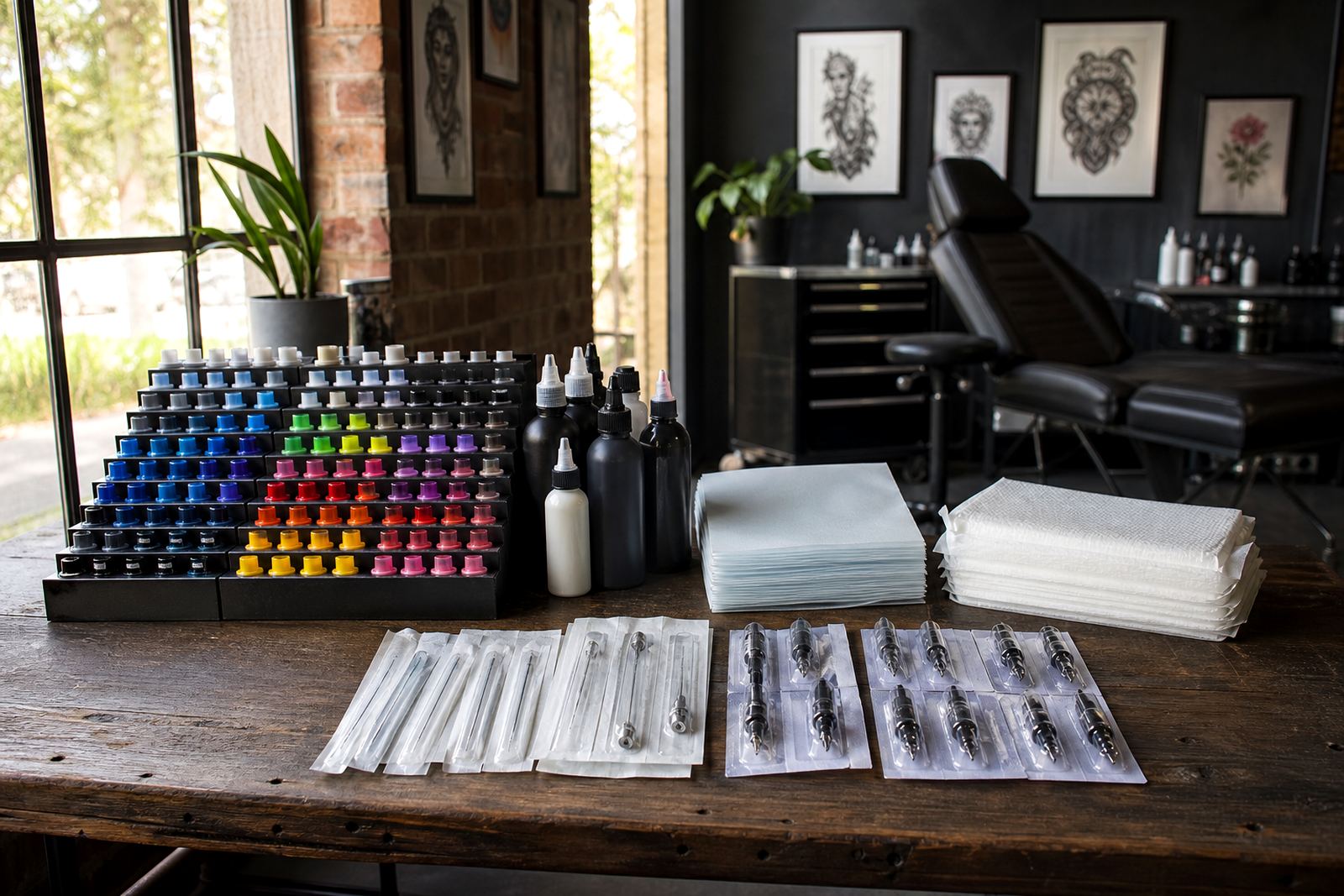
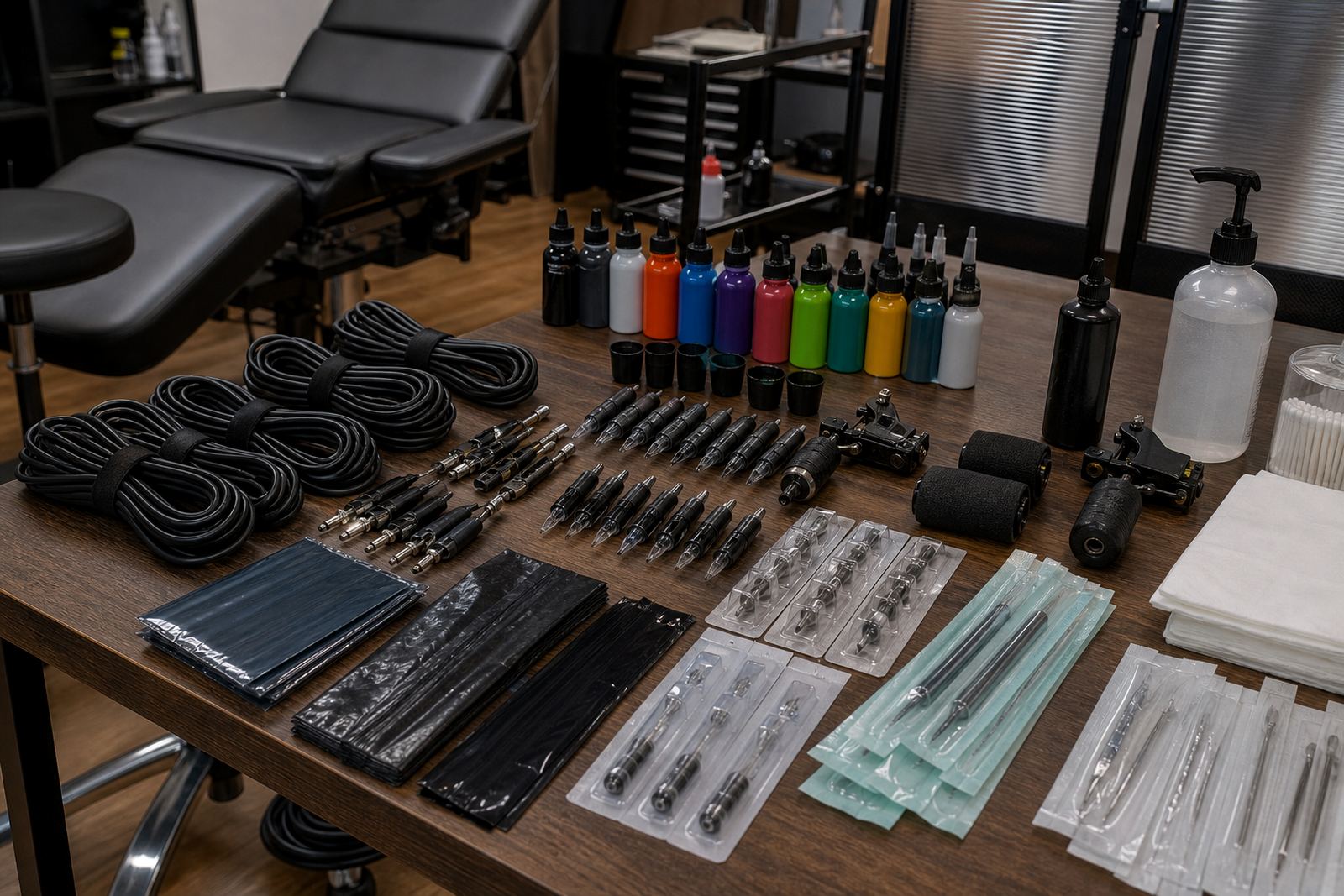
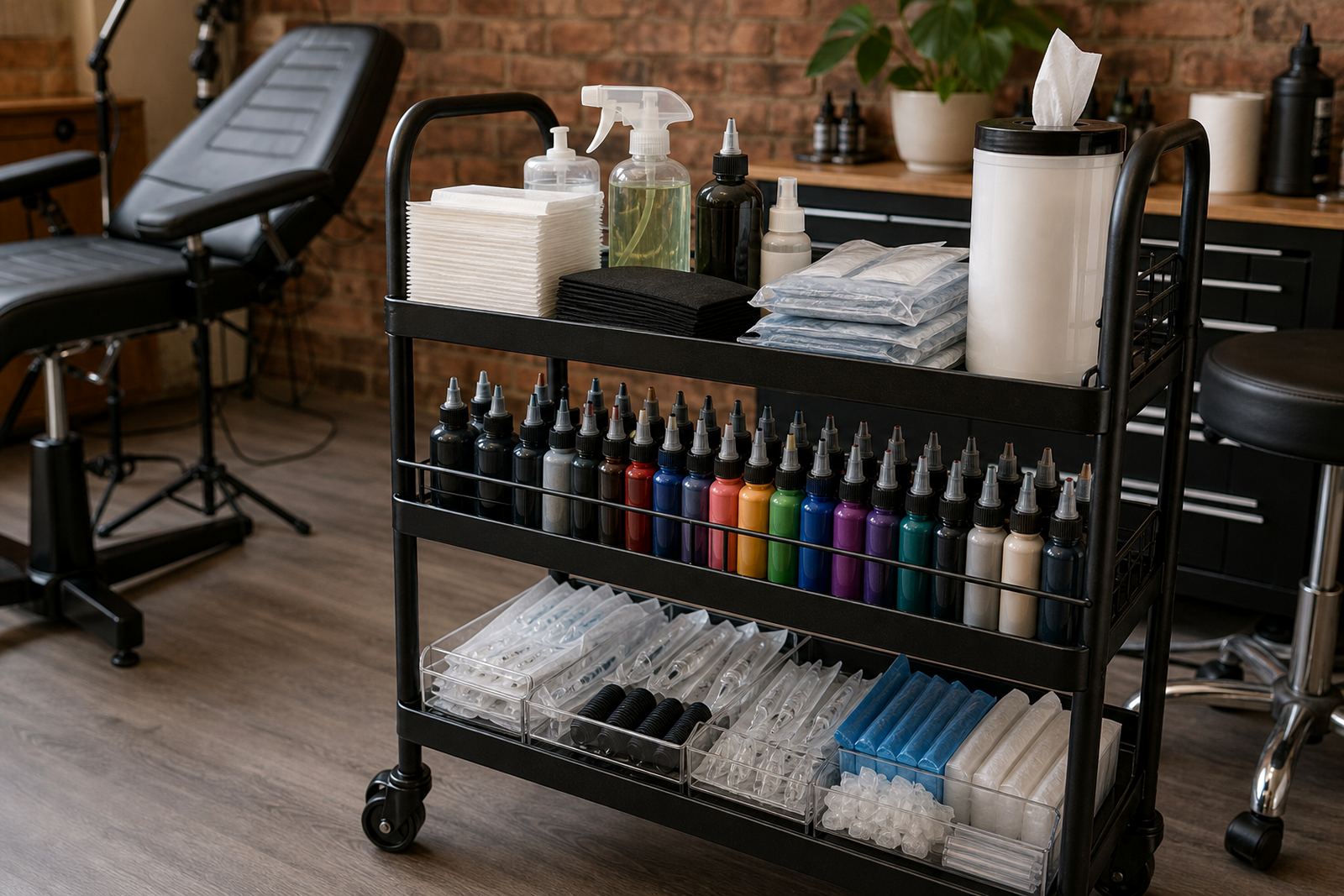
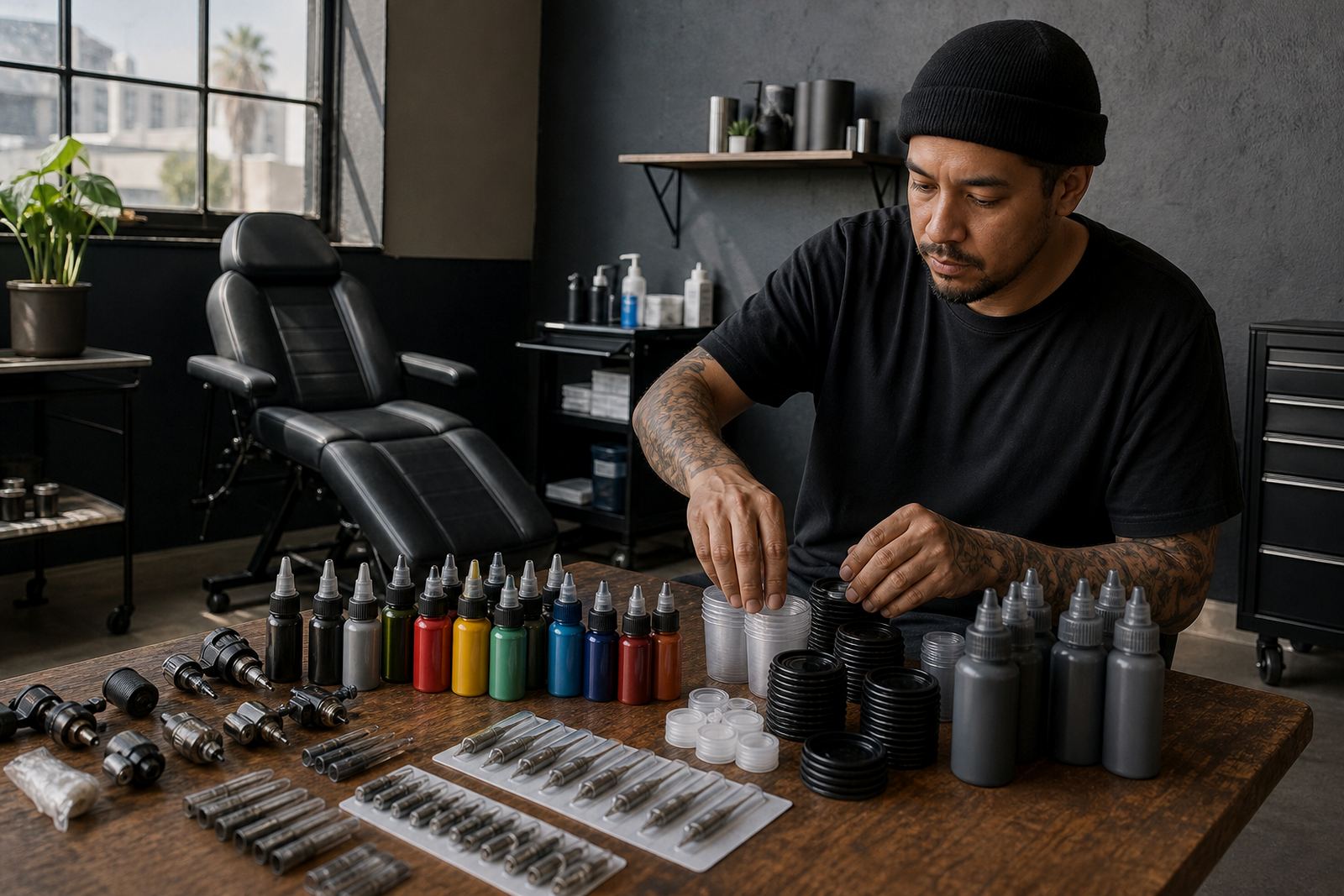
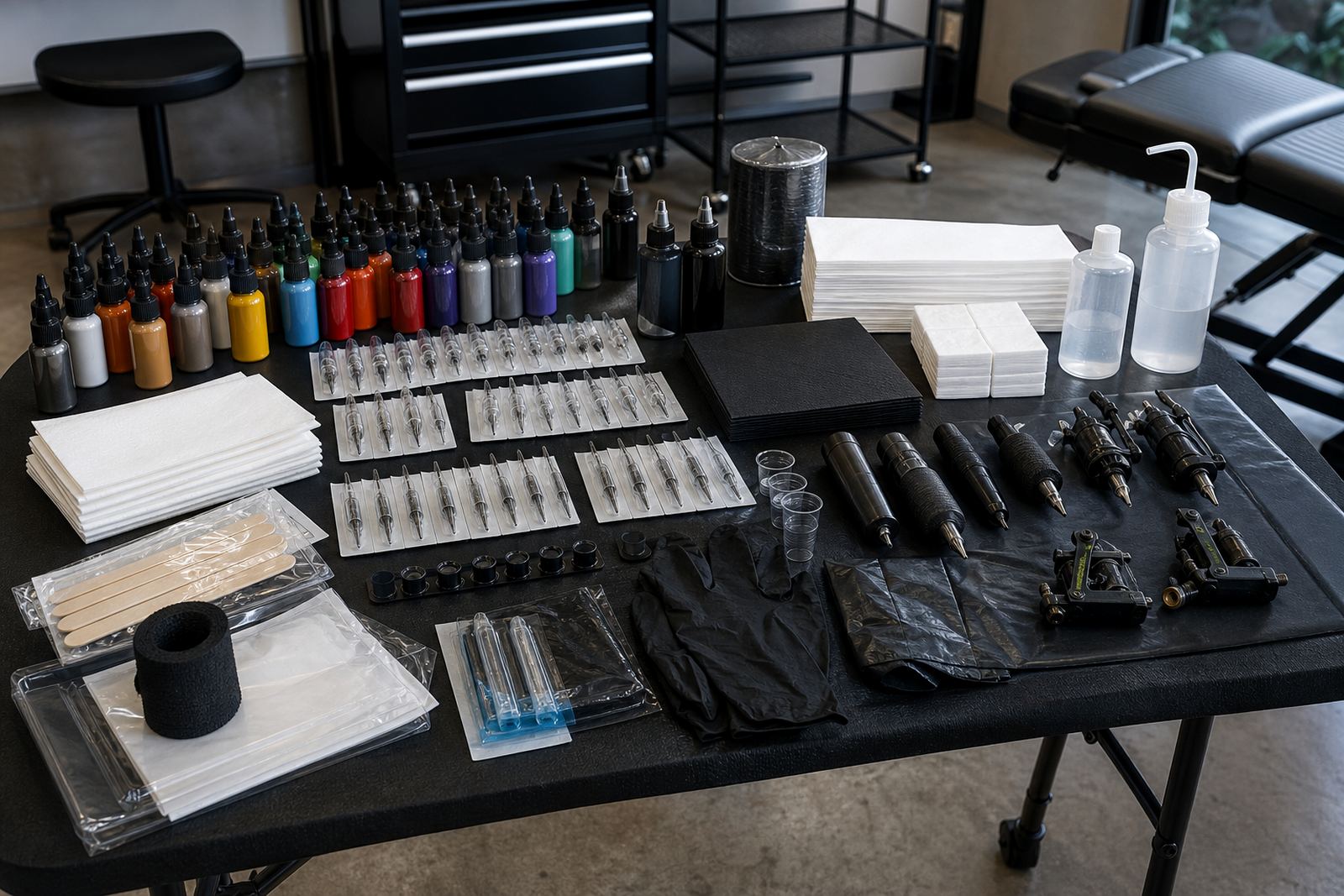
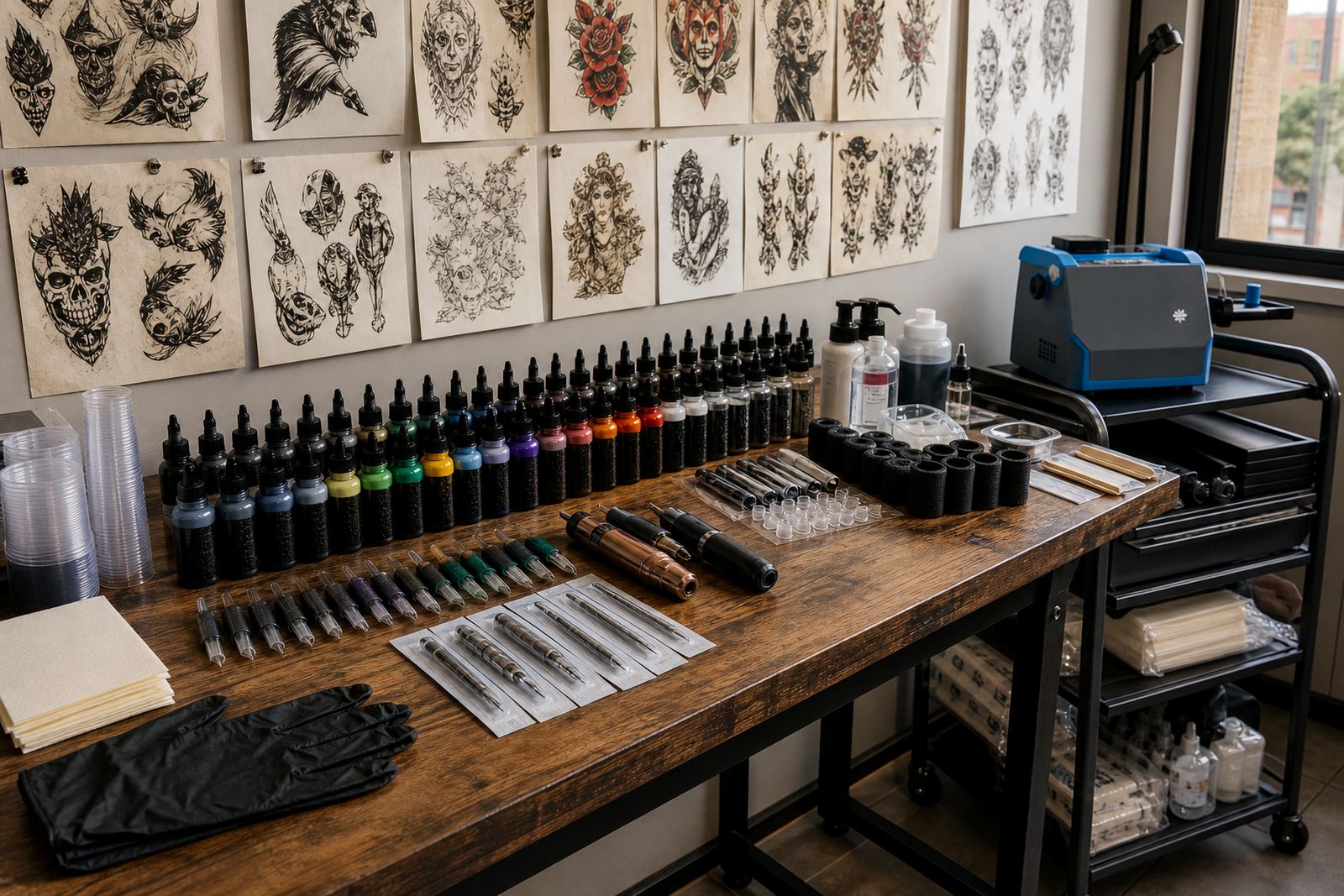
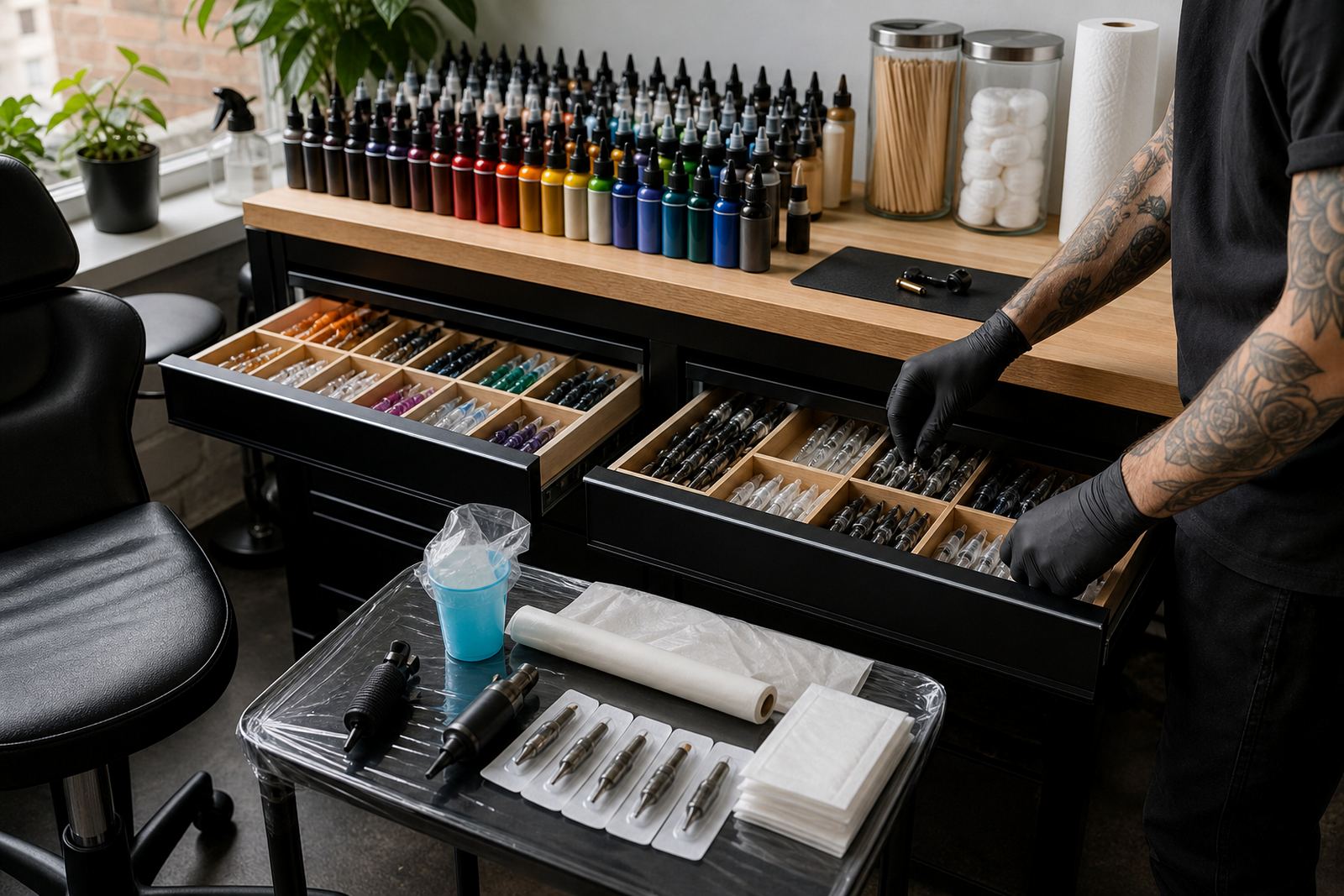
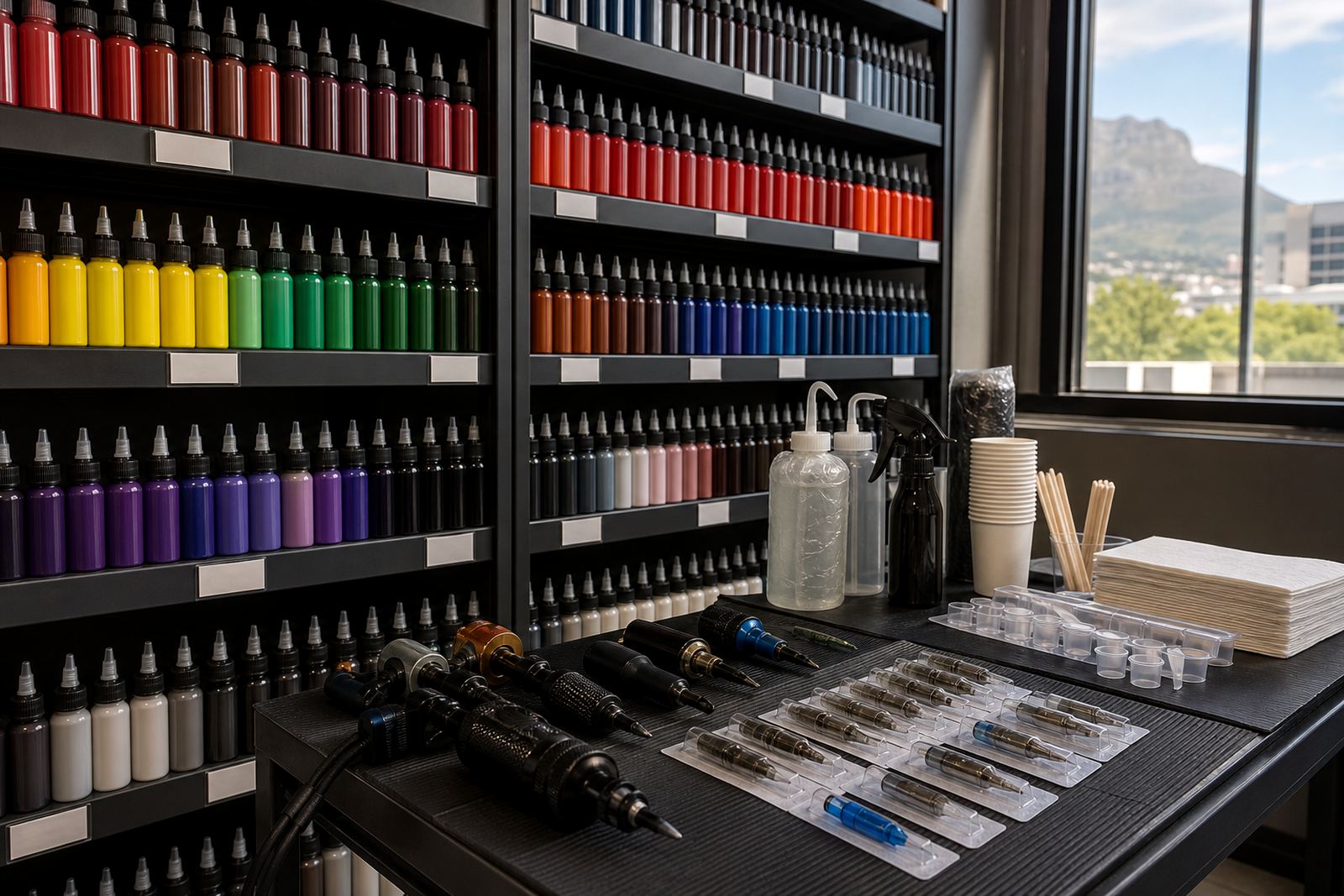
Ink choices affect how a set of lines, shading passes and colour packing sit in the skin, so artists usually sort stock by use rather than by bottle colour alone. In practice, that means keeping solid black, grey wash, lining colours and brighter shades grouped in a way that makes mixing and station prep quicker for the day’s work.

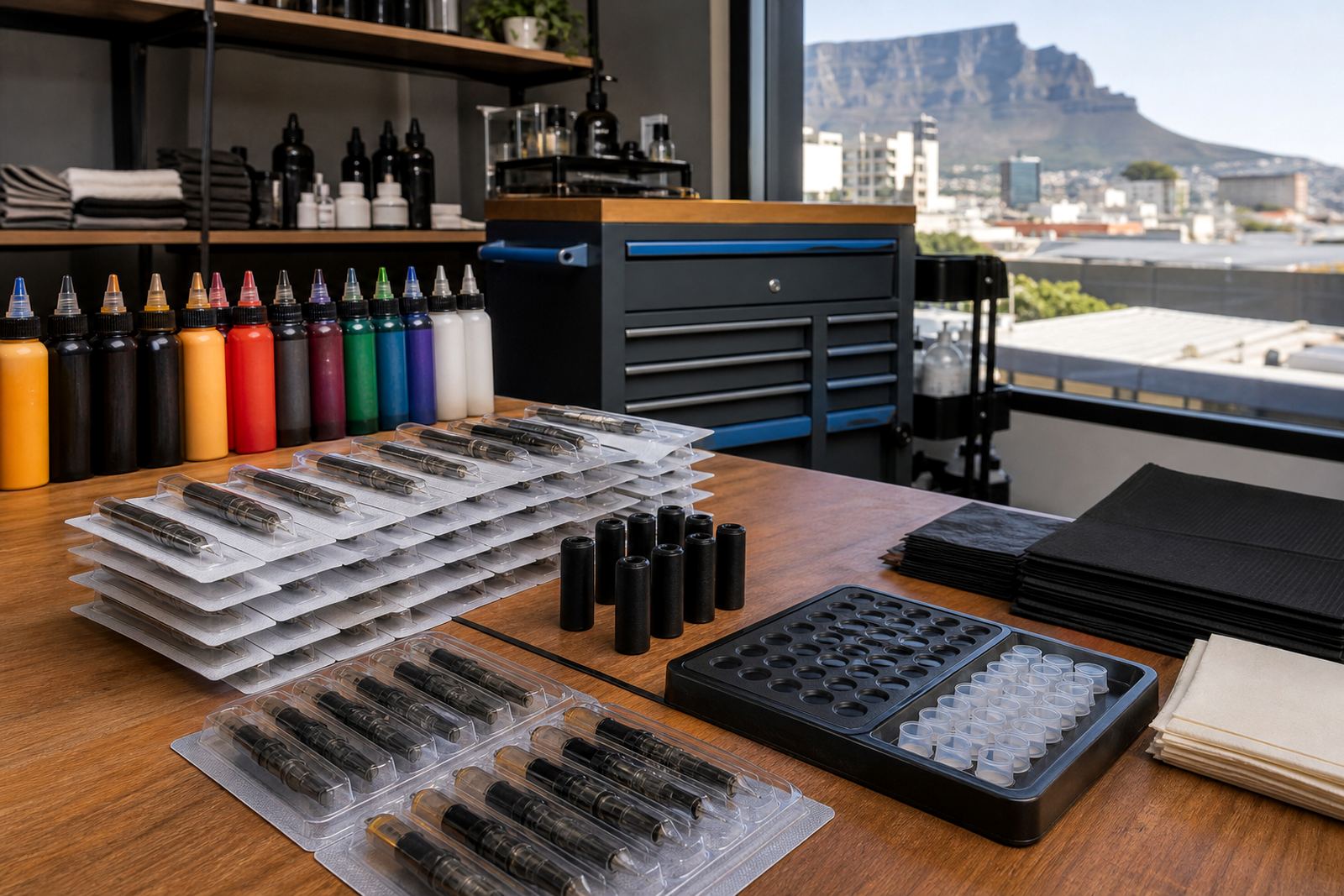
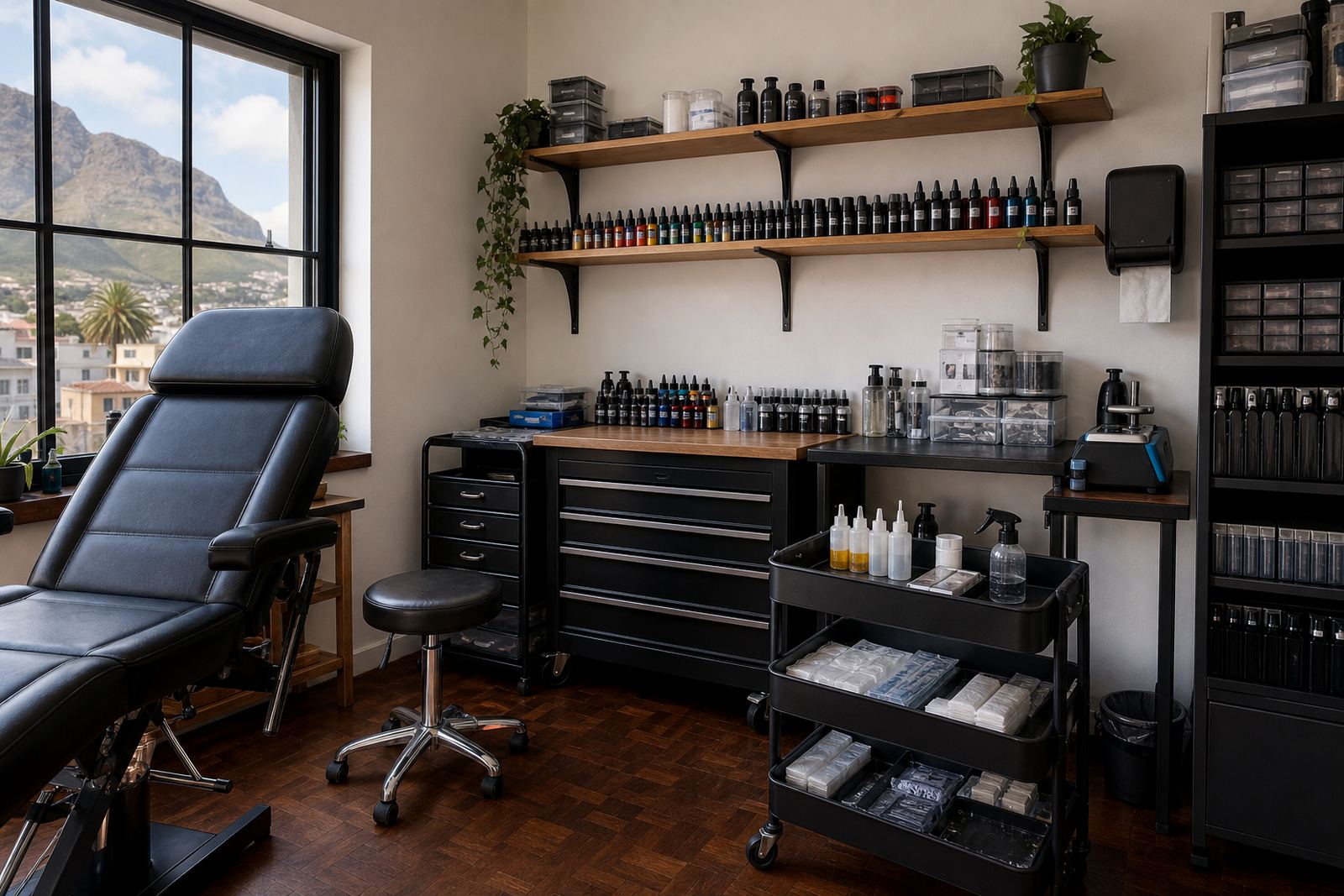
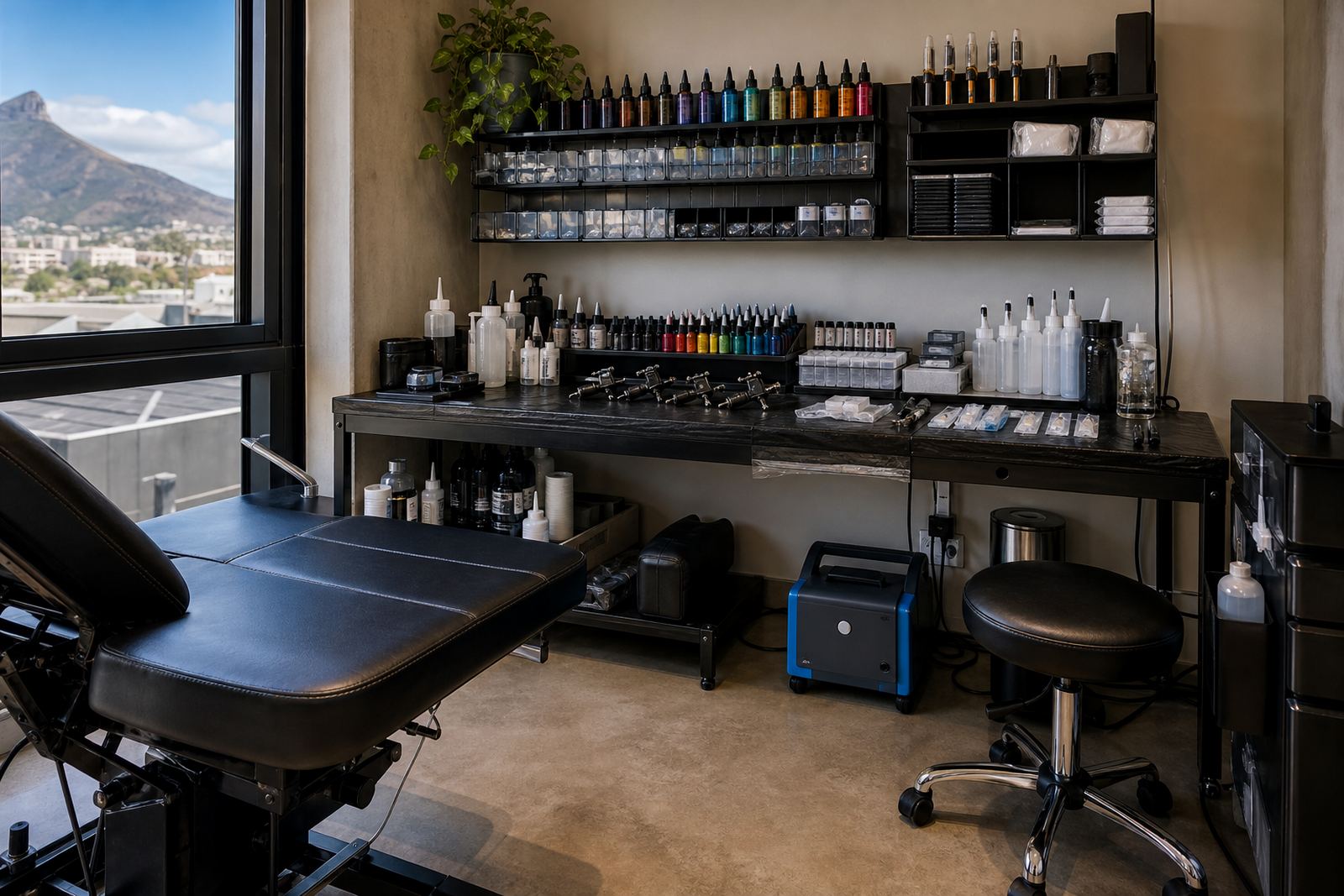
For studios in Cape Town and other coastal areas, capped bottles and clean storage matter because humidity and heat can affect how neatly bottles, caps and labels stay organised. A shelf plan that keeps fresh stock apart from opened items also makes inventory checks easier during busy weeks.

  • Group inks by lining, shading and colour work.
  • Store opened bottles with the cap clean and tight.
  • Keep labels visible so shades are picked without confusion.
  • Use a stock order that matches the styles your studio does most often.

Needle and cartridge groupings that keep stations moving

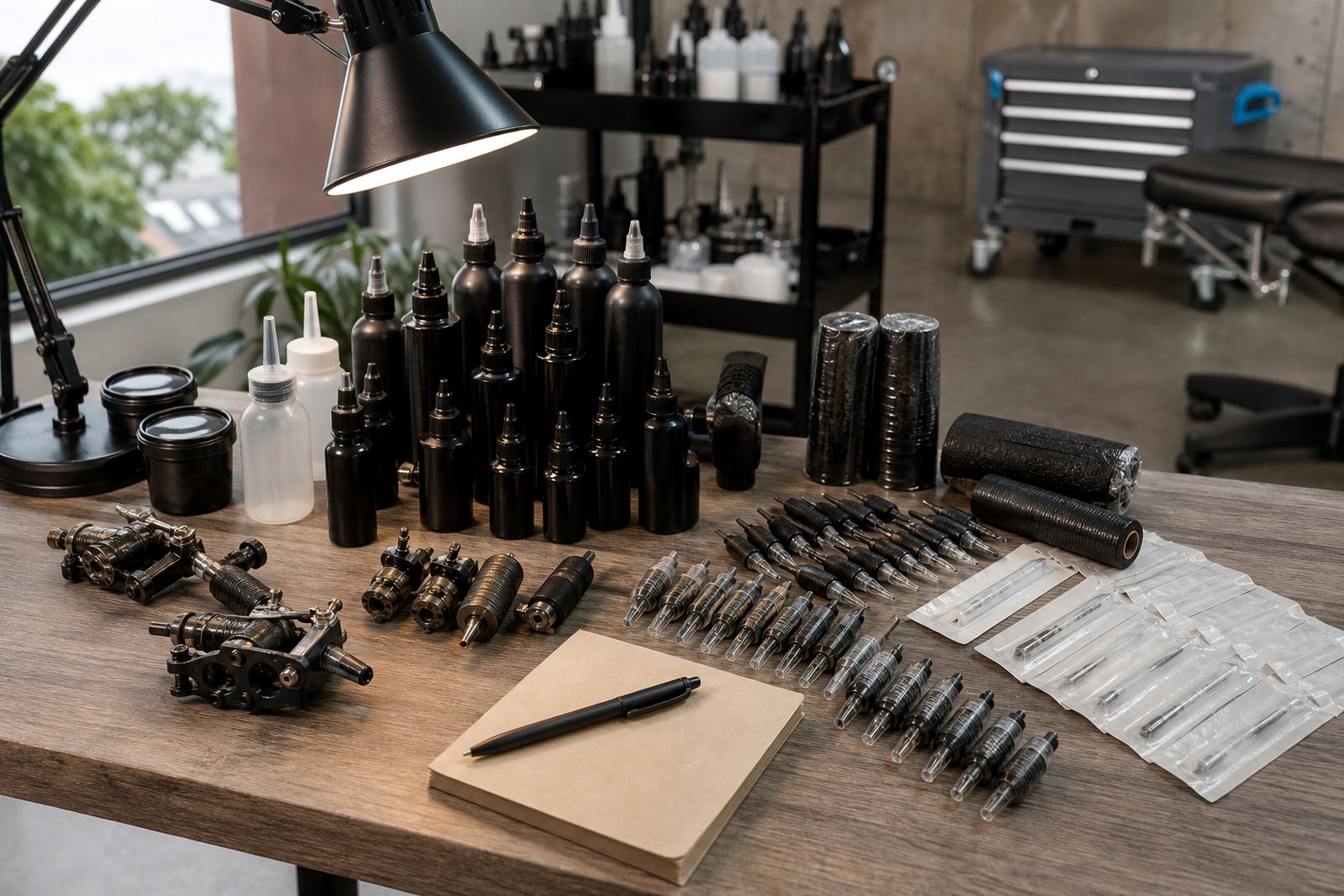
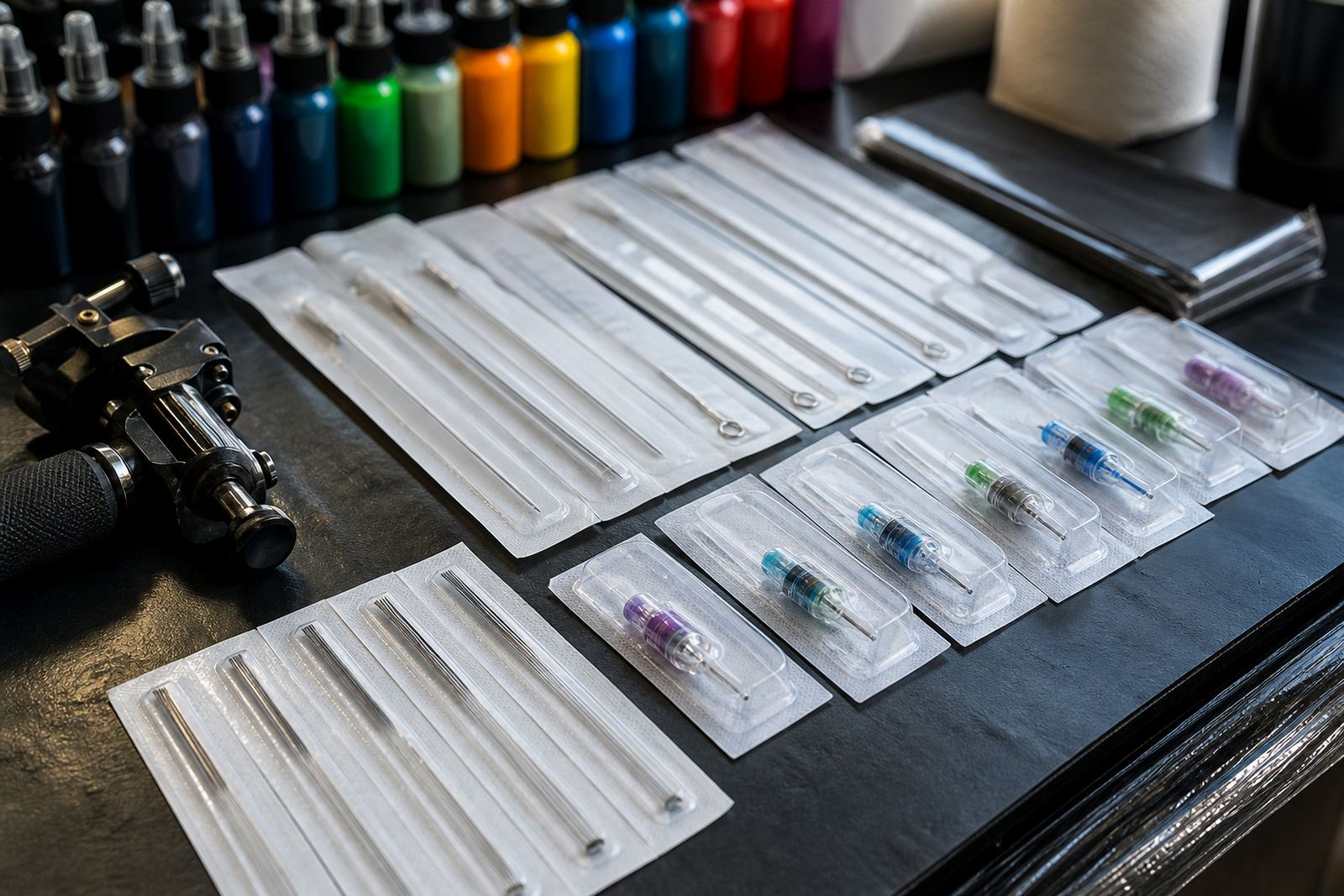
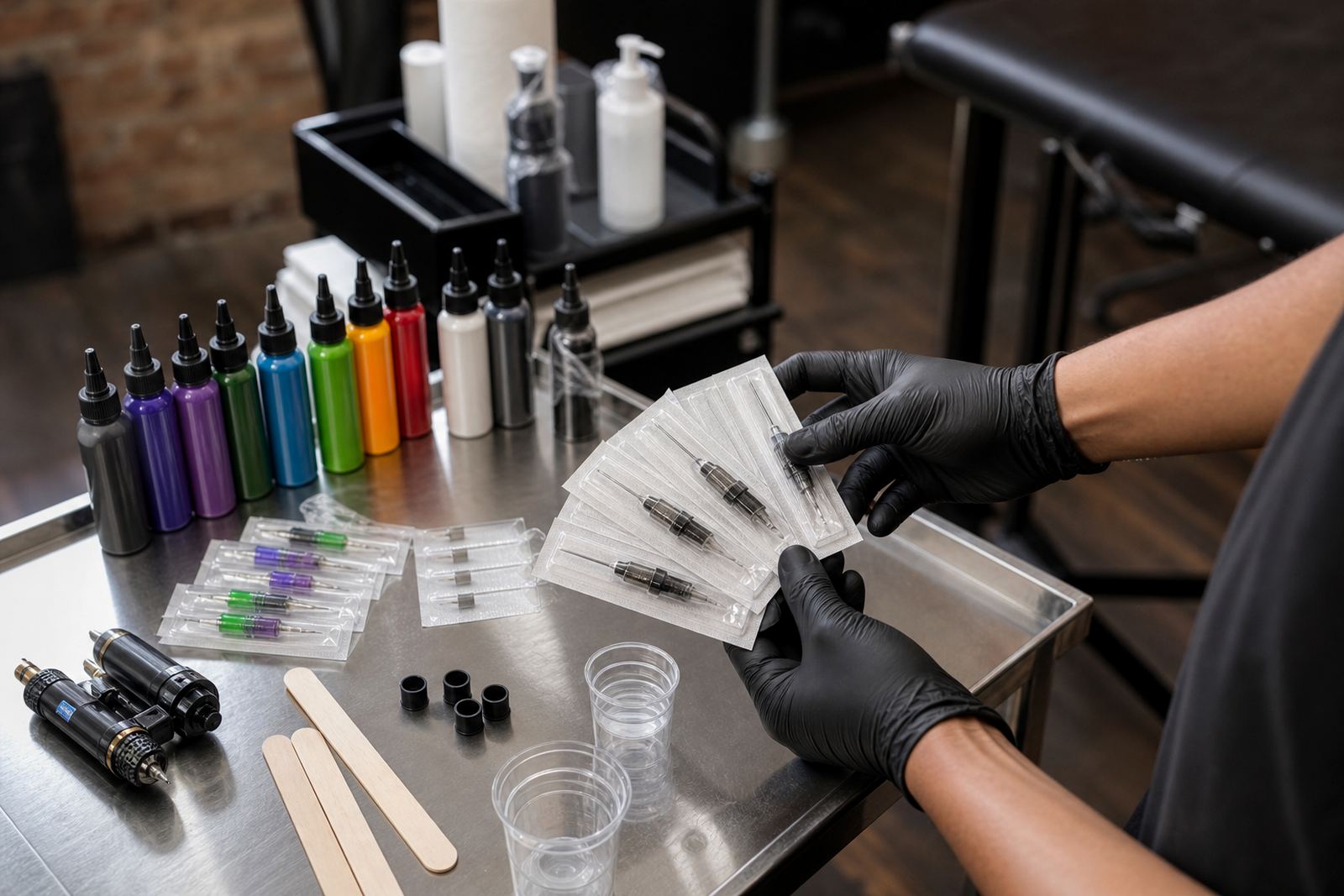
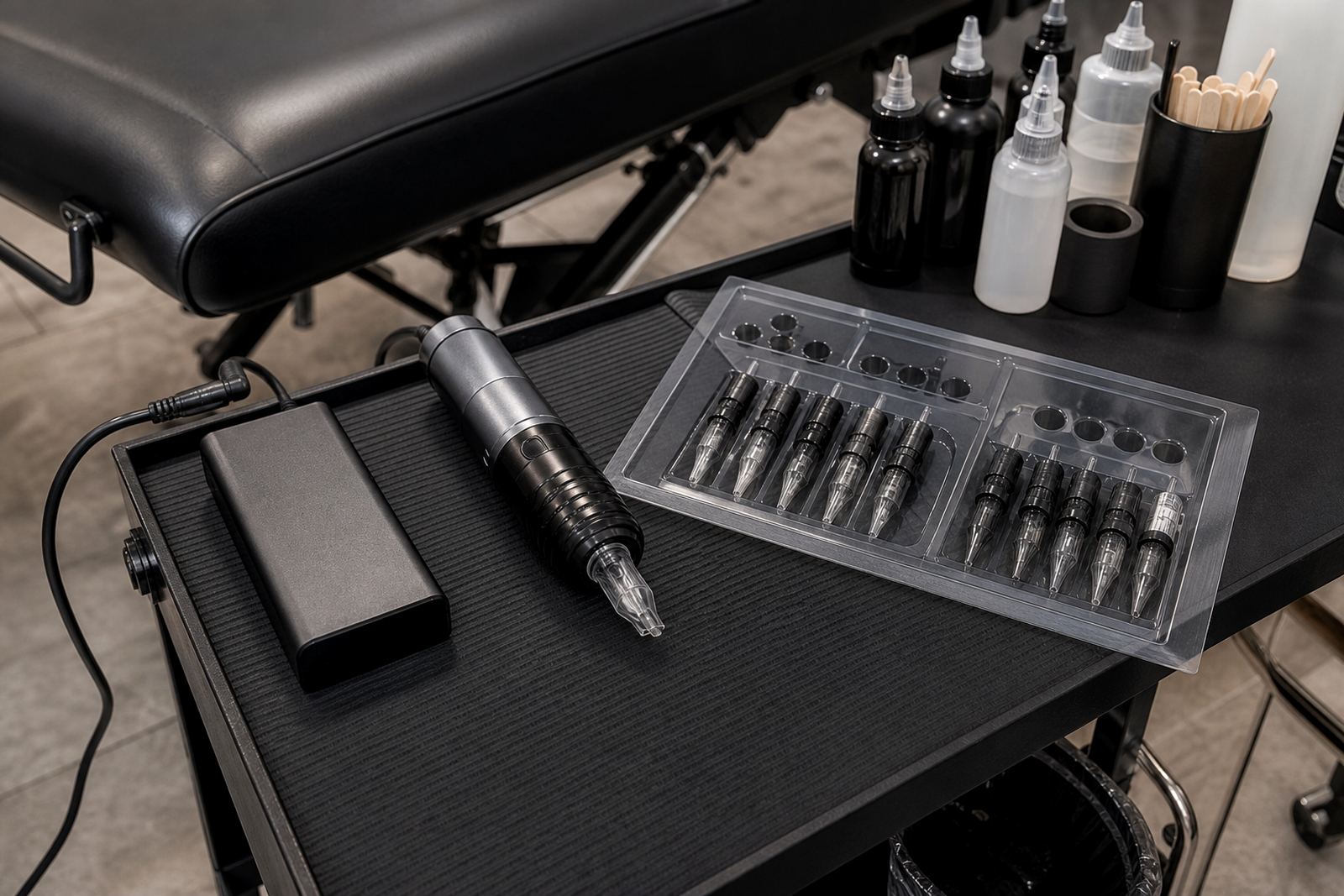
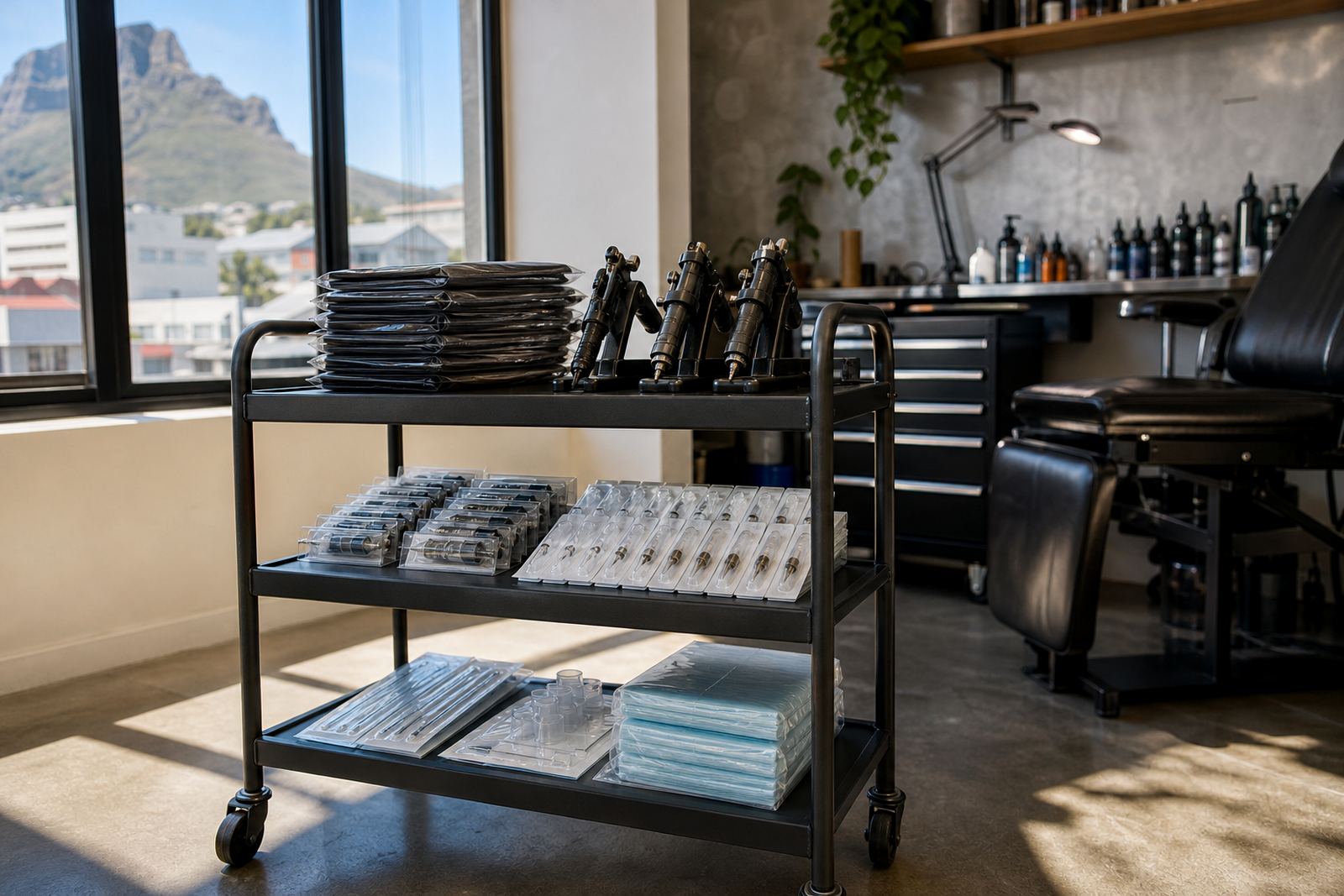
Needles and cartridges are usually sorted by configuration, taper, grouping and intended use. A clean drawer or tray system helps artists find liners, shaders, magnums and round groupings without slowing the set-up at the station. It also makes reordering simpler when one grouping runs low faster than the others.

Cartridge choice depends on the machine, the hand feel the artist prefers and the work being done that day. Some studios keep one set of groupings for fine detail, another for colour and soft shading, then a separate reserve for walk-in work and larger pieces.

  • Keep liners, shaders and magnums in separate sections.
  • Check that the cartridge fit matches the machine style in use.
  • Hold spare stock for busy weekends and larger bookings.
  • Use dated bins or labels so older stock is used first.

Machines, grips and the parts that need a tidy bench

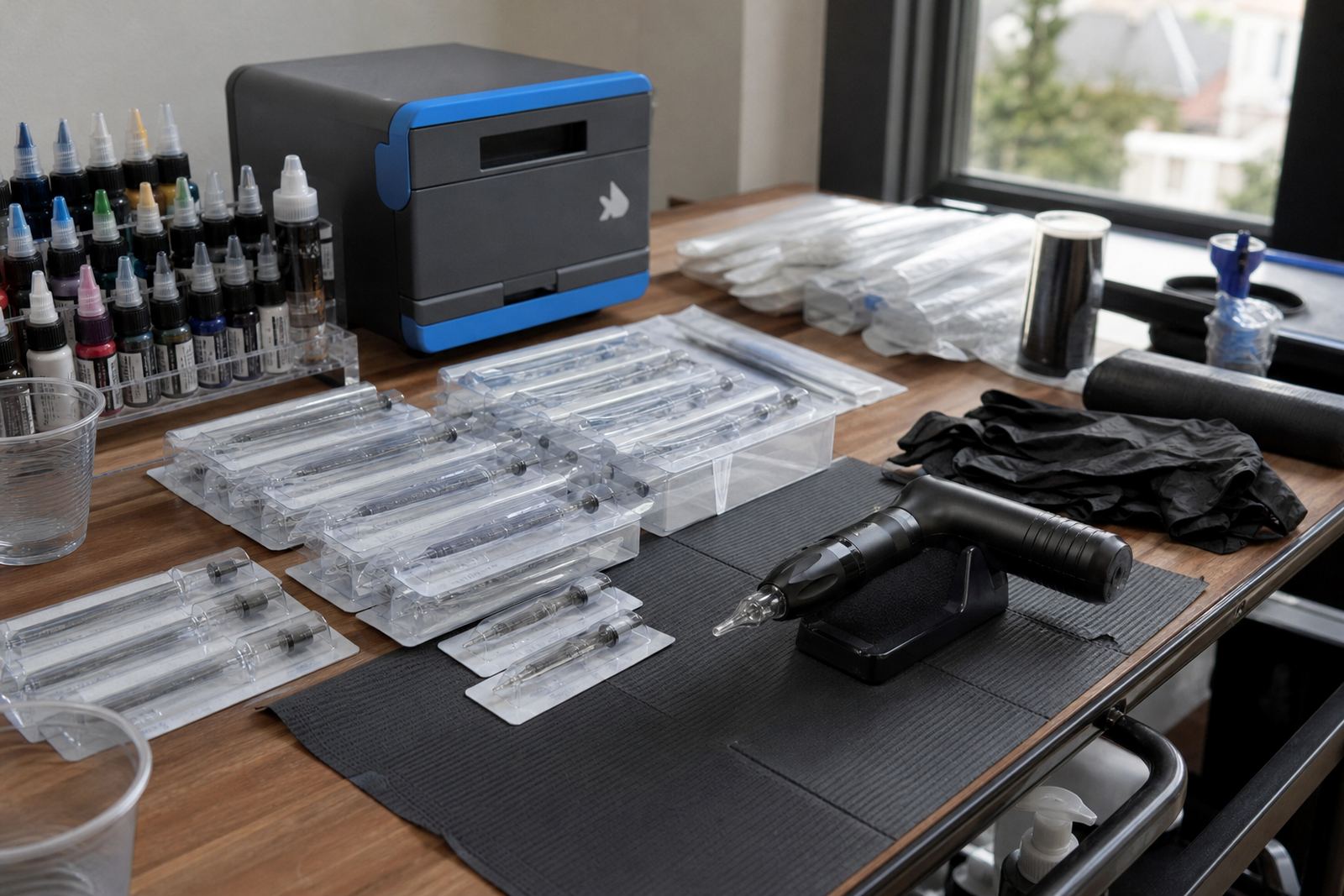
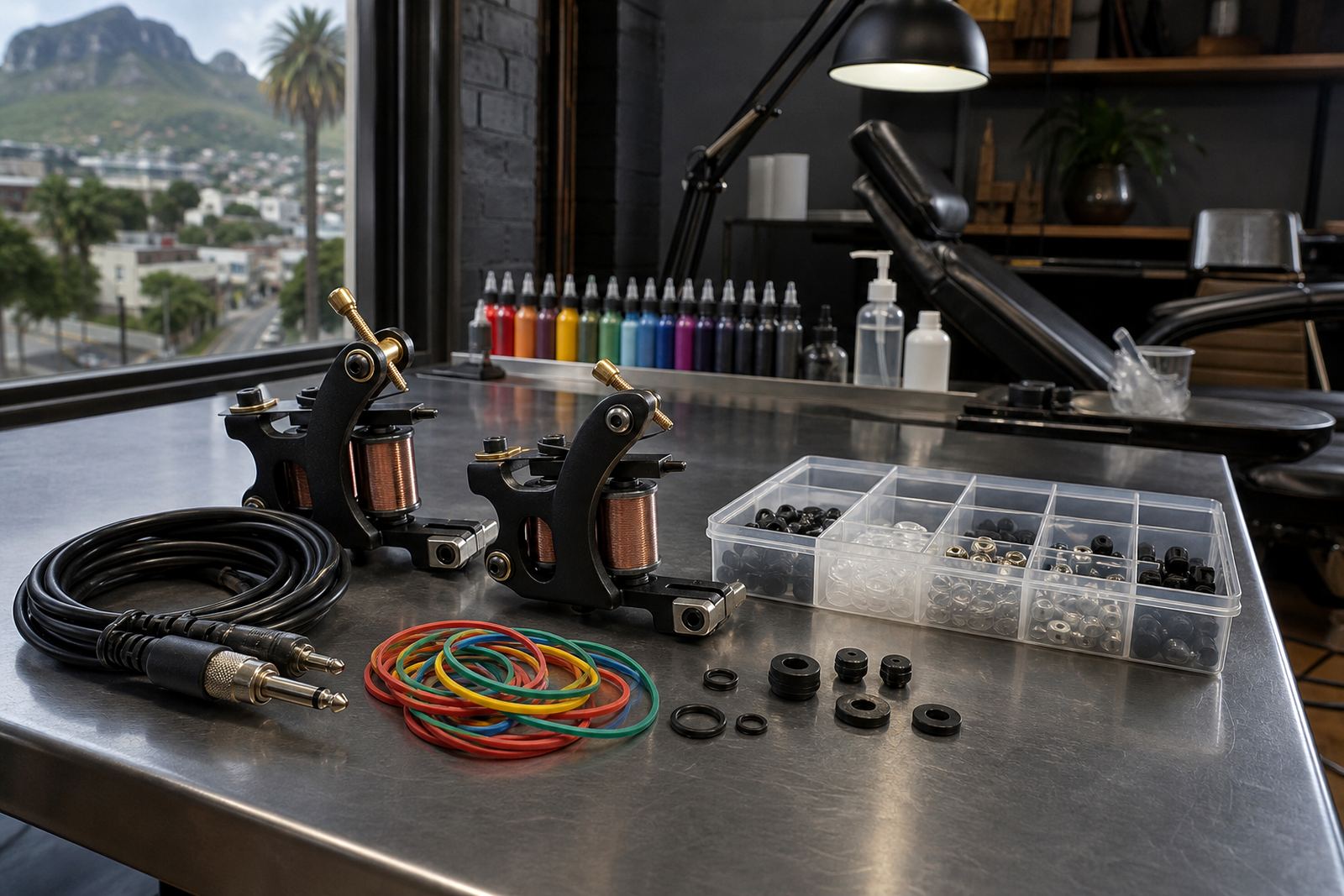
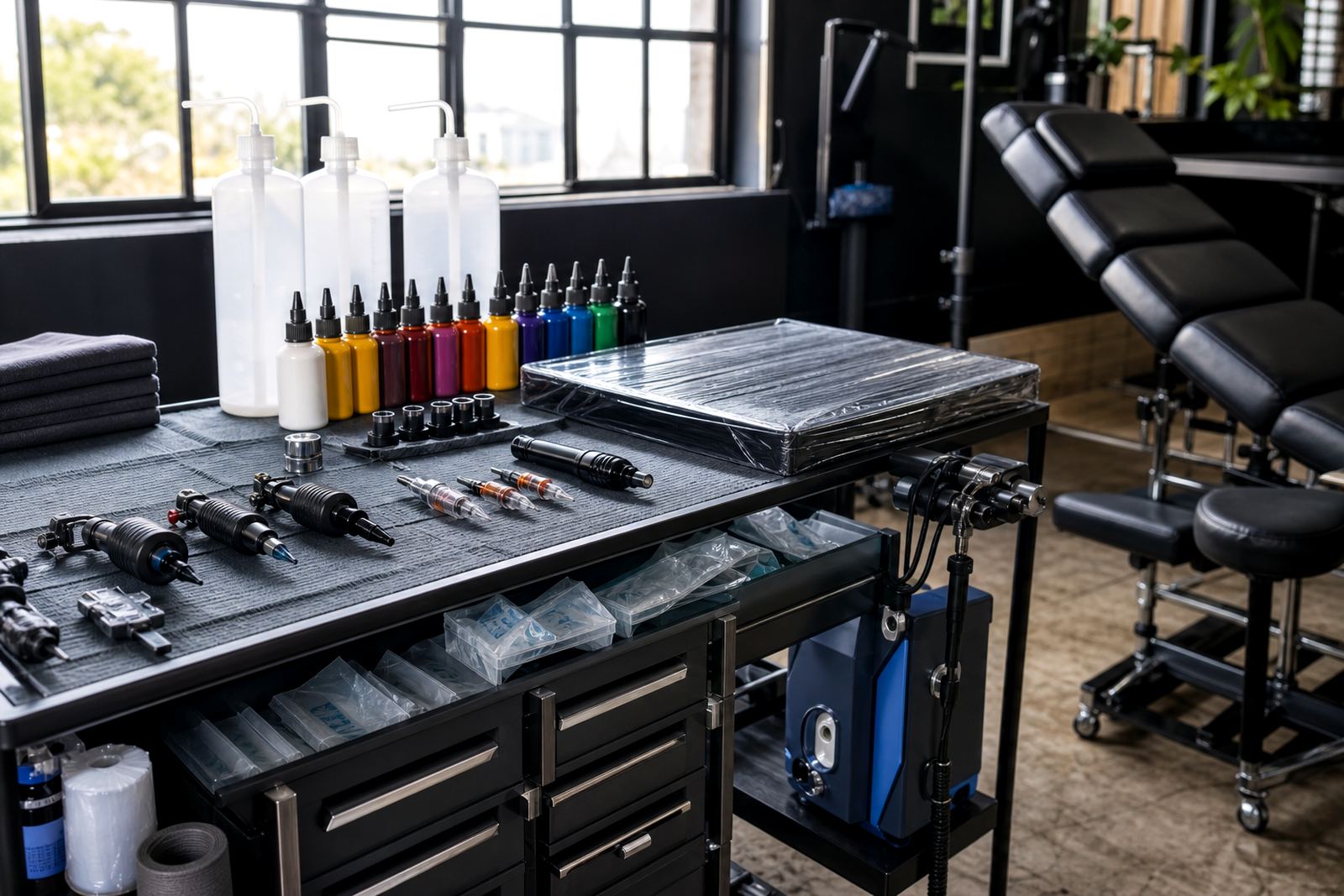
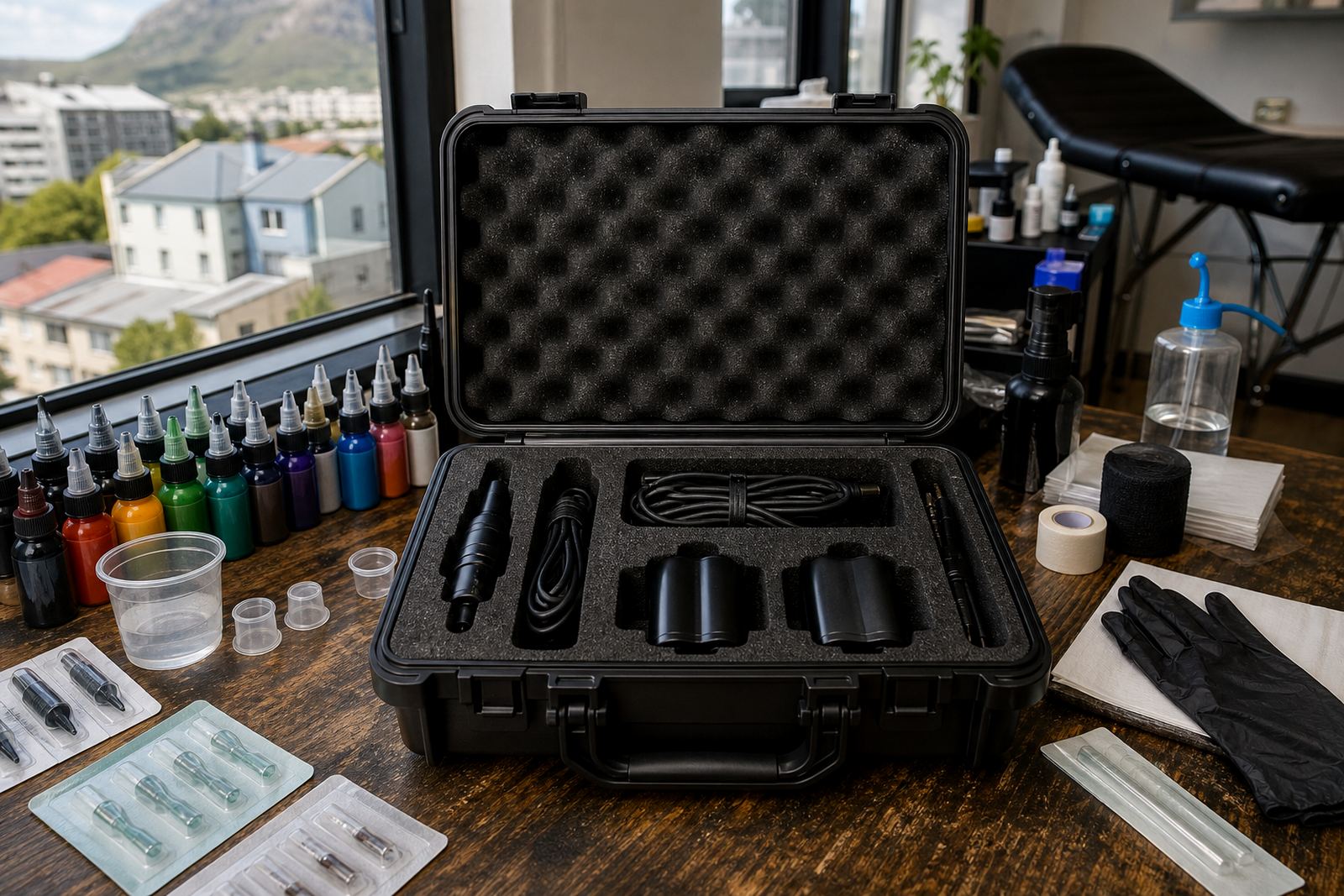
Machines and their related parts are easier to manage when the bench layout is settled before the first client arrives. Batteries, clip cords, grips, tubes and small fittings should all have a fixed place so the artist is not searching through mixed boxes during a session. For studios that run multiple artists, a shared storage plan reduces mix-ups and lost parts.

Flash Notes covers generic machine matching notes only, not repair work or skin advice. The aim is to help studios understand what belongs with what, and how to keep working parts stored neatly between appointments.

  • Separate machine parts by type and size.
  • Keep charged items and spare power parts in one marked area.
  • Return cleaned parts to the same tray after each shift.
  • Use a simple count sheet for shared studio gear.

Sterile single-use supplies and clean handling routines

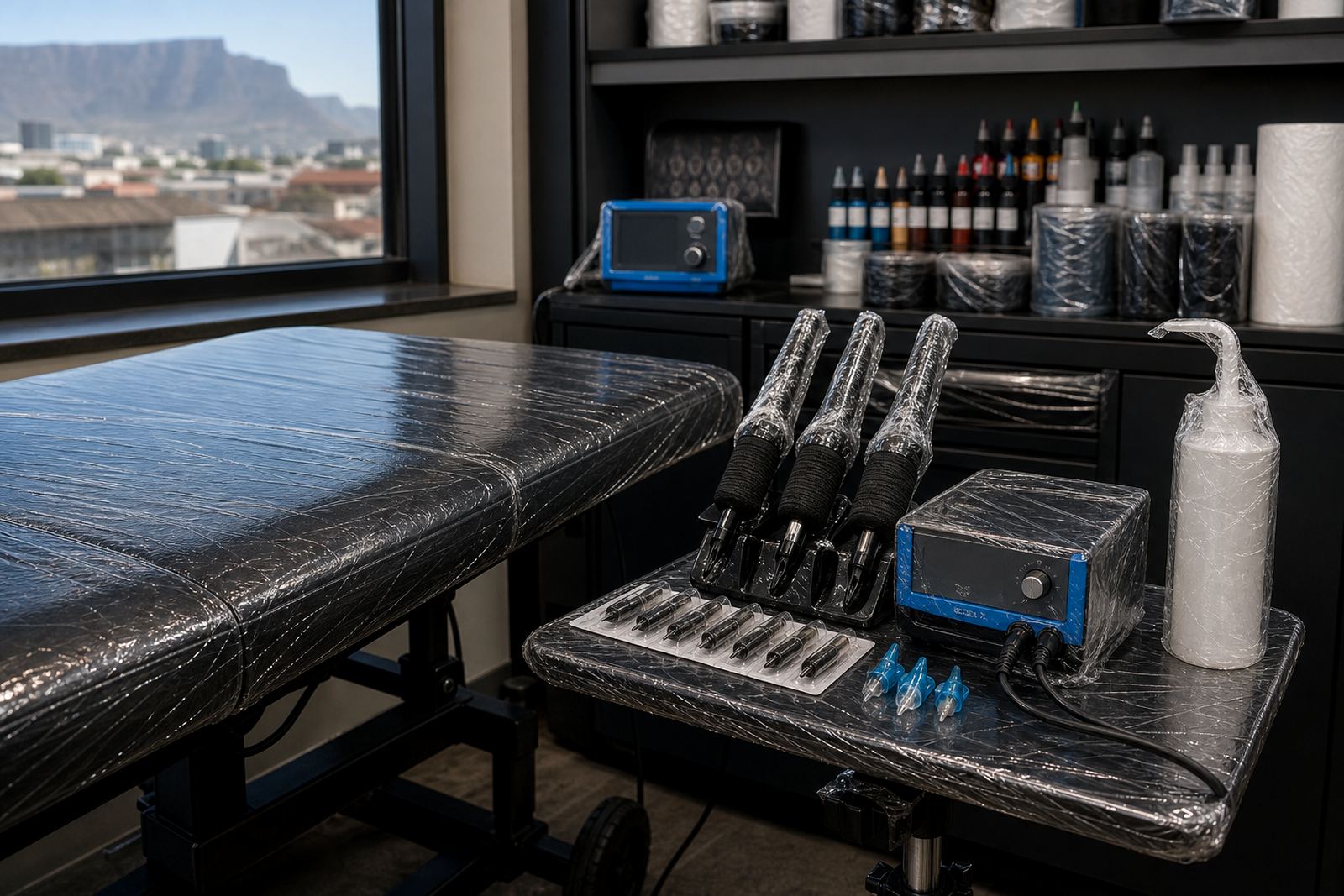
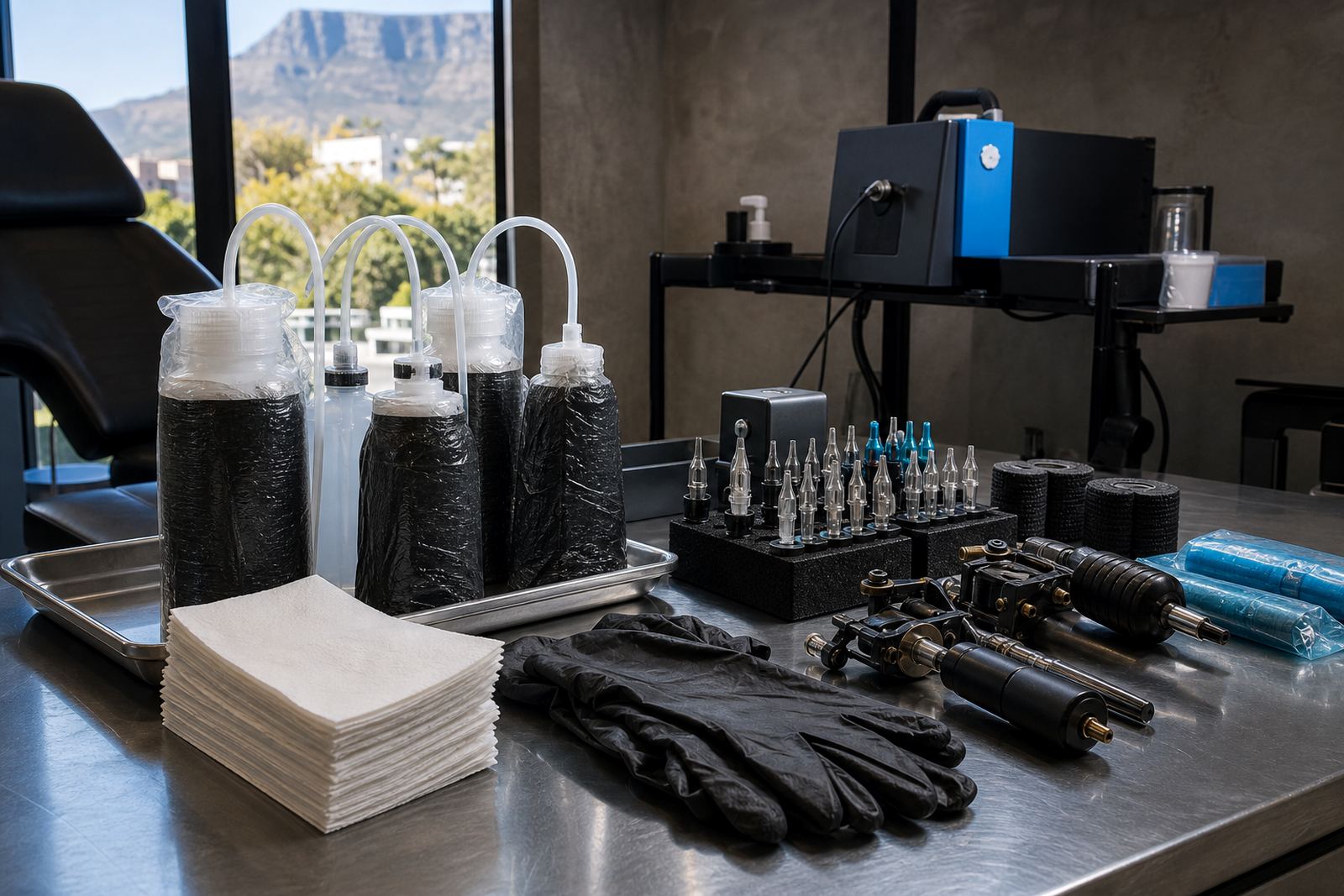
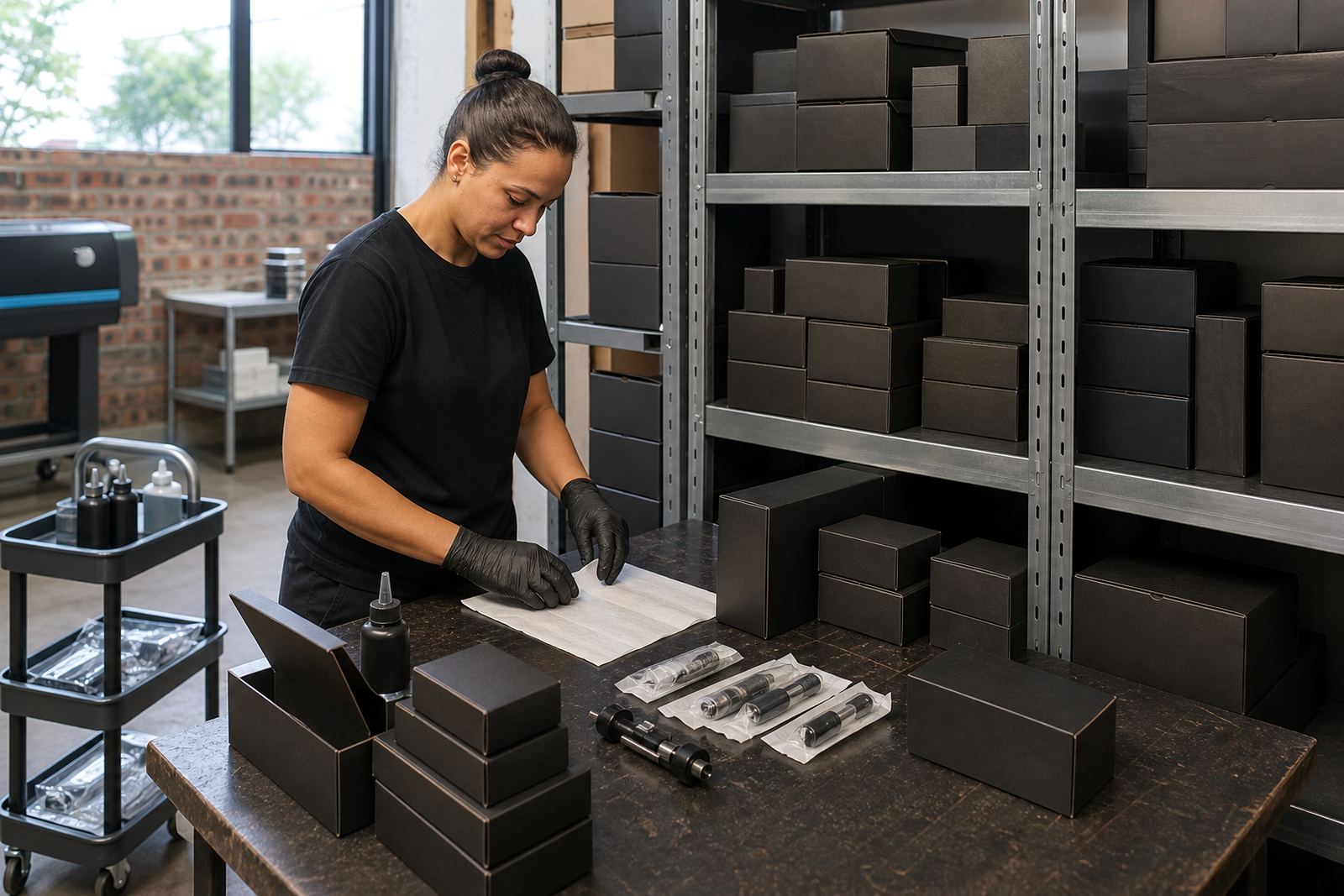
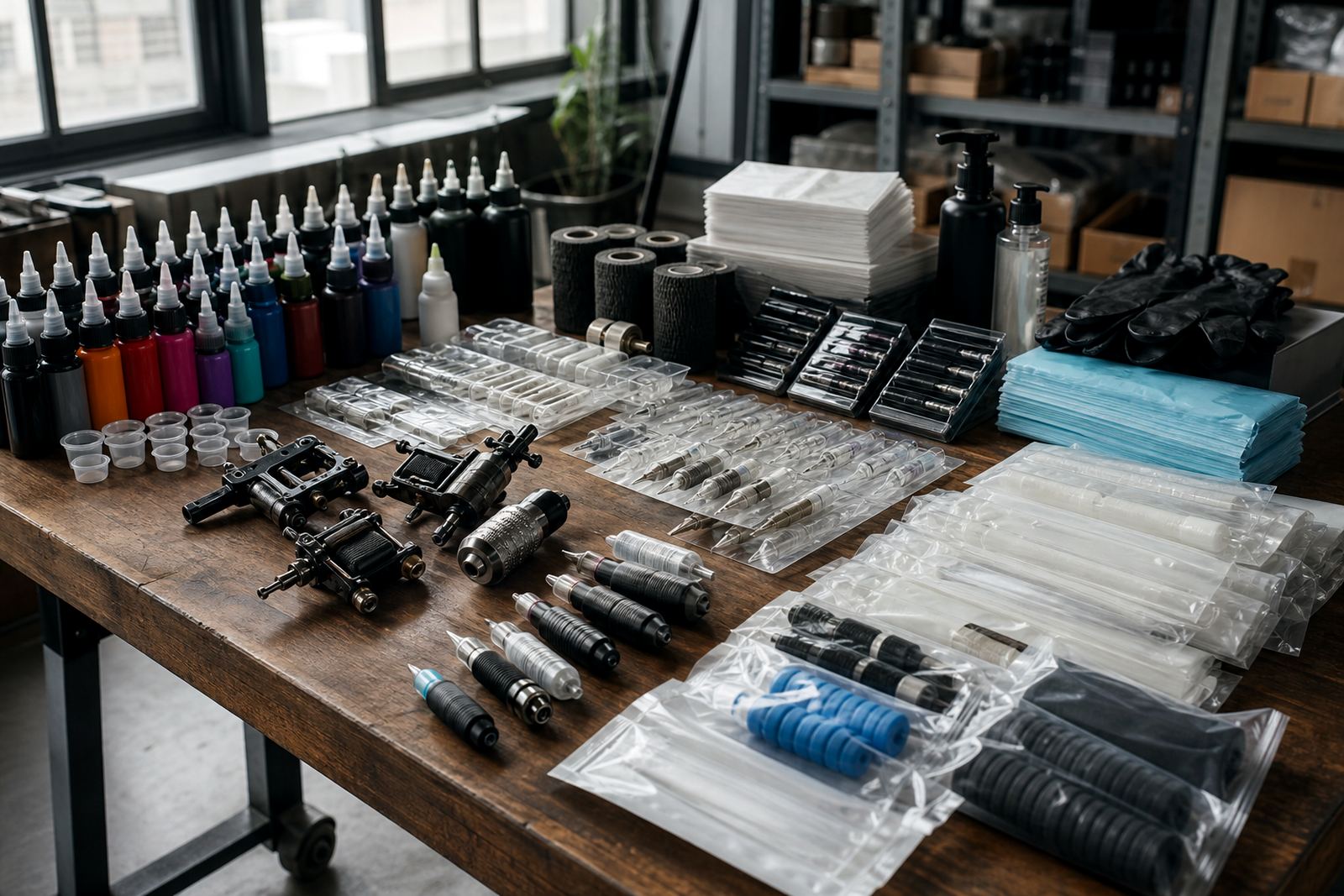
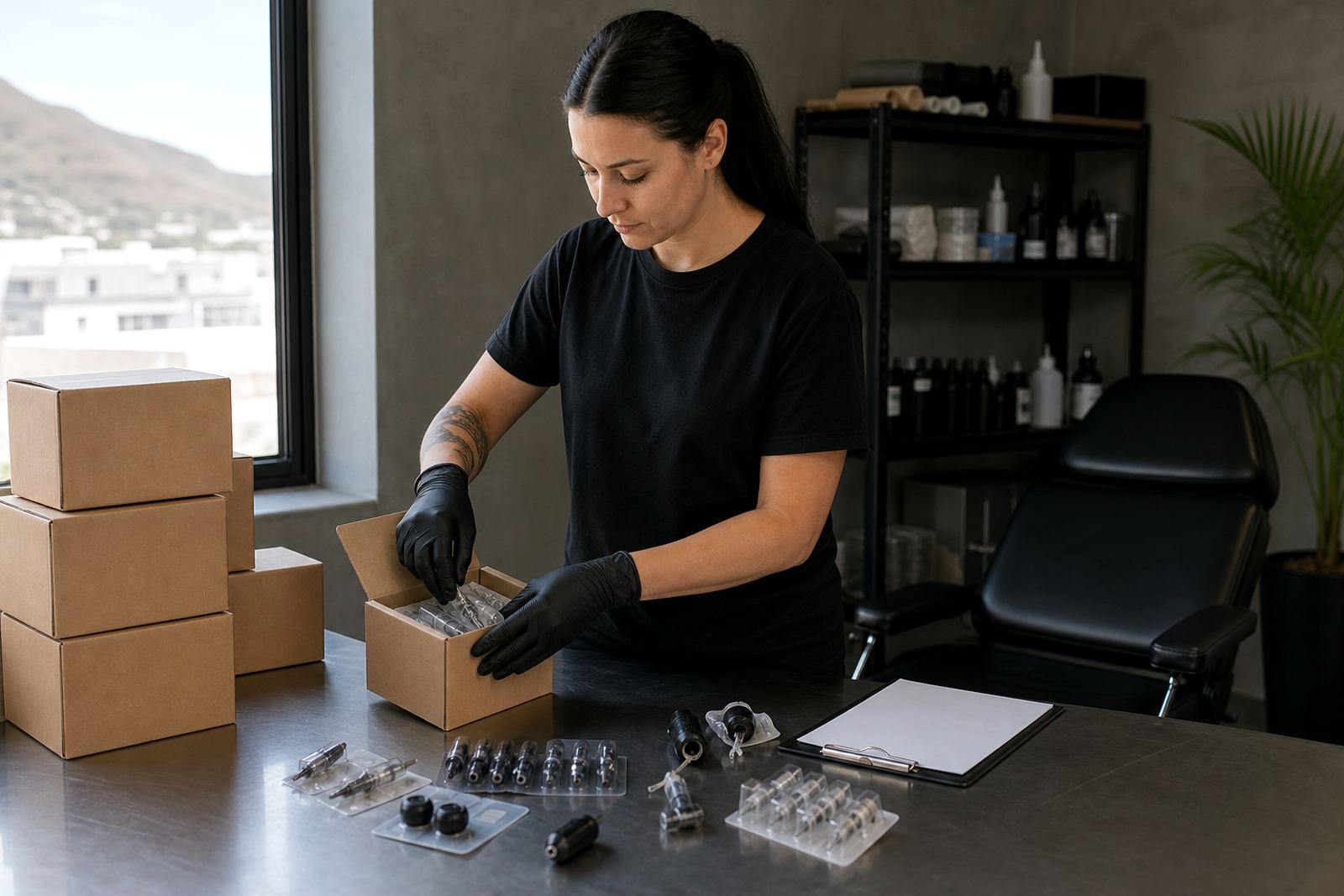
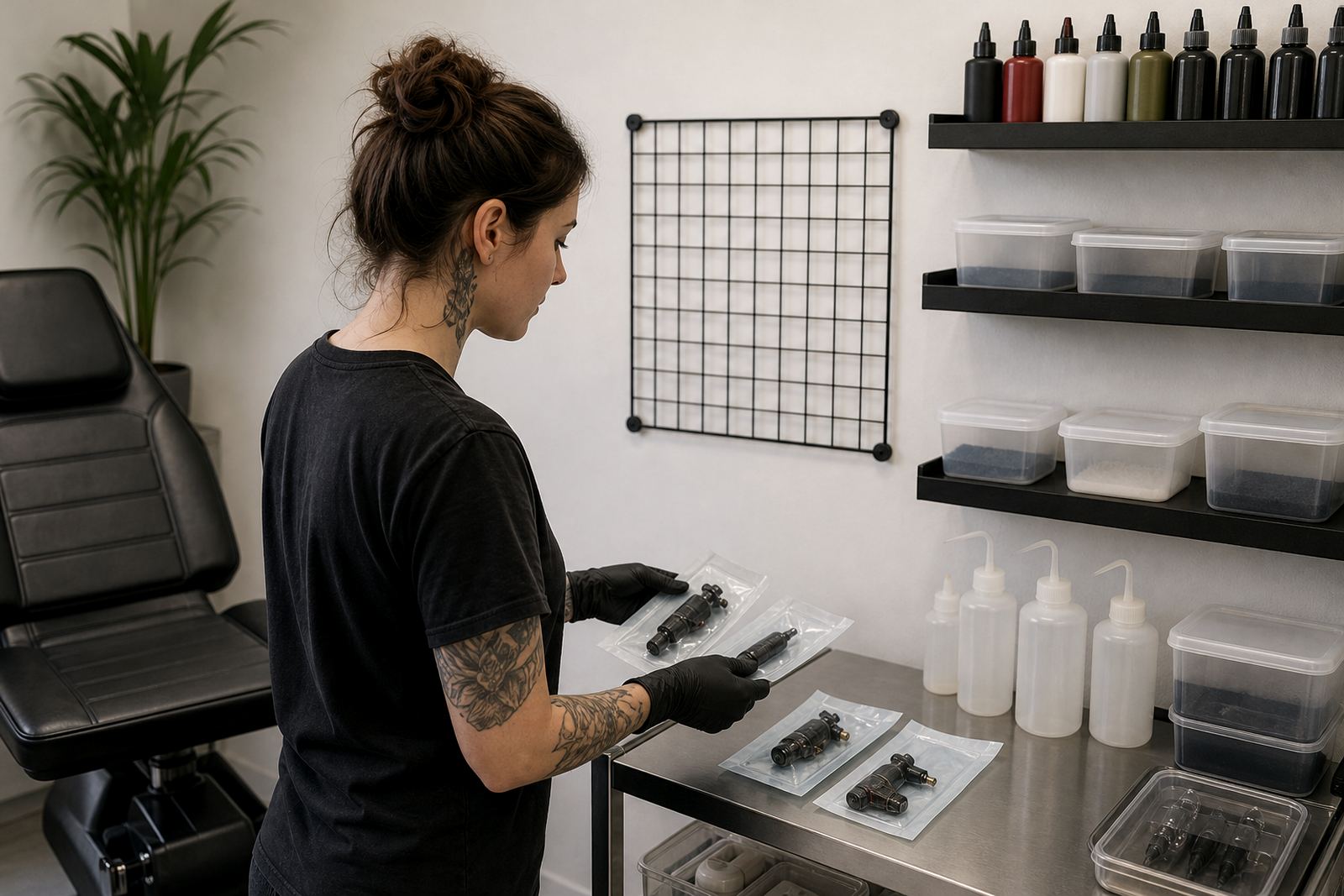
Single-use items are easier to control when they are opened only at the station and disposed of after use. Covers, barriers, gloves, caps and other disposable supplies should be arranged so the artist can reach them without crossing a clean area with a used one. That small bit of order matters in compact studios and in rooms that work back to back appointments.

We keep the writing here generic and practical, because local health rules differ and must always be followed. In other words, the studio should work to the rules that apply in its area and use stock handling methods that keep clean and used items clearly separate.

  • Mark a clean zone for unopened consumables.
  • Keep used items in a separate disposal container.
  • Store gloves, caps and covers in closed boxes.
  • Check that every artist uses the same basic handling routine.

Stock shelves for Cape Town, Durban and inland orders

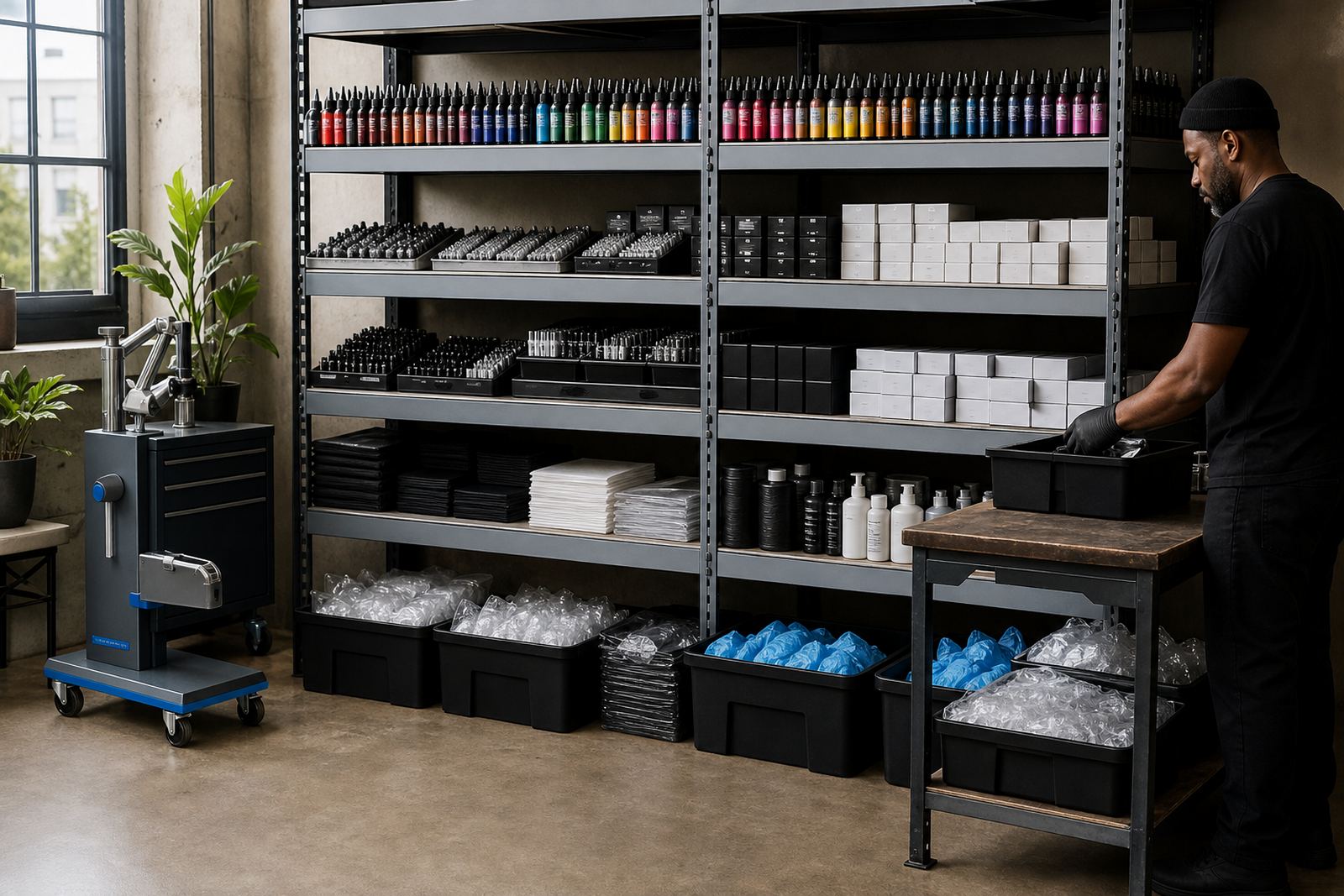
Ordering for one studio in Observatory is not the same as stocking for a shop that serves Johannesburg, Durban, Pretoria and Gqeberha as well. Coastal humidity, cooler inland winters and the pace of weekly bookings all affect how fast items move. Some studios keep more consumables on hand, while others prefer tighter stock and smaller, more regular replenishment.

Delivery to studios across South Africa works best when the order list is grouped by category first, then by count. That makes it easier to spot gaps in inks, needles, cartridges and general supplies before dispatch.

  • List fast-moving items first, then slower stock.
  • Keep a separate count for each branch or station.
  • Use one list for inks and another for disposables.
  • Check for broken seals, damaged boxes and mixed sizes before placing an order.

A practical way to read the range before placing an order

Choosing from the range is usually easier when you start with the work your studio does most often. Fine line work, heavy shading, colour realism and larger custom pieces do not all need the same mix of inks, needles and cartridges. Once that is clear, the rest becomes a question of how many artists are sharing the station and how often supplies are used through the week.

Flash Notes is the place for those supply notes, station ideas and ordering reminders. The cards and article listings sit separately, so readers can move through the topics they need without sorting through unrelated stock.

  • Match the range to the style of work on the books.
  • Choose stock levels by how many stations are active.
  • Keep a note of what runs out quickest.
  • Review storage space before adding new lines.

Questions we get asked

What does Flash Notes cover?

Flash Notes covers general notes on tattoo inks, needles, cartridges, machines and studio supply organisation. It stays on practical product understanding and keeps clear of medical or skin-health advice.

Does the page help with choosing stock for a studio?

Yes. The notes explain how to group supplies by use, how to think about station flow and how to keep stock easier to count, store and reorder for South African studios.

Does InkX Tattoo ship beyond Cape Town?

Yes. Orders are arranged for delivery to studios across South Africa, including Cape Town, Johannesburg, Durban, Pretoria, Gqeberha, Stellenbosch, Bellville and Somerset West.

Need tattoo supplies? Send the team a message

Contact form