
Start with the work you expect to do each week
A new studio order works best when it follows your actual appointment mix. A fine-line studio will use different needle groupings and cartridge sizes to a colour-heavy studio, while a walk-in space may need broader coverage across inks, grips, clip cords, disposable barriers and cleaning stock. It helps to look at the first month as a working pattern, not a dream list, then stock for that pattern with a little extra for busy days.
In Observatory, where space can be tight and shelves fill quickly, many studios separate opening stock into daily use, back-up stock and slow movers. That keeps the counter clear and reduces the chance of mixing sealed stock with opened items. If you are ordering for a shared setup or a small room, count how many tattoo stations will run at once and match that number to your consumables rather than guessing.
- Count active stations, not just total artists.
- Separate fast-moving consumables from spare stock.
- Leave space for sealed boxes and dry storage.
- Check municipal and local health rules before setting quantities.
Ink selection that fits your work, not just the shelf
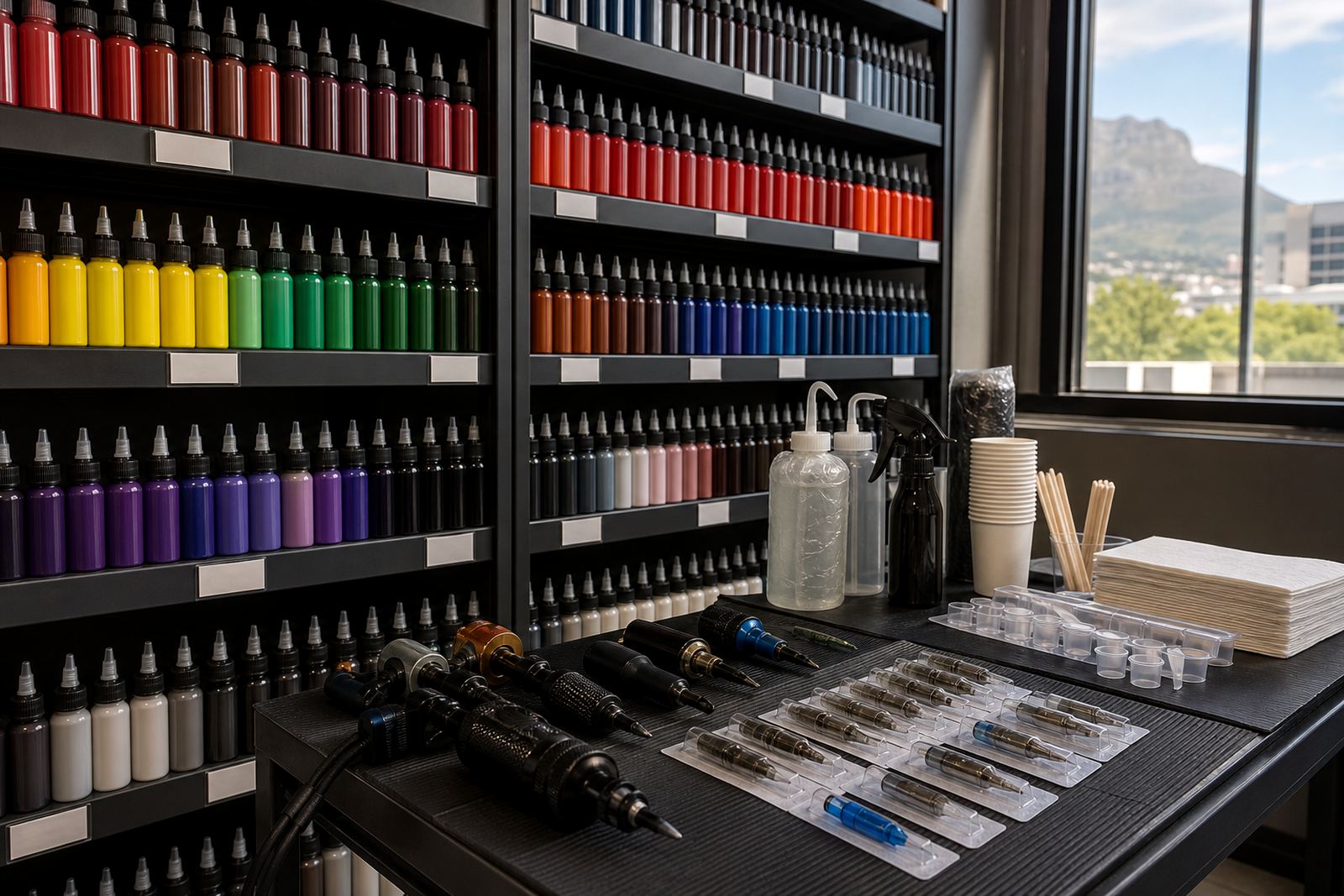
Tattoo inks are usually chosen by colour range, flow, opacity and how often a studio uses each tone. A sensible opening order includes core black, lining and shading tones, plus a working set of colour families that suit the style you plan to offer. If you expect more black and grey work, do not overbuy bright colours at the start. If your work leans toward colour fills or large pieces, you will need a broader palette and more of the shades that move quickly.
Storage matters as much as the colour list. Keep inks in a dry, cool area out of direct sun, with labels easy to read and bottles checked before each session. In Cape Town, moisture and sea air can make poor storage a problem, so sealed containers and a tidy shelf system help preserve order. Follow local health regulations for storage, handling and disposal, and keep your own records of what is opened and what is still sealed.
- Choose a core black set first, then add colour by demand.
- Keep inks sealed, labelled and stored away from heat.
- Use a shelf or tray system that keeps like shades together.
- Track opened stock separately from unopened stock.
Needles and cartridge groupings that cover everyday appointments
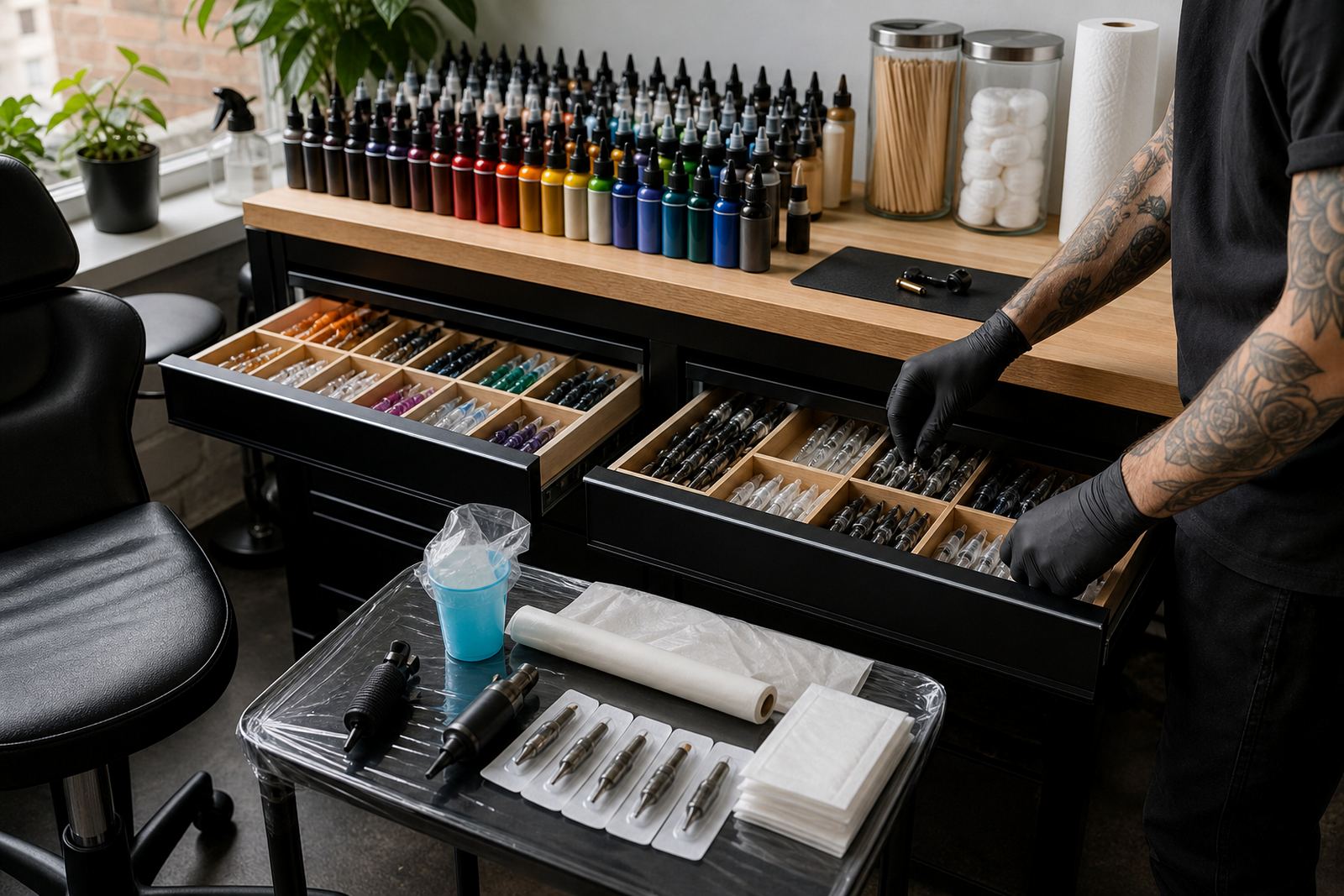
Needles and cartridges should be grouped by the job they do, not just by what looks popular in a catalogue. Line work, shading, colour packing and soft blending each need different configurations. A first order should include the groupings your artists use most often, with a few extra sizes for variations in line weight and fill areas. Buying one of everything can tie up cash and shelf space without helping the studio on day one.
Cartridge systems are handy for quick changeovers, while traditional needle groupings still have their place in many setups. What matters is consistency, fit and how the set matches the machine. If your artists prefer a certain cartridge size for daily work, hold enough of that size to avoid interruptions. A good stock plan also leaves room for single-use items that support sterile practice, because those items tend to move in steady numbers once the chairs are occupied.
- Stock the needle and cartridge groupings used most often.
- Keep liners, shaders and magnums grouped separately.
- Match cartridges to the machines in use at the studio.
- Add a small buffer for busy periods and group bookings.
Machines, grips and the rest of the station
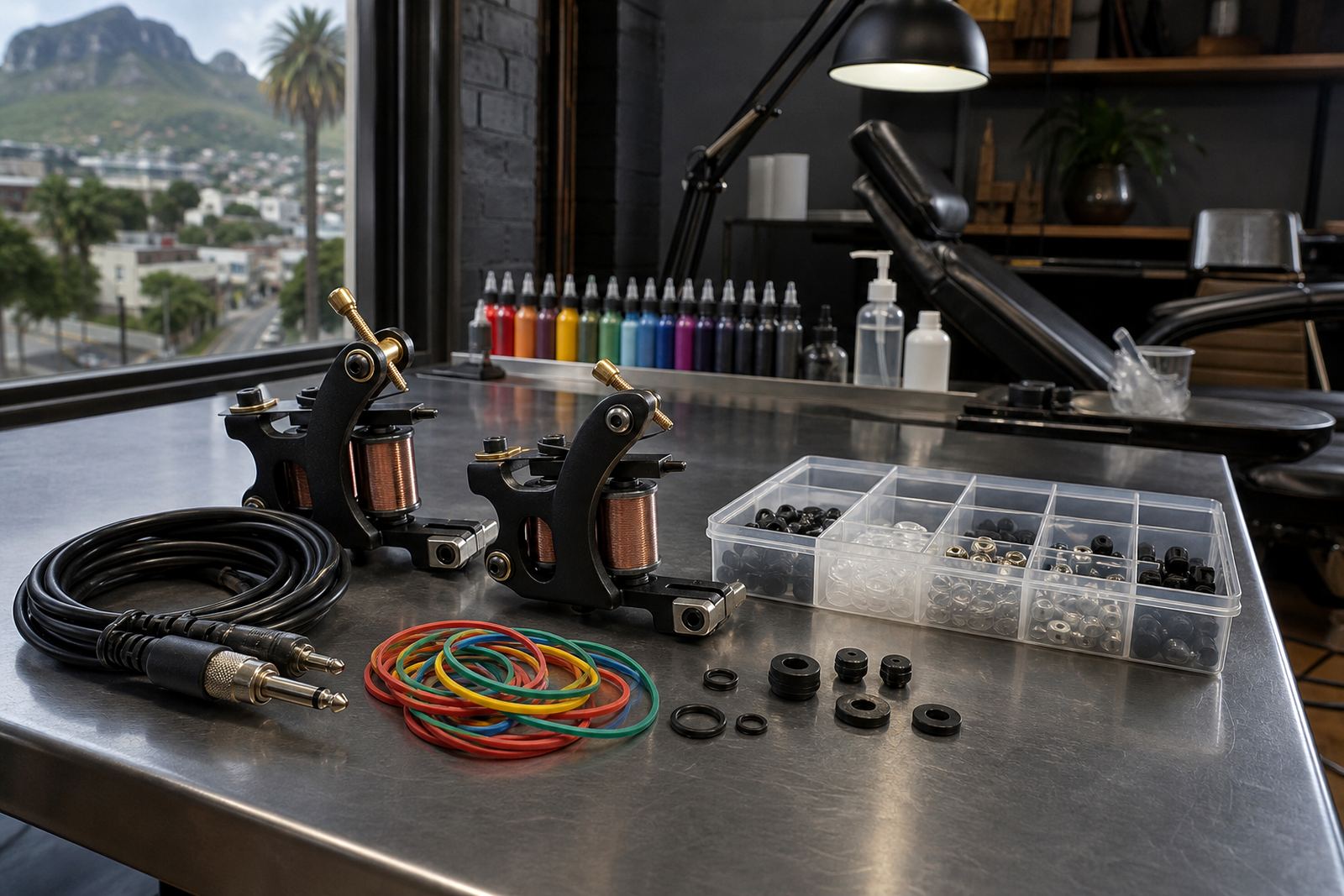
Machines are usually not the place to over-order at the start. It is better to match the machine type to the style of work and then build the rest of the station around it. Needles, cartridges, grips, clip cords, foot switches, barriers and wrap materials all need to fit the way your artists work. If the station feels cluttered, the team spends more time setting up and less time working cleanly.
A practical opening order includes the parts that are easy to miss: grip wraps, barrier film, disposable covers, ink caps, wash bottles, surface wipes and items for keeping the station clean between clients. Those supplies are small, but they run out quickly in a busy room. In Johannesburg or Pretoria, where studios may keep longer hours and do heavier traffic on some days, a clear system for station refills can save a lot of stop-start movement behind the scenes.
- Choose machine stock around your main tattoo styles.
- Include grips, barriers and setup items with the machine order.
- Keep spare power and control accessories where relevant.
- Set up the station so the artist can reach essentials without crowding the work area.
Sterile single-use stock and studio hygiene basics
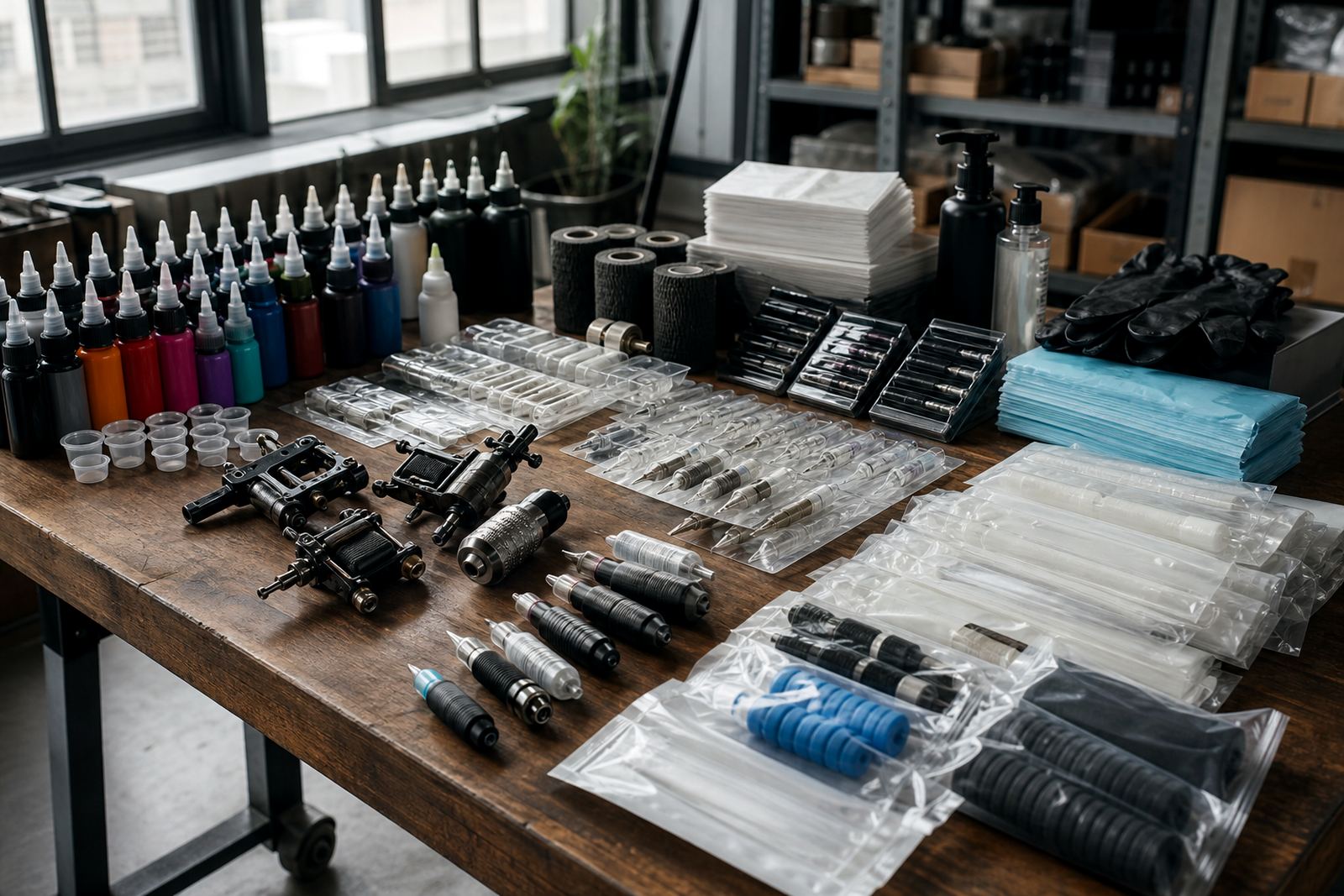
Single-use stock should be planned with care because it disappears quickly once appointments start. Gloves, razors where used, ink caps, barriers, aprons, swabs and other disposable items all form part of a clean workflow. The quantity you need depends on how many clients pass through the studio and how many setup changes happen in a day. It is better to keep a tidy reserve than to rely on a last-minute run for basics.
Studio hygiene also includes storage discipline. Clean stock must stay separate from used items, and open boxes should never sit on the same shelf as loose disposables. Follow local health regulations for cleaning, waste handling and surface management, and build those steps into the opening order from the start. A studio in Durban, for example, may also need to think about humidity when storing sealed items, especially if the room is close to the coast.
- Order enough gloves and disposables for busy days, not only average days.
- Keep clean stock separated from used or opened items.
- Store supplies in dry sealed areas with clear labelling.
- Build waste handling and surface cleaning into the daily routine.
A Cape Town opening order that stays practical
A small studio in Observatory might start with a narrow but complete order: one core ink set, a focused needle and cartridge range, the machine and grip setup the artists already know, plus the cleaning and sterile stock needed for daily work. That is often a better first step than filling the storeroom with products that will sit unopened. The aim is to keep the studio working cleanly, with enough stock for the first few weeks while the real usage pattern becomes clear.
For delivery to Cape Town, Johannesburg, Durban, Pretoria and Gqeberha, many studios prefer to split orders into essential items, back-up stock and later additions. That makes receiving, counting and shelving easier. It also helps when a studio in Stellenbosch, Bellville or Somerset West has limited storage and needs the main items to arrive in a way that can be sorted quickly. Keep the opening order grounded in the work on your books, and let the rest build from actual demand.
- Group the first order into essentials, back-up stock and later additions.
- Keep counting and shelving simple for the first delivery.
- Let early client demand shape the next round of stock.
- Use a stock plan that suits the room, not only the catalogue.