What sits on the tray before the first client
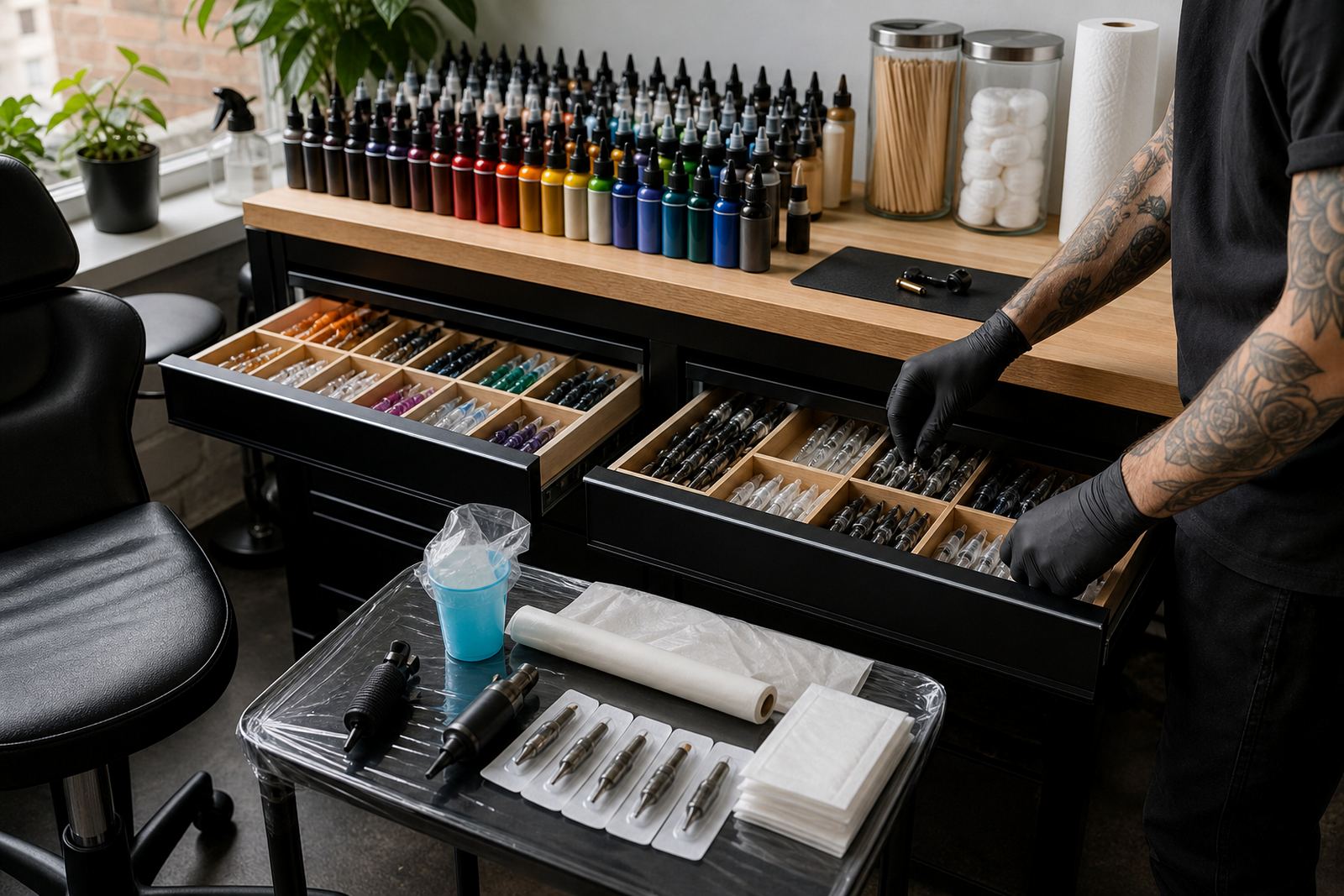
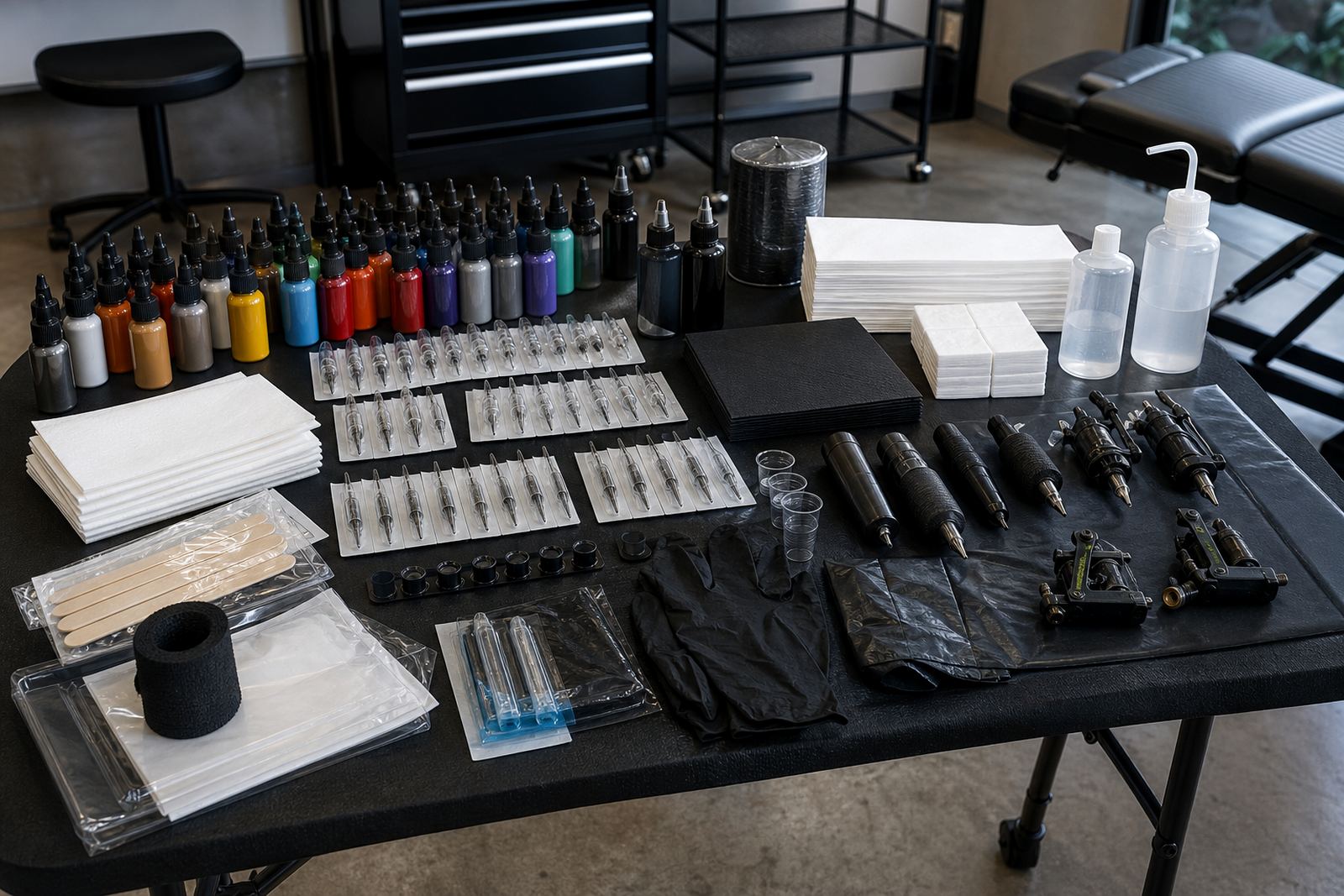
Most tattoo stations use a familiar mix of disposable items that get opened, used once, and discarded. That usually includes ink caps, clip cord covers, machine bags, razor handles, disposable razors, barrier film, wipe cloths, paper towels, apron covers and gloves. In some studios there are also single-use grips, mixing sticks, applicators and protective sleeve covers for tubing and furniture surfaces.
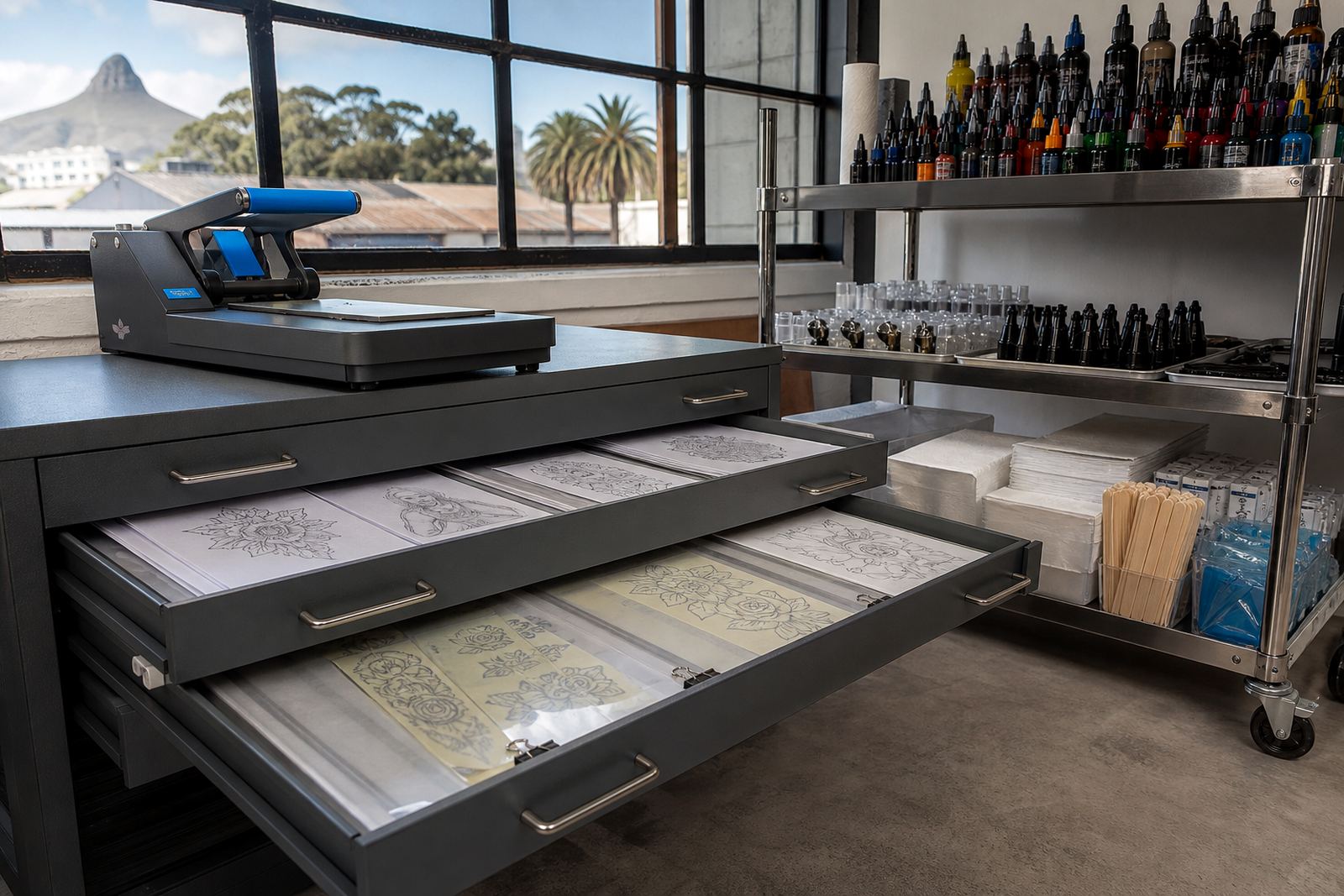
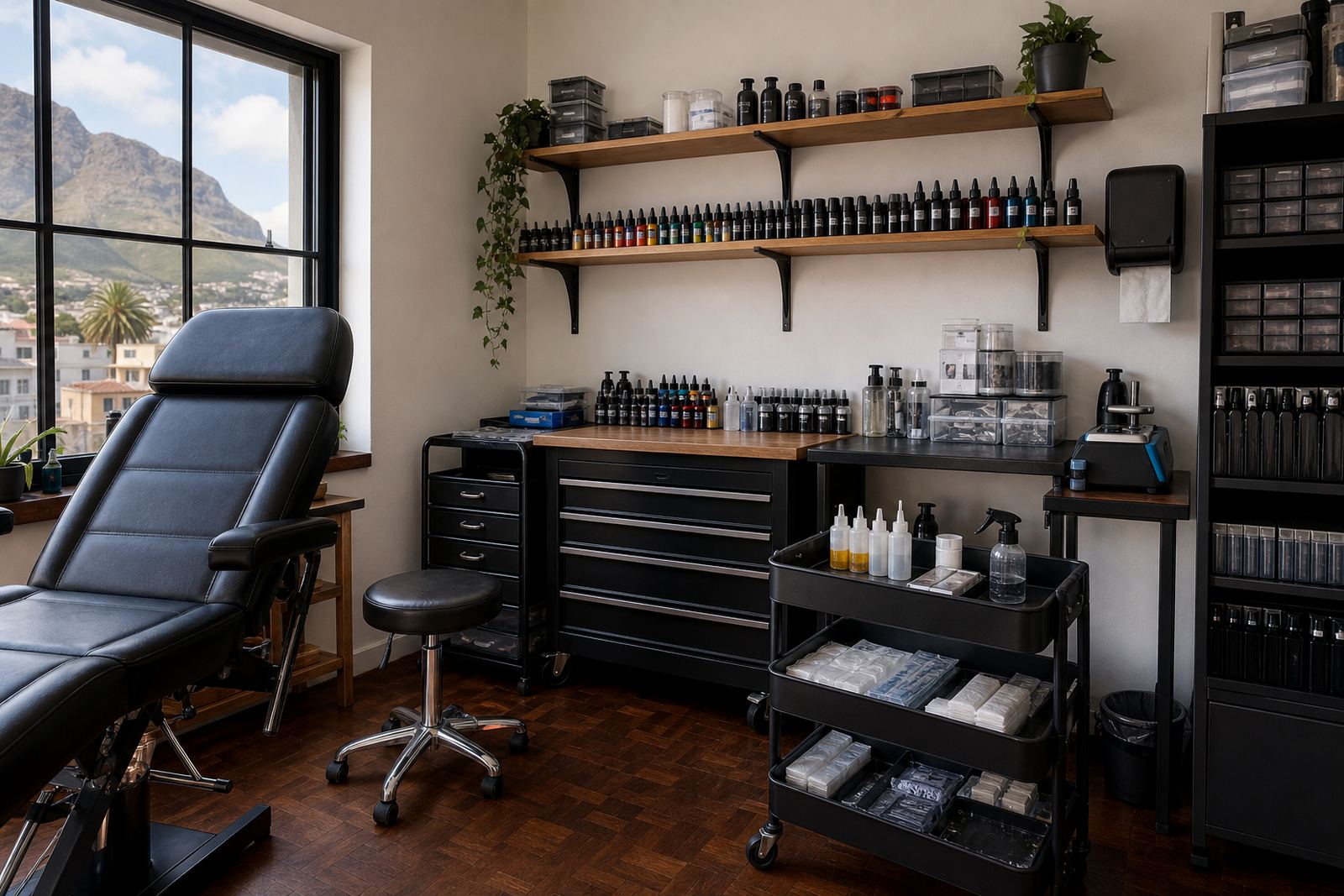
The point is not to fill a tray with everything under the sun. It is to keep the items close enough to reach without crossing the work area too often. A practical setup for a two-chair studio in Observatory might keep the daily consumables in a shallow drawer or lidded tub, with the more frequently used items separated into small groupings so the team is not hunting for one-size-fits-all packets during a booking rush.
Grouping disposables by station, not by shelf
It helps to think in station sets rather than loose boxes. A single chair may need its own bundle of gloves, paper, barrier film, ink caps and wipe-down paper for the day. When the supplies are grouped this way, the artist can reset the area fast between clients and see what needs topping up before the next shift starts.
- Gloves in the sizes that are actually used on site
- Ink caps in a few practical sizes for lining and colour work
- Razors and skin prep items for station clean-down steps
- Barrier film, clip cord sleeves and machine covers
- Paper towels, cloths and bin liners for end-of-session clearing
In larger studios, grouping also makes stock checks easier. A manager can count what is left in each station box, then reorder only the items that are running low. That saves time when the week is full and the storage room is already tight.
Needles, cartridges and the way they are packed
Needle groupings and cartridge groupings are usually ordered with the work style in mind. Some artists prefer grouped configurations for lining, shading or colour packing, while others keep a smaller selection and build their setup around repeat sizes. The important part is that the packaging stays sealed until use and the stock is stored in a dry, organised place.
In humid coastal towns like Cape Town or Gqeberha, sealed cartons and a tidy storage plan matter because cardboard, labels and outer packaging can pick up moisture if they are left in the wrong spot. A shelf off the floor, away from open windows and away from cleaning chemicals, is usually a better choice than a crowded corner beside the wash basin.
- Keep grouped needle types and cartridge sizes clearly separated
- Check outer packaging for damage before putting stock onto shelves
- Store items in their original packets until they are needed
- Rotate older stock forward so it is used before newer cartons
The disposable items that get overlooked
Most studios remember the obvious items, but smaller disposables often cause the real headache when they run out mid-day. These include ink cup rings, clip cord wraps, tray covers, barrier sleeves, tape, spray bottles for approved surface cleaners, disposable applicators and small waste bags. They do not take up much space individually, yet they disappear quickly during a packed Saturday in Pretoria or a walk-in day in Durban.
There is also value in keeping separate stock for front-of-house and back-of-house use. For example, a client area may need paper covers, wipe-down cloths and bin liners, while the workroom needs more specialised station protection. That split keeps the back room from being stripped bare every time a chair is reset.
Station hygiene starts with the stock room
Good hygiene planning begins before the station is opened. If single-use items are stored in open boxes, mixed together or handled too often before use, the whole workflow becomes untidy. A cleaner system keeps clean stock in sealed containers, used items in the correct waste bins and wet cleaning products away from dry consumables.
For studios in South Africa, it also makes sense to follow local health regulations and the rules that apply to the specific premises. That covers waste handling, surface cleaning, storage of sterile or sealed items and the way used disposables are discarded after each session. A simple shelf label system and a fixed place for each consumable can make that routine easier to keep to day after day.
- Separate clean stock from used waste immediately after a session
- Keep sealed packets dry and away from cleaning fluids
- Use clear labels for gloves, barriers, wipes and packs
- Set a regular stock count for the items that go fastest
Matching disposables to the studio workload
Not every studio needs the same mix. A small private room in Stellenbosch may use fewer station covers and more compact storage than a busy walk-in space in Johannesburg. A shop with multiple artists working at once may need more glove sizes, more paper products and a stronger replenishment rhythm than a one-chair setup. The right order pattern usually comes from watching what disappears each week, not from guessing at a perfect full cart.
InkX Tattoo supplies single-use studio items, along with inks, needles, cartridges, machines and other workstation consumables for studios across Cape Town, Johannesburg, Durban, Pretoria, Gqeberha, Bellville and Somerset West. The team in Observatory works with stock list help, range grouping advice, station planning, consumable reorders, product substitutions and seasonal restock plans so studios can keep the basics on hand without overfilling the shelves.