
Treat shared stock like a working schedule, not a pile
In a busy studio, shared supplies need a clear rhythm. One artist may use fine liners all week, another may move through curved mags and cartridges for larger pieces, so the safest way to manage restocks is to track what leaves the shelf each day and match it to the artists actually using it.
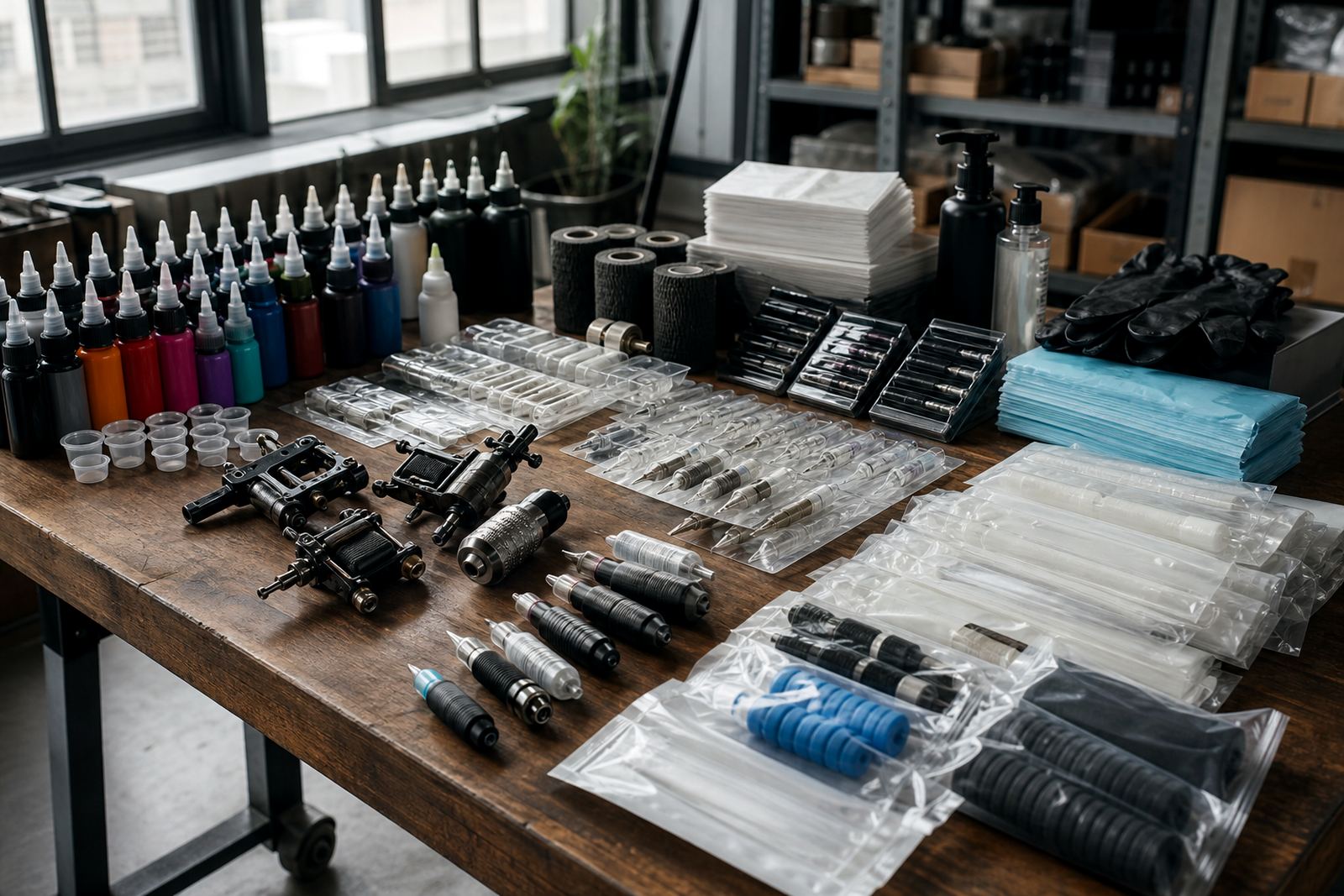
That means looking beyond a basic count. Keep one record for grouped needle types, one for cartridge sizes, and one for consumables that disappear in bulk such as grips, ink caps, clip cord covers and barrier wrap. When the same drawer serves more than one person, a quick visual check is not enough.
- Count opening stock before the week starts
- Mark fast-moving sizes separately from slow-moving ones
- Keep shared items in one labelled storage area
- Set aside a small buffer for walk-in work or late bookings
Ink colours need a different restock pattern to needles
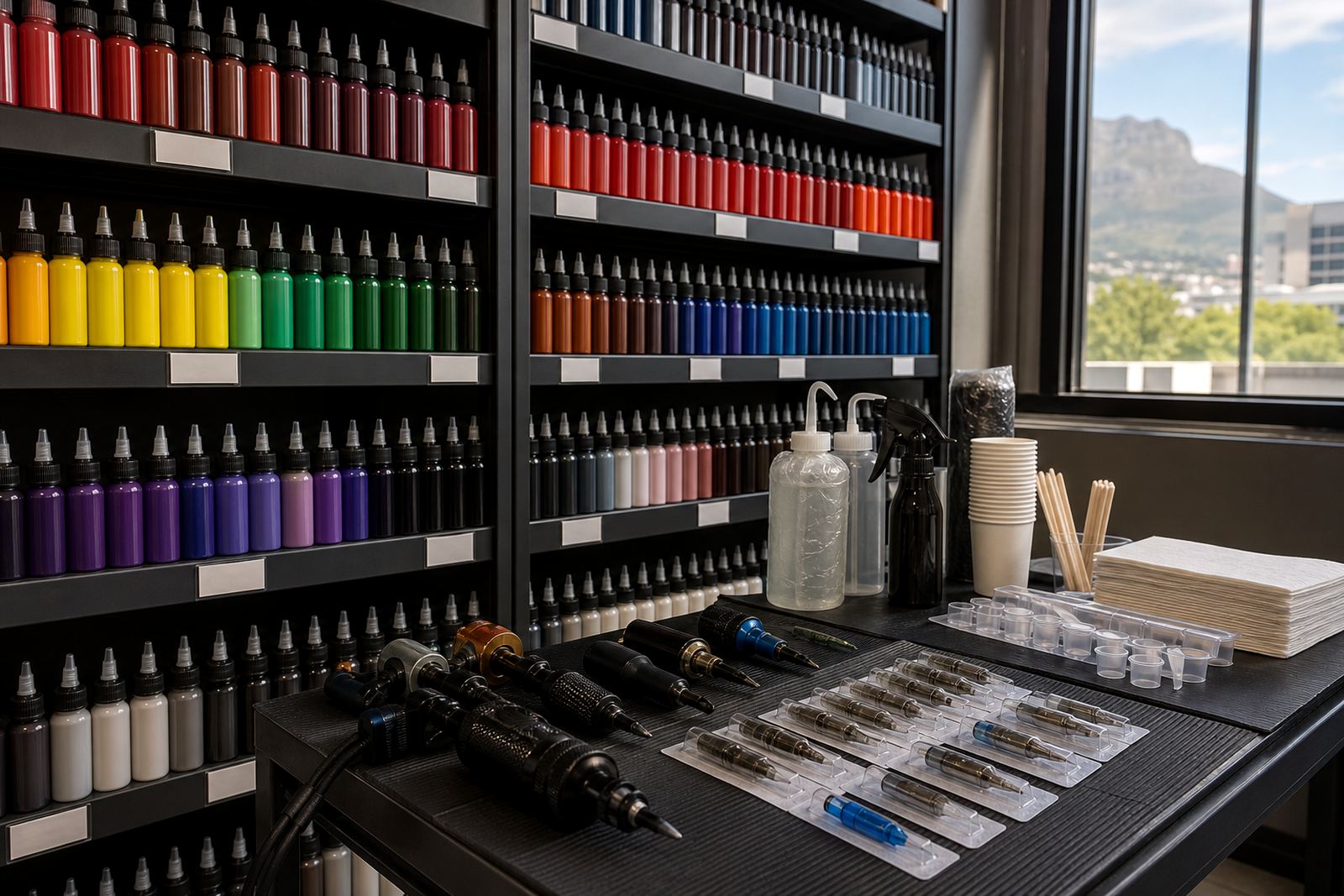
Ink is usually the easiest item to overlook because the bottles look full until the last few sessions use them up. In a multi-artist setup, the darker workhorse colours, lining blacks and common neutral blends often move first, while brighter shades can sit longer if only one or two artists use them. That is why a restock list should follow usage, not only the number of bottles on hand.
For Cape Town studios working near the coast, sealed storage matters too. Humid conditions and repeated opening and closing can make a tidy shelf behave very differently over time, especially when bottles are stored near windows or wash areas. Keep inks upright, closed properly and away from direct heat so the studio can sort out what is in use and what is reserve stock.
Match cartridge groupings to the artists who actually use them
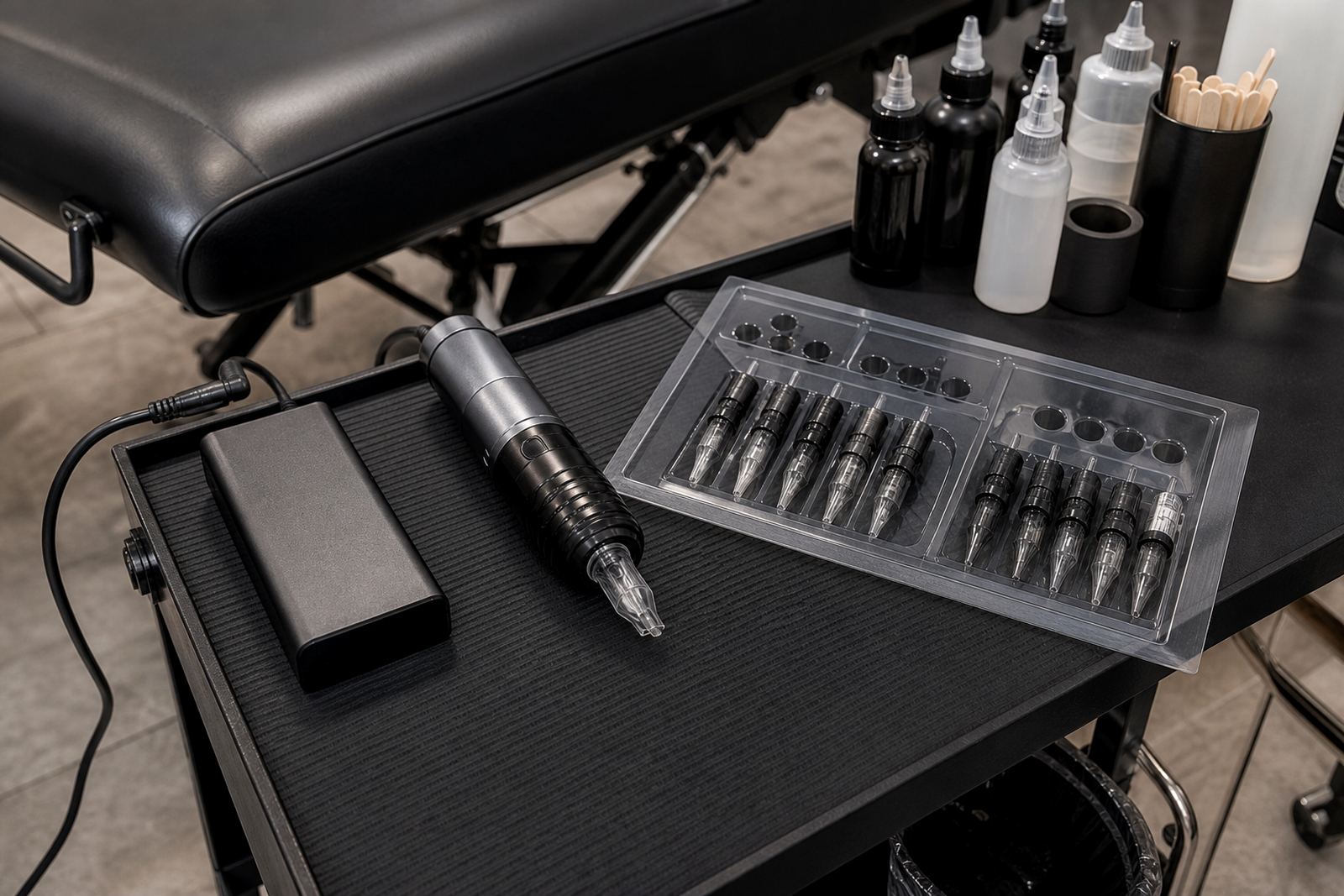
Cartridge groupings work best when they are separated by purpose. Line work, shading and soft packing all pull different sizes, and if the entire box is treated as one pool, the studio can run short of the one size everyone reaches for on the same day. A practical system is to group by needle configuration and count each group separately.
- Fine line groupings for detail work and small scripts
- Round shader groupings for controlled fill and texture
- Curved mag groupings for shading and broader coverage
- Specialty groupings kept aside for artists who use them regularly
It also helps to keep one sealed backup carton for higher-use sizes. That gives the operations team a clear signal when a reorder is due, instead of discovering the shortage while several artists are preparing their stations.
Station planning is easier when each artist has a fixed pull list
Shared stock often gets messy when every station is set up differently each day. If three artists work the same floor space, the cleanest approach is to assign each one a standard pull list for their core consumables. That list can include preferred needle groupings, cartridge sizes, gloves, barrier wrap, wipe-down supplies and the ink colours they use most often.
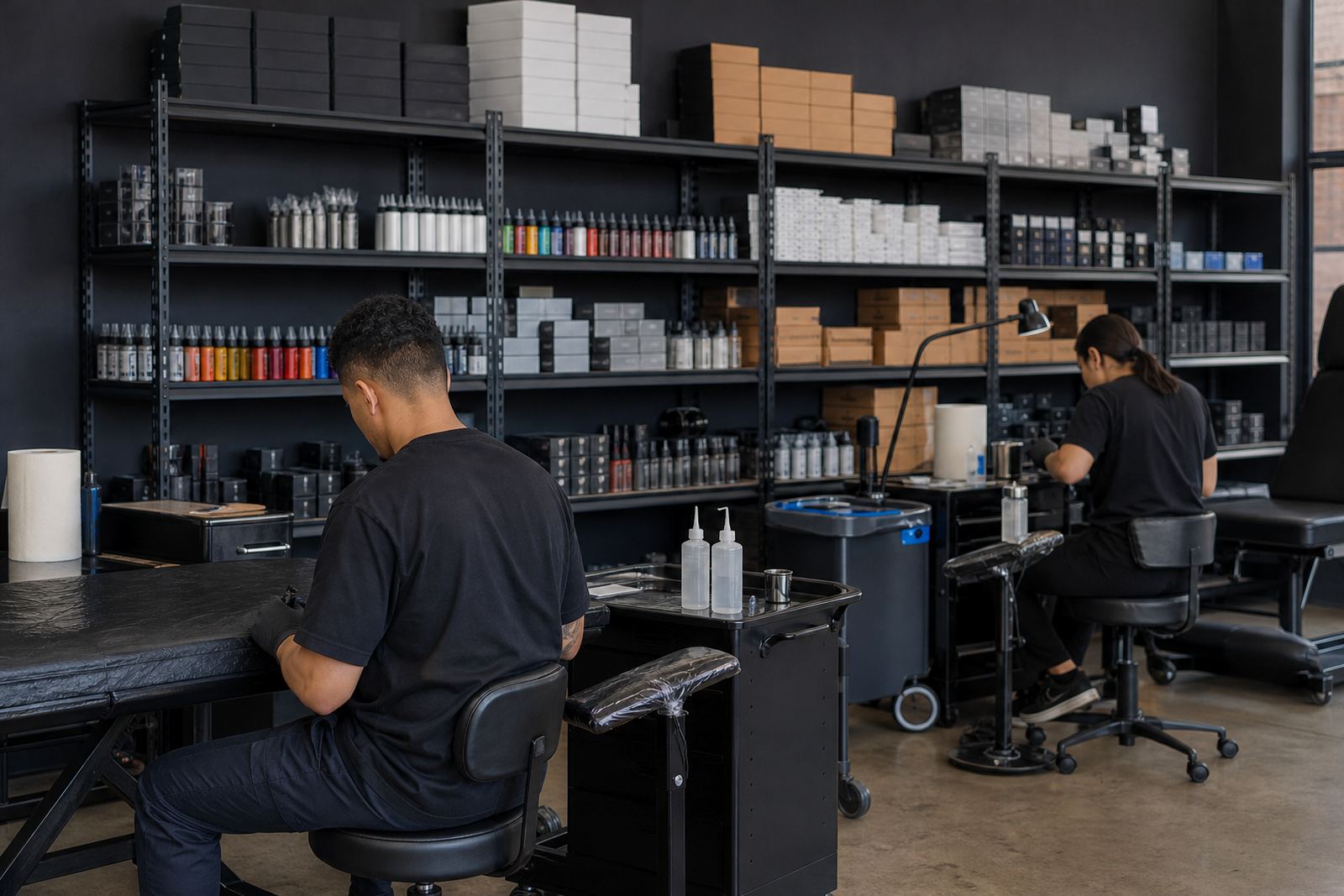
At a studio in Observatory, for example, a Monday can start with three artists booking separate sessions, each using different needle groupings and a different mix of blacks, washes and colour sets. Without fixed pull lists, one person overdraws from the communal tray and another has to delay setup. With a list, the warehouse or front-of-house team can pack the right mix first time and keep the remaining stock where everyone can see it.
This is also where product substitutions need care. If a preferred size is out, the replacement should sit close enough to the original use to avoid confusion, but it still needs to be checked against the artist’s usual station setup.
Consumables disappear fastest, so keep them in smaller counted packs
Not every item should be stored in one large shared container. Single-use supplies move quickly and are easier to manage in smaller counted packs, especially when the studio has several artists working different shifts. Barrier film, caps, wraps, gloves, wipes and other consumables should be issued in sensible quantities so the team can see what remains without opening every box.
For studios serving clients across Johannesburg, Durban, Pretoria and Gqeberha, delivery timing also matters. If an order is packed as one large mixed shipment, the team can struggle to separate what is for immediate use and what is for reserve. A better system is to split consumables into active stock, backup stock and items reserved for busy weekends or larger bookings.
- Keep daily-use consumables close to each station
- Store backup packs in a dry, tidy cupboard
- Separate open boxes from sealed stock
- Check labels before moving items back into shared storage
Hygiene and storage need the same discipline as the art itself
Good stock control is not only about avoiding shortages. It also keeps the studio cleaner, easier to audit and easier to work in during a full booking day. Follow local health regulations for sterile handling, disposal and studio procedures, then make sure the layout supports those rules instead of fighting them.
That means clear bins for used items, a defined place for unopened stock and a storage method that stops boxes from being mixed after delivery. In a shared environment, even a small lapse can affect the next artist on shift. Label shelves by item type, keep cartons off damp floors and avoid squeezing fresh stock into the same space as opened packs.
Seasonal restocks work better than emergency orders
Most multi-artist studios do not run out because they never order enough. They run out because the same few items move faster during certain months, or because a busy run of appointments empties a shelf before anyone updates the count. Seasonal restocks help avoid that. A winter plan may favour darker inks and higher liner use, while a summer schedule may push more mixed sets and fast-turnover consumables.
Build the next order from actual studio use, not from habit. If one artist changes their machine setup or starts using a different cartridge grouping, the whole restock pattern changes with it. That is why the best shared-stock systems stay practical: count what moved, note what stayed, then pack for the week ahead instead of hoping the shelf will stretch a little further.