
Give Every Tray a Job
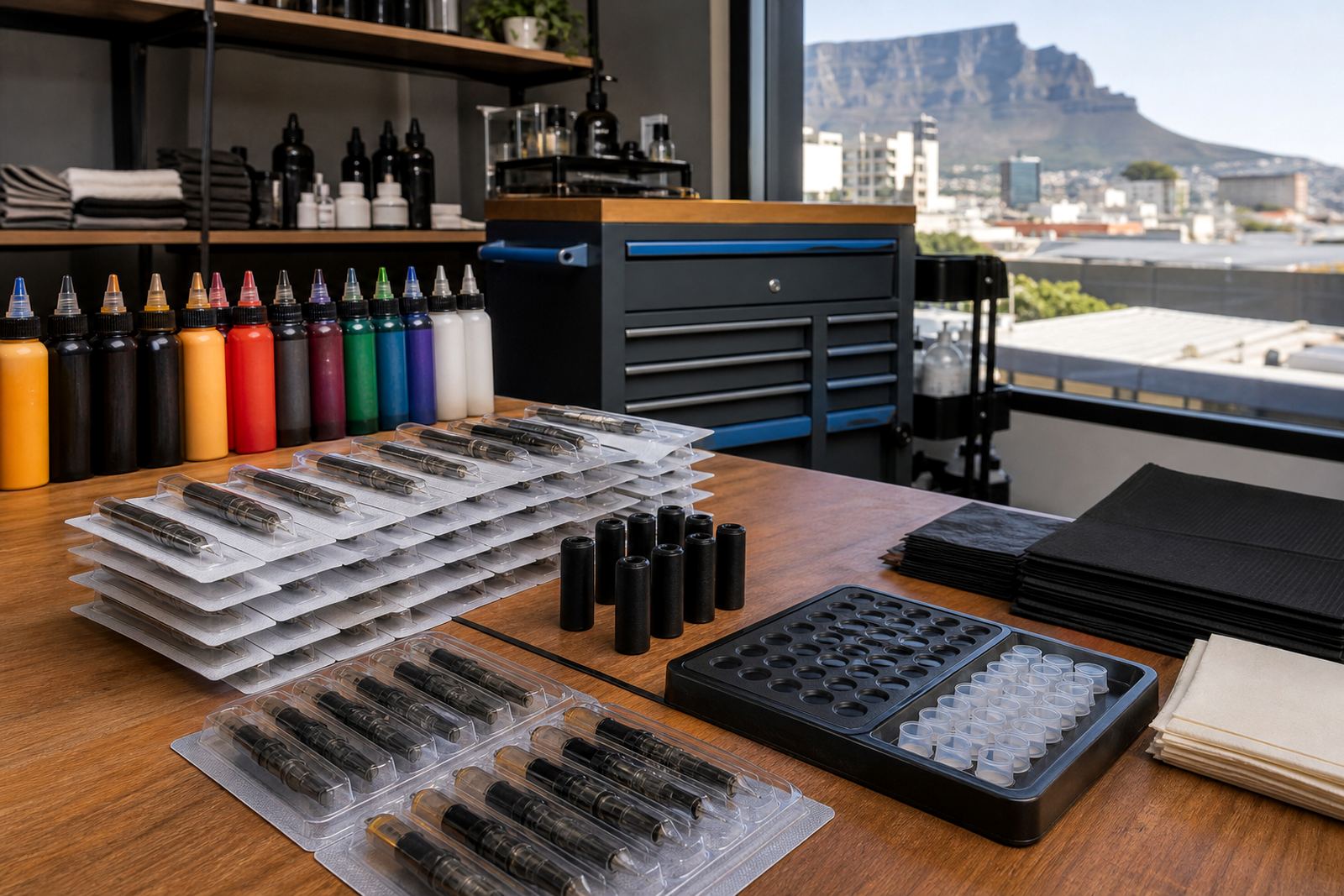
In a tight room, the easiest way to lose time is by mixing items that serve different parts of the session. Keep inks, needles, cartridges, grips, wraps and cleaning items in separate trays or drawer sections so the artist does not have to open three places for one setup. A shallow tray works better than a deep box because the full contents are visible at a glance.
Use the top shelf or highest drawer for slow moving stock and reserve the waist-height area for the things you reach for during every client. In Cape Town rooms where floor space is limited and the air can stay damp near the coast, closed storage is useful for keeping cartons, spare paper goods and wrapped consumables cleaner for longer.
- Group inks by colour family or usage pattern
- Keep needle and cartridge groupings separate from sterile single-use items
- Store wrap, barrier film and surface covers in one dry section
- Leave one tray empty for the next setup
Build a Setup Path That Matches The Room
A small room works best when the flow goes in one direction. Put the clean stock near the entry side of the room, the working supplies in the middle and the used item bin or waste point away from the main reach zone. That cuts down on crossing back and forth with gloved hands, and it also helps when two staff members are sharing a compact studio.
If the room has one narrow cupboard, split it by task rather than by product type only. One shelf can hold inks and caps, another can hold cartridges, transfer paper and clipcord covers, while a lower section keeps cleaning cloths, spray bottles and surface wipes together. In Durban or Gqeberha, where humidity can creep into drawers, a little space between packs helps cardboard sleeves stay in better shape and makes stock easier to count.
- Keep the most-used items at eye level
- Do not stack open cartons under sinks or near splash zones
- Leave space for daily wipe-downs between storage units
- Use clear labels for drawers, not just container lids
Keep Single-Use Stock Easy To Count
Small storage only works if stock counts are accurate. Sterile single-use supplies should be packed where the outer sleeve is protected and the expiry or batch information stays easy to see. When boxes are mixed together, it is easy to miss what needs reordering, and that usually shows up at the worst time, usually when the room is full of clients.
Many studios in Johannesburg and Pretoria keep a weekly count of cartridges, tips, gloves, ink caps and barrier covers by drawer rather than by whole room. That method suits a small space because the count happens where the stock lives. It also helps if one person handles ordering and another handles unpacking, since each drawer can be checked against the same list.
- Count by drawer or tray, not by loose packs on a counter
- Separate fresh stock from opened boxes
- Keep new deliveries in one marked holding area
- Rotate older stock to the front where it is seen first
Use Vertical Space Without Crowding The Work Surface
When shelving is short, the wall becomes part of the room plan. Slim wall shelves, peg rails or narrow basket units can hold light items that do not need deep storage. This frees the counter or trolley top for the session itself. The aim is not to fill every wall, but to keep the room from feeling busy and hard to clean.
For a studio in Stellenbosch or Bellville with one compact treatment room, it often helps to keep the top half of the wall for sealed stock and the lower half clear for movement and cleaning. Tall stacks can become unstable, so shorter rows of boxes are safer than one high pile that gets knocked during setup.
Good vertical storage is also useful for seasonal restock planning. When a busy period is coming, extra packs can be moved into a higher cupboard and marked by type, so the working drawer stays light and the artist does not have to sort through bulk stock every day.
Paper Labels Beat Memory Every Time
In a small studio, memory can seem quicker than labels, until stock starts moving between drawers, shelves and trolleys. Clear naming on the front of each container saves time and stops mixed groupings. Simple labels on the outside of boxes are easier to read than writing on the top, especially when items are stacked.
Use a plain system that suits the room: one label for colour inks, one for liners, one for shader cartridges, one for sterile single-use items, and one for studio cleaning stock. If a shelf holds mixed items, mark each section as well as each box. That way, anyone helping in the room can put things back in the same place without guessing.
- Use short labels with one function per box
- Mark the front edge of drawers, not only the lid
- Keep spare labels in the same storage area
- Replace damaged or peeling labels straight away
A Small Observatory Room, Packed Right
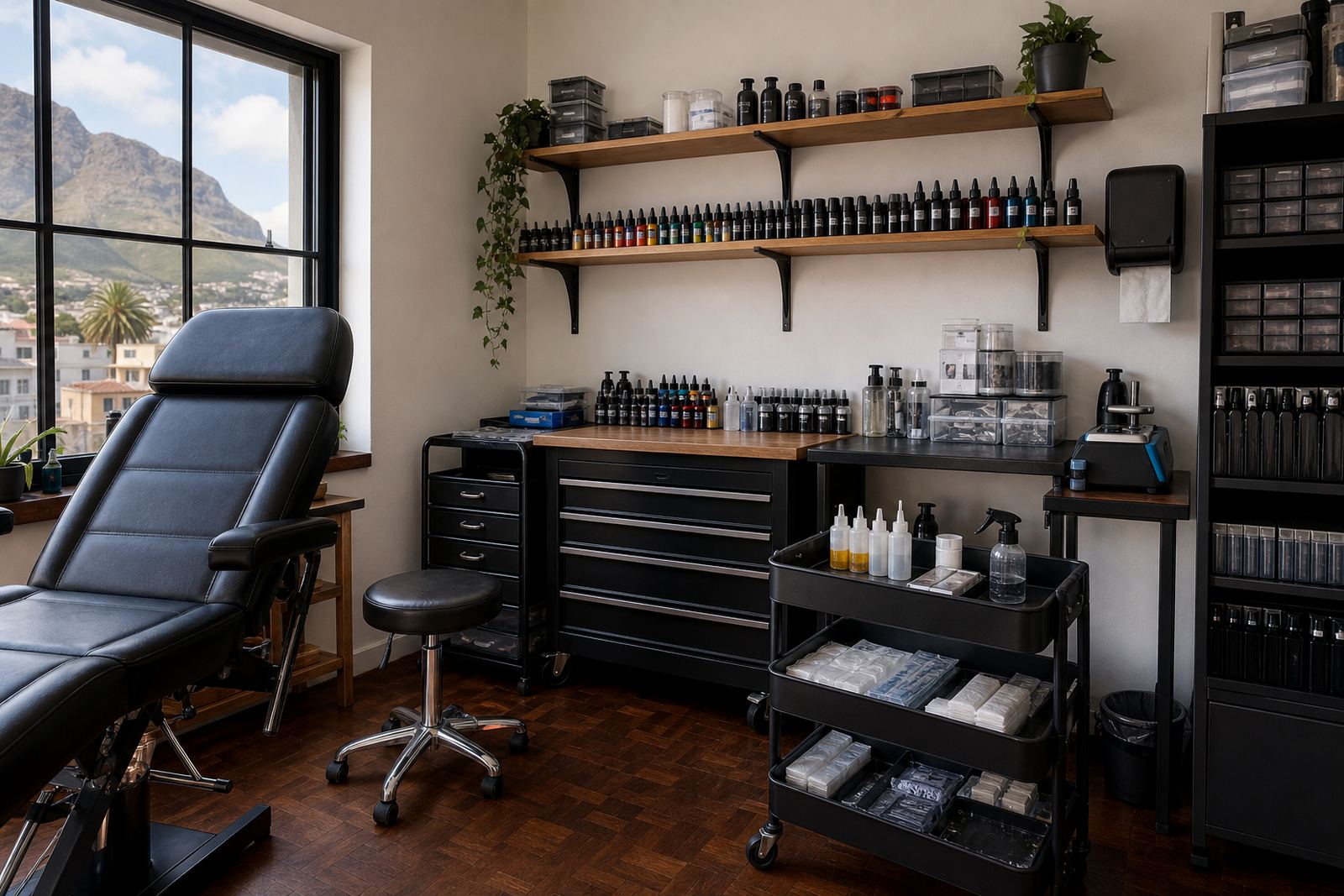
A practical layout in Observatory, Cape Town might use one narrow cabinet for inks and caps, one trolley for setup items, and one closed drawer unit for cartridges, gloves and wrapped consumables. That arrangement keeps the centre of the room open, which matters when the space also needs to handle client movement, chair positioning and cleaning between sessions. Coastal air can make packaging feel slightly damp if it sits open too long, so sealed storage is worth the trouble.
What matters most is consistency. When every item has a place, stock checks are quicker and there is less chance of opening the wrong pack under pressure. Follow local health regulations for room hygiene, storage and disposal, and keep the working area uncluttered enough that the cleaning routine can be done properly without shifting half the room around first.
For studios ordering across South Africa, it also helps to keep separate notes for branch deliveries in Cape Town, Johannesburg, Durban, Pretoria and Gqeberha. A small room can still carry the right stock if its shelves are planned around actual use rather than bulk volume.