
Watch the items that disappear first
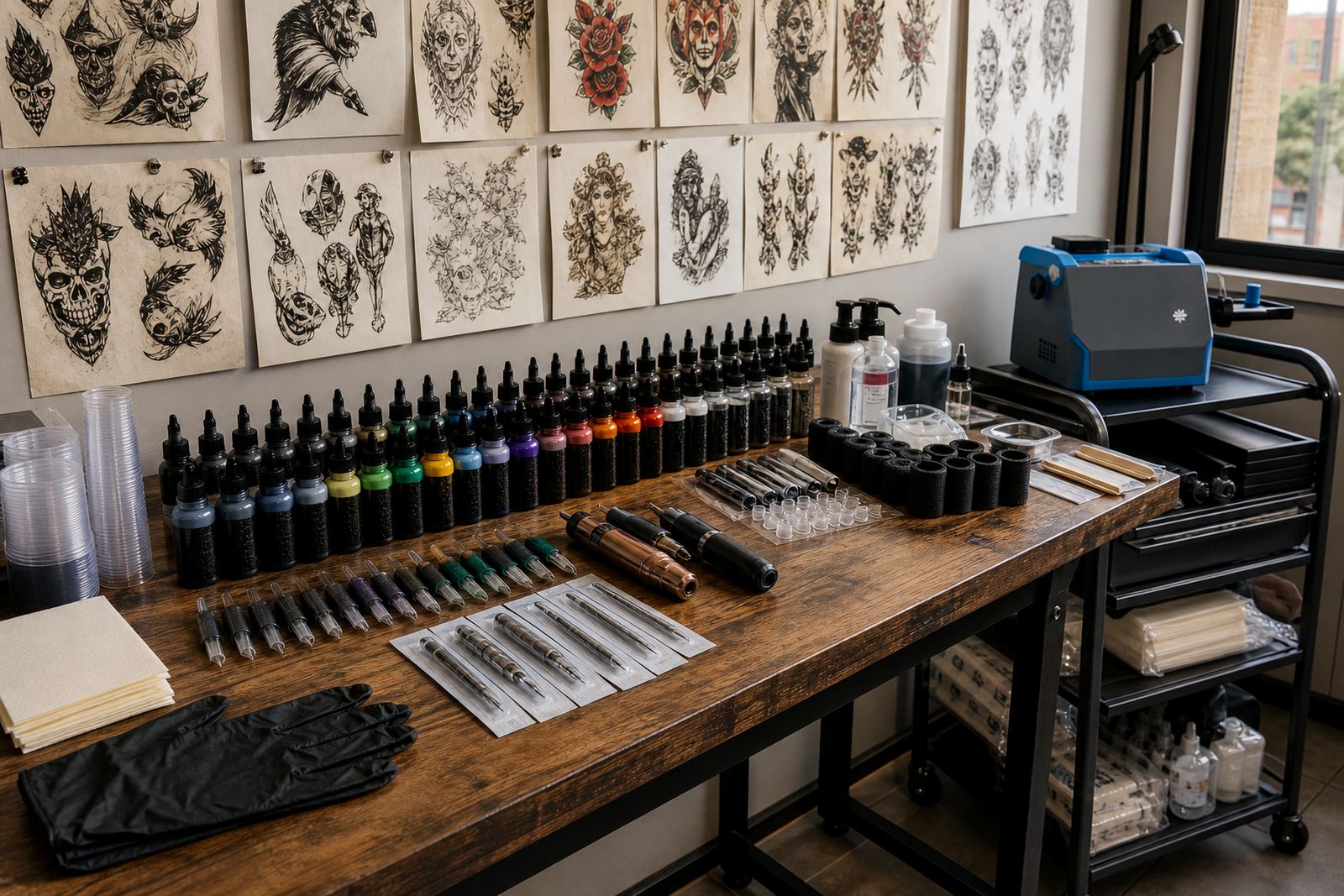
Some products move fast no matter the size of the studio. Fine-line needles, standard cartridge groupings, black inks, barrier wraps, gloves, cleaning wipes and clip cord covers tend to leave the shelf quicker than larger, less frequent items. In a busy month, those are usually the first lines to set with a reorder point.
A practical way to start is to list what is used in every session, then separate it from what is used only for certain styles or larger work. That makes it easier to spot the items that need closer control. In Observatory, where coastal humidity can affect how you store sealed packs and bottles, stock handling matters just as much as order timing, so keep containers closed and shelving dry.
- Daily-use items need tighter reorder points than speciality items
- Small packs often run out before larger cartons are opened
- Ink colours with steady demand should be checked more often than slow-moving shades
Base your reorder point on real studio flow
A reorder point should reflect the way your own studio works, not a general rule from somewhere else. Look at how many appointments you normally take in a week, how many items each appointment uses and how long it takes for a fresh delivery to reach you in Cape Town, Johannesburg, Durban, Pretoria or Gqeberha. That gives a more useful guide than counting shelves by eye.
For example, a studio in Bellville doing walk-ins and booked sleeves may use cartridges much faster on Fridays and Saturdays, while a smaller appointment-only space in Somerset West may move slower but still need the same ink colours on hand. If your busiest days shift with payday cycles, holiday periods or festival season, build that into your reorder notes.
- Track average weekly use for each high-turn item
- Add a buffer for busy weeks or late client changes
- Keep separate counts for standard work and larger custom pieces
Separate ink timing from needle timing
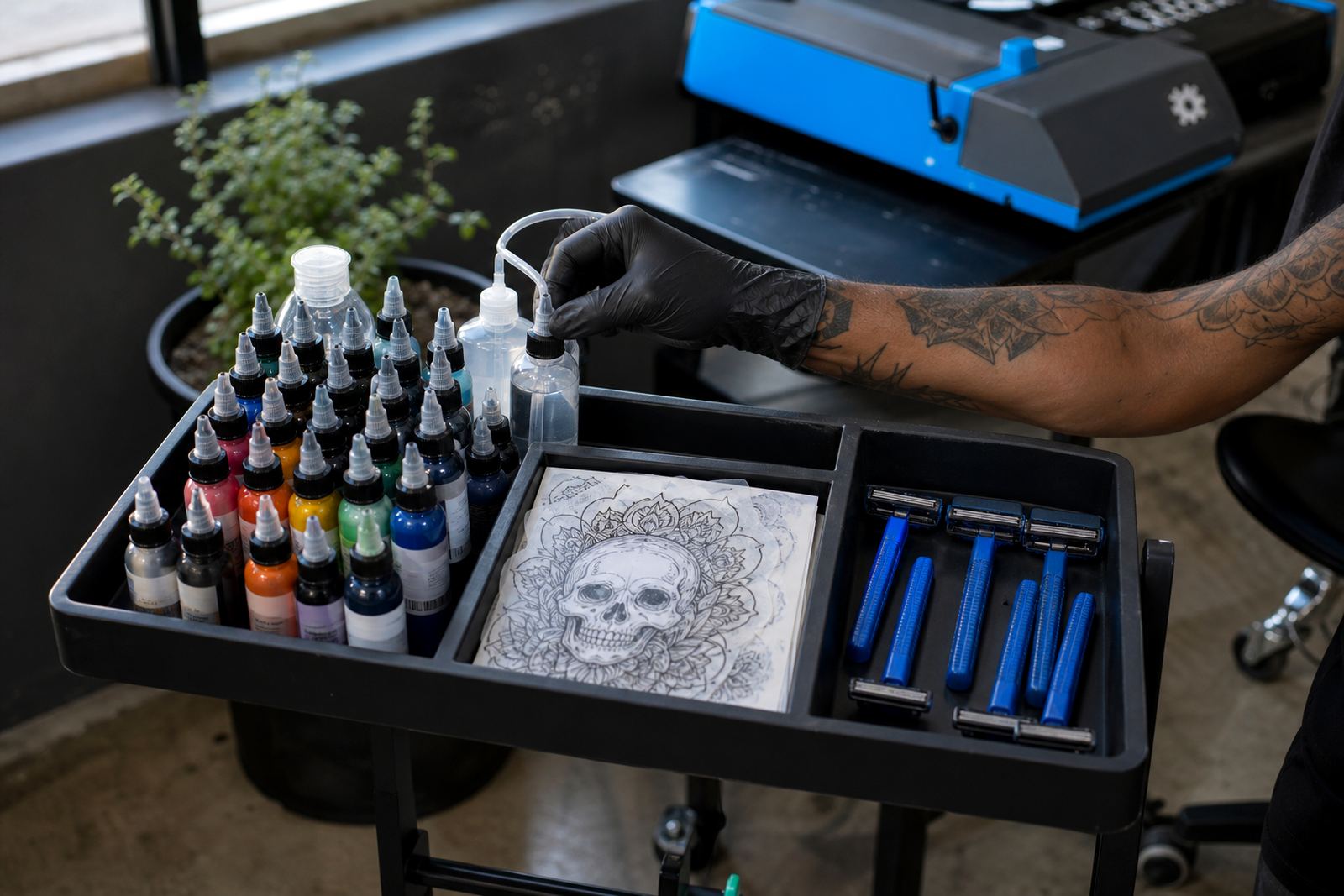
Ink and needles do not behave the same way in stock planning. Inks often move in colour groups, while needles and cartridges move by grouping, grouping size and line style. A studio may use a strong black and a few regular greys every week, while colour sets are ordered less often in smaller amounts.
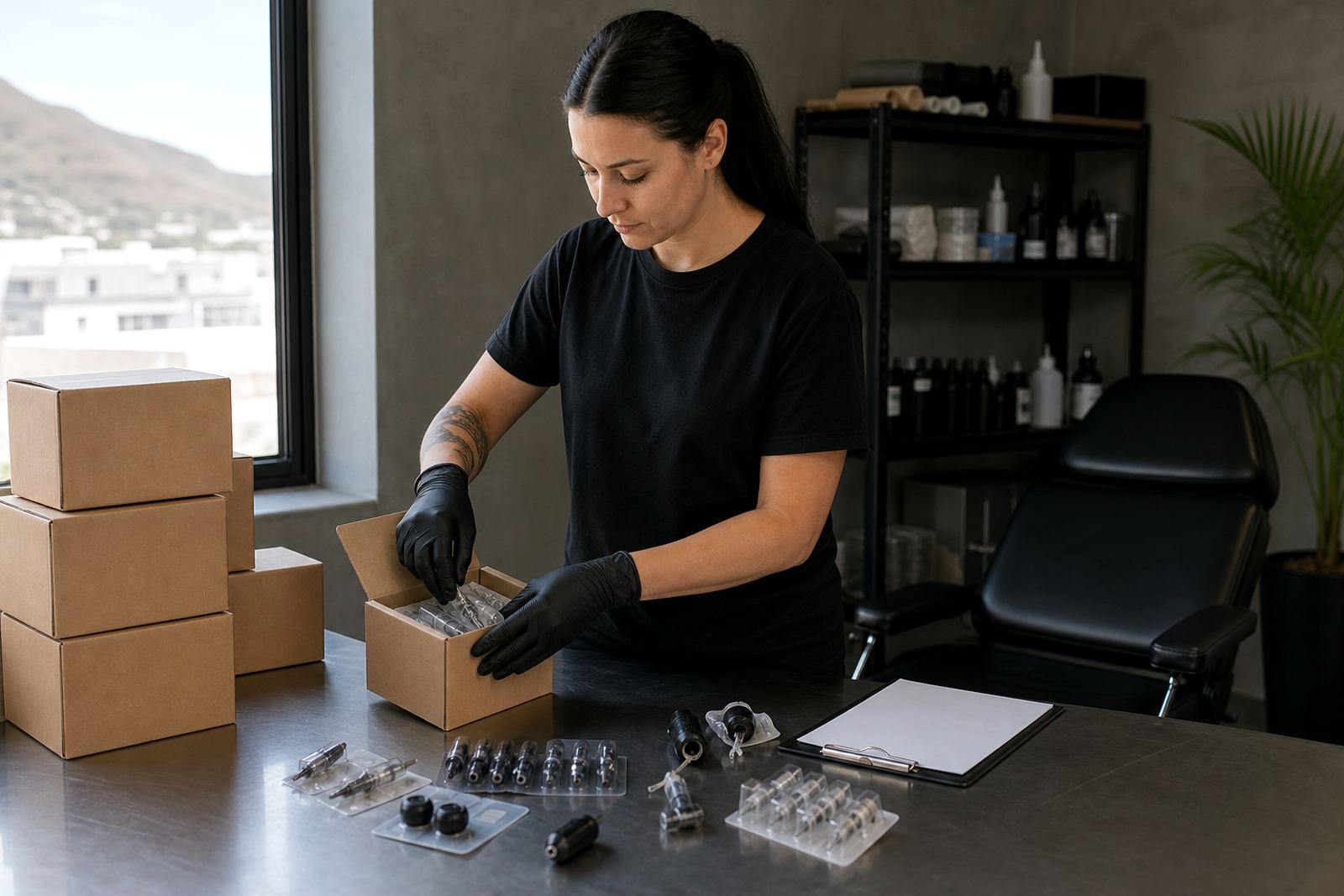
Needles and cartridges are better monitored by pack type and session type. Liners, shaders, round configurations and magnums all have different call rates. If you only count by item name, it is easy to miss the point where one grouping is low even though the total box count still looks fine.
- Colour inks often need their own reorder note by shade family
- Needles and cartridges should be counted by configuration
- Keep a short note of which styles use which grouping most often
Build in room for seasonal load
Seasonal demand is not just about December. Winter can bring more indoor appointments, while summer holidays often change booking patterns and delivery timing. Studios in Durban and Gqeberha may also keep an eye on humidity and storage conditions, especially where sealed consumables and labels are stored near working areas.
It helps to set a lower threshold for the items that cannot be paused mid-month. Sterile single-use supplies, gloves, barrier film, cleaning items and fresh cartridges should not be left to the last packet. A small buffer can save a full day of rearranging the schedule because a drawer is empty.
- Check stock before peak booking periods begin
- Raise buffer levels for fast-moving consumables
- Review storage areas after weather shifts or room changes
Make storage notes part of the reorder sheet
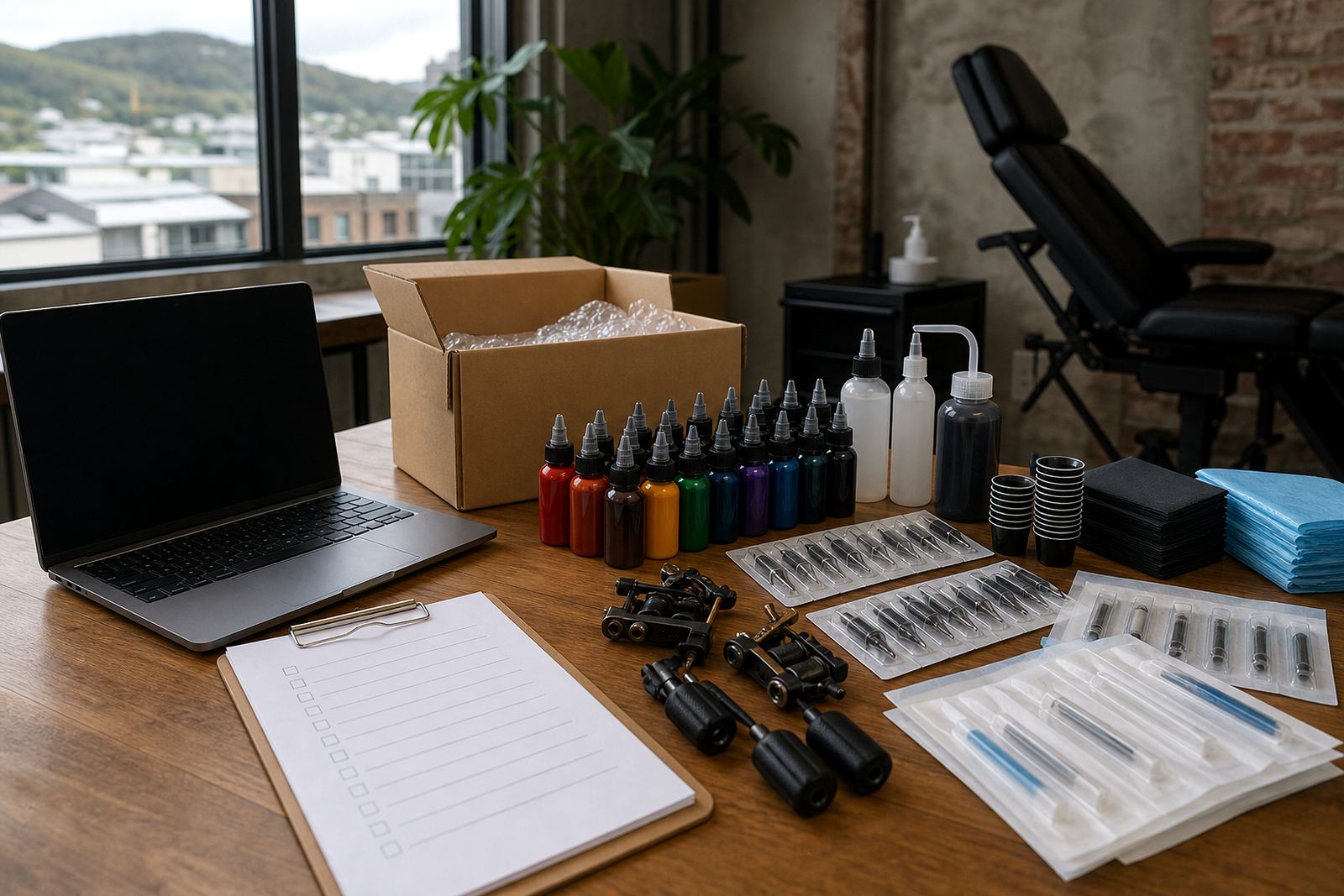
Reorder timing is easier when the same sheet also records where stock lives. A clean count does not help much if one carton is in the front room and another is in a locked back area. Keep a fixed place for each item group, then note the minimum shelf level before a reorder is triggered.
That approach is useful for studios that work with several artists and different station setups. It also helps with consumable reorders when one person is away and another needs to pick up the count without guesswork. In a busy Cape Town studio, the difference between an orderly shelf and a mixed pile can be the difference between a smooth session and a rushed restock run.
- Use one stock sheet for the main counts and one line for storage location
- Mark items that must stay sealed until use
- Separate bulk cartons from open working packs
A local example from Observatory to the bigger routes
Picture a small Observatory studio supplying artists across the week and sending urgent restock requests to Cape Town, Johannesburg and Pretoria. The studio keeps inks grouped by colour family, cartridges grouped by configuration and sterile supplies grouped by use. After a few weeks of recording actual use, it sees that black ink and round liners need the earliest reorder point, while speciality colours can wait a little longer.
That same studio also notices that delivery planning matters. If an order needs to reach Durban or Gqeberha before a busy weekend, the reorder point needs to sit higher than the absolute minimum. The aim is not to carry too much stock, but to keep enough working room for appointments, substitutions and unexpected demand.
For studio owners and managers, the best timing notes are plain and practical: count what moves, set a floor before the shelf looks empty, and update the notes when work patterns change. Follow local health regulations for handling and storage, then let the stock sheet do the memory work.