
Where the power unit usually sits at a tattoo station
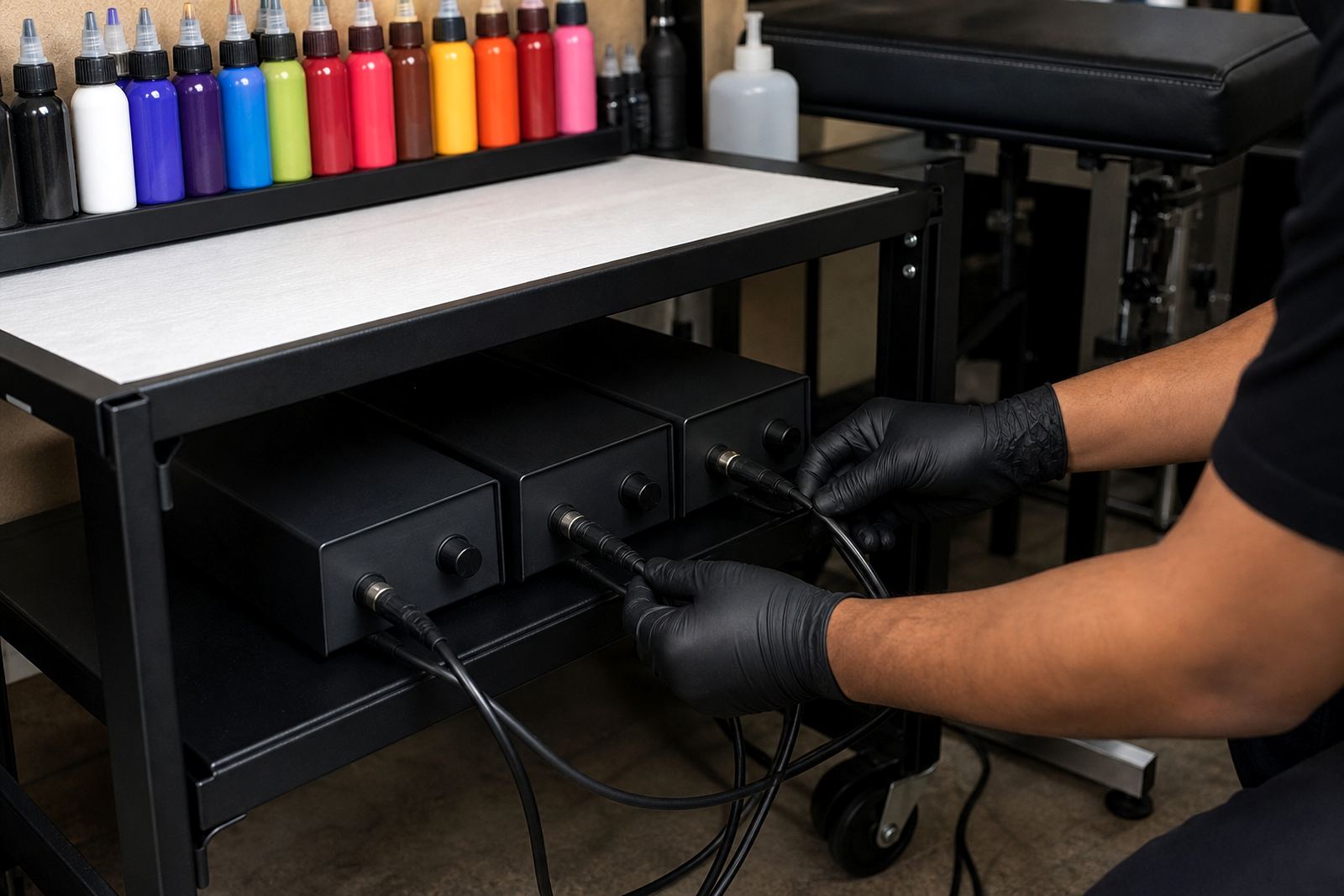
Most studios place the power unit close enough to read the display and make a quick adjustment, but not so close that it gets in the way of hand movement, bottles or clip cord slack. On a clean side shelf, wall ledge or compact stand beside the station, the unit stays visible without being knocked around each time the chair is adjusted. The main idea is a clear working line from the machine to the power source, with the cable laid so it does not catch on sleeves or table edges.
In smaller Cape Town rooms, especially where space is tight in Observatory or Bellville, a wall-mounted shelf or narrow trolley can make more sense than a large table. In shared studios, a fixed position for each station also helps staff reset the area quickly between clients and keep the wiring looking orderly.
- Keep the display easy to read from the seated working position.
- Leave enough slack for chair movement and hand repositioning.
- Place the unit away from splash zones and the edge of the work surface.
Matching the layout to the way the station is used
Not every station needs the same arrangement. A lining station often benefits from a very direct layout with minimal items around the unit, while a shading station may need slightly more room for multiple machine changes, cartridge boxes and spare grips. If the artist swaps between machines often, the power unit should sit where the controls are simple to reach without stretching across the tray.
For studios that run several work areas at once, the most practical setup is usually consistent positioning. That way, any artist walking into a station can find the power unit, foot switch and machine lead in the same place each time. It saves time and cuts down on clutter, which matters when a room gets busy and the station must be reset quickly. A tidy layout also helps when training junior staff or arranging new studio kits.
- Keep one station layout pattern across the studio where possible.
- Separate the power unit from sealed consumables and open packaging.
- Allow space for the machine lead, foot switch and any extra adapters the station uses.
Cable paths that stay out of the working area
Good cable routing is a small thing that makes a big difference. The lead should follow the edge of the station or run in a straight path that is easy to see and easy to lift clear for cleaning. Coiled cable sitting under bottles or tools tends to make a station feel cramped, and it can be a nuisance when the artist needs to change position quickly. Simple clips, holders or a neat loop at the back of the station are often enough.
In Durban, where humidity can be high, many studios prefer to keep leads and connectors stored dry and off the floor. In coastal spaces, that extra care matters for general studio upkeep. It is also useful to check that the power unit has a steady home between sessions instead of being moved around from station to station all day.
- Keep leads visible so they are not stepped on or pulled loose.
- Use a fixed path that does not cross over the main arm movement.
- Store spare cables and pedals in a dry place when not in use.
Placing backup items where they can be reached fast
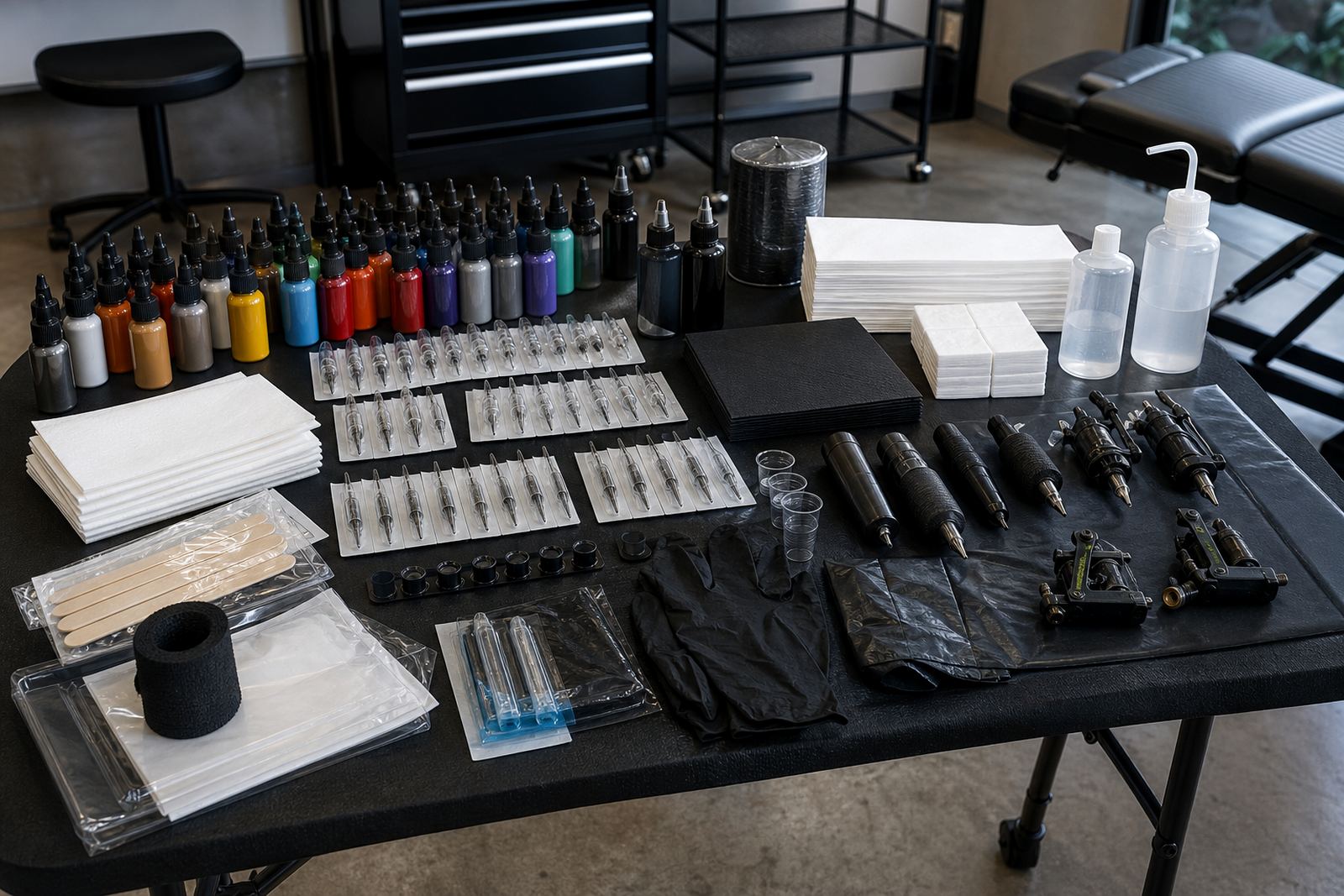
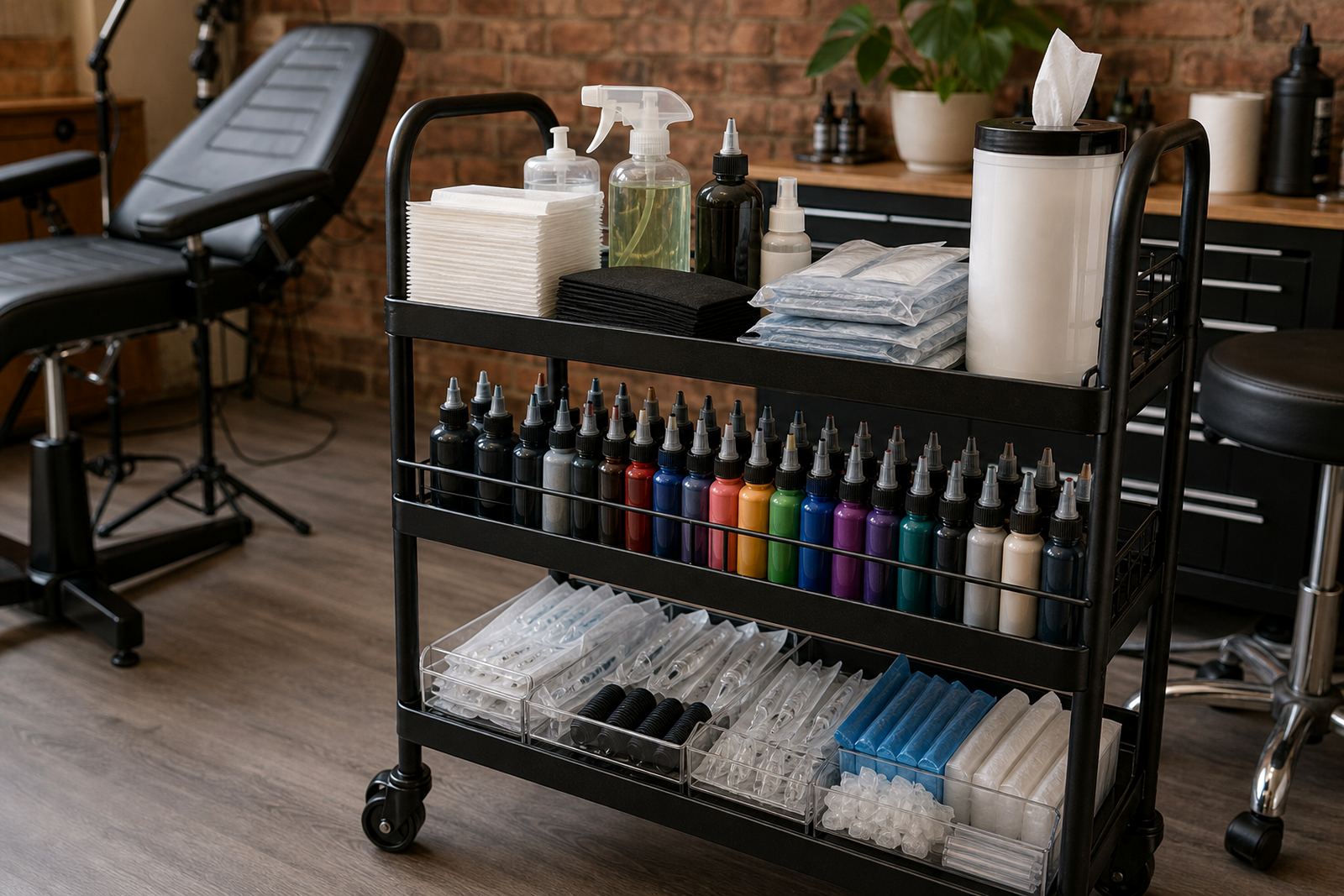
A station often works best when the power unit sits near the items needed for normal use, but not in the same crowded zone as sterile single-use supplies. Artists commonly keep spare grips, cartridge boxes, clip cord covers and cleaning cloths in separate sections of the station so that the power area stays uncluttered. The aim is quick access without turning the workstation into a pile of mixed items.
For larger studios in Johannesburg or Pretoria, the backup items may be grouped on a side trolley, while the power unit stays on the main station surface. That division helps when more than one artist uses the room and each needs their own consumables close at hand. It also makes stock checks easier at the end of the day, especially when consumable reorders are planned in bulk.
- Keep spare fuses, clips or adapters in a labelled container if the unit uses them.
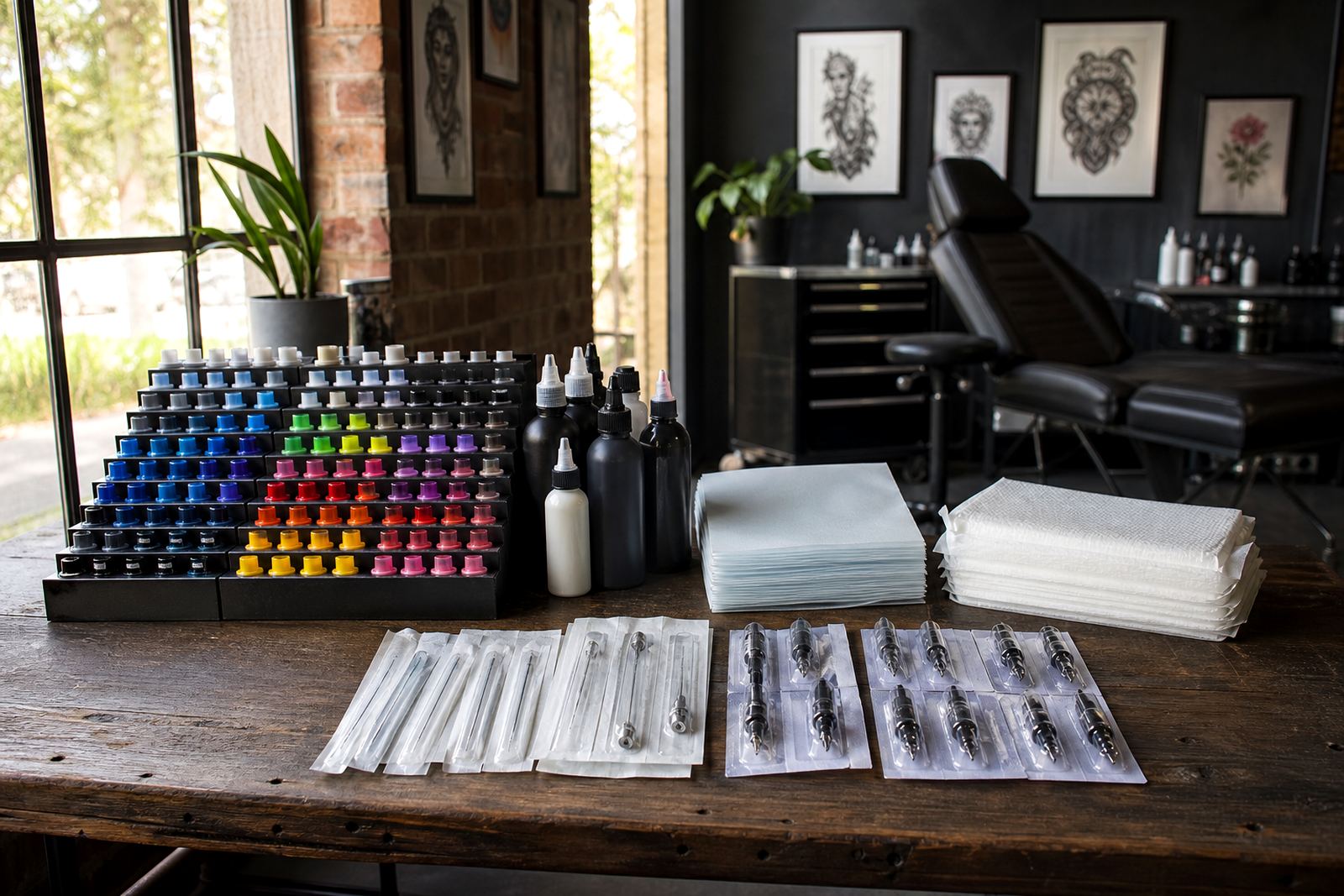
- Store cartridges and needles in their own grouped sections, not beside the power unit.
- Make sure the station can be cleared for cleaning without moving half the setup around.
What to think about in shared and private studios
Shared studios often need a layout that can be reset fast between appointments, while private rooms can be arranged more tightly around one artist’s habits. In shared spaces, the power unit should have a fixed, repeatable place so the next person does not spend time hunting for controls or sorting tangled leads. In a private room, the station can be shaped around the artist’s reach, body position and preferred side for hand tools.
A simple local example is a small studio in Observatory serving walk-in and booked clients on the same day. One station may be set with the power unit on a compact side shelf, the machine lead routed straight back, and the foot switch placed under the front edge of the station where it can be pressed without dragging across the floor. That kind of layout keeps the workstation neat when a room has limited square metres and a fair amount of movement around it.
Storage, studio hygiene and the power unit area
The power unit itself should not become the place where everything is parked. A clean station is easier to maintain when power equipment, sterile single-use supplies and general storage each have their own section. Wipeable surfaces, closed drawers and dry storage for consumables all help keep the area organised. Studios should also follow local health regulations for workspace handling and disposal, especially where used items, wipes and packaging are being cleared during the day.
For dispatch and stocking support, many South African studios also prefer power layouts that sit well with the rest of the station plan. If the setup includes new studio kits, machine match help or cartridge match help, the power area should still leave room for the other parts of the workflow. When everything has a place, the station is simpler to reset before the next client and the room feels calmer to work in, even when the day is busy.
- Keep the power unit off wet or busy cleaning zones.
- Use closed storage for extras so the station stays readable at a glance.
- Check that the layout still works after restock or a change in machine grouping.
A practical order for building the station
The most dependable power layout is usually the one built in layers. Start with the chair position, then place the power unit where the artist can read it clearly. After that, set the machine lead, foot switch and trays so they support the same movement pattern every time. Once those parts are fixed, add storage for needles, cartridges, inks and other consumables around the outside of the main work area.
That order makes it easier to fine tune the station without clutter. It also helps when different branches need slightly different setups, whether that is Cape Town Delivery, Stellenbosch Delivery or a studio in Gqeberha. A good layout does not need fancy gear, just a sensible arrangement that suits the room, the artist and the way the equipment is used day to day.