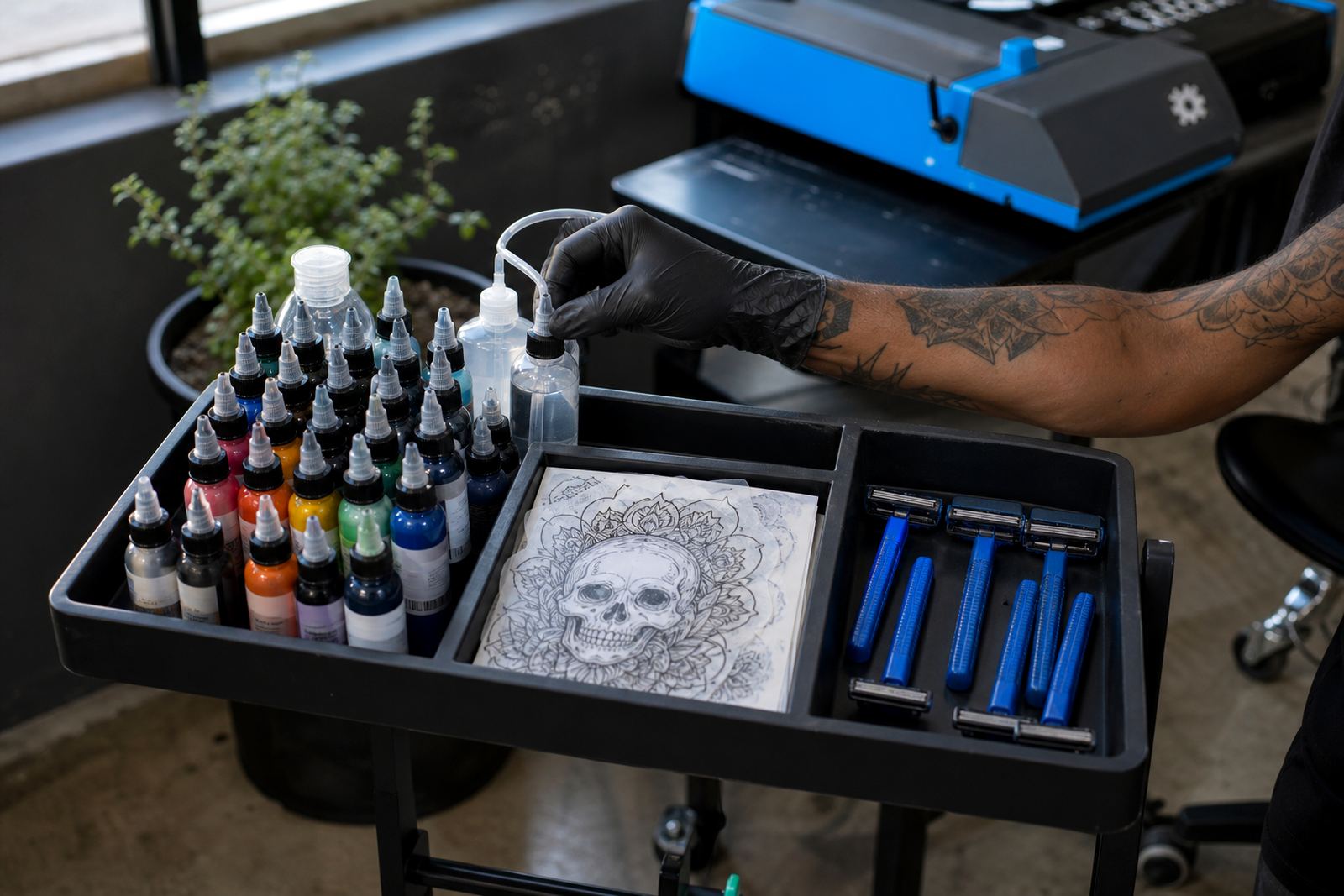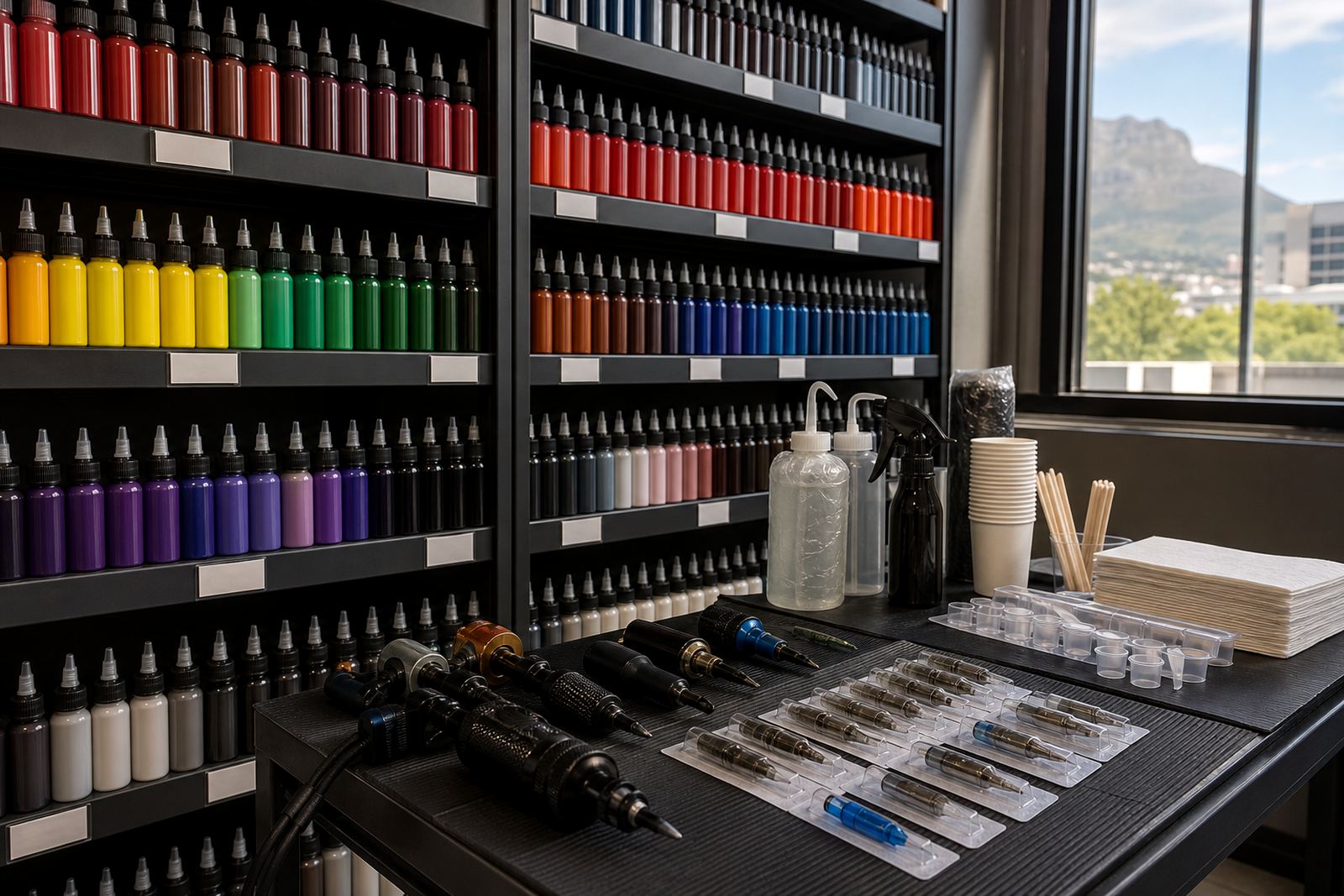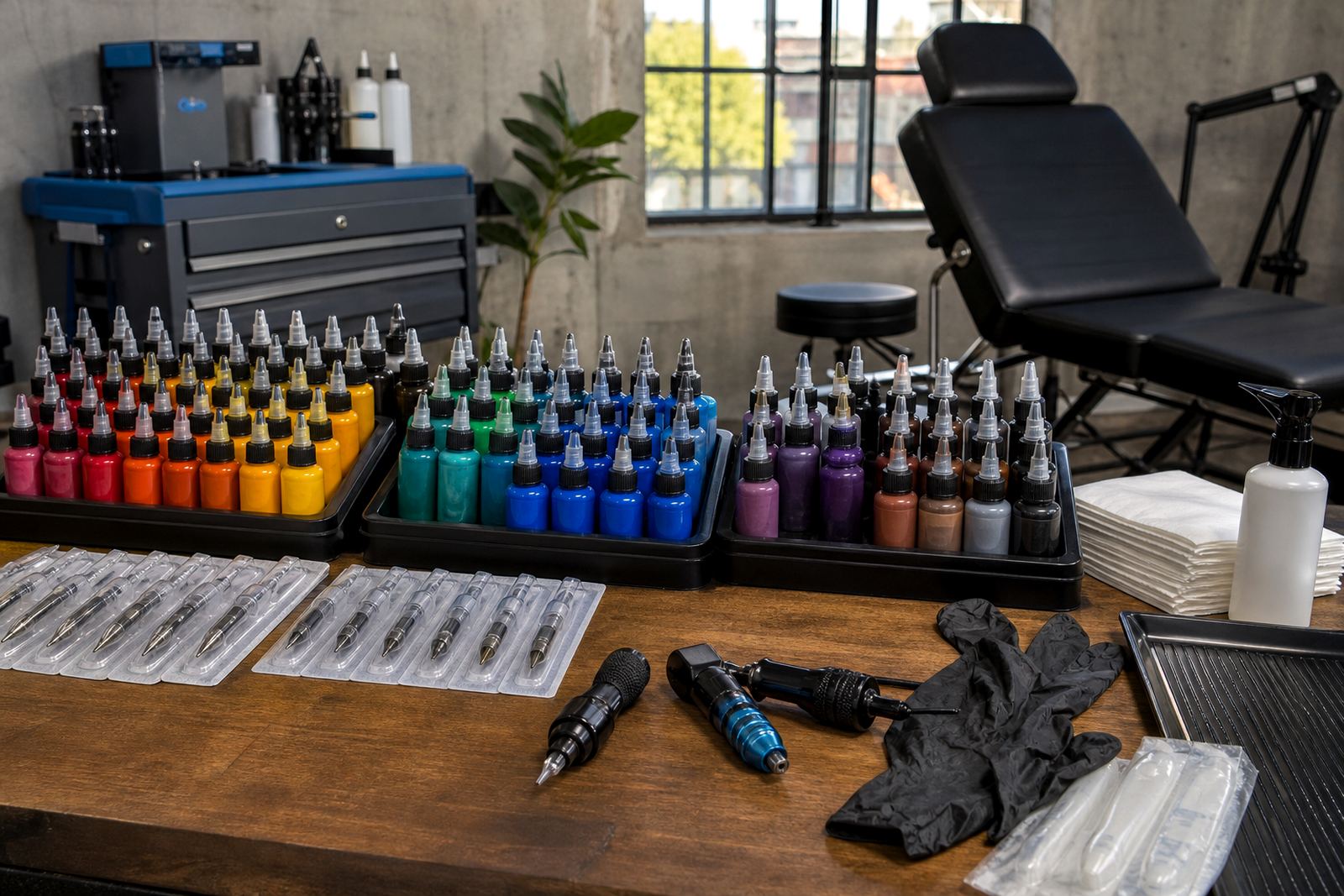

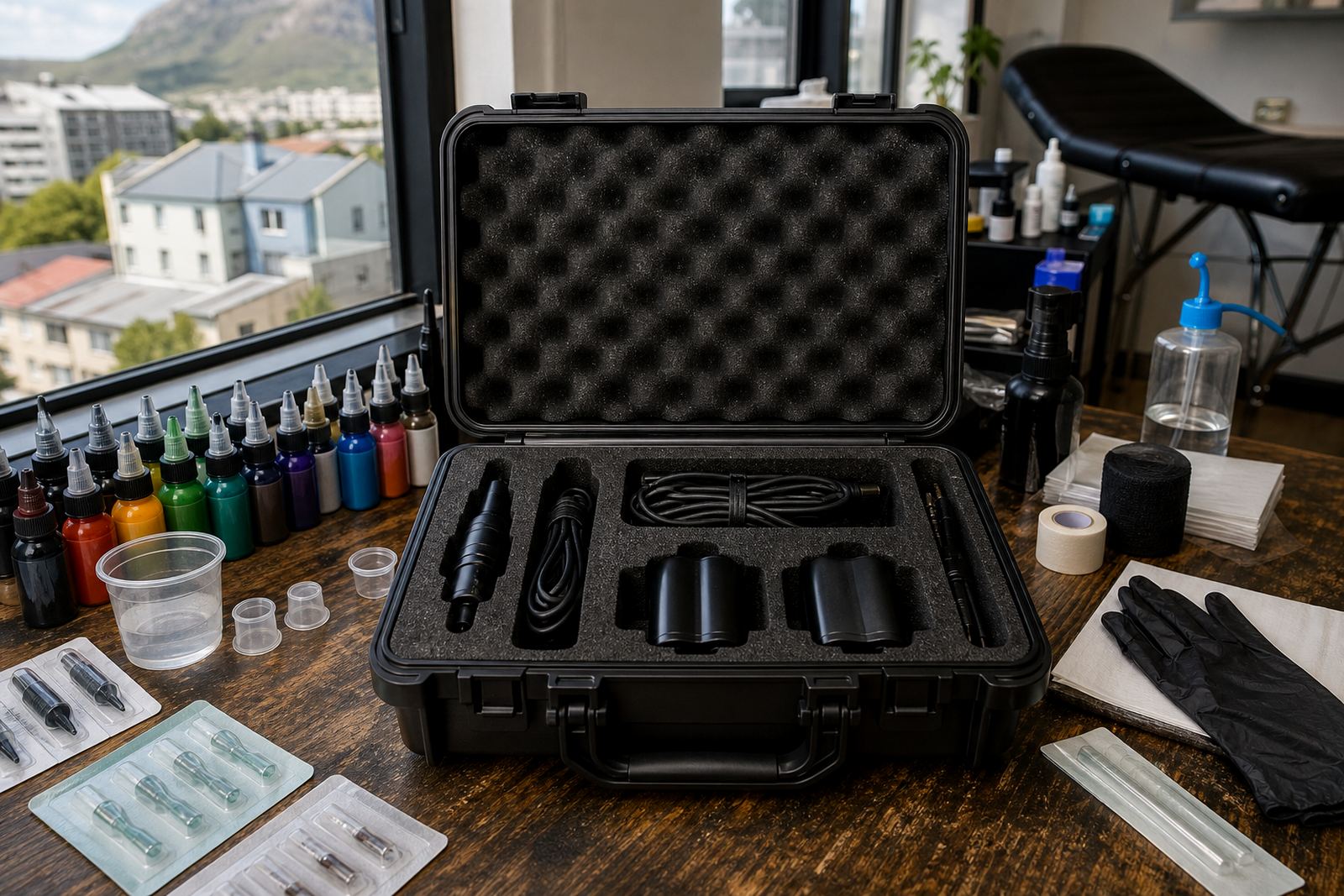
Pack the case by the way you work
The cleanest machine cases are usually built around the artist’s own routine. Some set up by machine type, others by lining, shading, colour packing, or fine detail. The point is to open the case and see each tool in the order it will be used, with fewer moves between tray and station. In a studio in Observatory, that might mean one side for everyday machines, the middle for cartridges and needle groupings, and the top layer for sterile single-use items.
Keep heavier tools low in the case so they do not shift in transit. If you travel between Cape Town, Stellenbosch and Somerset West, a packed case that sits flat and closes properly makes a noticeable difference when gear is loaded in and out of a vehicle. A tidy setup also helps if the room is small and you need to work from one compact station.
Group machines, needles and cartridges in a logical order
Most artists work faster when related items stay together. Machines, power leads where used, needle groupings and cartridge boxes should not all land in one loose compartment. A better approach is to separate them by use, size or session type. For example, a station kit for fine line work looks very different from a setup built for larger fills and mixed sessions.
- Place the machine you use first at the top or front of the case.
- Keep matching needles or cartridges close to that machine.
- Separate liner and shader groupings, or your own preferred set categorisation.
- Store spare grips, sleeves and tape in one marked section.
- Use small sealed pouches or trays for sterile single-use supplies.
That order reduces searching mid-session, especially when the room is busy and you are handling set-down and clean-up in the same space. It also makes stock checks easier before a long day.
Use storage that protects shape and sterility
Good storage is not only about neatness, it keeps items from rubbing, bending or getting damp. In coastal areas like Durban and Gqeberha, humidity can affect packaging and paper labels if the case is left open or stored badly. A closed case with dry internal compartments helps protect consumables, especially when supplies are moved between studio, car and home base.
Single-use items should stay in their sealed packs until needed, and opened consumables must be kept apart from new stock. If the case has mesh pockets or soft dividers, use them for storage only and not for loose contamination-prone items. A little order saves a lot of sorting later, and it keeps the working surface calmer when you set up fast.
Where local health regulations apply, follow them carefully and keep your station routine aligned with the rules in your area.
Build a station start that matches your day
A machine case setup works best when it mirrors the session ahead. A blackwork day, a script job and a colour session do not need the same layout. Many artists set the case the night before by preparing the main machine, the likely needle or cartridge groups, clip cords or wireless unit if used, plus the main consumables in the order they will be opened. That reduces double handling and helps the first five minutes of the day run smoothly.
For a studio in Johannesburg or Pretoria, where artists may move between appointments and walk-in work, a case that opens cleanly also helps with quicker resets between clients. If the tools are packed into clear sections, it is easier to see what has been used and what still needs to be set aside for the next station. It sounds minor, but it saves real time.
- Top layer: the first machine to use and the first set of cartridges or needles.
- Middle layer: backups, grips, sleeves and station barriers.
- Lower layer: spare consumables, cleaning cloths and unused stock.
- Side pockets: cords, batteries, adapters or accessories that stay separate.
Plan for stock checks before the case gets heavy
A case should not become a storage room. When too many extra items get packed in, the useful things are harder to find and the lid starts to strain. It is better to keep the working set lean, then top up from studio stock as needed. That is where regular stock list help and range grouping advice makes a difference, because you can see which machine-related items are always in use and which ones sit untouched.
For studios that buy in bulk, the same logic helps with consumable reorders and seasonal restock plans. One case might be built for a full day of line work, while another carries the smaller set for guest work or mobile sessions. The key is to keep each case matched to a purpose rather than cramming everything into one box and hoping it sorts itself out later.
A Cape Town example from a busy studio week
In Observatory, a studio preparing for a mixed week may pack one case for daily use and another for overflow stock. The main case holds the everyday machine, the most used needle or cartridge groupings, sterile single-use sleeves, station covers and the items needed for a standard start. The second case can hold backups, product substitutions, and the items that are only opened when the week gets unexpectedly busy.
That split works well for deliveries to Cape Town, Bellville and Somerset West too, because the studio can receive stock and file it straight into the right case rather than leaving everything in boxes. When the gear is arranged by use, it is easier for the whole team to keep the same system from one week to the next, even if one person is handling dispatch updates and another is sorting the station plan.
A practical machine case setup does not need to look fancy. It just needs to open fast, keep the right tools together and make the station easier to trust when the day gets moving.