
What a wipe station normally holds
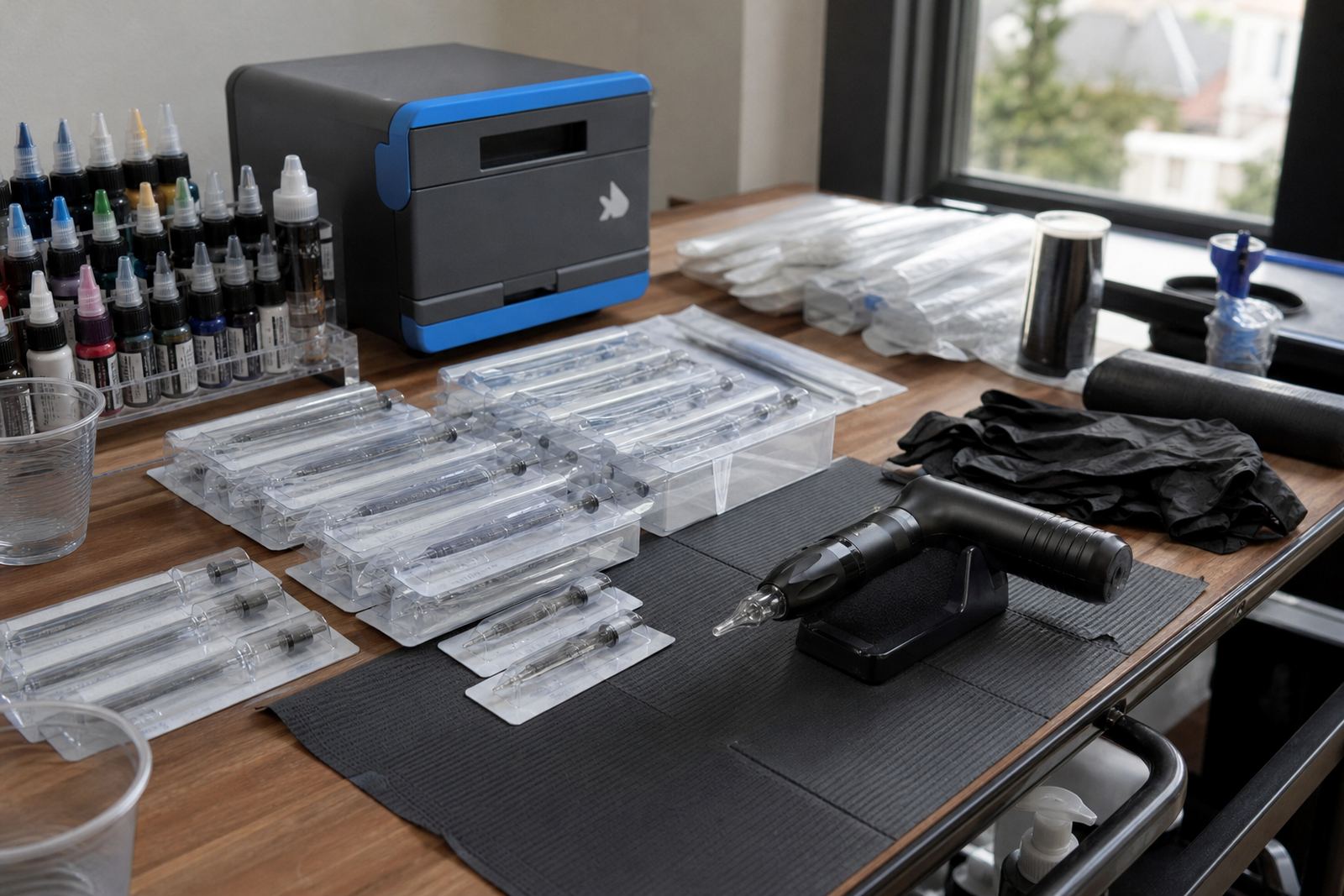
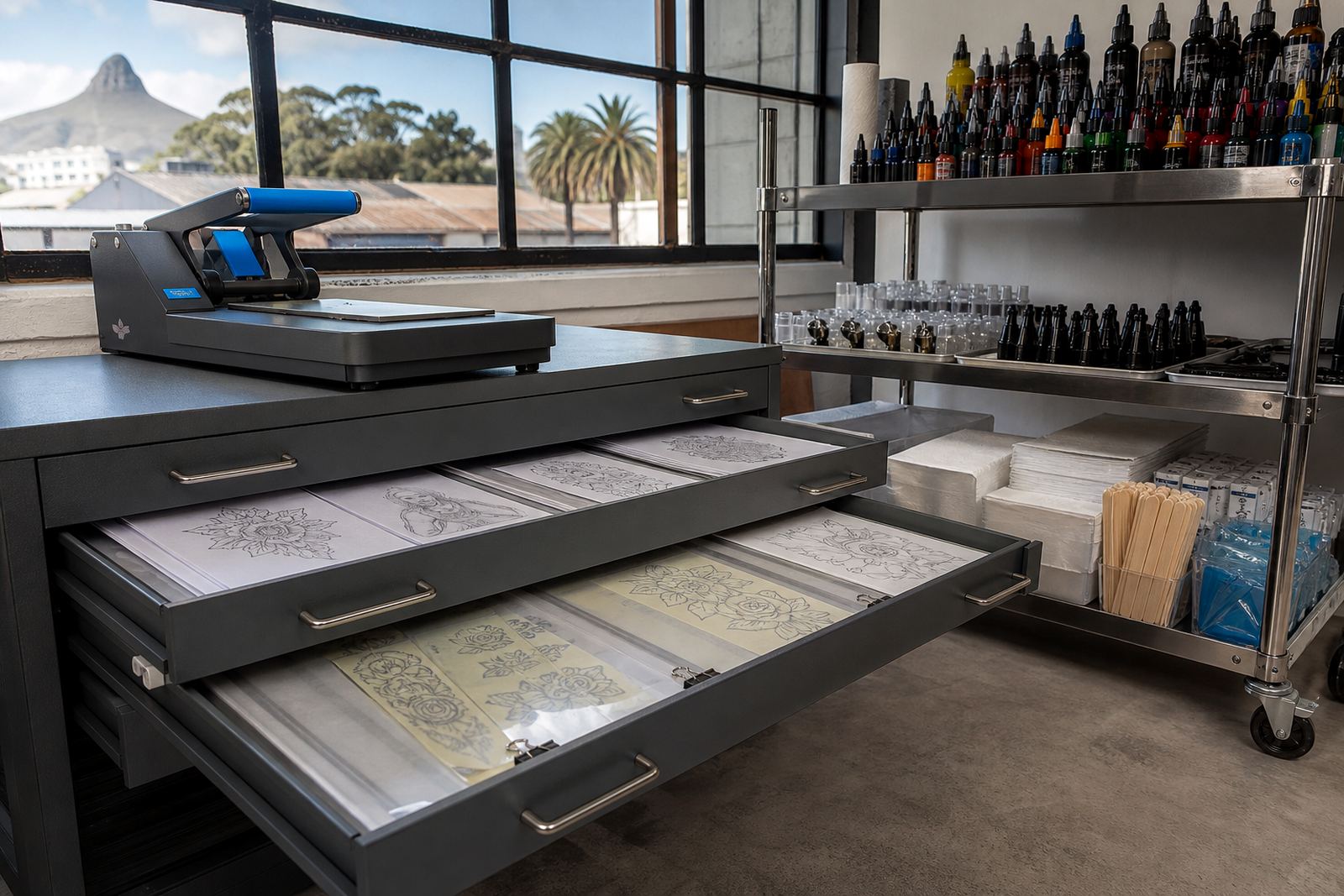
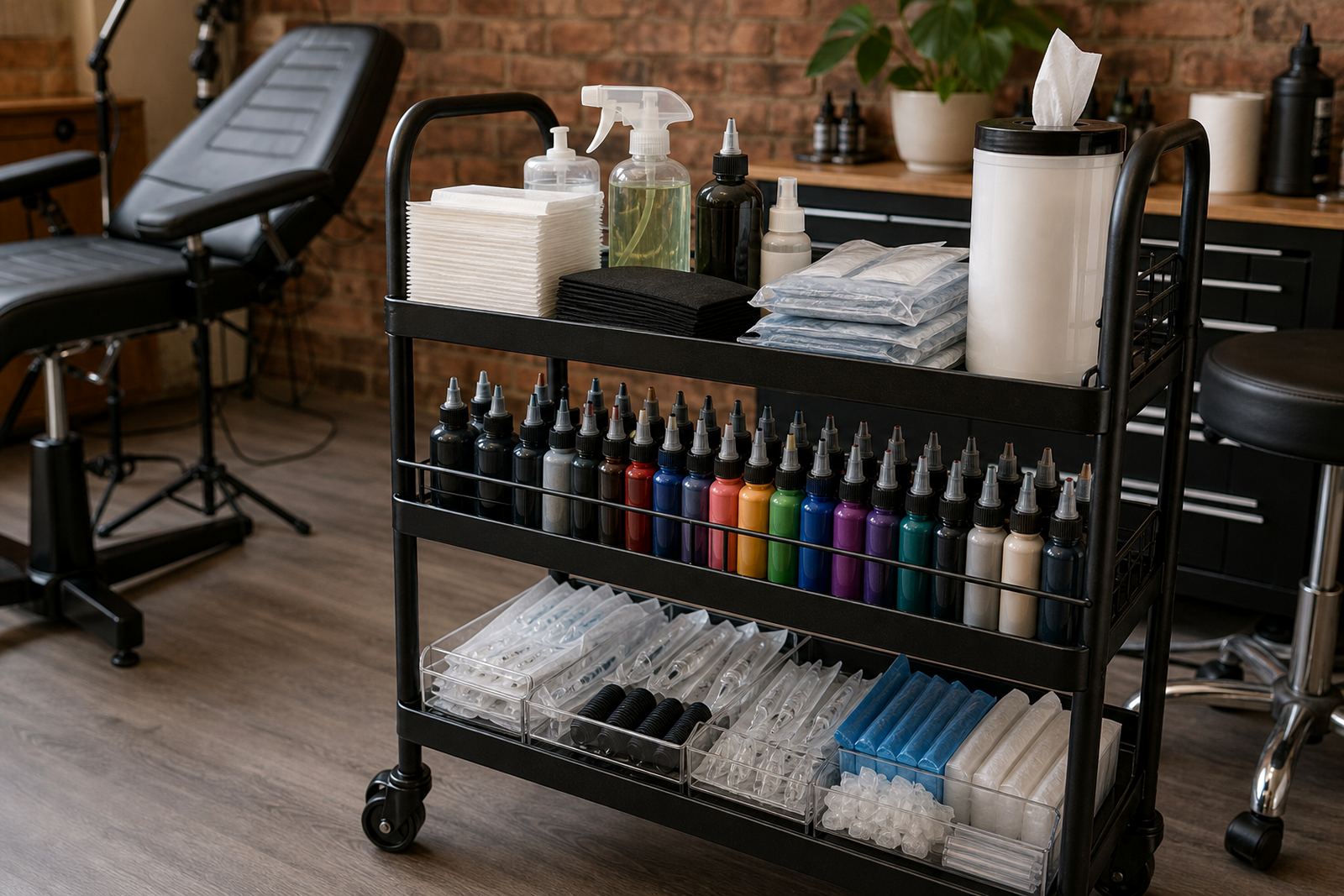
A wipe station is usually set up as a small, controlled area for the items used during cleaning and colour work. The exact layout changes from one studio to another, but the same parts show up often: wipe tubs, cloth supplies, gloves close at hand, surface barriers and a place for waste to be cleared without crossing the work zone.
In South African studios, the practical approach is to keep the station compact enough for easy reach, yet separate enough that it does not become a catch all shelf. On busy days in Cape Town or Johannesburg, that matters more than fancy storage. If people are moving between client prep, machine setup and cleaning, the wipe station should stay predictable.
How cloth supplies are usually grouped
Cloth supplies are often divided by use rather than by type alone. Lint free cloths, disposable wipes, and cleaning cloths for benches or tools are best kept in separate containers so staff do not reach for the wrong stack during a session.
- Keep dry cloths in one covered tub or drawer
- Keep single-use wipes in a clean, clearly marked holder
- Keep floor or general cleaning cloths away from client side stock
- Use smaller packs for the room, then store reserve stock in a separate cupboard
This makes restocking easier as well. If the front room in Stellenbosch runs short during a full day, a grouped system means someone can replace only the missing category instead of shifting half the shelf.
Where tubs work best in the room
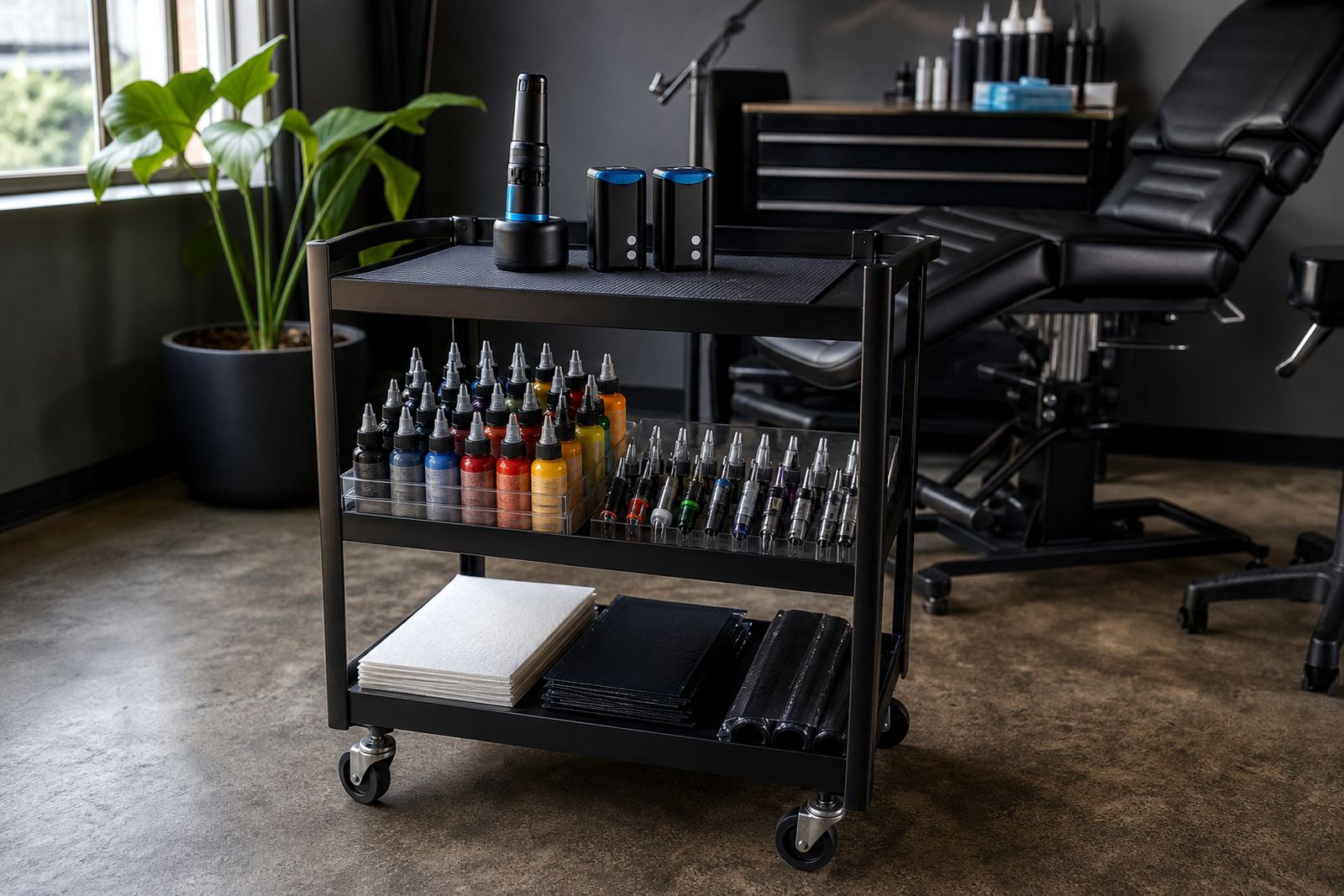
Wipe tubs are usually placed near the chair or bench, but not so close that they interfere with movement around the client. A side trolley, wall shelf or counter edge is common, depending on the room size. In tighter studios, a stacked grouping of tubs can save space, provided each tub has a clear purpose and lid.
The goal is simple: the artist should reach the right wipe without turning away from the setup. That is especially useful in rooms with limited floor space, or where the power point layout and equipment stands already take up the corners. In Durban, where humidity can affect stored cloths and paper goods, covered tubs help keep supplies cleaner and drier between sessions.
- Use one tub for active session stock
- Use one tub for backup cloths or wipes
- Use one tub for sealed sterile single-use items
- Keep spare tubs on a higher shelf or in closed storage
Keeping wipes and disposables in clean order
Wipes, cloths and disposable items should be grouped so clean stock never mixes with used stock. That sounds obvious, yet it is one of the first things that slips in a busy room. A studio in Pretoria with several artists on shift may need a dedicated top shelf for clean items and a lower or separate bin for waste, so there is no confusion during a rush.
Good grouping also helps with stock counting. If all wipe items are mixed together, it becomes harder to see what needs topping up. If they are split into neat categories, the team can check the room at a glance before the day gets moving.
- Label tubs by function, not by vague names
- Do not store opened packs beside sealed packs without separation
- Keep replacement cloths in their own container
- Clear waste from the station before the next client
Studio hygiene and storage habits that hold up
A wipe station works best when storage habits are consistent. Shelves should stay dry and easy to wipe down, and containers should close properly so dust does not settle into the stock. In coastal areas like Gqeberha or Cape Town, that matters more than people sometimes expect because air moisture can affect packaging and paper items left open.
Rooms should also be arranged so the wipe station is not used as a catch all for machine parts, random cartridges or personal items. When the space is limited, a few labelled boxes are better than a crowded shelf. Follow local health regulations for storage, cleaning and disposal, and keep the room layout aligned with those rules rather than trying to fit everything into one corner.
A practical layout for a busy South African studio
A useful wipe station often works in three parts. The first part is the active zone next to the working chair, where the current wipe tub and cloths sit. The second part is the refill zone, usually a shelf or cupboard with backup stock. The third part is the cleaning zone, where used materials are cleared and fresh surfaces are prepared.
That layout keeps movement sensible in small studios and larger shops alike. A team in Bellville may want quick access during back to back sessions, while a studio in Somerset West may prefer a calmer setup with more cabinet storage. The details change, but the grouping principle stays the same: active stock close by, reserve stock separated, and cleaning supplies stored where they do not drift into the working pile.
- Active zone: current wipes and cloths within arm’s reach
- Refill zone: sealed backups in covered storage
- Cleaning zone: materials for wiping down surfaces and clearing waste
- Review zone: a quick end of day check for what needs replacing
When to revisit your wipe station setup
Most studios only need a small adjustment now and then, not a full overhaul. Revisit the layout if people keep reaching across each other, if wipes are getting damp before use, or if the station is swallowing too much counter space. A better grouping often solves the problem without adding more gear.
If a studio adds more artists, extends working hours, or shifts to larger client flow, the wipe station should be reviewed along with the rest of the room stock. That keeps the space working for the team instead of forcing everyone to work around clutter. In a practical shop, the best system is the one that stays easy to keep in order on a normal day, not only when the room is quiet.