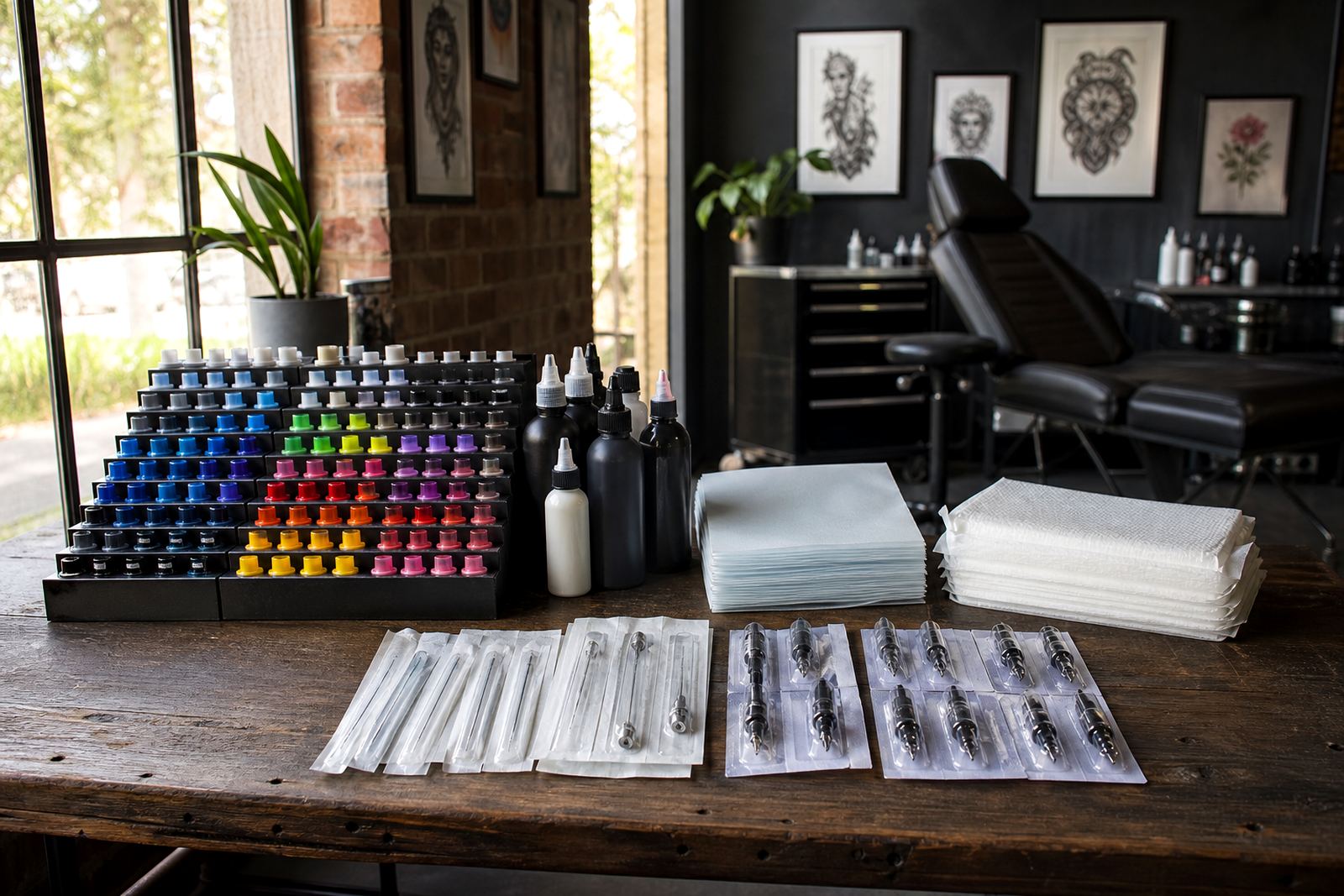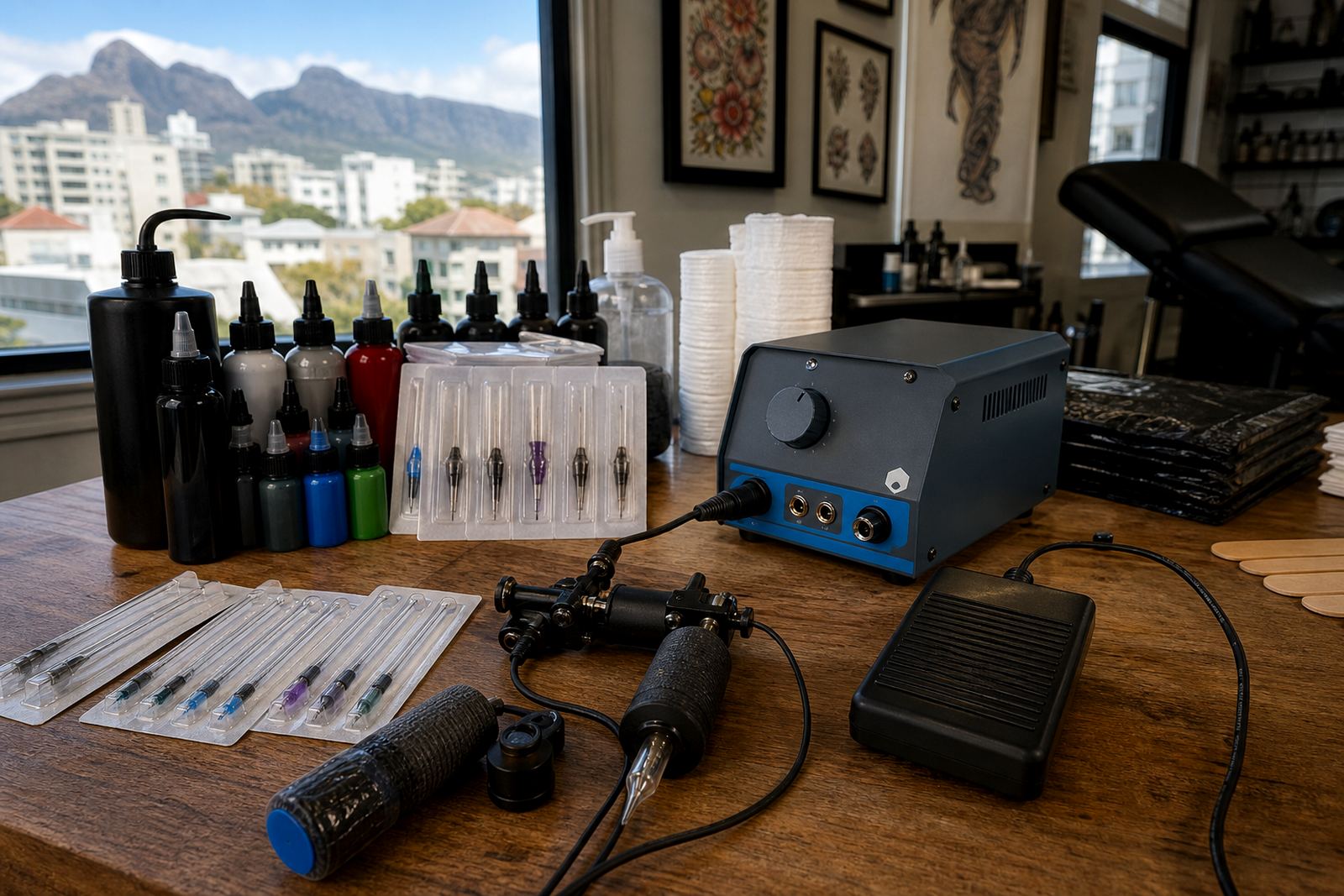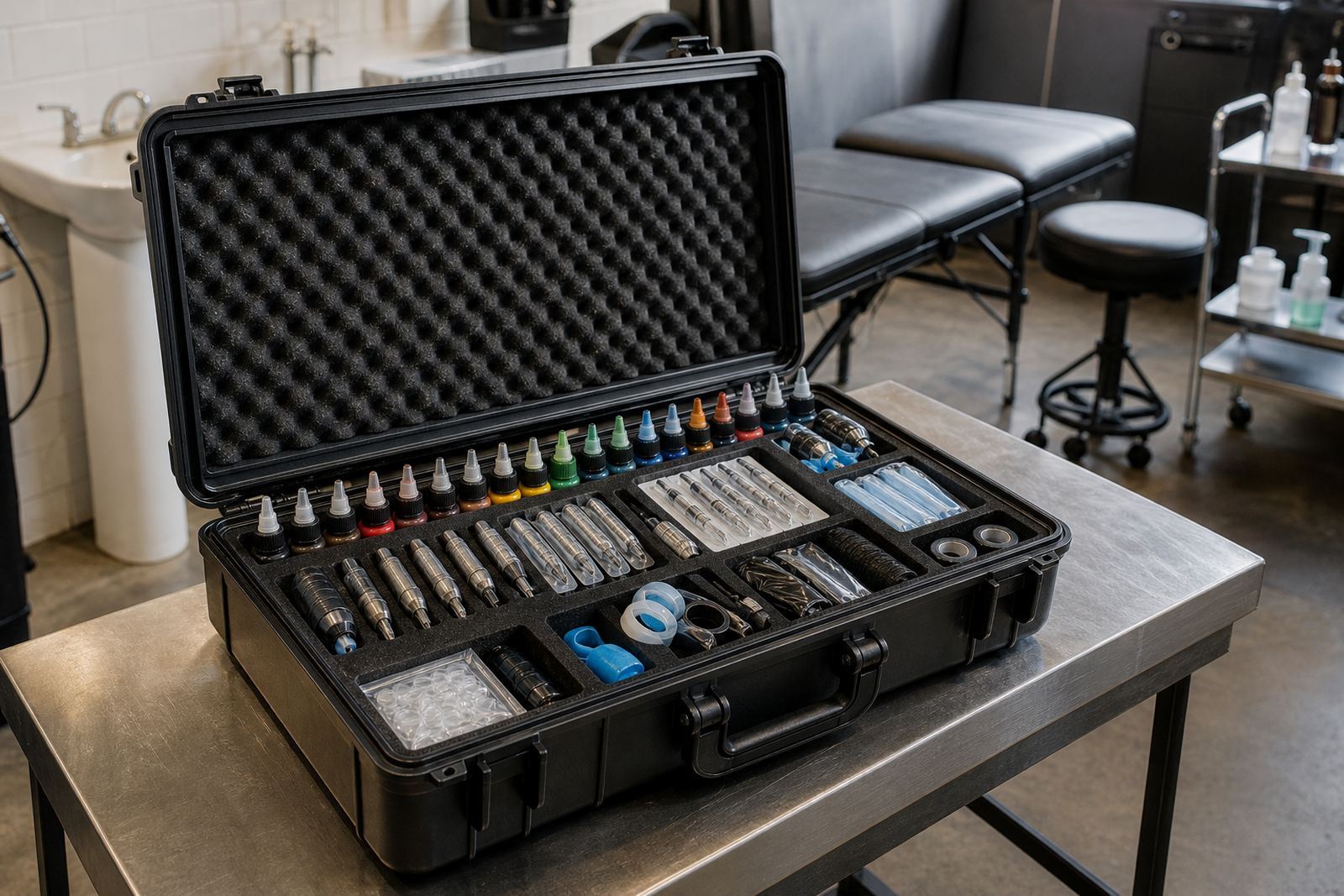

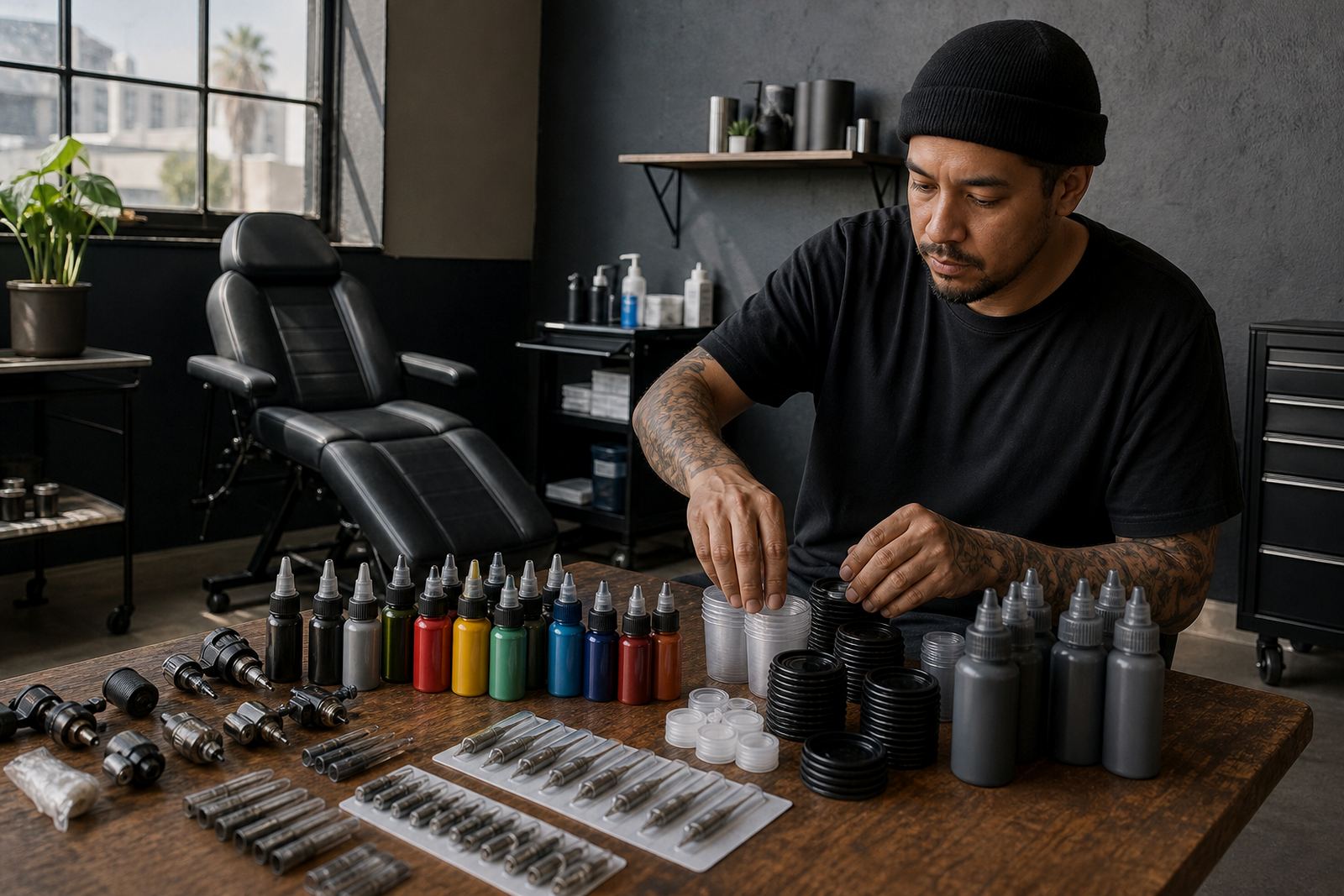
Small cups make blend prep easier to read
When a station is set up for the day, small cups give each colour or dilution its own place. That matters when an artist is moving between lining, shading and soft grey work, because the eye can track what is in each cup without guesswork. A neat row of cups also keeps the station cleaner, which is useful in a Cape Town studio where sea air and dust can settle on exposed surfaces quicker than expected.
For organised blend prep, the cup size should match the task. Too much liquid in one cup is wasteful, while cups that are too small can make a hand mix feel rushed. Most studios keep a few sizes in rotation so the working set fits the day’s appointments and the style of the piece.
Useful cup groupings for a working station
Many studios sort cups by task rather than by one general pile. That makes restocking easier and helps the station stay consistent from one artist to the next. A small label on the tray or a fixed place in the drawer can save time during setup, especially when multiple clients are booked in the same shift.
- Shading cups for diluted blends and soft transitions
- Line cups for darker inks kept separate from lighter mixes
- Accent cups for small colour accents or touch points
- Rinse cups for cleaning needles and tools between changes
- Reserve cups for spare blends or late adjustments
In larger shops, grouping cups with needles and cartridges by service type also keeps purchasing simpler. A studio doing fine line work will usually use a different mix pattern from one doing heavy black fill, so the cup count and size should match the work on the books.
What tidy blend prep looks like on a real day
A practical station is not about fancy tools, it is about order. Cups should be placed where the artist can reach them without crossing over sterile single-use items or touching clean surfaces unnecessarily. Once the cups are filled, lids or covers can help protect the contents from dust while the station is active, especially in open-plan studios with fans running or windows cracked for airflow.
For Durban and Gqeberha studios, humidity can make a table feel damp faster than expected, so a dry storage habit matters. Keep cups in sealed packaging until needed, store them away from wash areas, and do not leave open stock near sinks or cleaning chemicals. Clean storage is part of the whole blend process, not an afterthought.
Matching cups to ink, needles and cartridges
The right cup choice often depends on the supplies used around it. Cartridge work with smooth gradients may need a different set of cups from traditional needle and tube setups, because the pace of ink pickup and the amount of blend used can differ. A studio that stocks a broad range should keep the cup list tied to the rest of the consumable range, so ordering stays practical.
When stock is grouped well, it becomes easier to plan for common combinations:
- Small cups for detail work and narrow blends
- Medium cups for general colour packing and grey wash
- Larger cups for long sessions or multiple repeat fills
- Mixed packs for studios that run several stations at once
This is where stock list help and range grouping advice are useful. If a studio in Pretoria runs a steady mix of custom scripts and larger colour pieces, the cup supply should support both without creating too much loose stock on the shelf.
Storage habits that keep cups ready for use
Mixing cups are small, but they are easy to lose in a crowded supply room. Keep them in clearly sorted cartons or trays, and separate daily-use stock from reserve stock. That reduces rummaging during appointments and helps with reorders before a gap shows up on the shelf. It also makes dispatch packing cleaner when a studio is ordering needles, cartridges and cups together.
In coastal areas, packaging should stay closed until it is needed. Moisture, dust and general handling can damage the tidy feel of a set-up even when the product itself is still sound. A simple rule works well: if the box has been opened, it should have a fixed place and a count that gets checked during stock take.
- Store cups away from sinks and cleaning liquids
- Keep open cartons off the floor and out of direct sun
- Use one shelf or drawer for active stock
- Separate sterile single-use items from non-sterile consumables
Local ordering rhythms for South African studios
Studios in Cape Town, Johannesburg, Durban, Pretoria and Gqeberha do not all use the same volume of cups. A busy walk-in shop may burn through small cups quickly, while a private studio may prefer fewer sizes but more of each. That is why consumable reorders work best when they follow the actual booking pattern, not a fixed guess.
For example, a Stellenbosch studio doing a weekend run of fine line and script work may only need a compact pack of small cups plus a few larger ones for wash mixes. A Bellville shop with multiple artists on the floor may want broader pack sizes and a stronger buffer for peak days. Matching the cup order to the way the station is used keeps the shelf balanced and avoids unnecessary clutter.
A practical note on studio discipline
Good cup habits support the rest of the room. When small containers are counted, placed and discarded properly, the whole station feels easier to run. That matters for new studio kits, seasonal restock plans and any workspace that wants clear, repeatable prep. It also helps the customer-facing side, because the artist is not stopping mid-session to search for a cup or remake a blend.
InkX Tattoo works with studios that need straight stock support rather than guesswork. For mixing cups, needles, cartridges, machines and other studio supplies, the best results usually come from practical grouping and steady ordering, not oversized packs sitting untouched on a shelf.