

Start with the items that move fastest
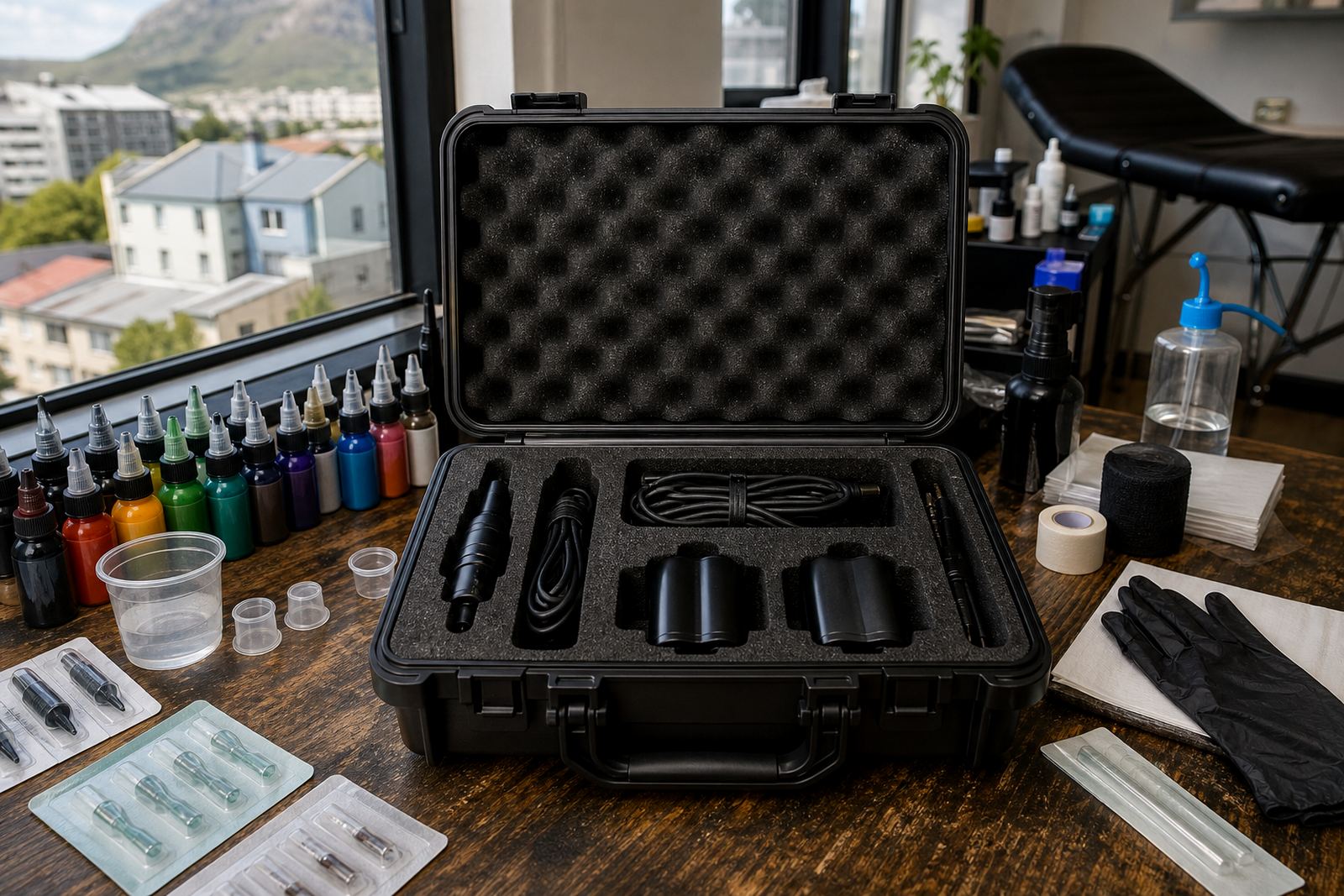
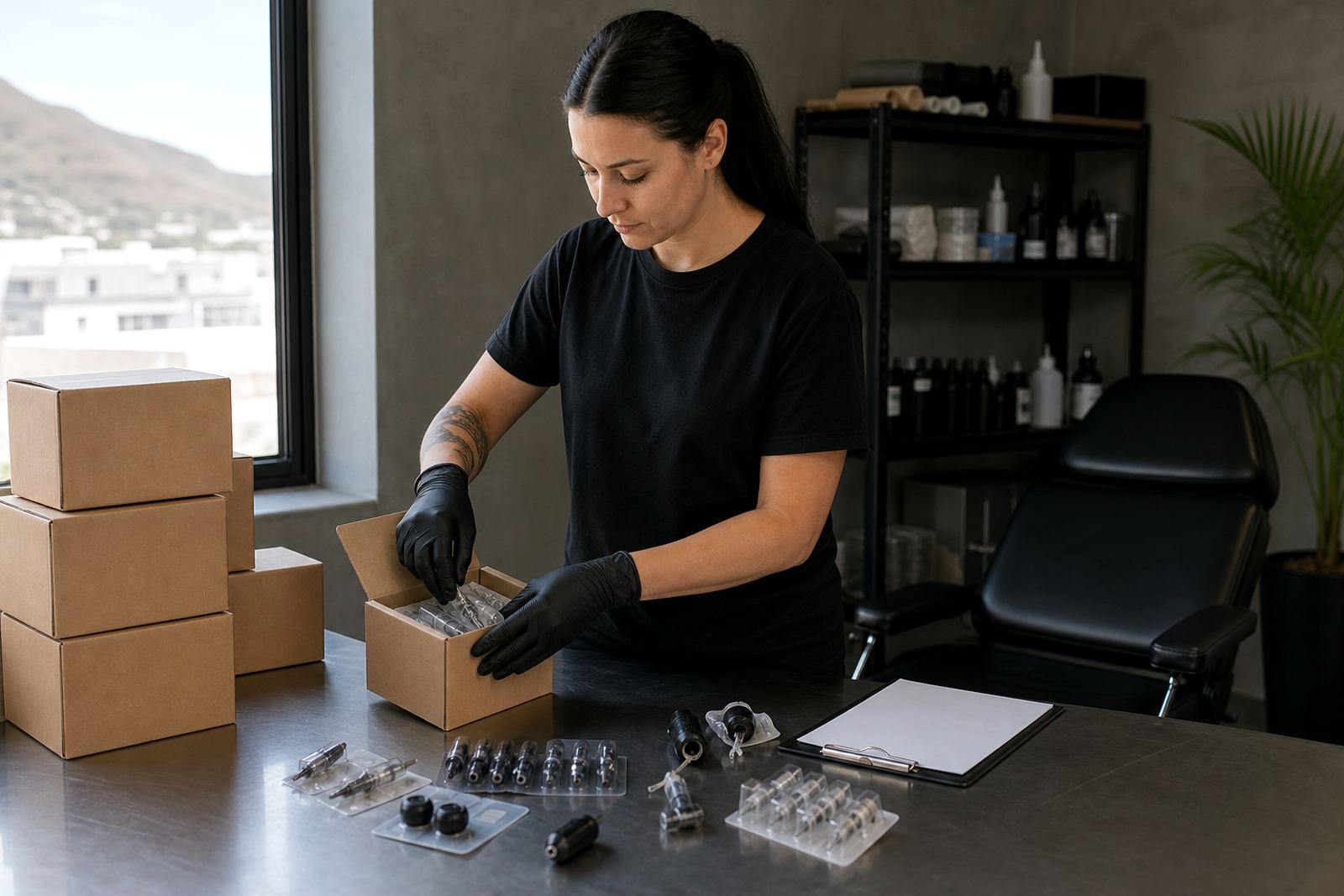
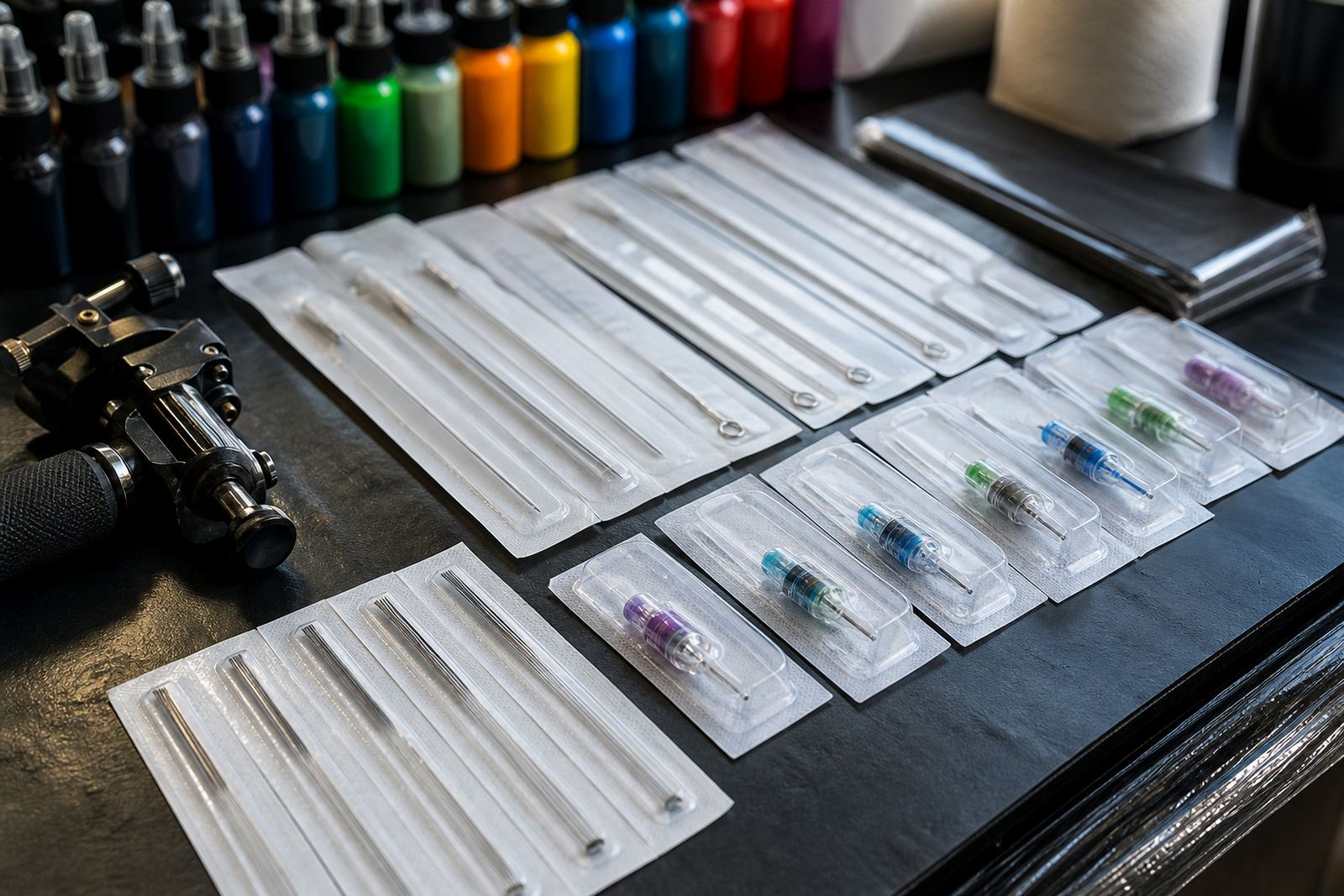
A back room count works best when it begins with the things that disappear quickest. In most tattoo studios that means tattoo inks, cartridge boxes, needle groupings, grip wraps, clip cord covers, barrier film and single-use cups. These are the lines that shift first when artists are booked solid, or when a few walk-ins turn into a full day.
Keep fast-moving items in clearly marked sections. Separate black work inks from colour sets, group needles by configuration and count cartridges by box size. That way the count reflects real usage instead of a pile of mixed packets on a shelf.
- Sort by category before counting
- Count sealed packs separately from opened stock
- Mark partial boxes with the remaining quantity
Make the shelves match the booking sheet
When storage follows the way the studio books work, counts become much easier. If the team does a lot of fine line work, those needle sizes and cartridge groupings need their own spot. If colour packing is common, larger ink bottles and rinse cups should sit in one area so the team is not hunting through unrelated stock.
A simple shelf map helps here. One shelf for inks, one for needles and cartridges, one for sterile single-use supplies, and one for bulk items such as gloves, drapes and cleaning stock. In a small Observatory room, that kind of order matters because space is tight and one misplaced box can throw off the whole shelf count.
- Use the same shelf order every week
- Keep heavy cartons on lower shelves
- Store smaller items in labelled tubs or trays
Count in pairs, not in a rush
Stock counts go wrong when one person is trying to tally, pack and answer questions at the same time. A two-person count is usually cleaner. One person reads the shelf and calls the count, the other writes or enters it. That extra set of eyes catches opened boxes, mixed carton sizes and missing items hidden behind larger packs.
For tattoo studios in Cape Town, Johannesburg or Durban, where delivery timing can differ from one area to another, this also helps spot gaps before they become urgent. A partial box of cartridges or a low bottle of black ink is easier to replace when it shows up early in the count, not after the Saturday rush.
- One person counts, one person records
- Pause and recheck open packs
- Confirm any odd numbers before closing the sheet
Track opened stock and sealed stock separately
Opened stock is not the same as sealed stock, and it should never be counted as if it is. A bottle with some ink left in it, a box with ten cartridges missing, or a sleeve of needles already opened needs its own note. That gives a truer picture of what is actually ready for the next session.
This matters even more in coastal areas such as Cape Town and Gqeberha where storage rooms can feel damp in winter. Moisture can affect packaging and labels, so the count should also include a quick check on storage condition. Keep items dry, off the floor and away from splashes or dust from the workshop area.
- Record sealed packs as full units
- Mark opened packs with the balance left
- Note any damaged cartons or faded labels
Use the count to plan reorders before the shelf runs empty
A good count is not only about knowing what is there, it is about knowing what needs to be ordered next. Once the numbers are clear, the studio can plan consumable reorders, bulk order support and seasonal restock plans without guessing. That keeps the back room steady through busy months, holiday periods and sudden booking spikes.
It is also the right moment to review substitutions. If a cartridge grouping is moving faster than expected, or a certain ink shade is always short, the count should lead into a change in the next order. That is far better than discovering the shortage when the tray is already open and the artist is waiting.
- Set a reorder level for each category
- Review the highest moving items first
- Check if a different pack size would suit the studio better
Keep the back room clean enough to count properly
Stock counts are easier in a room that stays tidy through the week. Wipe shelves, remove empty cartons, and keep sterile single-use supplies in closed containers. A clean count area makes it easier to see what is there and what has gone missing. It also helps the team avoid mixing new stock with old stock.
For studios working under local health rules, storage and hygiene should stay part of the routine, not an afterthought. The same shelf that holds needles and cartridges should not be crowded with unrelated items. When the room is neat, the count is quicker and the inventory makes more sense. That practical order is often the difference between a calm Monday morning and a back room full of guesswork.
- Clear empty cartons after unpacking
- Keep cleaning stock in its own spot
- Store supplies off the floor and away from traffic