
What a shader group is doing at the workstation
Shader needle groups are built to hold more needles together than a fine lining setup, which gives a softer deposit and broader coverage on larger areas. In everyday studio buying, these groups are often used for shading, colour packing and blending work where a smoother fill is needed rather than a hard outline.
The main thing to remember is that shader groups are not all the same. A round shader carries a tighter bundle, while flatter groupings spread the needles in a wider line. That difference changes how much ink sits in the skin on each pass and how the hand feels over longer sessions. For Cape Town studios that work through busy weekend bookings, that can matter when the artist is moving between small fills and larger colour blocks.
Round shader, magnum and stacked groupings
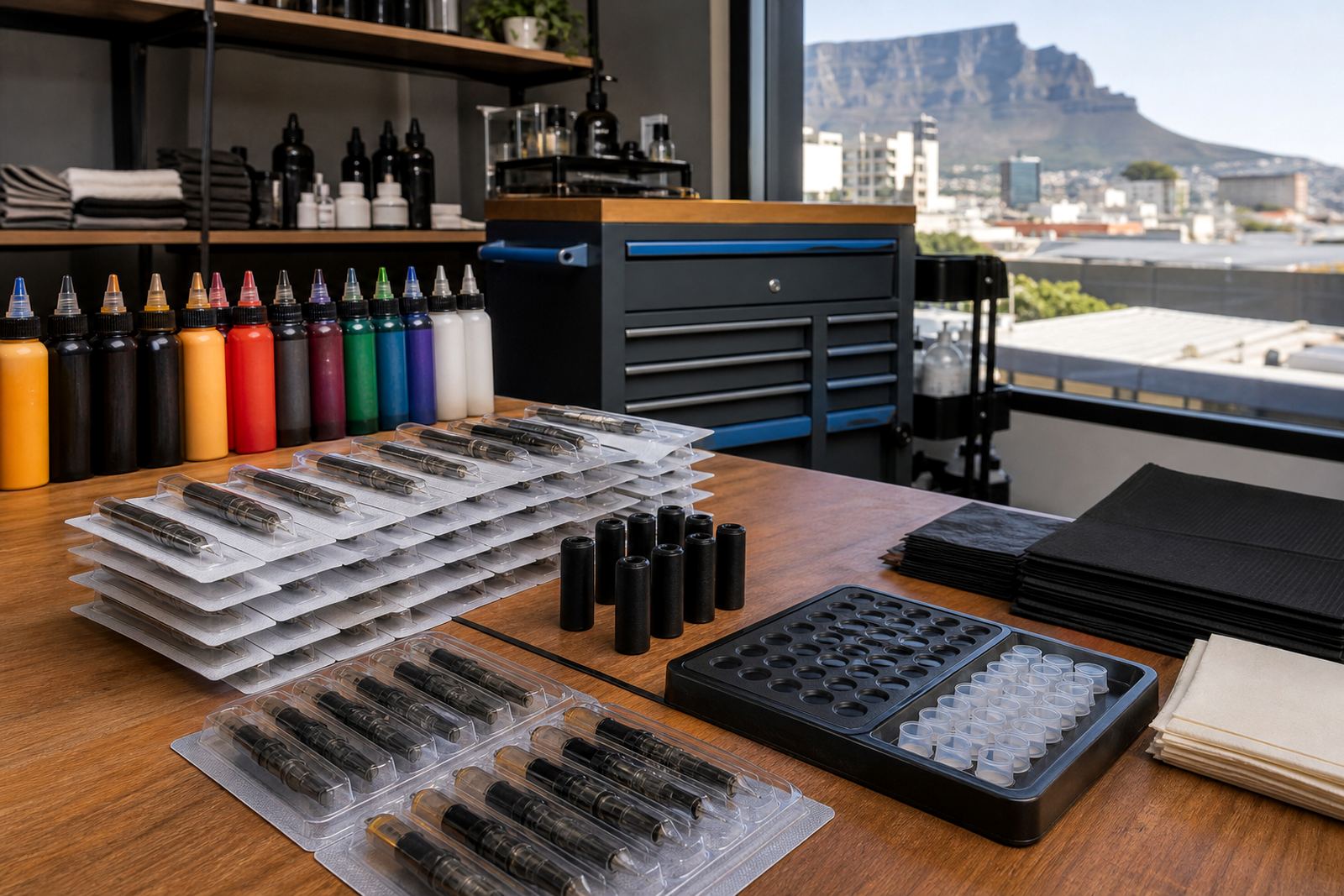
Most buying decisions start with the three common shader families. Round shader needles are grouped in a circular pattern and suit smaller shaded areas, soft edging and tighter control. Magnum groupings are wider and are used for broader coverage, while stacked versions bring the needles closer together for a denser pass.
- Round shader: suited to compact shading, light texture and controlled movement
- Magnum: used for broader fills, smoother coverage and larger colour areas
- Stacked magnum: gives a denser needle face for more packed work
- Curved grouping: helps reduce harsh marks on softer transitions
For studio stock, it helps to keep the sizes grouped by actual use rather than by catalogue order. A small Johannesburg studio may only need a few repeat shader sizes for walk-in flash work, while a bigger Cape Town space may hold more width options for artists who move between realism, traditional work and custom colour packing.
How needle count changes the feel in hand
Needle count affects how much pigment is carried and how the machine loads against the skin. Lower counts in shader groupings give more control in tighter areas, while higher counts are better for covering larger sections more quickly. That does not mean bigger is better. A group that is too large for the job can make the artist work harder and waste ink.
It is worth matching the needle count to the kind of sessions booked most often. A shop doing full sleeves and back pieces will usually use wider shader groupings more often than a studio focused on smaller script and linework add-ons. In Durban, where humidity can affect the feel of consumables during storage and handling, clear labelling and sealed packaging help keep stock in better order.
- Smaller groupings suit detail shading and tighter body areas
- Mid-size groupings work well for general studio use
- Wider groupings help with large fills and smoother coverage
- Keep the most used sizes closest to the packing bench
Cartridge or grouped needle stock
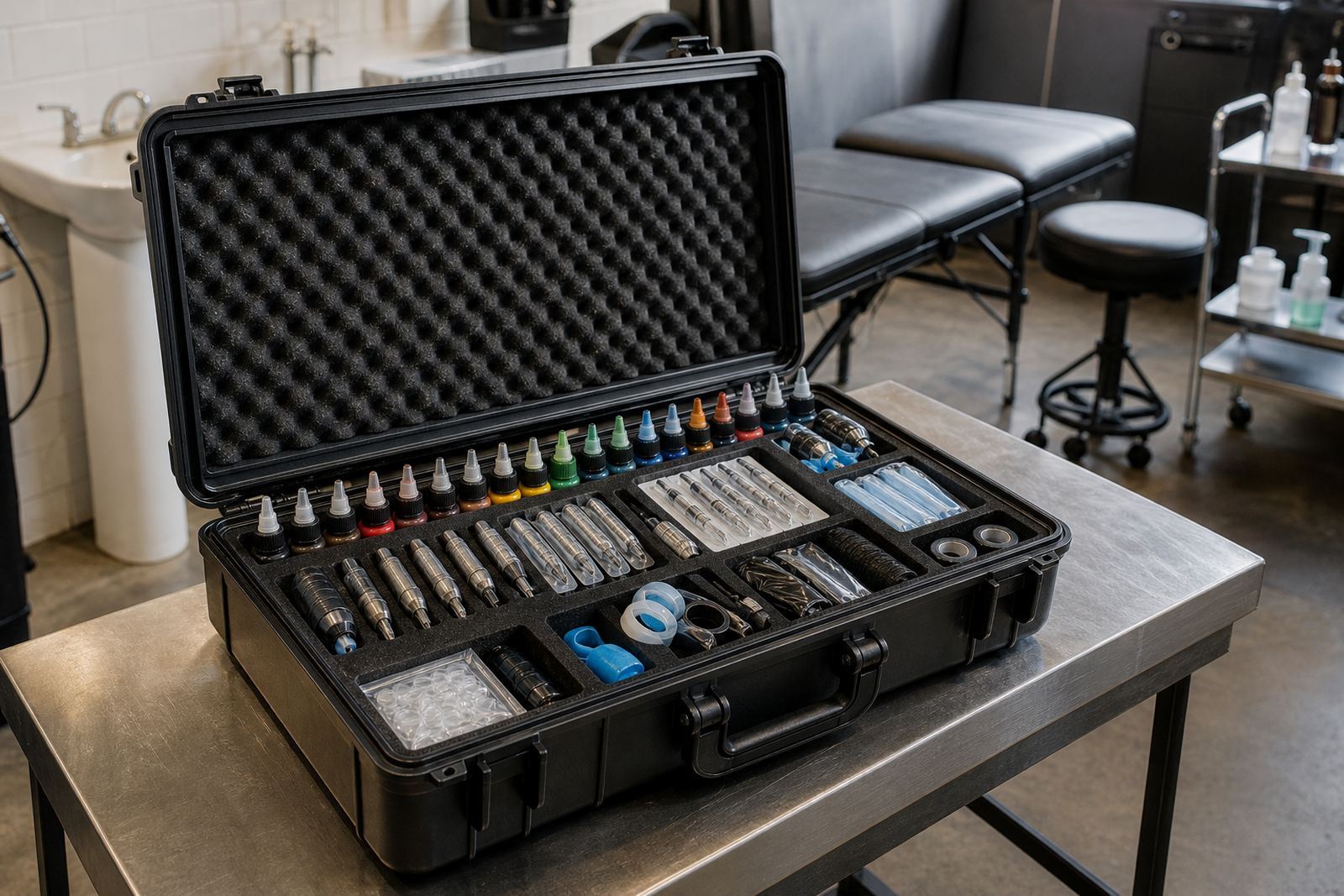
Some studios still prefer grouped needles, while others buy more cartridge-based options depending on machine setup and artist preference. For ordering, the key is to keep the buying list consistent across the team so the same shader styles are available when needed. Mixed stock without clear naming usually leads to mistakes at dispatch or during station setup.
Cartridge groupings are often chosen for quicker changes between jobs, while traditional groupings can suit artists who prefer a certain hand feel and machine balance. A Pretoria studio with multiple artists might keep both formats in stock, then match the consumable to the machine rather than forcing one option across the whole room. That kind of planning makes storage easier too, especially when consumables need to be packed by size and use.
Sterile single-use supplies and studio order
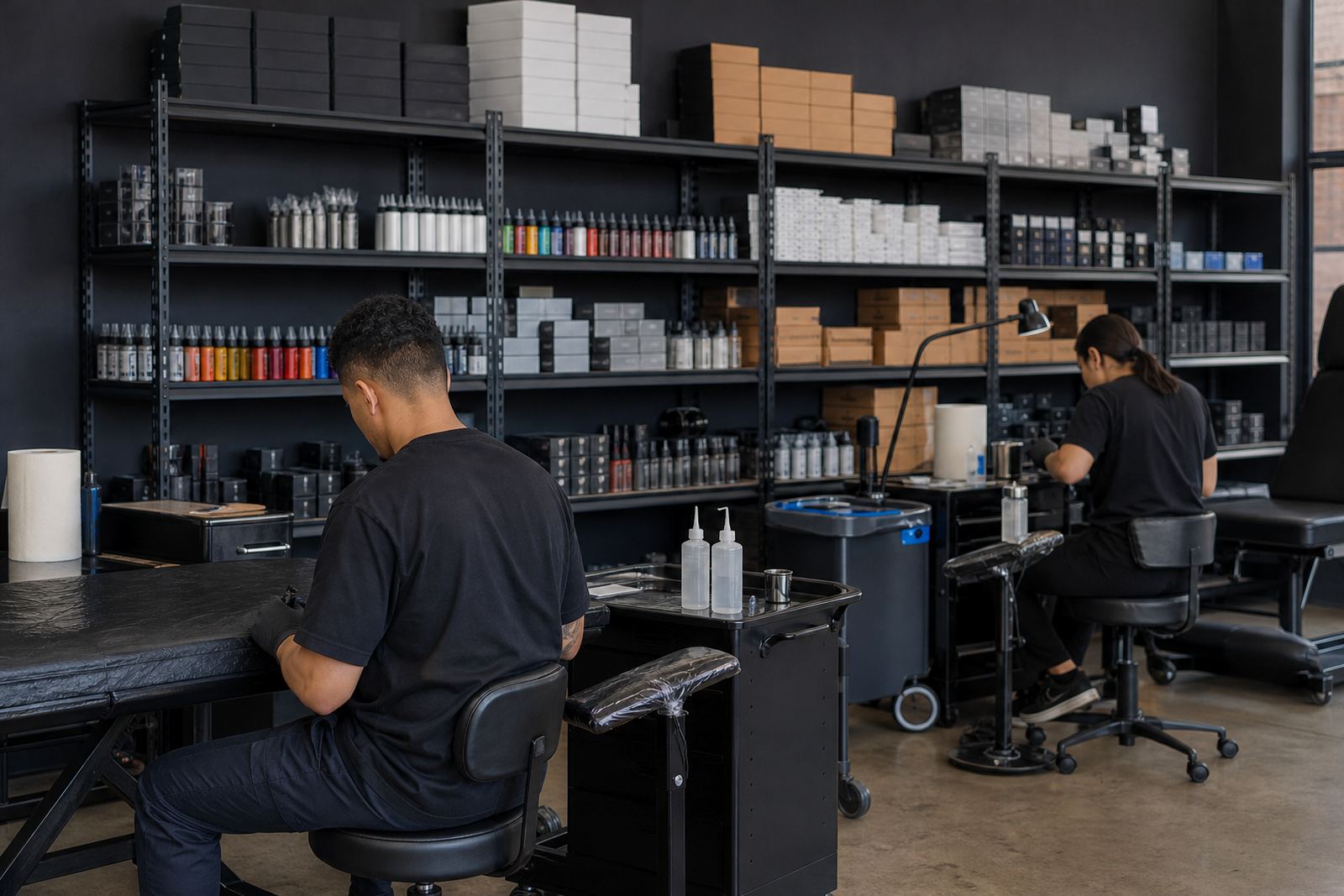
Shader needle buying is only one part of the station. Studios also need sterile single-use items, clip cords or power links where relevant, barriers, cups, wraps and general surface protection. These items should be stored in a clean, dry area with clear separation from open stock and from anything that may be returned to the shelf.
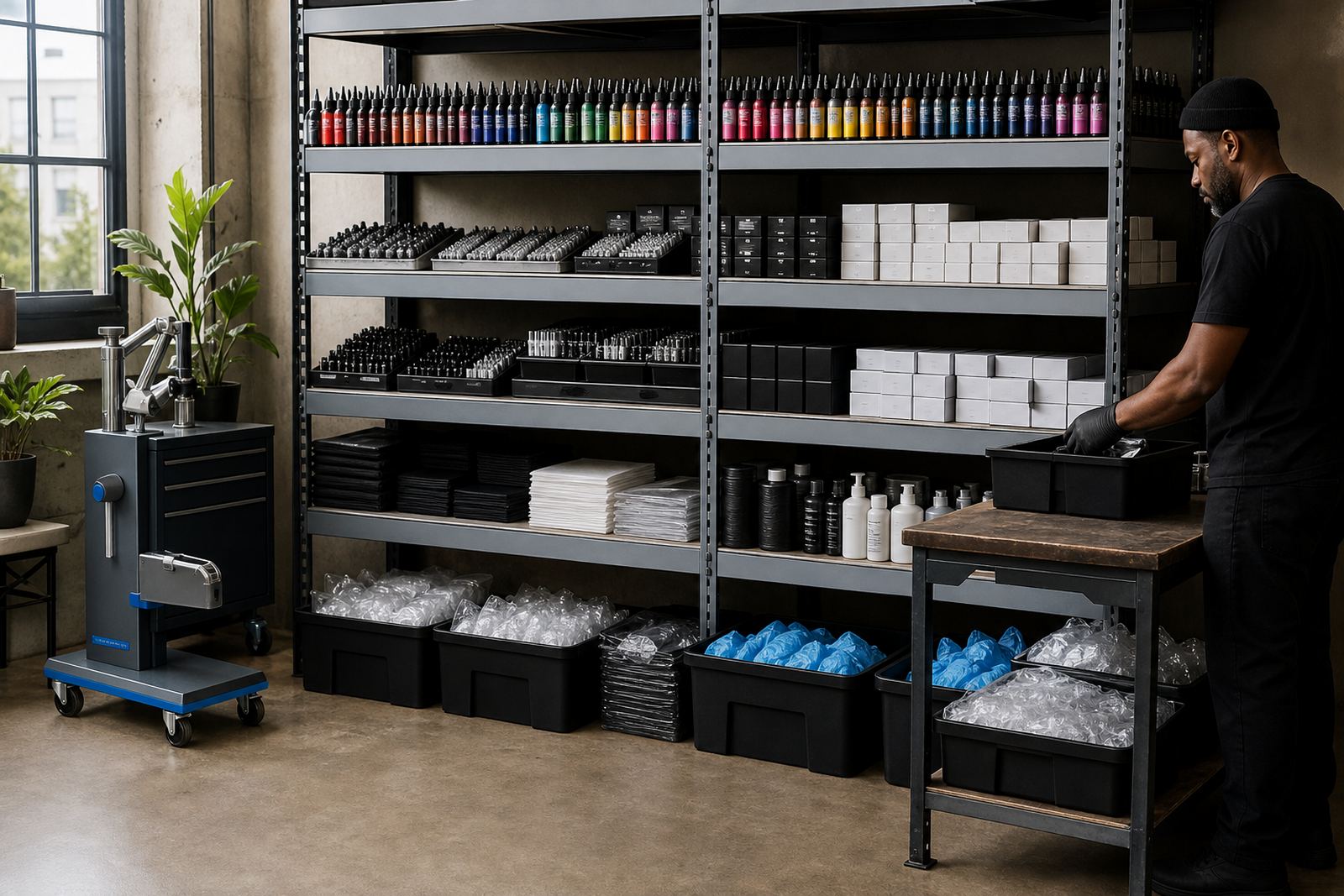
Good studio order is practical, not fancy. Keep sealed packs off the floor, separate damaged cartons from usable stock and rotate consumables so the oldest sealed items are used first. Follow local health regulations for handling, disposal and studio control procedures. If a Gqeberha studio is working close to the coast, the extra moisture in the air can make careful storage even more important, especially for paper packs and labels that need to stay legible.
- Check packaging integrity before adding stock to the shelf
- Keep single-use supplies in sealed, clearly marked storage areas
- Use first-in, first-out rotation for older sealed items
- Separate clean supply stock from waste and used materials
Packing a shader order for the week
Most studios do better with a repeat order pattern than with random top-ups. A practical order usually covers the shader sizes used most often, plus a small buffer for busy periods and cancellations that turn into same-day bookings. If one artist runs through wider magnums and another prefers tighter round shaders, split the order list by station so the stock room stays easy to read.
Seasonal buying also helps. Summer can bring more walk-ins and busy weekends, while winter may shift the mix toward smaller appointments and more careful stock control. For a studio in Stellenbosch or Somerset West, that might mean holding enough common shader groupings for regular appointments without tying up too much Rand in slow-moving sizes. Tamlyn and the online sales side can help keep the list tidy, while the warehouse team checks packing and dispatch so the right items leave in the right grouping.
The buying habits that save time later
Shader group purchasing works best when the team agrees on names, sizes and storage labels before the boxes arrive. If one artist calls for a medium magnum and another asks for a wide pack of the same style, the order sheet should still point to one clear stock code. That keeps reorder notes, station planning and training material consistent.
In practice, the best studios buy for the work they do most, not for the full catalogue. A small Bellville studio may keep a neat core range, while a larger Johannesburg team may carry more variety for different artists and visiting clients. Either way, careful grouping, clean storage and steady replenishment make shader stock easier to manage without overbuying. That is the sort of working rhythm that saves time at the packing bench and on the tattoo station.