What a pen-style machine actually changes at the hand
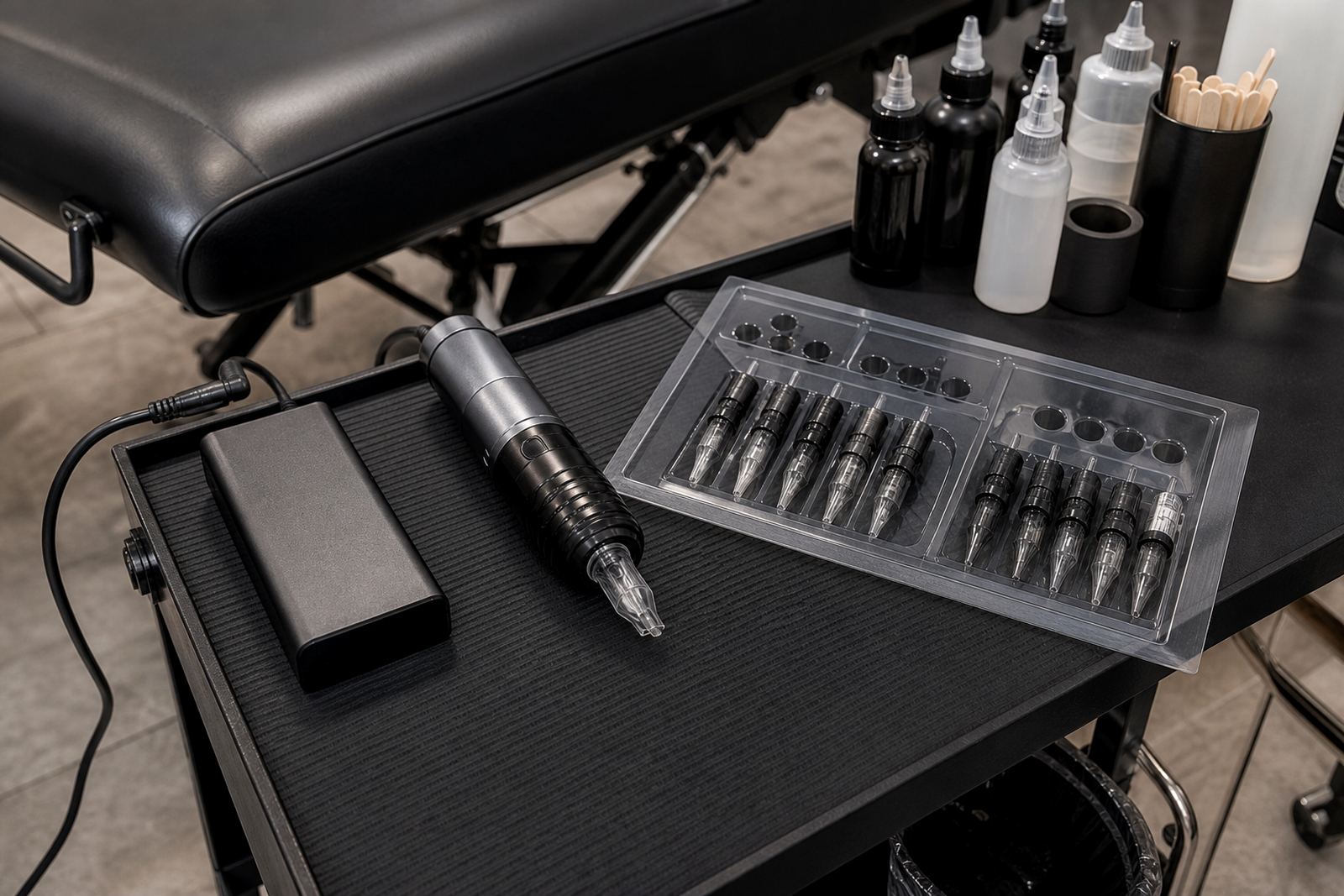
A pen-style tattoo machine places the motor in a slim body that sits much like a thick pen or marker. For many artists that shape feels natural during long sessions, especially when line work, shading and colour packing all happen in one day. The lighter feel can help with control, but the real value is how the machine is organised around the hand rather than around a separate frame and grip.
In practical terms, a pen layout usually means fewer loose parts on the station, quicker needle changes and a tidier work area. That matters in busy studios where one artist may be setting up while another is finishing a pass. In Observatory, Cape Town, where studio space can be tight, that compact layout is often easier to manage than a bulkier arrangement.
Needle groupings that match the job
Pen machines are commonly used with cartridges, and the grouping you choose affects how the needle touches the skin and how much pigment moves in one pass. There is no single setup for every artist. A small liner grouping gives a tighter point for detail, while larger magnums are often chosen for smoother shading and colour packing.
- Round liners for fine lines, scripts and small detail work
- Round shaders for soft shading and gentle fill
- Curved magnums for smoother transitions and broader colour work
- Flat or stacked groupings for specific packing or firmer shading needs
The needle size and taper also change the result. A tighter taper can feel sharper on the skin, while a longer taper usually gives a softer touch. The right choice depends on the design, the artist's hand speed and the look they are trying to build. That is why cartridge match help often matters more than simply buying the largest box available.
Cartridges, tension and how the setup feels during a session
Most pen-style machines are paired with cartridges because they allow faster changes between groupings and make station prep simpler. The cartridge housing, membrane and needle stability all affect how smooth the machine feels. A cartridge that sits firmly in the grip gives more predictable movement, while a loose fit can make the whole setup feel off.
Artists usually pay attention to the amount of give in the cartridge, the stroke of the machine and the way the tip sits in the grip. Those three things work together. For example, a shorter stroke can suit delicate line work or tighter shading, while a longer stroke can suit bold lining and heavier packing. Not every pen needs the same combination and that is where machine match help becomes useful.
- Check that the cartridge locks in cleanly
- Match the stroke to the work you do most often
- Keep a few grouping options available for different designs
- Store cartridges in a clean, dry place away from dust
Inks and how colour choices affect stock planning
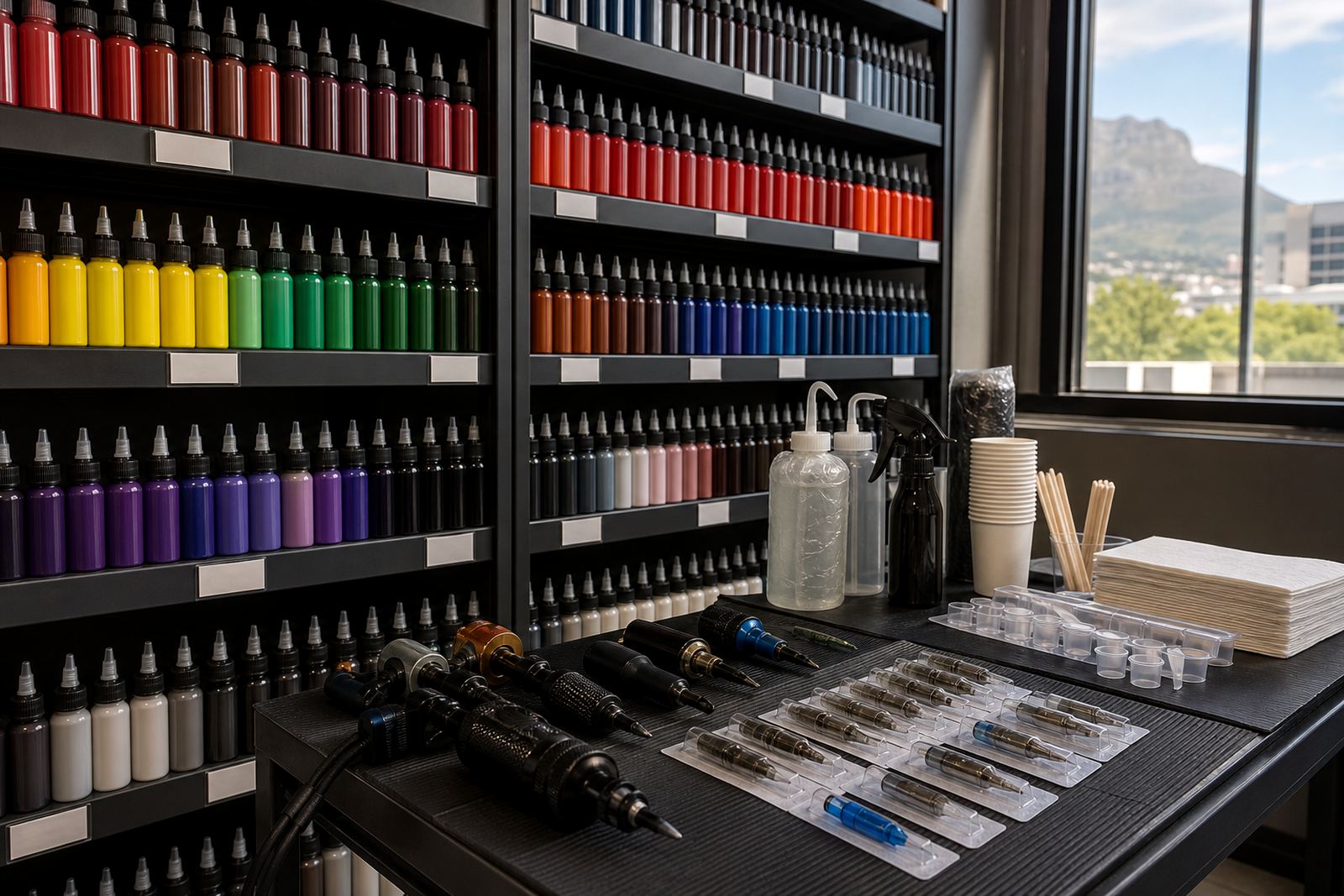
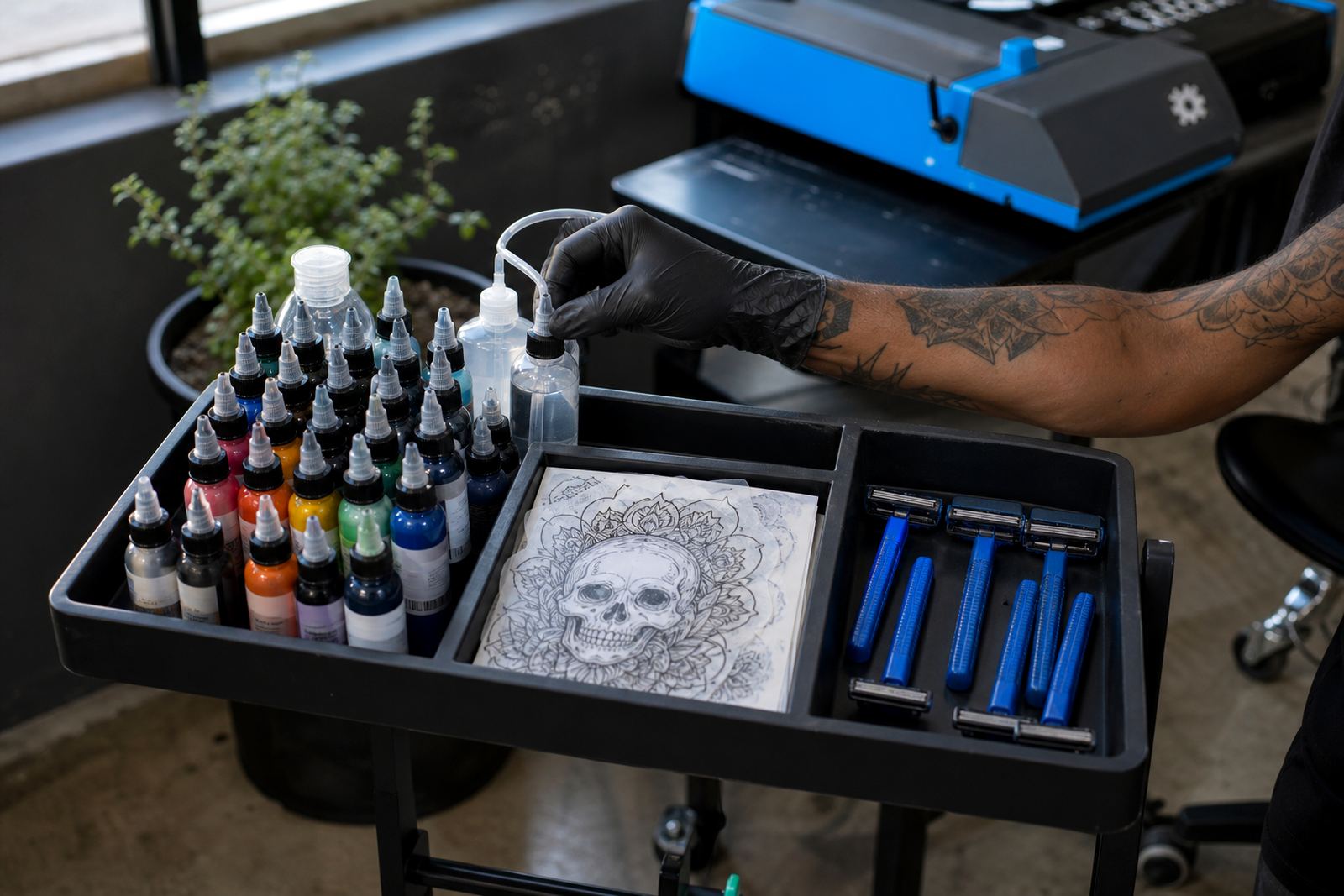
Tattoo ink supply needs are about more than just having enough bottles on the shelf. Studios usually plan around colour ranges, linework blacks, greywash-style needs and the volume used in busy weeks. A studio that does script and fineline work may move through different shades than one doing larger colour pieces, so the stock list should reflect the actual work on the table.
Good stock planning also means thinking about bottle sizes, shelf rotation and how often certain shades are used. In humid coastal areas like Cape Town, storage conditions matter because bottles, caps and packaging should be kept organised and sealed properly. Inland studios in Johannesburg or Pretoria may see different wear on consumables from dust and temperature swings, so storage planning changes from area to area.
- Keep your most used blacks and core colours easy to reach
- Separate opened and unopened bottles clearly
- Review slow-moving shades before placing bulk orders
- Match ink volumes to your actual booking pattern
Single-use supplies that sit beside the machine
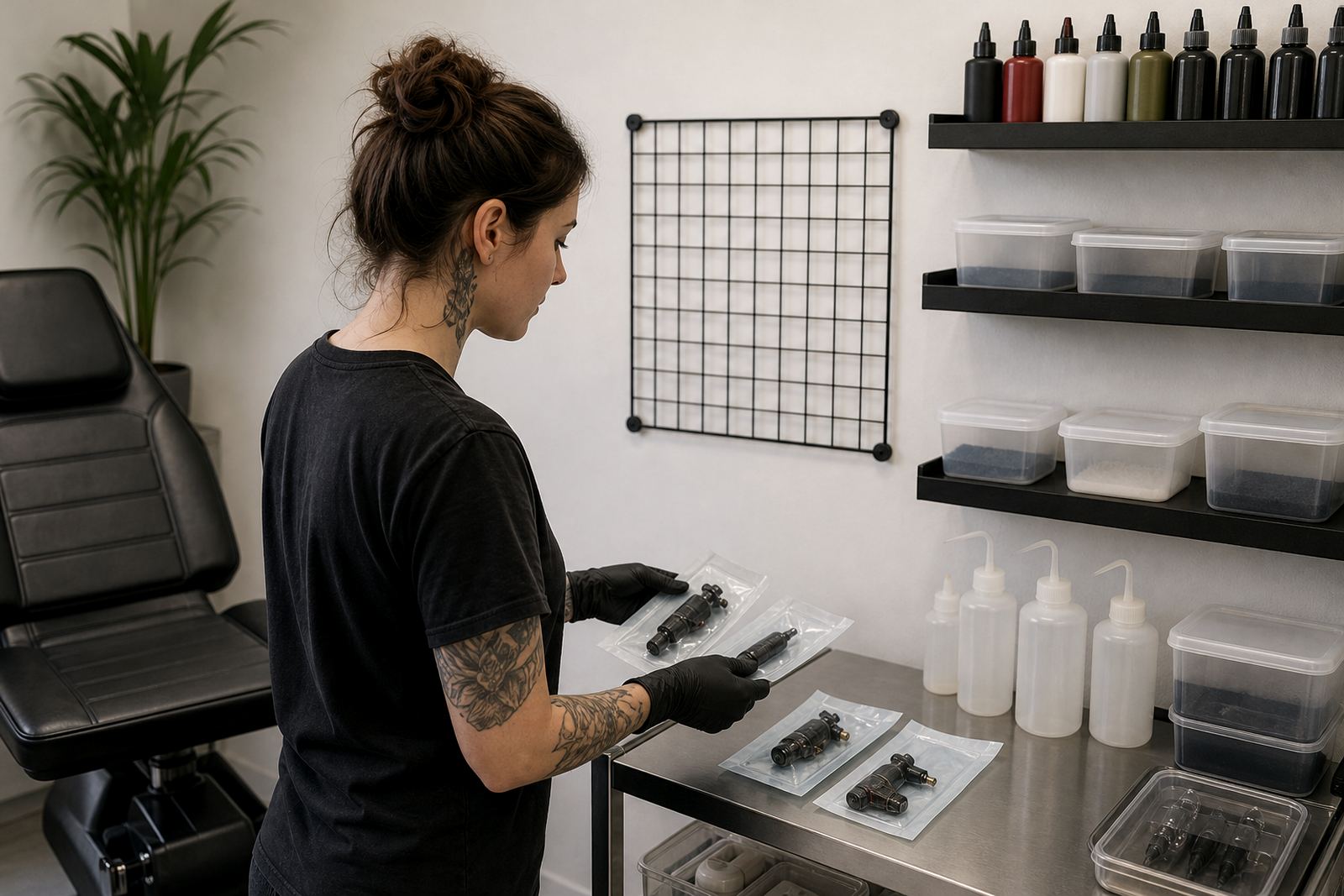
A pen machine does not work in isolation. The surrounding single-use items are just as important for keeping the station organised. This usually includes cartridge items, barrier covers, clip cord or power lead protection where relevant, ink caps, wipes, gloves and other sterile consumables used during setup and cleanup. The exact list depends on the studio layout and the way the artist works.
Storage planning helps here too. A drawer or shelf system with clearly grouped consumables saves time when the room gets busy. It also reduces the chance of mixing fresh stock with opened packs. Studios across South Africa often need to replenish these smaller items more often than they expect, especially when several artists share the same work area. Follow local health regulations for handling, storage and disposal in your area.
- Separate sterile packs from general consumables
- Keep backup cartridges and gloves in known locations
- Label storage by grouping or use type
- Plan reorder points before the last box is opened
A local studio example from Cape Town to Gqeberha
A small studio in Cape Town may start the week with two pen machines set up for line work and shading, then shift to cartridge changes as bookings move from fine detail to larger pieces. By the time a delivery is sent to Johannesburg or Pretoria, the order mix can look very different because the studio has already used more of one grouping than another. That is why a practical supply plan matters more than a broad generic list.
For studios in Durban and Gqeberha, humidity and storage space often shape the buying pattern as much as the tattoo menu does. A compact order of inks, needles, cartridges and table supplies may be better than overstocking shelves. When the work is sorted by station, the artist can focus on the piece in front of them instead of hunting for missing consumables. That kind of setup is what makes pen machines feel efficient in daily use.
InkX Tattoo supports studios with stock list help, range grouping advice, station planning, consumable reorders, bulk order support, new studio kits, machine match help, cartridge match help, storage planning, dispatch updates, product substitutions and seasonal restock plans.