






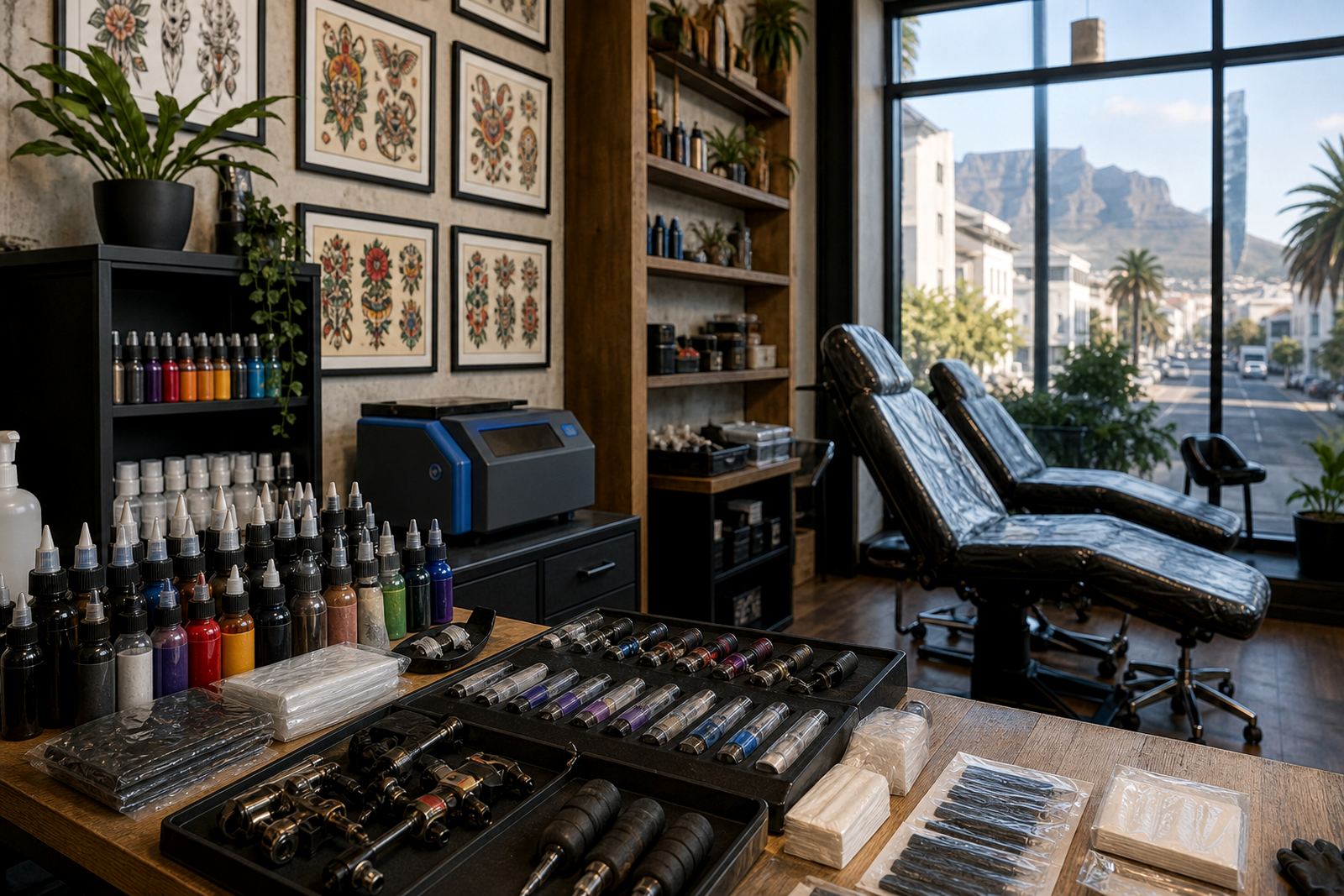
Cape Town front room studios and tight shelf space
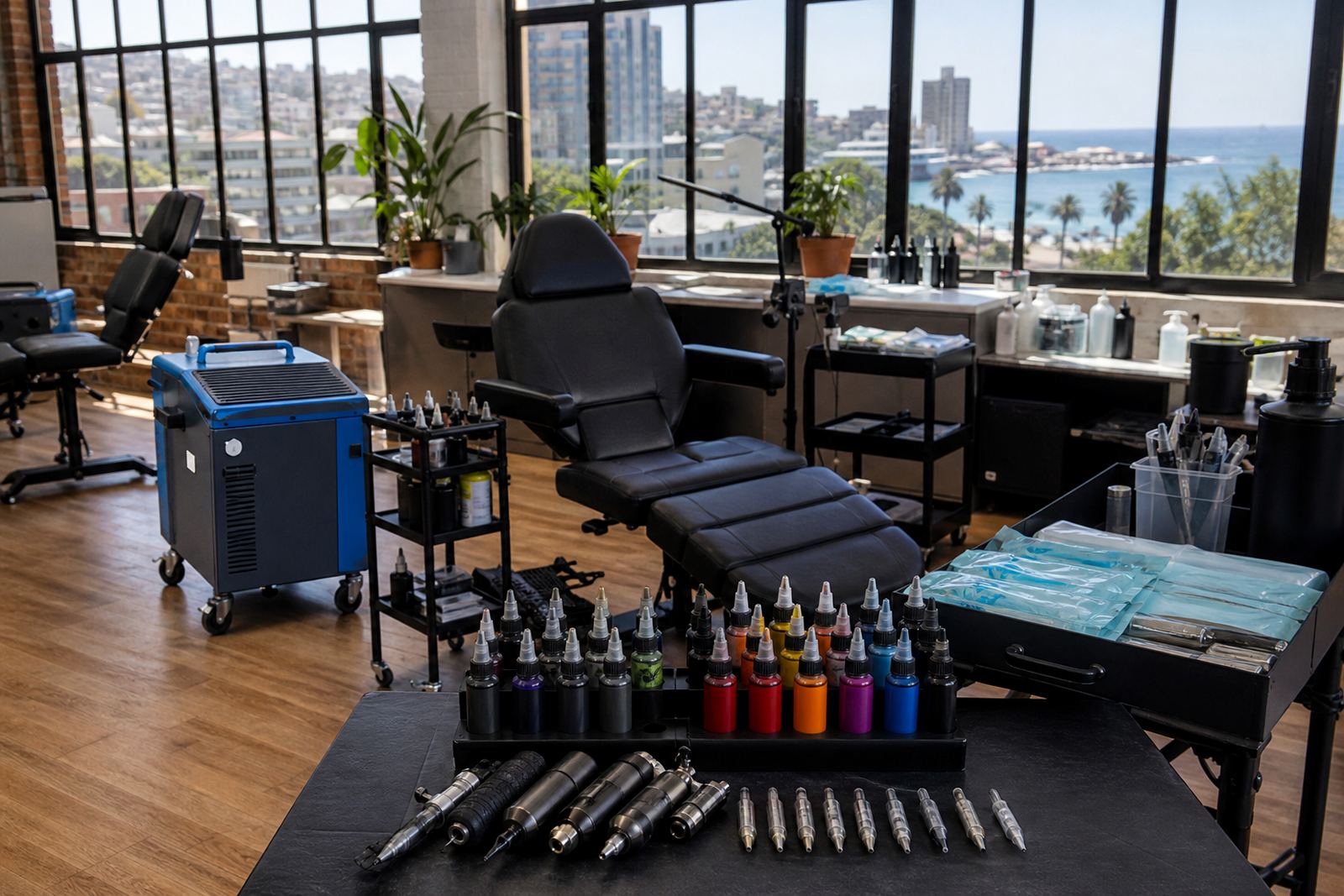
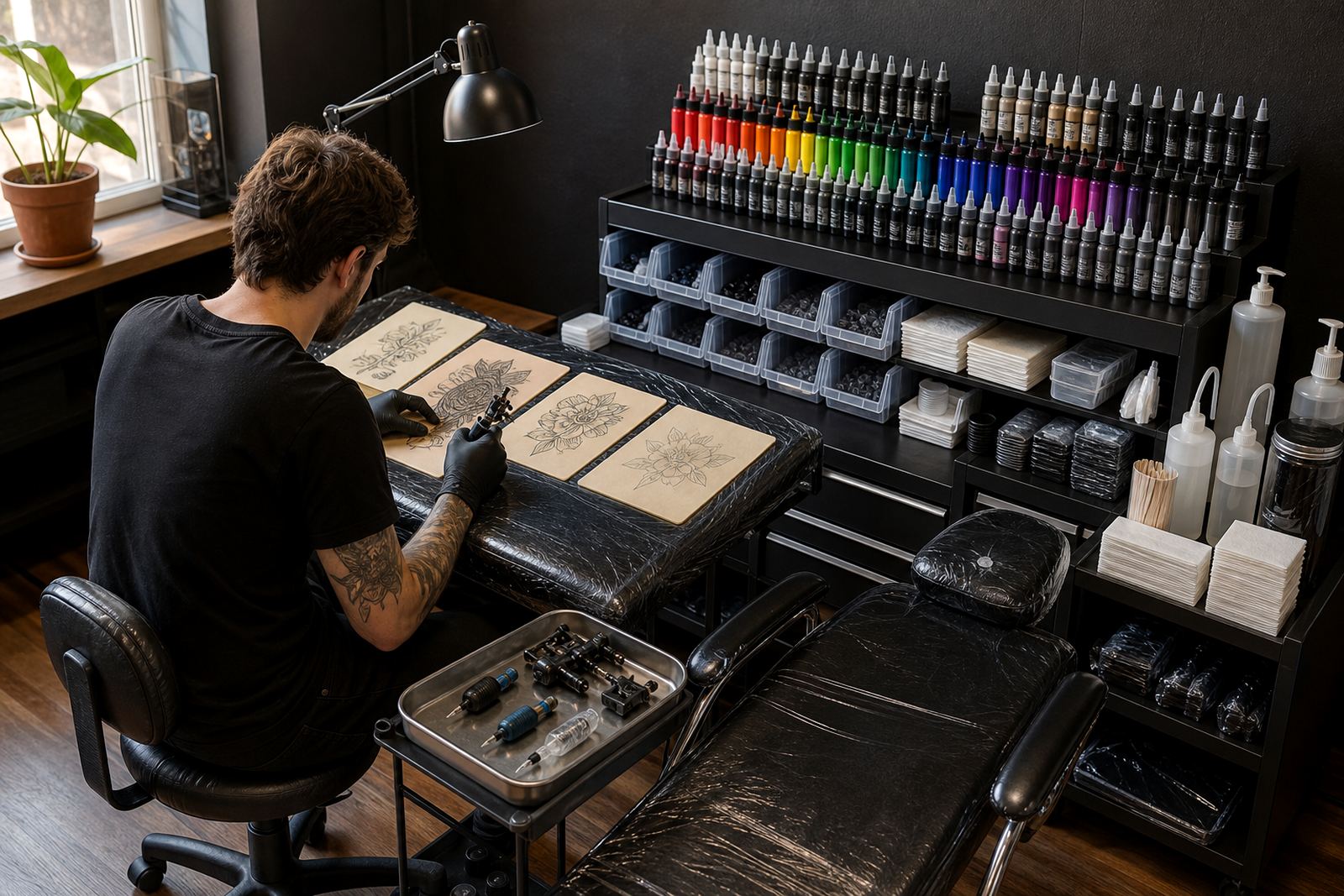
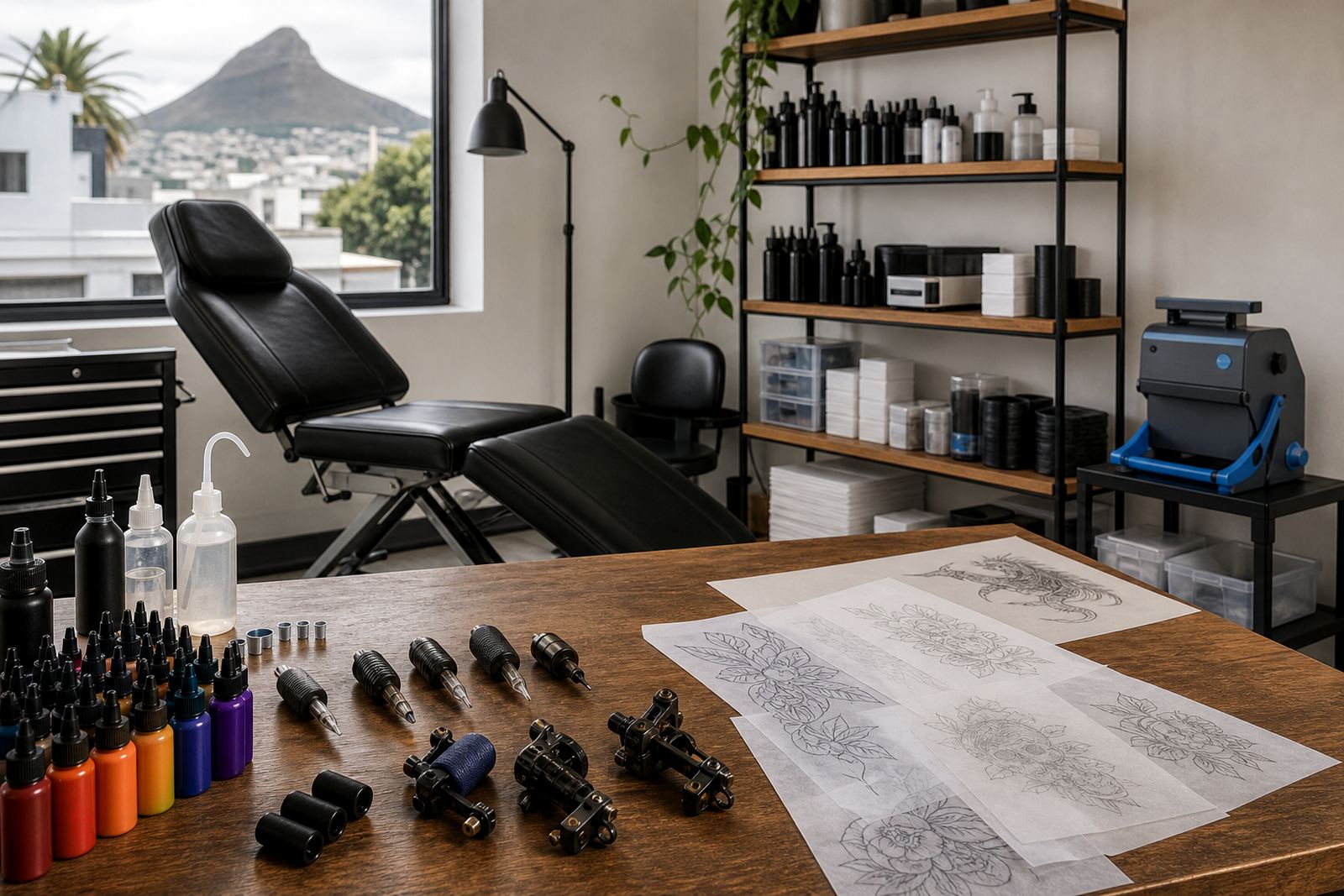
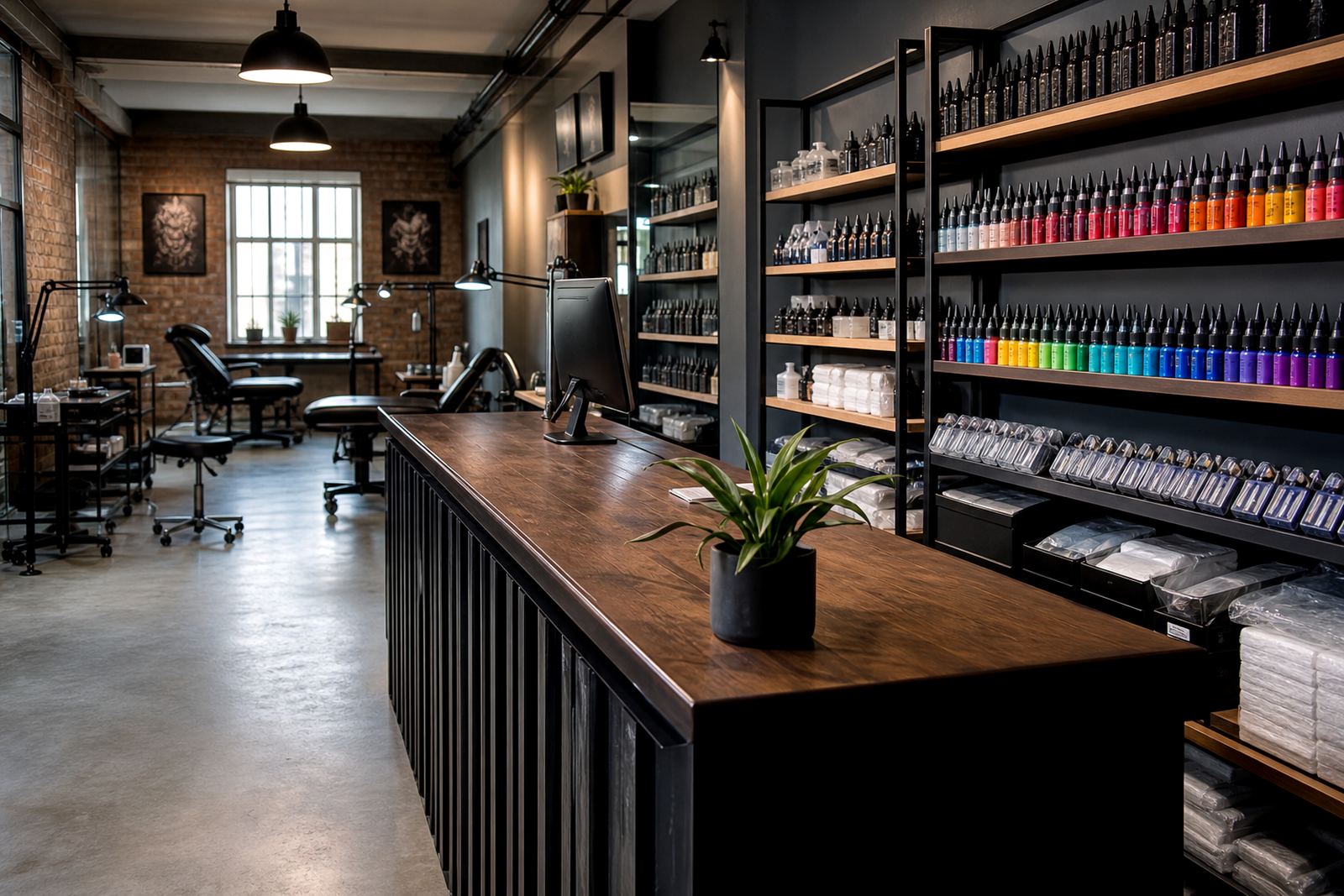
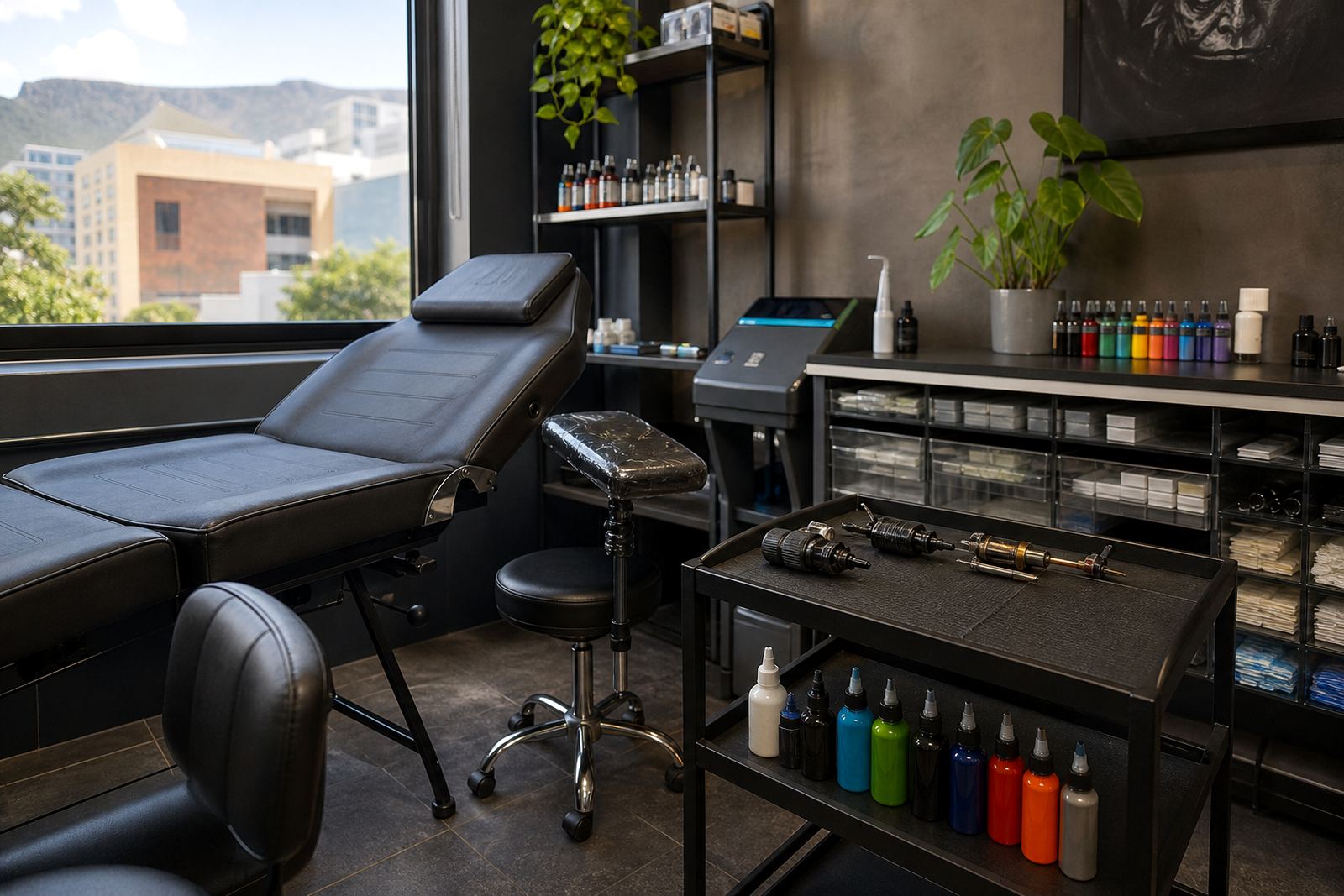
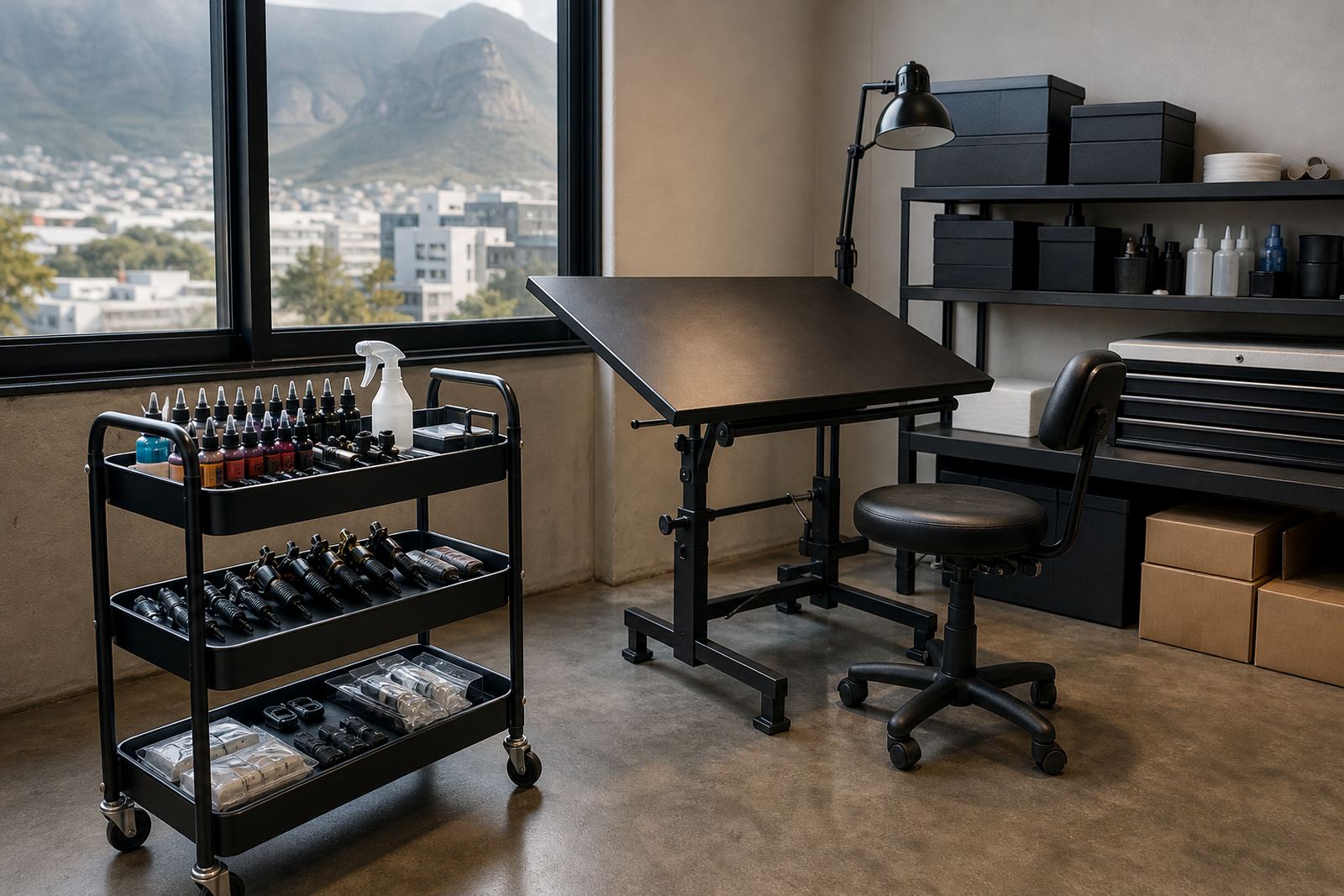
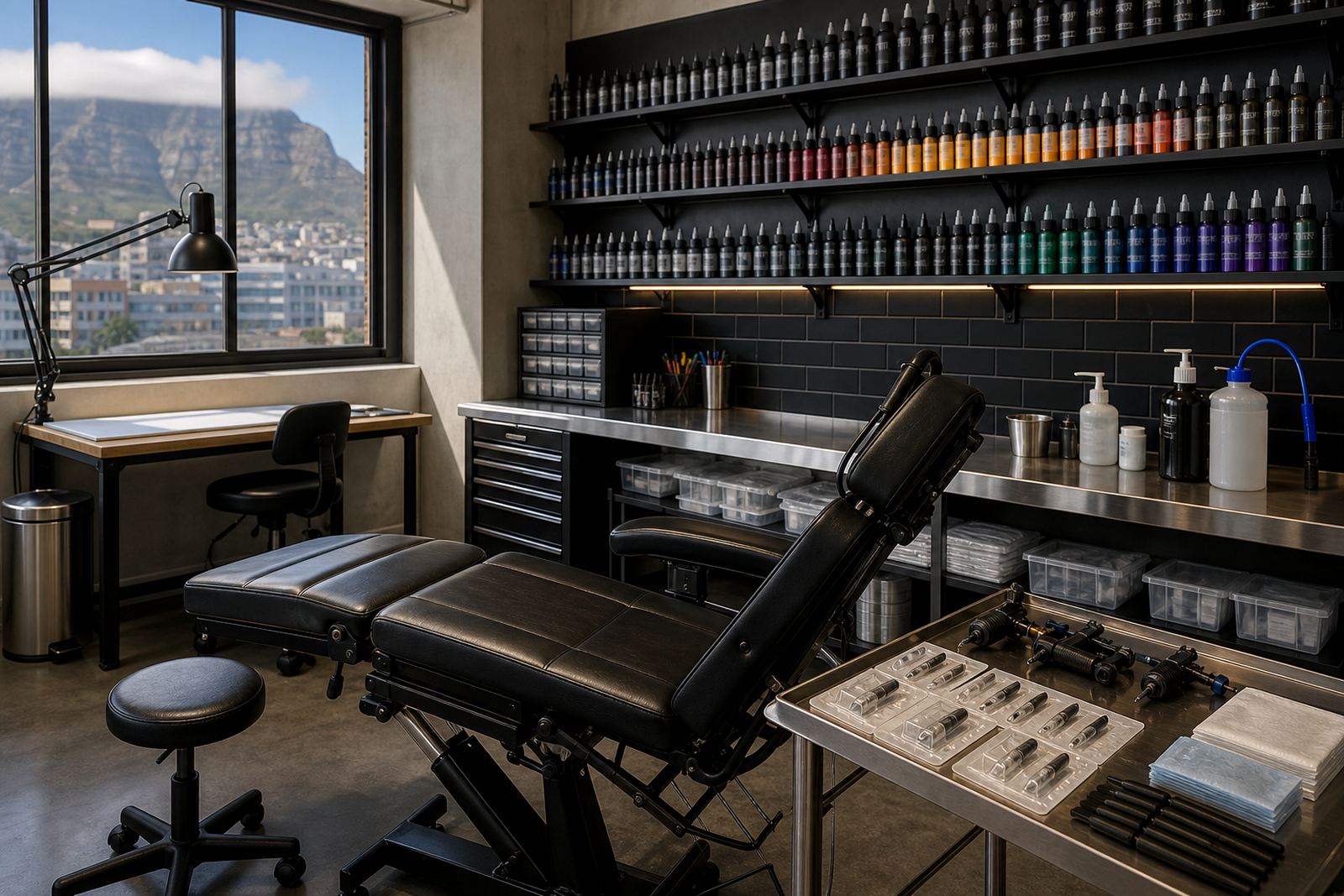
Small studios in Observatory, Woodstock and nearby parts of Cape Town often work with limited shelving, a steady walk in flow and a need to keep inks and disposables sorted by use rather than by guesswork. In these setups, the order usually starts with grouping inks by shade family, then separating needle groupings and cartridge counts so the working area stays quick to read.
Storage matters here because coastal humidity can affect cardboard, labels and the general feel of a packed supply room if things are left open. Many owners use lidded tubs, marked trays and sealed drawers for sterile single-use items, with clean stock kept apart from open boxes and used waste.
Busy multi-artist rooms with mixed chair times
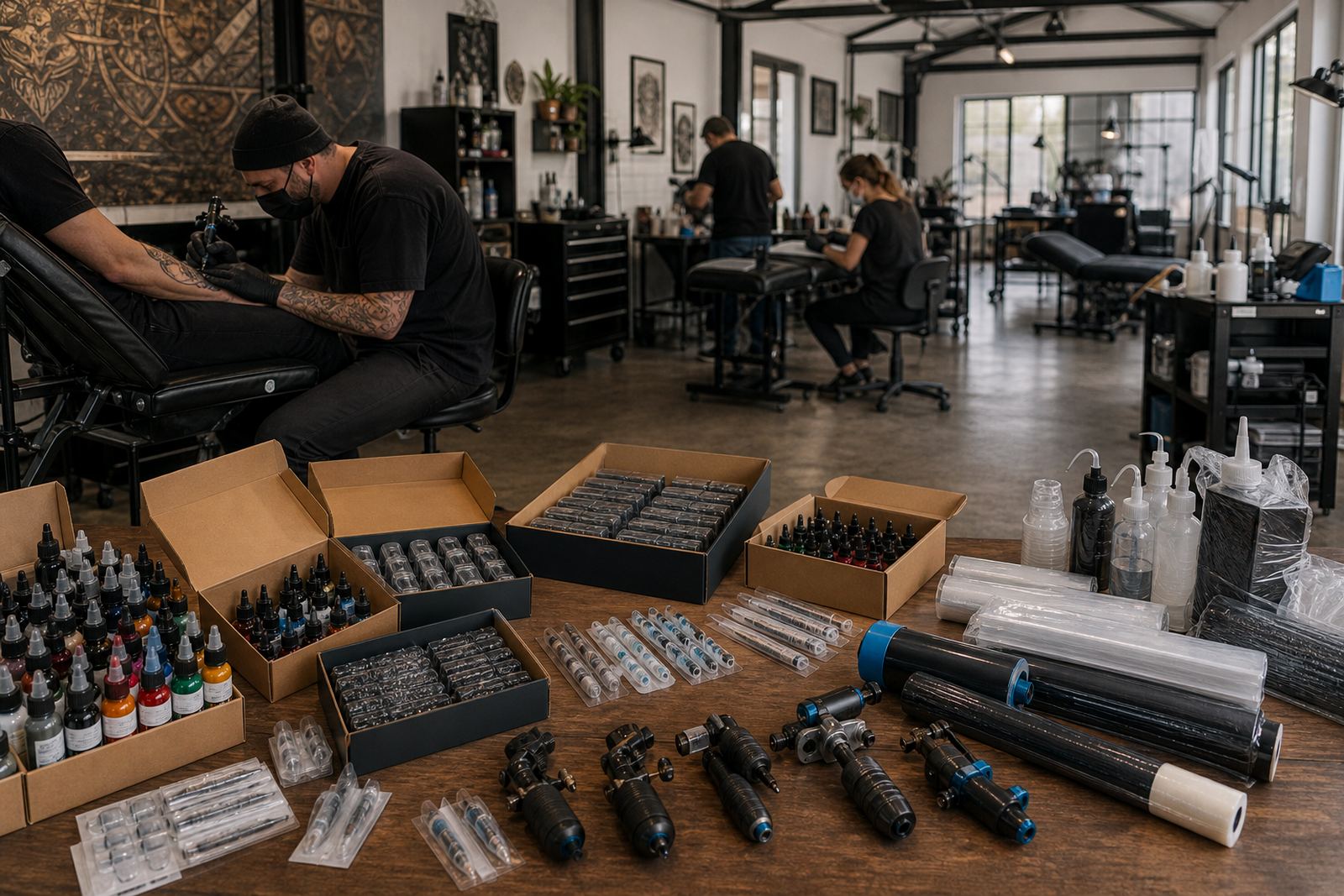
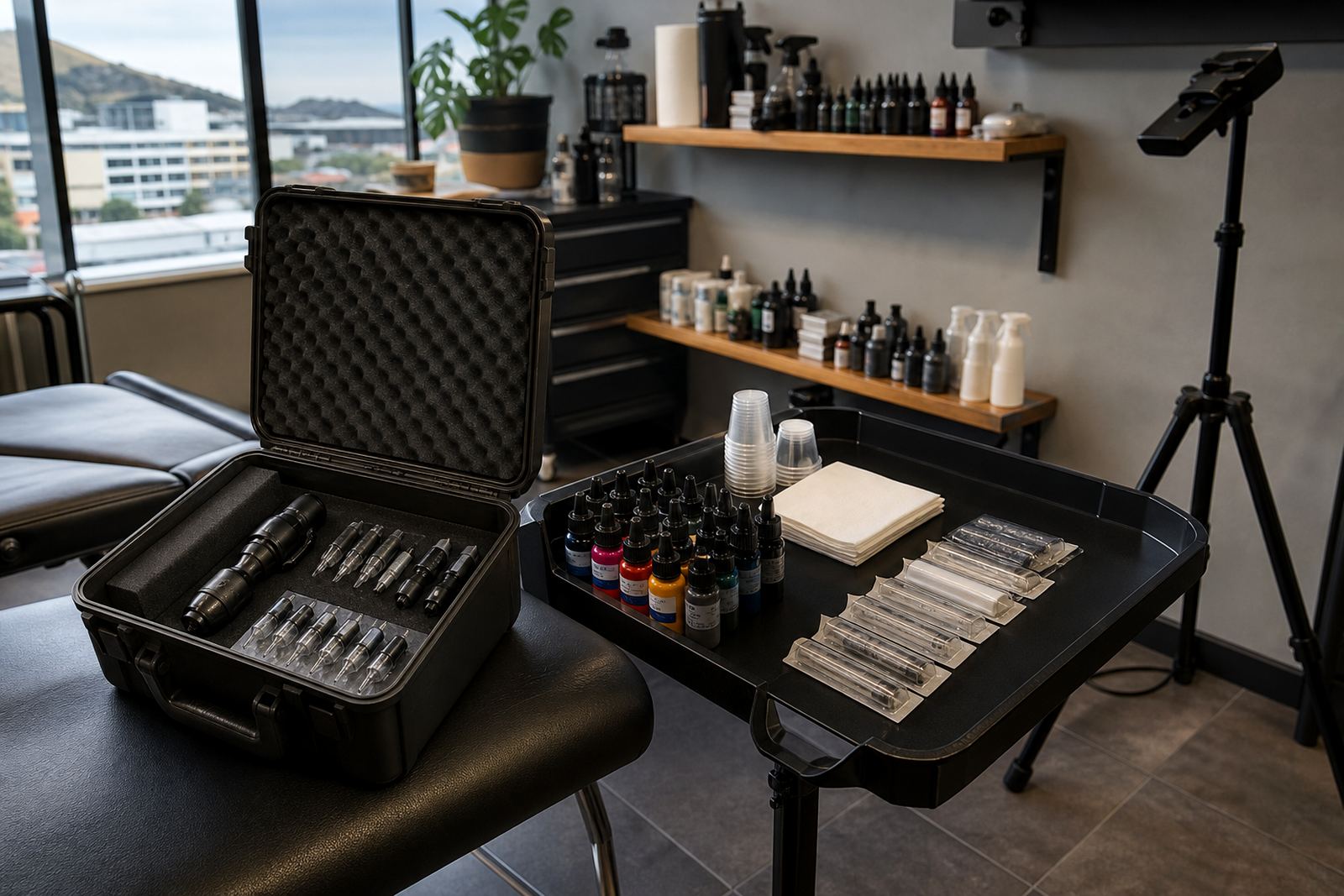
Studios in Johannesburg, Pretoria and Durban often need a wider mix of machine match support, cartridge match help and consumable reorders because different artists may run different workflows in the same week. That usually means a stock list built around the pace of appointments, the size of each station and the balance between ink bottles, grouped needles and replacement cartridges.
- Keep fast-moving colours and blackwork items easy to reach
- Separate machine consumables from studio cleaning stock
- Track cartridge sizes and needle groupings by artist preference
- Reserve a back stock area for sealed boxes and reorders
In rooms like these, station planning is less about fancy labels and more about reducing mix ups when the day gets full, especially when a team is sharing the same storage unit or counter space.
Durban coastal humidity and sealed storage habits
Durban studios often handle more moisture in the air, so storage planning becomes part of the daily routine rather than an afterthought. Ink bottles, sterile single-use supplies and boxed cartridges do best in dry cupboards, off the floor and away from windows or wash areas where condensation can build up.
Where the stock room is small, it helps to use range grouping advice so the team can keep daily-use items on the lower shelves and backup cartons higher up. This is also where product substitutions matter, because a planned reorder can shift if a preferred item is temporarily unavailable and the studio needs a close match for the same job flow.
Gqeberha and the practical side of seasonal restocks
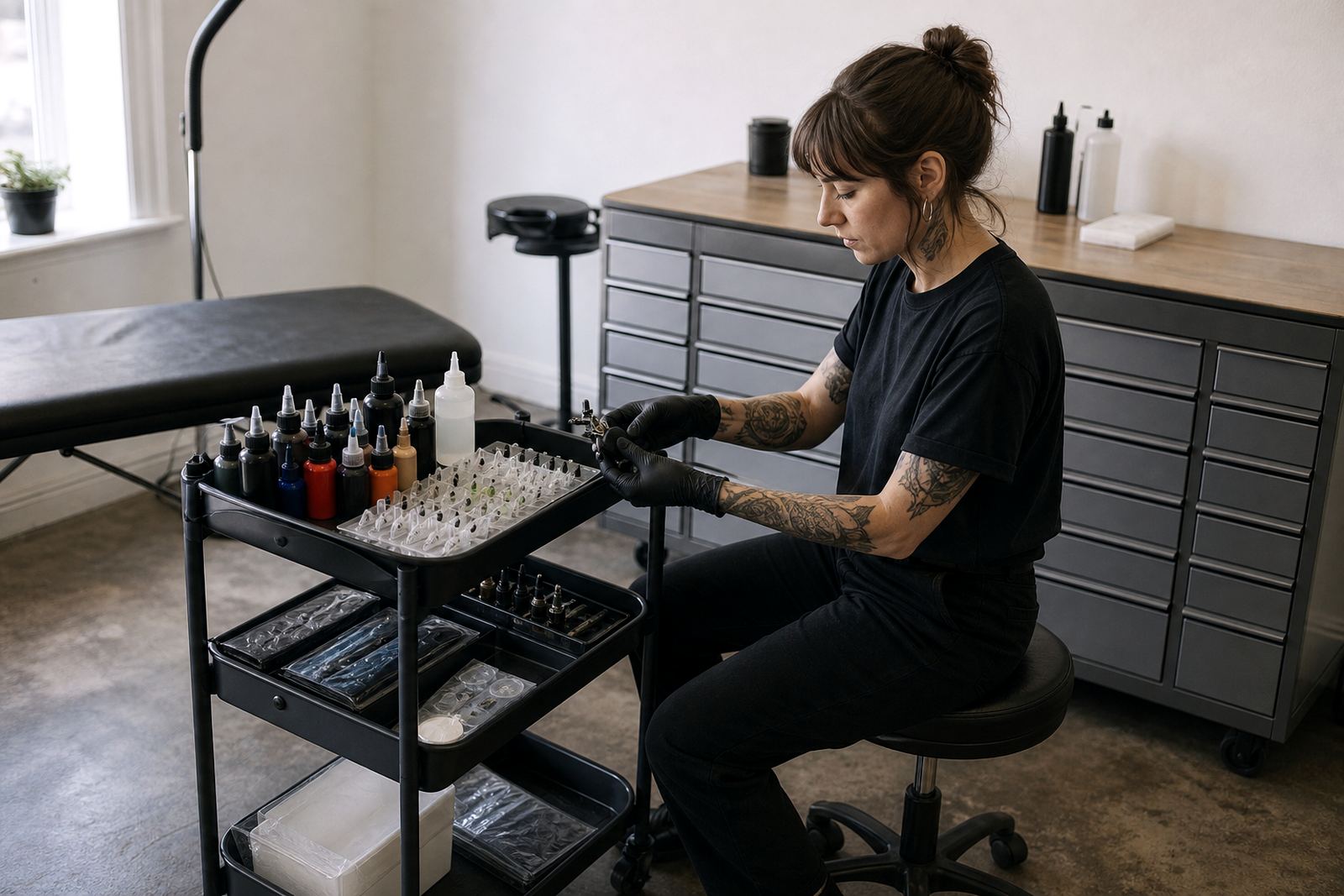
In Gqeberha, studios often plan around quieter and busier seasons by adjusting consumable reorders and keeping a clearer view of what gets used fastest. A tattoo supply list for this kind of setup usually includes inks, needle groupings, cartridges, grip items, barrier consumables and cleaning stock, all counted in a way that makes the next order easier to build.
Seasonal restock plans work best when the team notes what runs low first and what can sit longer in storage. That kind of record helps when a studio is choosing between a bulk order and a smaller refill, or when it needs new studio kits for a fresh work area.
New studio kits and the first month of ordering
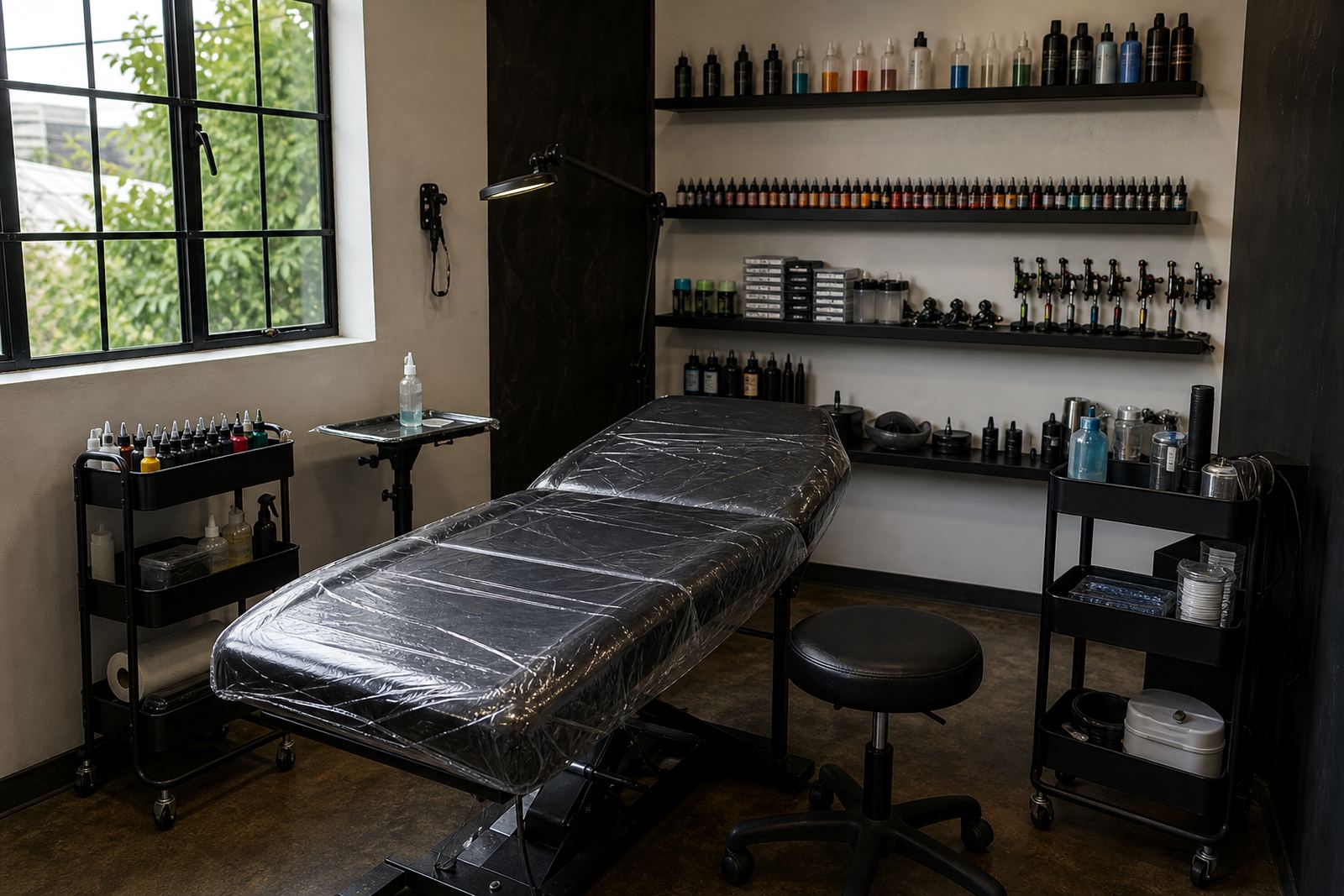
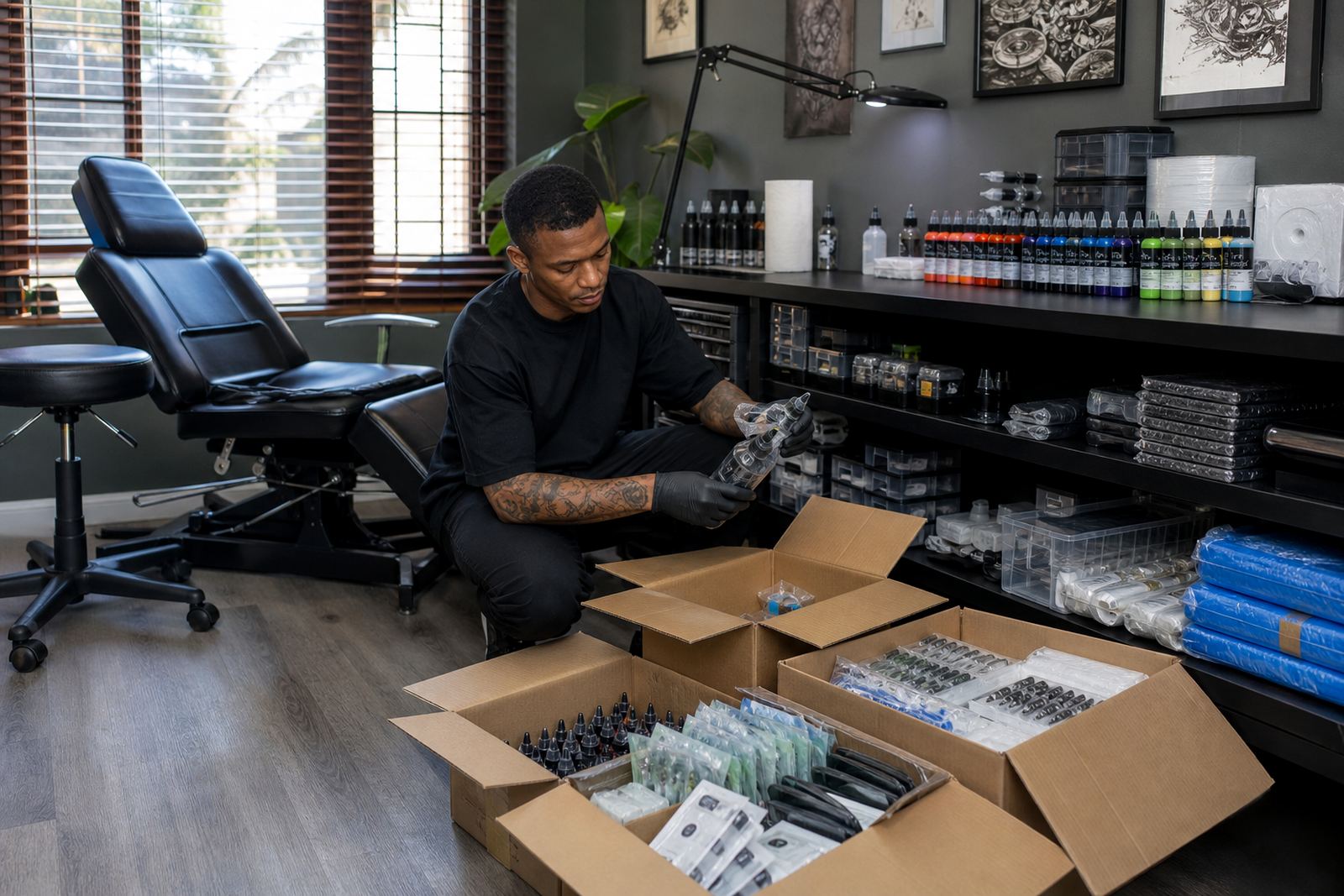
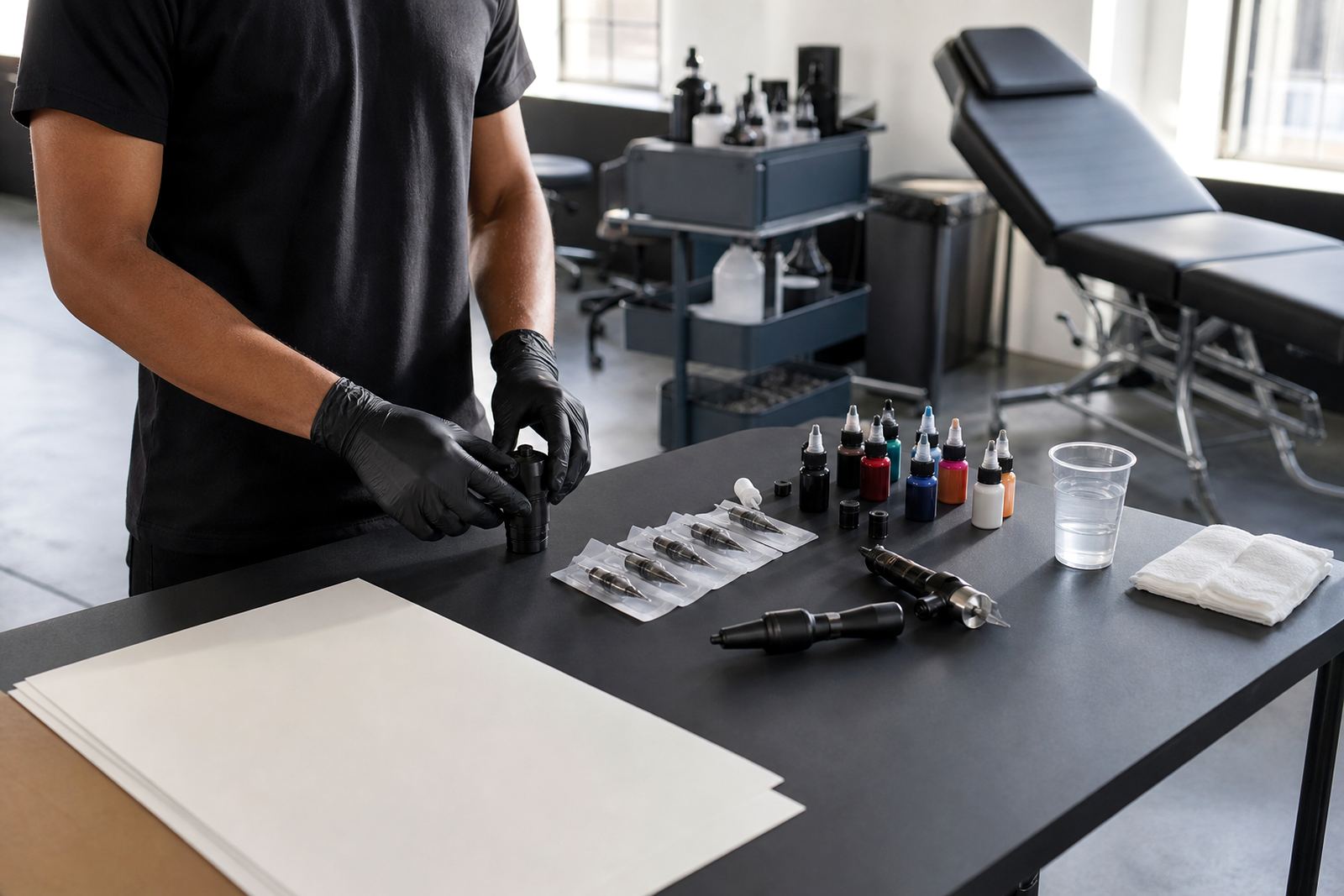
When a studio is setting up a new work room in Stellenbosch, Bellville or Somerset West, the first orders usually need more structure than a standard refill. New studio kits are often built from the same core items, but grouped so the team can unpack, store and assign stock without moving boxes around twice.
- Core inks for the day to day palette
- Needle and cartridge groupings for the machines in use
- Single-use supplies for barrier control and clean handling
- Storage containers and labels for easy sorting
That first stock cycle is also the time to decide where ordering notes will live, who checks the shelves and how dispatch updates are tracked when the next carton is on the way.
How the stories help you choose your own setup
These examples are presented as generic project stories by place and studio type only, so they can be used as a reference point rather than a fixed template. Some readers will need help with machine match choices, others want cleaner range grouping, and some only need a better way to manage consumable reorders across a few stations.
If your studio is in Cape Town, Johannesburg, Durban, Pretoria or Gqeberha, the useful question is usually not what looks broadest, but what fits your workflow and storage space best. A small shop with one artist may need a tighter list than a larger room with several chairs, and the ordering pattern should reflect that.
All studio supply decisions should follow local health regulations and the hygiene rules that apply to your setting. That keeps the order list practical, the storage clearer and the working area easier to manage for the whole team.