
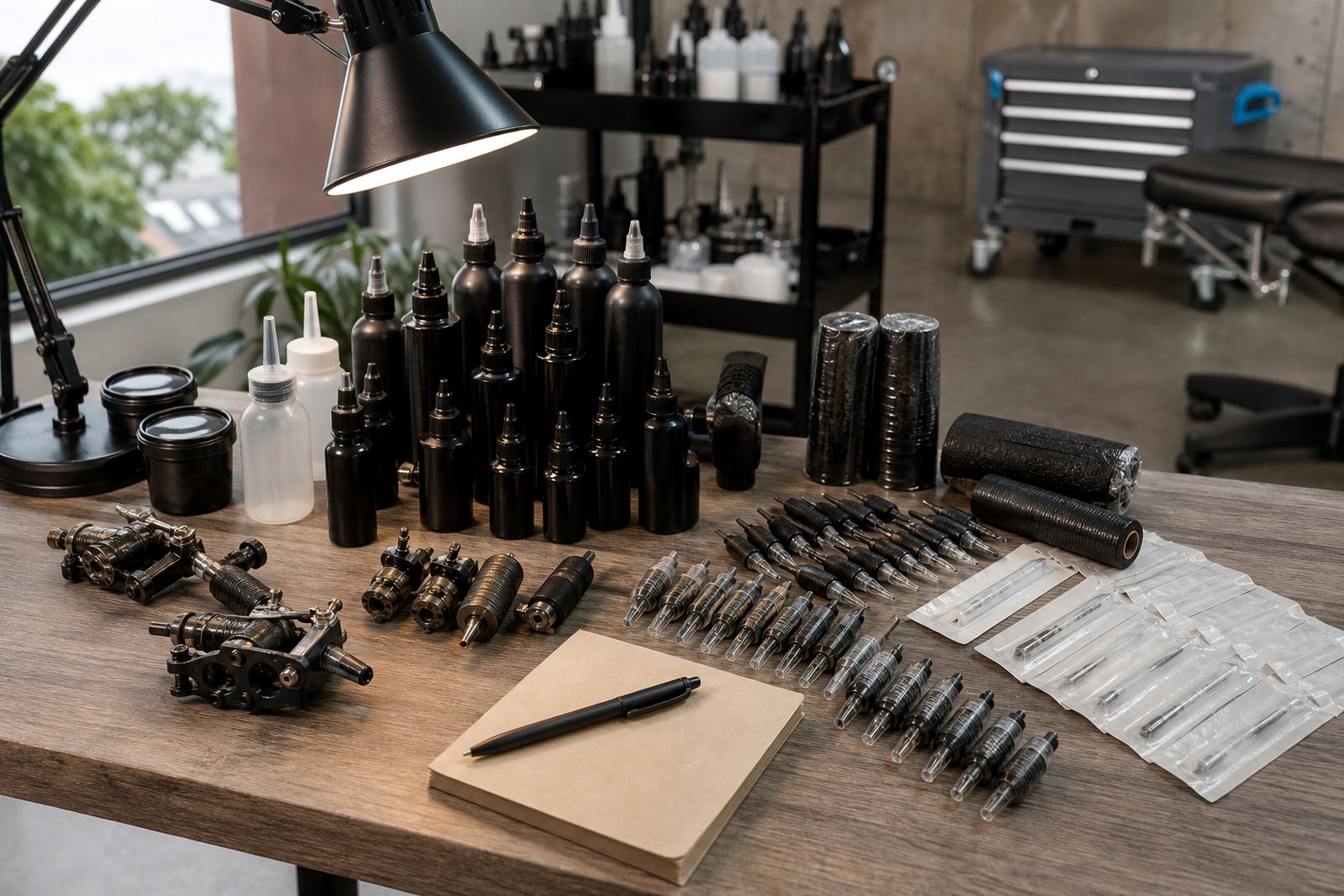
What studios mean by black ink groupings
In studio talk, black ink is usually grouped by use rather than by one single label. A lining black is often chosen for crisp linework, while a general-use black may suit shading, filling, and softer passes. Some artists keep a darker, heavier option for bold work and a lighter black for smoother gradients.
That approach helps when a studio is ordering stock for different artists and machine styles. A single shelf of black ink can still cover very different jobs if the bottles are grouped clearly and used consistently. In Observatory and other busy Cape Town workspaces, that kind of order saves time when the day gets full and the station needs to stay tidy.
Lining black versus general-use black
Lining black is usually selected for steady flow and strong, clean marks. General-use black is more flexible and can be used across lining, shading, and pack-in work depending on the artist’s method. Some studios keep both on hand because one behaves better in tight lines while the other feels more forgiving in wider passes.
The difference is often about body, flow, and how the ink sits in the setup. A lining black may feel thinner through the tip, while a general-use black can feel a little fuller. Artists in a high-volume Cape Town studio may prefer to separate them on the trolley so the right bottle is reached for without slowing the workflow.
- Lining black: used for precise outlines and controlled passes
- General-use black: used for shading, fill work, and mixed technique
- Heavier black: chosen when a stronger visual density is wanted
- Workhorse black: kept for day-to-day jobs across several stations
Needle and cartridge groupings that pair well with black
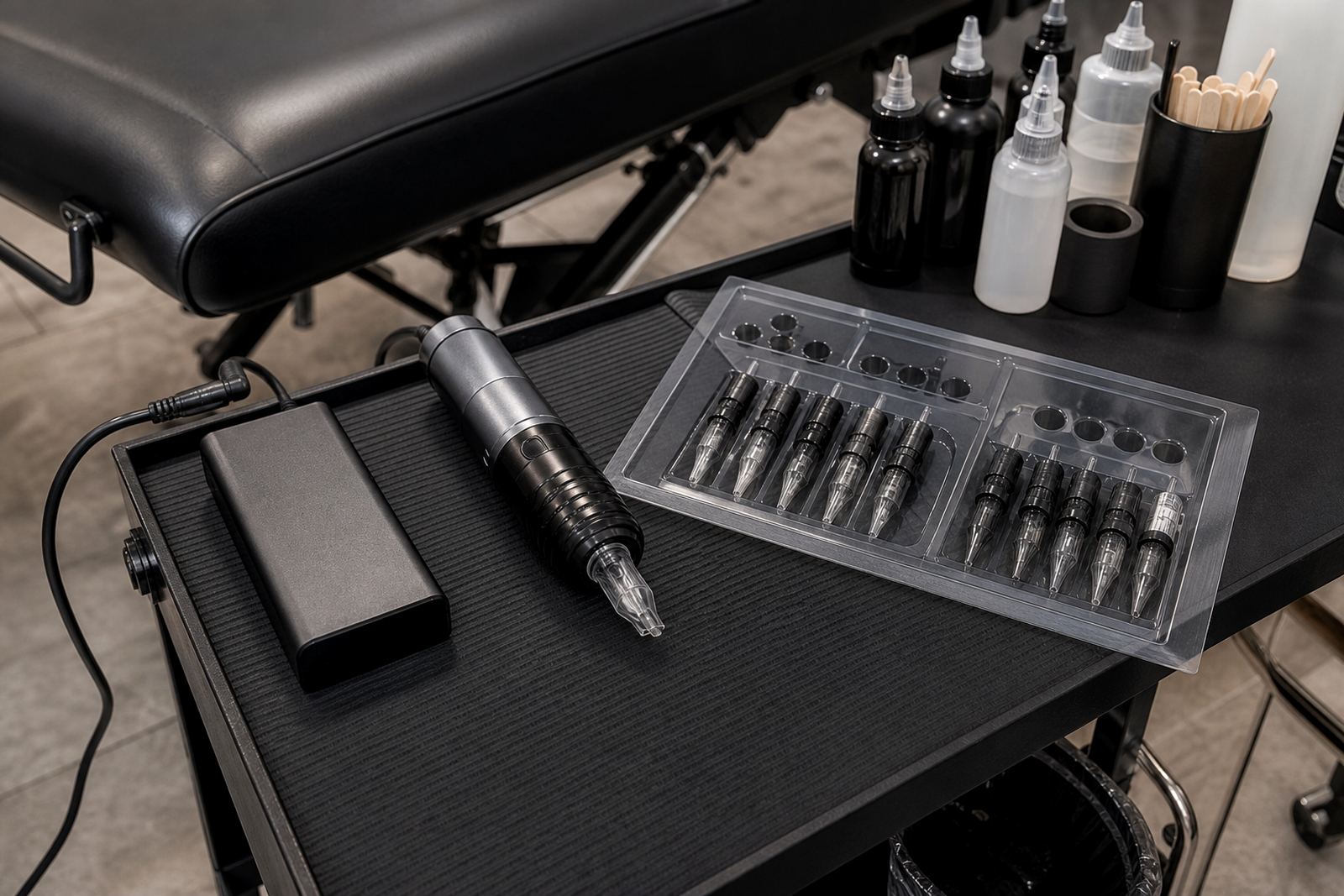
Black ink choices often sit alongside needle and cartridge groupings. Tight liners, round shaders, magnums, and curved magnums each move ink in a different way, so the same black may feel better in one setup than another. A studio that stocks matching groupings can keep the machine feel more predictable for each artist.
For example, a small round liner can make a thinner black feel more controlled, while a wider magnum may suit a slightly fuller ink for smoother coverage. That does not mean every artist works the same way, but it does help when stock is split into practical groups rather than one mixed pile. It also makes it easier to plan consumable reorders for a team using several machine styles.
- Round liners for narrow lines and fine details
- Round shaders for soft edge work and controlled fill
- Magnums for broader shading and larger black areas
- Cartridge groupings for artists who prefer quicker station changes
Bottle habits that keep black ink useful
Black ink lasts better in a studio when it is stored neatly, capped properly, and checked before use. Heat, dust, and repeated opening can all affect how a bottle behaves over time. In Cape Town, where coastal humidity can hang in the air, bottles and caps benefit from being kept in a dry cupboard or a clean station tray rather than left open near the work area.
Simple storage habits make a difference. Keep bottles upright, label them clearly, and separate fresh stock from opened stock. If a studio in Stellenbosch or Somerset West has several artists sharing the same supply shelf, it helps to group black inks by use and date so the right bottle is reached for first.
- Store upright and away from direct sun
- Keep caps and collars clean between sessions
- Group by use: lining, general-use, shading, fill work
- Separate new stock from opened bottles
How black ink fits into studio hygiene routines
Black ink is only one part of a clean station, but it needs to sit inside a proper hygiene routine. Single-use items, clean barriers, covered work surfaces, and careful handling of consumables all help the station stay organised. Studios should follow local health regulations and the rules that apply to tattoo work in their area.
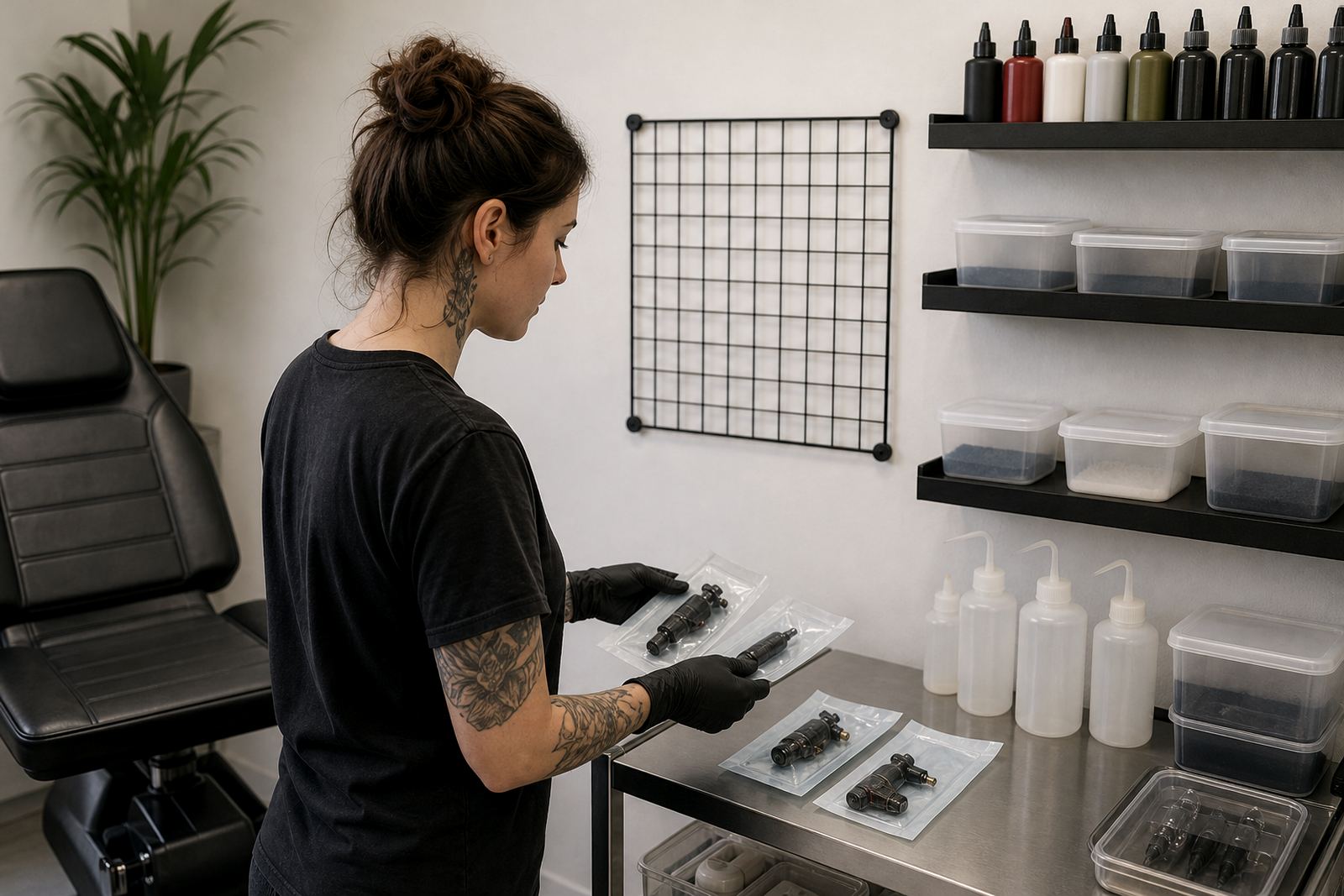
Many studios split black ink use into small working portions so bottles are not handled more than needed during a session. That keeps the station orderly and makes it easier to track what was used. In larger setups across Johannesburg, Pretoria, and Gqeberha, this is often paired with separate trays for cartridges, needles, wipes, and disposal items so each station has a clear rhythm.
Ordering black ink for a working South African studio
When a studio orders black ink, it helps to think in terms of daily use rather than just shelf count. A busy shop may need a stronger lining black, a general-use option, and one or two backup shades for different artists and styles. That is especially useful when stock has to move between Cape Town Delivery, Durban Delivery, and Johannesburg Delivery without confusion.
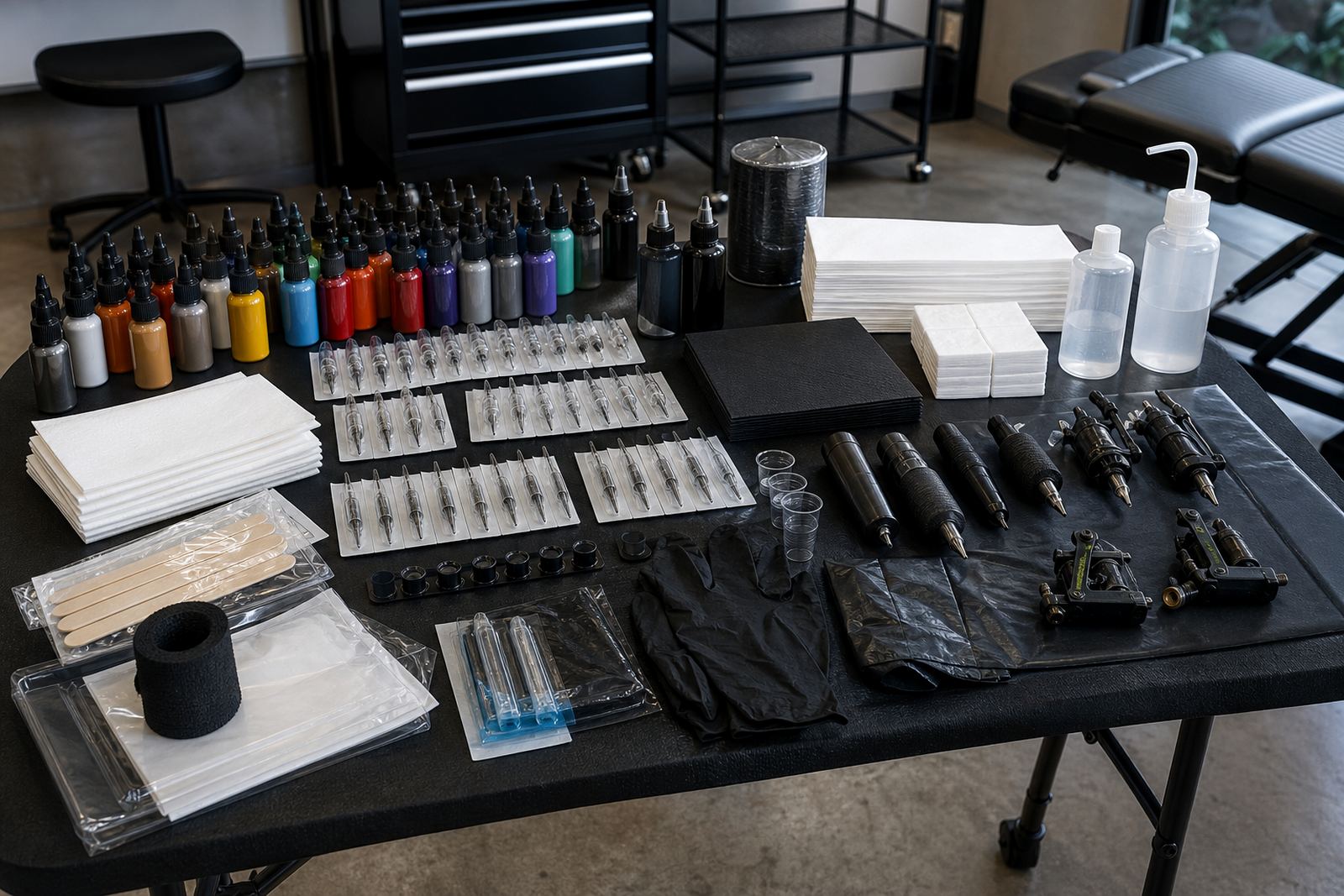
It also helps to plan for station changes, seasonal demand, and the mix of appointments on the books. A studio doing more fine line work will use black differently from one that leans into larger fill pieces. If the team is training new artists or setting up a new station, stock planning should include needles, cartridges, sterile single-use supplies, and storage items at the same time so the order makes sense from the start.
- Count black ink by artist use, not only by bottle type
- Match stock to the most common needle and cartridge setups
- Keep spare bottles for weeks with heavier bookings
- Include consumables and storage items in the same reorder