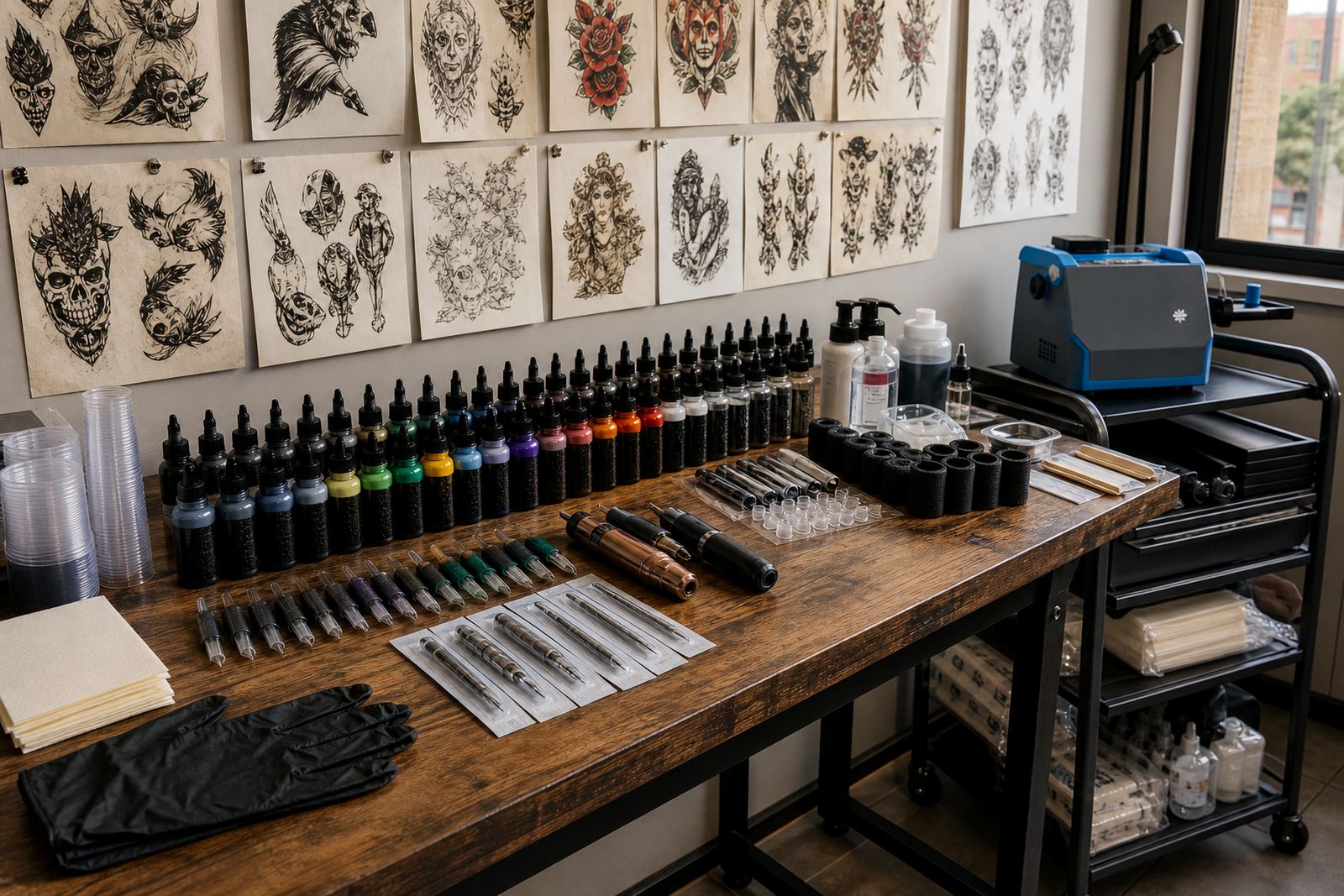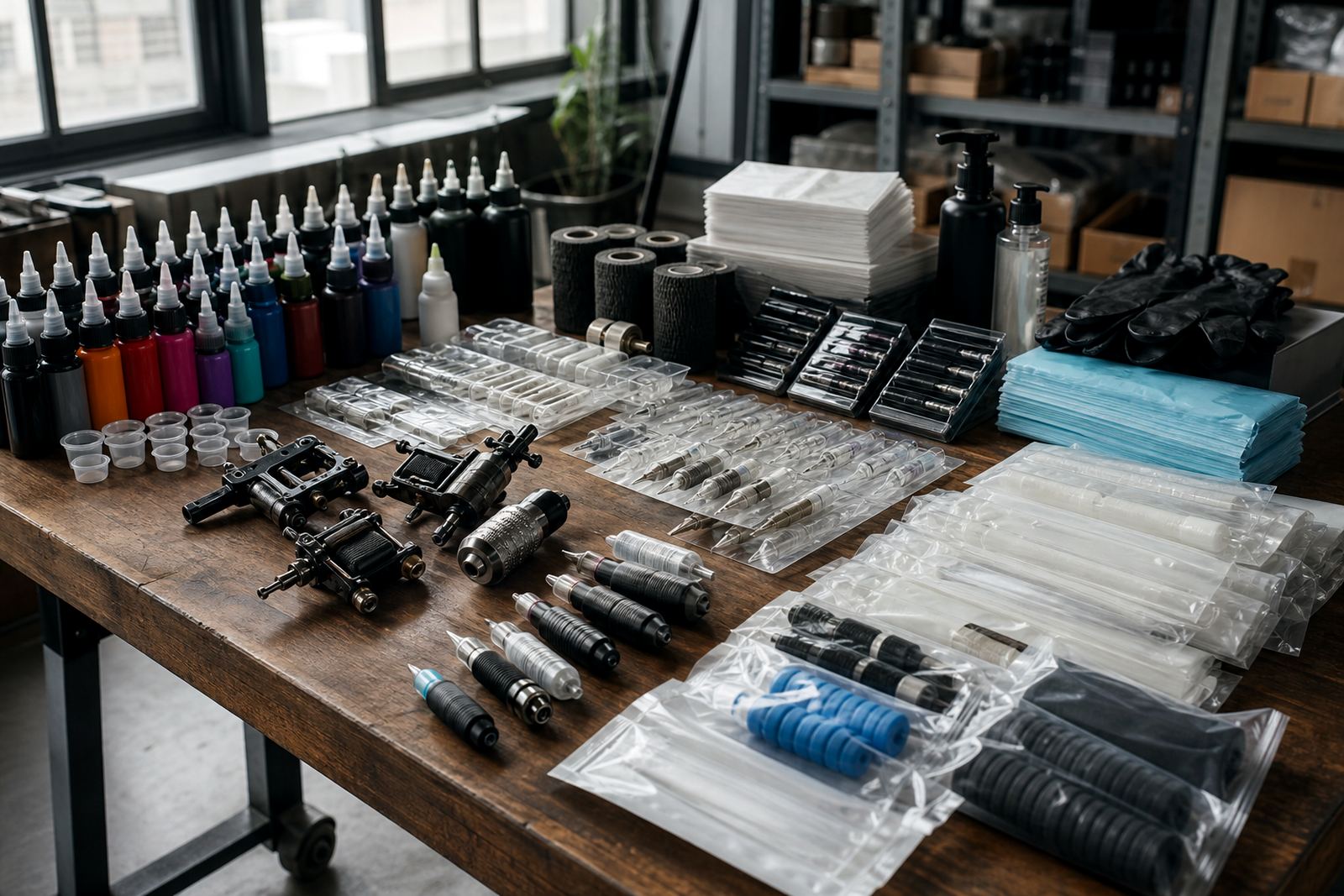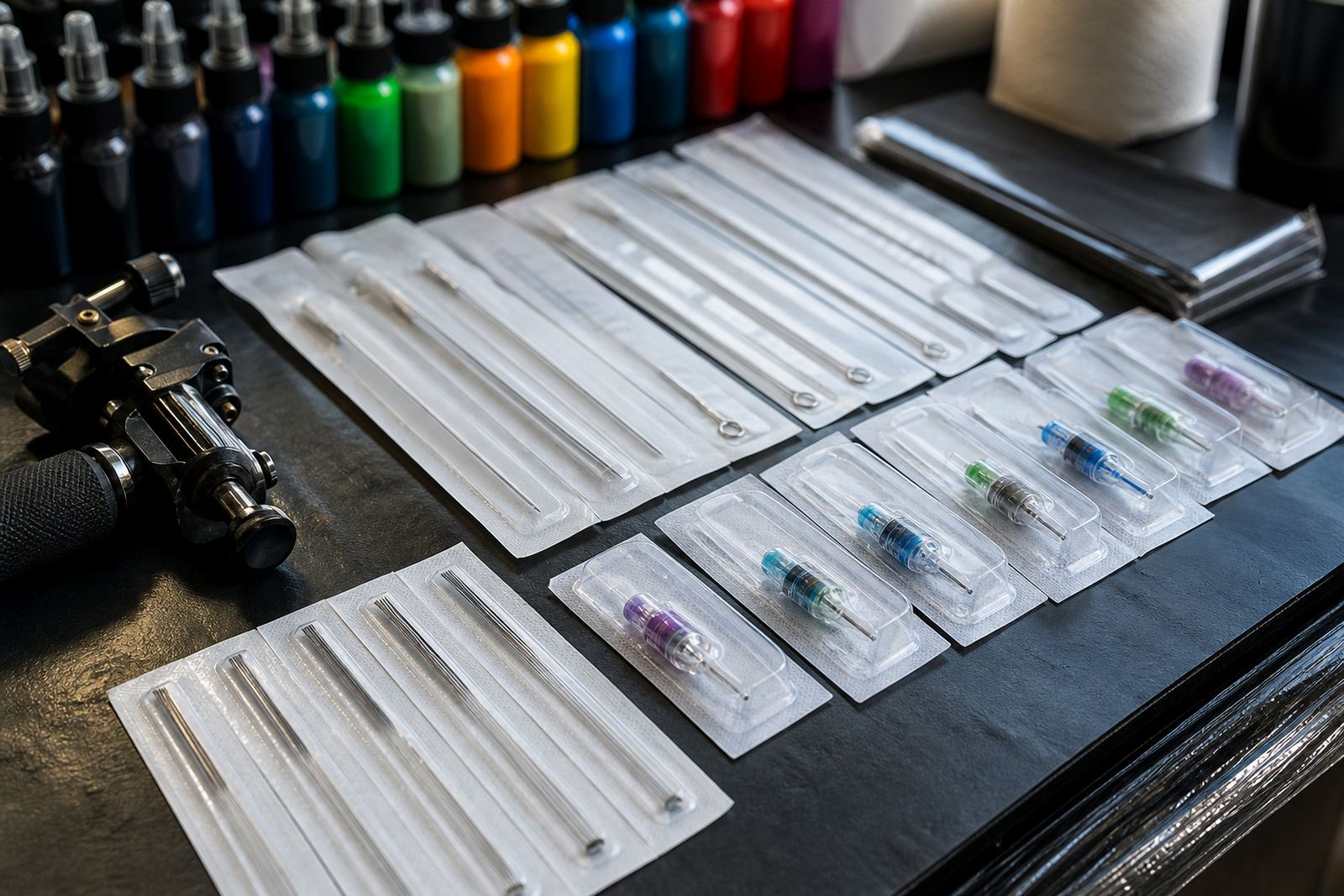

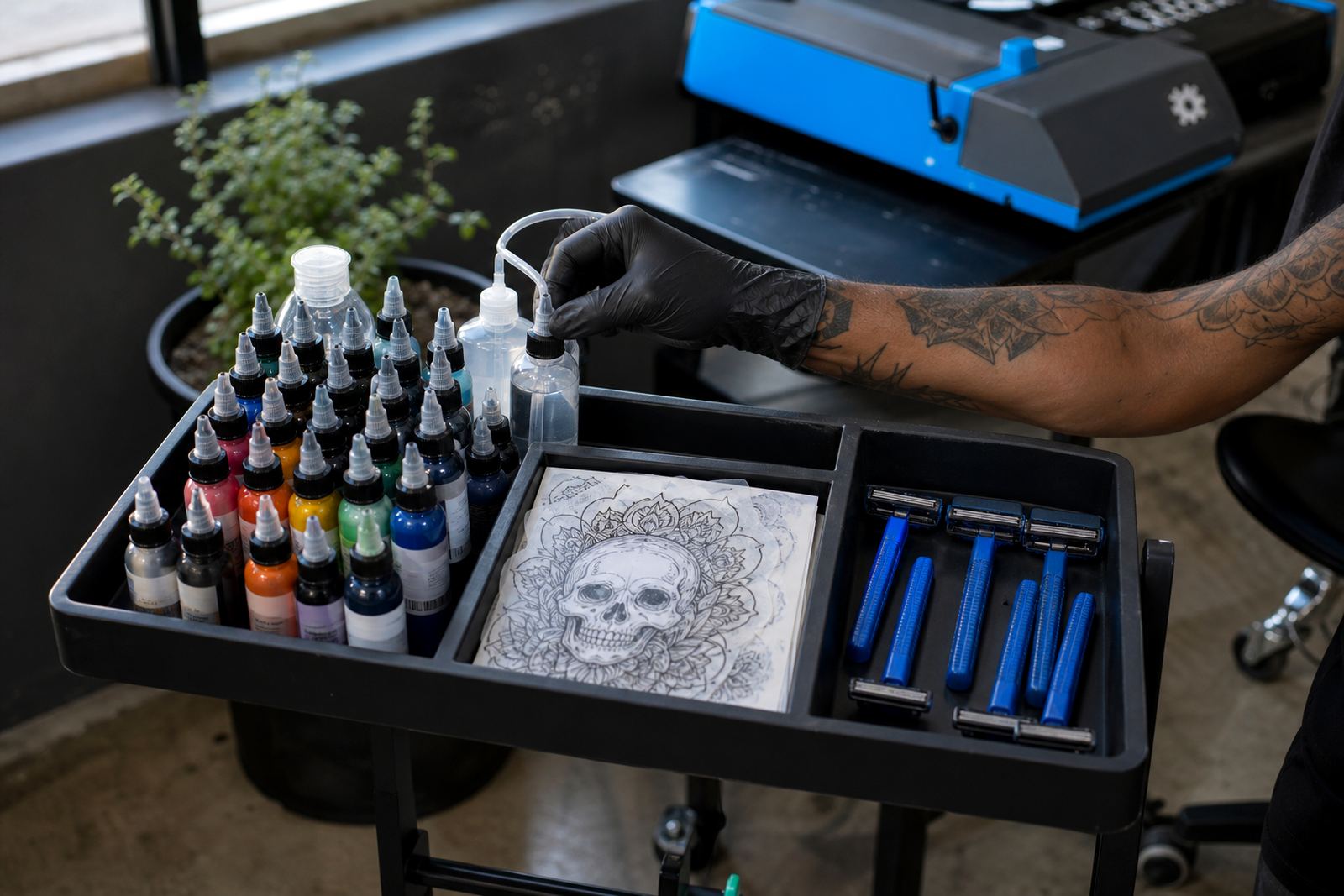
Keep transfer prep near the stencil flow
Transfer prep stocks are the small items that sit between the design stage and the chair. Carbon paper, stencil application items, marking tools, wipes, barrier film and single-use consumables all need a fixed place so the artist can move from drawing to transfer without hunting through drawers.
A good layout keeps the transfer step close to the design area, with enough space for clean handling and labelled storage. In a studio in Observatory or Bellville, that can mean one tray or shelf section reserved for prep stock only, while the main work surface stays clear for the session itself.
Group by task, not by box size
Mixed storage often leads to slow set-up and wasted stock. Grouping by task makes more sense. Keep stencil papers with skin-safe prep wipes, keep razor and skin-prep items in the same supply zone, and keep gloves, clip cord covers and barrier items close to the station pack. That way the artist sees what is needed for the next step, not just what fits in the box.
- Stencil and transfer papers
- Application and prep wipes
- Barrier film, covers and wraps
- Gloves, masks and other single-use items
- Tray covers, clip cord protection and tape
For a Cape Town studio dealing with humid coastal air, sealed tubs and lidded organisers also help keep paper and adhesive items in better condition. In drier inland areas such as Pretoria, the same grouping still helps with dust control and fast stock checks.
Match consumables with the way your station runs
Transfer prep stock should fit the way each station is used. If one artist prefers larger stencil sheets and another works with smaller layouts, keep the sizes separated and clearly marked. If a studio uses cartridges and disposable grips on a steady rotation, the prep shelf should hold the matching single-use items beside the transfer materials, not across the room.
This matters in shared studios and busy walk-through spaces where one person is prepping while another is clearing down. Separate groupings reduce mix-ups and make station planning easier when consumables are reordered.
- Keep larger stencil sheets in flat storage
- Store smaller format papers in a labelled sleeve or tray
- Place prep wipes and transfer gel beside the stencil pack
- Keep spare gloves and covers in the same supply section
Machine work still depends on clean preparation
Even when the focus is on machines, needles or cartridges, the transfer stage sets the tone for the session. A clean stencil application area helps the artist place the design accurately before the machine work begins. That means the station should carry the right prep stock, not just the tools used during tattooing.
Studio teams in Johannesburg or Durban often work with a full day of appointments and different skin tones, design sizes and placement areas. Clear prep grouping keeps the handover between consultation, stencil placement and machine set-up steady, without extra searching for basics that should already be close at hand.
- Single-use barriers ready for each station
- Stencil support items kept in one tray
- Wipes and cleaning cloths for surface reset
- Disposable items separated from reusable tools
Storage that handles Cape Town weather and coastal air
Storage matters more than many studios expect. Coastal moisture can affect paper stock, labels and adhesive items if they are left open or stacked badly. A sealed cabinet, plastic tubs with lids and clear labels help keep transfer prep supplies usable and easy to count. That is practical in Observatory, Somerset West and Stellenbosch, where sea air and temperature changes can make an untidy stock room harder to manage.
Good storage also supports hygiene. Separate clean stock from used items, keep the transfer prep area dry, and rotate older stock to the front. Where municipal health rules apply, the studio should follow them closely and keep the storage layout consistent with those rules.
Seasonal restock planning saves the last-minute scramble
Transfer prep items often run low at the same time as gloves, barriers and other consumables. A seasonal restock plan helps the studio see what moves together and what needs topping up before the busy period starts. Winter rushes, year-end appointments and event season can all push prep use higher than expected.
For delivery to studios in Cape Town, Johannesburg, Durban, Pretoria and Gqeberha, it helps to keep the prep category separate from general office stock. That way the order is easier to check, the packing is simpler and the items arrive grouped for station use instead of being split across different shelves.
- Review prep stock before busy booking periods
- Keep backup sheets and adhesives in sealed storage
- Separate studio-use stock from training stock
- Record which items run out first at each station
Local studio example: one shelf, three clear zones
A small studio in Observatory may only have a narrow prep counter, but that does not mean the stock has to be mixed together. One shelf can be divided into three clear zones: design and stencil materials on the left, transfer prep consumables in the middle, and clean station items on the right. With labels on each tray, the team can see at a glance what needs replacing before the next client sits down.
That kind of set-up works for solo artists and larger teams alike. It keeps the transfer flow practical, supports stock control and makes it easier for the Operations Manager or warehouse team to restock the right groupings without confusion.