
Flat storage keeps transfer sheets readable
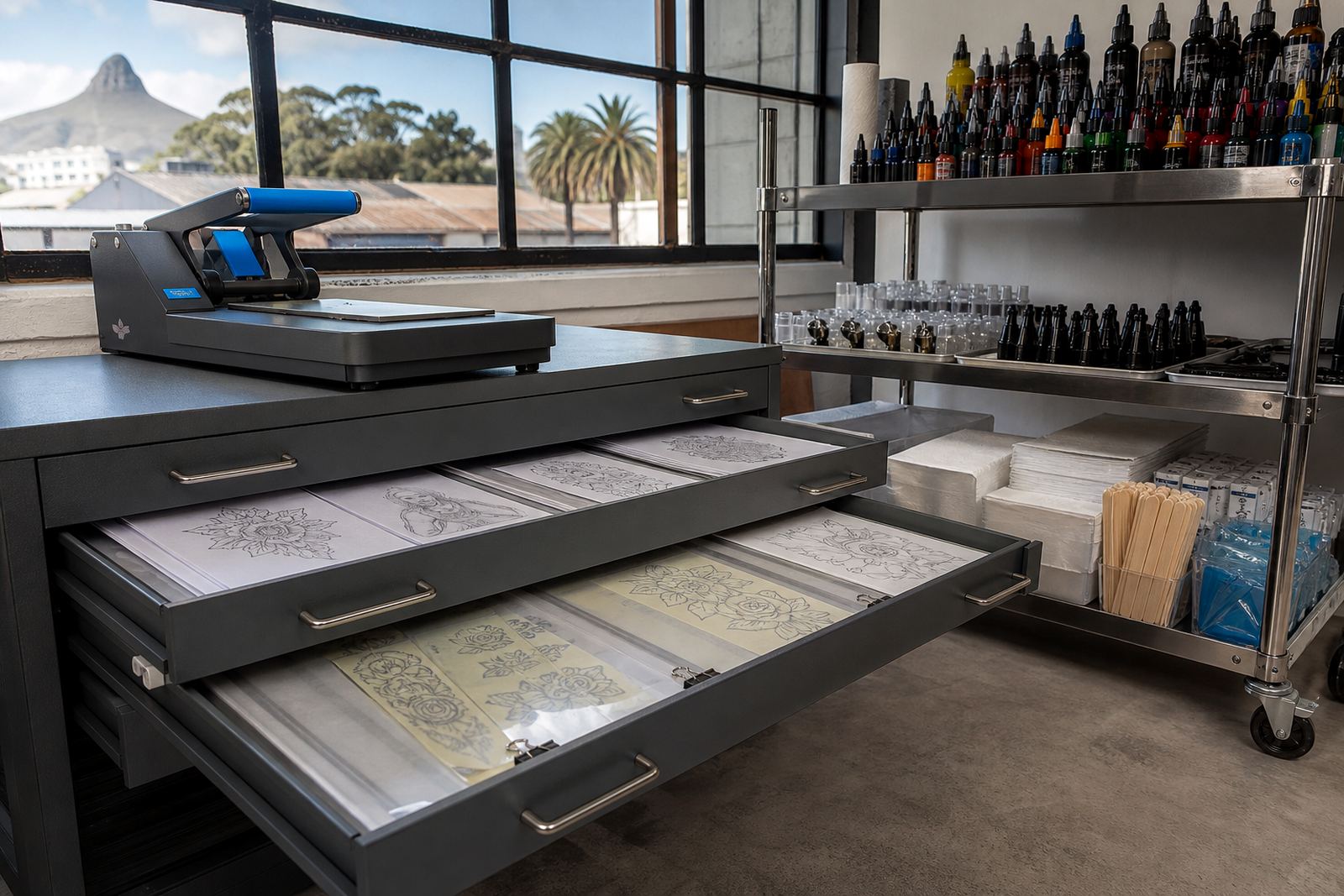
The easiest way to store stencil paper is flat, in the same orientation every time. Sheets that curl, bend or catch dust can make setup slower and the transfer process more awkward. A shallow drawer, lidded tray or rigid file box works better than stacking loose packs on a crowded shelf.
Keep the paper away from direct sunlight and from humid corners near sinks or doors. In coastal places like Observatory or Gqeberha, moisture can creep into storage areas fast, so a closed container matters more than people think. If a pack gets warped, set it aside before it reaches the station, it will only cause frustration later.
Separate unopened packs from working stock
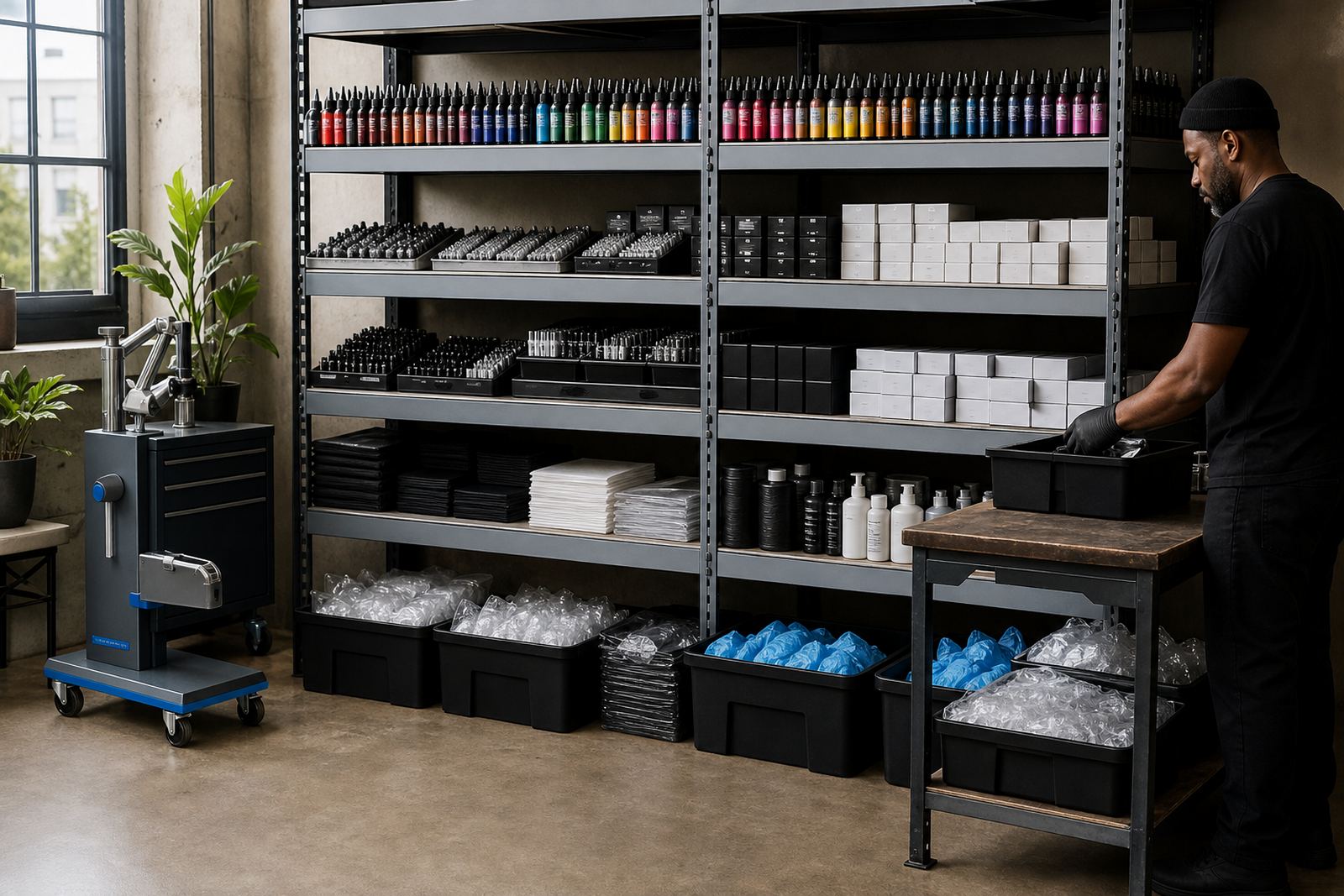
Stencil paper is easier to manage when new stock and open stock are kept apart. One area can hold sealed packs, while the current working pack stays near the prep bench. That small split helps the team see what is in use and what still needs to stay untouched.
- Label packs by paper type or size if your studio uses more than one format.
- Keep open packs in a lidded box so dust does not settle on the top sheets.
- Place a flat weight or divider on the stack if the cover tends to lift.
- Store extras off the floor, especially in rooms that get cleaned daily.
In a busy Pretoria studio, this system can stop people from grabbing the wrong pack during peak hours. It also helps with stock counts, because you can see at a glance what needs reordering.
Humidity, heat and storage corners in Cape Town studios
Paper products do not enjoy heat, damp air or storage spots that swing from cool to warm. A back room with poor airflow can leave stencil paper slightly waved at the edges, and that makes clean handling harder. Try to store it in a stable room, not beside a window, a kettle or a wet cleaning station.
For studios near the sea, especially around Cape Town and Durban, a sealed container is a sensible habit. It keeps out moisture and also protects sheets from splashes during cleaning. If the storage area sits close to a roller door or an outer wall, check it now and then for damp patches. Small changes in the room can affect paper more than people expect.
Keeping stencil paper close to prep stations
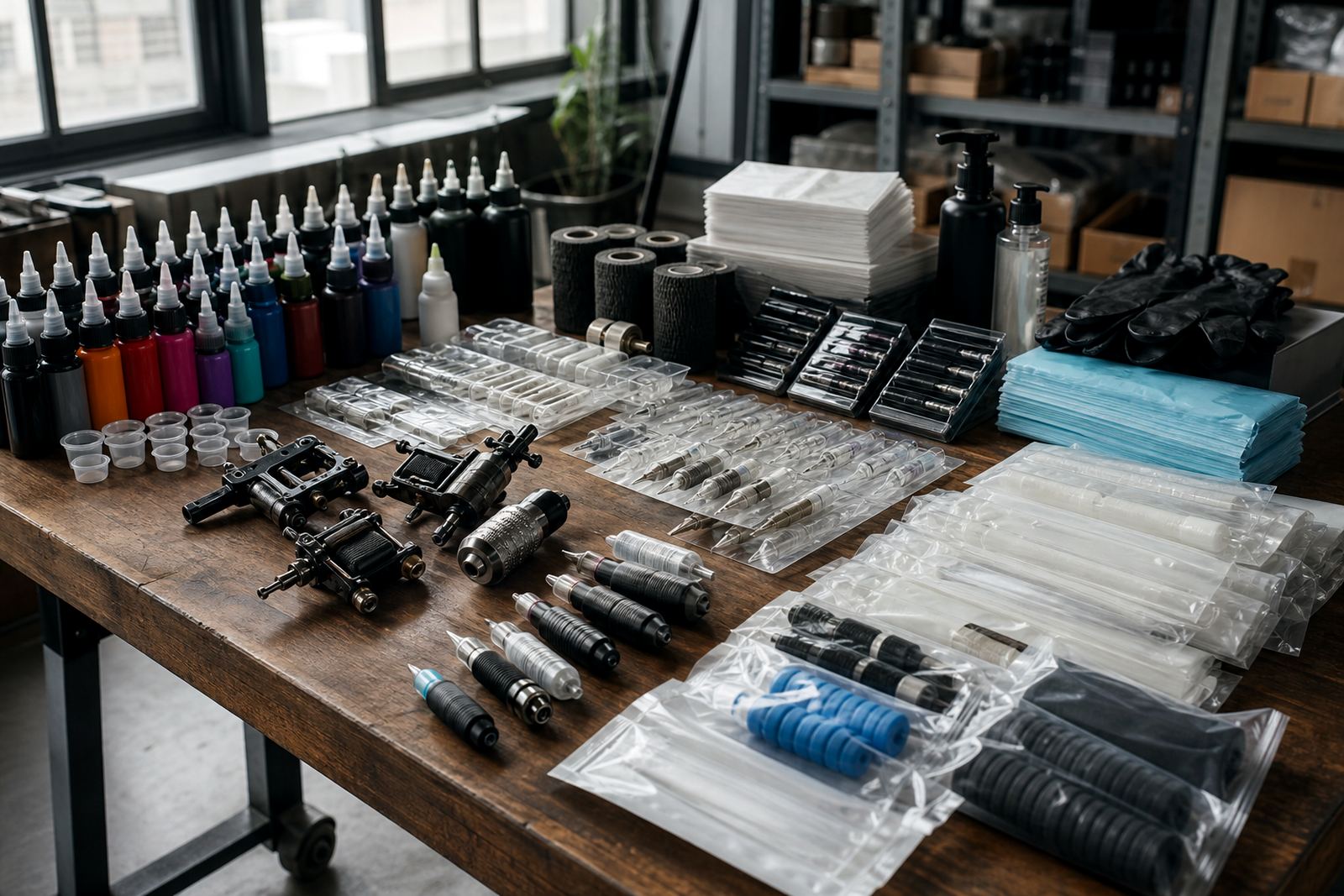
Good storage is not only about protection, it is also about access. If stencil paper is too far from the prep area, people waste steps and tend to leave packs open. A narrow shelf, drawer insert or trolley can keep the paper near the station without crowding sterile single-use supplies.
- Use one dedicated shelf for stencil paper only.
- Keep it away from clipper spray, cleaning fluids and ink bottles.
- Store the most-used size at hand height for quicker setup.
- Leave space for seasonal restock so packs do not get crushed.
That setup works well in smaller studios too, where every square metre has to earn its place. In Stellenbosch or Bellville, where many rooms are compact, a simple labelled drawer can be better than a large open shelf that collects dust.
Storage habits that support cleaner station flow
Stencil paper storage is part of overall studio hygiene, even though it seems minor. If sheets are mixed with loose blades, caps or used packaging, the station gets messy faster and the prep area becomes harder to control. A neat storage routine helps the whole room stay easier to manage.
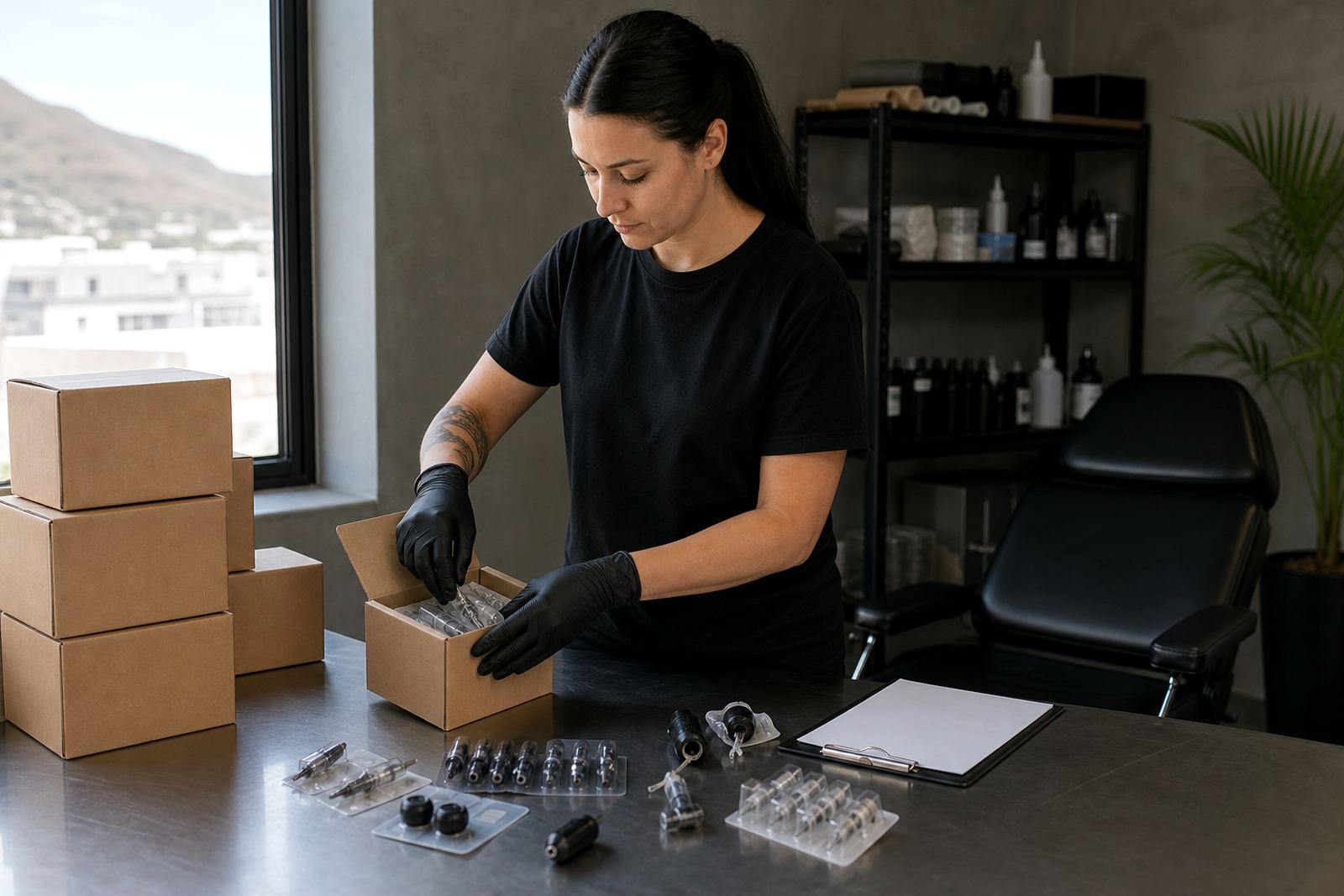
It also makes consumable reorders simpler. When the team knows exactly where stencil paper sits, what pack is open and what the usual usage looks like, restocking becomes more orderly. That matters in larger delivery areas like Johannesburg or Durban, where studios may receive mixed supplies on different days and need a steady internal system to match.
A practical setup for one busy Observatory studio
Picture a compact Observatory studio with three artists working different schedules. One lidded file box holds sealed stencil paper packs, a second shallow tray keeps the open pack for the week, and a small shelf above the prep counter stores spare sheets flat. Cleaning cloths and gloves stay in a separate cupboard, so the paper area does not get crowded.
That setup is plain, but it works. The team can reach what they need without hunting through boxes, and the paper stays cleaner for longer. If a store room is a bit humid after winter rain, the sealed box gives an extra layer of protection. It is a small habit, but in practice it keeps the whole workflow calmer.