
What changes when the cable is taken out of the station
A wireless setup looks cleaner at first glance, but the real shift is in how the station works minute by minute. The machine no longer needs a fixed lead path, so your tray can be arranged around ink cups, cartridges, wipes, barrier film and sterile single-use items without a cable crossing the working area.
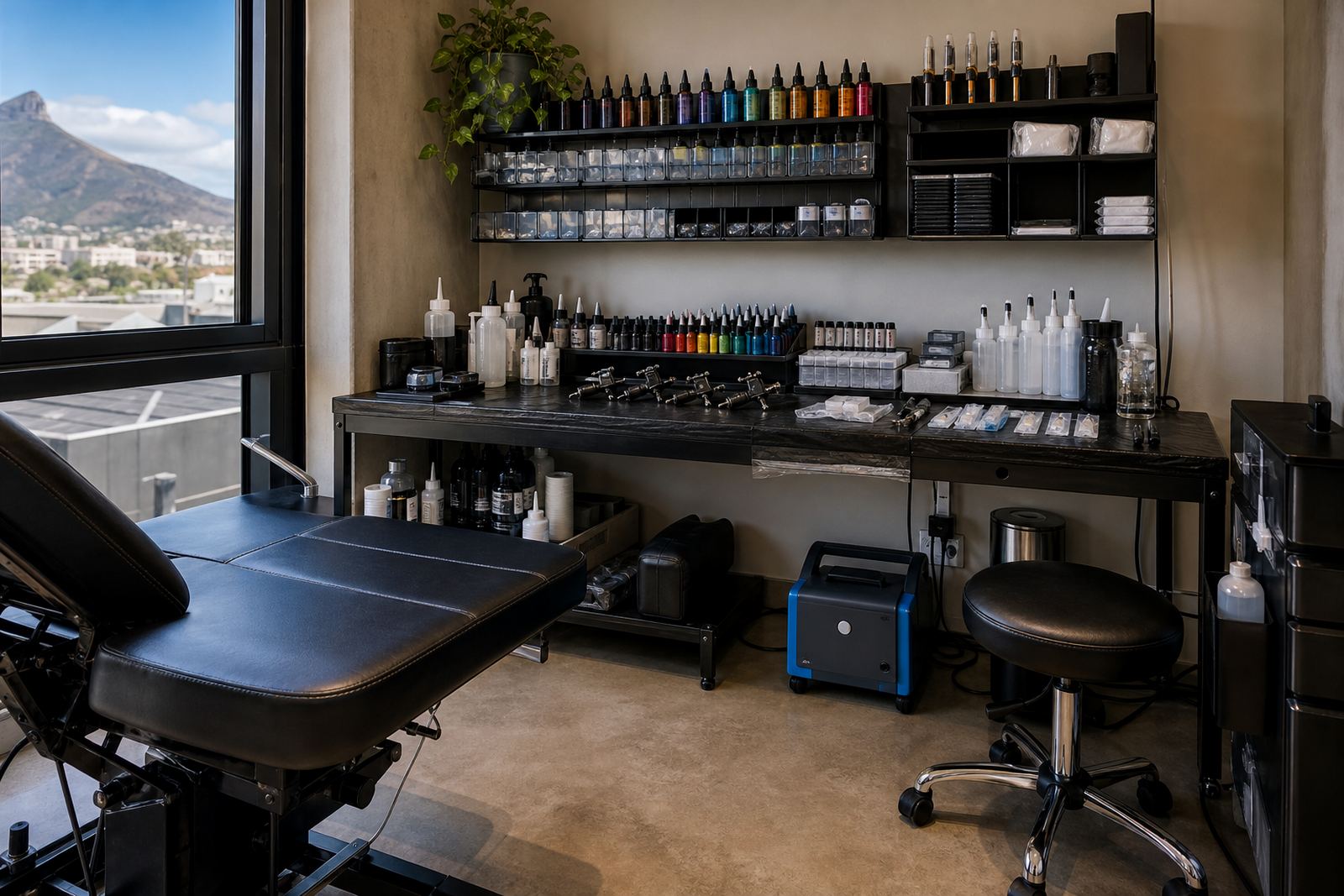
That extra freedom helps in compact studios in places like Observatory or Bellville, where space is tight and every surface has to earn its keep. It also changes what gets stored close to hand. Instead of building around a power connection, you start building around battery charging, spare packs, cartridge access and clean restocking points.
- Clear space for the machine body and battery pack.
- Keep cartridges grouped by grouping type and needle use.
- Store charging leads in a dry, labelled container away from spray zones.
- Place sterile single-use supplies where the artist can reach them without reaching over the work area.
Battery flow and the storage that goes with it
Wireless machines depend on a steady battery routine, and that routine needs a shelf or drawer plan. If packs are left loose with mixed consumables, studios lose time searching for the right one and run the risk of damaged cells or cluttered prep areas. A tidy charging point is not about appearance only, it keeps the daily handover between shifts much easier.
In Cape Town, where coastal humidity can creep into storage rooms, dry containment matters. Keep batteries and electronic accessories off damp floors, away from open rinse areas and out of direct sun near windows. A sealed tub or lidded drawer with clear labels works better than an open shelf in a humid back room.
- Use one storage point for charged packs and one for packs waiting to be charged.
- Keep a spare battery rotation so the station is not delayed by a flat unit.
- Separate charging accessories from inks, cleansers and wet wipes.
- Mark each pack or holder so it returns to the right place after cleaning.
Needle groupings, cartridges and how the tray should read
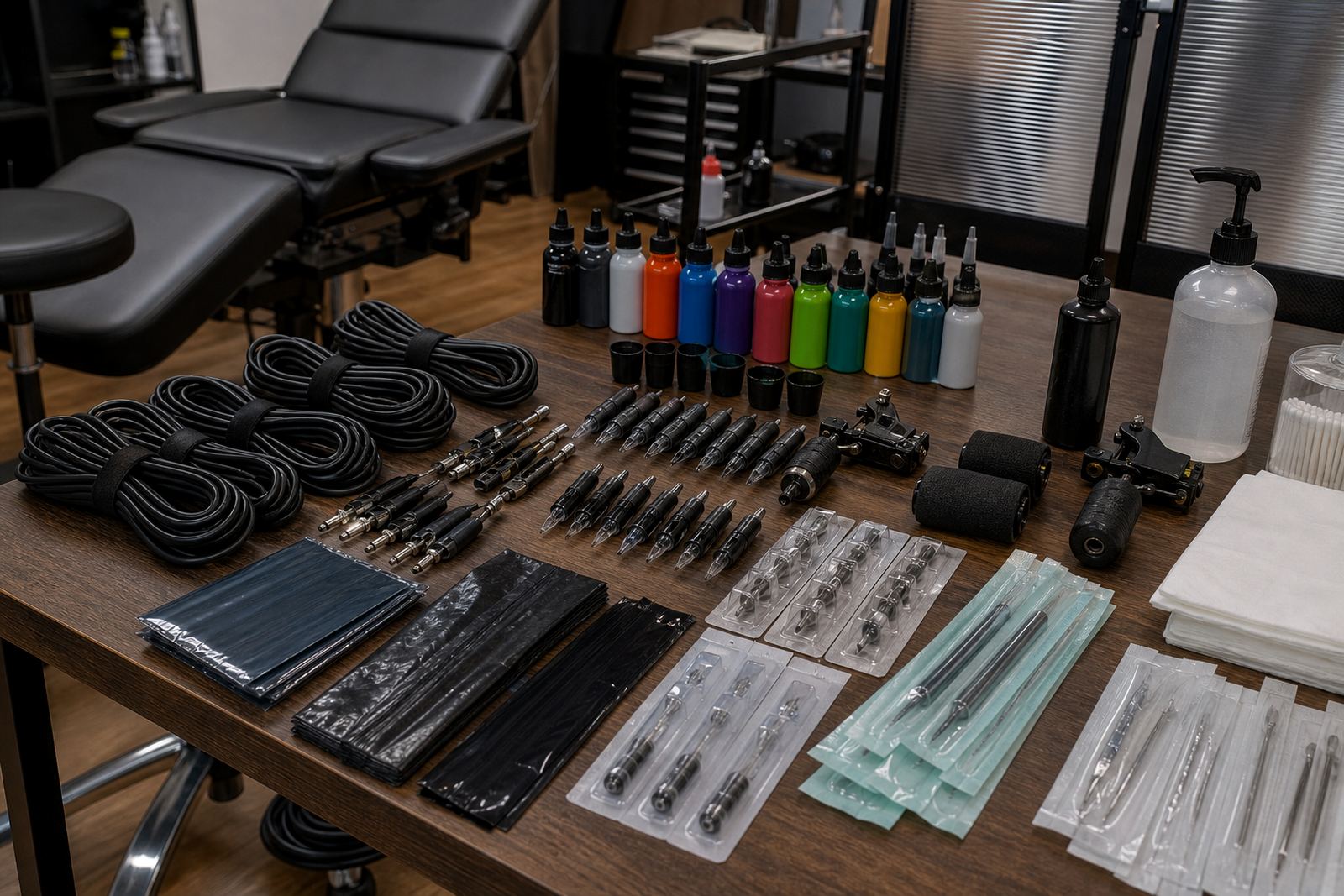
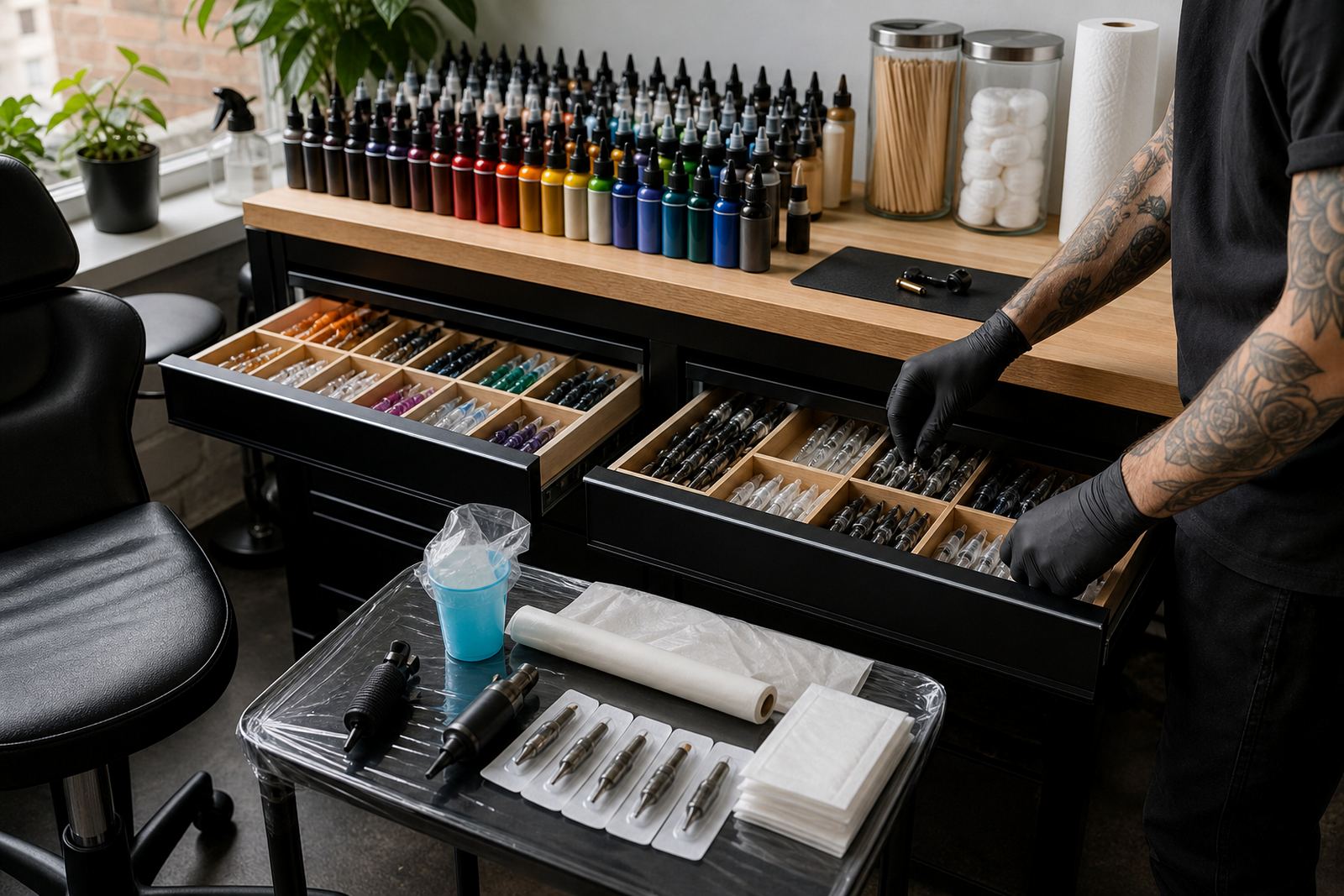
Wireless machines are often chosen for quicker station changes, so cartridge grouping becomes more important. When cartridges are sorted by line work, shading, colour packing or textured work, the artist can move from one stage to the next without digging through mixed boxes. That keeps the tray clearer and reduces handling during a session.
Needle groupings should be stored in a way that matches actual studio use, not just catalogue labels. A busy studio in Johannesburg may keep high-turn cartridges separate from fine-line sets, while a smaller studio in Pretoria might combine them in compact organisers by size and grouping. The point is consistency, not excess stock.
- Group cartridges by work type and needle configuration.
- Keep sealed sterile packs distinct from opened cartons and loose items.
- Use shallow organisers so the top labels are visible at a glance.
- Rotate slower-moving sizes toward the back, the high-use sizes to the front.
Station planning for a cleaner cable-free working line
A wireless station still needs discipline. Without a lead to define the layout, artists can allow the station to sprawl. The answer is to create a fixed working line from left to right or right to left, then keep the same logic across every appointment. Once the team learns that layout, restocking becomes predictable and the room feels less crowded.
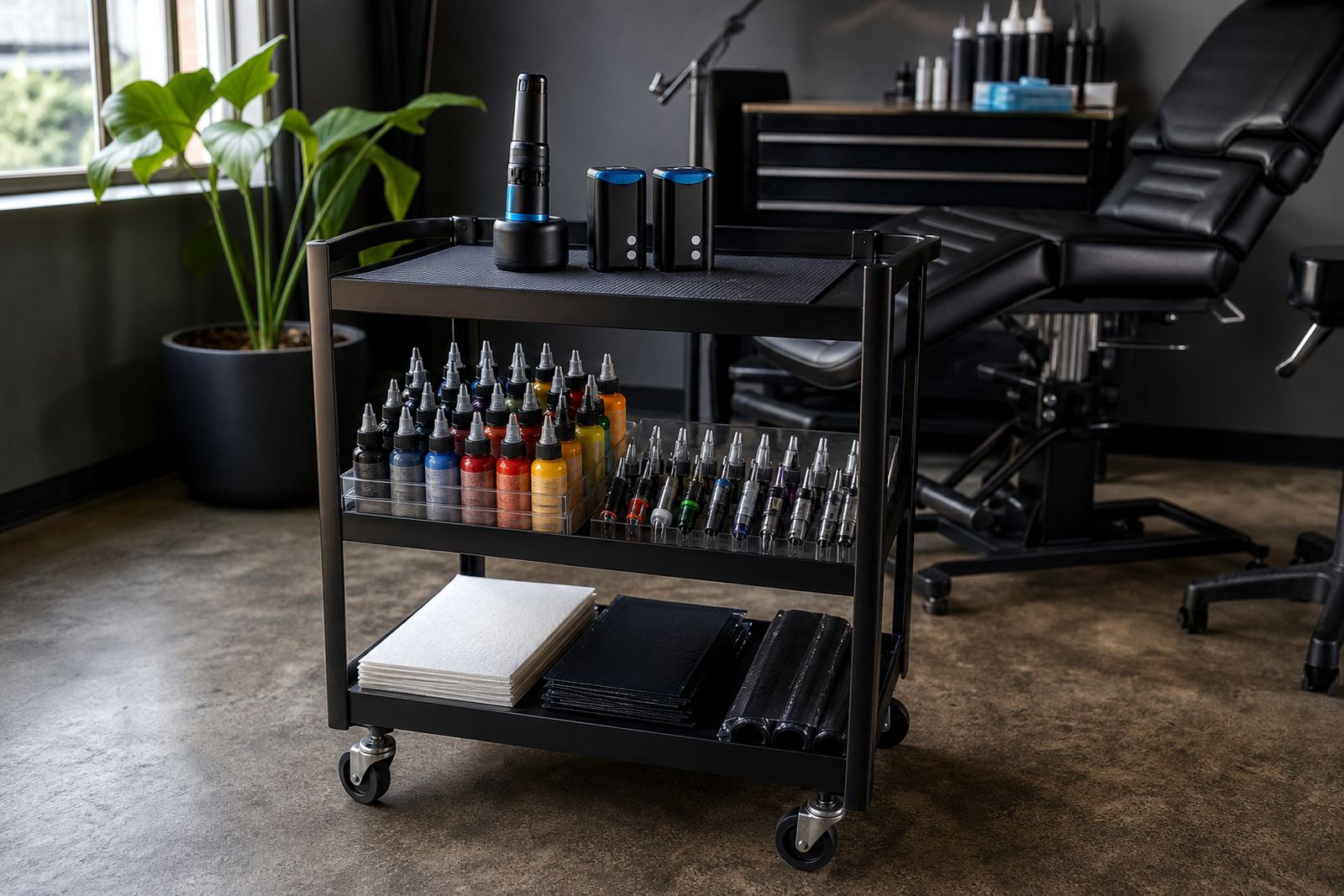
For studios offering multiple services, it helps to separate the wireless workstation into zones. One zone for the machine and battery, one for inks and cartridges, one for sterile single-use consumables, and one for finished items and waste. In Durban, where heat and humidity can make packaging softer, that separation also helps keep cartons from absorbing moisture on busy days.
- Define a clean zone, a working zone and a restock zone.
- Keep waste and used items on the opposite side from fresh stock.
- Use lidded containers for wipes, wraps and other dry consumables.
- Leave enough room for a quick surface reset between clients.
Storage changes that matter once cordless machines arrive
Wireless workstations usually need less cable storage, but more thought goes into small parts and consumable control. Studios often underestimate how quickly cartridges, grips, battery holders and single-use items pile up once the station becomes easier to move. A good storage plan prevents the back room from becoming the catch-all.
In a Stellenbosch or Somerset West studio, that can mean using compact shelves near the prep area and deeper storage in the stock room for bulk cartons. In larger operations, a warehouse-style layout with numbered shelves helps the team track consumable reorder levels and seasonal restock plans without opening every box.
Practical storage changes to make early:
- Move fast-moving cartridges to front-facing shelves.
- Keep machine accessories in labelled pouches or trays.
- Use dry, closed storage for sterile single-use stock.
- Separate bulk cartons from daily-use trays so stock counts stay accurate.
A Cape Town studio example that keeps the day moving
A small Observatory studio with two artists and a rotating appointment list needs stations that reset quickly. One artist may use a wireless machine for lining, the next for colour work, and both need access to the same cartridge groups and sterile supplies. The most useful change was not the machine itself, but the storage discipline that came with it.
They set one locker for charged packs, one drawer for cartridges by grouping, and one shelf for sealed consumables. That meant the morning setup was faster, but more importantly the end-of-day pack-down stopped turning into a mixed pile of parts. The team could see what was ready, what was low, and what needed to be reordered before the week got busy.
For studios serving clients across Cape Town and beyond, that kind of order is what turns a wireless setup from convenient to genuinely practical. Follow local health regulations, keep your storage clean, and treat the station as a working system rather than a loose collection of tools.