A Cape Town trade built around the studio floor
InkX Tattoo grew from the day to day needs of tattoo studios in Cape Town. The first customers were the people who needed consistent ink, dependable needles, cartridge groupings that matched the way they worked, and supplies that could be stored neatly without fuss. That kind of ordering matters when a studio is busy and every station has to be set up properly before the first client walks in.
From Observatory, the supply side of the business expanded alongside the craft itself. As more artists worked across the city and beyond, the mix of products had to cover a wider range of styles, skin tones, machine preferences and room layouts. The focus stayed practical: give studios stock that fits real working conditions, whether they trade in a compact room in Bellville or run a larger setup in Johannesburg.
How the range grew with the craft
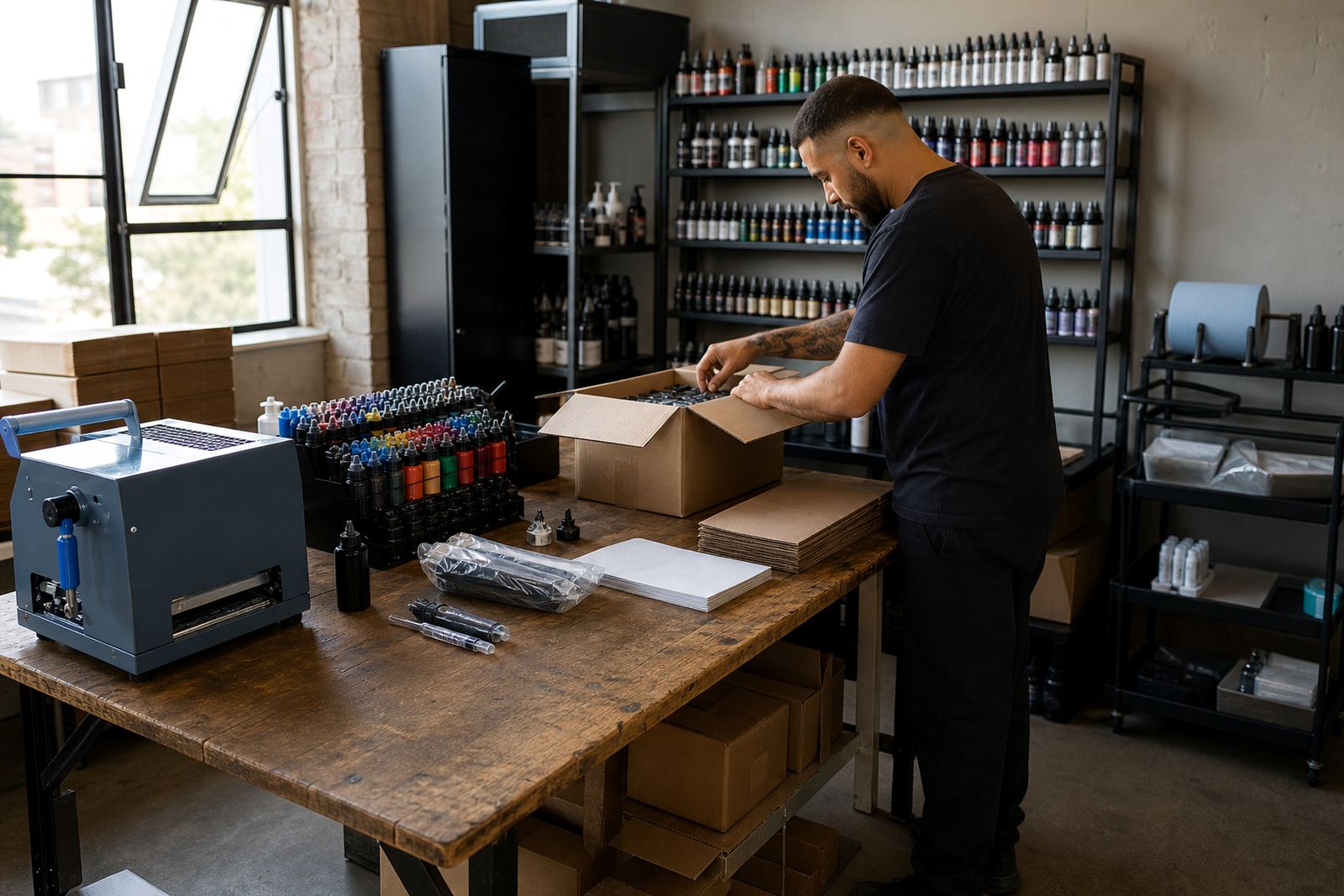
Tattoo work depends on small details that add up. Ink viscosity, needle grouping, cartridge fit, disposable grip covers, clip cord protection, gloves, barrier film and other single-use items all sit in the same supply chain. InkX Tattoo’s range developed around those everyday requirements, with products grouped in a way that makes stock easier to sort, replace and restock.
The aim has always been to support both established studios and newer artists without overcomplicating the order. A full studio may need bulk consumables and regular replenishment, while a smaller setup may need help putting together a first order with the right mix of machine supplies, sterile items and storage essentials. That mix changed as the craft grew in South Africa, and the stock range grew with it.
- Tattoo inks for line work, shading and colour packing
- Needle and cartridge groupings for different working styles
- Machines and related studio consumables
- Sterile single-use supplies for day to day studio work
- Storage and hygiene items for organised work areas
The customers who shaped the business
The customer base has always included more than one kind of studio. Some order for a busy town centre shop, some for private appointments, and some for mobile work that needs compact stock and tidy packing. There are also enthusiasts who prefer to buy carefully chosen supplies and keep their kit in good order. Across all of them, the common thread is the need for materials that arrive in usable condition and fit the way the artist already works.
Because tattooing is a hands-on trade, customers often ask for stock list help, machine match help, cartridge match help and range grouping advice. That is where experience matters. The right grouping can save time behind the station and reduce confusion when several artists share the same supplies. It also helps with seasonal restock plans and consumable reorders, especially for studios that keep a close eye on usage and storage space.
- Studios in Cape Town, Johannesburg, Durban, Pretoria and Gqeberha
- Local delivery areas including Stellenbosch, Bellville and Somerset West
- Artists needing product substitutions when supply patterns change
- Studios planning larger orders for multiple stations
How the team works behind the orders
The day to day work is carried by a team that understands both stock control and the pace of studio life. Mikhail Johannes van Wyk leads the business, with Anele Mlambo handling operations, Tamlyn Adams guiding online sales, Willem Masilela managing the warehouse, Nokuthula Khanye coordinating customer support, Riyaaz Parker looking after procurement, and Karabo Moagi handling content and training. Each role supports the others, so stock can move from planning to picking to dispatch without confusion.
That structure matters when the order mix changes quickly or a studio needs a different grouping for a machine setup. A careful warehouse process helps with pack accuracy, while procurement keeps an eye on the practical side of replenishment. The result is a working system that suits busy studios and keeps the supply side tidy, even when several areas need attention at once.
Supplying studios across South Africa
From Observatory, delivery reaches studios in Cape Town, Johannesburg, Durban, Pretoria and Gqeberha, with service also extending to nearby Cape Town areas such as Stellenbosch, Bellville and Somerset West. That footprint reflects how tattooing works in practice now: a studio may be based in one city but need a regular supply line that covers different branches or artists working from separate spaces.
South African studios also work in different conditions. Coastal humidity can affect storage habits in places like Cape Town and Durban, while inland studios often need better organisation for dust control and supply rotation. Whatever the setting, the business has stayed focused on the same practical needs: clean storage, reliable packing, sensible stock grouping and supplies that fit the rhythm of a working studio. Local health regulations must always be followed in the studio, along with the hygiene procedures required by the trade.
What has stayed constant from the first orders
Even as the range widened, the core approach did not change. InkX Tattoo still works like a trade supplier should: keep the stock relevant, keep the order process clear, and keep the support grounded in what artists actually use. That means helping with new studio kits, seasonal restock plans, dispatch updates and product substitutions when a studio needs a workable alternative.
The history of the business is really the history of listening to the studio floor. Customers ask for better grouping, cleaner storage, smarter reordering and supplies that fit their setup, and those requests shape the way the range is organised. It is practical work, and it has stayed practical from the beginning. That is what gives the business its character today, and what keeps it useful to the tattoo community across South Africa.