Where barrier film earns its place on the station
Barrier film is a thin protective wrap that helps cover high-touch surfaces in a tattoo station. It is commonly used on areas that are handled with gloved hands through the session, then replaced when the station is broken down and reset. The point is not to hide the station, but to keep contact points easier to manage during routine setup and cleanup.
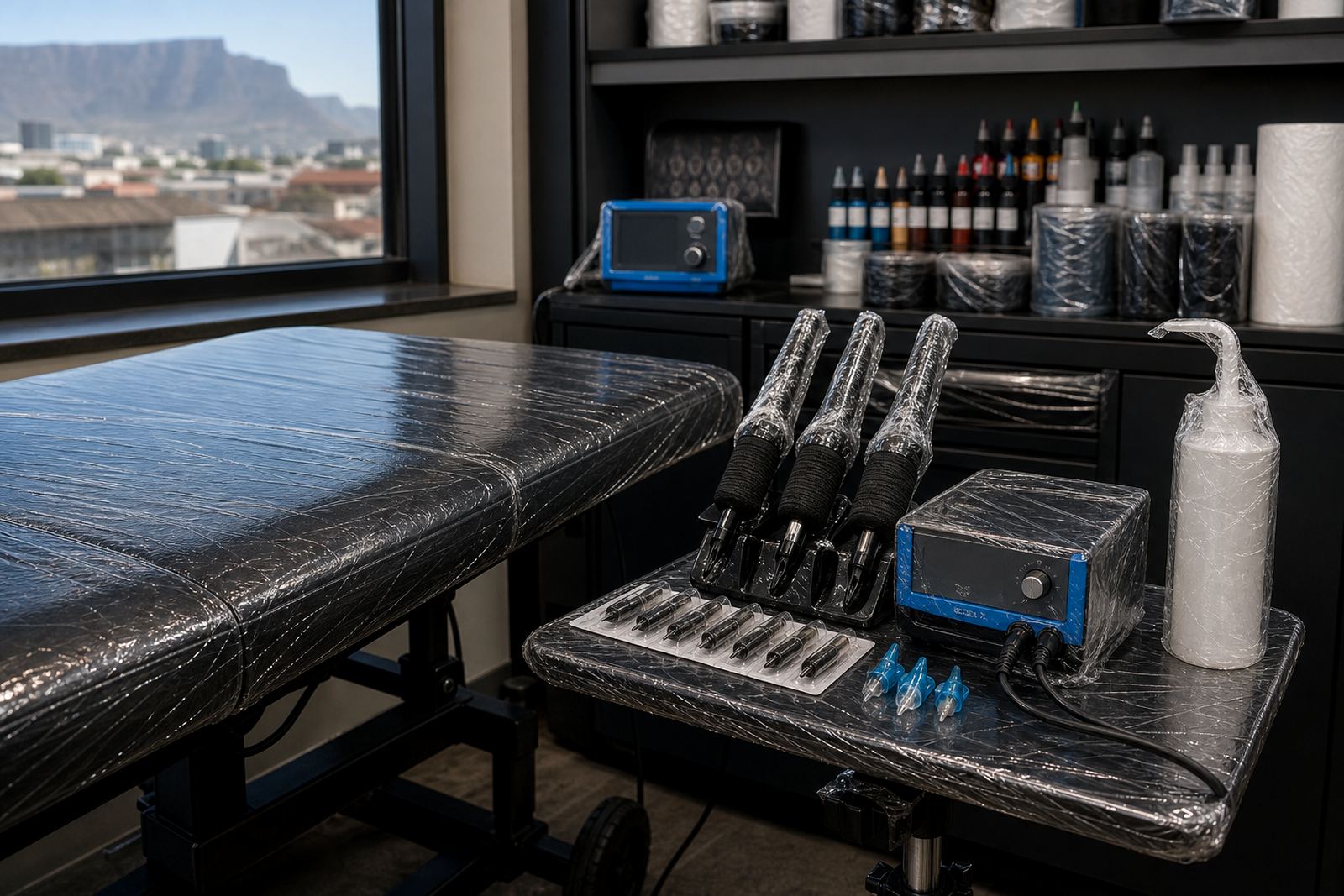
In practice, artists use it on surfaces that are touched repeatedly while working. That often includes machine grips, power control buttons, bottle tops, lamp switches, clip cord contact points and spray bottle triggers. On a full day in a studio, those small touch points add up quickly.
- Machine grips and handles
- Power supply buttons and dials
- Clip cord contact points
- Spray bottle triggers
- Light switches and lamp controls
- Tray edges and nearby work surfaces
The parts of a setup that get wrapped first
Most studios start with the items that are handled before the needle even touches skin. A clean station usually begins with the wrap order worked out in advance so nothing is missed. That is especially useful when the room turns over quickly between clients or when multiple artists share the same work area.
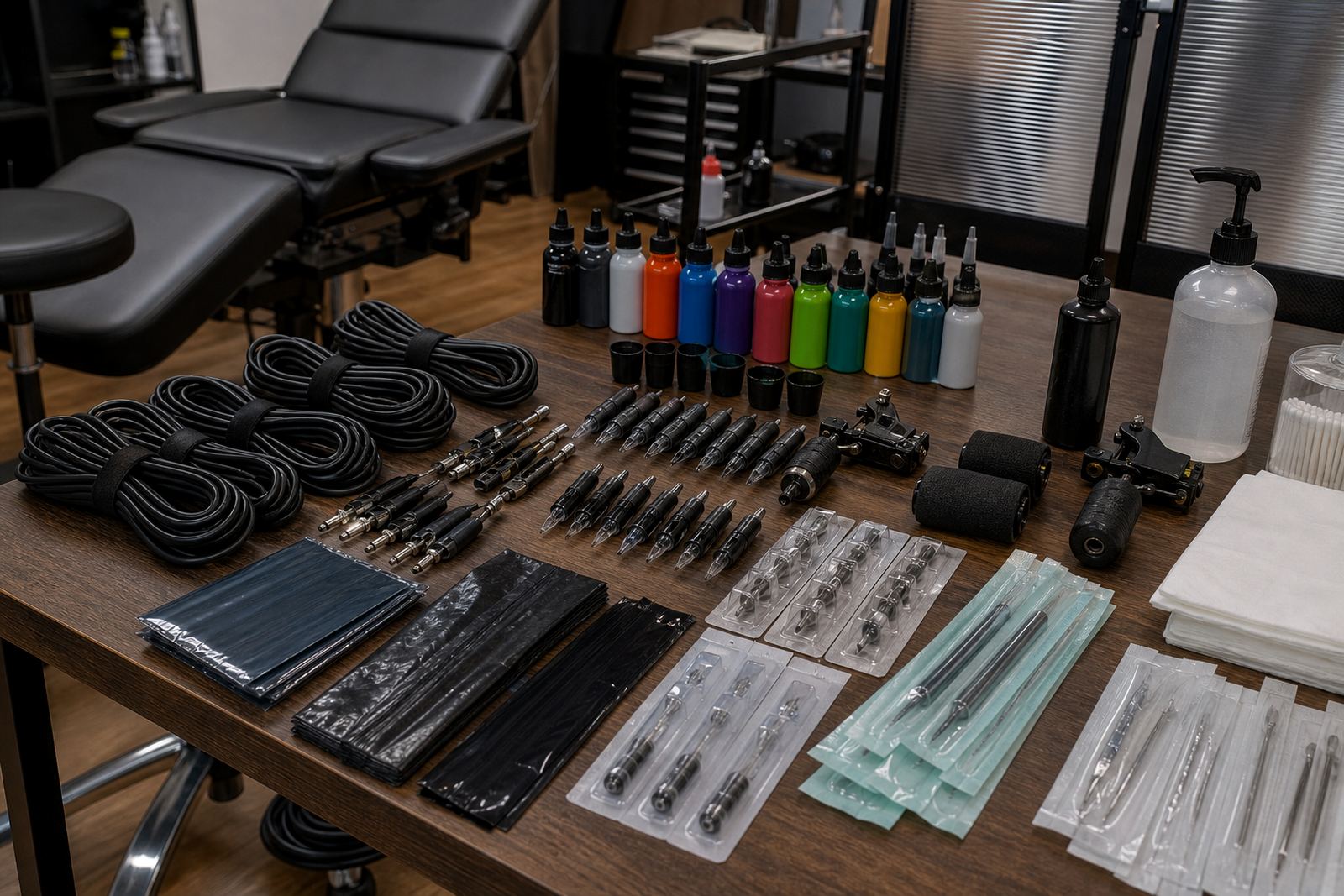
For a standard setup, barrier film is often applied to the machine and the surrounding control points before any other consumables are laid out. On cartridge stations, the most touched surfaces are usually the machine body, clip cord area if used, and the bottle or rinse points placed within reach. If a surface is likely to be touched more than once, it is a good candidate for wrapping.
- Wrap the machine body where gloved hands settle naturally
- Cover buttons, switches and dials that are adjusted mid-session
- Protect rinse bottle triggers and nearby holders
- Wrap tray edges that are bumped or touched often
- Cover lamp switches and task light controls
Barrier film around inks, needles and cartridges
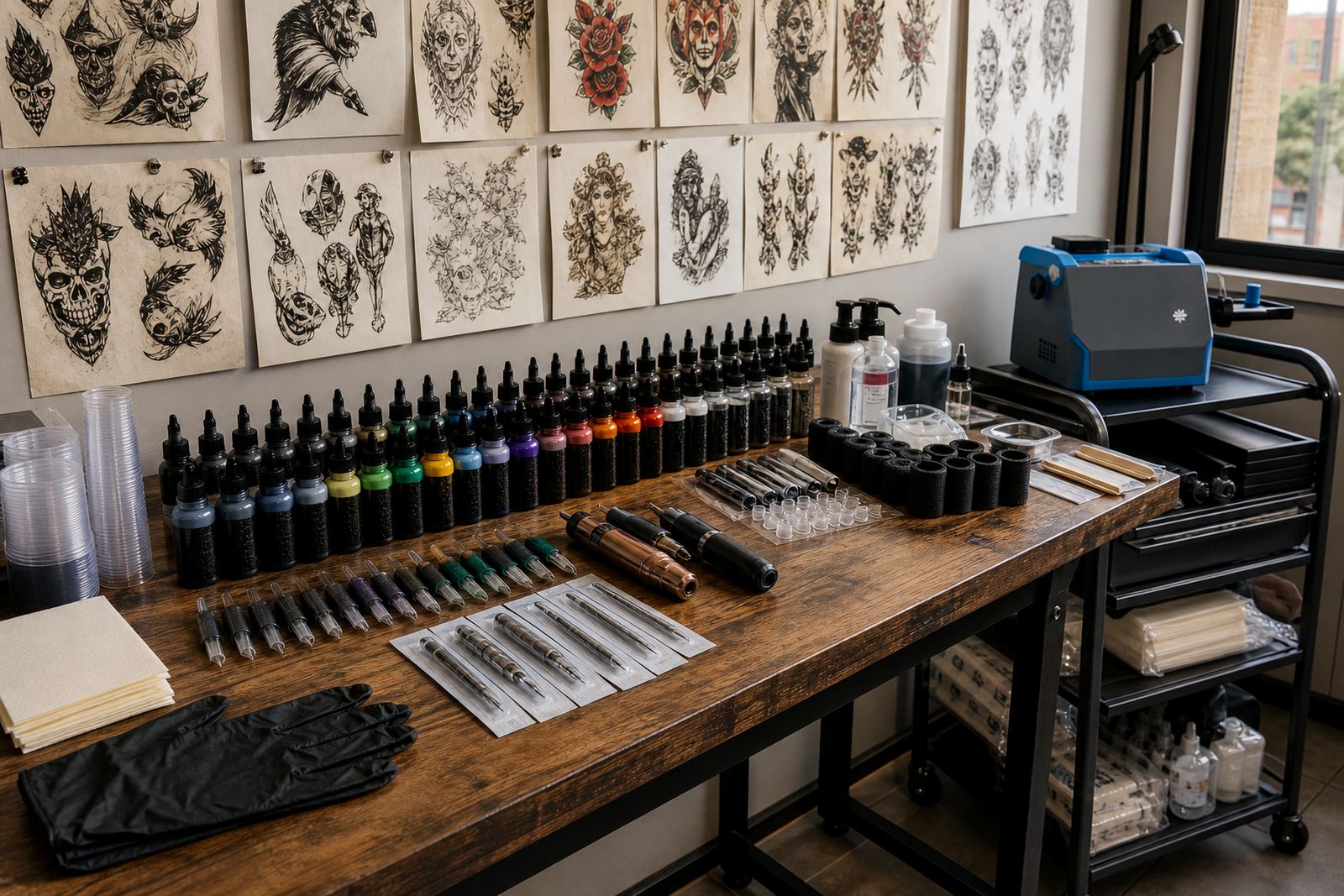
Barrier film is not only for the main workstation. It also helps around the supporting items that sit beside inks, needles and cartridges during the session. Ink caps, bottle necks, drawer handles and storage lids are all common contact points in a studio. Once they are in the line of regular handling, they are worth wrapping as part of the station routine.
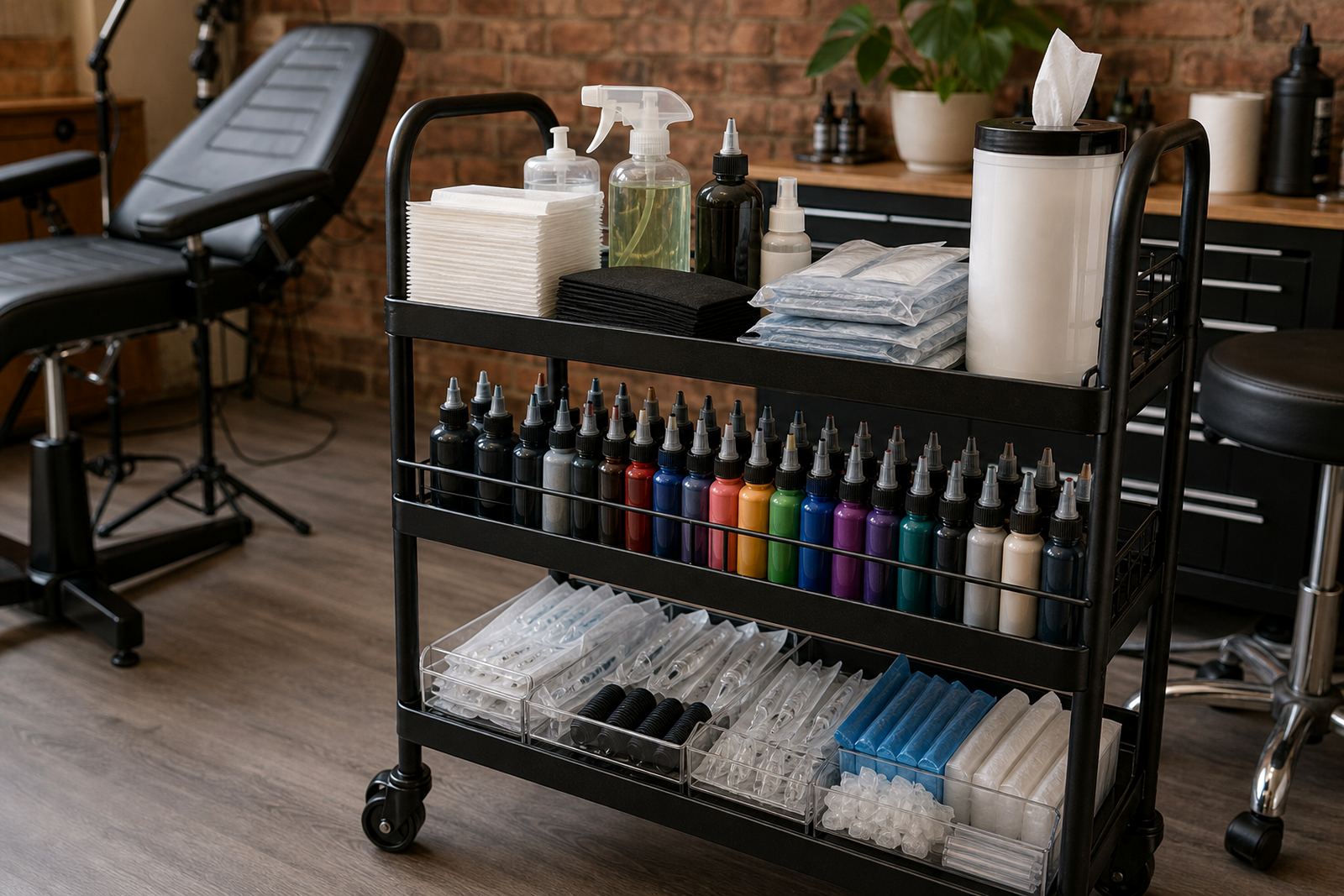
Good grouping matters here. A studio that keeps tattoo inks, needle groupings and cartridge boxes organised will find it easier to work barrier film into the same layout every time. That keeps the station consistent and saves fumbling around during setup. In a Durban studio with sea air and high humidity, for example, the team may keep storage sealed, then wrap the day’s touch points as soon as the station is set down so the room stays orderly while the client flow picks up.
- Ink bottle caps and outer bottle areas
- Drawer handles used for needles or cartridges
- Ink cap holders and nearby mixing areas
- Storage lids that are opened and closed through the day
- Clip cord holders and adapter contact points
Station flow that keeps the wrapping sensible
Barrier film works best when it fits the flow of the room. If a station is wrapped in a random order, artists spend extra time fixing corners or replacing torn sections. A better method is to work from the centre of the setup outward, starting with the machine area and then moving to the more general contact points. That keeps the worktable practical and avoids clutter.
Some studios in Johannesburg and Pretoria run a tighter setup because the room is shared by more than one artist. In those spaces, barrier film becomes part of the daily reset, not an afterthought. The same is true in smaller studios in Bellville or Somerset West where a single station may be used all day but still needs the same contact points protected each time.
- Start with the machine and controls
- Then cover the tray, bottles and light switches
- Finish with any handles or cabinet points near the chair
- Replace damaged film before the next client
Storage, humidity and keeping supplies ready
Barrier film is easy to use, but it still needs sensible storage. In coastal areas such as Cape Town and Gqeberha, humidity can affect the feel of packaging and how neatly rolls or sheets dispensed on the day. Keeping the stock in a dry cupboard, away from direct sunlight and dust, helps it stay ready for station use.
Many studios keep barrier film with other sterile single-use supplies, needles and cartridge groupings so the full station kit can be packed and checked in one place. That makes ordering easier too. When a studio knows how many stations it runs each week, reordering becomes a stock planning exercise rather than a last-minute scramble. Load shedding does not usually affect barrier film itself, but it can matter where lighting, storage access or machine power supplies are involved, so good station planning still helps the room stay workable.
Practical storage points include:
- Keep rolls or sheets in sealed packaging until needed
- Store away from moisture and direct heat
- Group with the day’s consumables for quicker setup
- Check that adhesive edges still hold cleanly before use
Using barrier film with local studio rules in mind
Every studio should follow local health regulations and its own hygiene procedures when setting up a work area. Barrier film is one part of that routine, not the whole routine. It helps with contact points, but it should be used alongside the studio’s normal cleaning, wrapping and disposal habits. The exact station layout may change from one room to another, especially where a client chair, machine stand and supply trolley sit close together.
At InkX Tattoo in Observatory, Cape Town, the practical approach is to group supplies by station use, then match the barrier film to the items touched most often. That may include a small travel station for a guest artist, a full studio setup for a busy weekday, or a replenishment pack for a branch delivery to Stellenbosch or Durban. The idea is the same each time: keep the contact points easy to manage, and keep the rest of the station organised around them.
For studios that order online across South Africa, barrier film sits naturally alongside machine match help, cartridge match help, consumable reorders and new studio kits. When the supplies are grouped well, the setup stays calmer and the work area is easier to reset between clients.