
Start with the working list, not the wish list
Before adding anything to your cart, build the order around the work already booked in the studio. Look at the styles you are running through the week, the needle groupings your artists use most often, and the ink set that suits those sessions. A good online order should reflect actual use, not just a shelf that looks full.
For a studio in Cape Town, that might mean checking black linework stock, a few core colour sets, cartridge groupings for shading, and enough sterile single-use items to cover the appointment book. If you are ordering for multiple artists, separate the list by station so one person is not short of cartridges while another is sitting on a surplus of the same size.
Match inks to the way they are used on the table
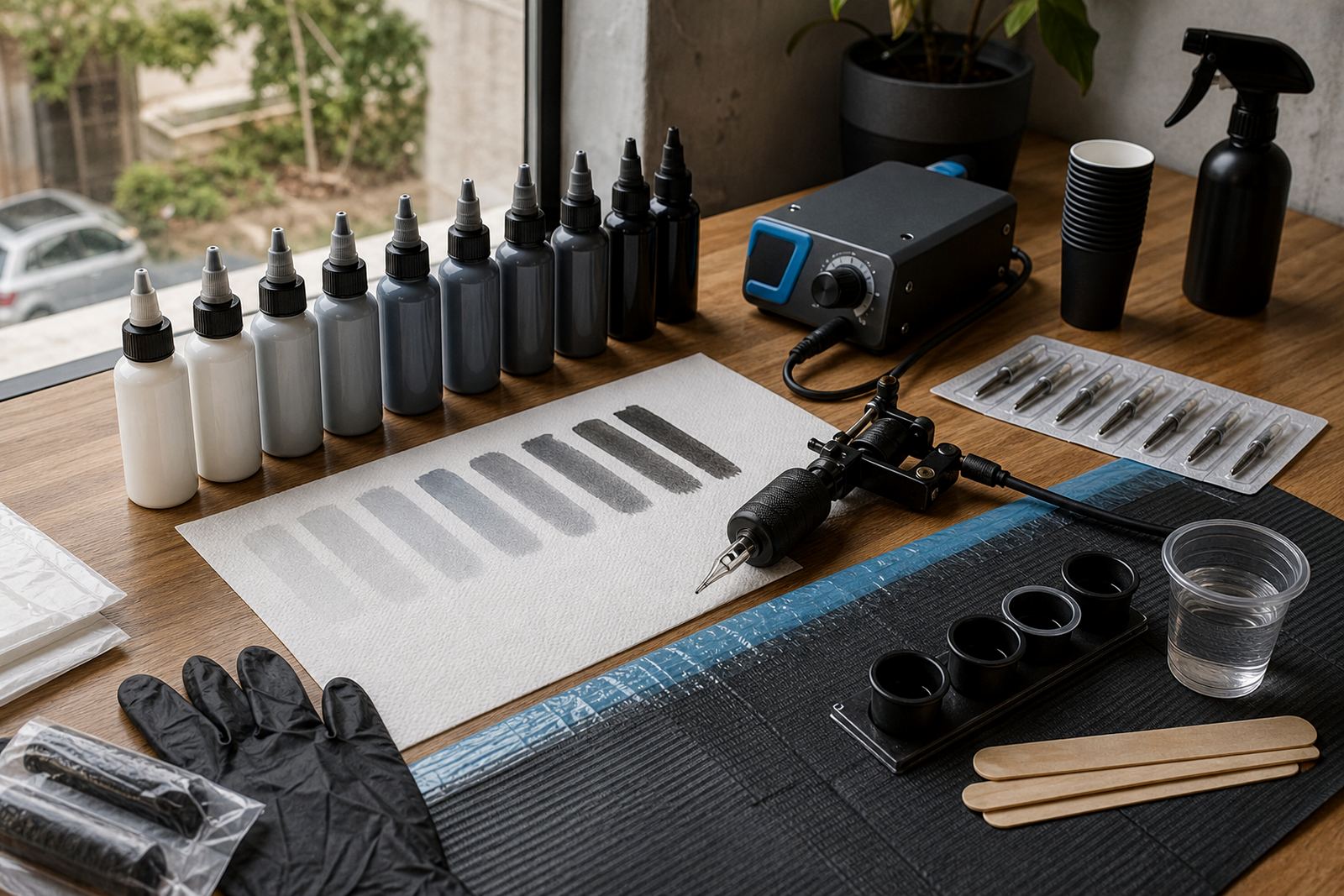
Tattoo inks are not all picked the same way. Some studios buy by colour family, others by how often a shade gets used. Either way, the cart should show a clear plan for linework, packing, shading and colour work. Check bottle sizes, colour repeats and whether the order includes enough of the shades that move fastest.
- Confirm the core black stock first, then the most used colours.
- Check whether each shade is needed in more than one size.
- Keep an eye on repeat colours that may already be sitting in storage.
- In coastal areas like Durban or Gqeberha, make sure storage space is dry and cool, with caps sealed properly after use.
If the order is being split across artists, note who uses which inks so the packing stays orderly. That saves time when the boxes are opened and keeps the station layout straightforward.
Check needle and cartridge groupings one by one
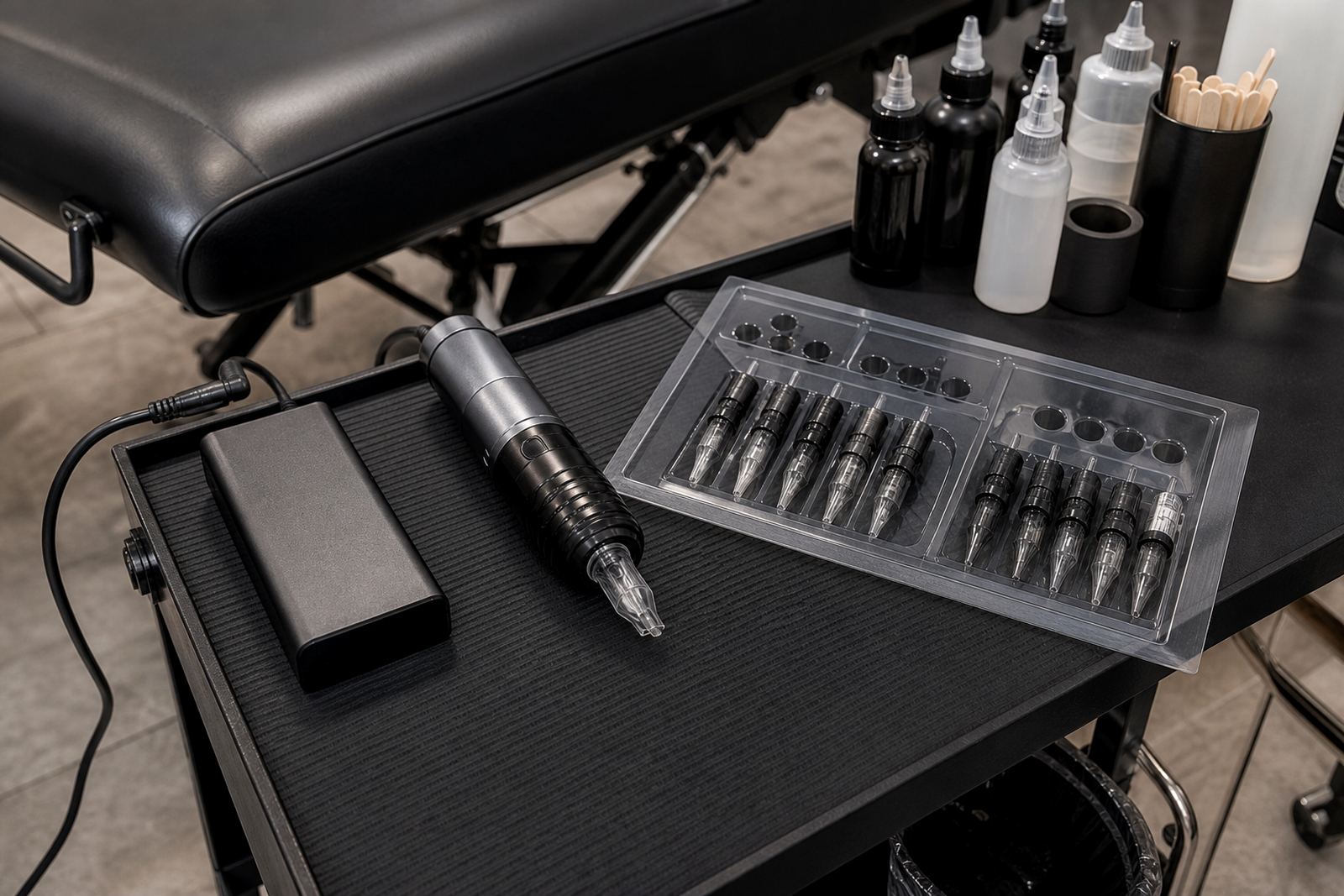
Needles and cartridges are where ordering mistakes can cost the most time. The size, taper, grouping and configuration all need a second look before checkout. A round liner, round shader, magnum or textured grouping can look close enough online if you are rushing, but the wrong selection can sit unused while the correct one is missing.
Compare the cart against the artist's usual hand speed, line weight and fill style. If the studio is taking on new work, add the sizes that support that shift rather than guessing from memory. Where several artists share stock, mark quantities by station or by person so nobody opens the box expecting the wrong grouping.
- Check grouping type against the actual tattoo process.
- Confirm cartridge quantities for the week ahead, not just one session.
- Separate fine-line, shading and larger fill options in the order.
- Review whether each artist uses the same size or needs a different mix.
Keep sterile single-use items counted properly
Single-use items need a stricter count than general supplies because they disappear quickly in a working studio. Gloves, grips, caps, barrier film, razors, wipes and clip cord covers all tend to run out at the wrong moment if the order was built from guesswork. Add them to the cart only after checking what is already stored and what is already assigned to the week.
This is also where cleaning and separation matter. Keep sealed items apart from open stock, and group the boxes so the unpacking process stays tidy. In a humid Cape Town summer, or a busy studio near the coast, clean storage helps prevent packaging from getting damp or messy before it is even placed on the shelf. Follow local health regulations for handling, storage and disposal in your area.
Use the station layout as your final cross-check
The best online order check is the one that reflects how the station is actually set up. Look at each artist's tray or trolley and compare it with the cart. If one station needs more ink caps, another more cartridges, and a third a different machine setup, the checkout list should show that split clearly. Station planning is less about neatness and more about avoiding gaps during a long day.
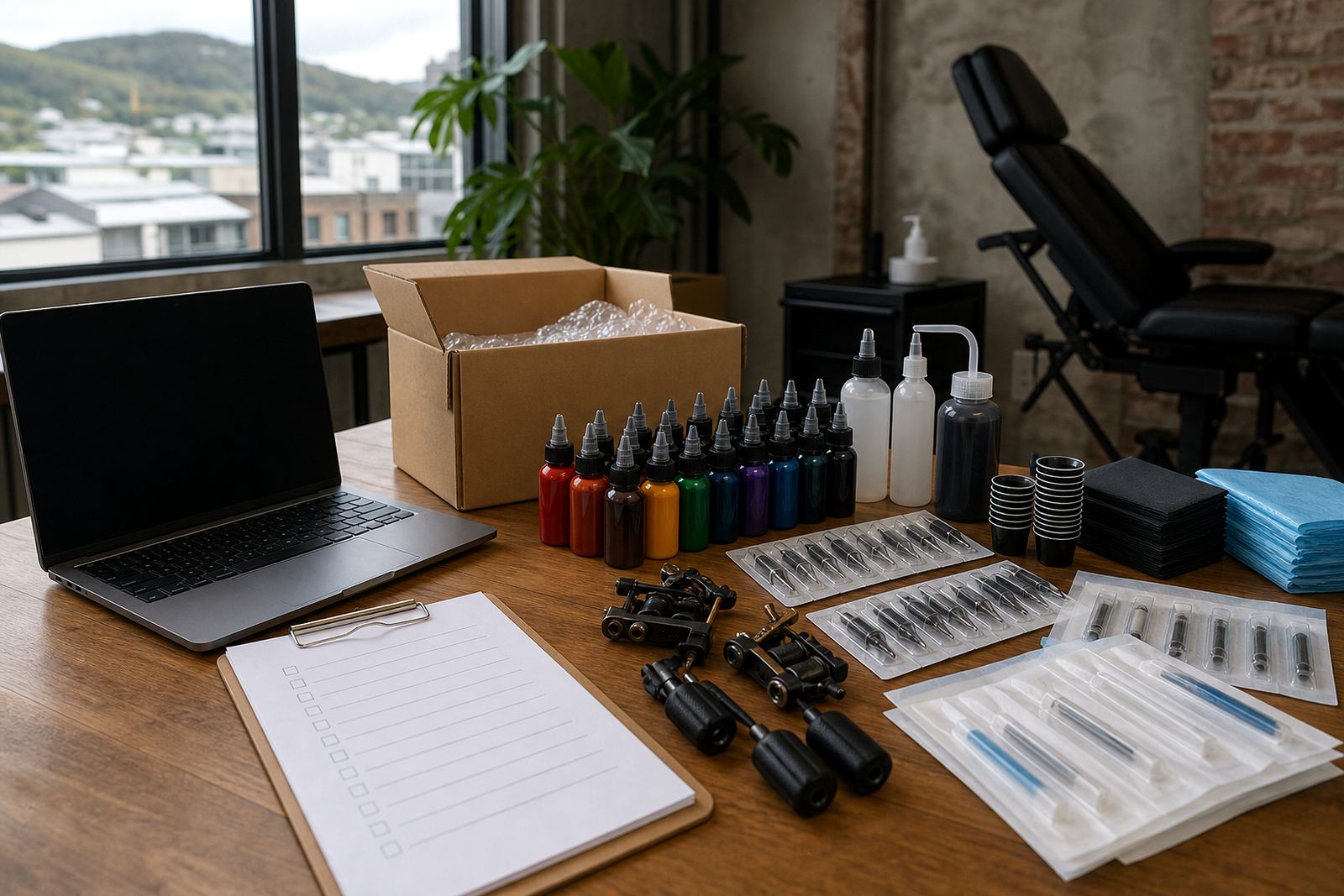
In a shared studio, a practical method is to review the order in the same sequence the team sets up the room. That means starting with inks, then cartridges, then sterile consumables, then storage and hygiene items. It sounds small but it cuts down on extra purchases and missing bits that only show up once the first client is seated.
Watch storage and dispatch details before you click pay
Storage planning matters as much as the products themselves. Make sure bottles, cartridges and sterile packs are listed in quantities that can be stored properly, especially if the studio keeps stock in a compact room, behind the counter, or in a shared prep area. Over-ordering can create clutter and make it harder to rotate stock in the right order.
If you are sending one order to several branches, check the delivery split before checkout. Cape Town, Johannesburg, Durban, Pretoria and Gqeberha branches may all need different quantities depending on trade, so one single cart can create confusion if the dispatch instructions are vague. The same applies to Stellenbosch, Bellville and Somerset West where smaller studios often want tighter, more regular replenishment.
- Confirm the delivery area for each box or line item.
- Check which products are going to the main studio and which are branch stock.
- Keep fragile items separate from bulk consumables where possible.
- Review storage space before adding extra cases or duplicate packs.
A Cape Town order example that saves time
Picture a studio in Observatory preparing for a full week of appointments. The owner reviews the artists' notes on Monday morning and sees that one station needs linework cartridges, another needs larger shading groupings, while the front shelf is low on black ink and barrier supplies. Instead of guessing, the order is built from the actual station list: inks, needles, cartridges, sterile consumables, and a few storage items for the prep area.
That kind of checkout habit keeps the packing practical and the shelf easier to manage. It also makes product substitutions simpler if a size is unavailable, because the team already knows which grouping or supply can be swapped without upsetting the station plan. For studios placing bulk orders or setting up a new kit, it is the kind of check that saves noise later.