
Why cord sleeves belong in a wired station
A cord cover is not there to make the setup look neat for the sake of it. It gives a wired station a cleaner working line, keeps cables grouped, and reduces the chance of a lead catching on a trolley edge, chair wheel, or a container on the side table. In a studio where the machine lead, clip cord and power supply cable all have to sit within reach, that small layer of control makes the station easier to work around.
For South African studios that run full days in Cape Town, Johannesburg, Durban, Pretoria or Gqeberha, the station often gets reset more than once. A sleeve helps keep the same routing in place after each clean-down. That matters when your team is swapping between lining, shading and packing stations and needs the cord path to stay predictable.
- Keeps cable runs together instead of scattered across the worktop
- Reduces rubbing where wires pass over edges or through tight gaps
- Makes the station quicker to reset after cleaning
- Helps support a more orderly working position around the chair
Choosing the right sleeve for the cable load
Not every cord needs the same sleeve. A single thin lead does not need the same allowance as a heavier machine cable set that moves with more bend and pull. The sleeve should fit the cable group without squeezing it too tight. If the cover is packed too full, it can shift in awkward ways and fight the natural movement of the lead during the session.
Look at where the cable passes in the station. A sleeve used over the main working stretch near the machine may need more flexibility, while the section closer to the power source can sit more still. In a Durban studio with humidity and constant clean-downs, a sleeve that dries quickly and stays easy to wipe is often worth more than one that feels overly thick and bulky.
- Check the cable count before choosing the sleeve size
- Allow enough movement for the machine hand grip and chair position
- Use a cover that can be wiped as part of the station clean-down
- Keep the routing neat near the foot pedal and power point
Building a cord path that does not fight the artist
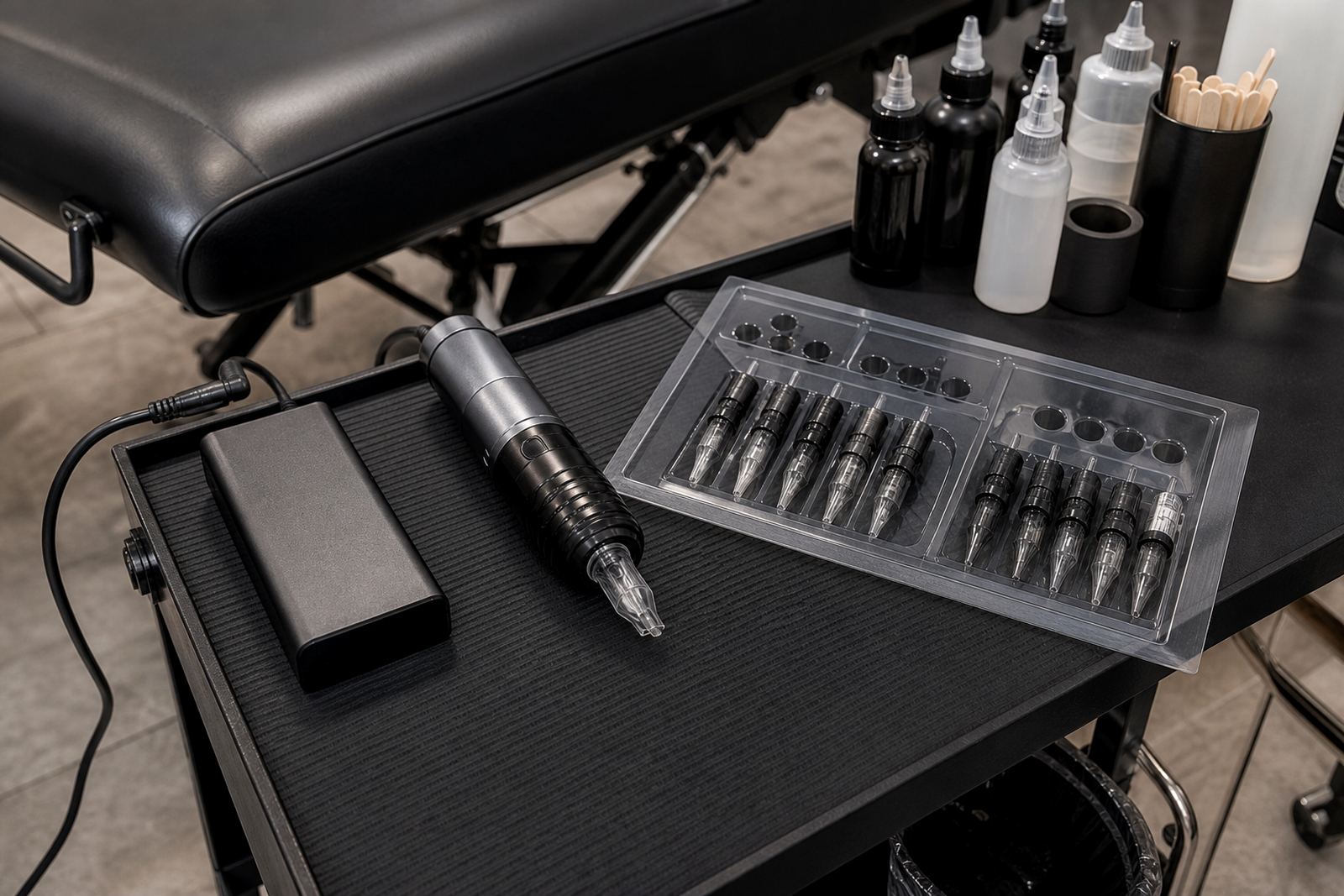
The best cord routine is one that the artist forgets about once the work starts. That means the cable should sit where the hand naturally works, not where it drags across the forearm or brushes the client chair. A sleeve can help shape that path, but the routing still needs thought. Keep the lead long enough to move freely, but not so loose that it pools under the station.
In a shared Observatory studio, for example, one station may need a cord that runs from a side power point, across the rear edge of the station, and down to a foot pedal near the artist’s stance. If the sleeve is clipped or guided in the wrong place, it can tug when the artist changes position. A better routine is to check the line before each session and adjust the length so the machine can move naturally without the cable becoming part of the workflow.
That is especially useful in smaller rooms where the chair, tray and power supply all sit close together. A tidy cord path keeps the working surface open and makes it easier to wipe the station at the end of the day.
Single-use covers, sleeves and clean-down habits
Cord sleeves work best when they are part of a full station hygiene routine. They are not a substitute for cleaning, and they do not replace the need for sterile single-use items where those are required. The point is to create cleaner handling around the cable path so the station is easier to maintain through the day.
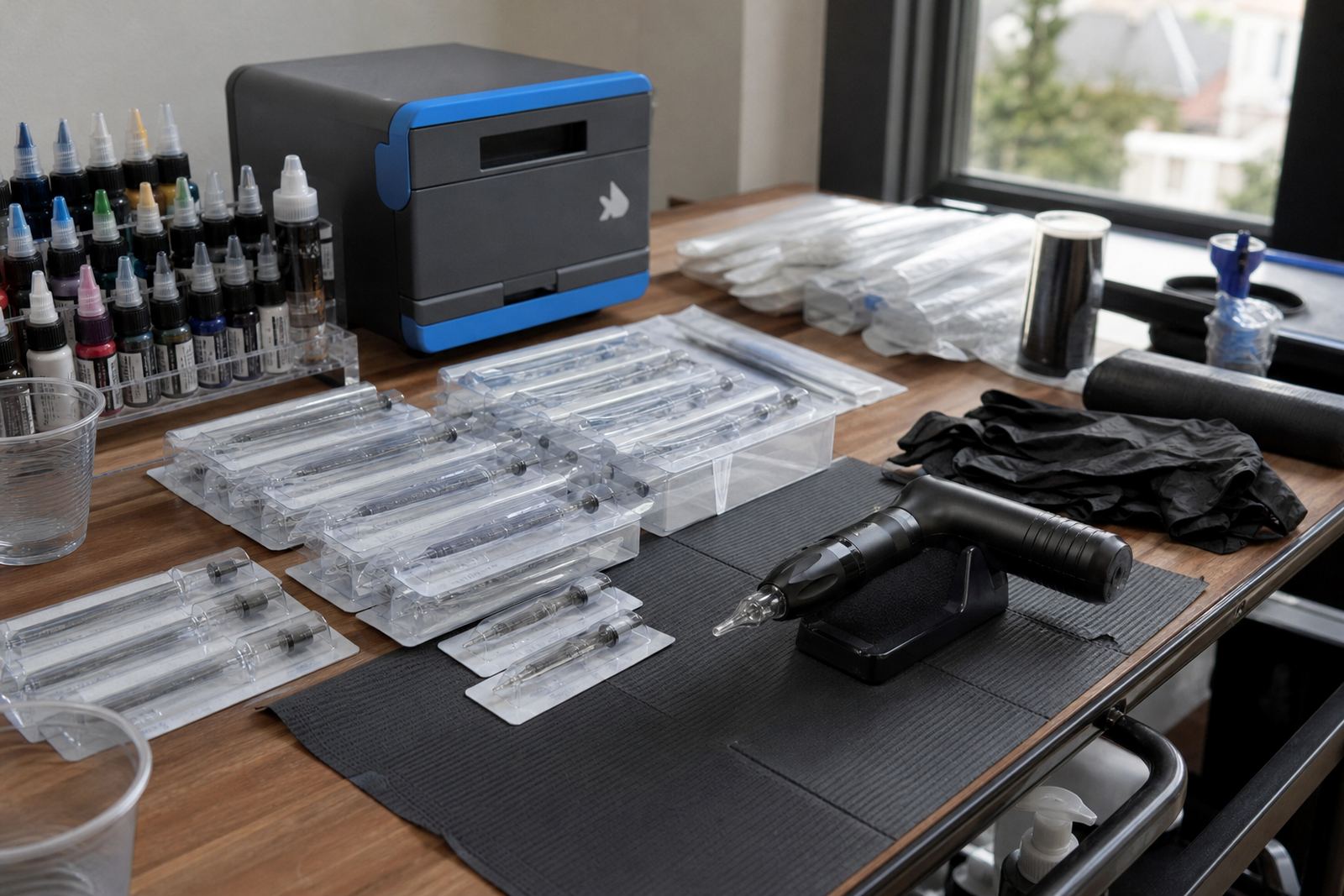
Many studios use a mix of barrier items and covers around the machine area, then replace or discard the single-use parts after the session. The cord sleeve sits within that structure by helping to separate the reusable wiring from the exposed work area. Follow local health regulations and your studio’s internal procedures for what must be single-use, what may be cleaned, and how the station should be reset between clients.
- Fit the sleeve before the station is fully dressed
- Keep the cable run clear of wet cleaning residue
- Replace damaged covers that no longer sit flat
- Separate reusable equipment from exposed working surfaces
Storage that keeps sleeves ready, not crushed
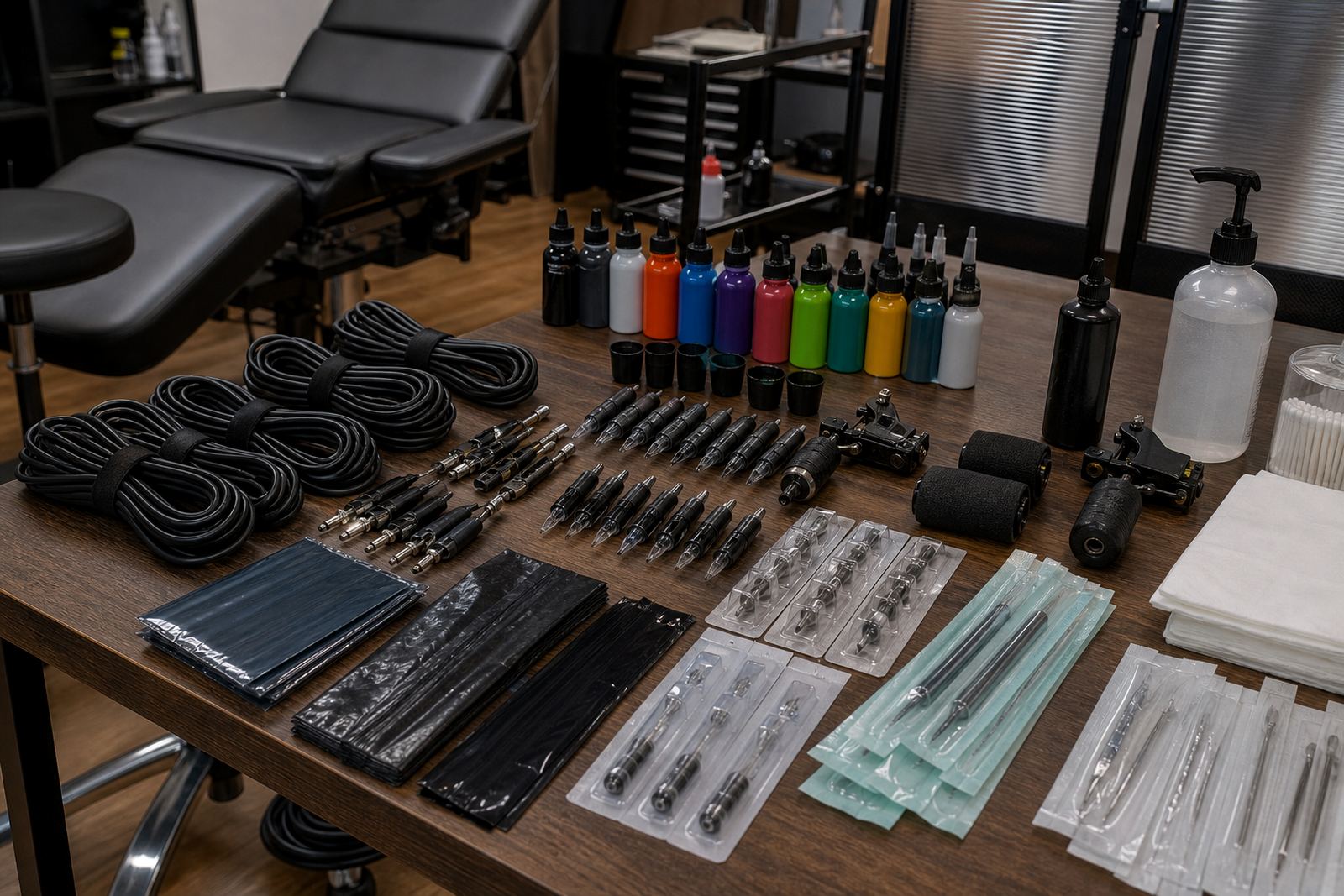
Storage matters more than many studios admit. A cord sleeve that has been folded into a tight corner of a consumables drawer often loses shape and becomes awkward to fit cleanly. Keep sleeves flat, dry and grouped by size so the right cover is easy to pull when station prep begins. That is useful in busy setups where the morning reset happens quickly and everyone needs the same layout to make sense.
In coastal areas like Gqeberha or Cape Town, moisture and salt air can make storage conditions less forgiving. Closed containers and dry shelving help keep packaging in better shape, while clear grouping reduces the chance of using the wrong size in a rush. A small stock check at the end of the week is usually enough to keep sleeves, disposable barriers and other studio supplies in order.
- Store sleeves flat rather than tightly rolled
- Group by size or cable type for quicker station prep
- Keep them away from damp floors and open cleaning fluids
- Review stock with the rest of the consumable reorders
A practical routine for one Cape Town station
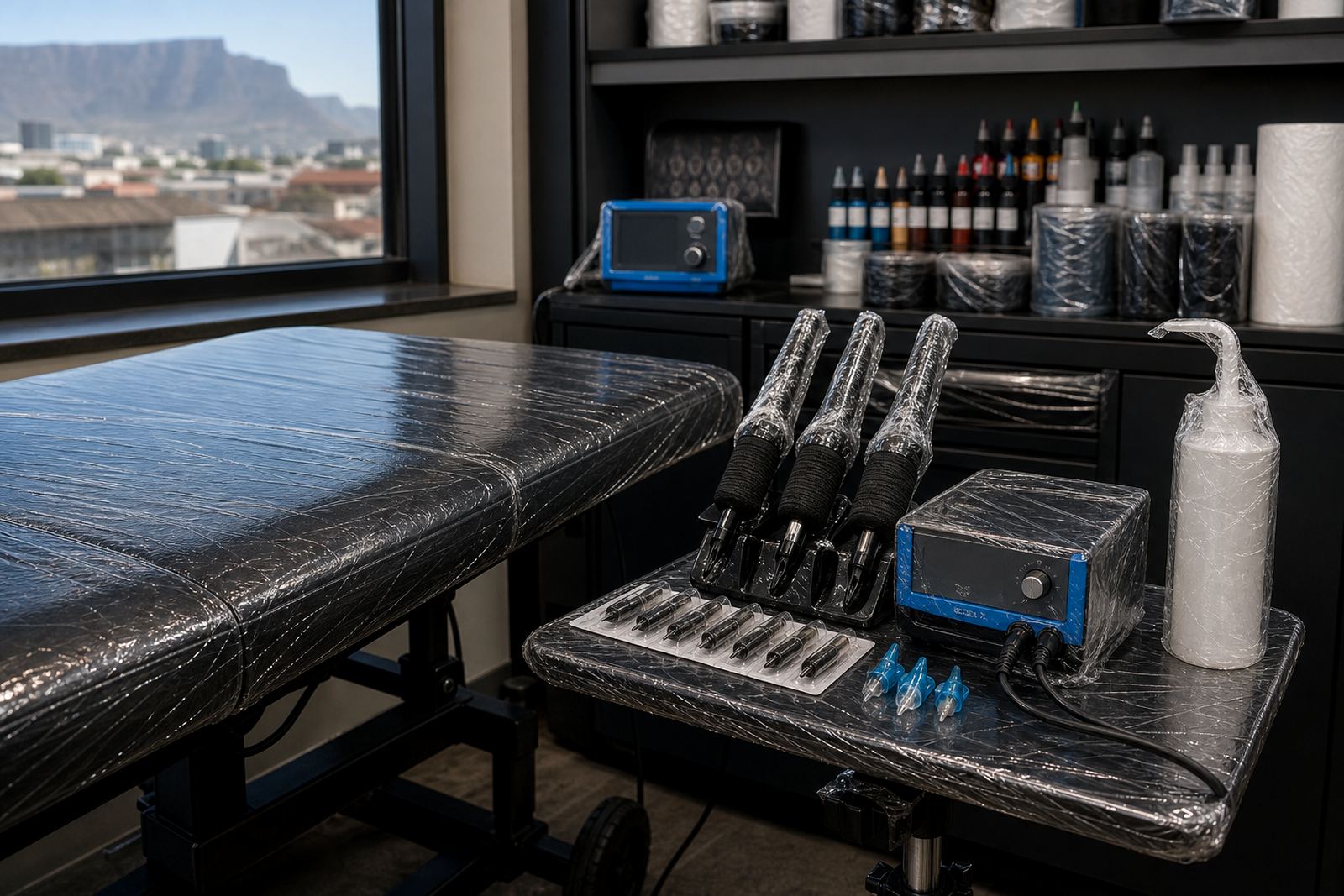
Take a compact station in Observatory as an example. The artist is working a full day with one wired machine, a foot pedal and a side-mounted power supply. Before the first client, the cable path is checked, the sleeve is fitted over the active lead, and the line is routed so it clears the chair wheel and the tray edge. After each session, the exposed parts of the station are cleaned, the cable is settled back into the same path, and any worn cover is replaced before the next client arrives.
That routine is not dramatic, but it saves time and keeps the station consistent across the day. It also makes it easier for a second artist stepping into the same room to understand the layout without adjusting everything from scratch. For studios handling deliveries across South Africa, the same habit applies whether the setup is in Pretoria, Durban or a smaller space in Stellenbosch.
Cord cover routines are one of those small practices that quietly support the whole station. They do not draw attention, but they help the wired side of the setup stay orderly, workable and easier to keep under control.