
What a rotary machine brings to the bench
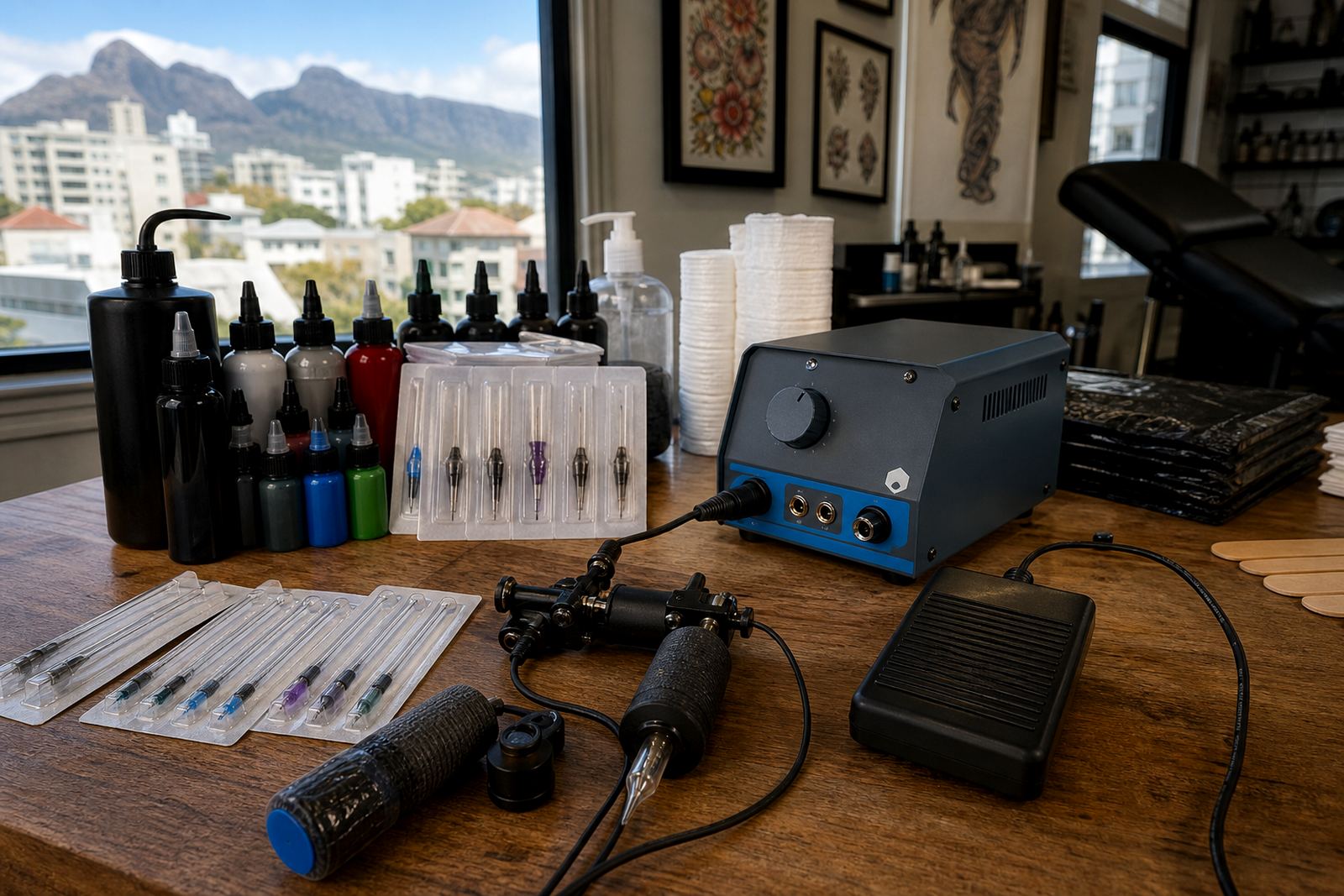
A rotary machine uses a motor to drive the needle bar in a controlled movement, which gives many artists a cleaner feel than heavier coil setups. That matters in busy studios where the same station may handle fine line work in the morning and fuller colour packing later in the day.
For supply planning, the machine is only one part of the picture. The needle grouping, cartridge fit, grip size and power source all affect how the setup behaves on skin and how comfortable it is to hold over a long session. In Cape Town's coastal humidity or in a drier Johannesburg studio, clean storage and sensible packing help keep parts in good working order.
Choosing the right rotary for the way you work
Not every rotary feels the same in hand. Some are lighter for detail work, while others have a bit more weight for steadier colour fills. Stroke length, motor strength and body balance all play a part, and the best match depends on the artist's hand speed and the type of work being done.
- Shorter stroke machines are often chosen for fine lining and softer shading.
- Mid-range stroke options suit mixed work across lining, shading and colour.
- Heavier duty styles can suit larger pieces and longer sessions.
- Wire or wireless power options should match the station's working flow.
For a new studio in Pretoria or a busy walk-in spot in Durban, the practical question is not only what the machine can do, but how easily the team can keep the setup consistent through the day.
Needles, cartridges and how the grouping changes the result
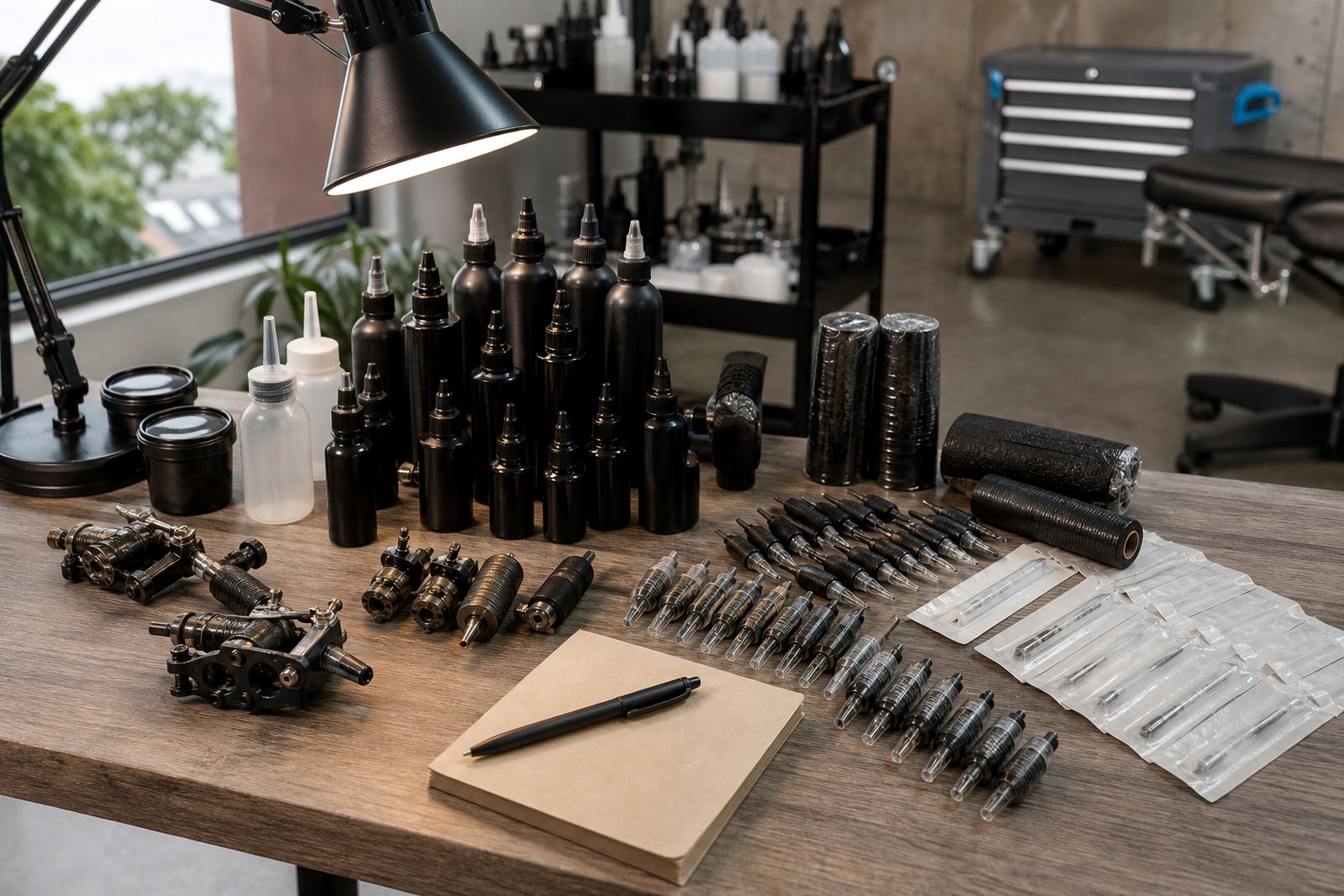
Needle grouping has a direct effect on how the machine lays down ink. Tight groupings are often used for crisp lines and detail, while wider groupings can suit shading and colour work. Cartridge systems make quick changes easier at the station, which helps when the artist moves between different sections of a piece.
Good stock control is useful here. A studio that works across Cape Town, Stellenbosch and Bellville may use a different mix of round liners, mags and soft edge cartridges depending on the daybook. Keeping those groupings sorted by purpose prevents mix-ups at the bench and saves time during setup.
- Round liners for detail and line control.
- Round shaders for softer fill and controlled shading.
- Magnums for broader colour and grey work.
- Cartridges stored sealed, clean and grouped by size.
Set up the station so the machine can do its job
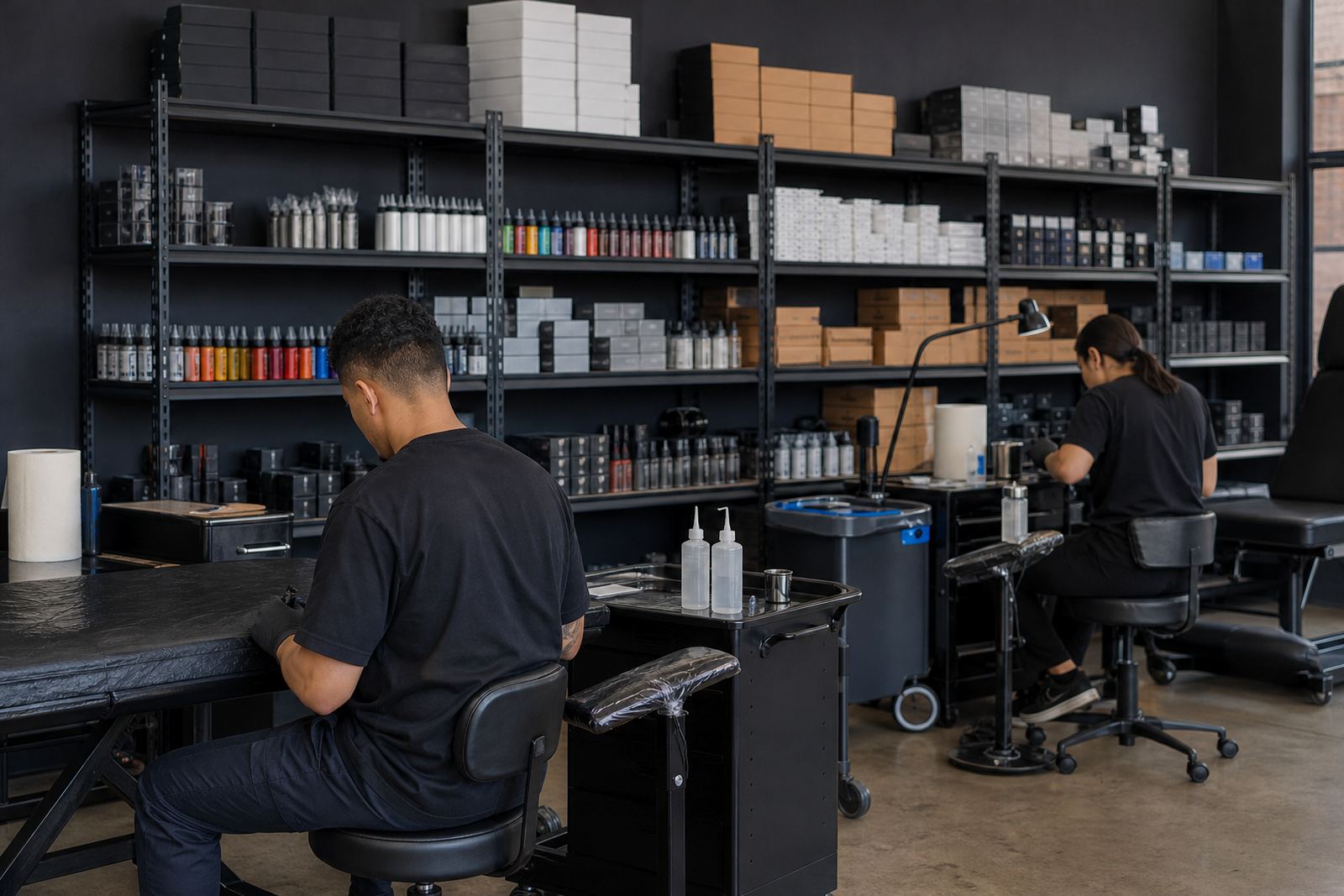
Rotary machines work best in a clean, organised station. That means grips, tip options, power leads or battery packs, clip covers, barriers and sterile single-use items kept in order before the session starts. A tidy layout reduces fumbling, which is useful when the day is full and the studio is moving from one client to the next.
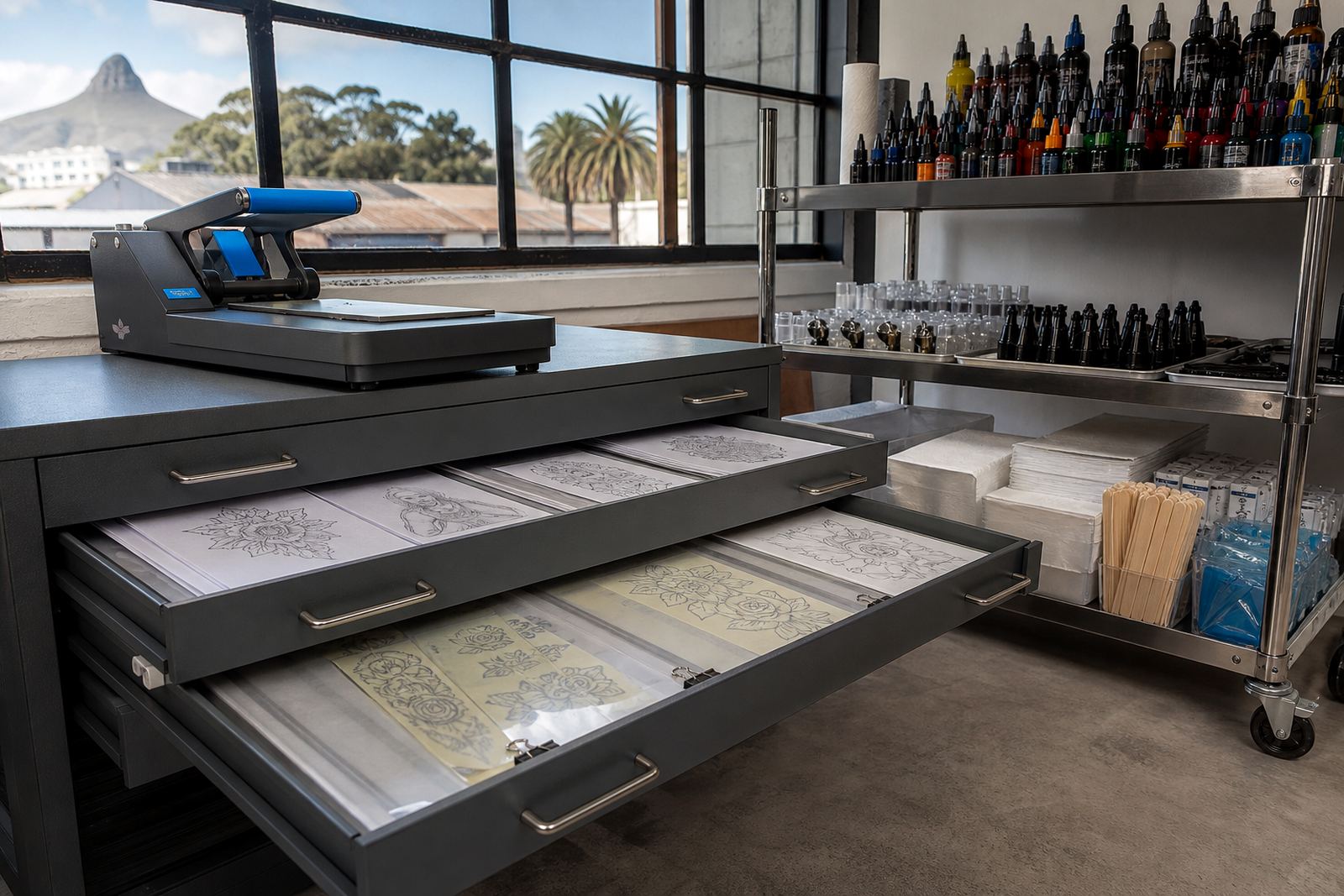
Station planning also helps with supply counts. When the same drawer holds cartridges, ink caps, wipes and barriers, it is easier to see what is running low and to restock in time. For studios in Gqeberha or Somerset West, where sea air can affect stored metal parts, closed containers and dry shelving are worth the effort.
- Keep sterile items sealed until needed.
- Store inks upright and away from direct sun.
- Use labelled tubs for mixed needle sizes.
- Check grips, caps and cable ends before each day starts.
Inks and flow matching in a rotary setup
The machine will only perform as well as the inks and needles allow. Thicker inks, thinner inks and different pigment loads all move through the setup differently, so the artist needs a machine that can keep a steady rhythm without forcing the hand. That is why many studios keep a range of inks in grouped storage, then match them to the needle choice and the intended result.
In a practical supply plan, this means checking bottle sizes, planned usage and how often each colour line is opened. If the studio does a lot of black work one week and full colour the next, consumable reorders should reflect that pattern rather than a fixed monthly guess. It is a small detail, but it keeps the station ready and the workflow calm.
Ordering for a studio that runs all week
Most tattoo studios need a mix of repeat stock and occasional extras. That includes cartridges in common groupings, spare grips, sterile single-use consumables, barriers, ointment cups, cleaning supplies and storage items. A sensible reorder plan keeps the core line available while still leaving room for the custom jobs and larger bookings that show up without warning.
InkX Tattoo supports studios across Cape Town, Johannesburg, Durban, Pretoria and Gqeberha, with delivery to areas including Observatory, Bellville and Stellenbosch. For larger orders, it helps to group items by machine type, station and expected use so the warehouse pack is simple and the bench restock is straightforward.
- Group items by station, not only by product type.
- Keep a small reserve for last minute bookings.
- Separate everyday consumables from low-turn specialist items.
- Review what moves fastest before the next restock.