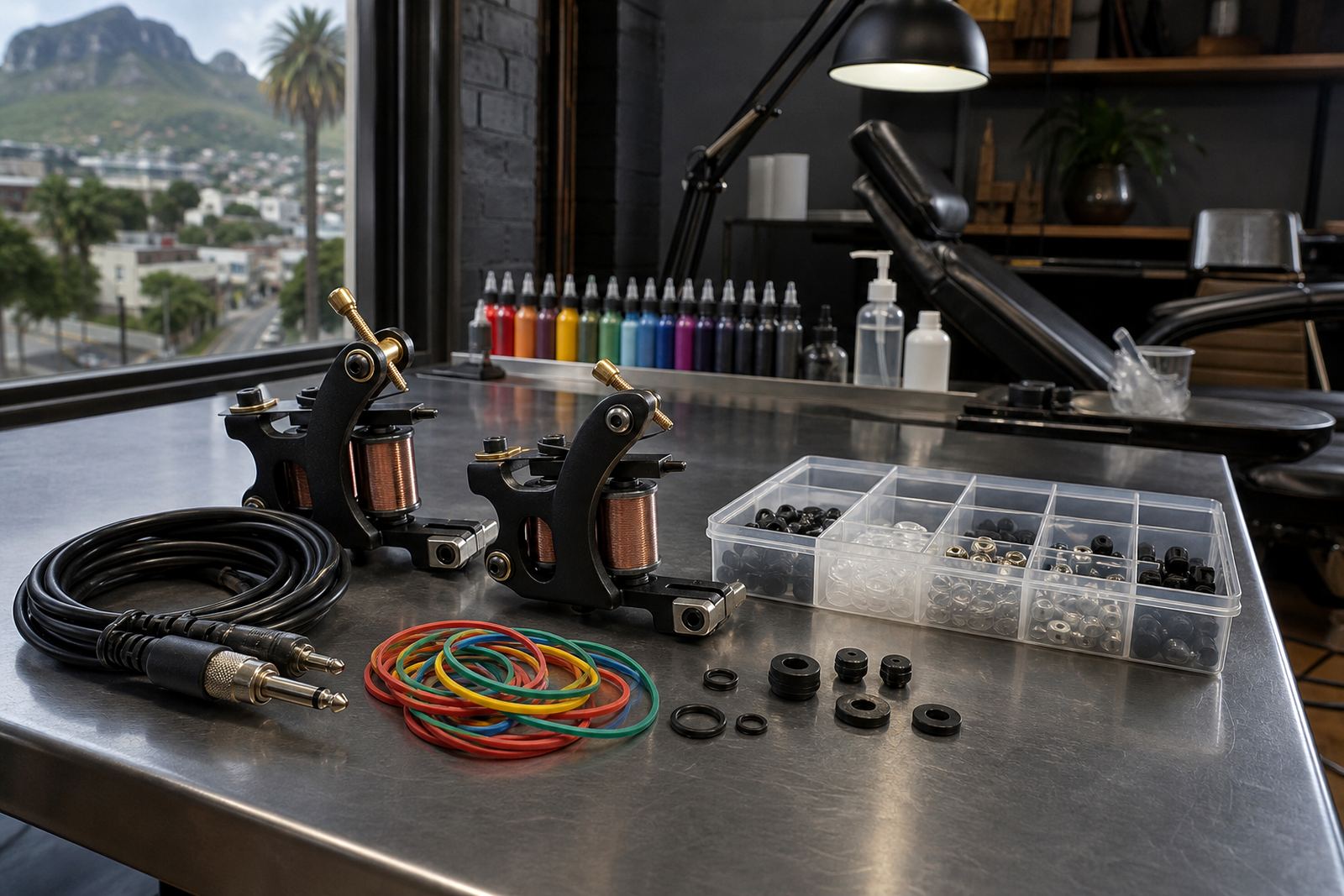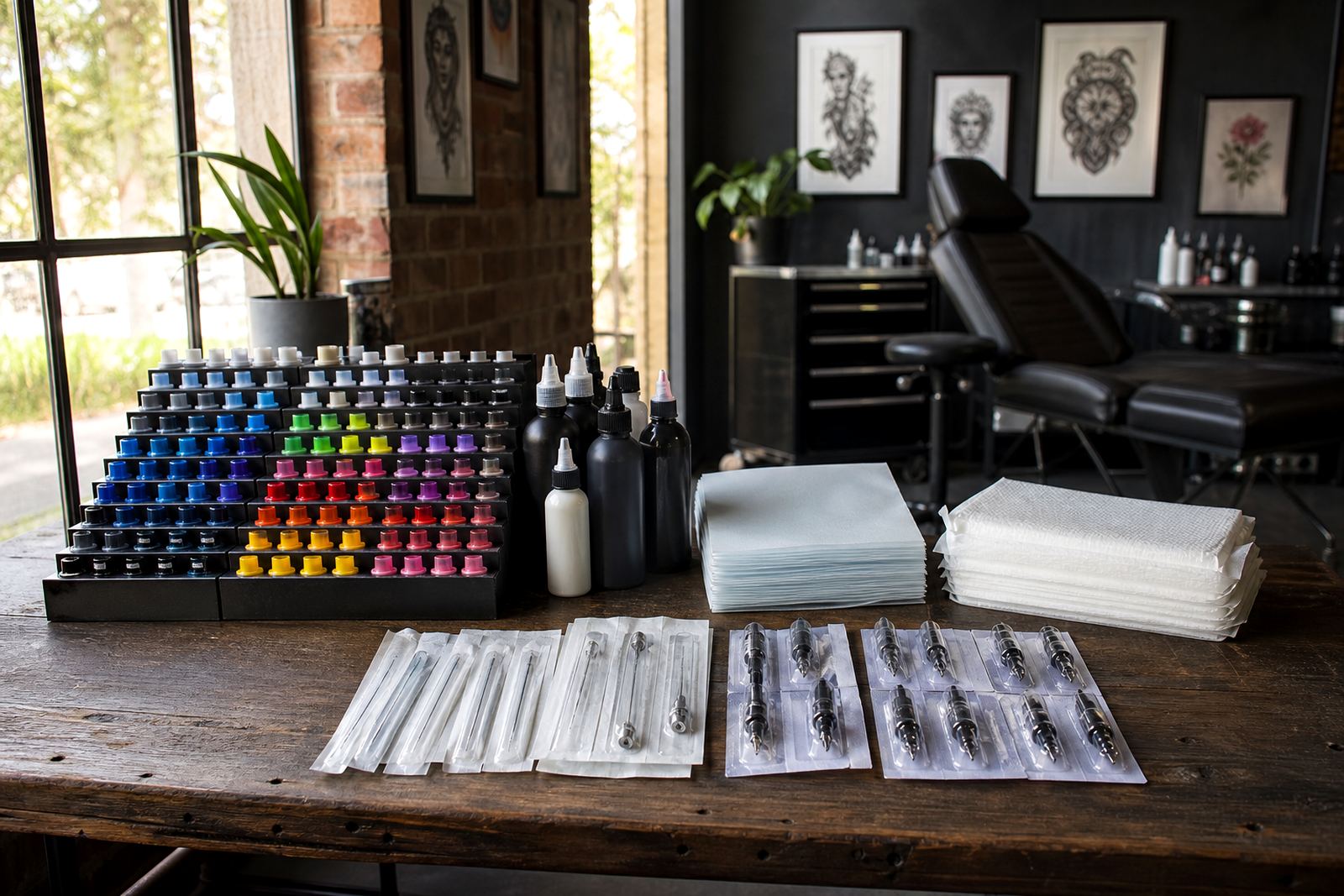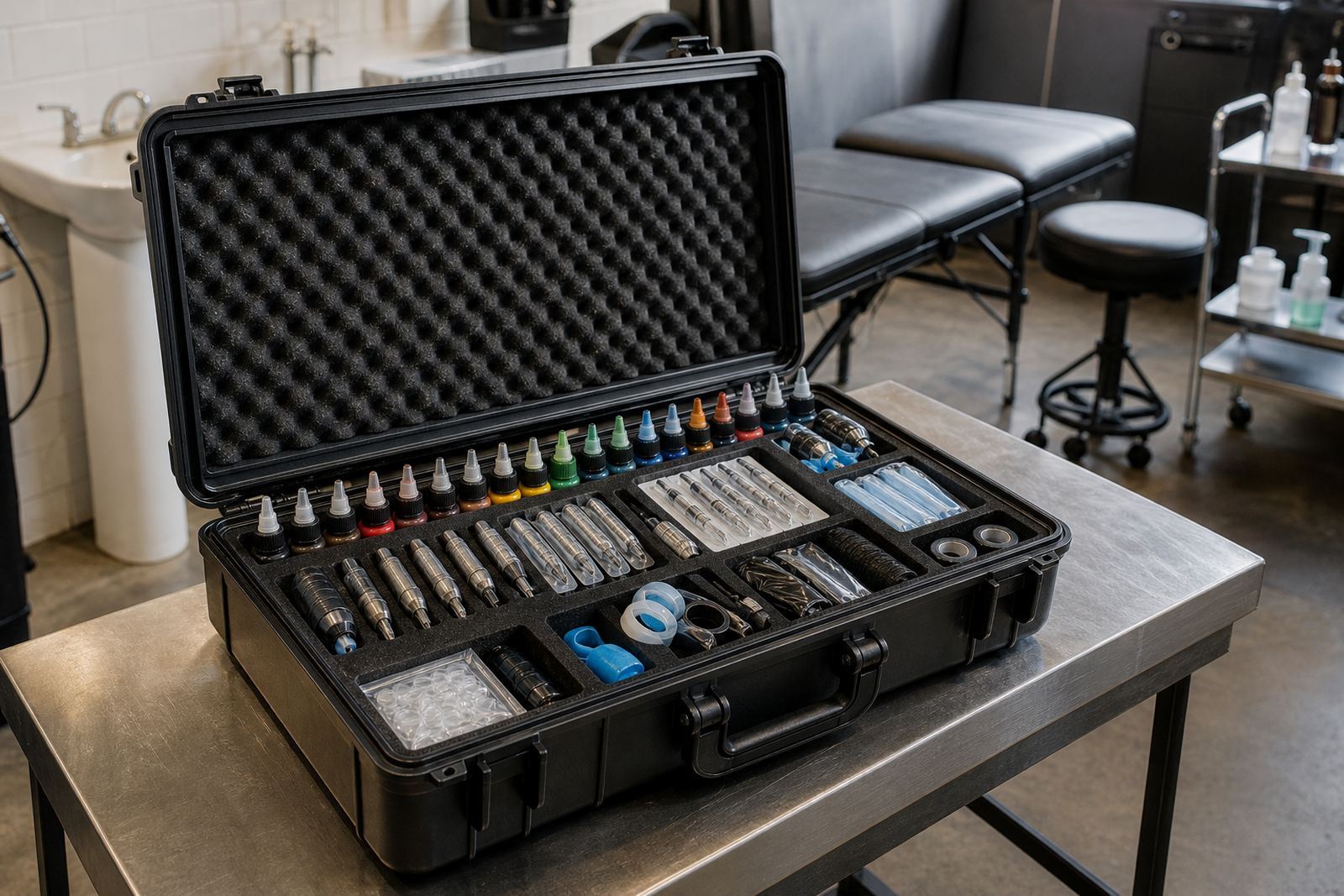

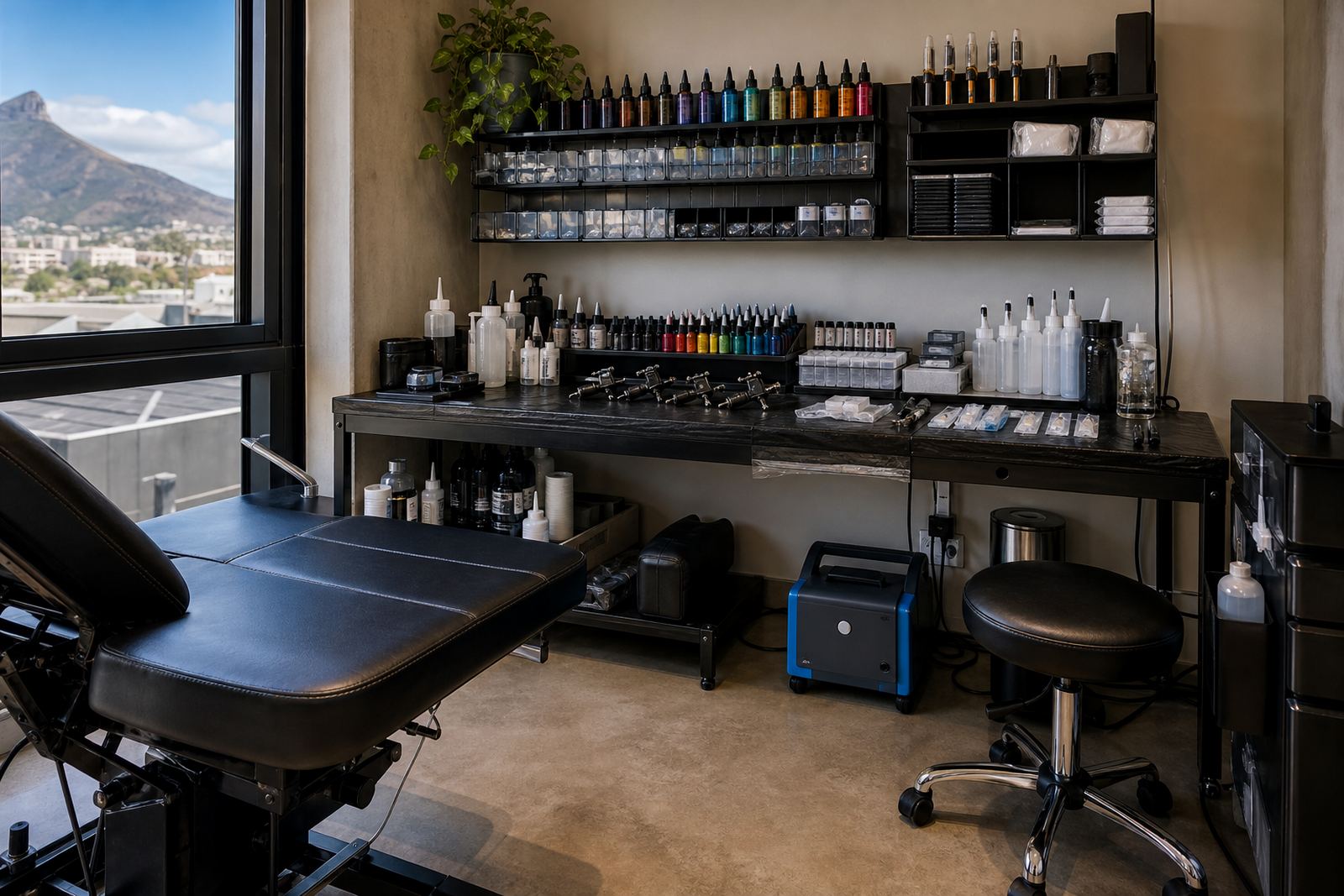
Start the morning with the parts that move fastest
Appointment days usually go smoother when the first task is checking the items that disappear quickest: needles, cartridge groupings, gloves, ink caps, rinse cups, wraps and sterile single-use packs. In a busy Cape Town studio, that check is often done before the shutters are fully up, while the team confirms which artists are booked for the day and what style of work is on the schedule.
Keep the fast-moving stock in one place rather than spread across drawers and counter tops. A small count at the start of the day saves time later, especially when a piercing or tattoo session runs longer than expected and the next client is already in the chair.
- Separate stock by use, not by supplier box
- Keep needle and cartridge groupings labelled by configuration
- Place fresh barrier items where each station can reach them easily
- Check expiry dates and packaging integrity before setup
Build each station for one booking at a time
A booked day works best when every station is set up for the next appointment, not for the whole week. That means one clean tray, one working setup and one clear path for used items to move away from clean stock. In studios around Observatory and Stellenbosch, the difference is often simple: less clutter on the surface and fewer crossings between clean and used areas.
Machines, grips, cartridges, ink caps and barrier materials should be arranged in the order they will be used. If the artist needs to switch between lining and shading, keep the matching cartridges or needles together so the change is quick and controlled. Storage boxes for unopened stock should stay closed and off the main working surface.
- Prep one station per booked client where possible
- Keep clean and used items physically separated
- Group cartridges or needles by configuration and session type
- Store unopened consumables away from moisture and dust
Map the day around the artists, not the shelves
Appointment flow becomes easier when the stock room supports the booking sheet. If one artist works fine line designs, another handles larger colour pieces and a third covers touch-ups, the consumable list will be different for each. That is where range grouping advice helps, because the studio can sort stock by practical use rather than by broad category alone.
For a Durban studio dealing with coastal humidity, storage needs a bit more care. Sealed containers, dry shelving and clear labelling help protect packaging and reduce damage from damp air. In Gauteng, the issue may be dust and busy turnover, so frequent top-up checks matter more than moisture. The point is the same in both places: the stock system should fit the way the studio actually works.
- Match stock grouping to the styles booked that week
- Keep moisture-sensitive items in sealed storage
- Separate travel kits from in-studio kits
- Review consumable use per artist so reorders stay accurate
Midday restock without breaking the rhythm
The middle of the day is often where studios lose time. Someone has to search for a fresh cartridge pack, another artist needs a different ink shade, and a new booking arrives while the front area is already busy. A simple replenishment routine, built around the gaps between appointments, keeps the pace steady without forcing anyone to stop work completely.
Consumable reorders should be timed to actual use, not guesswork. If the studio sees regular spikes on Saturdays or during school holidays, keep a buffer for those periods and watch the stock room closely in the days before. This is also the right moment to confirm dispatch updates for incoming parcels and to replace any damaged packaging before it reaches the floor.
- Use short top-up checks between sessions
- Keep a small reserve for peak booking days
- Log substitutions so the next order stays accurate
- Move damaged or open packs out of active stock immediately
Keep hygiene tasks tied to the booking rhythm
Studio hygiene works best when it is part of the appointment flow, not an extra job added at the end of the day. That means fresh coverings before each client, correct disposal for used items and a clear reset after every session. Local health regulations must always be followed, and each studio should keep its own procedures in line with the rules that apply to its area and services.
For scheduled bookings, it helps to assign the reset task to a particular point in the handover. Once one client leaves, the station is cleared, wiped and prepared before the next set of materials is opened. This approach suits both compact studios in Bellville and larger spaces serving several artists at once.
- Reset the station after each client, not at the end of the shift
- Keep sterile single-use supplies sealed until needed
- Use labelled containers for disposal and used barriers
- Recheck surfaces, cables and hand contact points before the next booking
Use the front end of the day to protect the back end
The first hour sets the tone for the rest of the appointment day. If the booking list, machine match help, cartridge match help and stock list help have already been done, the team can move through the day with fewer interruptions. That matters for studios handling delivery areas across Cape Town, Johannesburg, Durban, Pretoria and Gqeberha, where order timing and stock cover can affect how smoothly the week runs.
A practical example: a compact Observatory studio with three booked sessions can line up its stations the night before, split the inks by planned work and keep an eye on seasonal restock plans before a busy month. The result is not flashy, just calmer. Fewer trips to the storage shelf, fewer half-open packs on the counter and less pressure when the afternoon gets crowded.
That is the real value of appointment day flow. It turns stock control into part of the booking routine, so the studio is ready for the next client without scrambling for the next item.