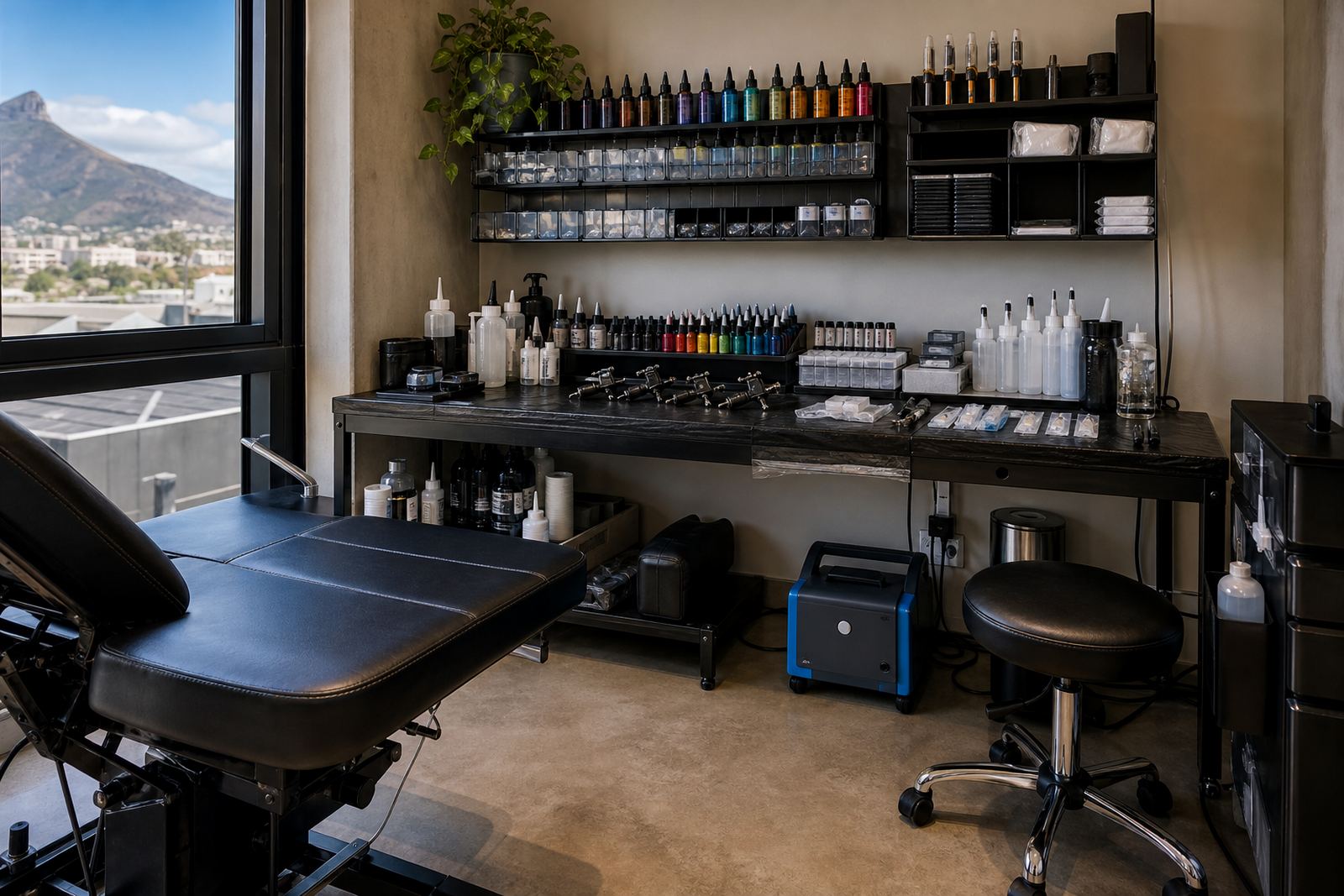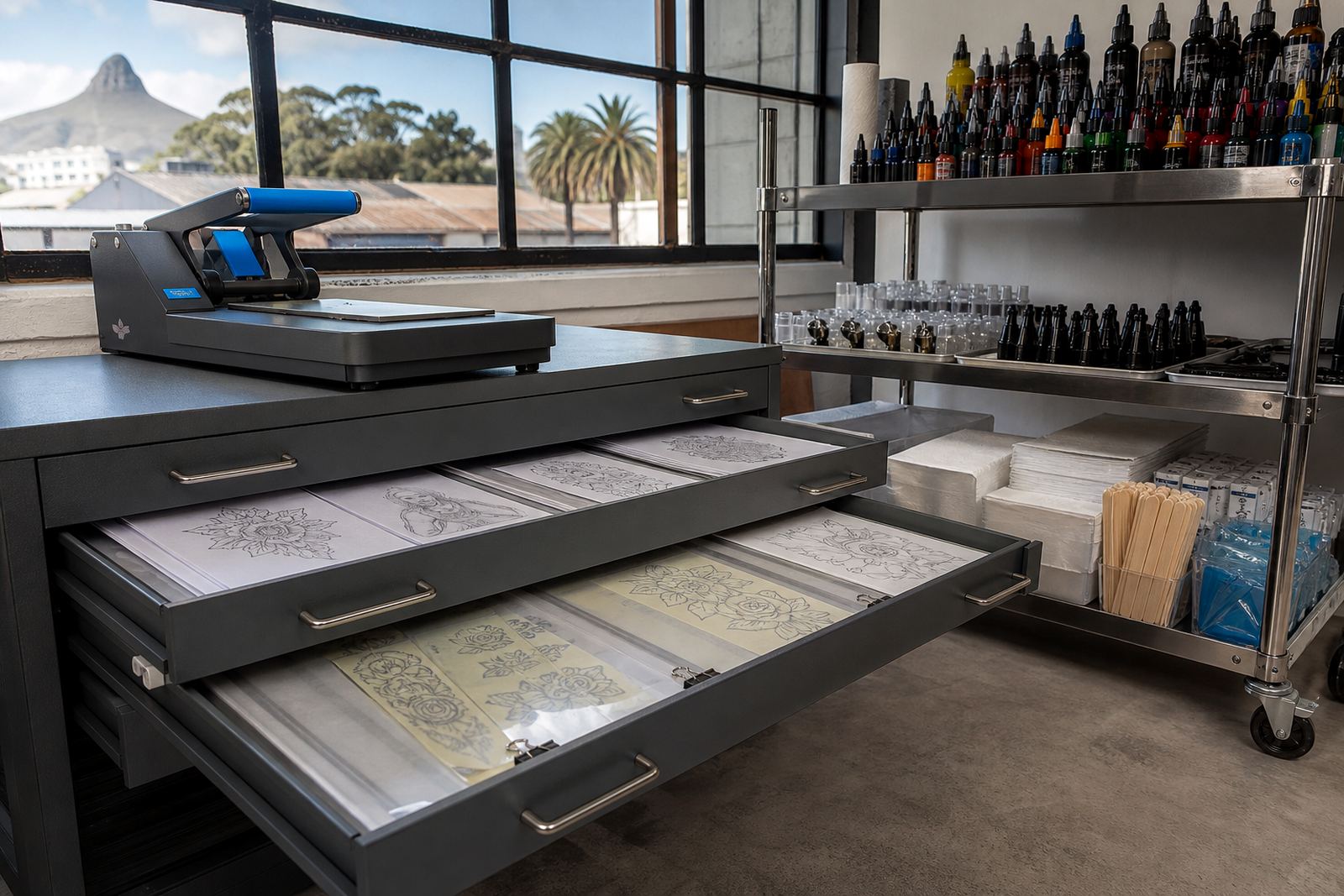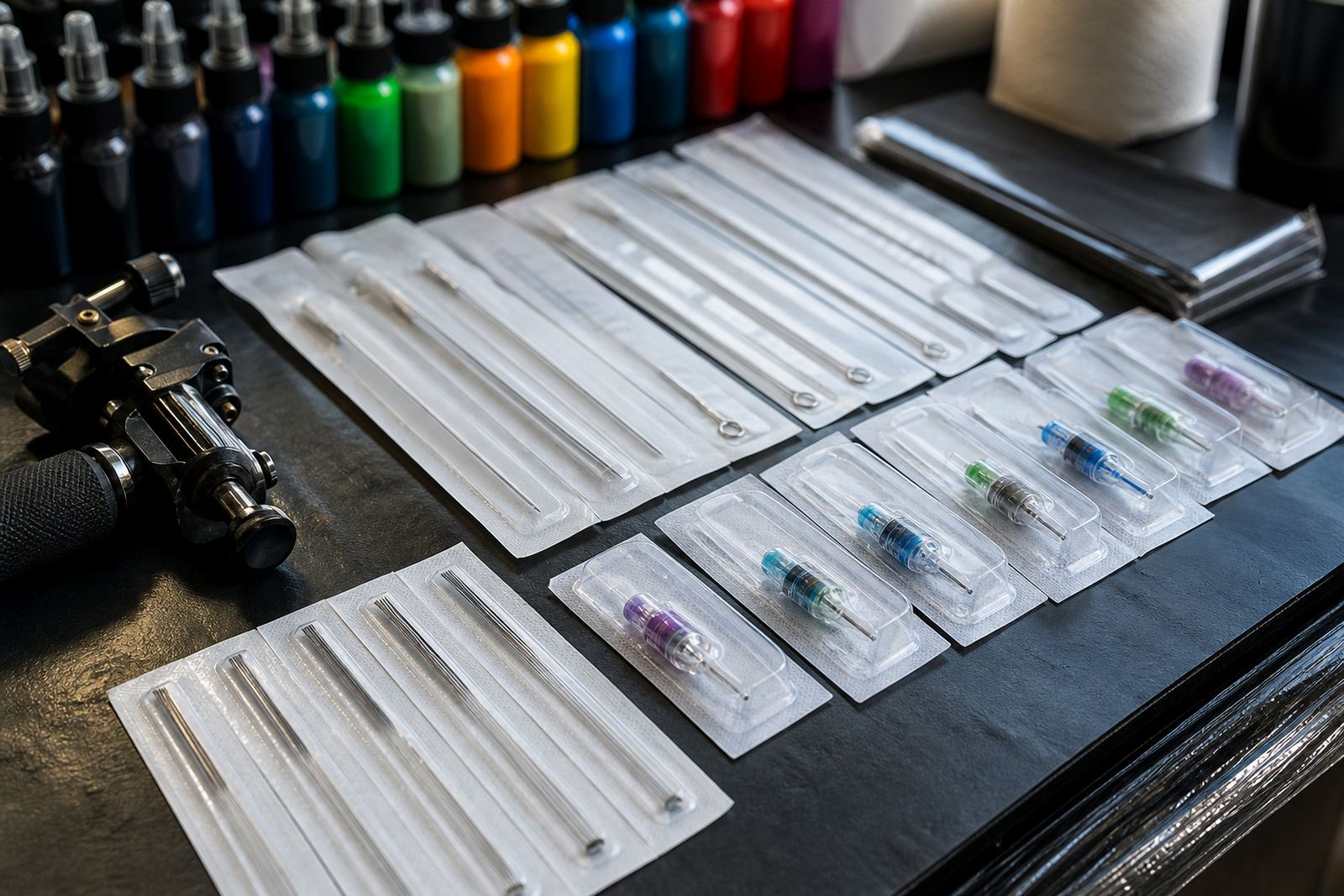

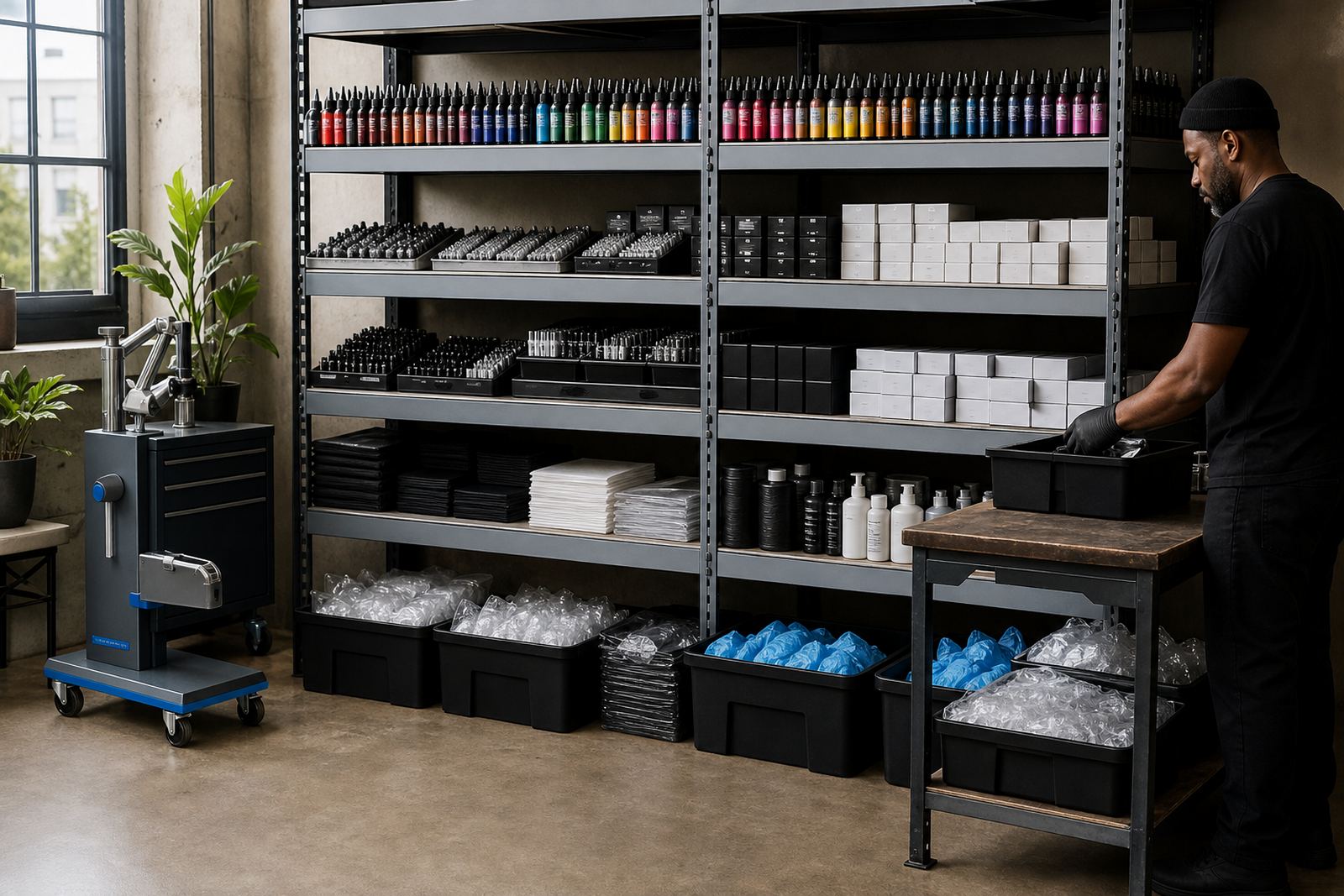
Start with four clear zones, not one crowded shelf
The easiest way to organise a tattoo stock room is to split it into four zones: inks, cartridges and needles, machines, and sterile single-use consumables. Keep each group on its own shelf or bin stack, then add a simple label and an internal order that makes sense for your team. That way the item you need is not buried under spare sleeves, grips or cleaning stock.
For smaller studios in Observatory or Stellenbosch, even one wall unit can work if you divide it into sections from top to bottom. Put the most frequently used items at eye level and reserve the lower shelves for heavier cartons, back-up stock and bulk packs. In a coastal space, keeping stock off the floor also helps when humidity rises in winter.
Keep inks upright and grouped by use, not colour alone
Ink storage works better when bottles are grouped by function and frequency of use. Many studios separate line work colours, shading sets, skin tones and black inks so the team can move quickly during a session. If you stock a wide range, keep each group in a tray or shallow tub with the labels facing forward.
- Place bottles upright to reduce spills and messy shelf tops.
- Use one shelf for daily-use inks and another for slower-moving colours.
- Keep caps, droppers and open bottles in one small container per group.
- Check expiry dates and batch details as part of weekly stock counts.
In Durban or Gqeberha, where warmth and moisture can build up, a closed cupboard away from direct sun is usually better than an open window shelf. A clean, cool cupboard also makes it easier to spot leaks before they spread.
Sort needles and cartridges by grouping and point type
Needles and cartridges are easier to manage when they are arranged by grouping first, then by configuration. Keep round liner groupings apart from shader and mag groupings, then separate the finer counts from the larger ones. This avoids the common problem of staff pulling the wrong box when the room gets busy.
Use a shelf divider or small lidded bin for each size family, and keep unopened packs in front of loose cartons if you have a mixed range. If your studio handles high volume work, colour-coded shelf tags can help, but plain written labels are usually enough when the stock room is tidy. For machine cartridges, it helps to store them close to the area where they are used, while still away from dust and handling marks.
Machines need their own shelf space, not mixed storage
Tattoo machines are best stored separately from inks and consumables. A dedicated shelf or padded tray keeps them from getting scratched, bent or buried under lighter stock. This also makes intake checks easier when new machines arrive and old ones are rotated out for servicing or display.
- Use a dry, dust-free shelf with enough space around each unit.
- Keep power units, clips and spare parts in a separate labelled tray.
- Do not stack heavy cartons on top of machines or wraps.
- Store any test accessories together so nothing goes missing between sessions.
If you run a compact studio in Pretoria or Bellville, a narrow vertical rack can free up floor space while still keeping machine stock visible. The main thing is to keep items easy to reach and easy to count.
Single-use consumables should move in front of older stock
Sterile single-use supplies work best on a first in, first out system. Place the older cartons at the front of the shelf and the newest stock behind them. This keeps the room orderly and reduces the chance of opening a newer pack while older stock is still sitting unused.
Keep barriers, gloves, wraps, caps, disposable trays and other consumables in separate bins where possible. Mixed cartons slow the team down and make restocking harder. In a studio with frequent walk-ins or booked sessions, a quick grab-and-go shelf for daily consumables saves time and keeps the rest of the storage area calmer. Follow local health regulations for handling, storage and disposal, and keep your internal process consistent across the team.
A local shelf map helps when deliveries arrive at different times
Many South African studios receive mixed deliveries through the week, so the shelf plan needs to support both unpacking and reordering. A practical approach is to mark each shelf with a fixed category and a reorder line. Once the stock drops below that line, the team knows it is time to review quantities before the next busy period.
For example, a Johannesburg studio might keep inks and cartridges on one wall, machines and parts on another, and sterile consumables in a locked cabinet near the prep area. A Cape Town studio close to the coast may prefer enclosed shelving to keep dust and moisture down. The exact layout matters less than consistency, because a steady system makes stock counts faster and storage mistakes easier to spot.
- Use fixed labels for every shelf section.
- Keep new deliveries separate until they are checked and sorted.
- Leave room for seasonal restock spikes before long weekends and convention periods.
- Review the layout after a few weeks and move slow items lower or higher as needed.
A practical setup is one people can follow under pressure
The best shelf zoning is not the neatest one on day one, it is the one the whole studio can use without thinking. If every item has a place, stock counts are cleaner, reorders are easier and the prep area stays more controlled during busy sessions. Keep the system simple enough for casual staff too, because a complicated setup usually slips after the first rush.
When your storage is arranged by category, group size and usage rate, you spend less time searching and more time keeping the room in order. That matters whether you are working from Observatory, running a branch in Durban or sending stock to a Gqeberha studio. A clear shelf map is small work, but it pays off every week.