
Why machine covers sit in the station sequence
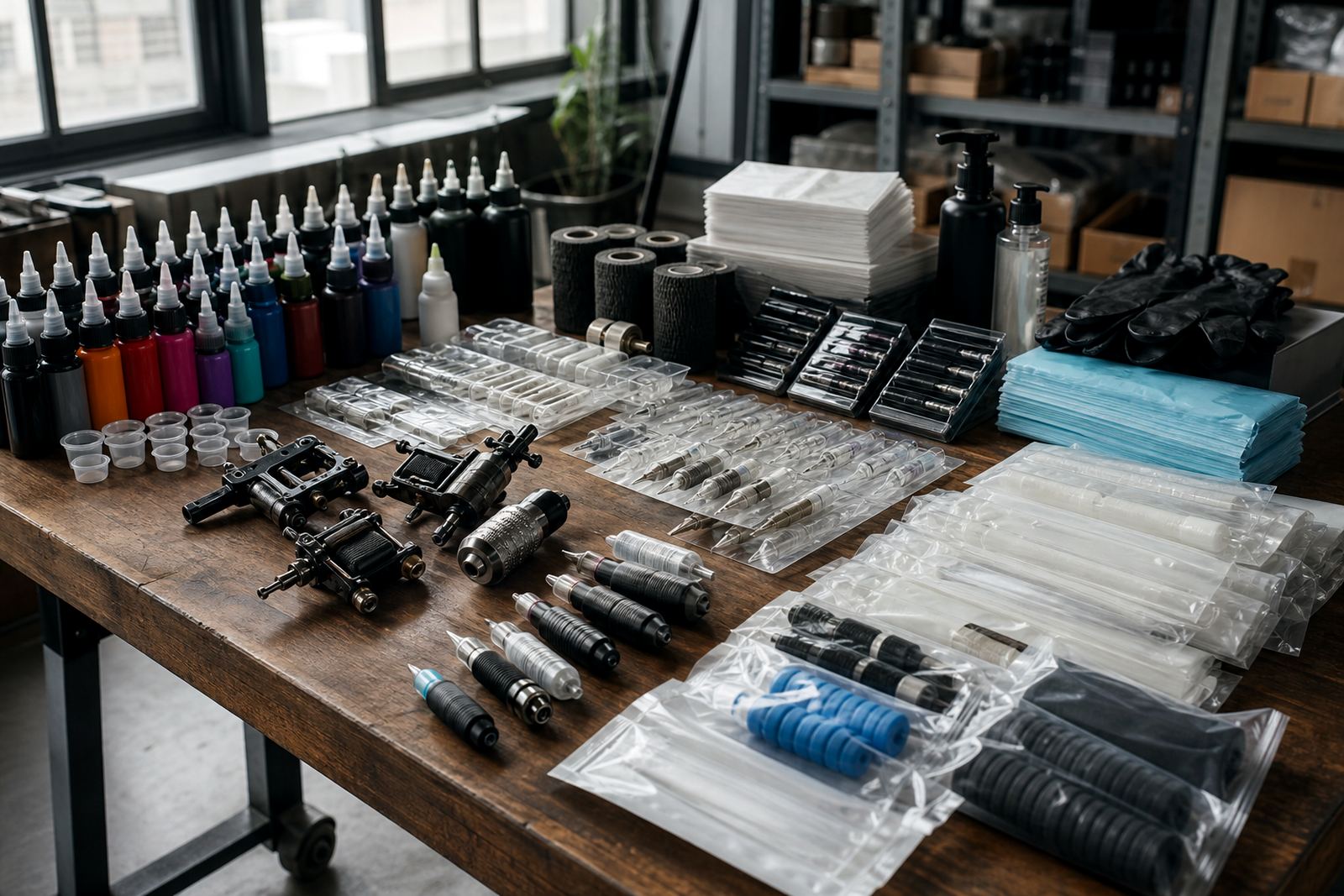
In a working tattoo studio, the machine is handled more than almost any other tool on the station. It gets picked up, adjusted, wiped, passed across wrapped surfaces and set down between tasks, so it makes sense to cover it before the first line is made. A proper machine cover is part of the single-use plan that protects the equipment surface from ink splash, glove contact and general handling through the session.
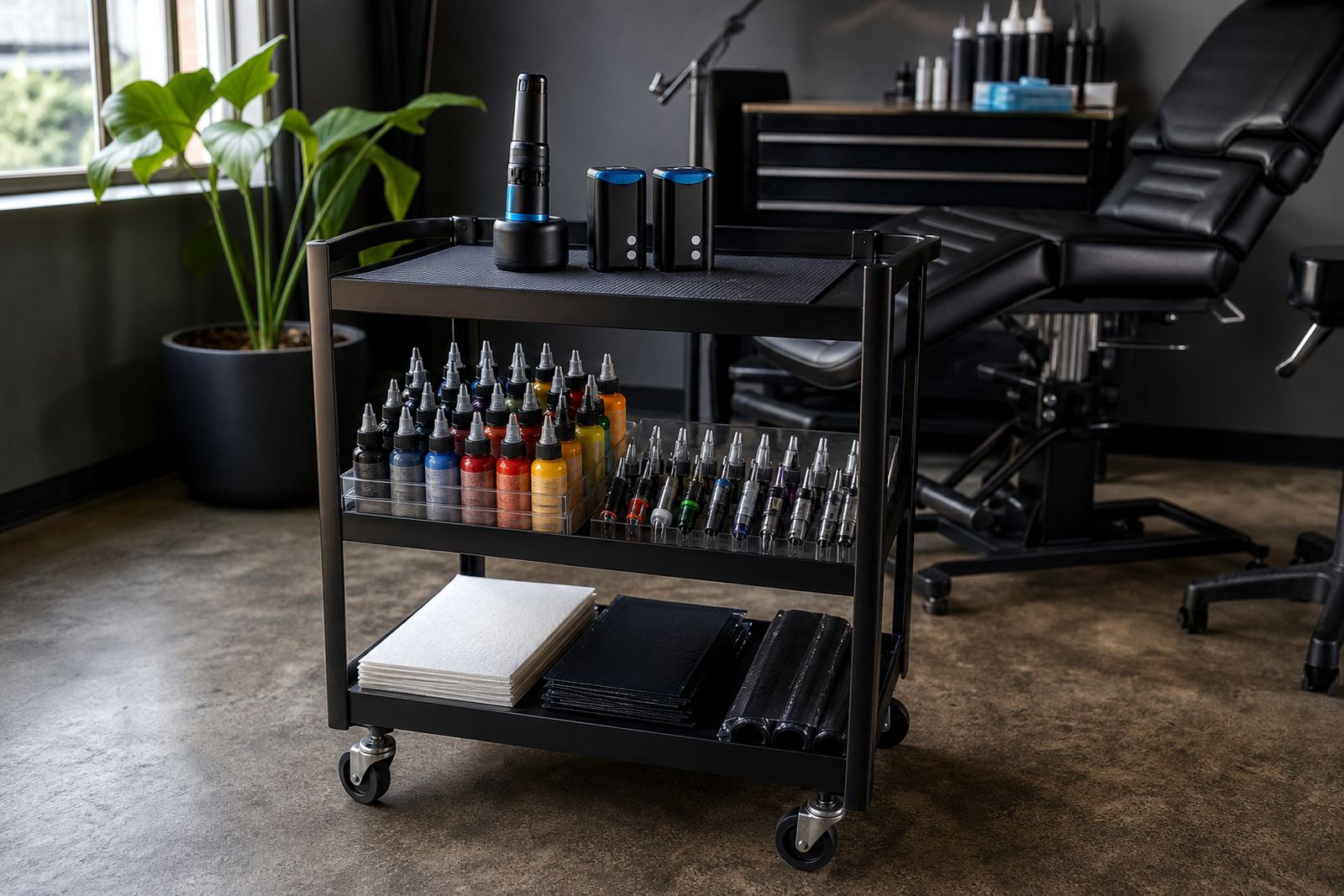
Most studios in South Africa treat machine covers as one step in a wider station routine that also includes wrapped power units, clip cords or battery packs, barrier film on contact points, and a clean tray layout. The aim is practical rather than fancy: keep the work area ordered, reduce cross-contact and make end-of-session cleaning faster. For studios in coastal places like Cape Town or Gqeberha, where moisture in the air can affect storage and paper-based consumables, keeping covers sealed and dry matters as much as how they are used.
Picking the right cover for the machine shape
Machine covers are not all used in the same way. Some are fitted sleeves for pen-style machines, others are longer bags or wraps for heavier coil or rotary bodies. The right size should slide over the machine without bunching so much that it interferes with grip, trigger movement or balance. If the cover is too loose, it can shift during work; if it is too tight, it can make the machine awkward to handle.
Studios often keep more than one grouping on hand, especially when the team works with different machine formats. A small selection of cover sizes can make station prep smoother and reduce waste. When ordering for a multi-artist studio, it helps to match the cover size to the machines used most often, then keep a few larger options for the heavier units.
- Pen-style machines usually need slim sleeves with a neat fit around the barrel.
- Bulkier machines need wider covers that leave space for grip and movement.
- Corded setups may need extra length to cover the connection area neatly.
- Battery units often benefit from a cover that does not press on buttons or screens.
How single-use prep works around the machine
Good station prep starts before the client sits down. The machine cover is usually placed after the machine has been checked, wrapped or fitted for the session and before inks, needles and other consumables are opened. That order matters because once the cover is on, the machine can be moved into the station without handling the body directly again. It keeps the workflow tidy and helps everyone on the floor know what has already been prepared.
In a busy studio, the cover also helps define where the clean handling zone ends. The artist can keep the grip, machine body and cord sections within a covered area while the needle groupings, cartridge boxes and rinse cups sit in their own prepared spaces. This is especially useful when there are multiple stations running at once and artists need to avoid reaching across one another’s setup.
Station prep habits that save time
Machine cover routines work best when they are consistent across the team. A new artist and a senior artist can use slightly different styles of work, but the station should still follow the same basic sequence so nothing gets missed. The cover is just one item in that sequence, yet it sets the tone for the rest of the table.
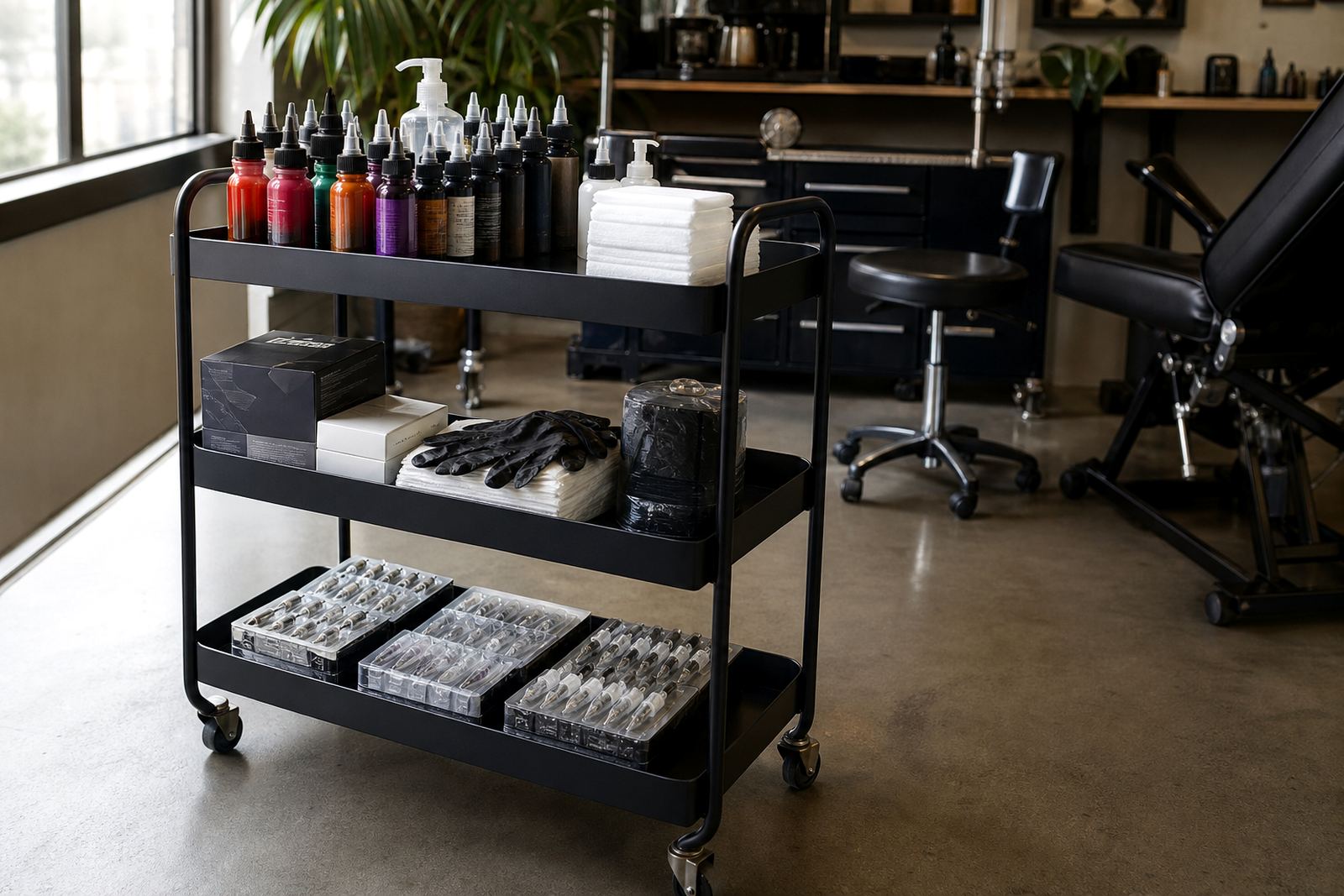
Many South African studios keep a small prep bin or drawer near the station with the day’s consumables grouped by use. That usually includes covers, barrier film, clip cord sleeves, gloves, disposable grips where used, and paper towels. When these items are grouped together, the artist is less likely to open extra packs mid-session or leave sealed items exposed to dust, especially in open-plan spaces where fans or air movement can carry particles across the room.
- Open only the covers needed for the session, then reseal the rest.
- Keep covered items away from rinse water, spray bottles and damp counters.
- Match the cover to the machine before the client is seated.
- Dispose of the used cover with the rest of the single-use station waste.
Storage that keeps covers ready for work
Machine covers are simple consumables, but they still need proper storage. Keep them in a dry cupboard or sealed box and off the floor, especially in studios close to the sea where humidity can creep into packaging. In Johannesburg or Pretoria the issue is often dust from traffic or building work, so sealed storage still helps. If packaging is left open on a prep surface, covers can pick up dirt long before they are used.
It helps to store covers in the same area as the other disposable station supplies, but not where wash bottles or used tools are handled. That separation makes stock checks faster and reduces mix-ups during a busy day. Studios that do regular stock counts can also spot which sizes are moving fastest and adjust order quantities before the shelves run low.
A Cape Town studio example
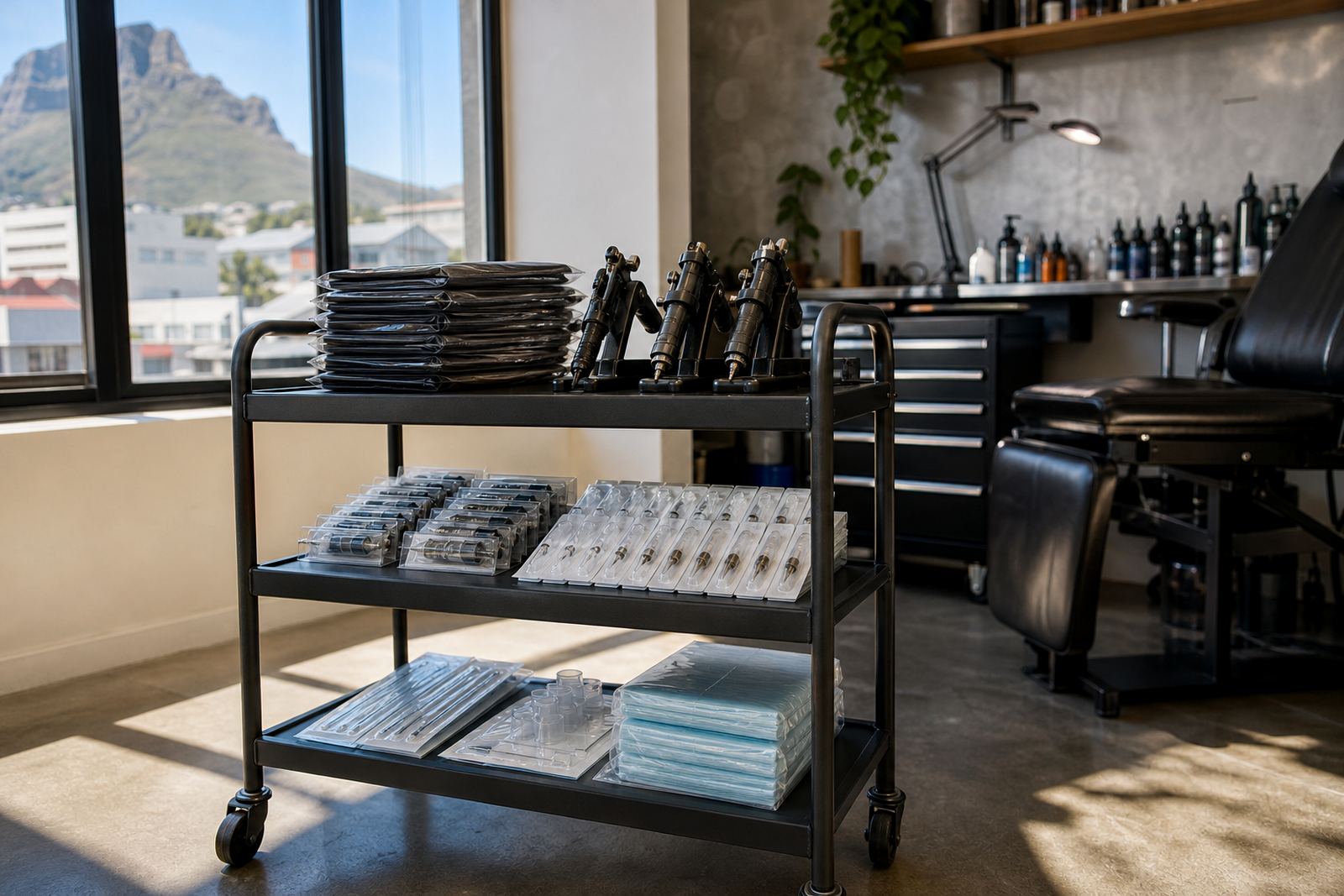
A small studio in Observatory with two workstations might prepare the morning shift by laying out each station with a selected machine cover, a wrapped machine, needle groupings for the booked styles and the usual disposable consumables. One artist may be working with a slim pen machine while another uses a larger body, so the cover sizes are different even though the station logic is the same. Once both stations are set, the team can see at a glance which items are ready and which still need to be opened.
That sort of routine is useful when the day has short gaps between clients. There is less stopping and starting, fewer open packs on the counter and a better chance of keeping the workspace organised from the first session to the last. For studios that deliver to Cape Town, Johannesburg, Durban, Pretoria and Gqeberha, the practical value is the same: the right cover in the right size, stored properly and used in the same order every time.
What to review before the next restock
When a studio reviews machine covers, it is usually worth checking more than the count on the shelf. The team should look at which machine types are used most often, how many stations need to be stocked each day and whether any covers are being wasted because the fit is poor. That can shape future orders more usefully than a rough guess.
It also helps to review how machine covers sit alongside the rest of the station plan. If needle groupings, cartridge formats and machine bodies are changing through the week, the cover stock should be able to keep pace. Follow local health regulations, use single-use items as intended and keep storage conditions clean and dry so the routine stays practical for the whole studio.