
Set the cap line before the first client sits down
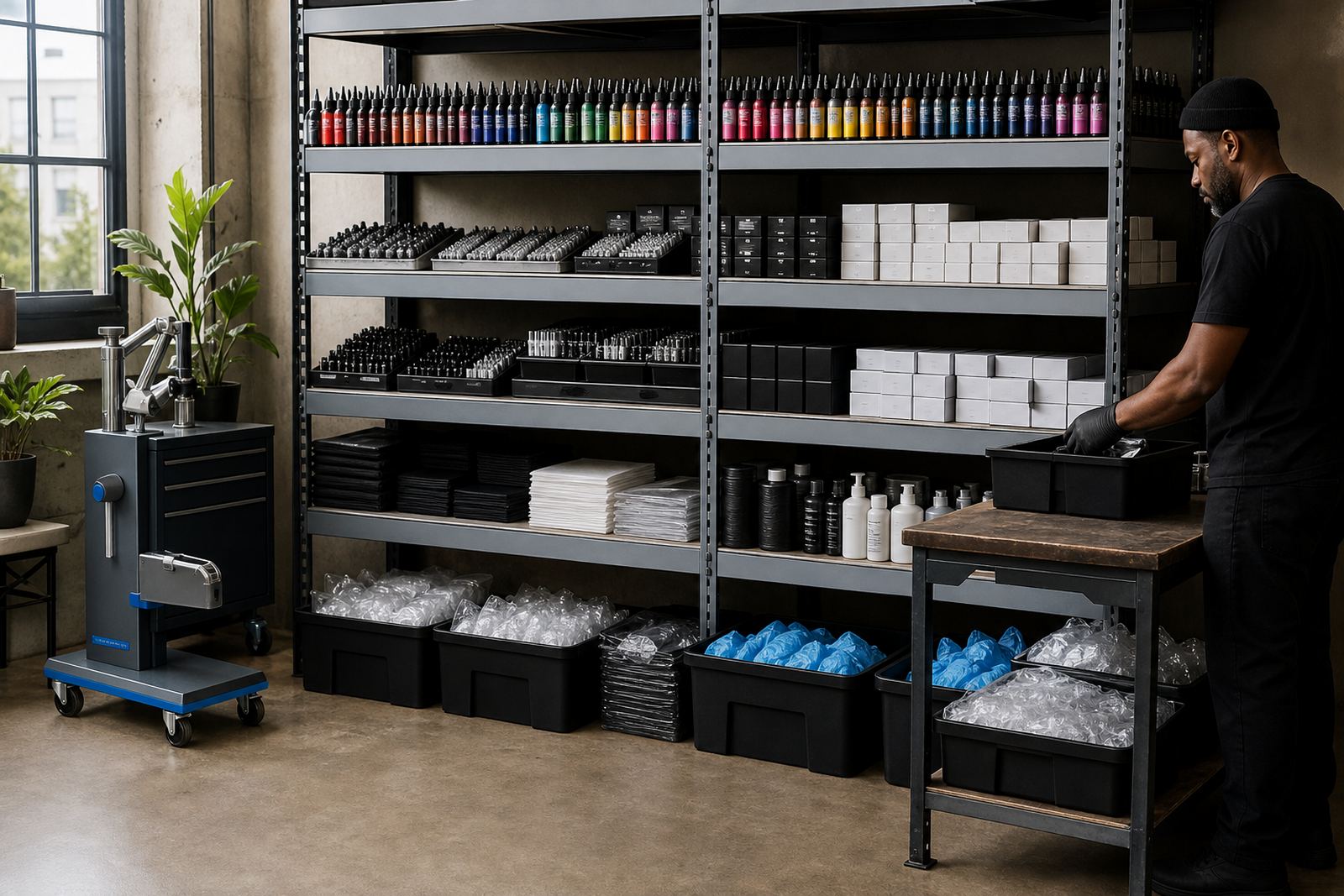
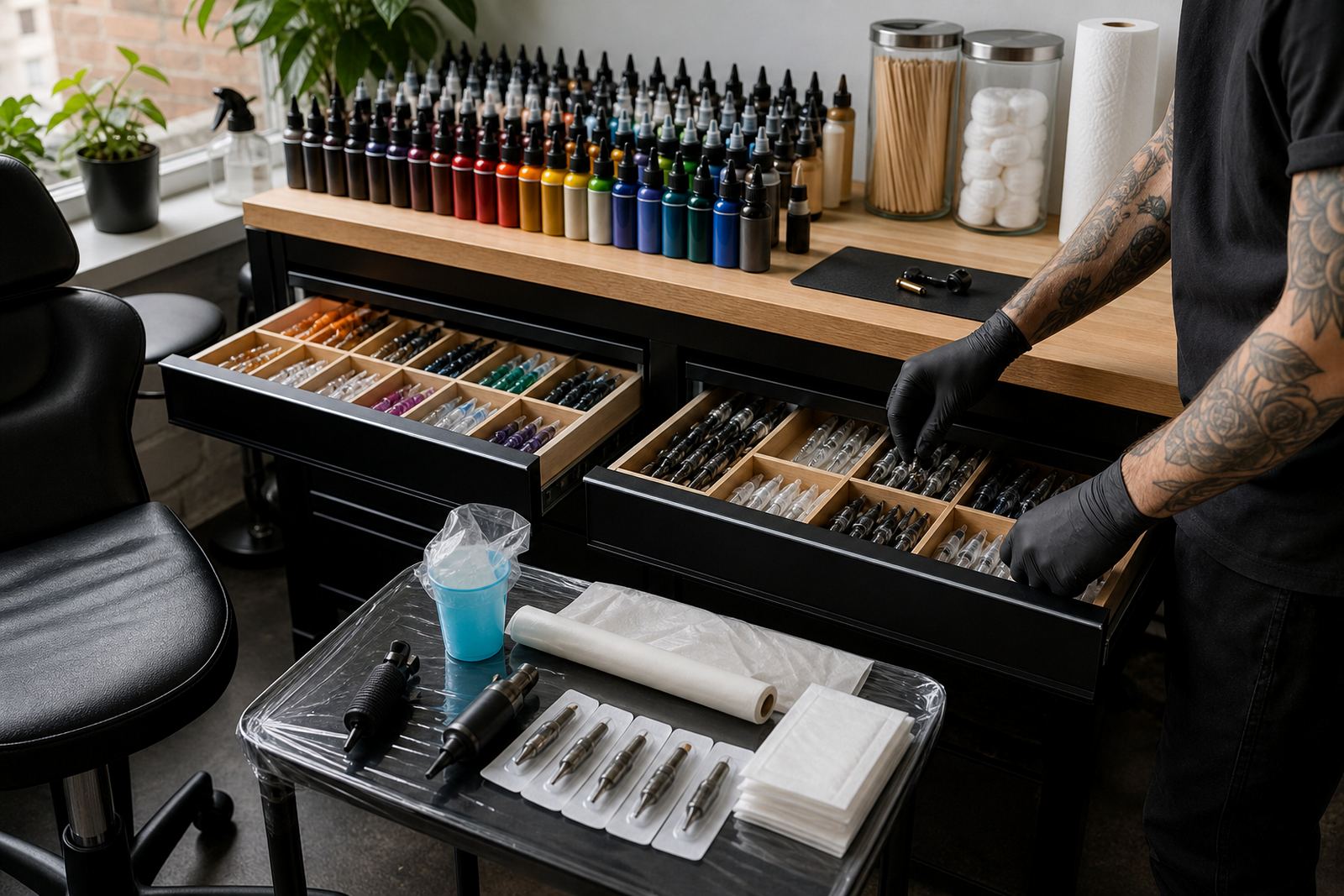
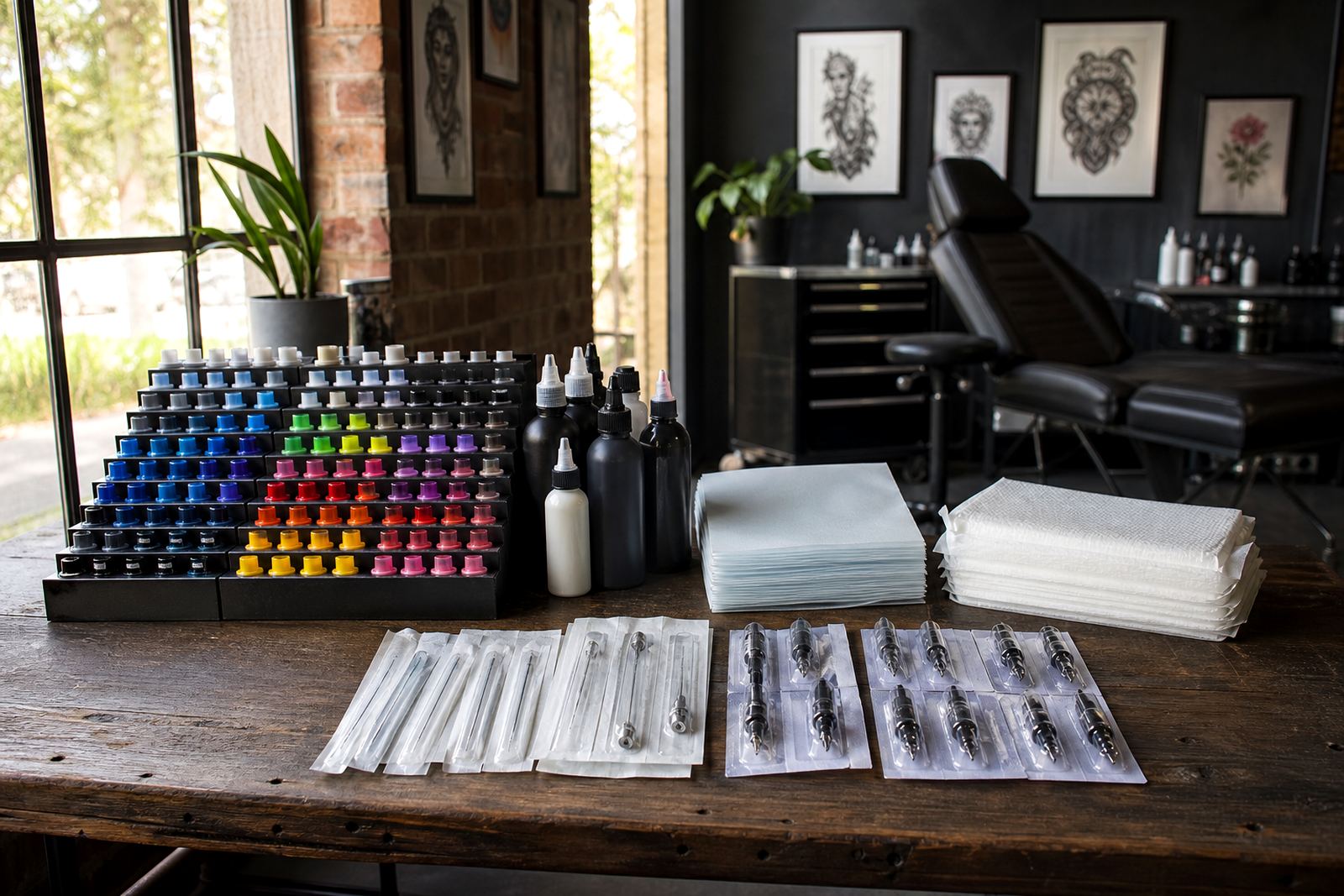
Ink cap work is easier when the station has a fixed place for each size and use. A small tray, a flat organiser or a marked surface helps keep caps in a straight run so the artist does not have to sort through loose items while gloved up. For multi-colour work, line caps up by shade or by session order, then keep a spare row for the colours that tend to move fastest.
In larger rooms, some studios use separate cap zones for lining, shading and cleanup fluids. That makes sense where two or more artists share a table and each needs a different rhythm. The point is not fancy gear, only a layout that stops caps sliding around when bottles are put down or sleeves brush the table.
- Keep cap rows close to the dominant hand side of the station.
- Use one shallow tray for open caps and one sealed container for back-up stock.
- Label cap holders by size if the studio uses more than one format.
Match holders to the way the station is used
Cap holders come in many shapes, from compact stands to weighted bases and clip-on pieces. The best choice is the one that stays steady on the surface and suits the type of work being done. A fine-line setup may use smaller caps and narrow holders, while a colour session may need a wider base with space for more volume. If the holder is too light, it gets nudged out of place and the station becomes untidy very quickly.
It helps to group holders with the items they support. Keep needle and cartridge groupings apart from cap holders, and store each set in a dry cupboard or drawer with clear sections. In coastal areas like Cape Town and Gqeberha, extra care matters because humidity can affect how neatly things stay packed, especially where cardboard or paper packaging is used.
- Choose holders that do not wobble on smooth surfaces.
- Store spare caps with clean lids or in closed tubs.
- Separate daily-use holders from back-up stock so the station stays uncluttered.
Build a small dispensable kit for every station
Small dispensables are the items that disappear quickest during a session, so they need their own system. Wraps, sleeves, wipes, tape, ink caps, mixing sticks and barrier items can all be packed in a compact way that supports the session without taking over the table. When these items are scattered, the artist spends time hunting instead of working and the whole rhythm breaks down.
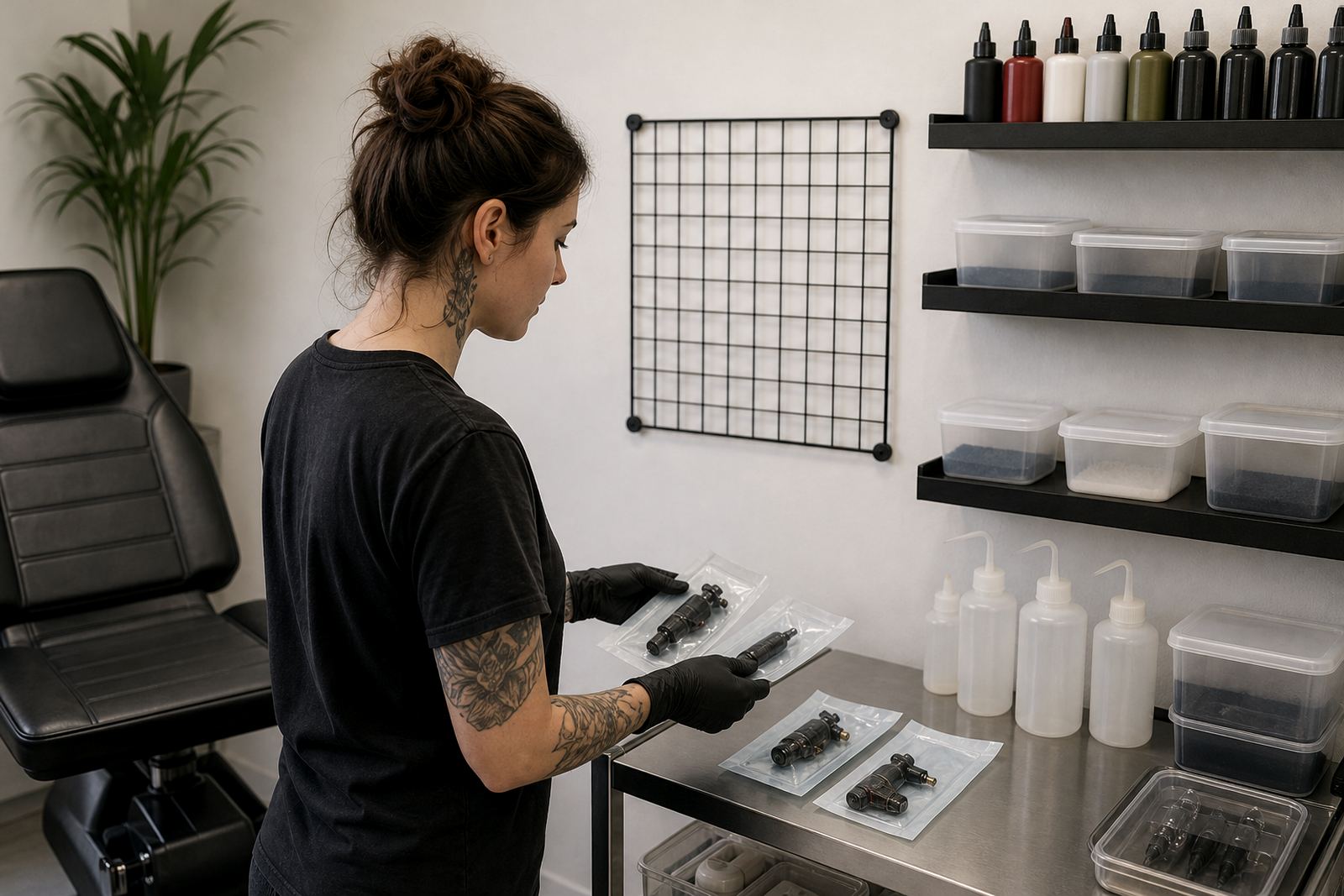
A practical method is to prepare one session tray with only the things that are likely to be used in that appointment. Refill it from a larger storage box at the end of the day. That keeps the main stock tidy and makes it easier to spot when something is running low before it causes a rush later.
- Use small lidded tubs for loose disposable items.
- Keep one dedicated tray for open packs and another for sealed reserves.
- Check that labels face forward so stock can be counted at a glance.
Keep flow and hygiene in the same routine
Organisation works best when it follows the same order every session. Open caps only when they are needed, place them on the chosen side of the station, and move used items into a separate waste point as soon as they are finished with. That routine reduces clutter and helps the studio stay within local health rules without forcing anyone to stop and rethink the setup halfway through the day.
A clean flow also makes storage easier after the client leaves. If the cap tray, holder and consumables all have a return place, the station resets faster and there is less chance of leaving mixed stock on the bench. A simple sequence can save time during peak hours, especially where appointments run back to back and the room turns over quickly.
Plan for colour changes and short notice restocks
Some sessions use only a few caps, while others need a full spread of shades and dilution cups. A studio that keeps a sensible reserve can deal with both without overfilling the station. The trick is to group the small items by likely use, then keep a second supply packed for the next booking or the next day.
That kind of planning is useful for studios serving areas like Johannesburg, Pretoria and Durban where delivery schedules and appointment books can be tight. If the front stock is arranged by session type, it becomes easier to notice whether the studio needs more liners, more cartridge groupings or just extra caps and holders for the week ahead.
- Sort reserve stock by session type, not only by item type.
- Keep a separate box for fast-moving consumables.
- Review the last few bookings to see which caps and holders were used most.
A Cape Town station that stays workable under pressure
In Observatory, a small studio working through a full day might set up one tray for caps, one for holders and one for sealed consumables before the first appointment arrives. If the artist moves from a black-and-grey session to colour work in the afternoon, the tray can be swapped fast without disturbing the rest of the bench. That sort of arrangement is plain, but it keeps the room calm and the workflow clear.
For studios that order across South Africa, the same habit applies whether the stock is going to Bellville, Somerset West or Gqeberha. Keep the station tidy, keep the back-up items packed in sections and make sure the small things are easy to find when the room gets busy. A neat cap system does not need much space, just a plan that is followed the same way each day.