The rules sit beside the art, not behind it
Every studio that works with skin should treat compliance as part of the station setup, the same way a machine or cartridge grouping is part of the work. The products matter, but so does the way they are stored, opened, labelled, used and discarded. Local health officers and municipal inspectors may look at handwashing points, cleaning records, waste bins, surfaces and general hygiene before they even ask about stock.
In Observatory, a compact studio can still run neatly if each work area has a clear layout, covered storage for sterile single-use items and a plan for used consumables. The same thinking applies in Cape Town, Johannesburg, Durban, Pretoria and Gqeberha, where the detail may differ but the expectation stays the same: keep the space orderly, keep surfaces clean and keep your documentation in order.
What inspectors often look at first
A practical inspection usually starts with the basics. That means clean worktops, safe storage, proper separation of clean and used items, and enough space to move without cross-contamination between stations. If the studio uses tattoo inks, needles, cartridges and other consumables, those items should be stored in a way that protects them from dust, moisture and accidental mix-ups.
- Handwashing access with soap and disposable towels or a suitable drying method
- Covered bins for used single-use items and sharps containers where required
- Written cleaning routines for stations, trays and touch points
- Clear stock separation between sterile packs, opened items and waste
- Records for cleaning, restocking and disposal where local rules call for them
Humidity can be a factor in coastal towns, especially in Cape Town, Durban and Gqeberha. Boxes left open in a warm room can absorb moisture, and that can spoil the condition of paper wraps, labels and other consumables. A dry cupboard and sensible rotation make a real difference.
Single-use items should stay single-use
Needles, cartridges and other sterile single-use supplies need a strict handover from sealed pack to used container. Once opened, they should not be treated like reusable stock. That is not only a hygiene matter, it is also how a studio shows it understands the basic operating rules around tattoo work.
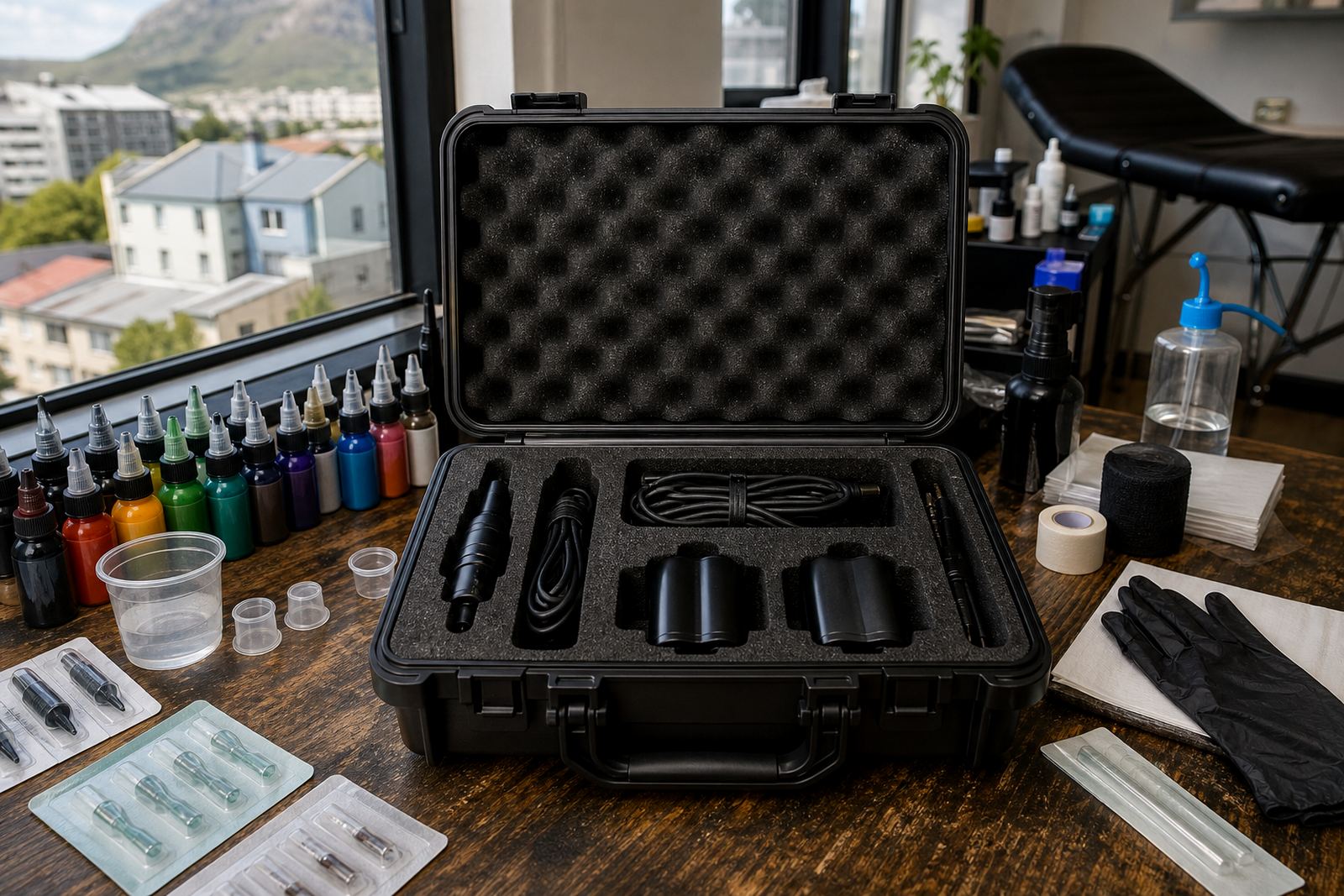
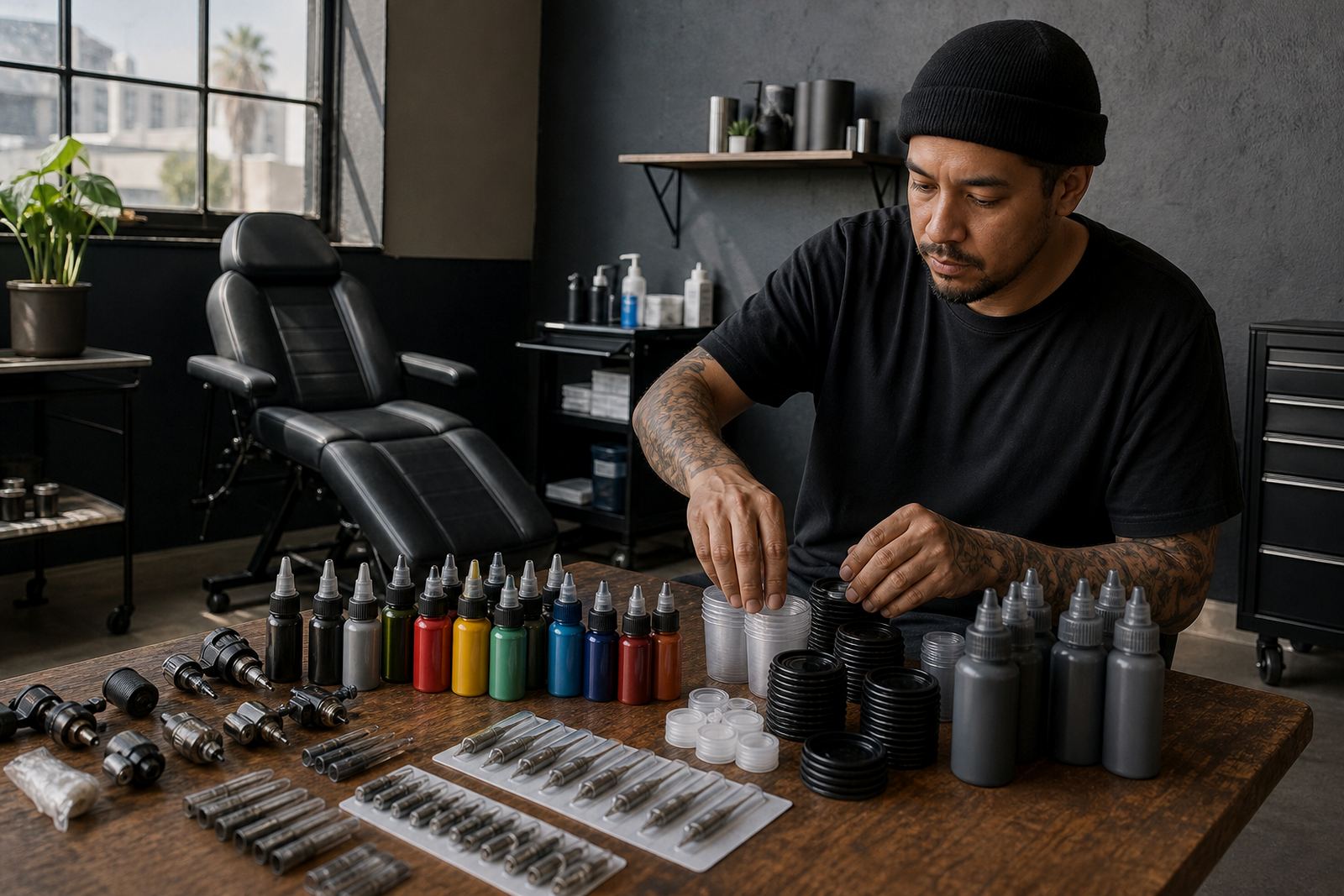
Studios often keep mixed stock on hand for different line work, shading and colour packing. That can be organised well if the ranges are grouped clearly and each station is set up with the correct items before the client arrives. It reduces the temptation to open extra packs on the fly, and it helps the team stay within a clean workflow.
- Check seals before the day starts
- Keep unopened stock in labelled boxes or sealed tubs
- Move used items straight to the correct disposal point
- Do not return opened consumables to storage
Inks, labels and storage need discipline
Tattoo inks should be stored according to the maker’s instructions and kept out of direct heat and sunlight. Once bottles are opened, labels should remain readable and the stock should be rotated so older items are used first. In a studio that does a steady flow of appointments, a simple shelf plan is often better than a crowded cupboard with loose bottles shoved wherever there is room.
Many local studios also use seasonal restock planning so they do not run short before a busy period, or overbuy stock that sits for too long. That matters in South Africa, where delivery routes can vary and certain items may need careful scheduling to reach studios in Bellville, Somerset West or Stellenbosch without delay. Good storage is not just neatness, it is part of responsible operation.
A studio layout that supports clean work
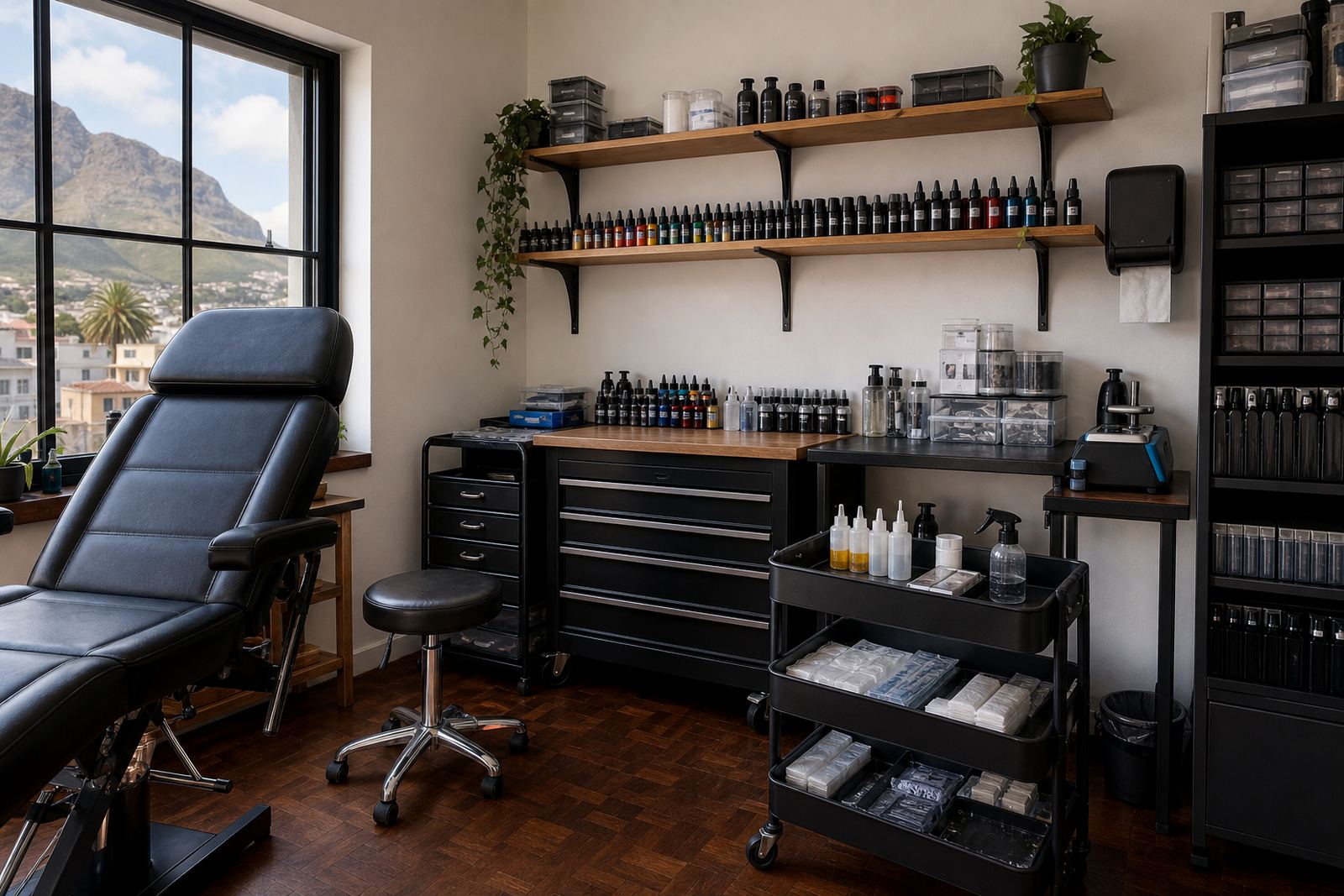
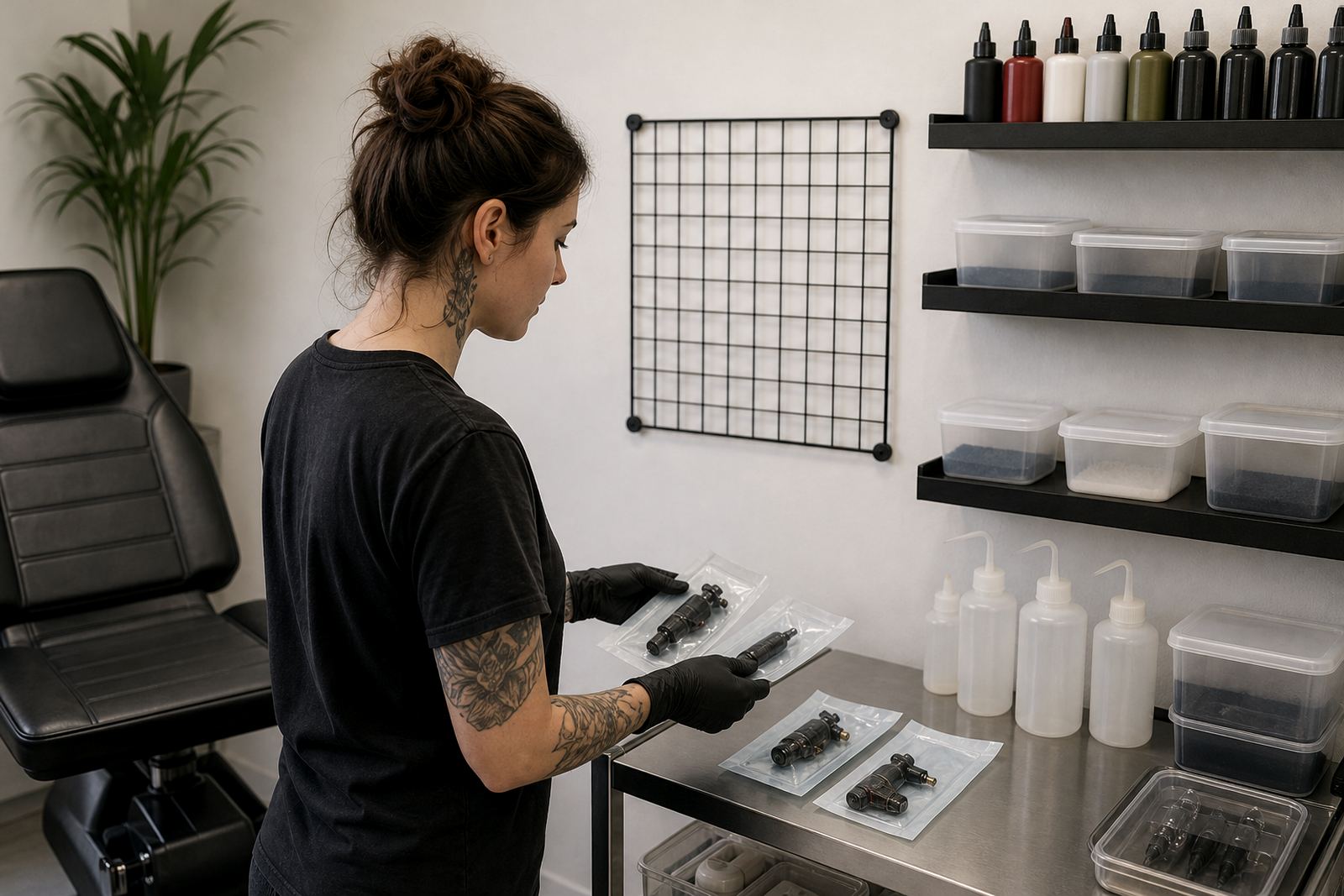
Station planning should reflect the actual flow of tattoo work. Clean stock on one side, used items on another, and enough space for a tray, machine, cartridges and wipes without clutter. If the room is cramped, the safest answer is often to reduce what is placed on the station rather than crowding it with every item at once.
A local example: a small Observatory studio with two stations may keep each setup simple, with pre-packed consumables, a marked waste point and separate storage for backup stock. That kind of arrangement makes it easier to follow local health regulations and municipal expectations without turning the room into a storage area. The same principle helps larger studios too, especially when multiple artists share the same supply room.
- Keep one station for clean preparation and one for disposal if space allows
- Use labelled containers for different needle and cartridge groupings
- Store paper, gloves, covers and wrap in a dry, closed cabinet
- Leave enough room to clean around and under equipment
Waste, records and the boring bits that keep a studio open
The practical side of compliance is often the least glamorous part, but it matters most when a municipality asks for proof. Waste handling, cleaning logs, disposal routines and stock records show that the studio is not guessing its way through the day. If a supplier, manager or senior artist handles procurement, they should keep track of what arrives, what is used and what needs replacing.
For studios working across Cape Town, Johannesburg, Durban, Pretoria and Gqeberha, the message is the same: follow local health regulations, keep the paperwork tidy and make sure the work area matches the stock on hand. When the team knows where each item lives, what gets opened first and where used materials go, the studio runs more smoothly and inspectors have less to question.
A useful habit before every busy week
A short weekly check can prevent most avoidable problems. Look at the station layout, the sealed stock, the waste containers and the cleaning supplies before the bookings start filling up. If something is missing, damaged or out of place, sort it before the first client sits down.
That habit helps new studios as much as experienced ones. It keeps the work practical, keeps the supplies organised and helps everyone stay within the local rules that apply to tattoo work in South Africa.