
Start With the Colours That Move Most Often
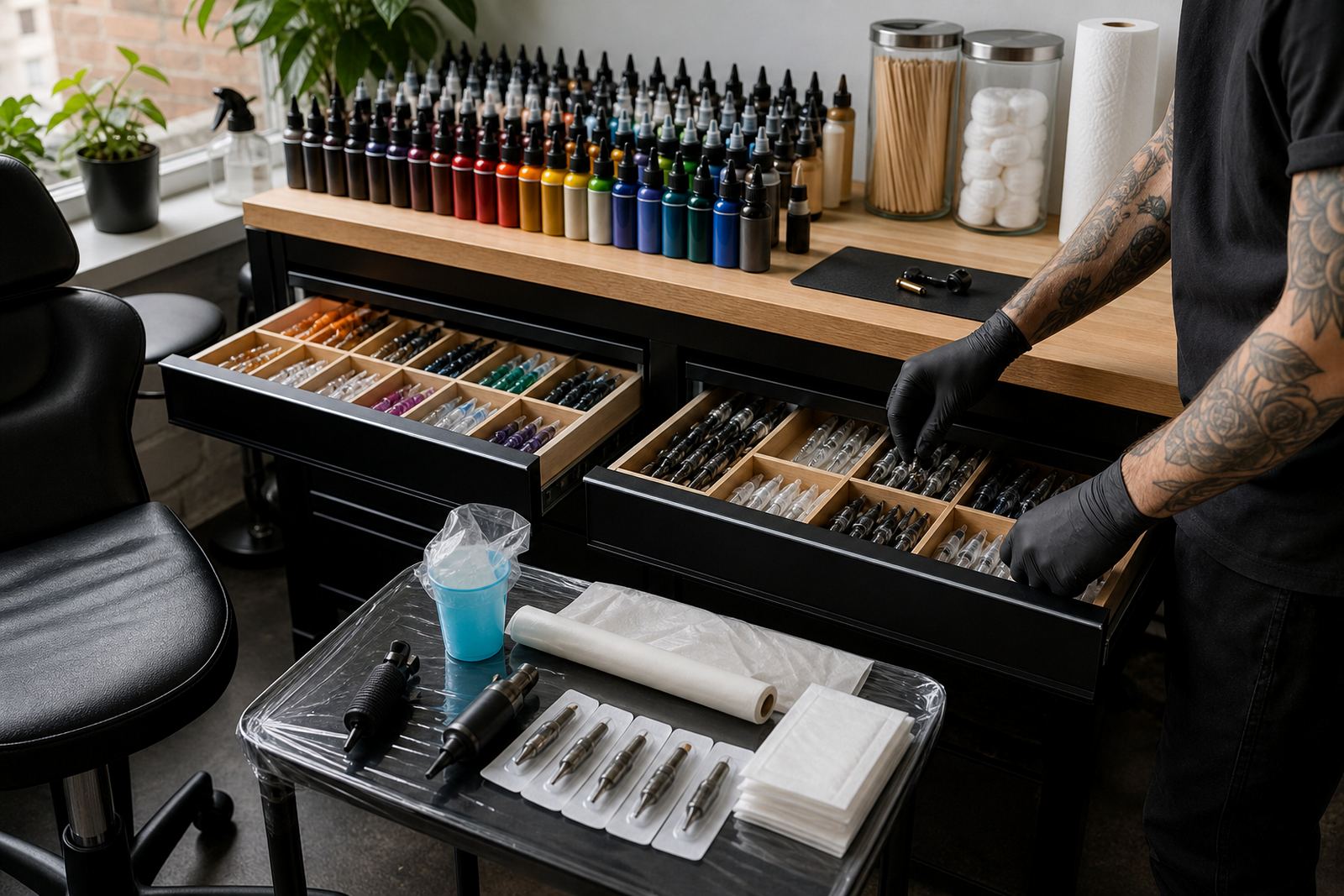
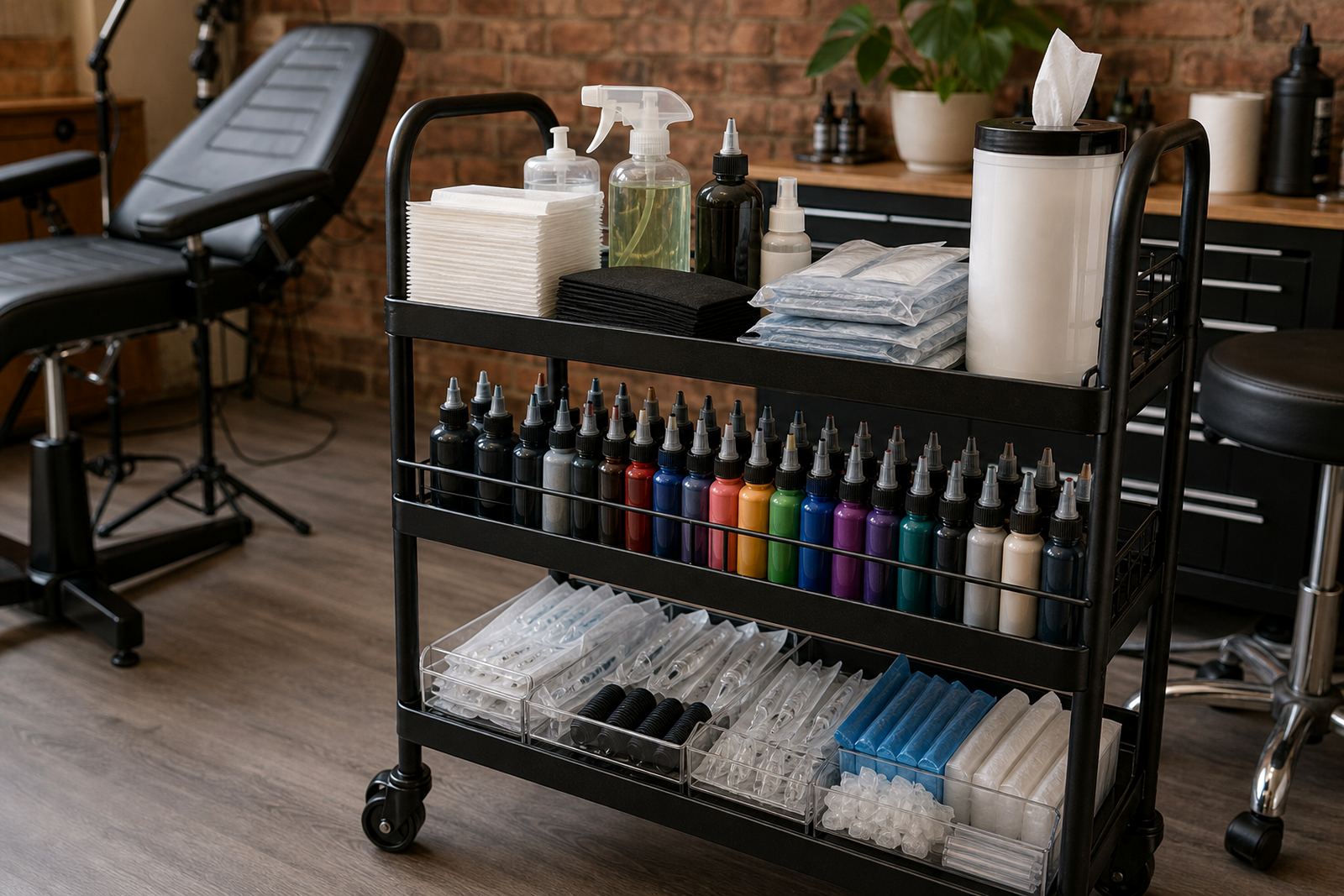
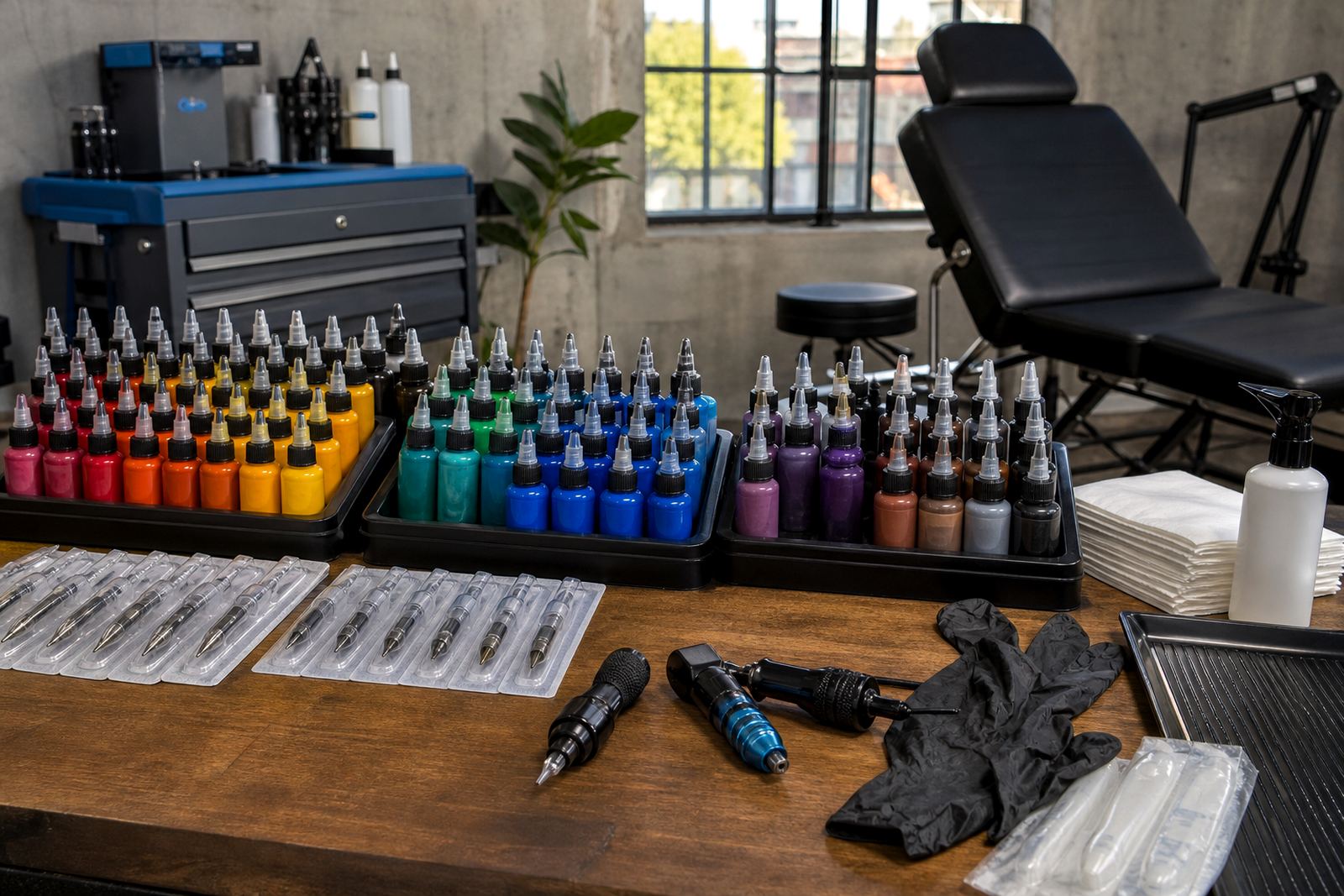
A working palette does not need every colour in every shade. It needs the tones that get used day after day, grouped in a way that makes selection fast at the station. In practice, that usually means separating core blacks, lining tones, grey wash sets, warm reds, cool reds, yellows, greens, blues and skin-tone friendly neutrals into their own zones.
In a busy Observatory studio, for example, a single shelf can carry the most used bottles in front, while slower moving shades stay in reserve storage. That keeps the front-of-house area cleaner and cuts the time spent hunting through half-empty rows during a full booking list.
- Keep your most used tones in the easiest reach zone
- Group by family, not by whatever arrived last
- Move slow sellers off the main shelf before they crowd the space
Build the Palette Around Real Work, Not Nice-to-Have Colours
Different studios work with different colour demand. Walk-in portrait work does not need the same spread as a studio that handles bright illustrative pieces or heavy cover-up jobs. A sensible palette is shaped by the work you actually book, then trimmed to match shelf space and cash flow.
For Cape Town shops near the coast, storage conditions matter too. Heat and humidity can make a crowded shelf harder to manage, so a leaner range is often easier to rotate and inspect. Keep the practical colours visible, and put seasonal or specialist shades into labelled backup boxes so they do not get mixed into daily use.
- Match the range to your usual tattoo styles
- Keep specialist shades in reserve, not on the main shelf
- Review dead stock before it starts taking over storage
Use Colour Families to Keep the Shelf Order Clear
Colour family grouping works better than arranging bottles only by size or supplier. Artists can move from one shade to the next without wasting time scanning a mixed row. It also helps with stock checks, because gaps show up quickly when each family has its own section.
A good setup often uses simple labels such as black and grey, warm tones, cool tones, vivid colours and blending shades. If your studio keeps cartridges, needles and inks on the same back shelf, give the inks their own fixed place so they are not buried under consumable boxes. It saves time at the station and makes end-of-day packing less messy.
- Group inks by family and use case
- Label every box or tray clearly
- Keep cartridges and needles separate from bottle storage
Plan Shelf Space for the Bottles You Will Reorder Often
Overflow usually starts when there is no fixed place for the repeat items. If a colour range is small but active, it deserves a front shelf or shallow tray where stock counts can be done at a glance. Deeper storage works better for slower lines, backup sizes and unopened sets.
In Johannesburg and Pretoria studios, where storage rooms are often shared with other supplies, this matters even more. A clear order prevents mixed boxes from building up around the work area. When the same colours are reordered often, place them together with notes on bottle size, shade family and how many units fit on hand. That keeps monthly buying calmer and avoids overfilling the space.
- Use front shelves for repeat order colours
- Keep reserve stock in a separate cabinet or box
- Count by family, not by random bottle piles
Keep Single-Use Supplies Away From Colour Storage
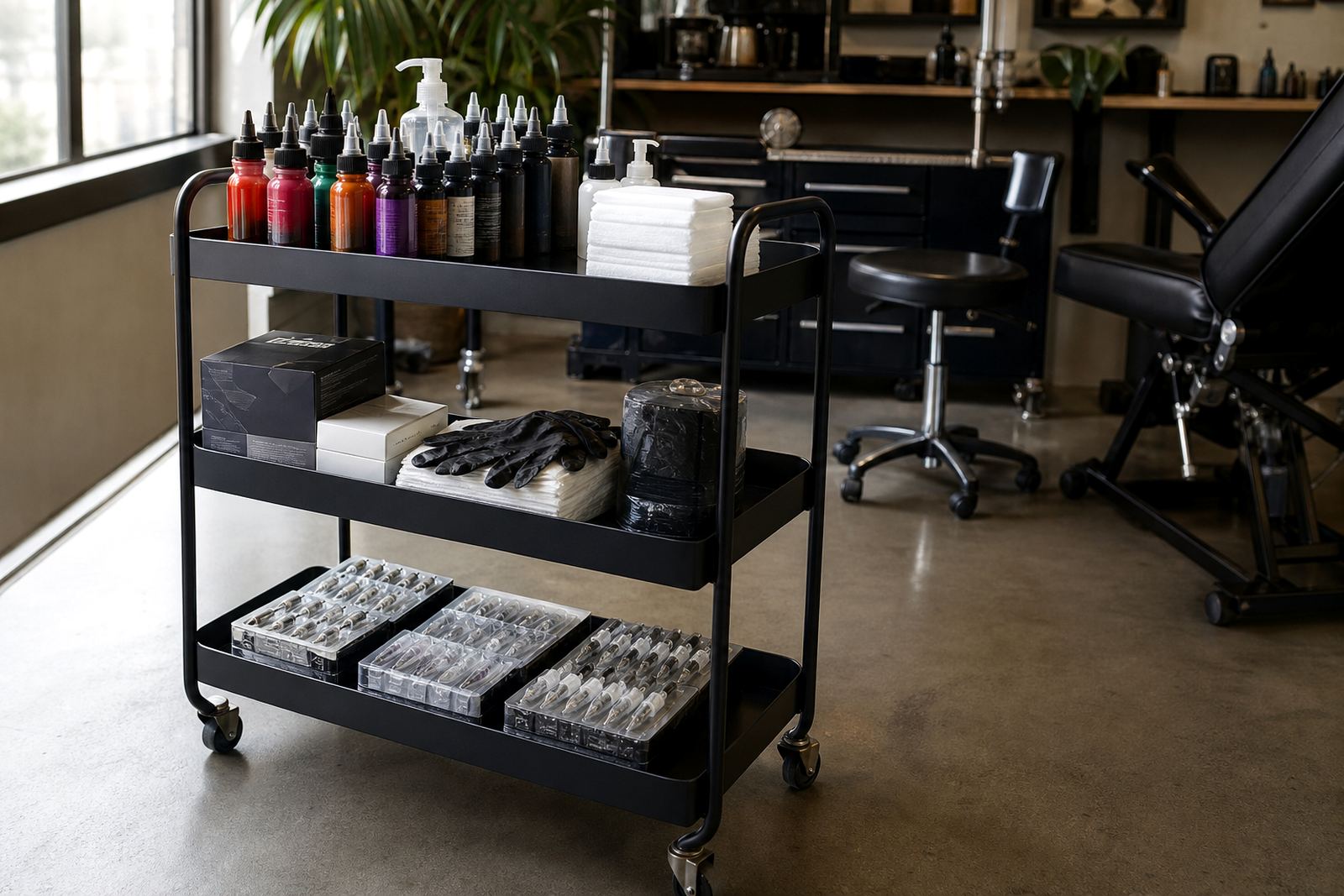
Needles, cartridges, gloves, barrier film, caps and other sterile single-use supplies should not share loose storage with inks. Once everything sits together, the shelf becomes harder to clean and harder to audit. Separate storage also makes it easier to rotate consumables and see what still needs ordering.
For studios handling high client volume, one practical layout is inks on one side, sterile consumables in sealed boxes on another, and station-ready items in a clean middle section. That keeps the colour range visible and prevents small supplies from getting mixed into the wrong place. Follow local health regulations and your own studio procedures for handling, sealing and disposing of consumables.
- Store sterile single-use items in sealed, clearly marked boxes
- Keep inks away from loose consumable packaging
- Use separate zones for shelf stock and station stock
A Local Example From a Compact Cape Town Studio
A compact studio in Observatory might only have one main stock cupboard and a narrow shelf behind the work area. In that case, the best setup is a tight working range of colours at station height, with slower moving tones in labelled storage tubs above or below. The result is less clutter and fewer interruptions during a busy day.
That same studio may also send deliveries to branch areas such as Bellville, Somerset West or Stellenbosch, so the palette has to be easy to restock and easy to count before dispatch. When the range is grouped properly, replenishment orders are simpler and the team can see at a glance what is running low. It is a small change, but it keeps the working area neater and the buying list more accurate.
A Working Palette Needs Regular Pruning
A strong colour range is not the biggest range, it is the one that still earns its shelf space. Every few weeks, compare what is on the shelf with what is actually being used. Shades that move slowly can be shifted into reserve storage, combined into smaller display groups, or removed from the main station altogether.
That review also helps with product substitutions when a preferred shade is unavailable, and it makes seasonal restock planning easier before busy periods. If the palette is tidy, the team can see which families need topping up and which ones are sitting too long. The storage stays lean and the work area stays practical.