
What a coil setup really needs at the bench
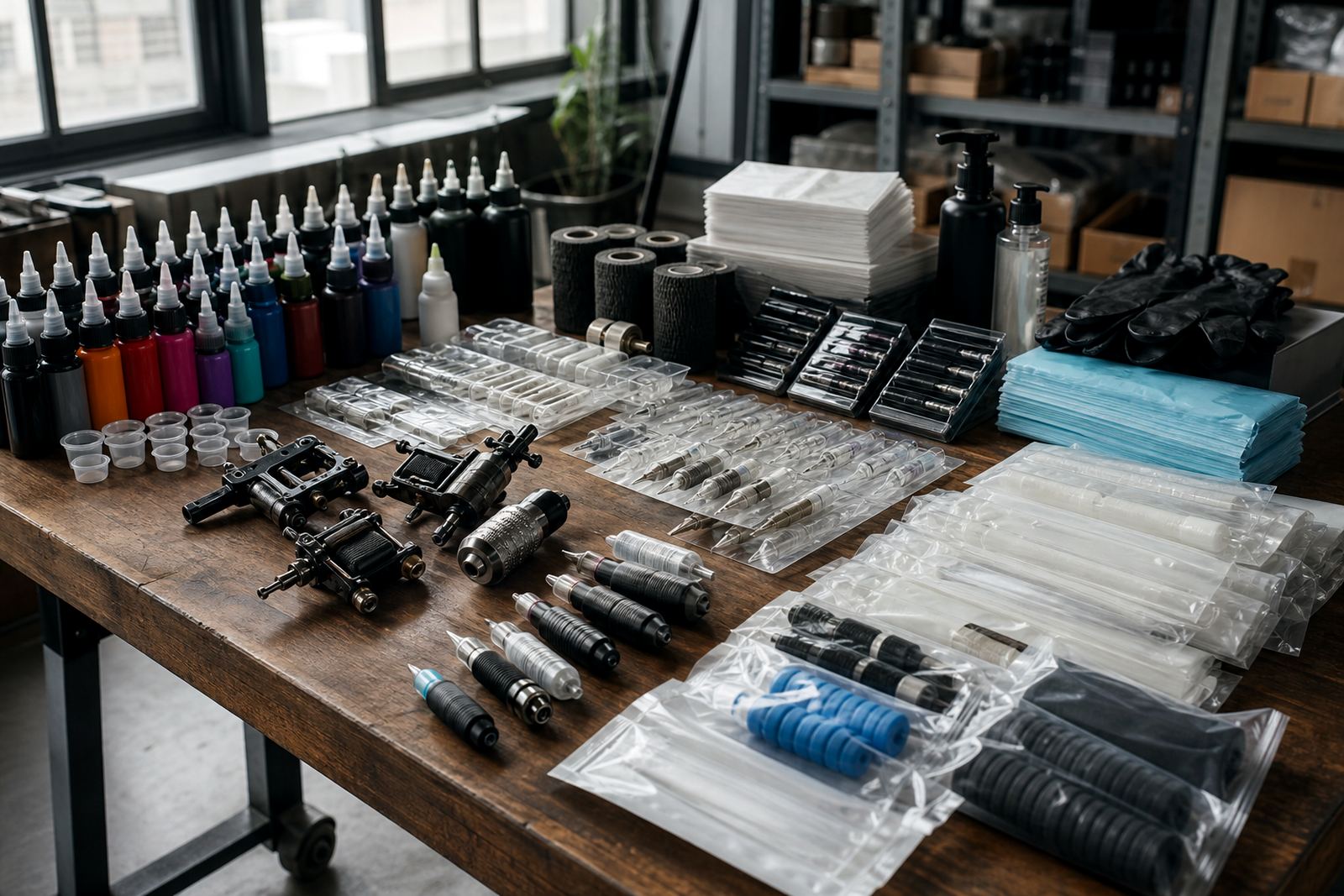
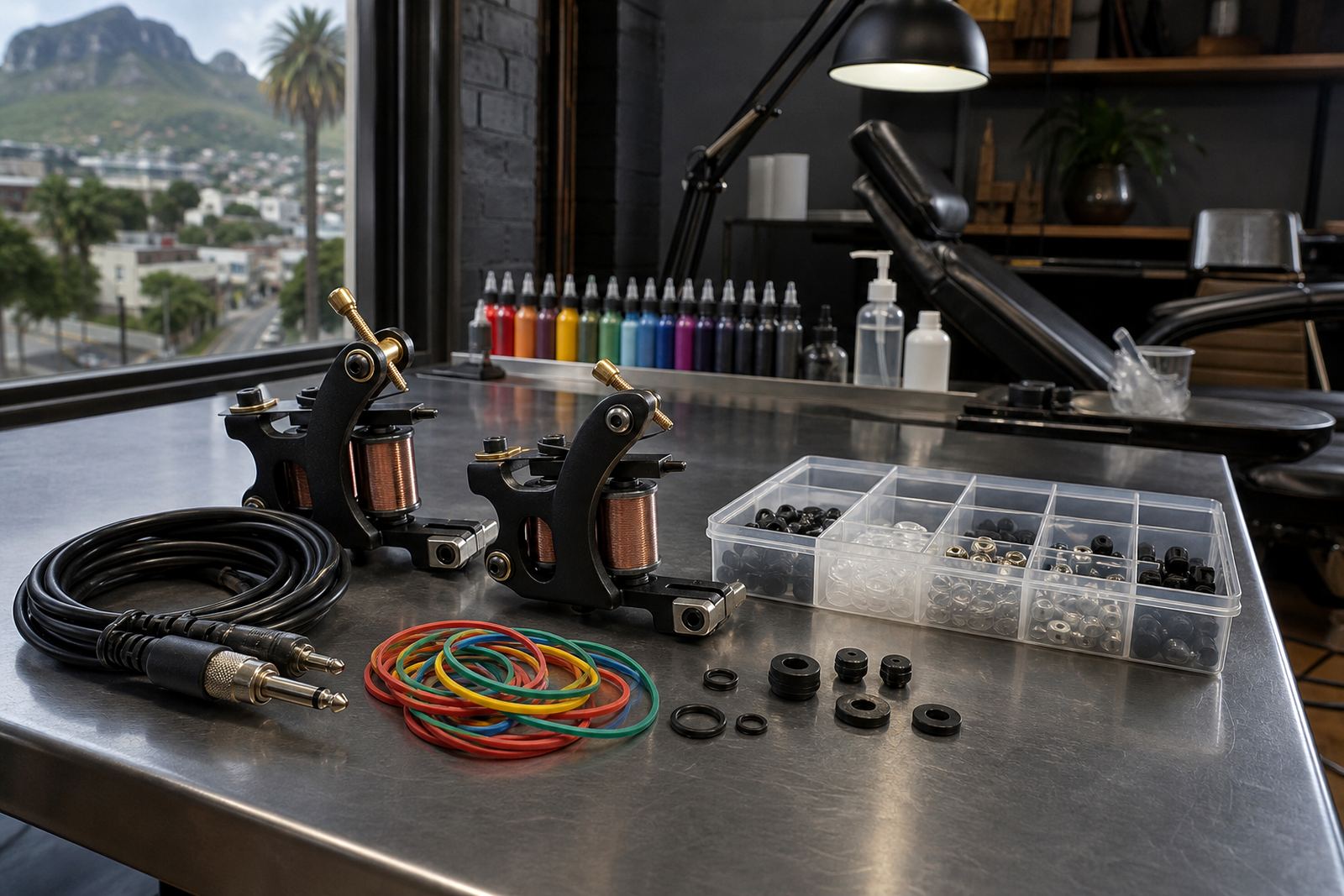
A coil machine setup is built around a few working parts: the machine body, the power supply, clip cord or connection lead, grip or tube, needle bar or cartridge system, and the sterile single use items that keep each station organised. In practice, the machine only performs well when the rest of the bench is arranged with the same care as the device itself.
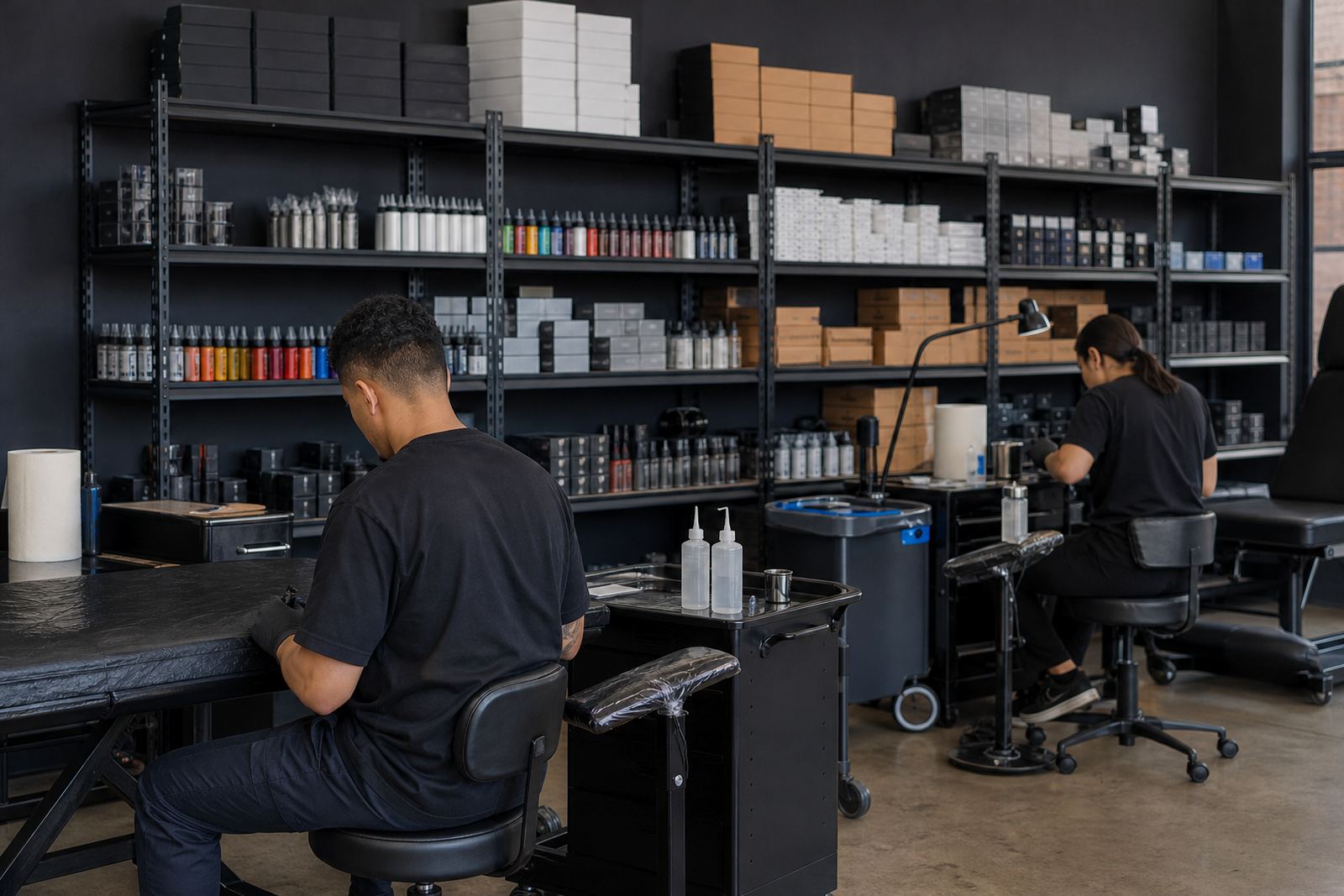
For studios in Cape Town, Durban and Gqeberha, humidity and salt air can affect storage more than many people expect. Needles, cartridges, rubber bands, springs, grips and packaged consumables should stay dry, sealed and off dusty shelves, especially in rooms that open often to the street or to sea air. Keep inks upright and clearly labelled so colours are easier to track during a long day of appointments.
Needle groupings and cartridge pairings that make sense
Coil machines are commonly paired with traditional needle groupings for line work, shading and solid colour packing. The exact choice depends on hand speed, hand pressure and the size of the area being worked, but the grouping itself should always match the task rather than being chosen by habit alone.
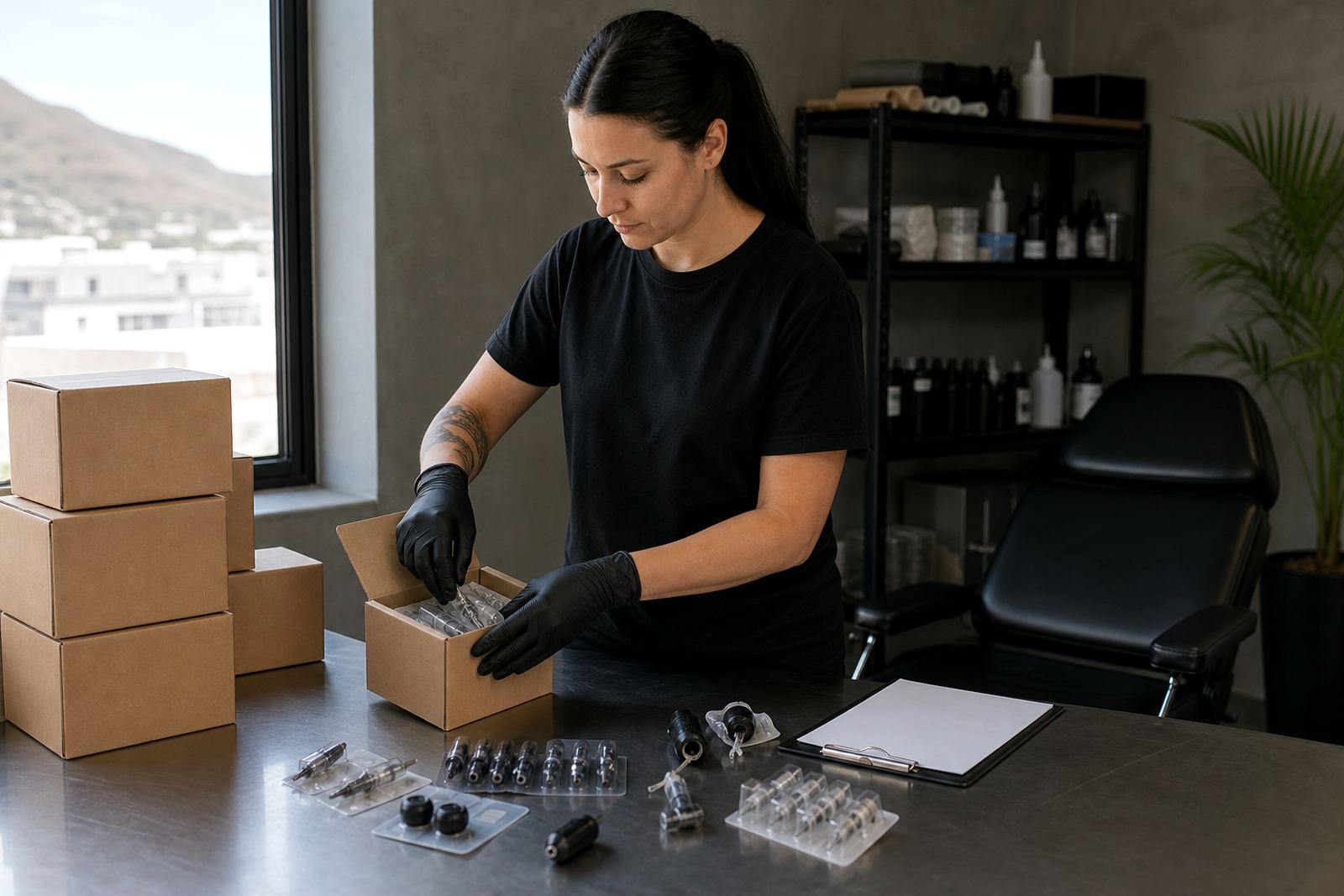
Cartridges are used in many studios for quicker changes between tasks, cleaner station flow and reduced handling at the bench. Some artists keep one set of grouped liners for crisp outlines and a separate set of magnums for shading or fill work, then pair those with cartridges for selected jobs where speed matters more than the feel of a fixed tube.
- Small liners for fine outlines and detail passes
- Round shaders for short shading work and lighter fills
- Magnums for larger shading areas and colour packing
- Cartridges for faster switchovers during mixed sessions
- Matched grips, tubes and sleeves to suit the chosen system
Ink choices that keep the flow predictable
Tattoo ink selection affects how a coil setup behaves during the session. Thinner inks move differently from heavier ones, and some colours need more controlled passes to sit evenly in the skin. A studio that stocks a proper range of inks can set up for blackwork, colour work, fine line work and larger fill sessions without scrambling for substitutes.
For a shop in Observatory taking bookings from the Cape Flats to the northern suburbs, it helps to keep inks grouped by use, not just by colour. Black lining, black shading, greywash, bright colour and neutral washes each have their own place on the shelf. That makes stock counts easier and cuts down on wastage when a studio is busy on a Friday and Saturday run.
Power, tuning and the feel of the machine in hand
Coil machines reward proper tuning. Spring tension, contact points, frame balance and needle stroke all affect how the machine behaves during lining or shading. When a setup feels too harsh, too soft or uneven, the issue is often in the combination of machine, power and needle choice rather than in one single part.
A practical bench layout helps here. Keep the machine, foot control if used, clip cord or lead, spare springs, elastic bands and cleaning items together in one station. That saves time during client changes and makes it easier to spot wear before it interrupts a session. In a Cape Town studio working through coastal damp, even small parts need regular checking so the machine keeps its rhythm.
- Check that moving parts stay clean and aligned
- Keep spare springs and contact pieces sorted by size
- Match power output to the task and the machine's feel
- Set aside separate station items for lining, shading and packing
- Replace worn consumables before they start affecting control
Sterile single use supplies and station hygiene
Every coil machine station should be set up around clean handling and single use consumables where needed. Needle cartridges, wraps, covers, ink caps, clip cord barriers, razors and other disposable items should be opened only when required and binned after use according to studio procedure. Follow local health regulations and the operating rules that apply to your premises.
Good storage matters as much as the session itself. Shelving should keep sealed stock away from floor dust, cleaning liquids and direct sun. In Johannesburg or Pretoria, where many studios work in mixed retail or office buildings, a tidy stock room helps with stock counts and keeps the working floor less cluttered. The cleaner the storage system, the easier it is to find the right consumable without slowing the room down.
How a local studio can build a useful kit list
A well planned kit is usually based on the kind of work the studio does most often. A shop handling walk-ins, custom pieces and cover-ups will need a broader range of liner needles, shader groupings, cartridges and inks than a studio that focuses on one style only. If the stock list is built around actual appointments, the shelf space works harder and the waste drops.
For example, a Gqeberha studio doing a steady mix of script, blackwork and colour accents may keep a leaner coil setup for line work, then add cartridges and larger magnums for bigger sessions. That same studio can store consumables by station so each artist has the pieces they need close at hand, without mixing open stock and sealed stock in the same tray.
- Basic coil machine set with matching tube or grip options
- Needle groupings for line work, shading and fill work
- Cartridge options for artists who switch tasks often
- Black and colour inks organised by use
- Single use station items for clean turnover between clients
- Storage boxes and labels for dry, orderly stock control
Keeping stock practical for Cape Town to Pretoria
When studios order across Cape Town, Johannesburg, Durban, Pretoria and Gqeberha, the useful question is not how much stock looks impressive, but what will actually move through the month. A coil machine overview should end at the shelf, because the real work is in keeping the right parts in the right quantities and making sure the bench is ready for the next booking.
That is where range grouping advice, stock list help, machine match help and cartridge match help all matter. A clean setup is easier to manage when inks, needles, cartridges and sterile supplies are grouped properly from the start. With clear storage and sensible pairings, the machine feels better in the hand and the studio runs with less interruption.