
Why cartridge groupings matter at the station
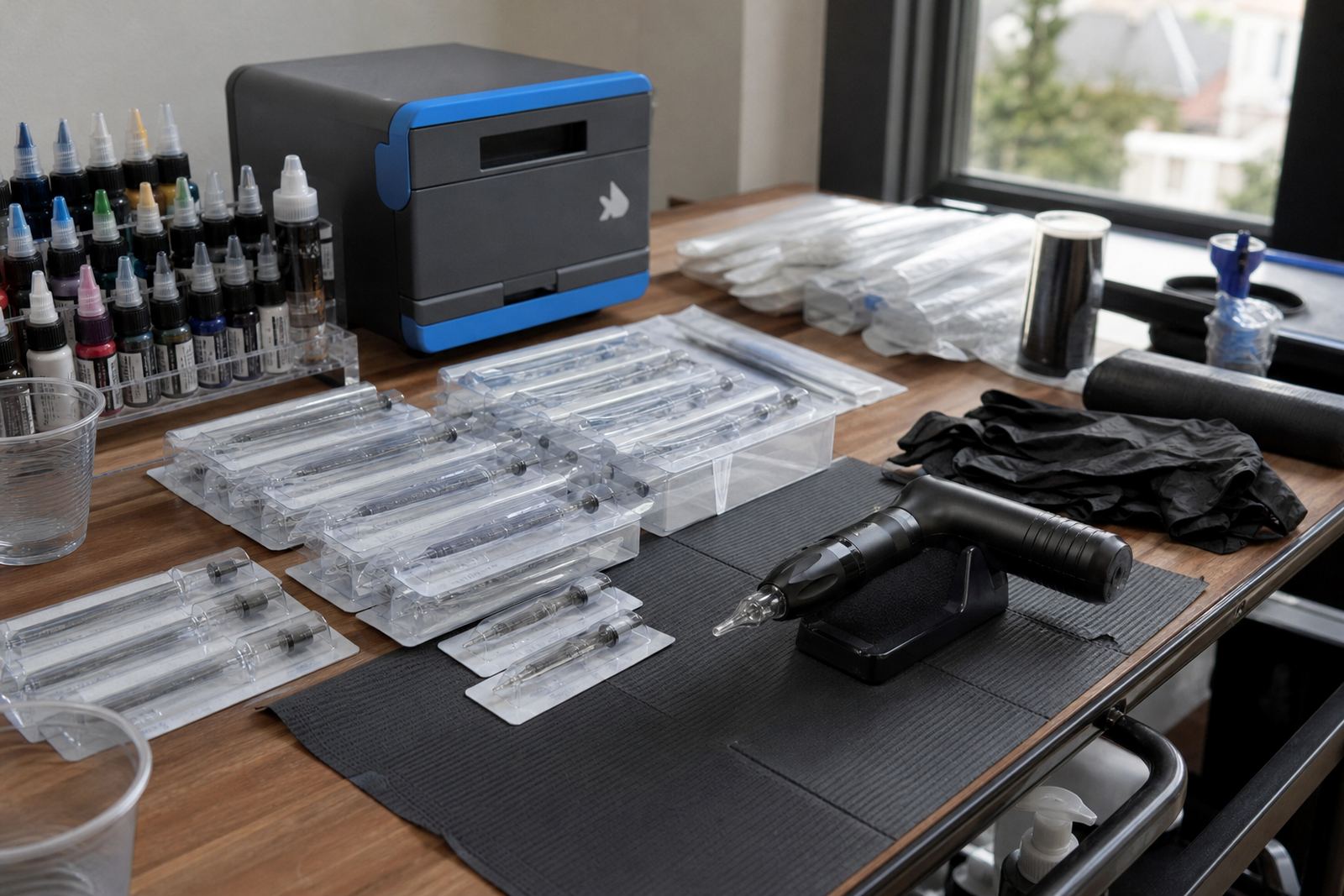
In a busy studio, cartridges are usually sorted by the kind of work they are meant for, not just by size. A line cartridge is handled differently from one used for shading or packing solid colour, and that separation helps artists choose quickly when the chair is filled and the tray is already laid out.
Most studios keep a few clear groupings on hand: liners for outlines, round shaders for softer fill and small detail, and larger magnums or curved magnums for shading and colour packing. That is not only about preference, it also keeps stock easier to count and reduces the risk of using the wrong cartridge when multiple artists share the same space.
- Line work often calls for tighter grouping and a narrower needle spread.
- Shading usually needs a broader footprint for smoother passes.
- Colour packing can benefit from wider groupings and a cartridge that feeds evenly.
- Artists working from compact stations may keep separate trays for each task.
Reading the cartridge label without overthinking it
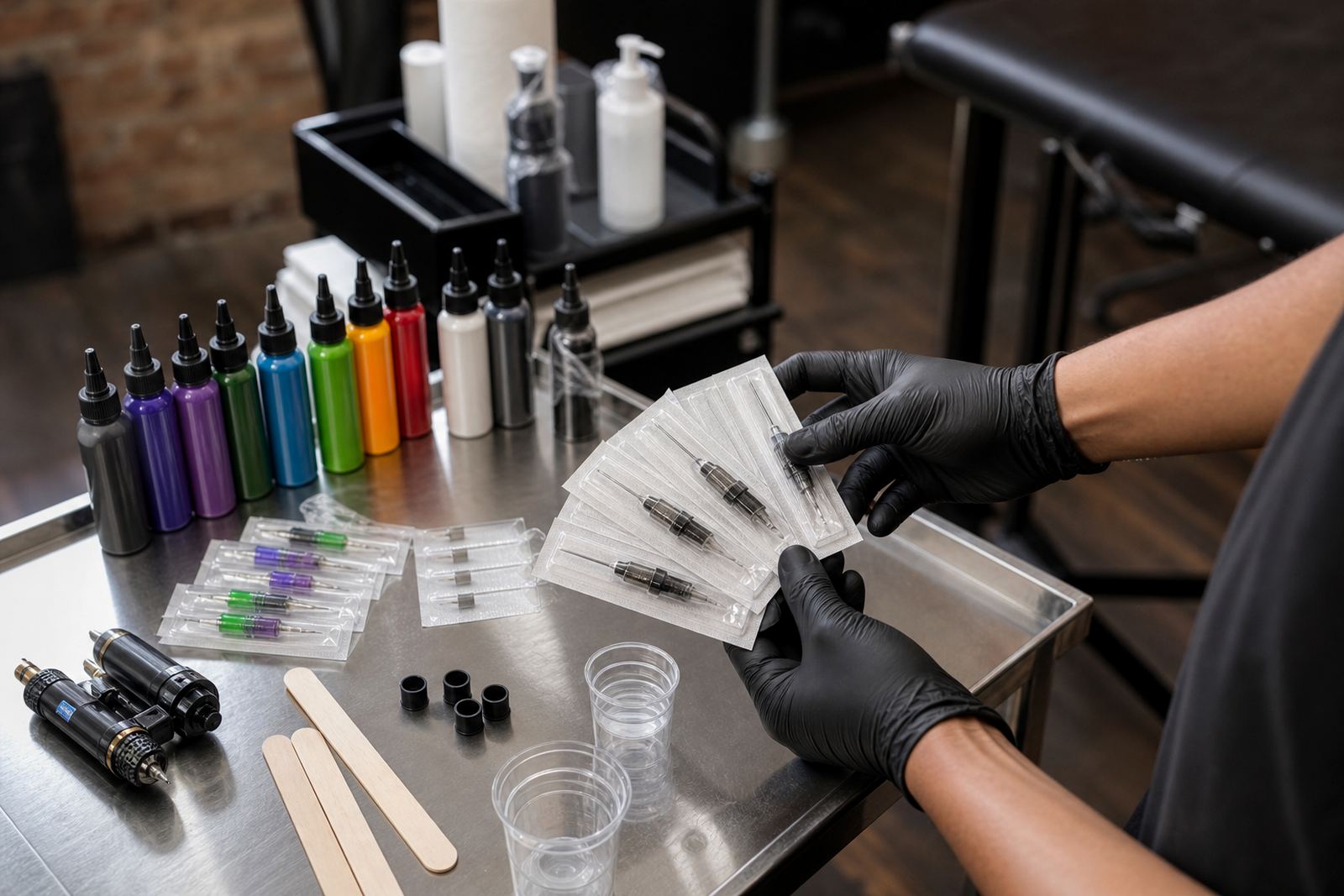
Most cartridge packaging tells you three practical things: the needle count, the configuration and the taper. The needle count gives a rough sense of coverage, while the configuration shows how the needles sit together. The taper affects how the point enters the skin and how the cartridge behaves when moving through detail or heavier fill.
Short tapers are often favoured for bolder work where a stronger deposit is wanted, while medium and longer tapers can suit cleaner detail and smoother transitions. The exact choice depends on the artist’s hand speed, machine set-up and the style being done, so there is no single cartridge that suits every chair.
In a Cape Town studio working with both walk-ins and scheduled appointments, one artist may need a tight liner for fine script while another needs wider magnums for a half sleeve. Keeping those cartridges grouped and clearly marked cuts down on confusion, especially when the day moves quickly and the work changes from one client to the next.
Needle and cartridge groupings that studios keep separate
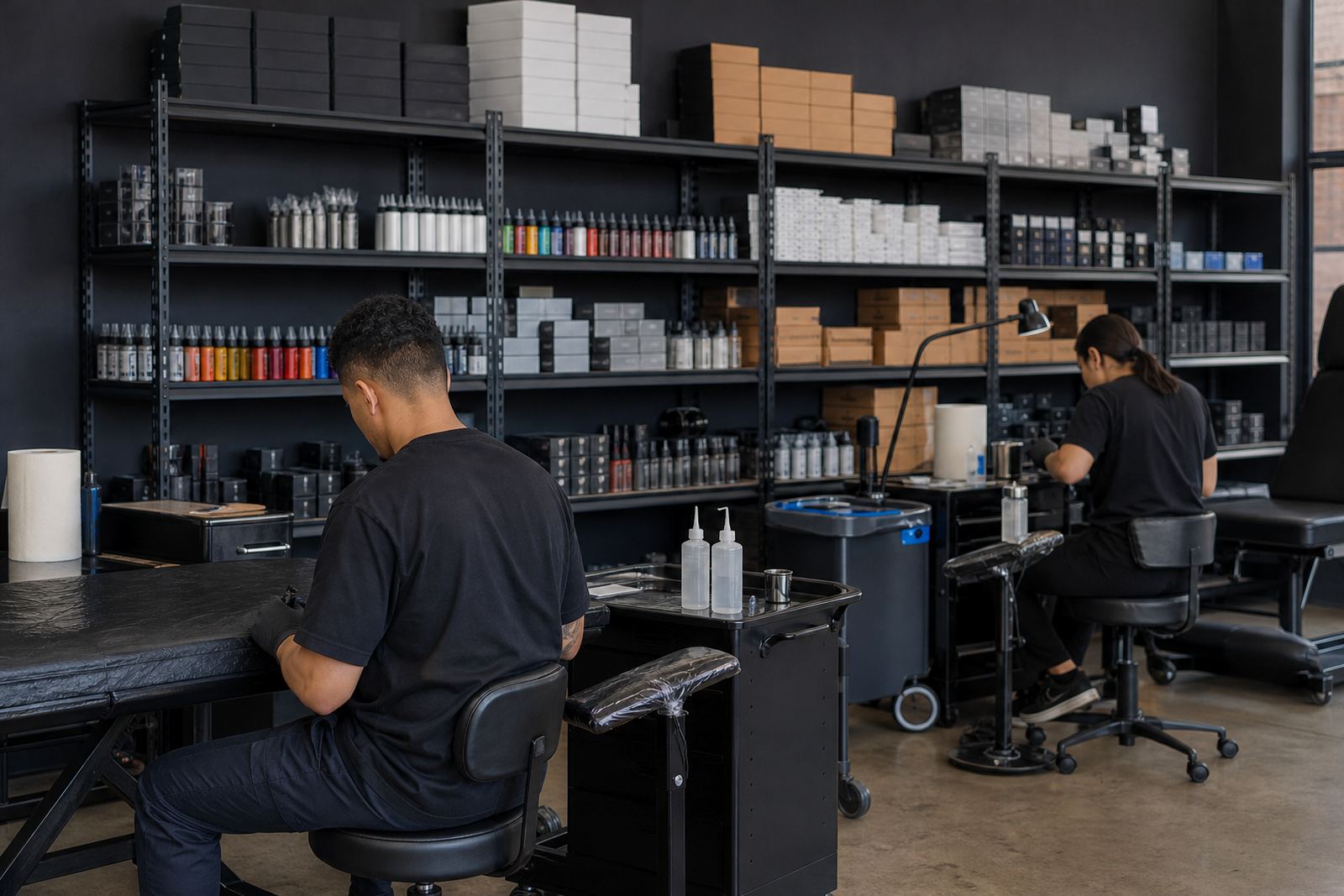
For practical stock control, it helps to break cartridges into task groups rather than a long mixed shelf. That way the team can see what is running low, what gets used most and what must be reordered before a weekend rush. In larger studios, this is often tied to station planning and consumable reorders, so the buying list follows real use rather than memory.
- Liners: for outlines, script and crisp borders.
- Shaders: for softer gradients, transitions and controlled fill.
- Magnums: for broader coverage and colour work.
- Curved magnums: for smoother movement over larger areas.
- Textured or specialty groupings: for artists who prefer a particular feel in the hand.
Some studios also keep a separate box for small detail cartridges used on finer pieces, while larger groupings are set aside for sleeves and broader colour sessions. That separation makes it easier to brief new staff too, especially when the shelf is shared by more than one artist.
Machines, feed feel and how cartridges affect the hand
Cartridges do not work in isolation. The machine, stroke length and hand speed all affect how the cartridge feels during a session. A cartridge that runs comfortably on one machine may feel too soft or too firm on another, so studios often keep notes on which groupings pair well with which set-up.
For artists using rotary machines, cartridge choice can make a noticeable difference to the way the needle moves through the skin and how much control is felt at the tip. If a studio uses several machine types, matching cartridge groups to those machines helps avoid wasted time and uneven results. It is ordinary stock planning, not guesswork.
That matters in places like Pretoria, where a studio may see everything from fine-line requests to heavier blackwork in the same week. Clear cartridge grouping means the artist can reach for the right box, check the machine set-up and get on with the client without pausing to sort through mixed stock.
Single-use supplies, storage and clean station habits
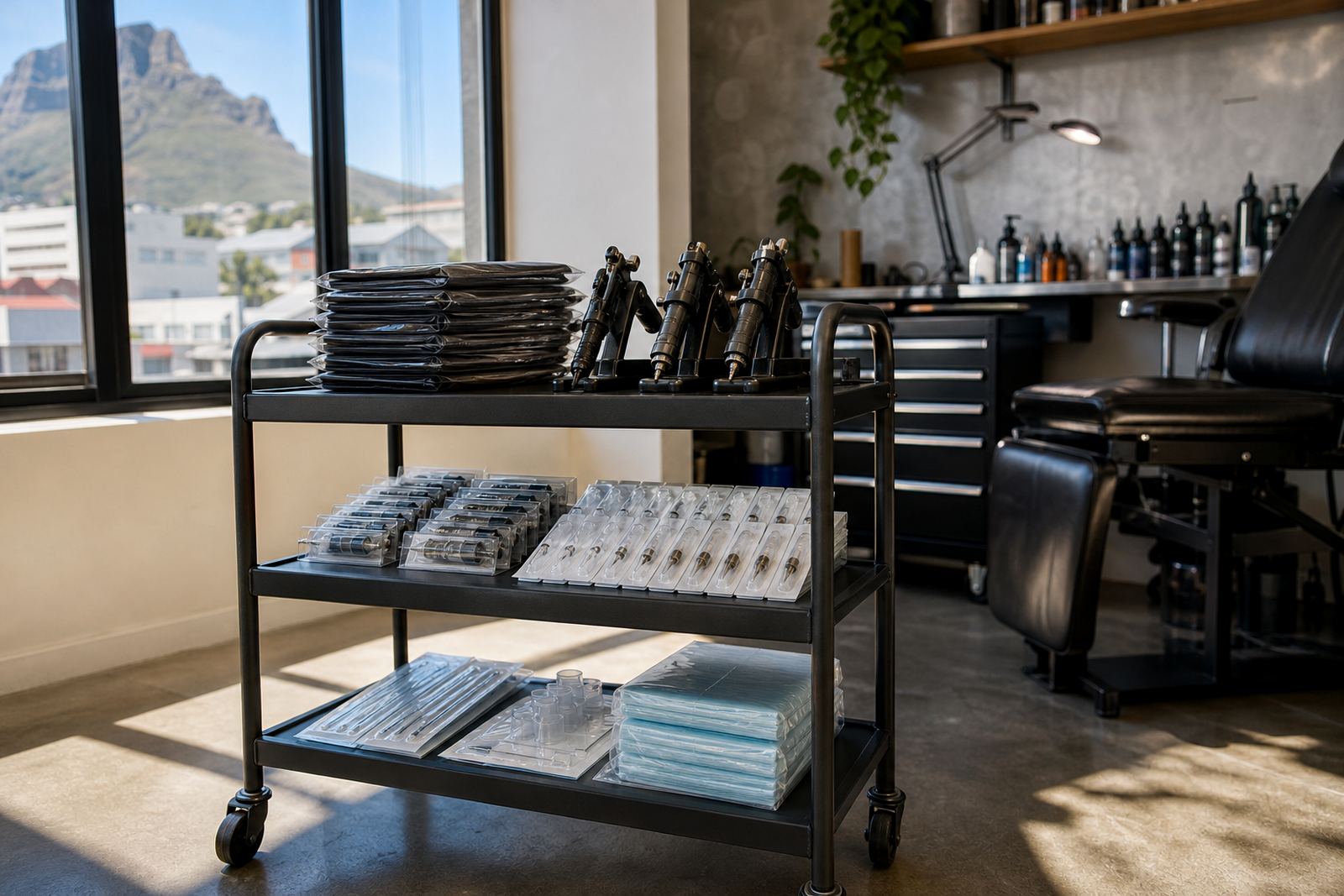
Cartridges sit alongside other sterile single-use supplies on many stations, so the way they are stored matters. Boxes should stay dry, closed and away from general handling. Once a carton is opened, studios usually keep the inner packs organised so that the first cartridge is easy to reach and the rest stay protected from dust and moisture.
Hygiene in the studio is not just about the work surface. It also includes how cartridges are handled before a session starts, where used items are discarded and how clean items are kept apart from opened stock. Local health regulations must always be followed, and studios should keep their own processes aligned to those rules.
- Store unopened cartridges in a clean, dry cupboard or shelf.
- Keep task groups separated so the wrong size is not pulled in a rush.
- Do not mix new stock with opened loose items.
- Label shelf spaces clearly for faster stock counts.
Ordering for a multi-artist studio
Many South African studios do not order cartridges one box at a time. They plan around artist style, chair bookings and the kinds of work that come through the door. A studio in Observatory may need fine liners and small shaders for weekday appointments, then wider magnums for the weekend rush when larger pieces are booked.
Good ordering starts with a clear stock list, then moves into range grouping advice and seasonal restock plans. If one artist burns through round shaders faster than anything else, that should shape the order. If another works mainly with bold black fills, the magnum group should be watched more closely. That practical approach keeps the shelf useful, and it saves the team from opening boxes only to find the wrong sizes were ordered.
For studios serving Cape Town, Johannesburg, Durban, Pretoria and Gqeberha, delivery planning also matters. Carton sizes, storage space and reordering rhythm all affect how stock is received and put away. The best system is usually the one that mirrors how the team actually works, not the one that looks neat on paper.
A clean shortlist for cartridge buying
When a studio is reviewing cartridge stock, the decision is easier if the buying list stays practical. Start with the most used task groups, then add the sizes that support the work your artists do most often. After that, check what has been sitting too long and what runs out quickest.
- List the cartridge group by task, not only by gauge.
- Keep one set of notes for each artist’s common choices.
- Separate fast-moving items from slower stock.
- Match the order to actual station use, not hopeful forecasts.
- Keep storage tidy so reorders are easier to count.
That sort of discipline sounds small, yet it changes the whole rhythm of the studio. Less sorting, fewer mixed boxes and better hand-over between artists usually mean a calmer workday and cleaner stock records.