
A room planned around the way artists work
The client was a small tattoo studio in Stellenbosch serving appointment-based work, flash sessions and ongoing custom pieces. Their room had enough floor area for a working station, but the stock side was becoming untidy, with stencil papers, inks, needles, cartridges and disposables all sharing the same shelves.
The brief was to sort the room into clear zones so artists could move from setup to pack-down without digging through mixed boxes. We grouped the supply list into daily-use items, refill stock and sealed spare storage, then matched the room layout to that split. The result was a cleaner stock path and less time spent checking what was on hand.
- Client type: independent tattoo studio
- Town: Stellenbosch
- Room use: custom design work and regular studio sessions
- Main need: stock separation and easier access
What had to fit into the space
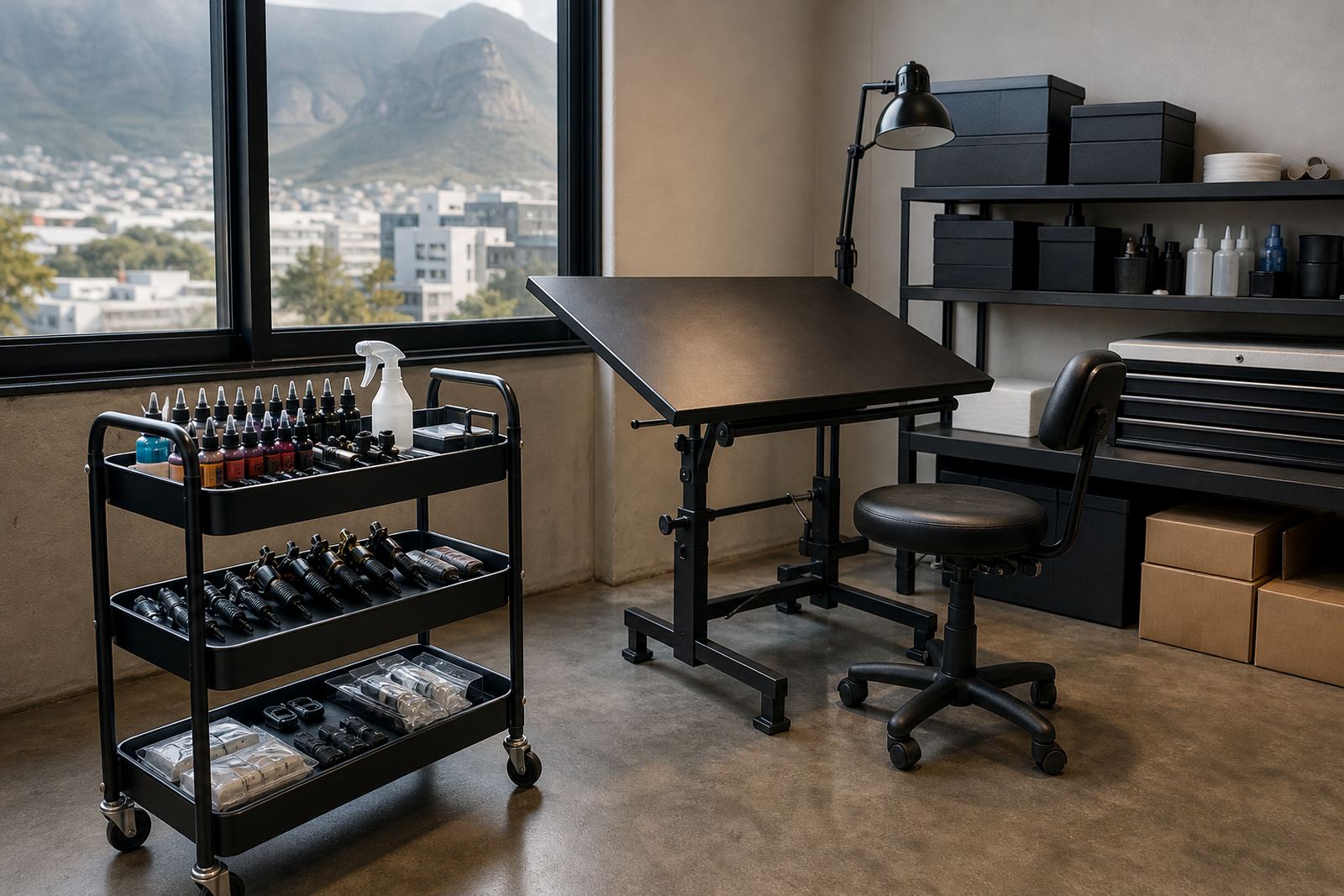
The room had a practical size, but the walls and shelves needed to work harder. There was limited space for open boxes, so the layout had to keep inks upright, needles in grouped packs and cartridges stored where sizes could be checked at a glance. We also allowed for sealed single-use items to stay separate from open consumables, which helps keep the room orderly during busy days.
Stellenbosch can be warm and dry in summer, with cooler mornings in winter, so storage needed to stay consistent through the seasons. The studio also wanted a setup that would handle dust from an open door and everyday foot traffic without turning the shelves into a catch-all. We kept the materials grouped by category and use rate rather than by supplier order, which made the room easier to run.
- Storage method: grouped shelving with labelled sections
- Working stock: inks, needles, cartridges and disposable wrap items
- Reserve stock: sealed cartons and back-up consumables
- Room priority: quick access without clutter
Supplying the tattoo core and the studio extras
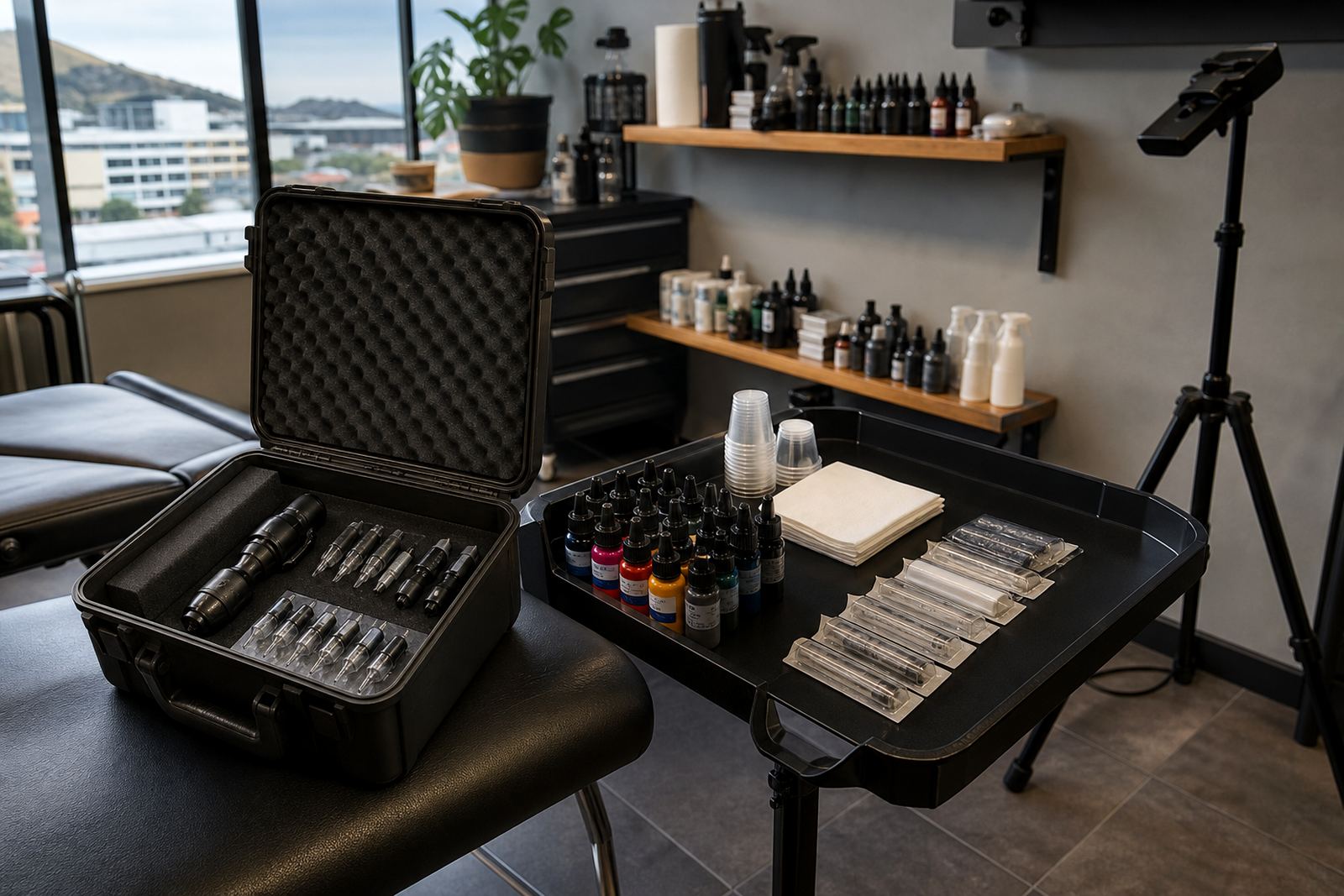
We supplied a mix of tattoo inks, grouped needle options, cartridge packs, machine-related consumables and studio hygiene items that support daily use. The stock list was trimmed to the sizes and formats the studio actually used, rather than filling the room with too many variations. That meant fewer duplicate items and a simpler count at the end of the week.
We also helped with storage planning for sealed trays, clip cord covers, barrier films, glove boxes, cleaning cloths and waste containers. None of the items were treated as decorative extras. Each one had a place in the room and a reason for being there.
- Ink range: core colours and black work inks
- Needle grouping: liners, shaders and mixed utility packs
- Cartridge grouping: standard size packs for daily use
- Studio supplies: barrier materials, covers, gloves and cleaning stock
A clean split between stencil work and stock handling
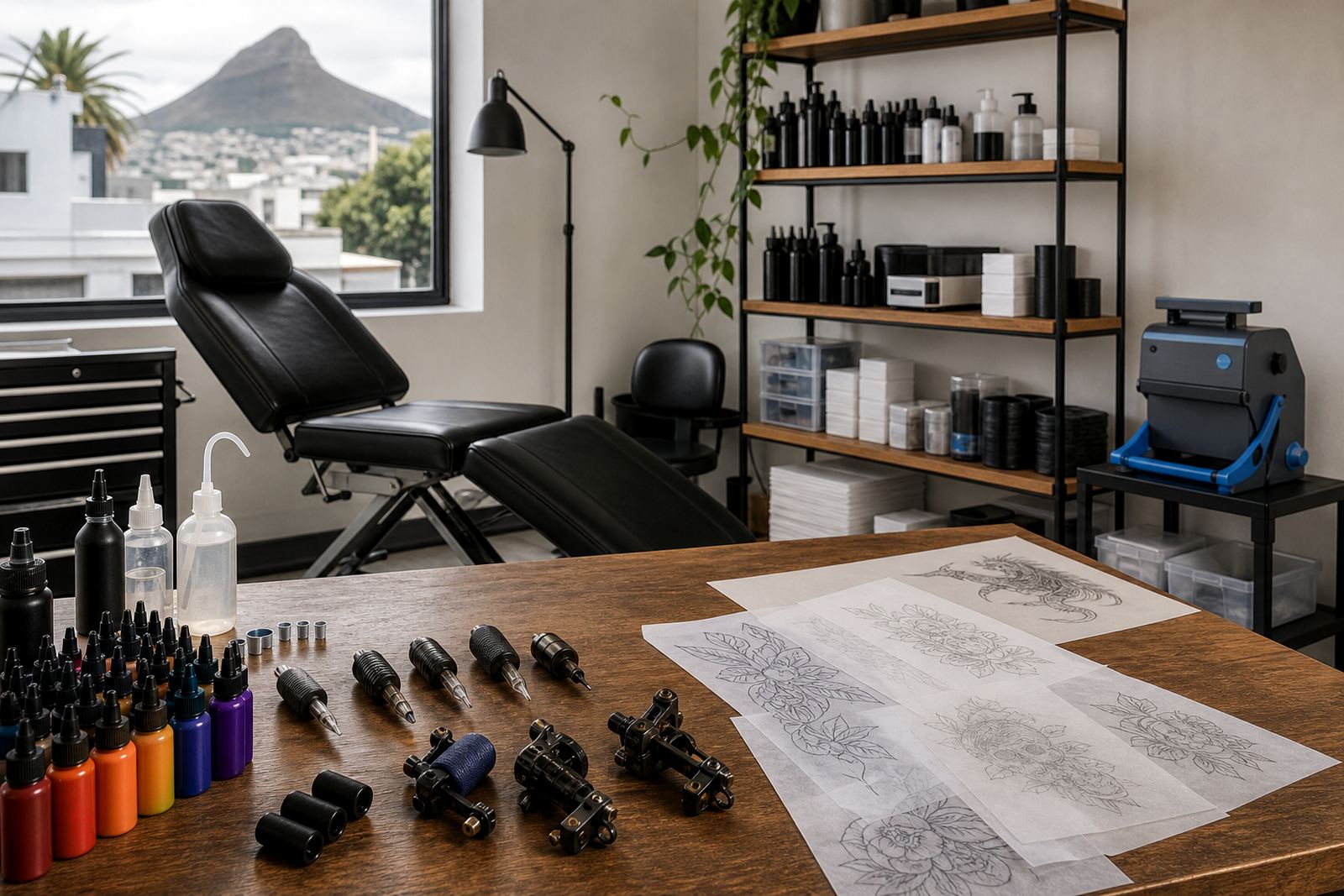
The design room needed a division between stencil prep and general stock handling. We separated the surface used for paper, transfer materials and layout tools from the shelving used for consumables. That kept the busiest part of the room clear, and reduced the chance of mixing fresh sheets with opening packs and reorders.
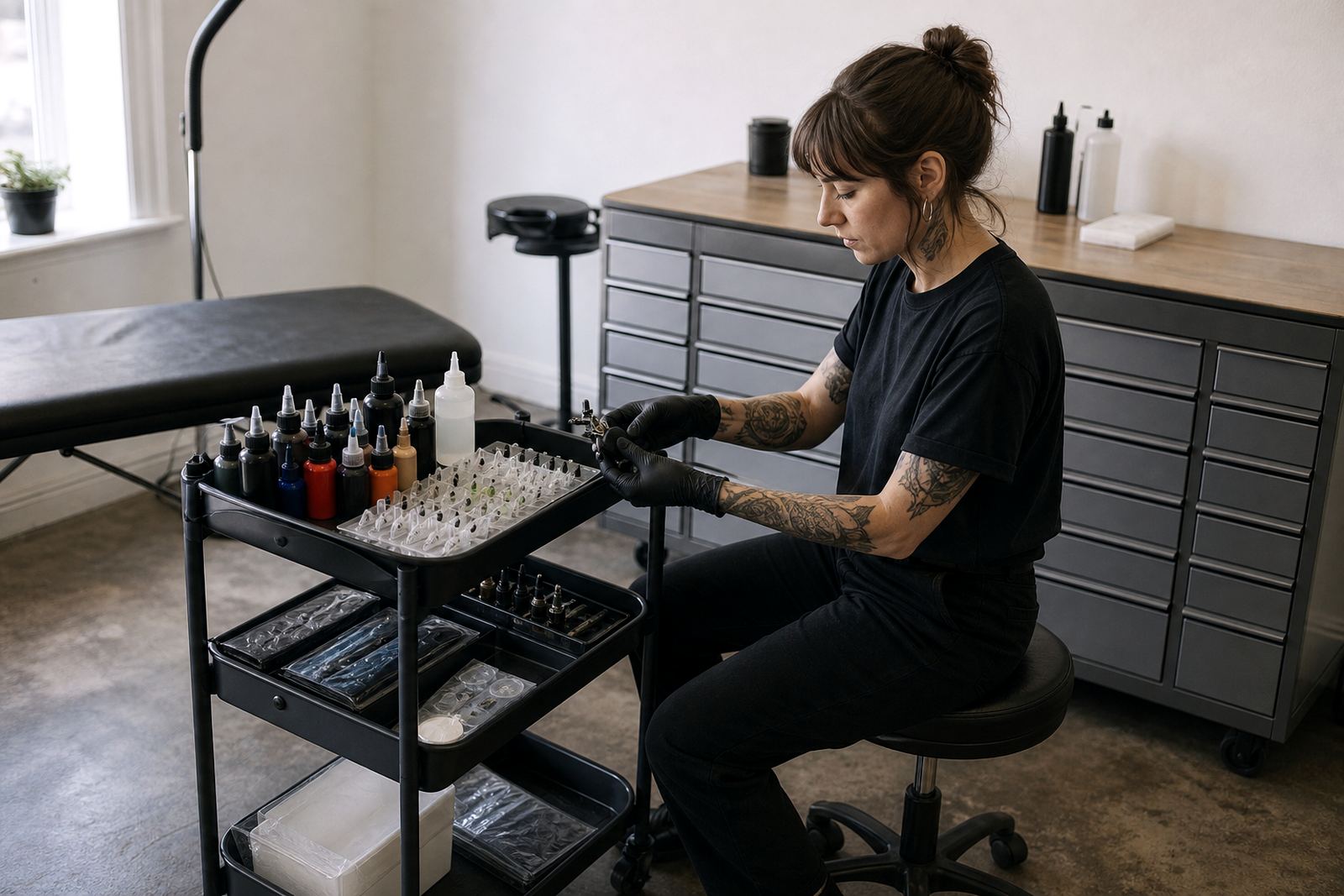
The room layout also had to suit the team member who handled intake and sorting. Small, high-turn items were placed close to the front of the storage run, while heavier cartons sat lower down. It sounds basic, but that kind of sorting saves a lot of time when the studio is moving between clients and preparing for the next day.
- Stencil area: transfer sheets, prep papers and layout tools
- Stock area: inks, needles, cartridges and sealed disposables
- Lower shelves: heavier back-up cartons
- Front shelves: fast-moving consumables
The work carried out over three weeks
Week one was stock review and grouping. We checked the current mix, removed repeated items from the active shelves and set out a clearer order for the room. Week two focused on supply matching, with ink and cartridge groupings narrowed to the sizes the studio used most often. Week three was about final room flow, restock logic and the last round of labelling so the team could keep the sections in the same order.
The whole process stayed practical. We were not trying to turn the room into a showroom. The point was to make it easier to work in, easier to restock and easier to keep tidy after a full day with clients.
- Week 1: stock audit and category grouping
- Week 2: product matching and supply trimming
- Week 3: shelf flow, labelling and final placement
- Outcome: a room that supported the artist schedule
What changed after the room was reset
After the reset, the studio had a clearer working rhythm. Artists could find the right ink or cartridge grouping without opening multiple boxes, and sealed stock stayed separate from items already in use. The client also had a better view of what needed reordering, which cut down on duplicate buys and stopped smaller consumables from disappearing into mixed shelves.
The finished room suited the scale of the studio and left enough space for future additions without forcing a full rearrangement. It was a neat, practical result for a Stellenbosch team that wanted the room to support the work, not get in the way of it.
- Clearer access to fast-moving supplies
- Less shelf mixing between active and reserve stock
- Better reordering visibility
- Room for future stock growth
What to repeat for a similar studio
For a room like this, we would use the same split between stencil materials, active consumables and sealed back-up stock. That structure works well for studios that run regular appointments and need to keep the room tidy without overcomplicating the storage plan. We would also keep the cartridge and needle groups tight, because too many near-duplicate options can slow down ordering and pack-down.
In a town like Stellenbosch, where studios often balance custom work with steady client flow, simple grouping usually works better than trying to store everything in one place. Follow local health regulations for handling, storage and disposal, and keep the room layout consistent so the team does not have to relearn it every week.
- Keep stencil supplies separate from general stock
- Limit active cartridge and needle groupings
- Store sealed back-up stock away from daily-use items
- Keep the shelf order the same after restocks
Key facts
| Project type | Custom-design focused tattoo supply room |
|---|---|
| Town | Stellenbosch |
| Timeline | 3 weeks |
| Core supply groups | Tattoo inks, needles, cartridges and studio supplies |
| Layout focus | Stencil materials separated from working stock |
| Delivery area | Cape Town and major South African studio routes |