
Room layout with three artist zones
The client was a shared tattoo room in Centurion used by a small team that rotates between walk-ins and booked sessions. The room had one stock point, mixed drawers and a lot of loose consumables on open shelves, which made it hard to keep each artist’s machine set, barriers and cartridges together.
The brief was practical: separate working stock by artist, keep sterile single-use items easy to reach, and create a cleaner flow from storage to chair side. The room also needed space for sealed back stock, because deliveries were being unpacked into the same area where sessions ran, so items got moved around more than they should have.
What had to fit the daily Centurion workload
The main constraint was floor space. The room did not have the benefit of a spare store room, so the zoning had to use wall shelving, labelled tubs and compact trays rather than large cabinets. Another constraint was shared use, because different artists preferred different needle groupings and cartridge counts and they needed their own packs kept separate.
- Two working shelves for day stock and sealed replenishment stock
- Individual drawer sections for machines, grips, barriers and clip cord covers
- Separate cartridge groupings by fit and purpose, with clear count control
- Closed tubs for sterile single-use supplies and outer packaging
- Dry storage above floor level for cartons, sleeves and bulk reorder stock
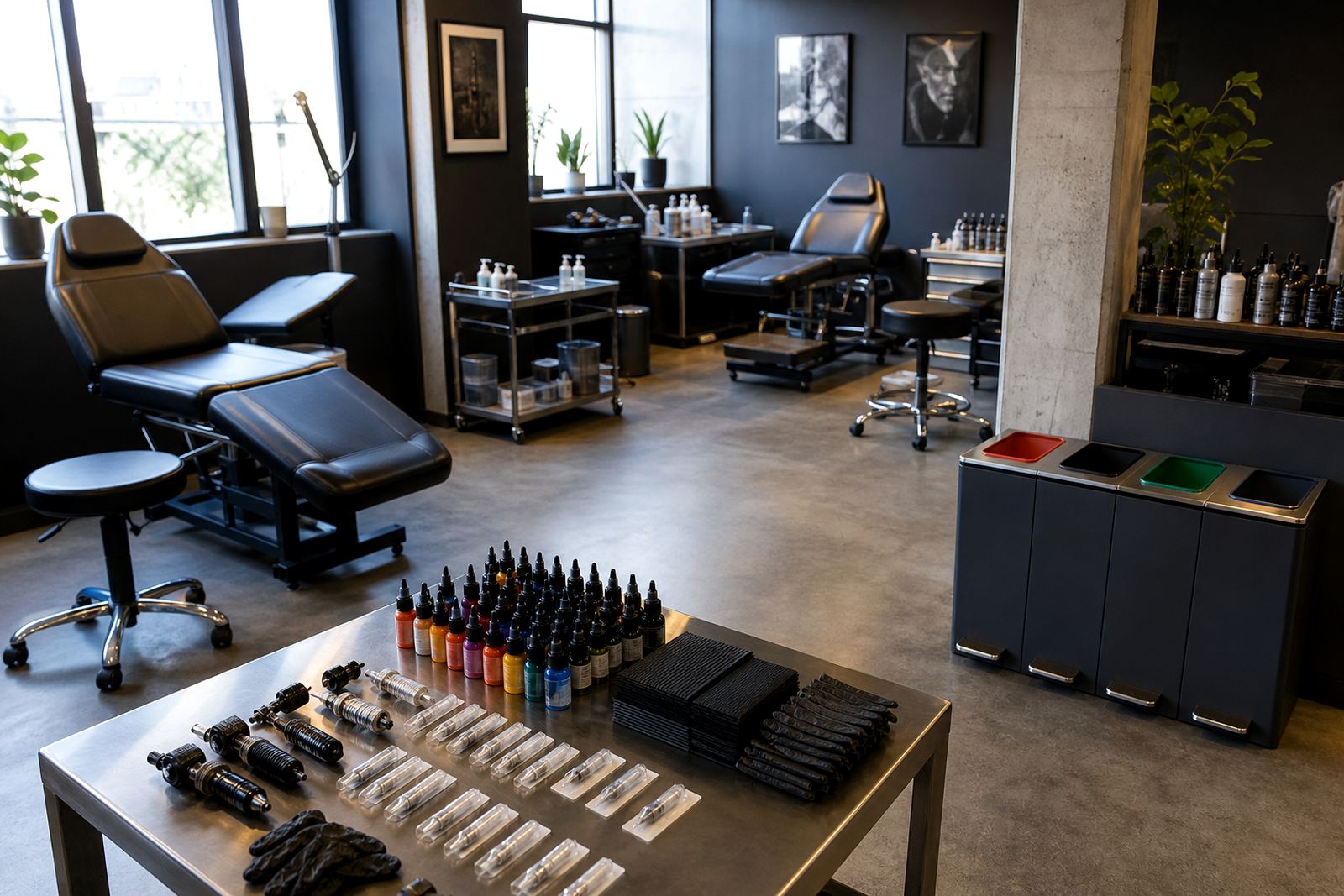
We also had to factor in routine cleaning. The studio keeps surfaces wiped between clients and works under local health rules, so the storage plan needed smooth fronts, wipeable containers and enough seperation between clean stock, open packs and waste bins.
Grouped stock, not mixed stock
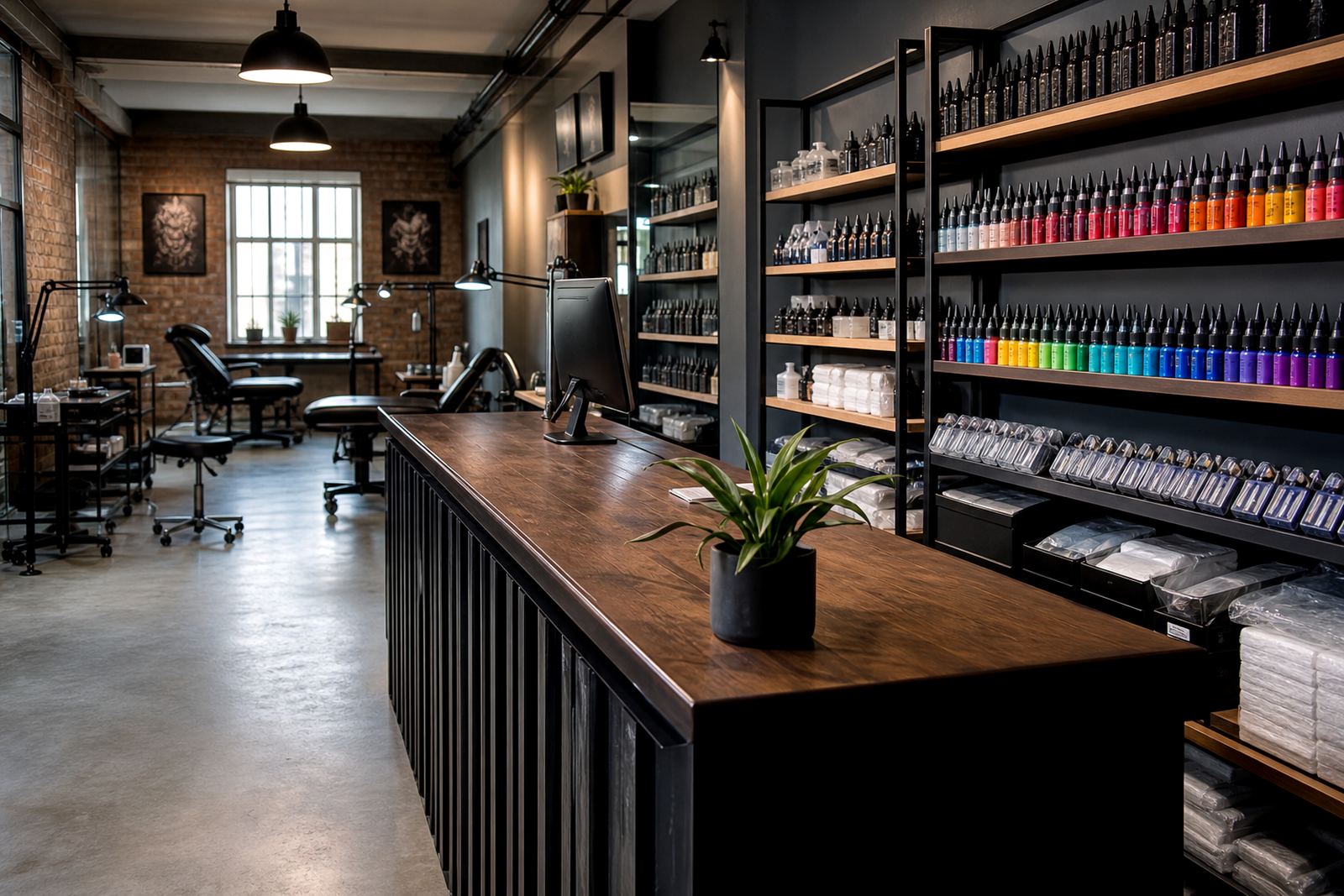
We supplied and arranged stock categories around how tattoo artists actually pull items during a session. Machine accessories were grouped by hand style and use case, cartridges were split into working sets, and barrier items sat in the closest reach zone so the room did not turn into a scramble when a chair changed over.
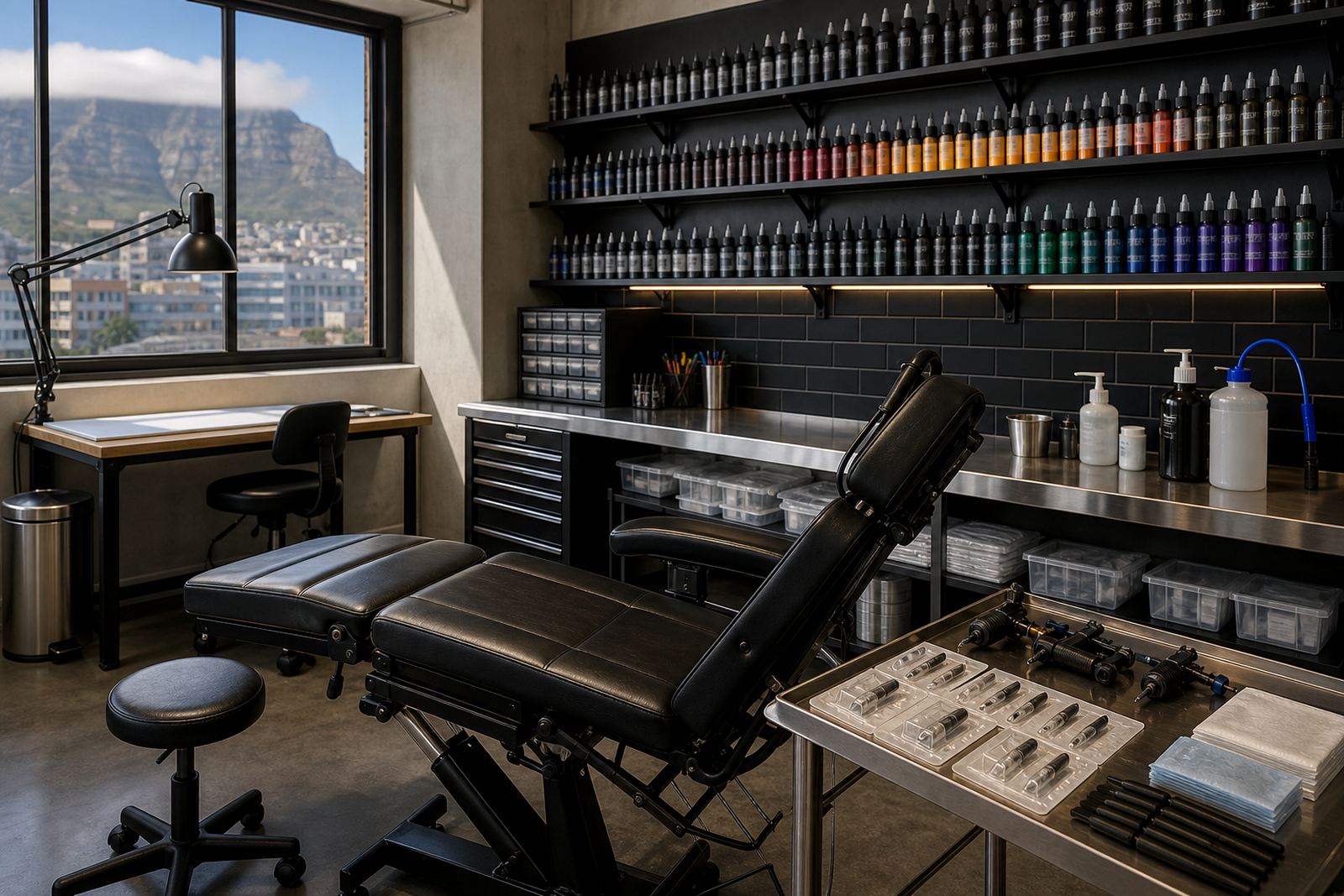
The cartridge grouping was set up with narrow drawers and labelled dividers so common sizes and uses were not piled together. Needle groupings were kept in closed, marked containers, while sterile single-use items stayed in their own sealed section away from open cleaning stock. That reduced handling and made it easier for the studio to see what was low before a busy weekend.
- Machine storage grouped by artist, with a fixed shelf position for each set
- Cartridge trays split into working stock and reserve stock
- Barrier packs stored with wraps, sleeves and clip covers in one zone
- Consumables ordered by session flow, from setup to cleanup
Storage choices that suit a shared room
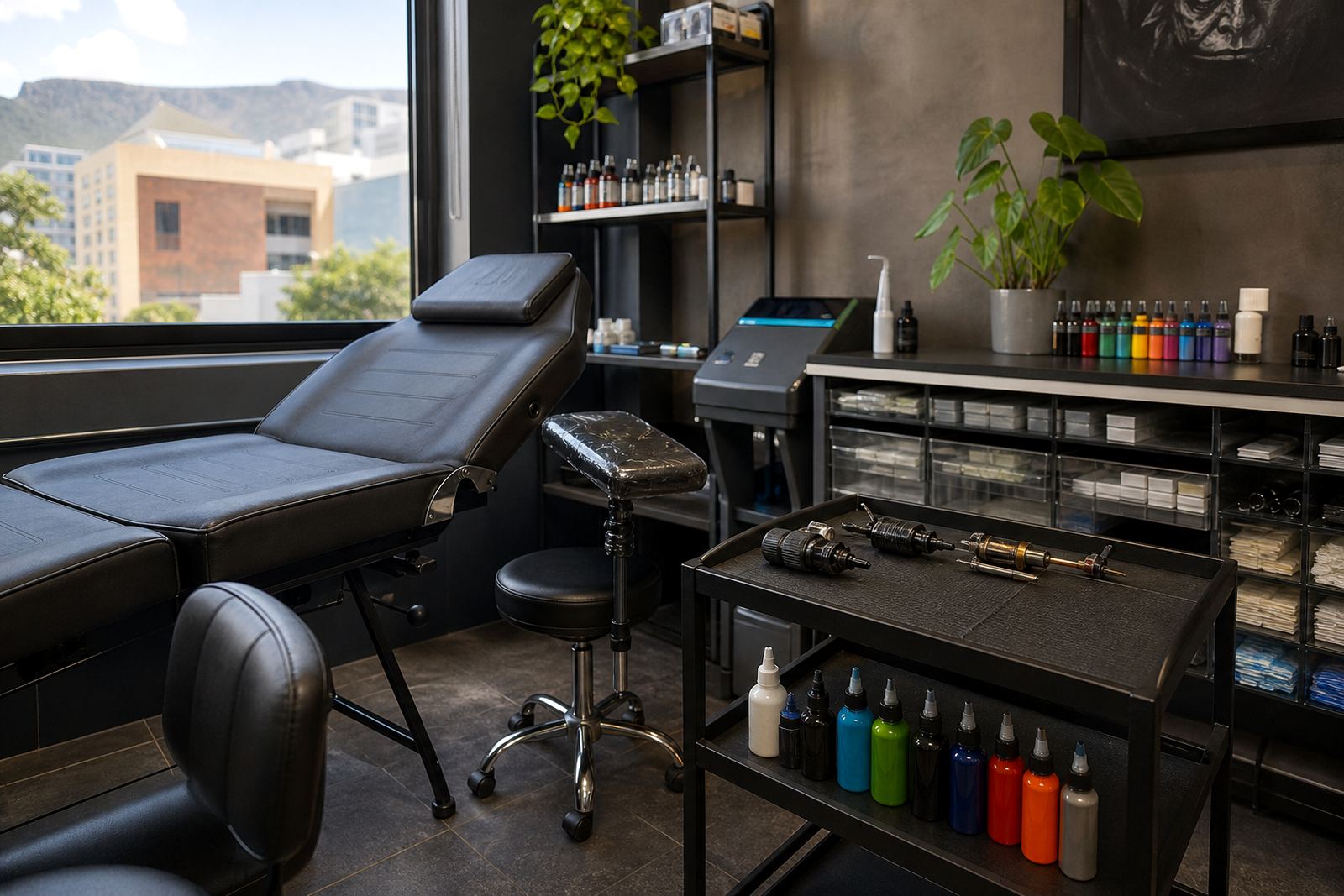
Because the room is used by several artists in one day, storage had to be fast to read and easy to reset after each client. We used shallow containers for fast-moving items and deeper tubs for bulk refills, with labels positioned on the front edge so nobody had to open every drawer to find a pack.
The back stock area was kept higher and drier, which matters in Gauteng’s dusty conditions and during the hotter months when packaging can get bent or crushed if it is stacked badly. The team also wanted a clear place for unopened stock from Cape Town deliveries and national dispatches, so the room could stay tidy even when a few cartons arrived at once.
We set aside one section for seasonal restock planning too. That helps when the studio gets a heavier booking run, because cartridges, gloves, barriers and aftercare support items can be counted and topped up before the week starts rather than patched together mid-shift.
Six weeks from first layout to settled stock
The project ran over six weeks. In week one we reviewed the room layout and the current stock mix. Week two was used to group the consumables by artist and by function. In week three we set the shelf order, drawer labels and working trays. The remaining weeks were for fine tuning, stock counts and small changes after the team tested the flow during actual studio days.
By the end of the rollout the room had a clearer handover point for shared supplies. Artists could see where their machine sets sat, where the cartridge groupings lived and which stock was for immediate use versus reserve. There was less double handling and far fewer items being moved from one surface to another just to make space.
What changed for the studio day to day
The most useful result was consistency. Each artist had a defined stock zone, so the room no longer relied on memory or on someone being free to search for a pack. The team also found it easier to do quick counts at the end of the day, which helped with consumable reorders and with planning the next delivery.
- Cleaner chair-side setup because barriers and cartridges were easier to reach
- Less stock mixing between artists during busy shifts
- Better visibility of reserve stock and slower moving items
- Quicker resets after cleaning between clients
It also gave the studio a steadier feel for new staff or visiting artists. The storage logic was simple enough to follow without a long handover, which matters in a shared room where the people on shift can change from day to day.
What we would use again in a room like this
For a shared Centurion room, the same approach would work again: fixed artist zones, shallow working trays, sealed reserve storage and a clean split between open stock and packed stock. If the room had more wall height, we would add another tier of labelled shelving for bulk cartons, but the basic structure already suits a busy tattoo floor.
We would also keep cartridge match help tied to each artist’s usual set-up, rather than letting everything merge into one communal drawer. That small discipline saves time, keeps counts cleaner and makes dispatch planning easier when the studio needs a grouped restock for the next few weeks.
For studios across South Africa, from Cape Town and Johannesburg to Durban, Pretoria and Gqeberha, the same logic holds: when tattoo supplies are grouped properly, the room works better. Not perfect, just better and easier to run.
Key facts
| Project type | Shared room stock zoning for a tattoo studio |
|---|---|
| Town | Centurion |
| Timeline | 6 weeks |
| Core items | Tattoo machines, barriers, grouped cartridges, needles and sterile single-use supplies |
| Storage method | Labelled shelves, shallow trays, closed tubs and reserve stock zones |
| Service focus | Stock List Help, Station Planning, Cartridge Match Help, Storage Planning |