Hatfield Brief: Short Sessions, Tight Space, Fast Reset
The client was a small student-focused tattoo studio in Hatfield, Pretoria, working with compact appointments, flash sheets and repeat visitors who wanted clean turnaround between sessions. The brief was practical: keep core stock close at hand, reduce time spent sorting supplies, and make sure the workstation could be reset quickly between artists.
The studio did not need broad retail shelves or oversized storage. It needed grouped stock that matched the work done on the day, plus a reserve for busy weeks when bookings stacked up. We planned the range around that rhythm and kept the order structure simple enough for a small team to manage.
What Had To Fit Into The Room
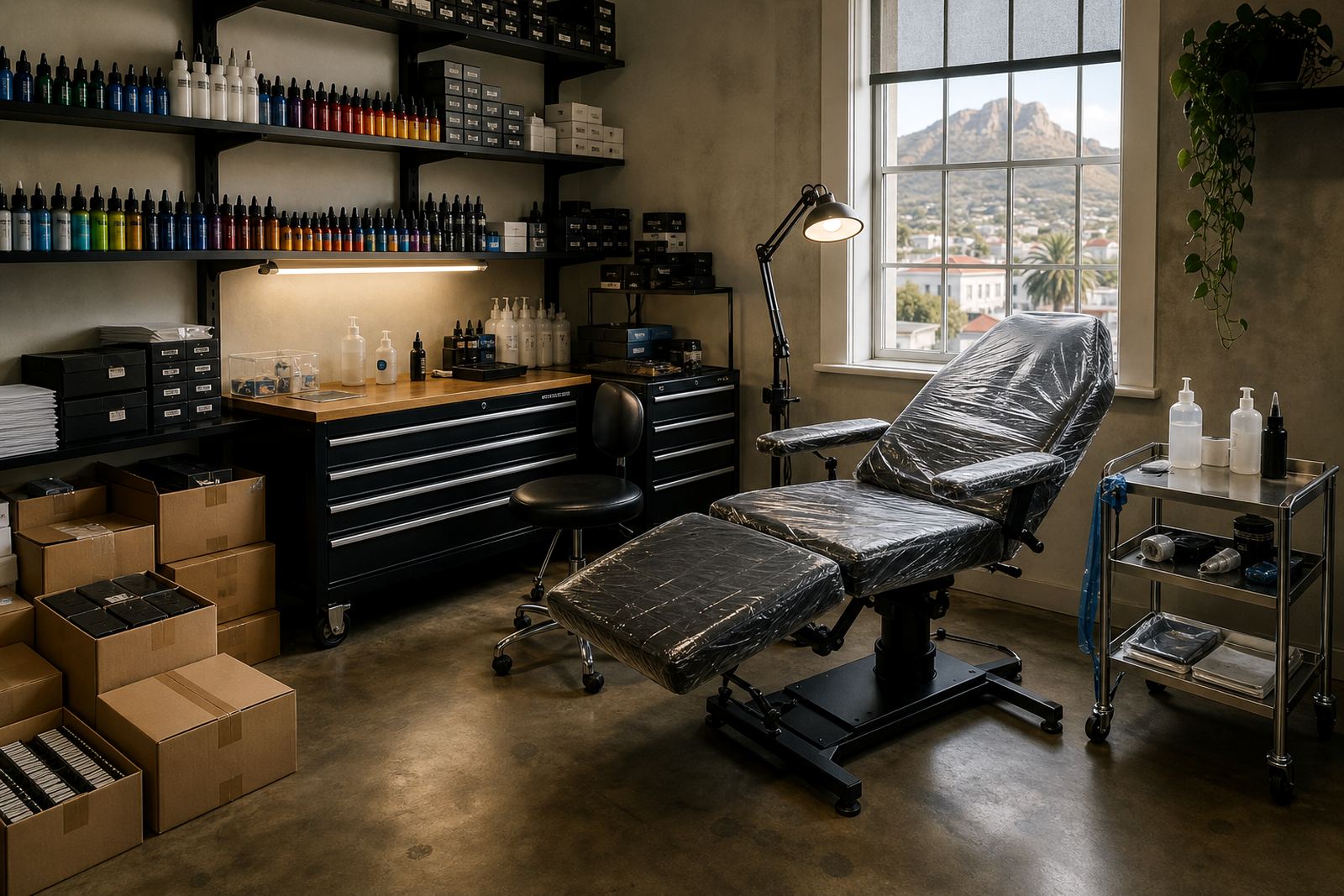
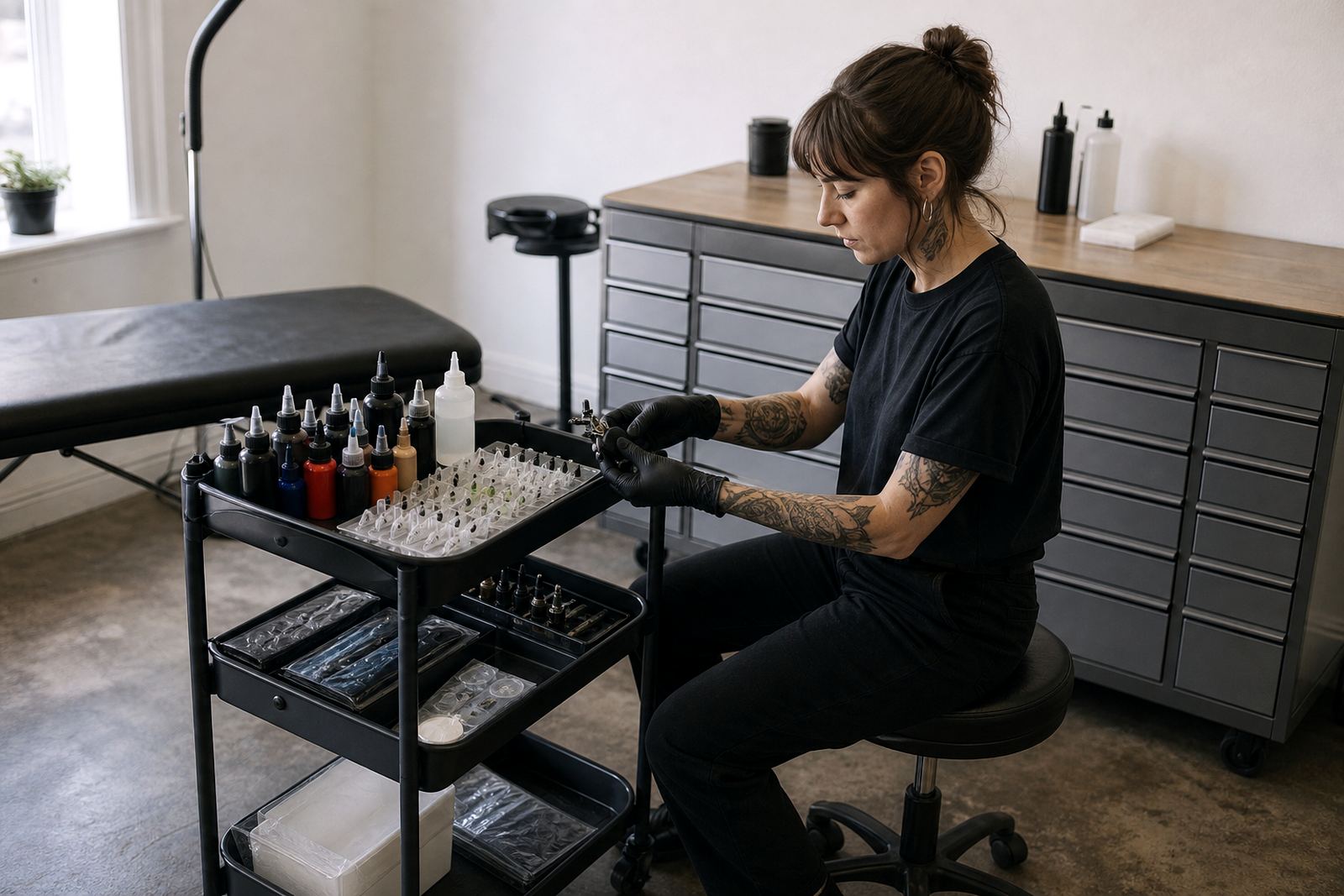
Space was the main constraint. The studio had limited shelf depth, a narrow prep area and a high need for clean separation between sealed consumables, open stock and used disposables. That meant every item had to earn its place, especially where cartridge groupings and needle packs were concerned.
- Ink groupings for lining, shading and colour packing
- Needle and cartridge ranges in common grouping sizes
- Single-use barriers, cups, wraps and prep items
- Storage tubs and labelled trays for compact shelving
- Wipe-down friendly containers for daily handling
We also kept the order list suitable for students sharing the same room, so the setup could be used by more than one artist without confusion. It was a small space but the work flow had to feel organised, not cramped.
Range Built For Flash Work And Turnover
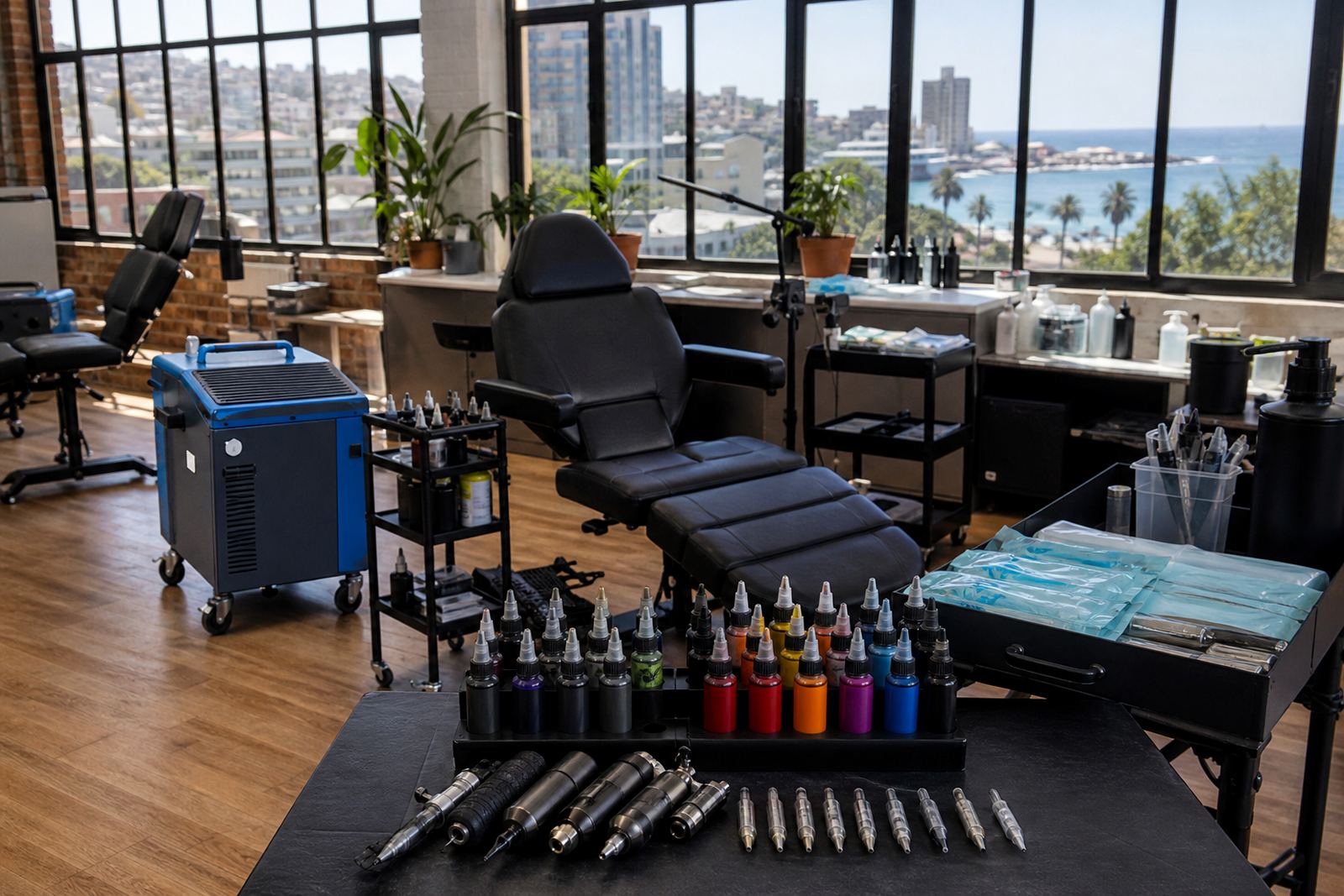
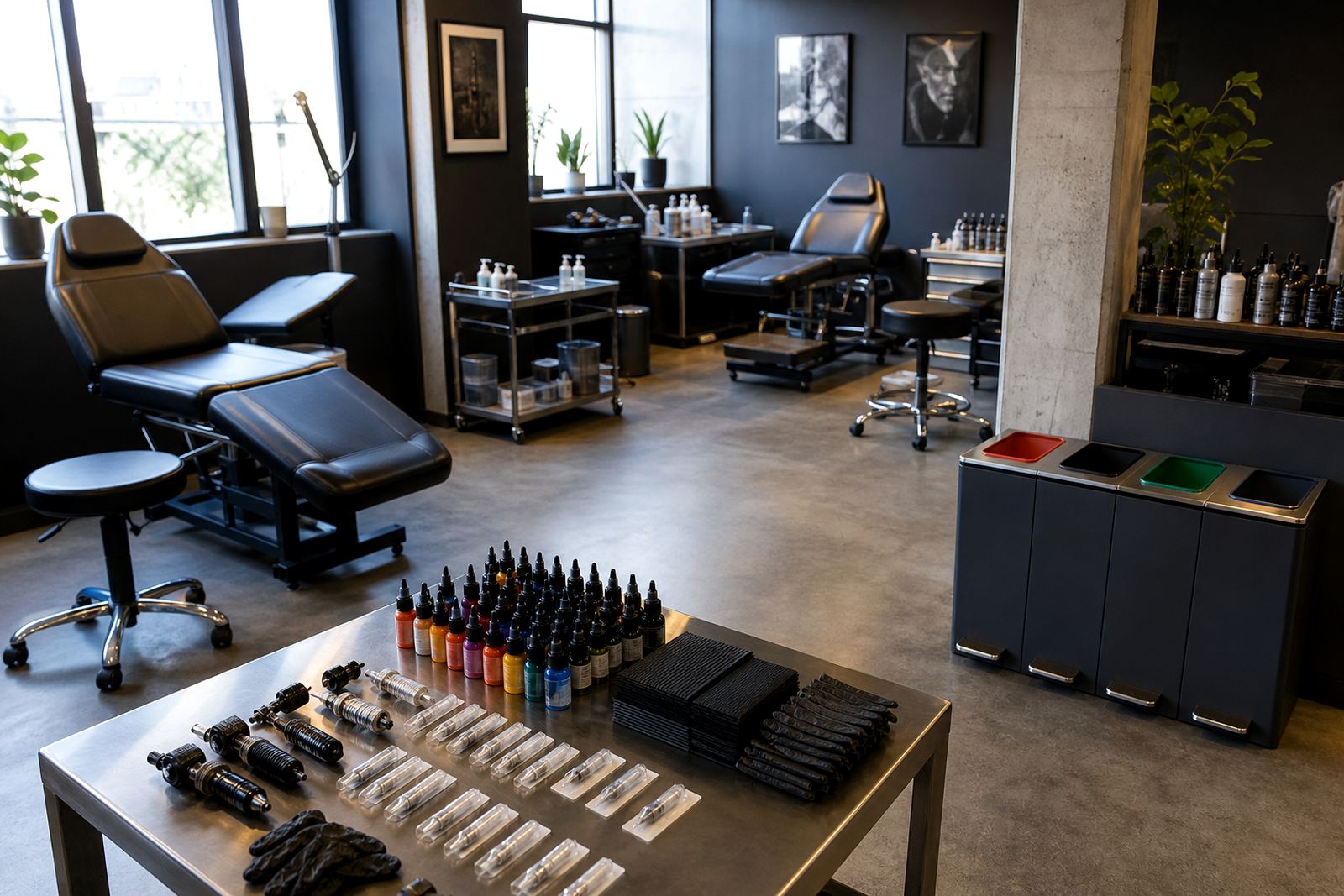
We supplied a mixed stock list centred on tattoo inks, grouped needles, cartridge sets and sterile single-use studio supplies. The ink plan covered common session demands with compact bottle counts rather than a heavy wall of duplicates. Needle and cartridge groupings were arranged by use case so the team could pull the right pack quickly without digging through mixed boxes.
For the workstation side, we included disposable grips, clip cord covers, clip-style barrier wraps, ink caps, gloved prep items and surface protection materials. Storage planning mattered just as much as the consumables, so we matched the supplies to sealed tubs, stackable trays and labelled sections that could hold up in a busy student environment.
- Grouped inks for line work, shading and colour work
- Needle packs for fine detail and general tattooing
- Cartridges in practical groupings for quick selection
- Sterile single-use items for cleaner session changes
- Compact storage choices for smaller counters and shelves
How The Stock Plan Was Put Together
The project ran over three weeks from stock review to dispatch planning. Week one covered the brief, room layout and the likely session mix. Week two focused on range grouping, storage sizing and consumable quantities. Week three was used to finalise the supply list and set up reorder planning for the most used items.
Because the studio served compact bookings, the stock plan had to be flexible without becoming messy. We grouped the order so core items sat beside fast-moving consumables, while less frequently used items were kept in smaller reserve quantities. That reduced handling time and made it easier for the team to reset between artists, even when the day filled up quickly.
Dispatch To Pretoria And Support For Reorders
Once the list was confirmed, dispatch planning was arranged for delivery to Hatfield with support for future deliveries to other South African studio locations as needed. The business also needed help with consumable reorders, so we set the supply list up in a way that made repeat ordering less uncertain and easier to track.
For a student studio, the important part was not overbuying. It was holding enough stock to cover the week while keeping the shelves readable. We kept the quantities practical and the packing order tidy, which helped the studio protect storage space and cut down on unnecessary unpacking.
- Consistent stock holding for compact booking patterns
- Delivery planning for Pretoria with wider South African coverage
- Consumable reorders grouped by actual use rate
- Product substitution options for interrupted supply lines
- Storage notes for sealed and open items
What Changed After The Setup
After the stock was in place, the studio had a clearer split between daily-use items and reserve stock. That made flash days easier to manage because the team could reach for the right ink group or cartridge pack without sorting through mixed supplies first. The workstation also reset faster between bookings, which helped the room stay usable through a full day of short sessions.
The results were practical rather than flashy. Less time was lost looking for items, the shelves were easier to keep in order, and the supply list matched the size of the studio better. For a place built around student traffic and quick turnover, that was the point.
What to repeat for another compact studio
If we were setting up another small studio in a student-heavy part of Pretoria, we would use the same approach: group the stock around actual session types, keep the open shelf count low, and choose storage that can be cleaned and checked quickly. A compact studio needs control more than volume.
We would also keep the consumable list tied to the machine and cartridge combinations already in use, rather than filling the room with broad extras. That keeps the list cleaner and makes monthly planning easier when the work pattern changes during term time and exam breaks.
Key facts
| Project type | Student tattoo studio stock setup |
|---|---|
| Town | Hatfield, Pretoria |
| Timeline | 3 weeks |
| Core supply groups | Tattoo inks, needles, cartridges, sterile single-use supplies |
| Storage scope | Compact shelving, labelled trays, sealed tubs |
| Distribution reach | Delivery to studios across South Africa |