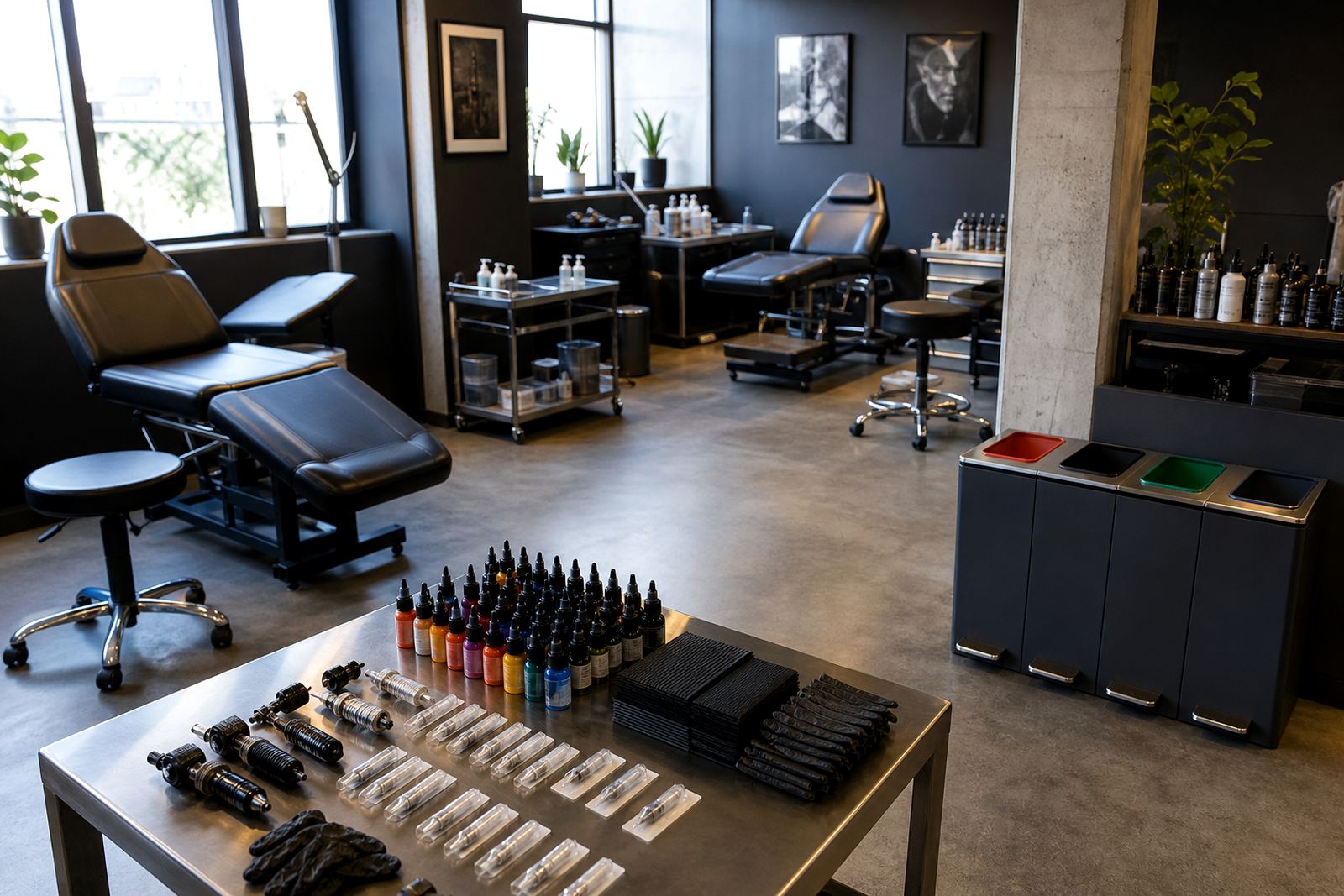

A small room with a full working load
The brief came from a private tattoo studio in Umhlanga, operating from a compact room with only a few shelves, one lockable cabinet and very little spare floor space. The artist needed a cleaner way to keep inks, cartridge groupings, sterile single-use items and general studio supplies in order without filling every surface. The room also sat close to the coast, so storage needed to cope with warm air, salt exposure and the slower drying conditions that often affect packaging and labels in Durban’s humid months.
The owner wanted stock that could cover regular appointments, short notice walk-ins and a steady flow of custom work. The challenge was not only the quantity of items, but the way they were grouped. A room this size can become cluttered quickly if every needle size, cartridge type and consumable sits in one pile. We mapped the main working needs first, then matched the stock list to the space available. That kept the room practical, easy to count and easier to restock without overbuying.
- Client type: small private tattoo studio
- Town: Umhlanga, KwaZulu-Natal
- Space: compact treatment room with limited shelving
- Main need: organised restock planning for a coastal setting
Grouping the stock by daily use
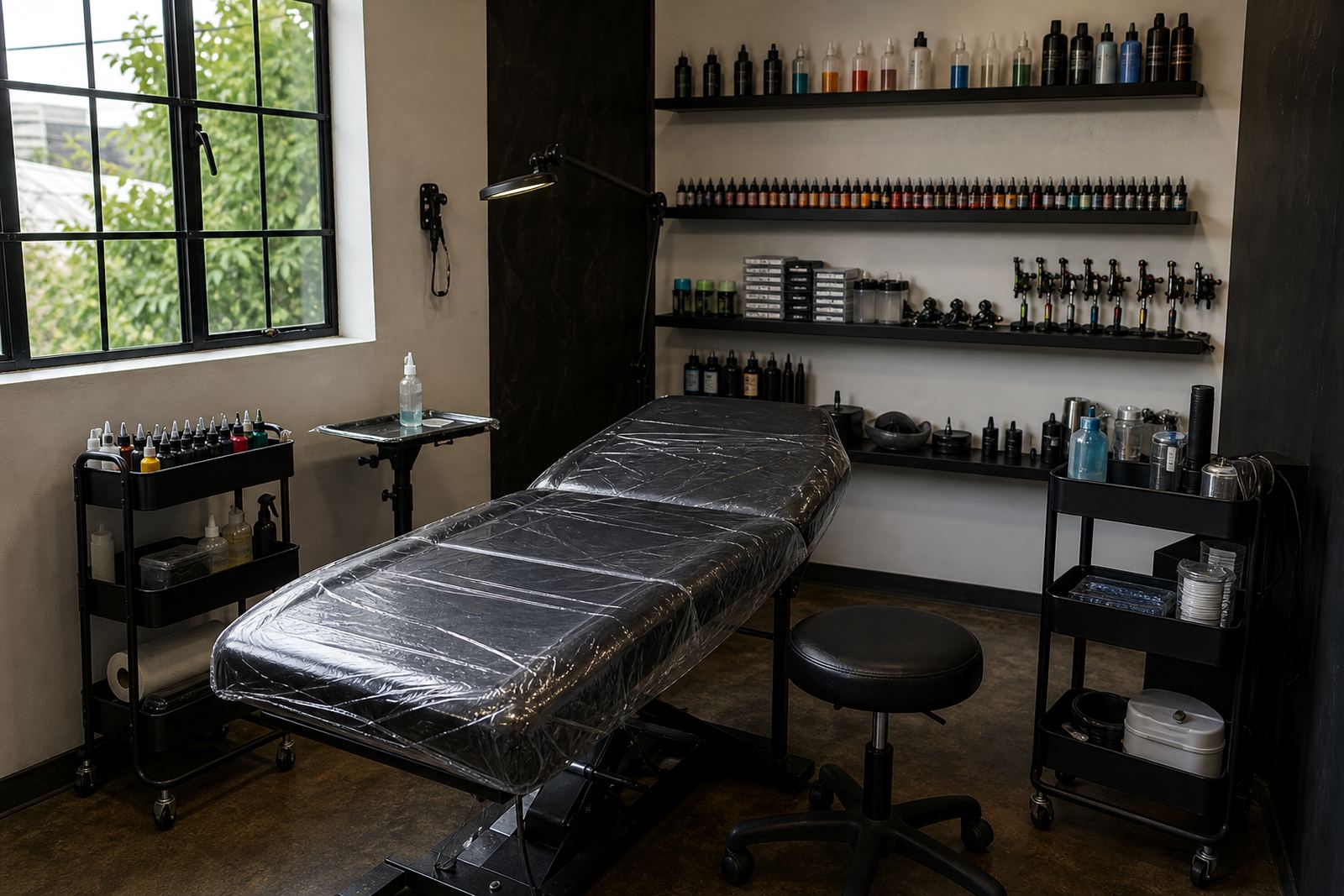
The supply plan was built around usage patterns rather than a broad catalogue approach. Inks were grouped by core working colours and support shades, with bottle sizes chosen for regular turnover rather than long shelf life on the rack. Needles and cartridges were split into the common working groupings most studios keep close at hand, so the artist could find liner, shader and mixed-use options without opening multiple boxes during a session.
We also separated sterile single-use supplies from reusable room items and from stored back-up stock. That made the cabinet easier to manage and reduced the time spent sorting through mixed cartons. Storage planning matters in a room like this because a small change in layout can save a surprising amount of time across a full week. The final grouping was designed for quick access, clear counts and fewer interruptions between appointments.
- Ink groupings: main colours, dark shades and support tones
- Needle groupings: common line and shade sizes
- Cartridge groupings: routine working types and backup packs
- Single-use supplies: wrapped items kept separate from shelf stock
What went into the supply pack
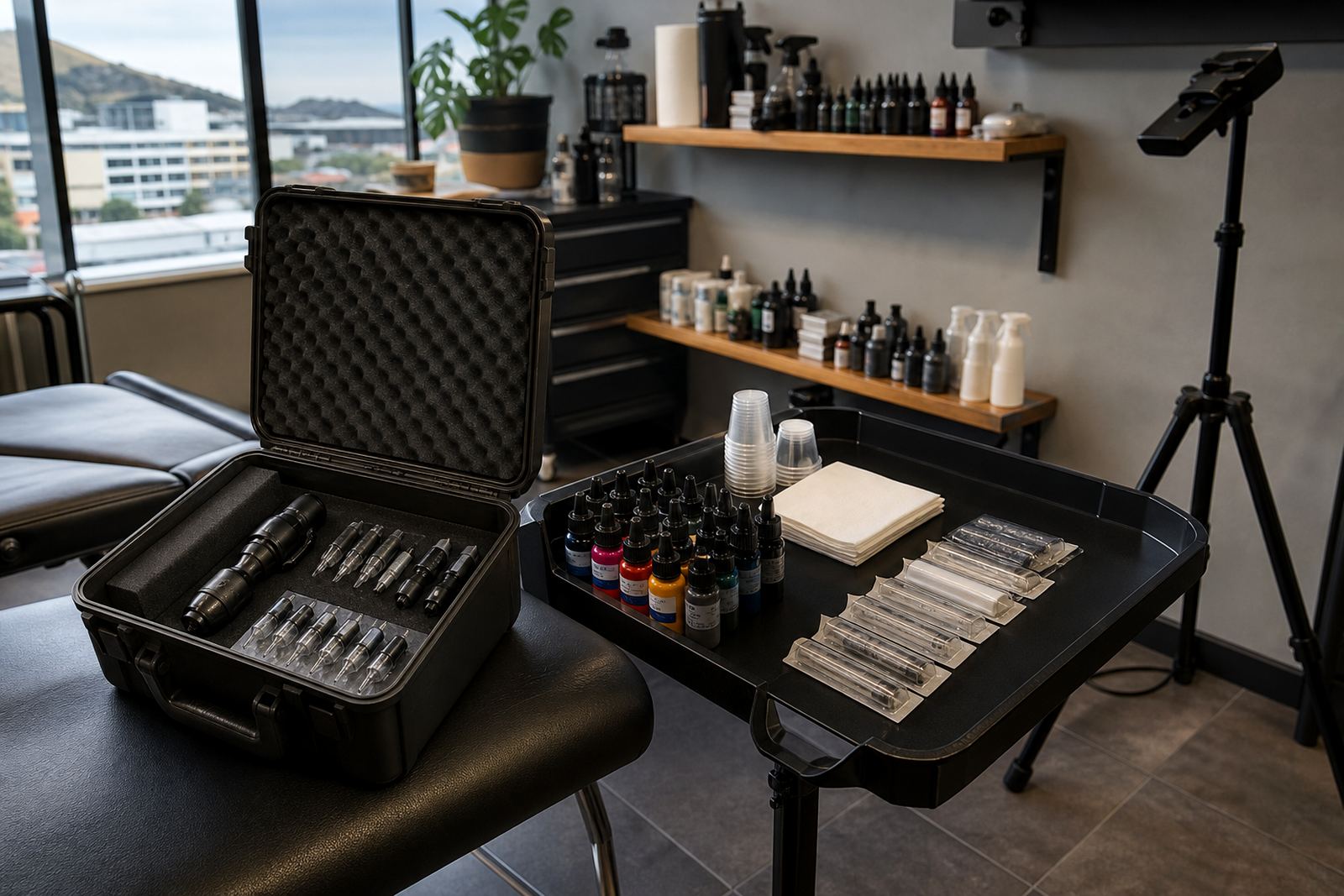
The order combined tattoo inks, needles, cartridges and studio consumables in a format that suited a small room with regular turnover. We supplied the kind of stock that helps a studio keep moving without needing bulky reserve boxes underfoot. The mix included consumables for setup, cleaning, wrapping and day-end resets, together with storage containers and labels that make it easier to track what is open, what is sealed and what needs to stay at the back.
We also included machine-related accessories and station organisation items where they made sense for the room layout. The studio used mains-powered equipment, so the supply plan kept attention on orderly placement, tidy cables and protected storage areas, rather than adding extra clutter. The point was to support the working rhythm of the room, not force a bigger system into a small space.
- Tattoo inks in practical working sizes
- Needles and cartridges in clear size groupings
- Single-use hygiene stock for daily station resets
- Storage tubs, labels and cabinet organisation items
- Machine accessories kept in a separate working tray
Coastal storage choices that made sense
Umhlanga’s coastal air changes how a small room should be packed. Cardboard breaks down faster, sealed packaging can pick up damp if it is stacked too tightly, and loose labels can curl when storage is not managed carefully. We used a layout that kept sealed cartons off the floor, separated opened stock from closed stock and left enough air space around shelves for easier checks. It is a modest detail, but in practice it keeps the room neater and reduces wasted time checking what is still usable.
We also set out a simple rotation flow for consumables so older stock would sit in front of new stock where that made sense. That helped with stock movement and kept the cabinet from becoming a forgotten pile of mixed orders. The studio was reminded to follow local health regulations for storage, handling and room hygiene, especially where single-use items and cleaning materials were being kept in the same working area. Nothing about the layout was complicated, it just had to be disciplined.
Three weeks from brief to stocked room
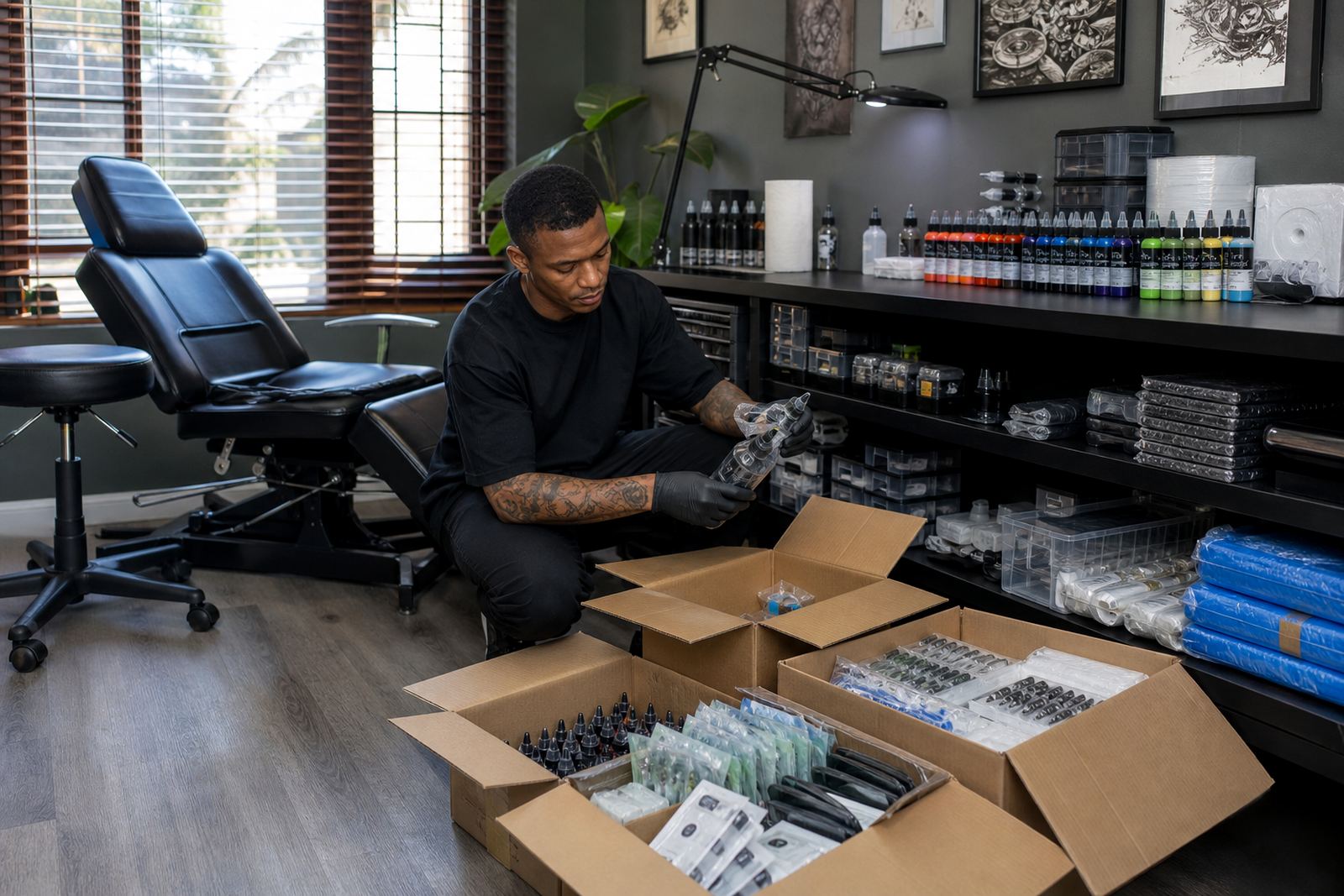
The project ran over three weeks from first stock review to the final room set-up. Week one was the stock map, room measurements and grouping plan. Week two covered order preparation, substitutions where needed and delivery coordination to the studio. Week three was the unpack, shelf layout and final restock sequence. This approach worked well because the room did not need a full rebuild, only a careful tightening of how stock entered and left the space.
During that period we also adjusted the ordering mix to better suit the studio’s actual volume. Instead of overloading the room with deep reserve packs, we kept a working balance that matched the room size and the pace of use. That reduced overflow on the shelves and made the cabinet simpler to read at a glance.
- Week 1: room check and stock grouping plan
- Week 2: order build and delivery scheduling
- Week 3: shelf layout, unpacking and final placement
What changed after the restock
The main result was space. The artist could reach the most used items without shifting boxes around first, and the studio had a clearer split between daily consumables and reserve stock. The room looked less crowded, but more importantly it worked better during busy blocks. Fewer items were left loose on surfaces, and the stock count was easier to keep steady from one session to the next.
The studio also found it easier to plan consumable reorders because the grouped stock showed what was moving fastest. That made the next restock simpler, especially for the items that get used up in small but regular amounts. For a coastal room with limited storage, that sort of order is worth more than a large pile of surplus supplies. It keeps the work area calmer and makes the next reset less of a chore.
- Cleaner use of cabinet space
- Faster access to inks, needles and cartridges
- Better separation of open and sealed stock
- Less clutter across the treatment room
The same approach we would use again
If we were repeating this project for another compact coastal studio, we would use the same sequence: count the real working stock first, group items by use, then build the order around the space rather than around a long wish list. That method suits small rooms in places like Umhlanga, where humidity, space and daily turnover all need to be considered together. It also works well when a studio wants steady supply flow without filling the room with excess cartons.
We would keep the same focus on stock list help, cartridge match help, storage planning and dispatch updates, because those four pieces made the project easier to manage from start to finish. The result was practical and tidy, which is exactly what a compact working room needs. Not flashy, just ordered and ready for the next set of appointments.
Key facts
| Project location | Umhlanga, KwaZulu-Natal |
|---|---|
| Client type | Small private tattoo studio |
| Room size | Compact treatment room with limited shelving |
| Core supplies | Tattoo inks, needles, cartridges and studio consumables |
| Storage focus | Coastal humidity, sealed stock and shelf rotation |
| Timeline | 3 weeks from brief to final restock |
| Delivery area | Delivery arranged for South African studio use |