
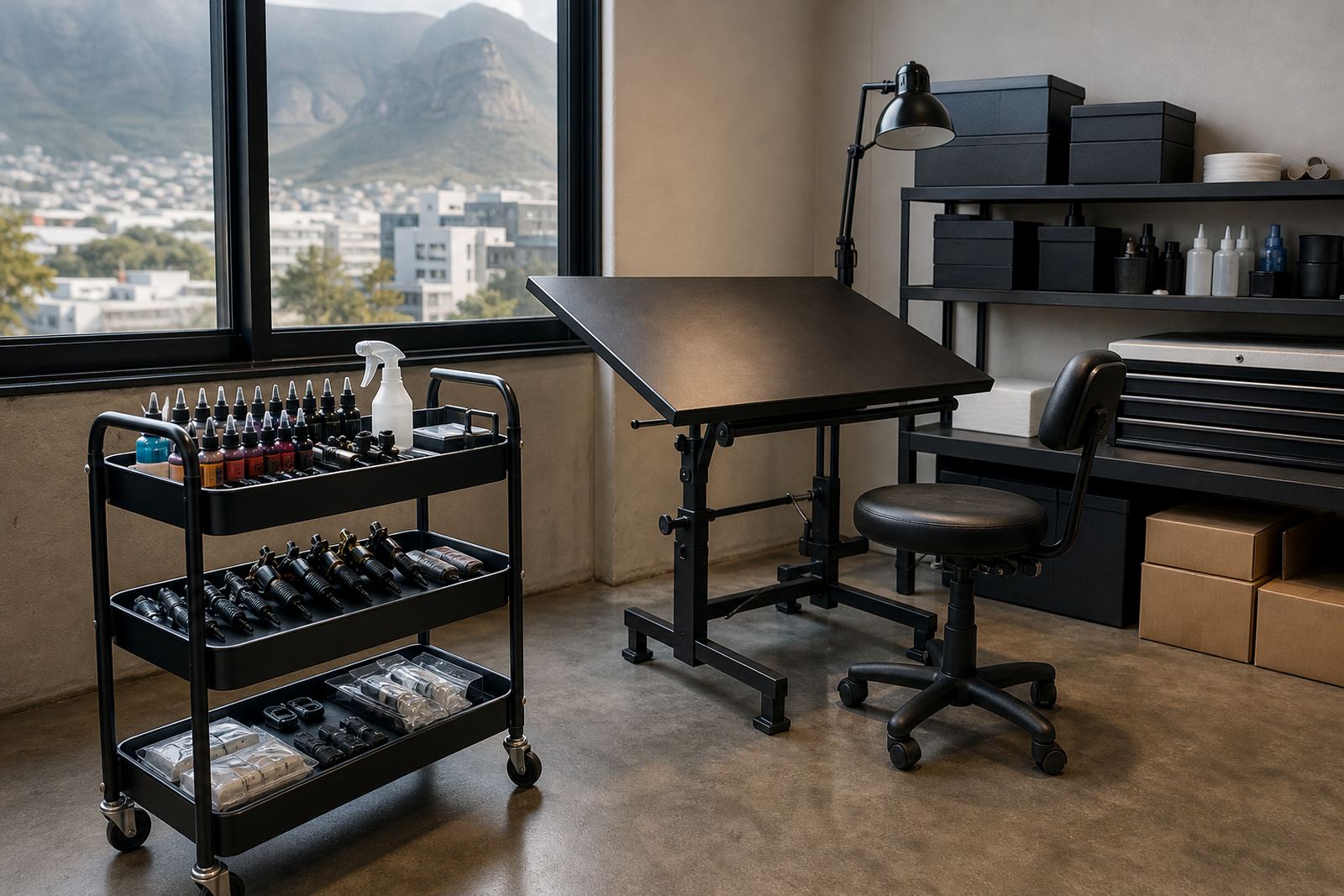
The Glenwood brief and room pressure points
The client was a small tattoo studio in Glenwood, Durban serving appointment-based work with mixed session lengths and a steady flow of repeat colour work, lining, and shading. The room had a tight footprint, so every shelf, tray, and prep surface had to earn its place. In a coastal area like Durban, humidity also changes how organisers, labels, and sealed stock are handled, especially when a room sees long trading hours and frequent opening of packs.
The brief called for order planning around scheduled sessions rather than loose top-up buying. Stock needed to be grouped by use, counted in practical quantities, and stored so the artist could pull the right items quickly during a booking block. The client also wanted prep zones that stayed tidy between appointments, with clear separation between clean stock, open consumables, and waste.
- Studio type: appointment-based tattoo room
- Town: Glenwood, Durban
- Space pressure: limited storage and narrow prep surfaces
- Working pattern: scheduled sessions with mixed service lengths
What we mapped before the first order
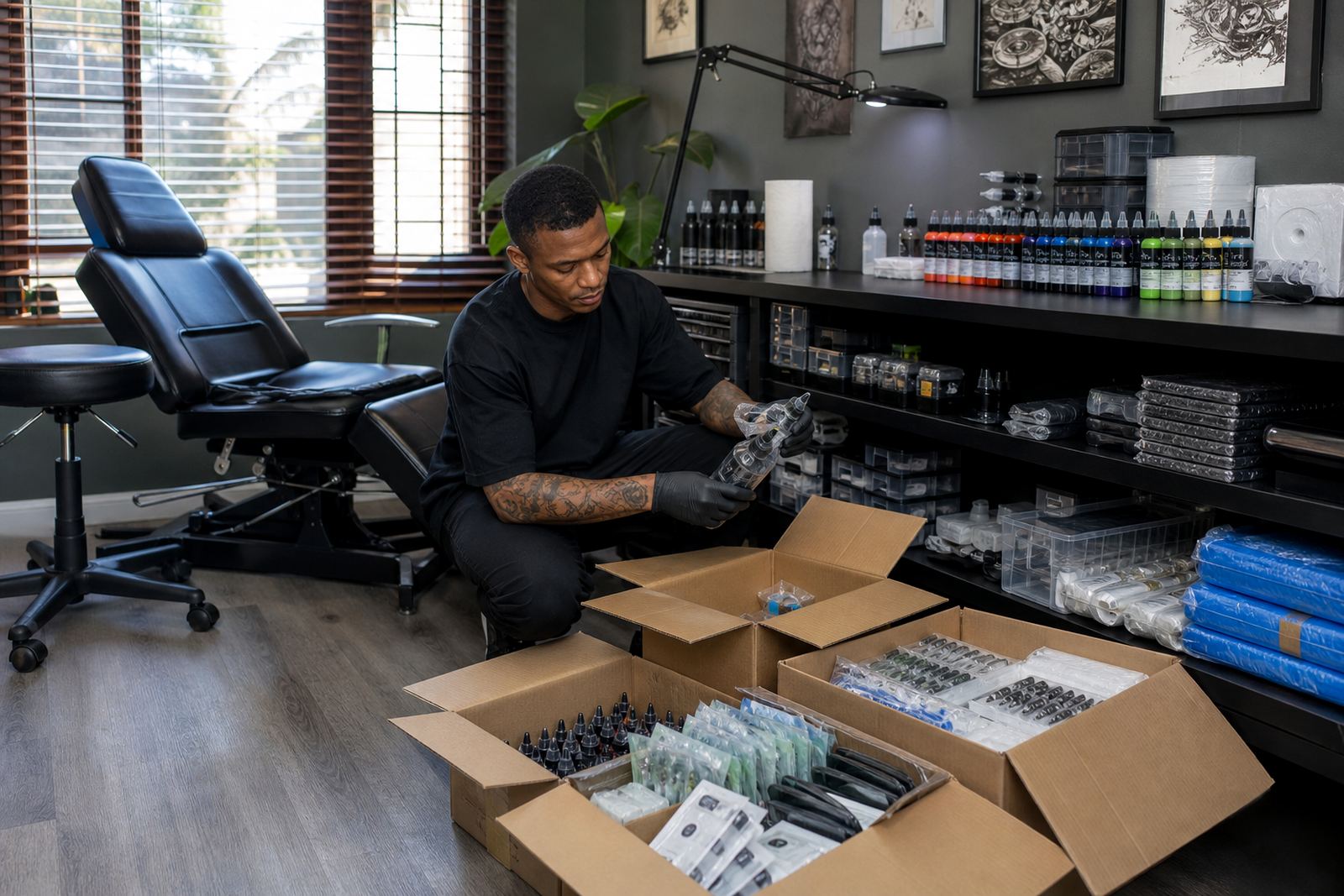
We worked from the room layout, the session rhythm, and the likely use split between line work, shading, colour packing, and cartridge-based work. That gave a practical stock list rather than a broad shopping list. The inks were grouped by use, needles by grouping type and pack size, and sterile single-use items were separated from reusable storage and cleaning items. We also marked which items had to sit closest to the station and which could live in a back cupboard or drawer unit.
The main constraint was keeping the station uncluttered while still allowing fast changeovers. The second was avoiding over-ordering of slow-moving items that take up shelf space. Measured rotation was the answer: smaller front-line quantities, back-up reserve stock, and a clear reorder point for the items used most often. That kept the room tidy and reduced the chance of opened packs being left half-used across several days.
- Ink groupings: lining, shading, colour pack, and dark neutral sets
- Needle groupings: single needles, grouped configurations, and assorted cartridge types
- Sterile consumables: barrier items, wraps, wipes, and single-use packouts
- Storage focus: sealed boxes, labelled drawers, and dry shelf placement
How the supply set was arranged
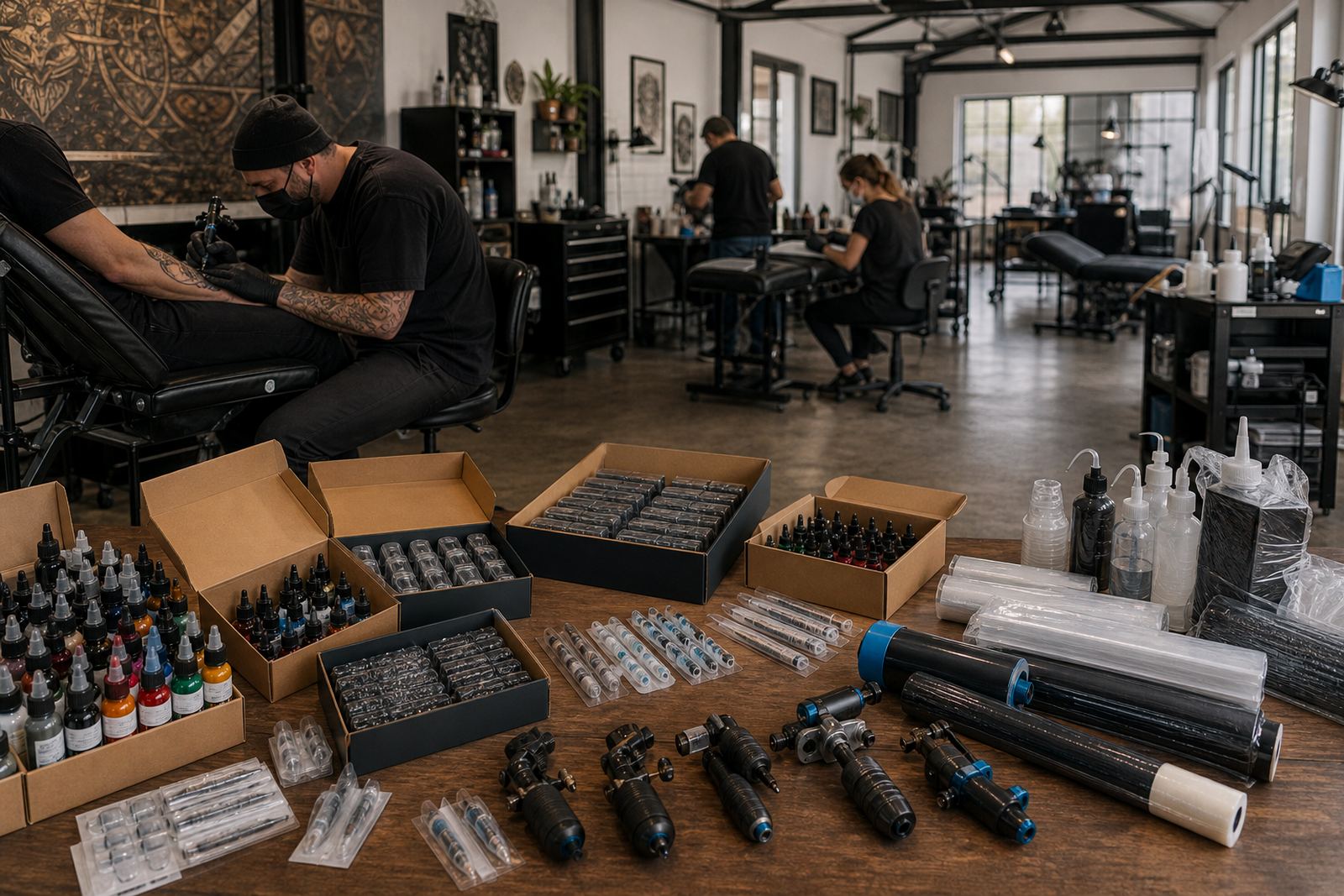
We supplied a structured range of tattoo inks, needles, cartridges, machines, and studio supplies so the room could be stocked by function rather than by loose product lines. Inks were listed by working purpose and bottle size, with enough variation to cover black work, line work, and colour sessions without filling the shelf with odd one-offs. Needles and cartridges were matched into sensible quantities for a studio that books sessions in advance and needs clean turnover between clients.
For the station, the order included sterile single-use items, tray-friendly consumables, and storage pieces that supported separation between clean and used stock. The machine side was handled generically, with set-up support for compatible handpieces and cartridges based on the studio's way of working. We also included preparation for product substitutions where one item in a grouping needed to be swapped for an equivalent option to keep the session plan moving.
- Measured ink stock for regular session use
- Needle and cartridge packs grouped by tattooing task
- Single-use studio supplies for clean changeovers
- Storage items for shelf rotation and drawer separation
Prep zones that stay tidy between bookings
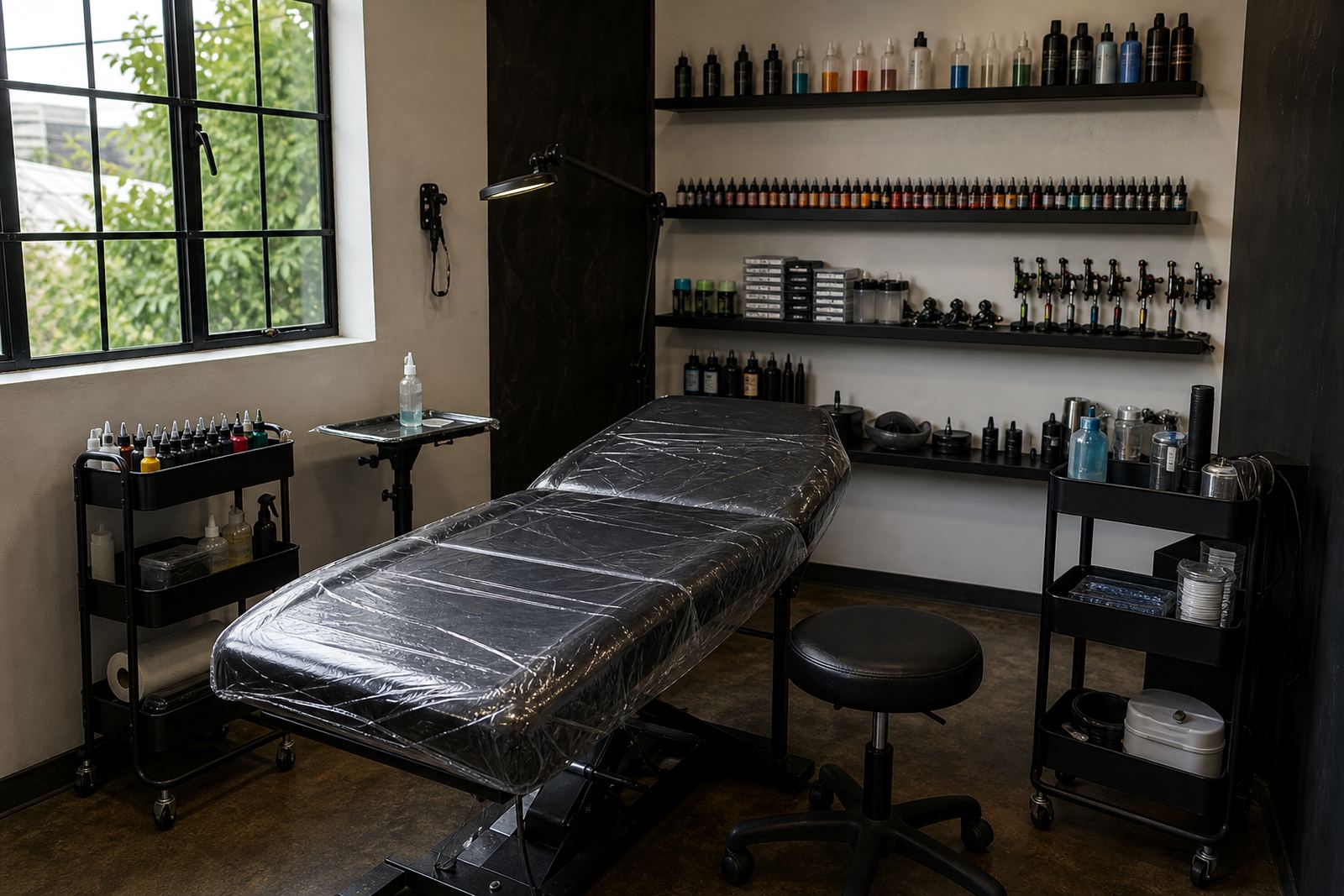
The room was organised into clear zones so the artist could prep, work, and reset without spreading items across the whole studio. Clean stock sat in one area, active session supplies in another, and used disposables were isolated immediately after each appointment. This matters in a compact room because clutter builds quickly when a session runs long or when a client arrives early for setup checks.
We also planned a simple stock rotation system that made sense for a busy Durban studio. Fast-moving items were kept at eye level and in the nearest drawer, while slower items were stored higher up or in reserve boxes. That layout reduced unnecessary handling and helped the team keep count during dispatch checks and studio restock days. The result was a room that looked ready for the next booking without a long reset between clients.
Timeline from order plan to room-ready stock
The project ran across three weeks. Week one covered room review, session flow, and the first stock grouping plan. Week two covered item matching, pack quantities, and substitution options where a like-for-like replacement made sense. Week three covered final dispatch, labelled grouping on arrival, and the last round of stock rotation notes for the studio team.
Because the room worked on bookings rather than walk-in volume, the timeline was shaped around appointment dates and the need to keep key supplies close for the first round of sessions. The stock arrived in practical groupings that made unpacking quicker, and the station could be set up without spreading everything across the floor or a crowded worktop.
- Week 1: layout review and stock mapping
- Week 2: grouping advice and item matching
- Week 3: dispatch, unpacking, and rotation setup
What changed once the room was working properly
The studio gained a cleaner prep flow and better visibility over what was on hand. Sessions could be opened with the right inks, needles, and cartridges already grouped for the day’s work, and consumables were easier to count before a booked block started. That cut down on last-minute searching and reduced the amount of spare material sitting open on the bench.
The client also had a more practical way to plan reorders. Instead of waiting until shelves were crowded or nearly bare, the team could see what needed topping up and what could stay in reserve. For a room in Glenwood, that kind of measured handling is useful when humidity, limited storage, and regular client turnover all affect how neatly a station can stay arranged.
What would be repeated for a similar studio
The same approach would suit another appointment room with limited space and mixed tattoo styles. We would repeat the measured stock rotation, the task-based grouping of needles and cartridges, and the separation of active consumables from reserve stock. It also makes sense to keep storage simple and dry, with clear labels and no overfilled drawers.
For a similar project, we would again start with the booking pattern and the size of the prep zone before ordering anything. That gives the studio a better fit from the start, especially where delivery, storage, and local health regulations all need to be kept in step with daily work. The Glenwood room showed that a small space can still run cleanly when the stock plan matches the actual session flow.