
Brief from a busy inner-city studio
The client was a tattoo studio in central Cape Town working from a compact room with high foot traffic, a narrow stock area and a constant pull on consumables. The brief was to turn one back room into a working design room that could hold drawing materials, transfer items, machine storage and general studio supplies in a way that stayed orderly during peak trading days.
The team wanted quick access to the right items without having loose stock spread across every surface. They also needed the room to support artists moving between sketches, stencil prep and machine changeovers, with enough separation to keep clean items, used items and spare stock in clear groupings. The building sits in the city centre, so space was tight and the room had to work hard without adding clutter.
- Client type: city-centre tattoo studio
- Town: Cape Town
- Room use: sketch prep, transfer stock, machine organisation and consumable storage
- Main pressure point: limited floor area with high daily turnover
What had to fit into one room
The main constraint was size. The room had to handle paper goods, stencil transfer stock, sealed disposables, ink storage, machine parts and small tools without becoming difficult to clean or navigate. There was also the usual city problem of mixed use space, where every square metre matters and one bad shelf layout can slow the whole day down.
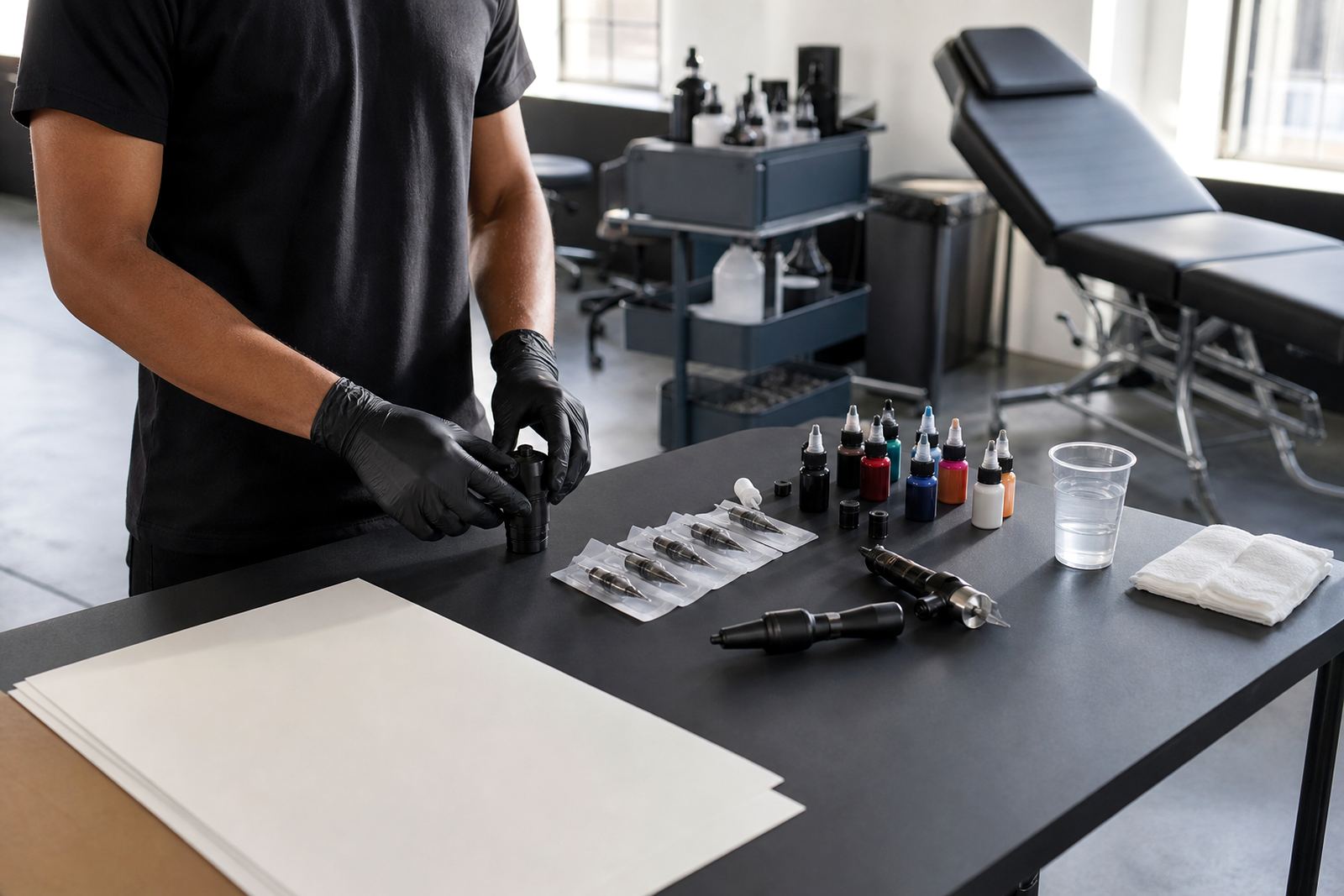
We worked around a simple rule: frequently used items had to stay at arm level, sealed stock had to stay grouped by type, and open working surfaces had to remain clear. That meant planning storage by category rather than by random container space. It also meant choosing the right grouping for needles, cartridges and single-use supplies so the artists could find what they need quickly, even when the room was full.
- Compact room with limited wall and shelf space
- Need for separate zones for clean stock and active prep areas
- Daily use of inks, needles, cartridges and machine parts
- Easy cleaning and fast item retrieval were both important
The supply mix we put together
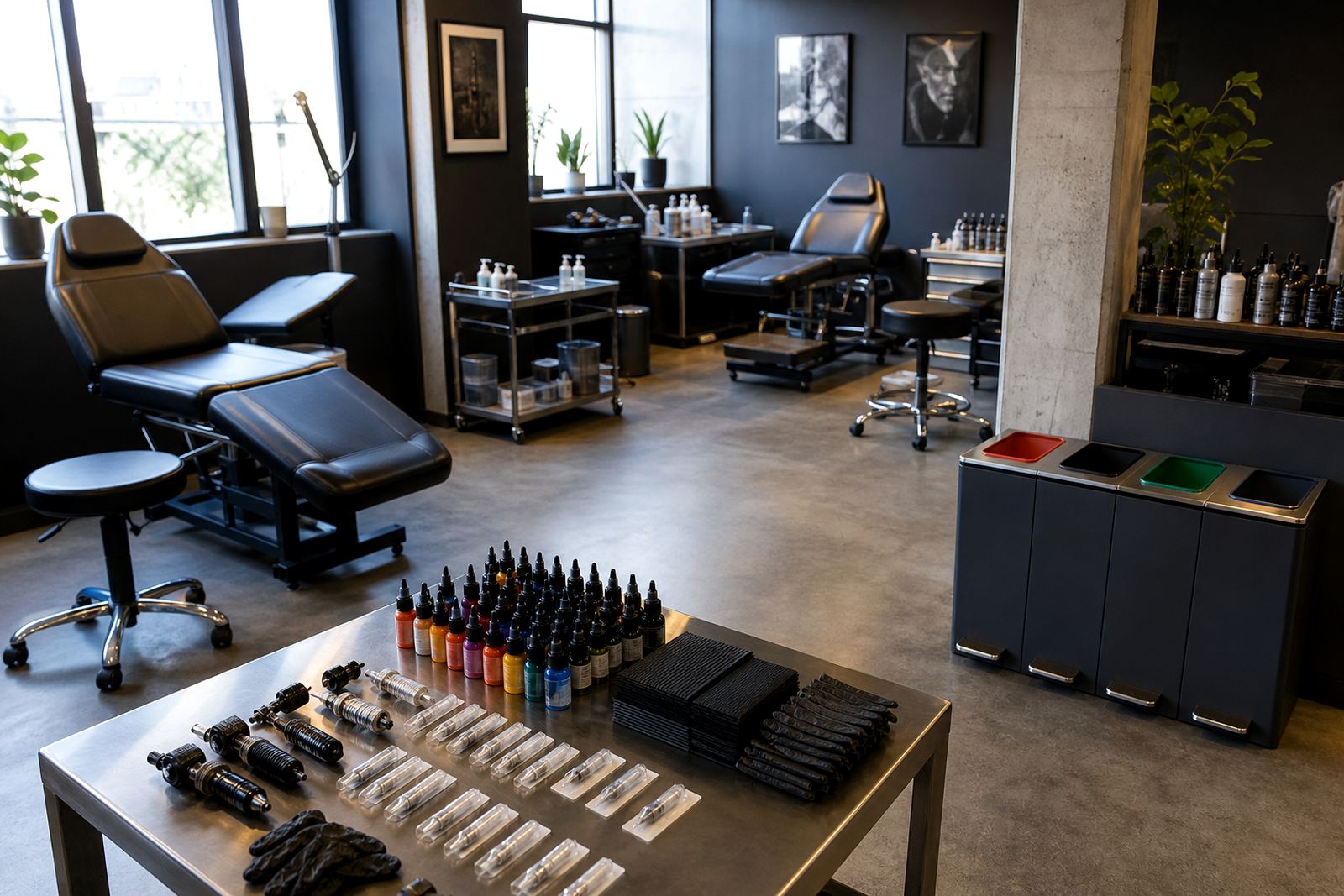
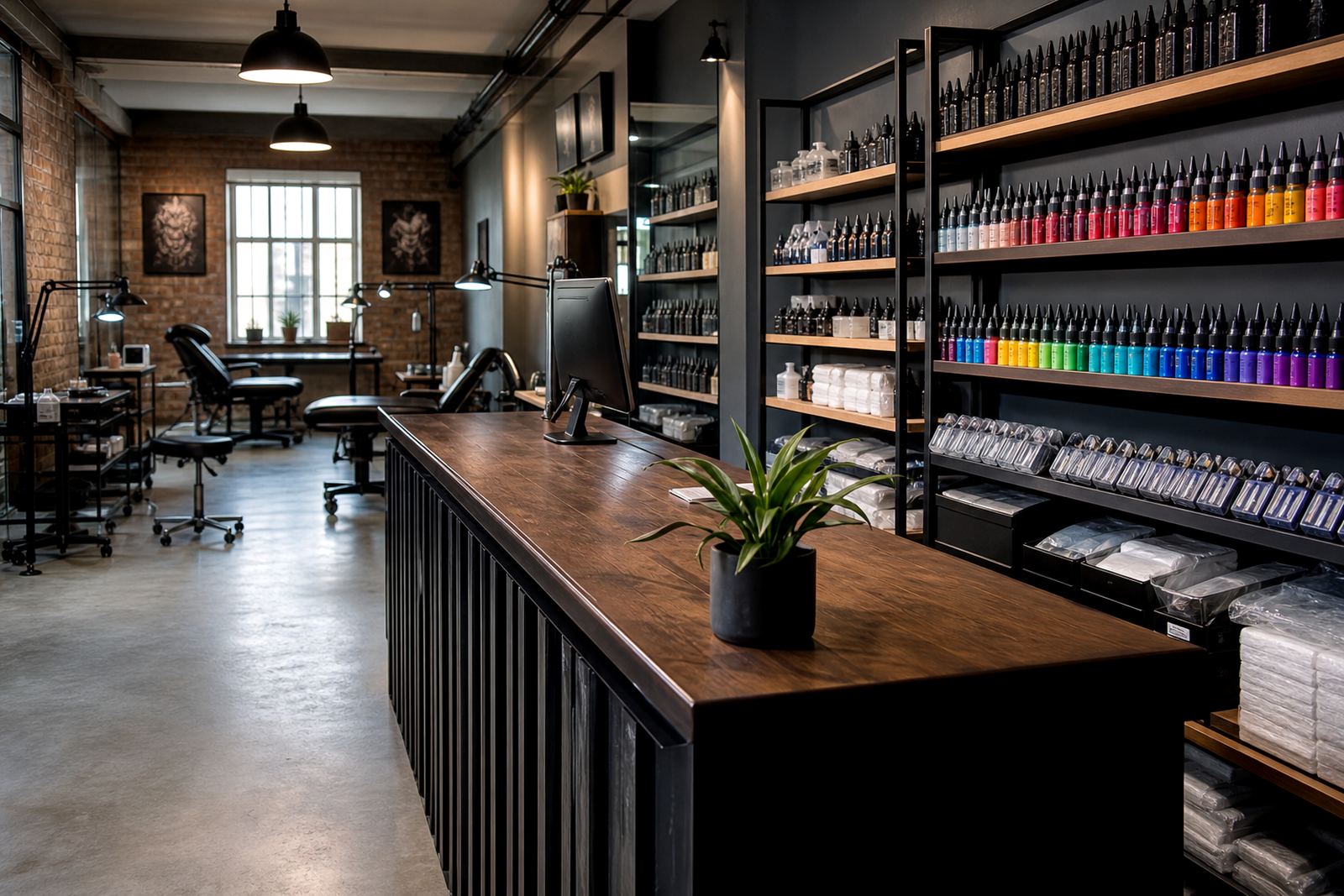
We supplied a structured mix of tattoo inks, needle groupings, cartridge groupings, sterile single-use supplies and general studio consumables. The inks were organised by working colour families so the studio could keep warm sets, cool sets and neutrals in order. Needles and cartridges were grouped by line, shading and general purpose use, with packs kept clearly separated for faster stock checks.
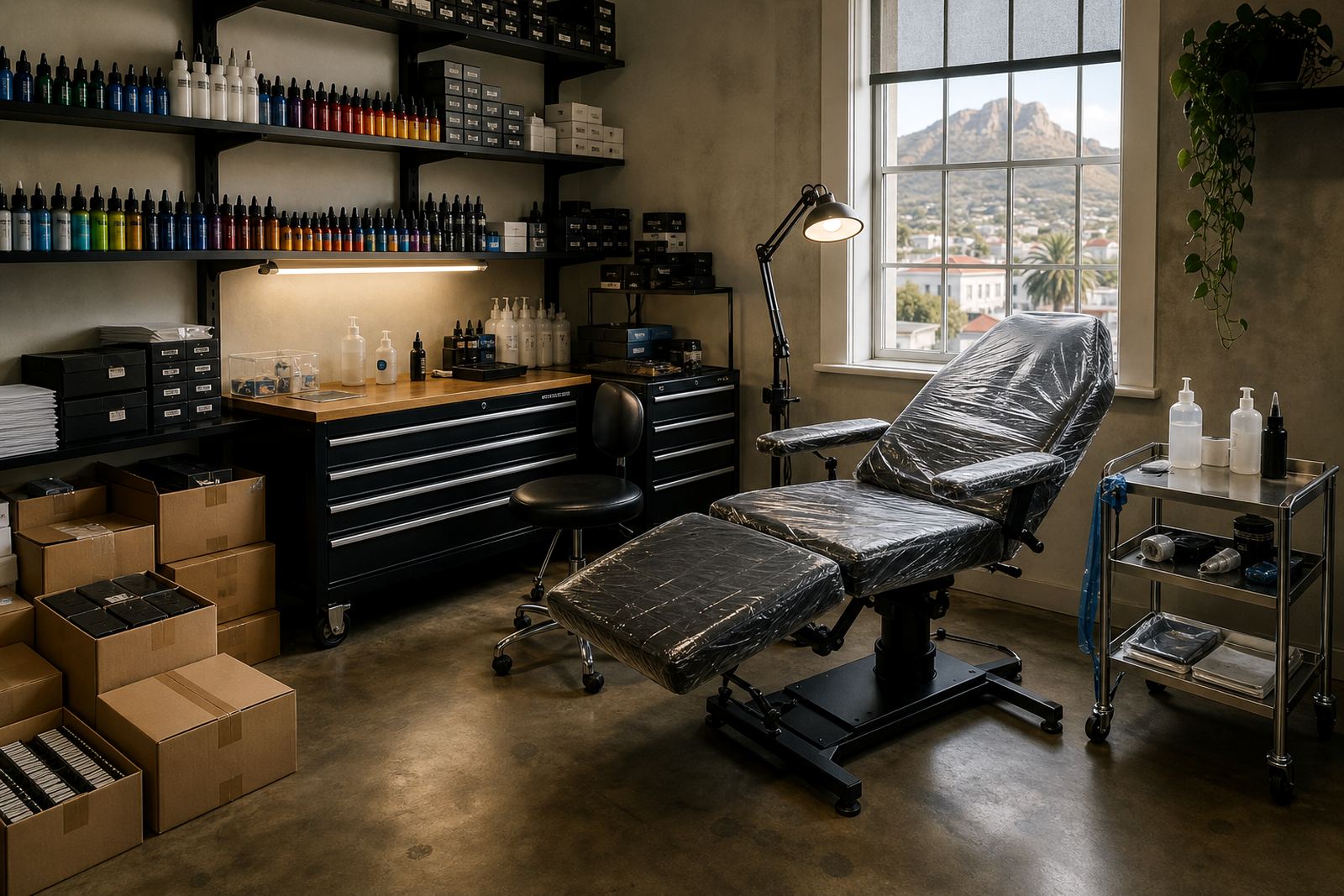
For the room itself, we added storage support that suited a tight city studio: sealed containers for small items, shelf labelling, tray grouping for machine accessories and practical stock separation for fresh and opened packs. The result was a room that made sense from the moment you walked in, not a pile of mixed cartons that needed sorting before every shift.
- Ink groupings for lining, shading and colour work
- Needle and cartridge groupings kept in clearly marked sections
- Single-use items stored in sealed, tidy packs
- Machine accessories and small tools stored by function
How the room was arranged
The room was laid out in three working bands. The first band held sketch prep materials and transfer stock close to the working counter. The second band stored inks, cartridges and needle packs at reach height. The third band, higher and lower shelving, held slower-moving stock, backup consumables and spare machine items. That split kept the centre of the room open and made it easier to move through without knocking into stock tubs or making a mess.
We also set the room up so the daily opening routine was quicker. The active stock for the day sat separate from reserve stock, and the storage plan made it easy to tell what needed topping up. Small labels, clear containers and fixed shelf positions did most of the work. Nothing fancy, just a room that stays in order when the studio gets busy and people are reaching for the same items all day.
- Three-zone layout for prep, active stock and reserve stock
- Clear shelf positions for each consumable type
- Open centre space left free for movement and sorting
- Room flow designed for quick opening and closing routines
Timeline and delivery scope
The project ran over four weeks from stock selection to final room set-up. The first week was spent reviewing the room plan and the mix of stock needed for the studio’s regular work. The second week focused on grouping products and confirming storage quantities. In week three, the stock was prepared for dispatch and the room plan was refined around shelf size, access points and day-to-day handling. The final week covered delivery, unpacking guidance and final arrangement support.
Because the studio serves clients in the city centre and also draws work from nearby areas, the plan had to be practical for repeat supply orders too. We kept the ordering structure simple enough for reorders, seasonal restocks and special batch top-ups without changing the room every time a fresh carton arrives. That saved the team time and kept the storage system stable.
- Project duration: 4 weeks
- Scope covered: stock grouping, storage planning and dispatch support
- Built for repeat consumable reorders and seasonal restock planning
What changed after the setup
The biggest change was that the studio could see its stock at a glance. Needles no longer sat mixed with unrelated consumables, cartridges were easier to count and inks were stored in a way that made daily use less disruptive. The artists had a clearer place for sketch prep and transfer items, so the room worked more like a proper support space and less like spare storage shoved into a corner.
There was also a clear lift in stock control. The team could see what moved fast, what slowed down and what needed ordering before it ran low. That matters in a studio with steady client flow and limited space, because one missing item can delay an entire appointment block. The room was not larger, it just worked more efficiently.
For a city studio, that sort of order is worth a lot. It keeps the bench clear, reduces wasted time hunting for supplies and makes it easier for everyone on the floor to work from the same system. Small gain, but the effect shows every day.
What we would carry through to the next room
We would use the same layout approach again for another compact studio room in Cape Town or any other busy urban area. Start with the stock categories, separate fast-moving items from reserve stock, then set the room around the actual working rhythm of the artists. That method works well when the space is tight and the team needs to get on with the day without constant reshuffling.
We would also keep the supply mix practical: tattoo inks grouped for easy access, needle and cartridge packs separated by use, and sterile single-use items stored with the same order every time. Add a sensible dispatch plan and the room stays manageable even when deliveries arrive in batches. Simple, but it holds up.
- Use category-based storage from the start
- Keep active stock separate from reserve stock
- Match shelf positions to daily working patterns
- Plan for extra stock without changing the room layout
Key facts
| Project type | City-centre studio room for sketch prep, transfer stock and machine organisation |
|---|---|
| Location | Cape Town city centre |
| Timeline | 4 weeks |
| Main product groups | Tattoo inks, needles, cartridges, sterile single-use supplies |
| Storage focus | Shelf grouping, sealed packs, reserve stock separation |
| Delivery reach | Cape Town, Johannesburg, Durban, Pretoria and Gqeberha |