
Bellville brief, kept plain and workable
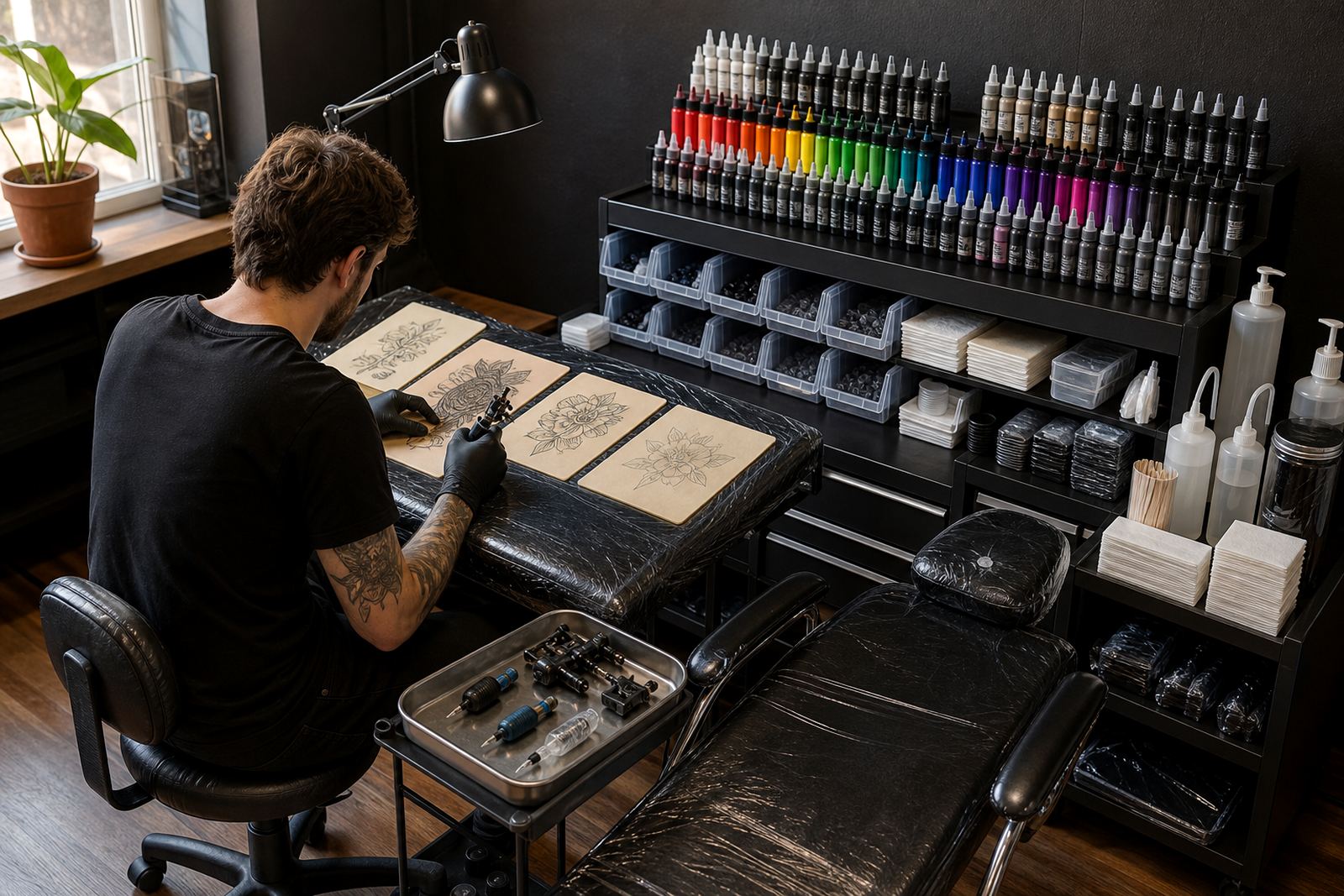
The client was a busy training studio in Bellville, Cape Town, working with apprentices on close supervision and a limited floor area. They needed a starter station that could handle practice work, early client sessions and daily clean-downs without taking over the room.
The main ask was to keep the buy list tight. They wanted a few dependable machines, a sensible spread of needle groupings, cartridge options for different line and shading tasks, and enough sterile single-use items to support regular turnover. No overbuying, no mixed boxes that cause confusion, and no storage pile-up near the workstation.
- Starter machines chosen for controlled hand feel and steady needle movement
- Needle and cartridge groupings split by line work, shading and general fill work
- Single-use items packed for easy counting and cleaner station resets
- Storage advice shaped around a small Bellville studio with daily stock movement
The constraints on the floor
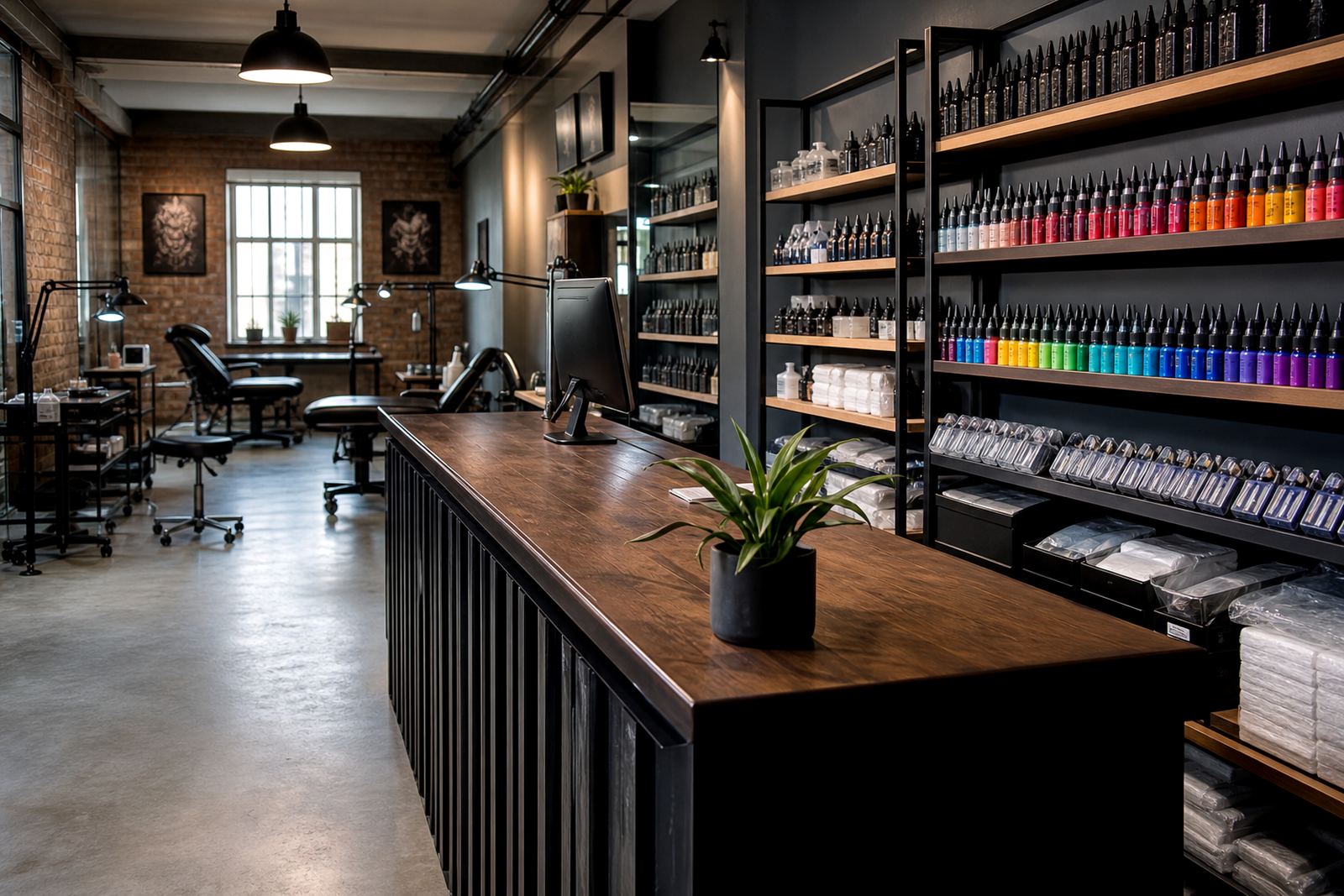
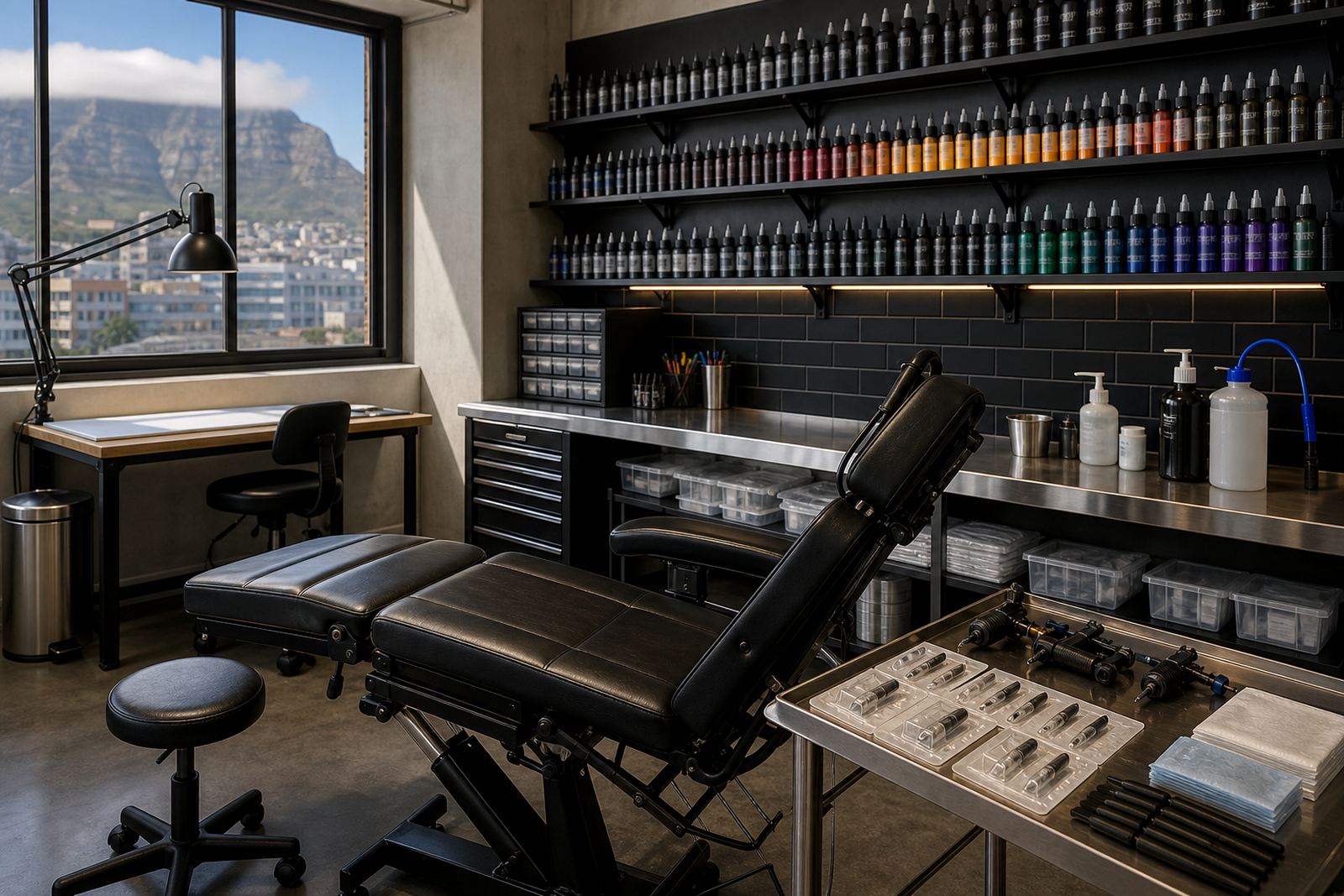
The studio had limited shelving and only a narrow clean area beside the stations, so the kit had to stay compact. There was also a real need to separate training stock from client-ready stock, because apprentices were learning to work with clean handling habits, labelled packs and clear top-up routines.
Bellville studios deal with coastal humidity spillover from the Cape side on some days, so we kept the storage plan practical: sealed boxes, dry shelving and no loose cartons sitting under sinks or near the wash zone. We also advised the team to keep their setup in line with local health rules and municipal requirements, especially around waste handling and sterile stock rotation.
- Compact packing to suit a small back room and one main prep shelf
- Clear separation between training stock and live session stock
- Dry, sealed storage to limit damage from damp air and dust
- Simple labelling so junior staff could restock without guesswork
What went into the apprentice bay
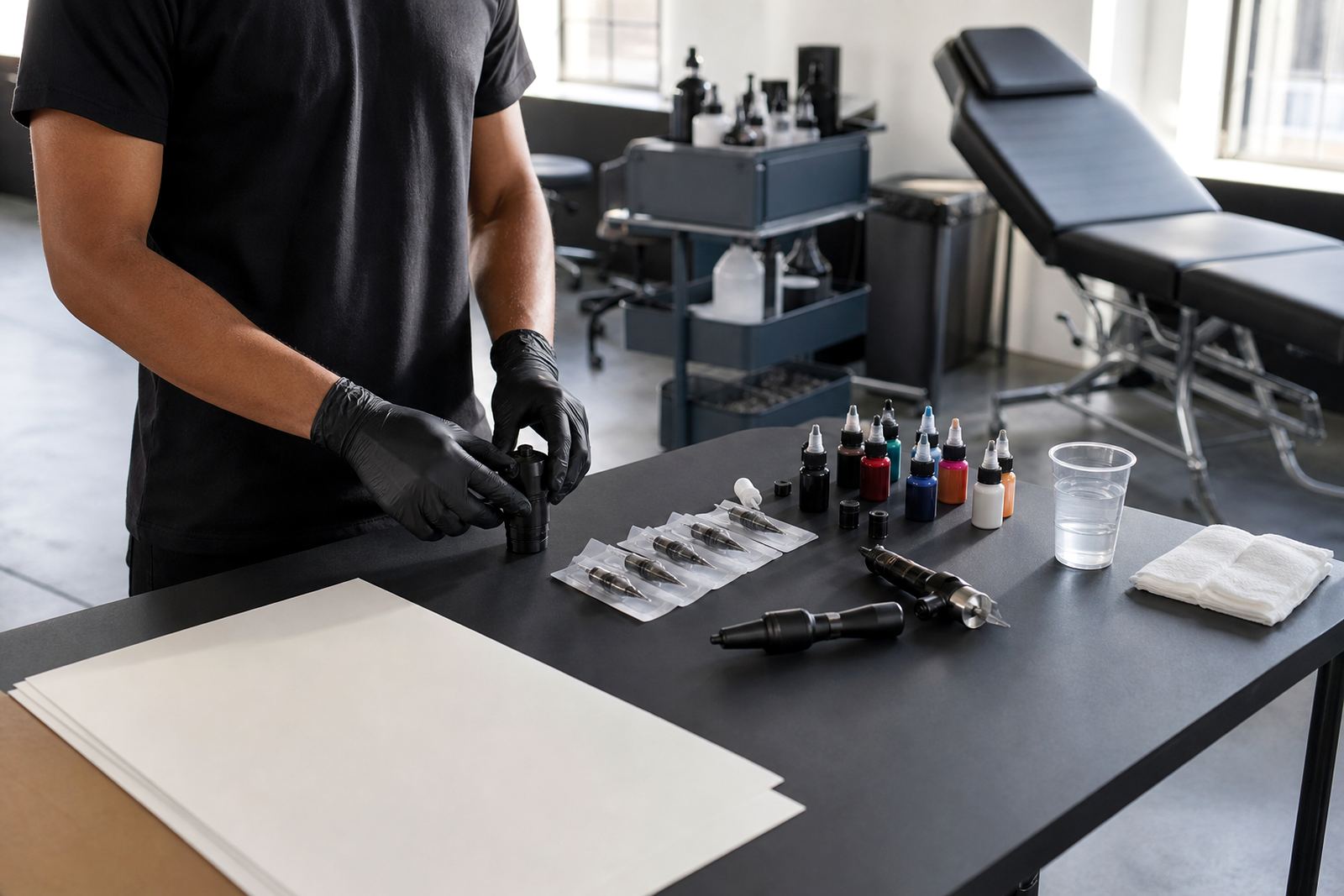
We supplied a starter mix built around basic tattoo machines, cartridge groupings and standard single-use items used in studio work. The machine side was kept modest, with one set for line control and one for softer shading passes, so apprentices could work through the usual technique stages without changing the whole station around.
The needle and cartridge grouping was broken into common working sizes, including fine line options, mid-range liners and shader groupings for broader fill work. On the consumable side we included sterile single-use items such as grips, tips where suitable, barrier wrap, ink caps, clip cord covers and other day-to-day station items that support cleaner turnover between sessions.
- Machine group: basic rotary-style units for practice and early client work
- Needles: grouped for tight line work, general lining and shading tasks
- Cartridges: matched to different stroke and grouping needs
- Single-use stock: gloves, caps, wrap, covers and station disposables
How the stock was arranged for training speed
We did not treat this as a general wholesale order. The aim was a station layout that let a supervisor see at a glance what each apprentice had, what was missing, and what had to be held back for later use. That meant sorting the order into small working units instead of bulk piles.
Consumables were grouped by station use so the team could set up fast before a session and clear down without mixing fresh stock with used items. We also set aside a small reserve for consumable reorders, because apprentice bays tend to use more gloves, wraps and caps while the team is still learning their daily rhythm.
- Setup packs split by station rather than by box alone
- Reserve stock kept aside for repeat consumable ordering
- Group labels used for quick identification by junior staff
- Store layout planned for fast pull-out and tidy return
Timeline and handover in weeks
The project ran over three weeks from first stock review to handover. In week one we worked through the starter list, matched the machines and grouped the needles and cartridges. Week two focused on station planning, stock counts and the single-use set. Week three covered packing, dispatch and the final storage layout notes for the Bellville team.
The handover was calm and practical. Nothing flashy, just a working bay with enough structure for apprentices to learn from and enough order for the supervisor to keep tabs on usage. That mattered, because once a training room gets busy the weak point is usually not the machine, it is the stock system around it.
- Week 1: brief, stock match and grouping plan
- Week 2: consumables, storage plan and station split
- Week 3: packing, dispatch and handover notes
What changed after the bay was set up
The studio ended up with a cleaner training flow and less time spent hunting for the right item mid-session. Apprentices had a clearer layout to work from, supervisors had a neater way to count stock, and the single-use items were easier to manage because they were grouped by use rather than left in mixed cartons.
Just as important, the team had a clearer basis for future restocking. Instead of guessing what to buy next, they could track the line, shader and cartridge groups separately and keep the bay moving at the pace of real appointments. The result was a more orderly station without overloading the room with extra gear.
- Cleaner station flow for trainees and supervisors
- Less wasted time on mixed or misplaced stock
- Better tracking of needle and cartridge use
- More controlled reorders for consumables and single-use items
What to repeat in the next apprentice bay
For a similar studio, we would keep the same approach: a tight starter machine set, grouped needles and cartridges, and a short list of single-use items matched to actual station use. That keeps costs sensible and helps the team learn good habits without filling the room with stock they will not use straight away.
We would also repeat the storage split, with sealed packs, labelled reserves and a separate place for training stock. In a place like Bellville, where studios often work in compact rooms and move fast between sessions, that kind of structure saves time and keeps the prep area easier to maintain. The same setup works well for other studios needing station planning, machine match help or product substitutions across South Africa.
Key facts
| Project type | Starter station support for an apprentice bay |
|---|---|
| Town | Bellville, Cape Town |
| Timeline | 3 weeks |
| Core stock | Basic tattoo machines, needle groupings, cartridge groupings and single-use setup items |
| Delivery scope | Studio supply support for Bellville plus dispatch across South Africa |
| Support focus | Station planning, consumable reorders and storage planning |