
A Small Room With A Full Working Load
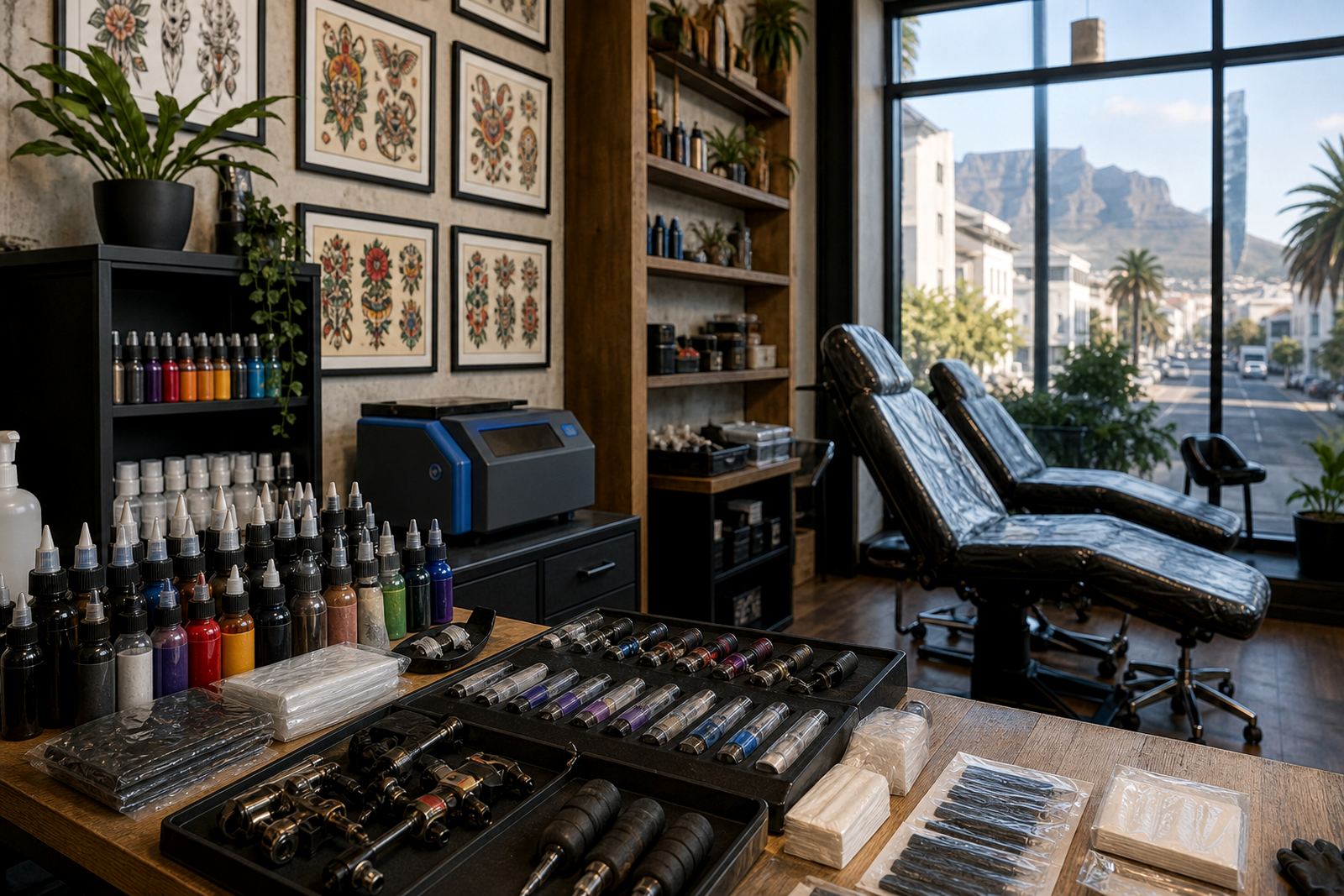
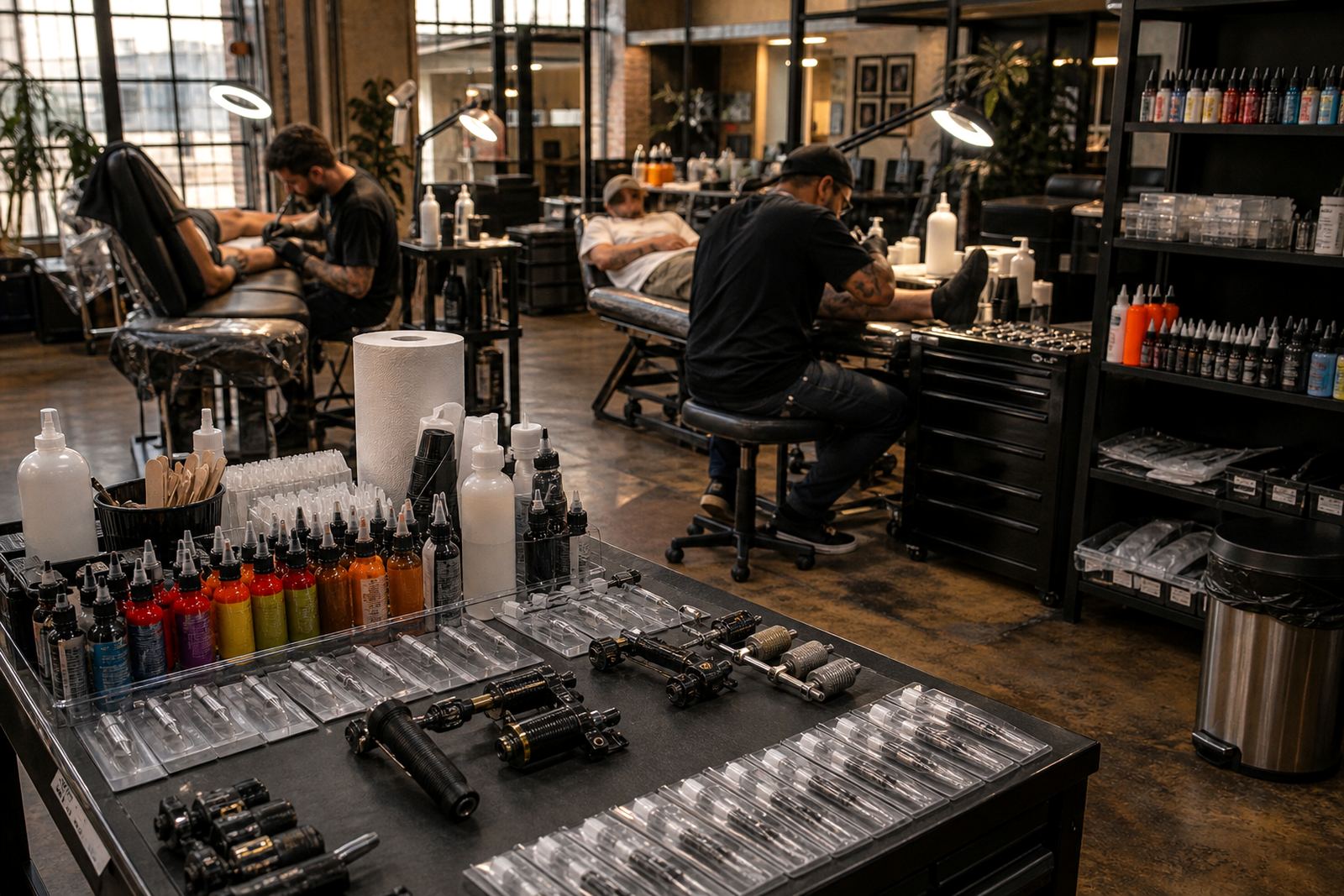
We grouped the order into clear working sets so the room could be topped up without unpacking everything at once. Ink bottles were separated by use, liners were paired with cartridge groupings, and the daily consumables were split into clean handling and barrier items. That let the studio keep the fast moving products close to the station and the reserve stock in a back storage section.
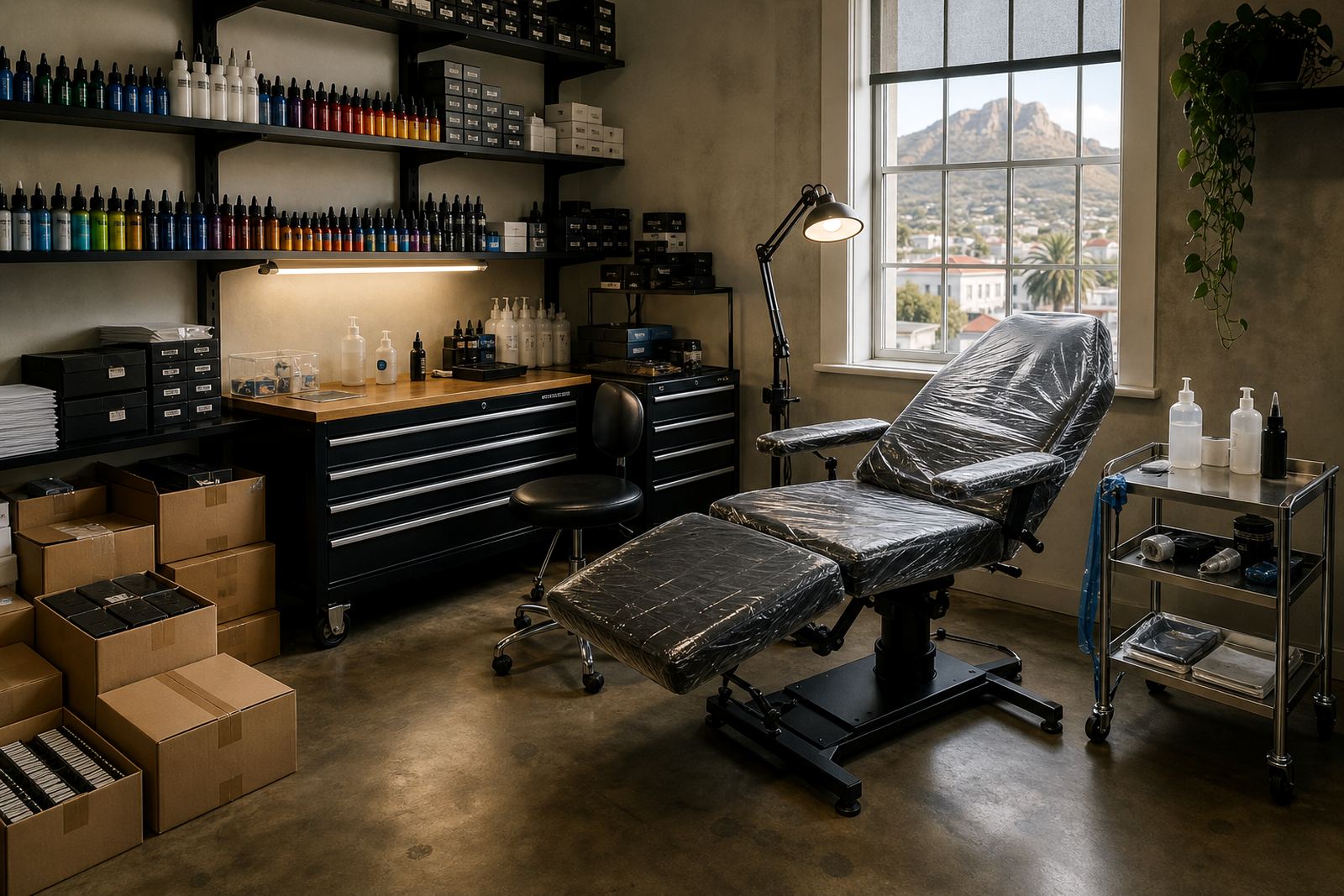
The room had enough volume for mixed appointments, but not enough space for random packing. We set the stock so the most used items were visible first. This included tray covers, clip cord barriers, machine sleeves, wipe stock, grip wraps and single use items for station turnover. Where the room had to use narrower shelving, we planned the order so heavier cartons sat lower and lighter consumables stayed above eye level.
- Inks arranged by grouping and frequency of use
- Liners matched to cartridge groupings for easier restock checks
- Barriers, sleeves and covers packed for quick station setup
- Daily consumables sorted into open stock and reserve stock
What We Supplied For The Room
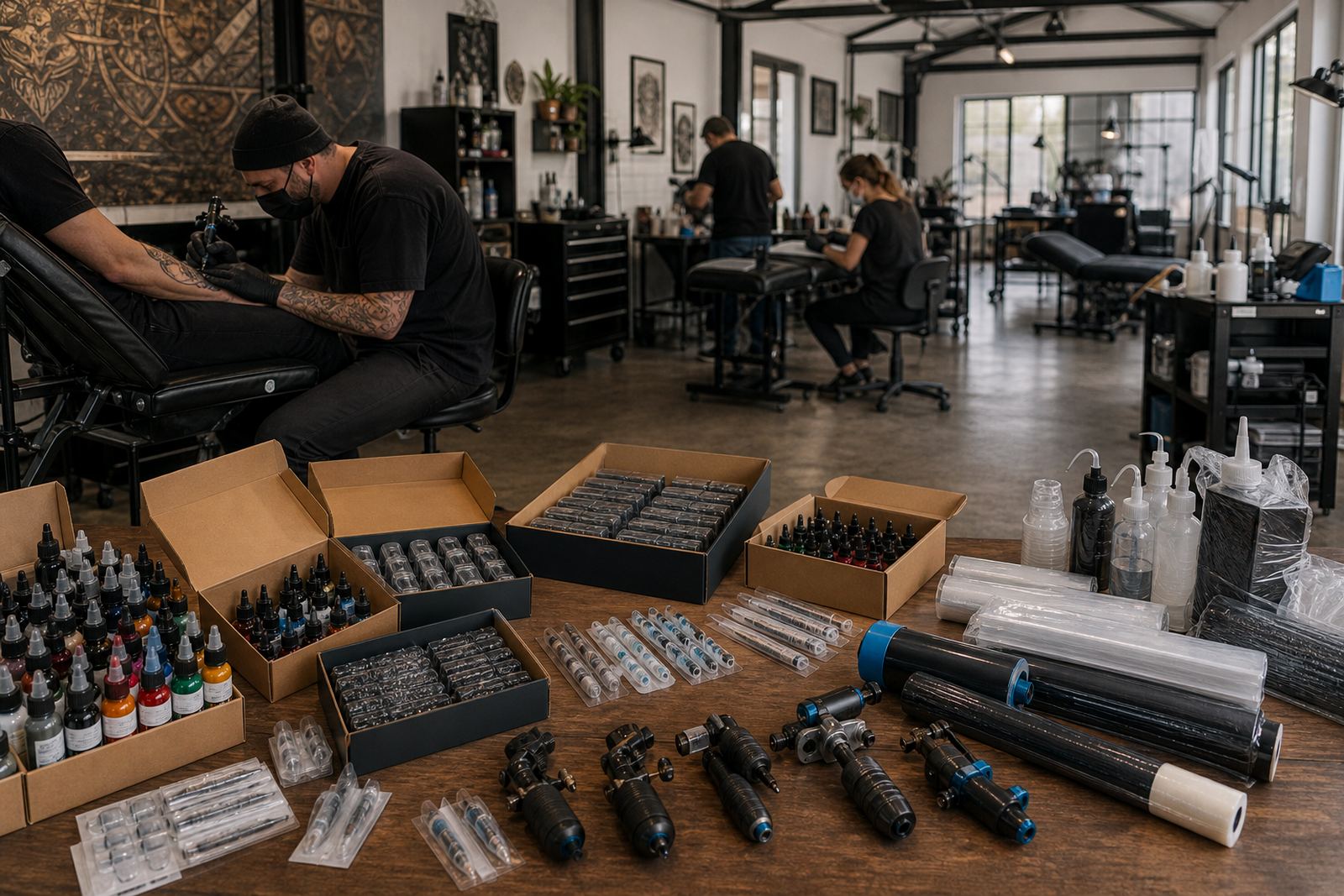
The supply list covered the items the studio uses most often during daily work. We included tattoo inks for shading and line work support, needle groupings for liner and general tattoo use, cartridge groupings for cartridge based machines, and the common barrier items needed to keep the room organised. Storage planning was part of the supply too, so the stock could be stored upright and out of direct heat.
For this room we supplied mixed packs of single use consumables, machine support items, cleaning and wipe stock, barrier film, clip cord covers, bottle covers, tray covers and other everyday studio consumables. The exact mix was chosen to suit a private room that runs on a tighter footprint and needs stock that is easy to count. We also supplied a few reserve quantities for the items that tend to move fastest over a month.
- Tattoo inks for line, shade and general colour work
- Needle groupings and cartridge groupings
- Single use barriers and protective covers
- Daily consumables for setup, wipe down and station turnover
- Storage items to keep bottles, packs and tools orderly
Four Week Rollout From List To Shelf
The work ran over four weeks. In week one we reviewed the room layout, the current stock pattern and the storage pressure points. In week two we grouped the range and confirmed the items that needed to sit closest to the station. Week three covered the supply and dispatch stages, with stock packed so the room could receive it in workable sections rather than one oversized drop. In week four the final stock split was set up for easier rotation and replenishment.
The timeline suited the space because the room could not absorb everything at once. Small batches meant the studio could place items where they actually get used, and then adjust after a few days of live use. That mattered in a room where the work surface is tight and a single cluttered shelf can slow everything down.
- Week 1: room review and stock map
- Week 2: range grouping and order finalising
- Week 3: dispatch planning and stock packing
- Week 4: shelf placement and rotation setup
How The Room Worked After Restock
For a room of this size, we would use the same approach again: group the range by use, keep the most active items closest to the station and store reserve stock in a separate block. We would also keep the ink and cartridge mix under regular review, because small studios often change their pace depending on appointments and style mix. That way the room stays ready without being overfilled.
We would keep the storage plan simple enough for daily use but specific enough to avoid mixed packs sitting in the wrong place. For studios in Cape Town, humidity and room temperature are always part of the conversation, so upright storage, closed cartons and tidy rotation are worth keeping in the plan. It also helps to follow local health regulations and studio hygiene rules for the room, especially where sterile single use stock is involved.
- Keep fast movers close to the working chair
- Separate reserve stock from open stock
- Store inks and consumables upright and dry
- Review cartridge and liner counts before busy periods
Key facts
| Location | Observatory, Cape Town |
|---|---|
| Project type | Private tattoo room stock restock and storage planning |
| Core items | Tattoo inks, needles, cartridges, barriers, daily consumables |
| Space condition | Compact room with limited shelf depth |
| Timeline | 4 weeks |
| Delivery area | Cape Town studio delivery with national supply support |