The brief from Summerstrand
The studio serves walk in flash clients and repeat appointments close to the beachfront, so the pressure was on the counter side of the operation rather than the chair side. They needed tattoo inks, needle groupings, cartridge groupings and single use consumables arranged so the artist could reach for the right item quickly, with less digging through mixed boxes during a packed day.
The space also had the usual coastal challenges. Salt air, fine dust and a steady stream of folded packaging can make storage untidy fast, especially when stock moves in and out several times a day. The brief was to tighten the stock flow, keep sterile items separate from open consumables, and make restocking easier for the team on the floor.
What we mapped before the order went out
We started by grouping the core items into practical working sets instead of loose product lines. That meant separating liner, shader and mag groupings, then pairing cartridges by common session use so the team could pull from the right tray without overhandling everything else. In a flash studio, that kind of order saves time when the queue is moving and the artist only has a few minutes to reset.
- Ink groupings by use case, with clearer colour separation for faster pull-outs
- Needle and cartridge groupings packed by session style and replacement rhythm
- Single use supplies kept apart from long shelf-life stock
- Storage layout planned for dry cabinets, sealed tubs and easy count checks
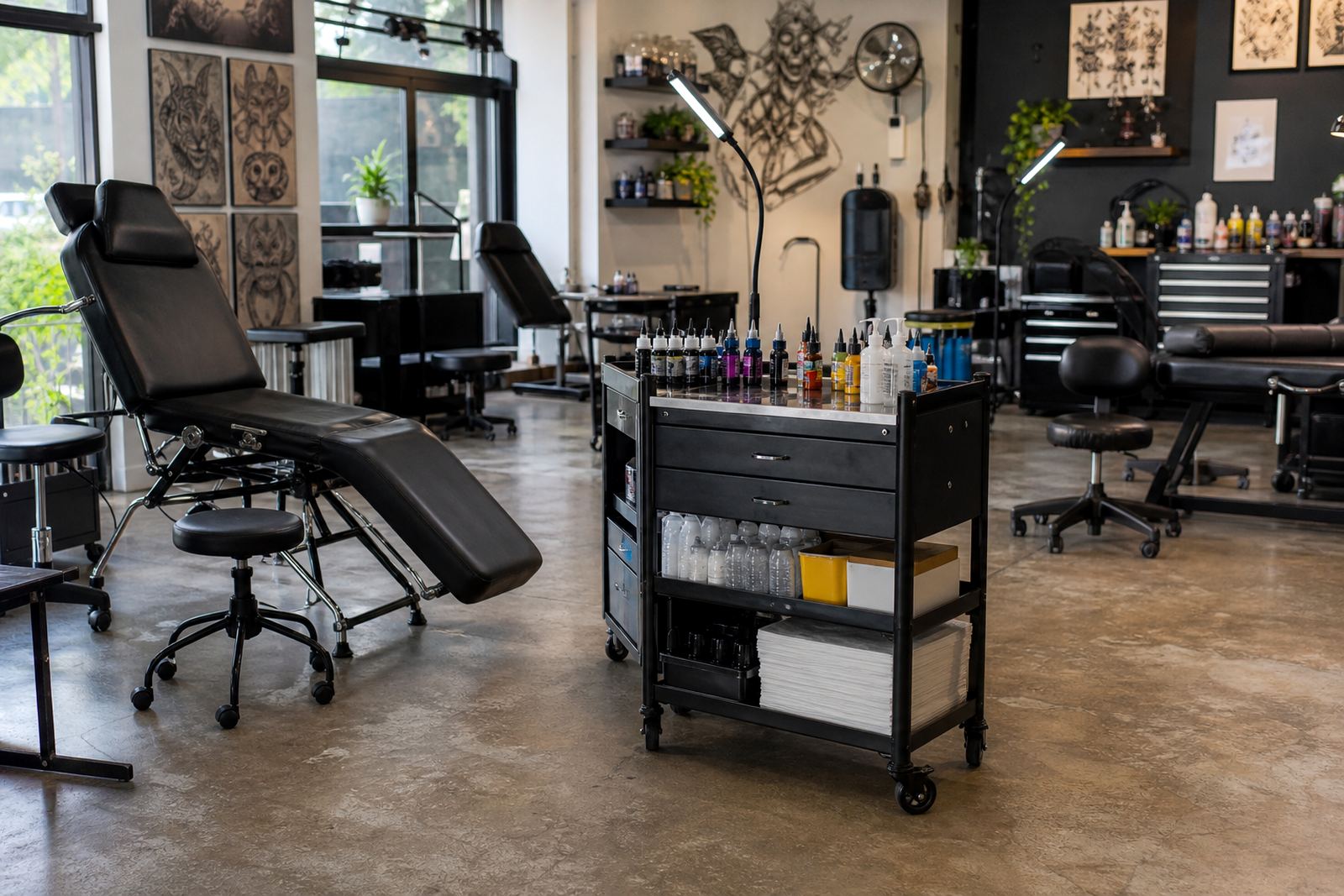
We also flagged where the team would need station planning help, especially around the turnover between appointments. That included tray space for caps, barriers, wipes and fresh cartridges, plus a separate shelf zone for bulk replenishment.
Supplies supplied for the flash setup
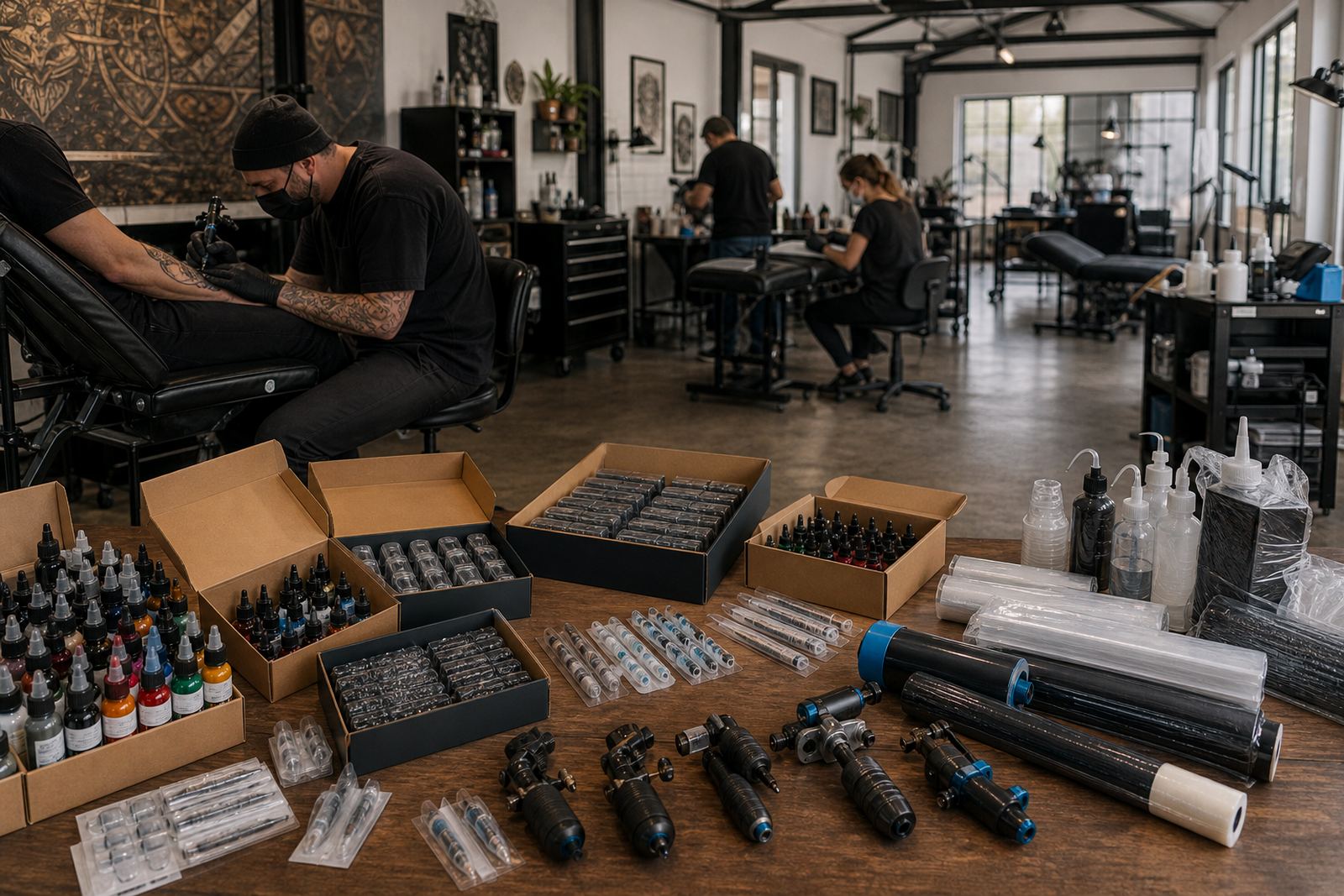
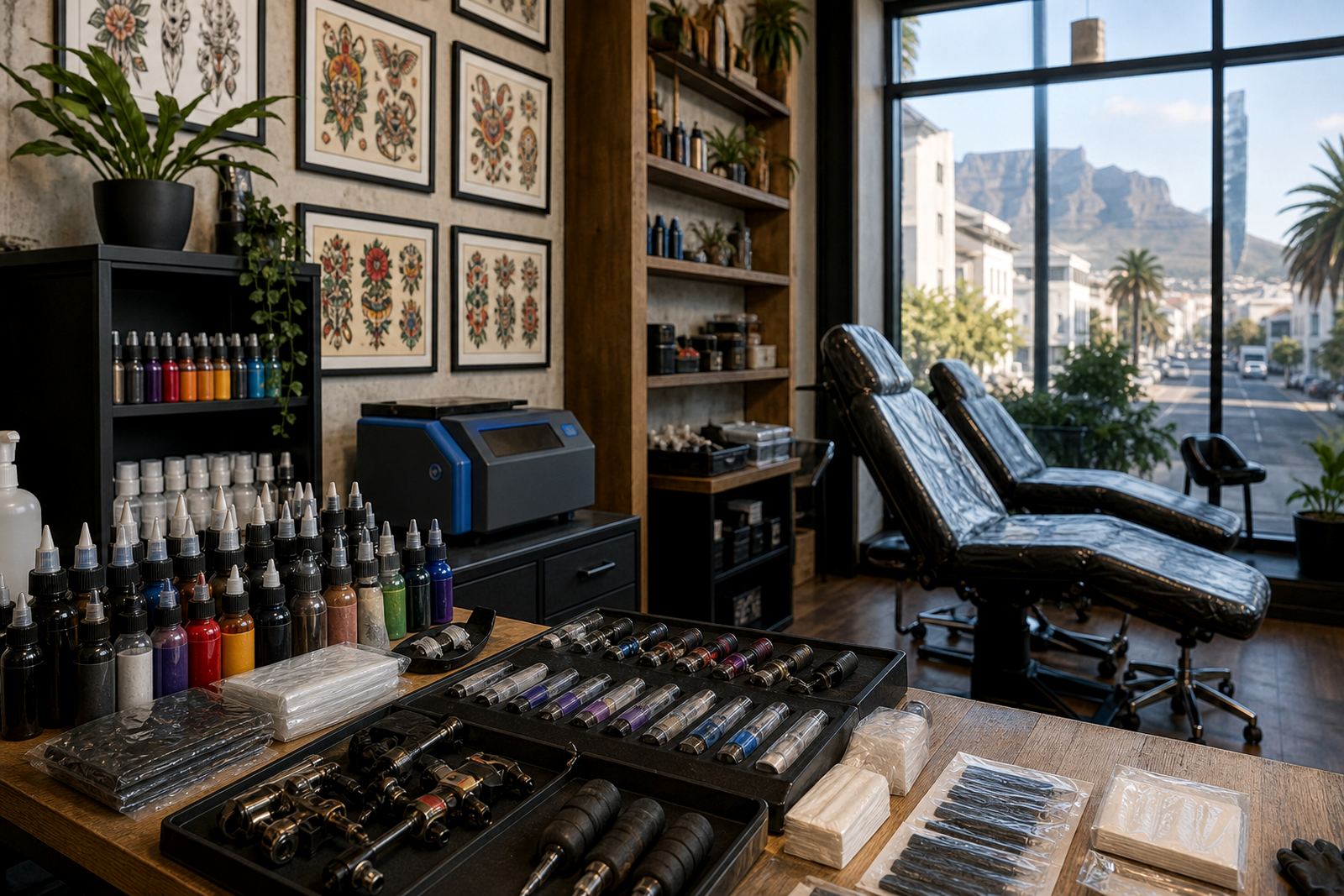
The order was built around the items that move fastest in a studio working close to the coast. We supplied ink sets for everyday linework and fill work, needle groupings in common configurations, cartridge packs for quick changeovers, and a practical spread of sterile single use supplies for station prep and cleanup. The aim was not to flood the studio with excess stock, but to keep enough on hand for a solid run of flash days without constant emergency sorting.
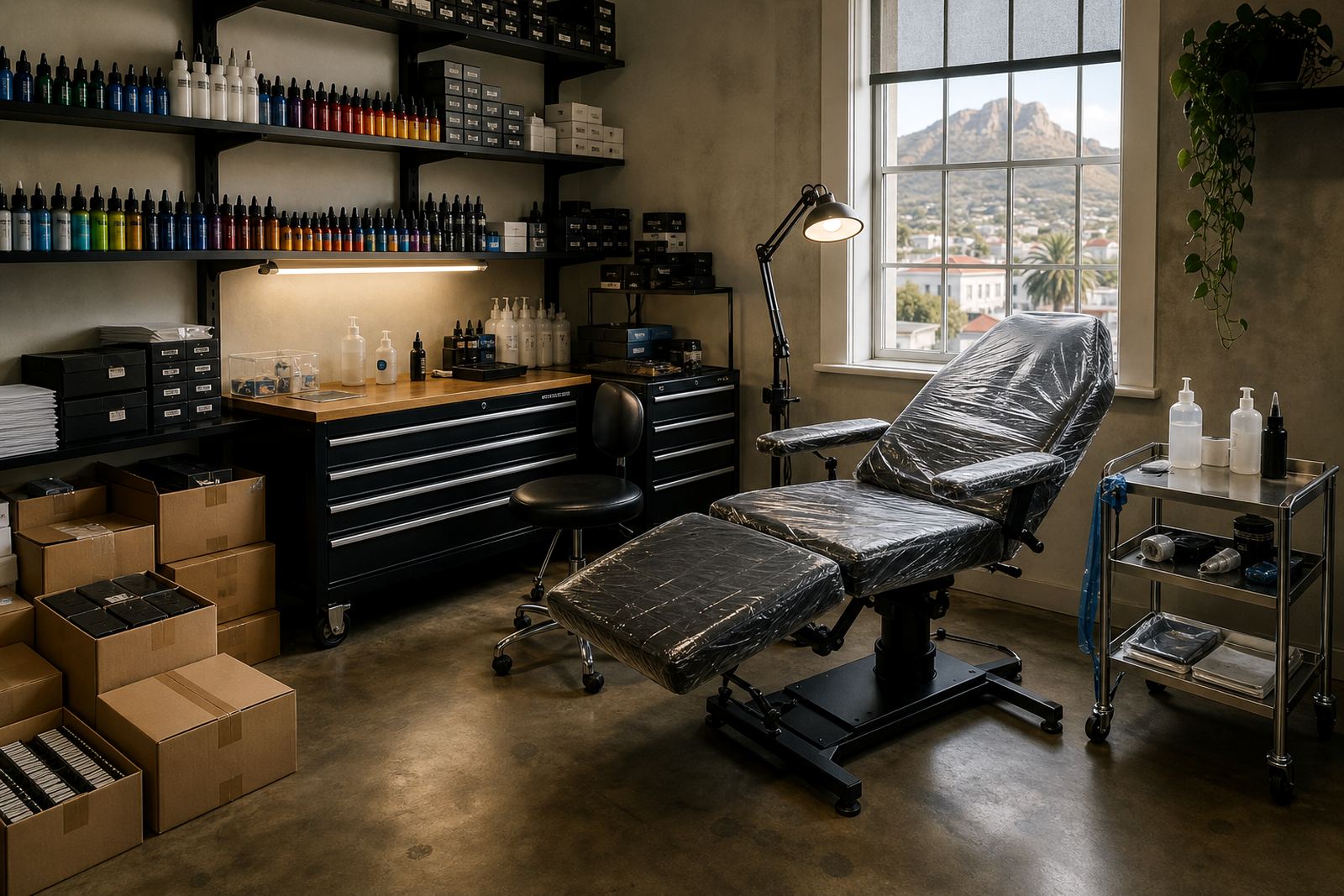
We also included storage support for consumables that need to stay sealed and dry. In a humid area like Summerstrand, cartons can soften and labels can lift if stock is left open too long, so the pack plan leaned on organised inner tubs, dated shelf rotation and space for a clean dispatch area. The team asked for product substitution support as well, so we matched alternatives where a preferred item was temporarily short, while keeping the working spec aligned.
- Ink bottles and working shades grouped for quick artist access
- Needle groupings and cartridge groupings packed separately
- Barrier film, caps, wipes and other single use studio supplies
- Storage aids for dry stock, sealed consumables and rotation control
How the studio flow was arranged
The biggest change was the way stock moved from arrival to station. Instead of all consumables sitting in one mixed area, we split the flow into receiving, holding, issue and used-item removal. That made it easier for the operations side to track what was available, what was opened, and what needed to be moved out of the live working area.
For quick flash sessions, the station setup matters just as much as the product choice. The artist needs clean access to cartridges, ink caps and barriered surfaces without breaking concentration. We set the plan around short reset points, with the most used items nearest the hand and deeper stock stored away from the immediate work zone. Local hygiene rules were left to the studio to apply in full, and the layout was built to support that routine rather than get in the way of it.
Timeline and delivery rhythm
The project ran over three weeks from stock review to dispatch planning. Week one covered the working list and grouping logic. Week two was used to finalise substitutions, confirm pack sizes and set the dispatch split for Cape Town and out of town delivery. Week three covered fulfilment, handover notes and the final count plan for seasonal restock.
That timeline suited the studio because it allowed the team to keep trading while the stock system was improved. There was no long shutdown, just a cleaner way of keeping the consumables moving. Delivery support was arranged for Summerstrand and the wider studio network, including Cape Town, Johannesburg, Durban, Pretoria and Gqeberha, with branch area support for Stellenbosch, Bellville and Somerset West as needed.
What changed after the reset
Once the supplies were in place, the studio had a steadier rhythm at the counter and at the station. Flash bookings were easier to prep for because the artist and support team knew where each item belonged. Cartridge swaps took less sorting, and the refill checks became more predictable because the stock was split into working units instead of a single loose pile of consumables.
The other gain was storage discipline. Dry stock stayed cleaner, open cartons were reduced, and the team could see gaps sooner before they turned into missed sessions. For a seaside studio, that matters. The air can be harsh on packaging and labels, and if the shelves are messy the whole place feels harder to run. This setup gave the team more control without adding extra steps.
- Cleaner station resets between flash sessions
- Fewer mixed consumable piles in the live work area
- Clearer stock checks for inks, needles and cartridges
- Better handling of humid coastal storage conditions
What we would do for a similar studio
For another beachside flash studio, we would use the same approach: group by use, separate sterile consumables from general supplies, and keep the most-used items closest to the station. We would also keep the reorder plan simple, with stock held in practical amounts rather than oversized cartons that take too long to turn.
That is especially useful where sessions are short and frequent. The less time spent searching, unpacking or reshuffling boxes, the more time the team has for the work in front of them. If a studio is planning a flash-heavy schedule, cartridge match help, stock list help and storage planning all fit well into the same setup, provided the team follows local health regulations and keeps its own hygiene procedures tight.
Key facts
| Project type | Studio stock flow and consumable planning |
|---|---|
| Location | Summerstrand, Gqeberha |
| Timeline | 3 weeks |
| Core supplies | Tattoo inks, needle groupings, cartridge groupings, sterile single use supplies |
| Support areas | Station planning, dispatch updates, seasonal restock plans |
| Delivery reach | Cape Town, Johannesburg, Durban, Pretoria and Gqeberha |