
The brief from a busy Helderberg studio
The studio needed a counter system that could handle quick enquiries at the front while keeping working stock organised behind the scenes. They wanted inks grouped by use, needles and cartridges separated by configuration, and a clean method for storing sterile single-use supplies so the team could move fast without mixing up categories.
The location in Somerset West meant the counter had to cope with weekday foot traffic, weekend spikes and the usual Helderberg dust that finds its way into open shelves if the stock is left exposed. The owner asked for a practical plan, not a display piece, and wanted the stock room to support the counter rather than slow it down.
- Front counter stock for walk-in enquiries
- Back-of-house grouping for working artists
- Clear separation between inks, needles, cartridges and consumables
- Storage that kept items visible and tidy without crowding the work area
What had to fit on the counter and behind it
The main constraint was space. The studio had a modest front area, so the counter could not be loaded with loose boxes or mixed consumables. We planned the stock around fast-moving items first, then built the rest of the grouping around that. The result was a tighter layout that made sense for a shop handling both retail enquiries and studio use.
We also had to work around municipal trading expectations for clean presentation and orderly storage. That meant sealed consumables stored off the floor, easy-to-wipe surfaces, and a layout that supported regular cleaning rather than fighting it. No fancy extras, just a working system that could stay organised when the counter got busy.
- Small front area with limited display space
- Regular walk-ins, so easy stock access mattered
- Need for clean, wipeable storage surfaces
- Separate holding points for stock and daily-use items
Stock grouping used for the setup
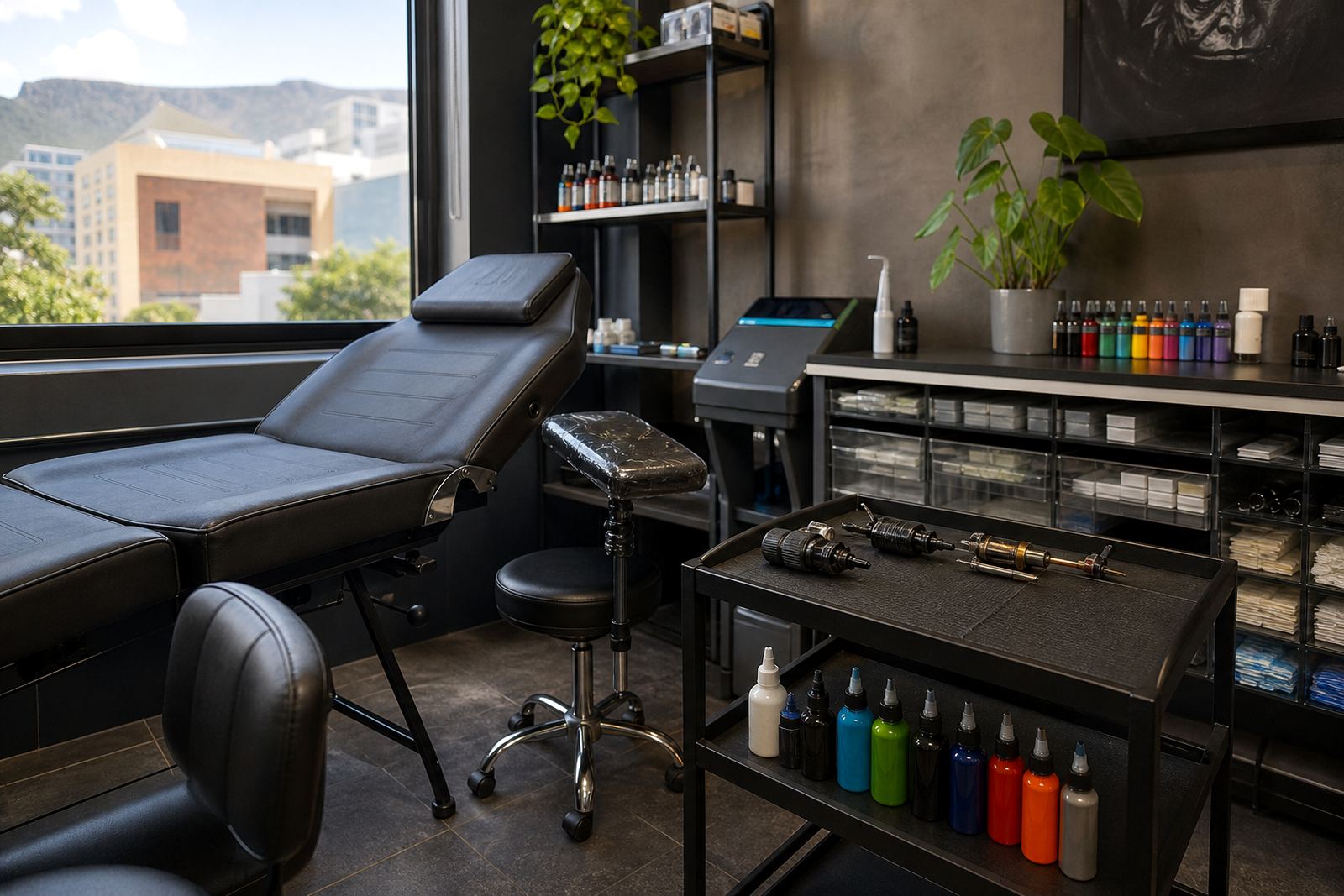
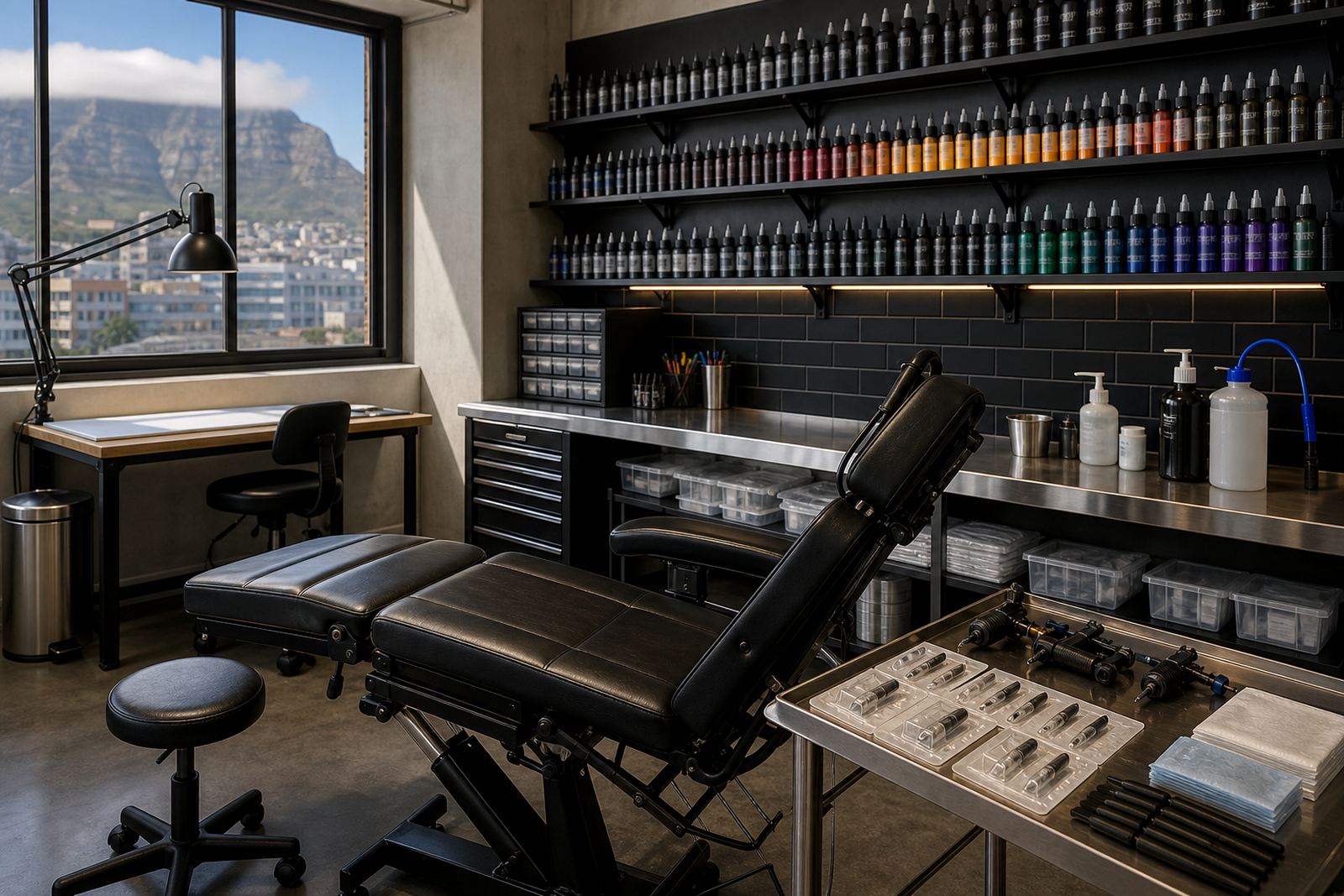
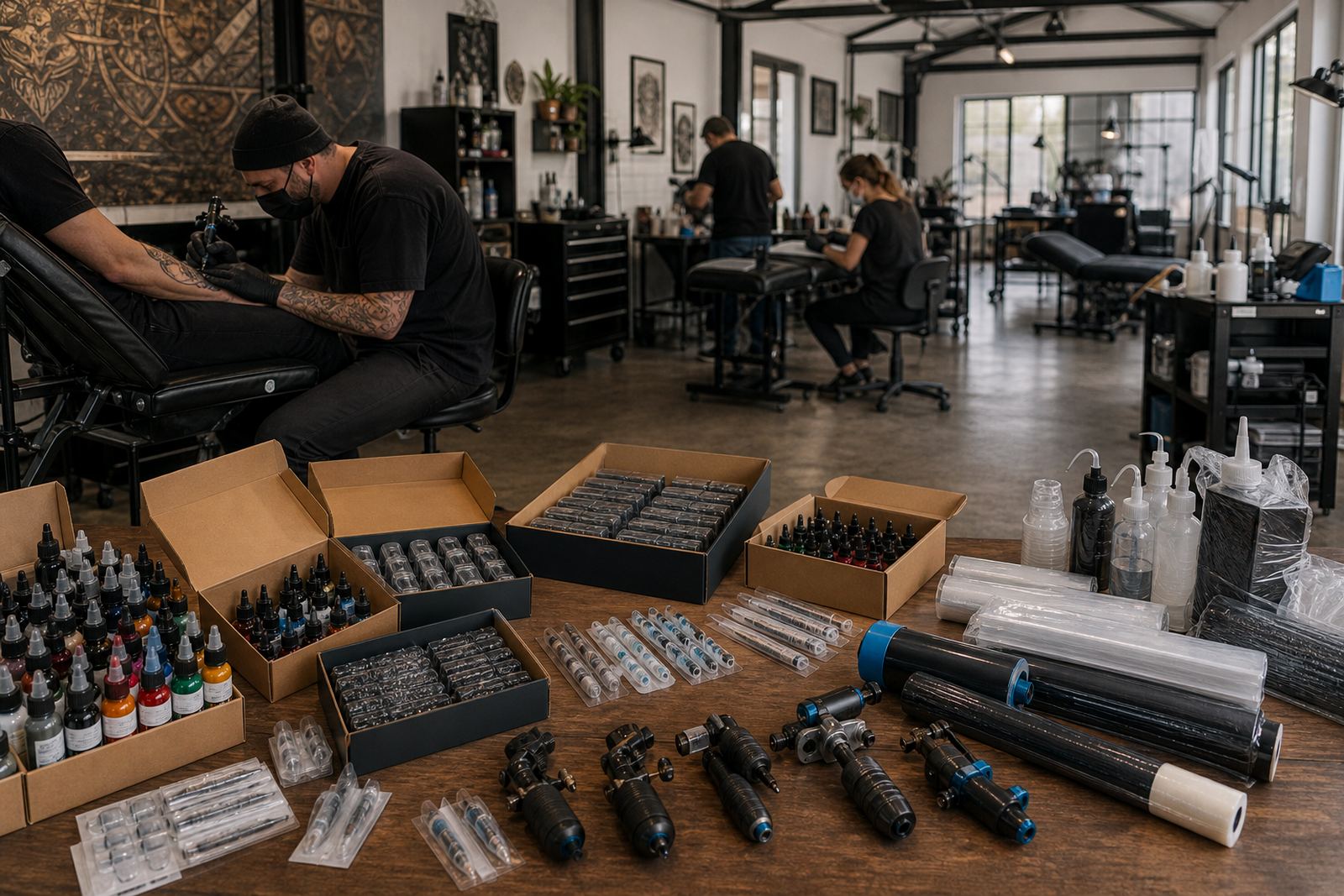
We supplied and grouped the stock by use rather than by random shelf space. Inks were split into working ranges for lining, shading and colour packing. Needle groupings were kept separate from cartridge groupings, with each configuration labelled so the team could find the right box without opening three others first. Machines and power items were kept in their own section, away from sterile single-use supplies.
The studio also asked for storage planning around replenishment. That included sealed tubs, shelf labels and a simple pick path for daily use stock. It sounds small, but it saves time every day when the counter is handling questions and the back area is being restocked at the same time.
- Ink groupings for lining, shading and colour work
- Needle groupings by configuration and box size
- Cartridge groupings kept separate from loose needles
- Sterile single-use supplies stored in closed, labelled sections
- Machines and accessories separated from consumables
How the counter flow was arranged
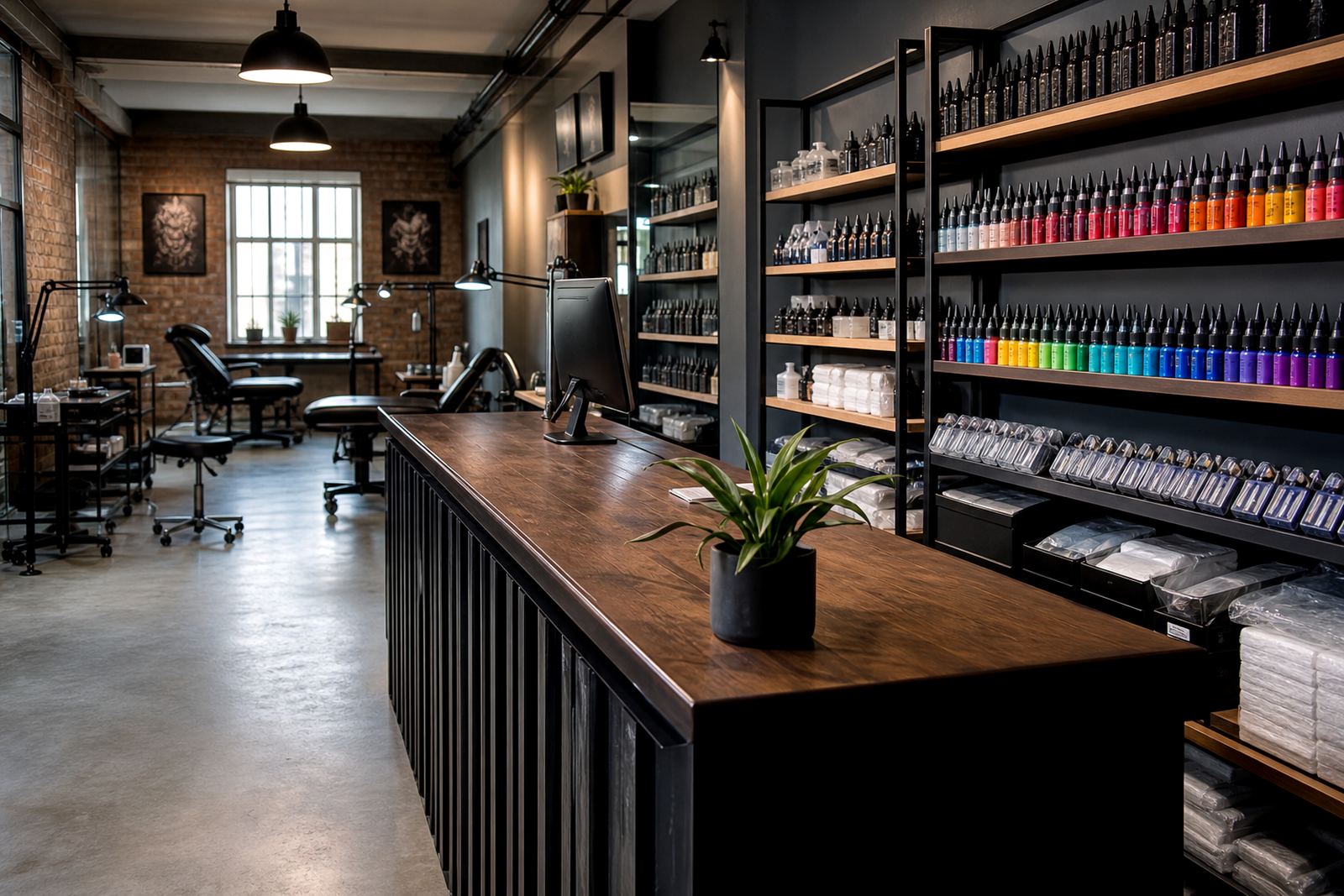
The front-of-house flow was set up so the most requested items sat within easy reach of the enquiry point. The team could show product types, confirm compatibility and then move directly to the right shelf without walking the client through the entire stockroom. That kept the counter calm, which matters when someone is asking for a refill while another customer is waiting at the door.
Behind the counter, the layout followed a simple left-to-right logic: enquiry stock, working stock, overflow, and restock holding. We also adjusted the shelving heights so small items did not disappear behind larger cartons. It made the shelves easier to scan and cut down on the usual clutter that builds up around daily trade.
- Fast-moving items placed closest to the front counter
- Overflow stock held separately from daily-use stock
- Short shelf runs for smaller cartons and packs
- Clear pick path for staff during peak periods
Delivery support and dispatch timing
The project ran over three weeks, from the first stock map to the final grouped dispatch. Week one covered range grouping and counter planning. Week two covered product matching, stock list help and consumable sorting. Week three covered dispatch updates, reorder grouping and a final check on the packed stock so the studio received what it needed in a usable order.
Delivery went through our Cape Town base with stock sent to Somerset West and supported as part of the wider Western Cape delivery route. For the parts of the order heading to other studio locations, the same labelling logic was used so the receiving teams could shelve items without re-sorting the whole consignment. That kept the handover straightforward and saved the studio time at unpacking.
- Week 1: stock mapping and counter layout
- Week 2: matching, grouping and consumable planning
- Week 3: dispatch, labelling and final stock handover
What changed after the stock was in place
Once the new grouping was in use, the studio had fewer interruptions at the counter because staff could find the right item faster. The owner reported smoother walk-in handling and less time spent checking mixed boxes for the correct needles or cartridges. The back area also stayed tidier because the stock had fixed places instead of drifting across the shelves.
The setup also gave the team a better picture of what needed reordering. With consumables separated by type and use, the studio could see which items moved fastest and which ones stayed on hand for longer periods. That made planning more practical, especially when the week got busy and the shelves needed topping up without overbuying.
- Faster counter handling for walk-ins and regular enquiries
- Less shelf confusion during busy shifts
- Cleaner separation between daily use and reserve stock
- Clearer view of reorder needs across the range
What we would set up the same way again
We would repeat the same basic structure for another studio of this size: start with the counter flow, group the fast movers first, then slot the rest of the stock around those core items. That approach works well for places that handle both retail enquiries and studio use because it keeps the front counter useful without overloading it.
We would also keep the labelling plain and direct, with storage separated by product type rather than by whichever box happened to arrive first. In a working studio, that kind of order matters more than fancy display. It keeps things moving, reduces handling mistakes and makes the stock room easier to keep in shape week after week.
- Start with the front counter flow before filling shelves
- Group by use and configuration, not by loose arrival order
- Keep sterile single-use supplies sealed and separated
- Use simple labels that staff can read at a glance
Key facts
| Project type | Front-and-back stock planning for a tattoo studio counter |
|---|---|
| Town | Somerset West, Western Cape |
| Stock categories | Tattoo inks, needles, cartridges, machines and studio supplies |
| Layout focus | Walk-in handling, enquiry flow, and daily replenishment |
| Timeline | 3 weeks |
| Delivery coverage | Somerset West with support to Cape Town, Johannesburg, Durban, Pretoria and Gqeberha routes |