
A shared floor that had to work without crowding
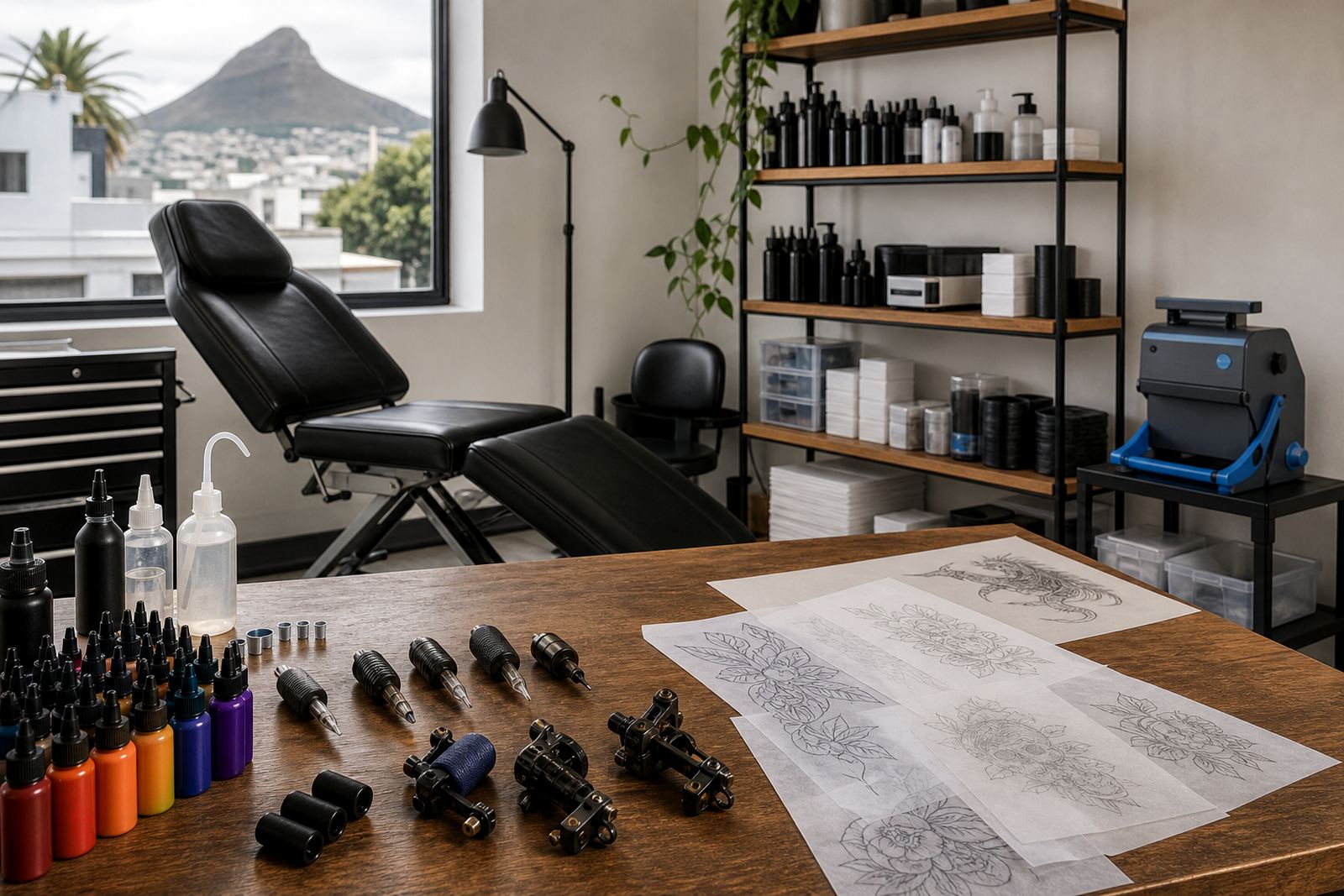
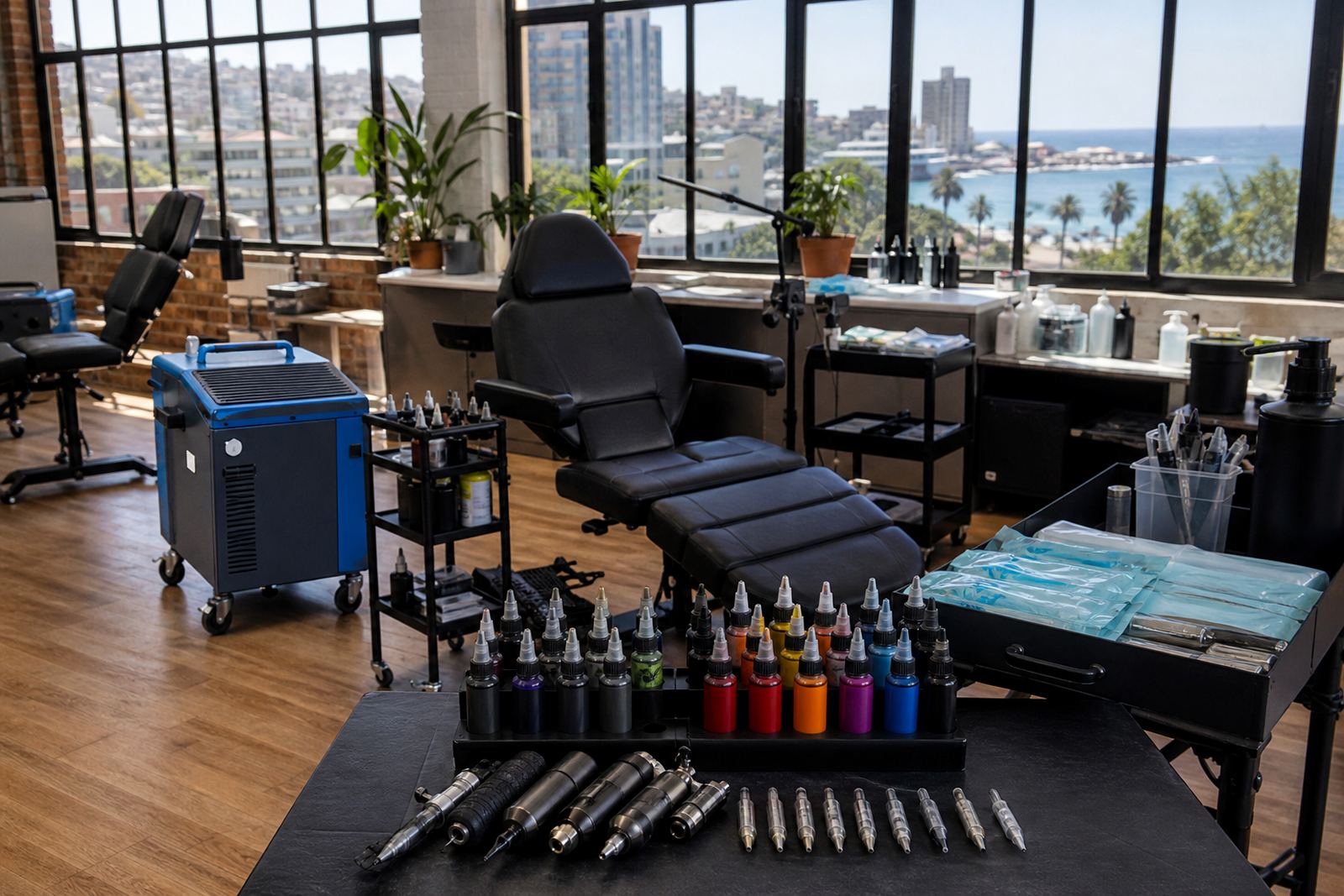
The client was a shared tattoo studio in Woodstock, Cape Town with a mixed team of resident artists and visiting workers using the same floor through the week. The brief was straightforward but detailed: keep the main working area centred on cartridges and black inks, make wipe points easy to reach, and avoid clutter around the stations.
The room had steady foot traffic, limited wall space and a need to separate clean stock from active work items. That meant the setup had to support fast turnover between appointments, neat handover between artists and enough storage for needles, cartridges, grip consumables and single-use studio items without overfilling the floor.
What we mapped before any stock moved
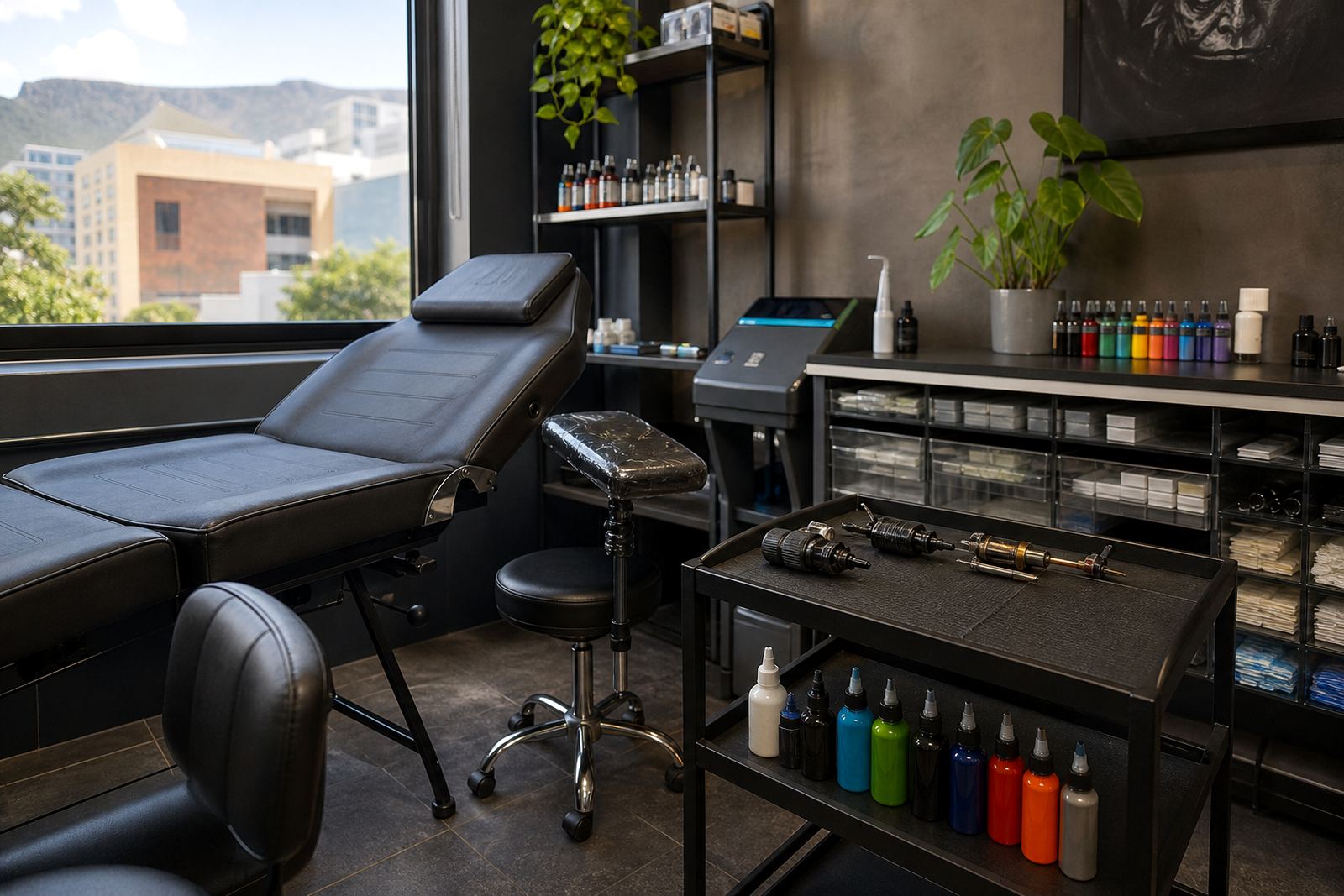
We worked from the room flow first. The team wanted station grouping that kept the core materials close to each workstation, while the central wipe stations sat where everyone could reach them without crossing another artist's area. The storage plan had to suit a shared studio where drawers and shelves are opened often, so the most used items stayed nearest to the work zone.
- Needle and cartridge groupings for lining, shading and general work
- Black ink grouping with clear separation from other colour stock
- Central wipe station placement for shared access
- Single-use consumables stored apart from reusable studio items
- Closed storage for clean stock in a humid coastal environment
Because the studio sits in Cape Town and not far from the coast, we also paid attention to storage that helps keep labels readable and bottles, sleeves and wrapped items in a tidy condition. The emphasis was on order, not display.
Supply list built around the studio rhythm
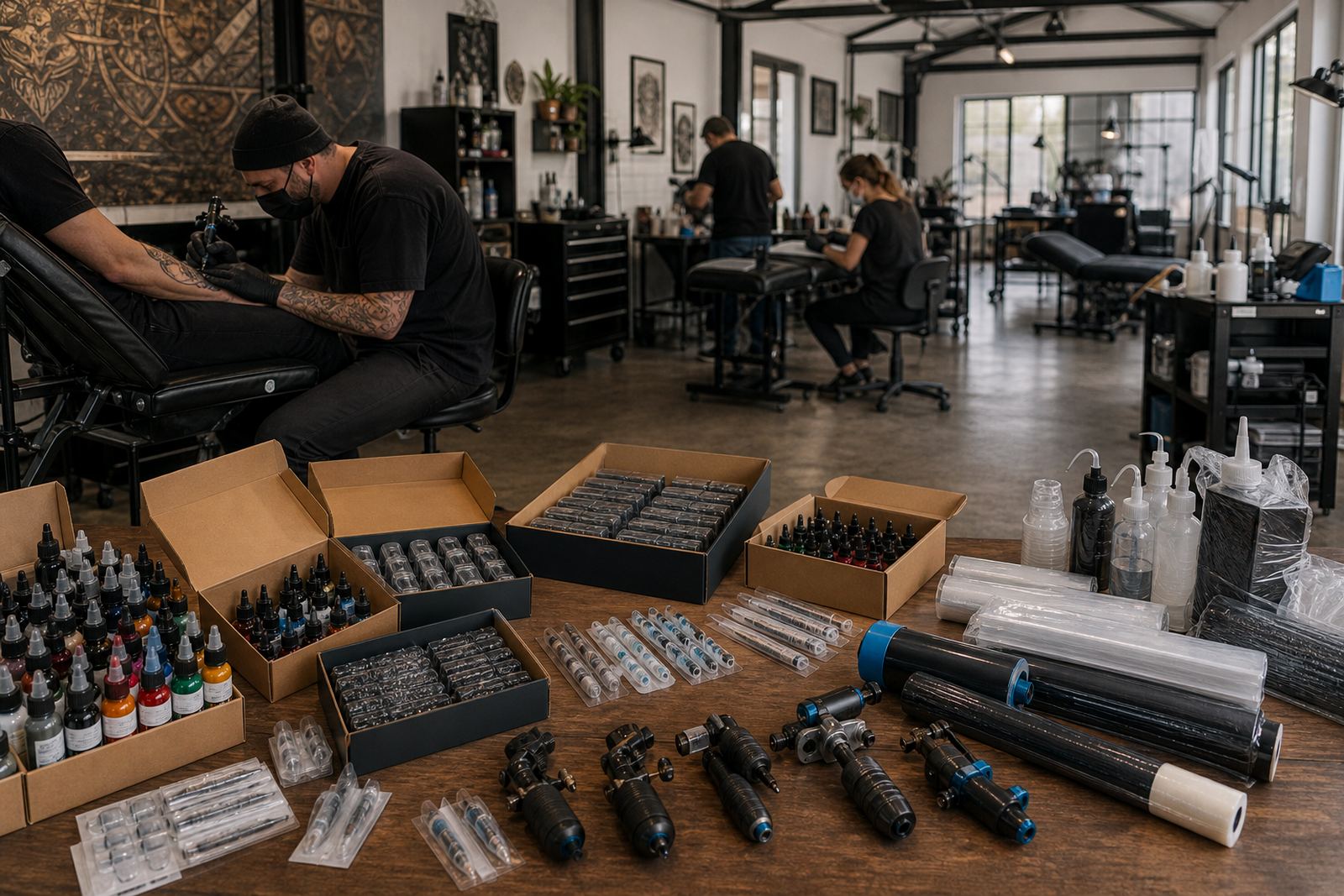
We supplied a range built for routine studio use rather than show pieces. That included tattoo inks in black groupings, grouped needles and cartridges, machine support items, sterile single-use supplies and general studio consumables. The stock mix was chosen so the shared floor could cover daily appointments without forcing artists to split common items across different corners of the room.
The cartridge set-up was arranged by function so the artists could pull the right group quickly, while the ink side stayed simple and concentrated around black work. The storage items were matched to the room size, with compact handling in mind and enough reserve capacity for bulk reorders when the studio planned busier weeks.
- Black ink groupings for line, fill and shading work
- Needle and cartridge ranges sorted by use type
- Machine support consumables for working stations
- Single-use gloves, wraps, cups and other hygiene stock
- Storage containers and shelf organisation items
Two-week rollout with staged room setting
The project ran over two weeks. The first stage covered stock planning, grouping and room mapping. The second stage focused on packing, delivery and station setup support so the studio could start using the new layout without having to rebuild it later. Each step was kept practical because the room already had a working rhythm and could not afford a messy reset.
During the handover, we helped the client group products by function, mark the central stations and separate replenishment stock from daily-use stock. That small change made the space easier to manage when several artists were working at once. It also made stock checking faster at the start and end of the day, which matters in a shared studio where items move quickly.
The result on a busy Woodstock floor
The finished setup gave the studio a cleaner flow around the centre of the room. Cartridge selection became quicker, black ink use stayed more consistent and the wipe stations were no longer tucked into awkward corners. The team also had a more dependable way to store consumables so the room stayed orderly even on fuller days.
One of the more useful changes was how the shared stock was split. Daily-use items sat within easy reach, while reserve stock stayed put until needed. That cut down on unnecessary movement across the floor and made it easier for the team to keep the studio tidy between clients.
- Faster access to cartridges and black inks
- Clearer shared use around central wipe stations
- Less duplicate stock kept out on the floor
- Better storage control for consumables and replacements
What we would repeat on the next shared studio fit-out
We would use the same approach again for any shared studio with limited floor area and several artists rotating through the day. Start with room flow, group the cartridges by function, keep black inks central and place wipe stations where everyone can reach them without interrupting another station. That structure works well in Cape Town, Johannesburg, Durban, Pretoria and Gqeberha when the stock mix is handled carefully and the storage plan matches the room.
We would also keep the same attention on single-use stock, because shared studios need a clear place for clean consumables and a separate place for items already in circulation. The best result came from making the floor easier to manage, not from filling it with more product.
For studios following local health regulations, that kind of order supports a more controlled working environment and makes daily stock handling simpler. In this project, the room did not need extra noise, just the right groupings in the right spots.
Key facts
| Project | Woodstock Shared Studio |
|---|---|
| Town | Woodstock, Cape Town |
| Setup type | Shared floor with central wipe stations |
| Core stock focus | Cartridges and black inks |
| Rollout time | 2 weeks |
| Service mix | Stock List Help, Station Planning, Cartridge Match Help, Storage Planning, Dispatch Updates, Bulk Order Support |