
Measure the gear before you pick a case
Start with the items you carry most often: machines, cartridge boxes, bottle sizes, clip cords, grips, power parts and sealed consumables. A case that looks large on screen can waste space inside if the internal layout does not suit your kit. Measure the longest item first, then check height for bottles and any foam inserts you may use.
For studio use, a low case with a flat top may suit shelf storage better, while a mobile kit often needs a firmer shell and a handle that does not twist under weight. In Cape Town, Durban and Gqeberha, humidity can affect how you store inks and paper goods, so a case that closes tightly is worth closer attention.
- Measure length, width and depth of the largest item
- Check whether trays or dividers reduce usable space
- Allow room for sealed consumables and gloves
- Make sure the handle and latches feel solid when the case is full
Cases for machines need more than just padding
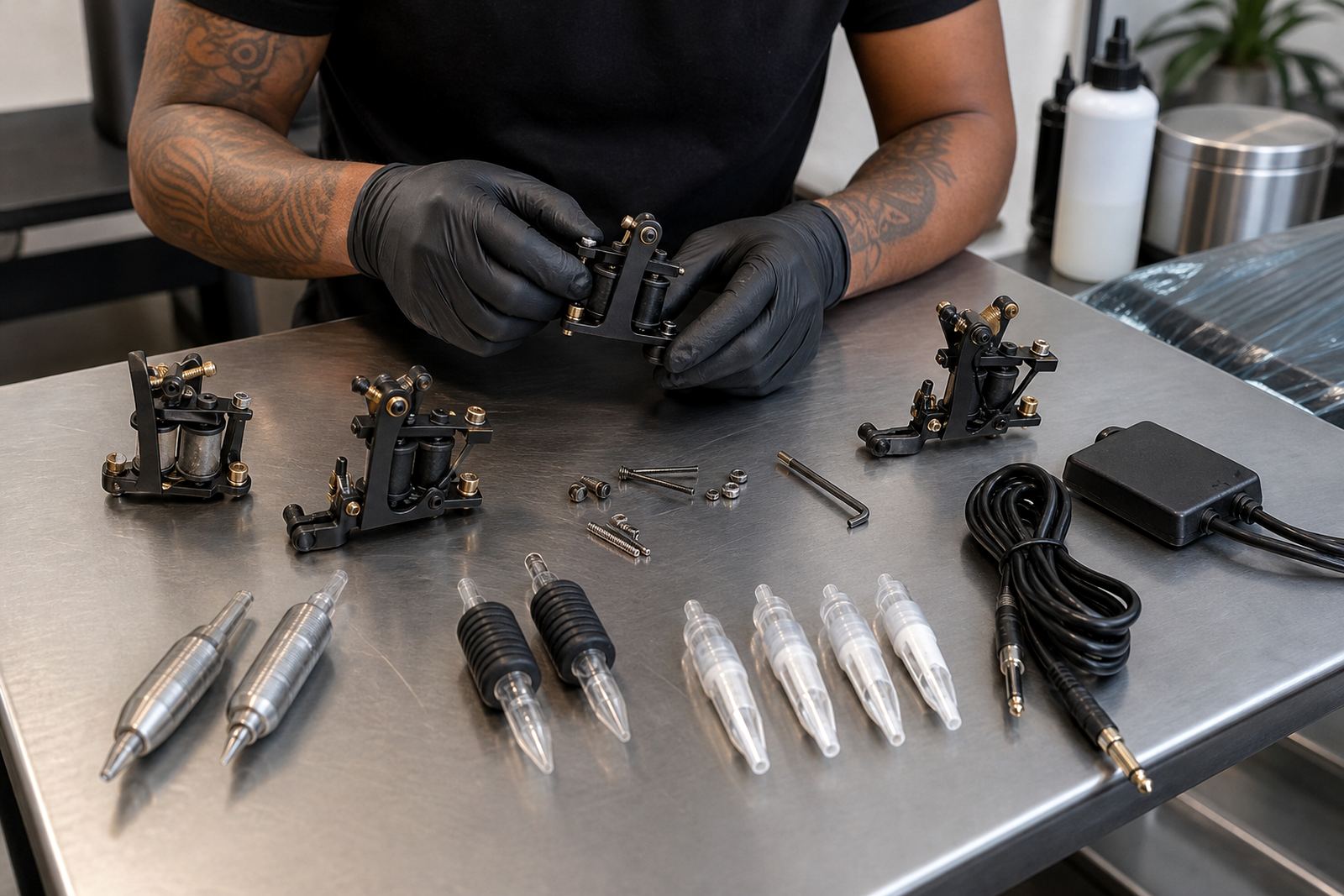
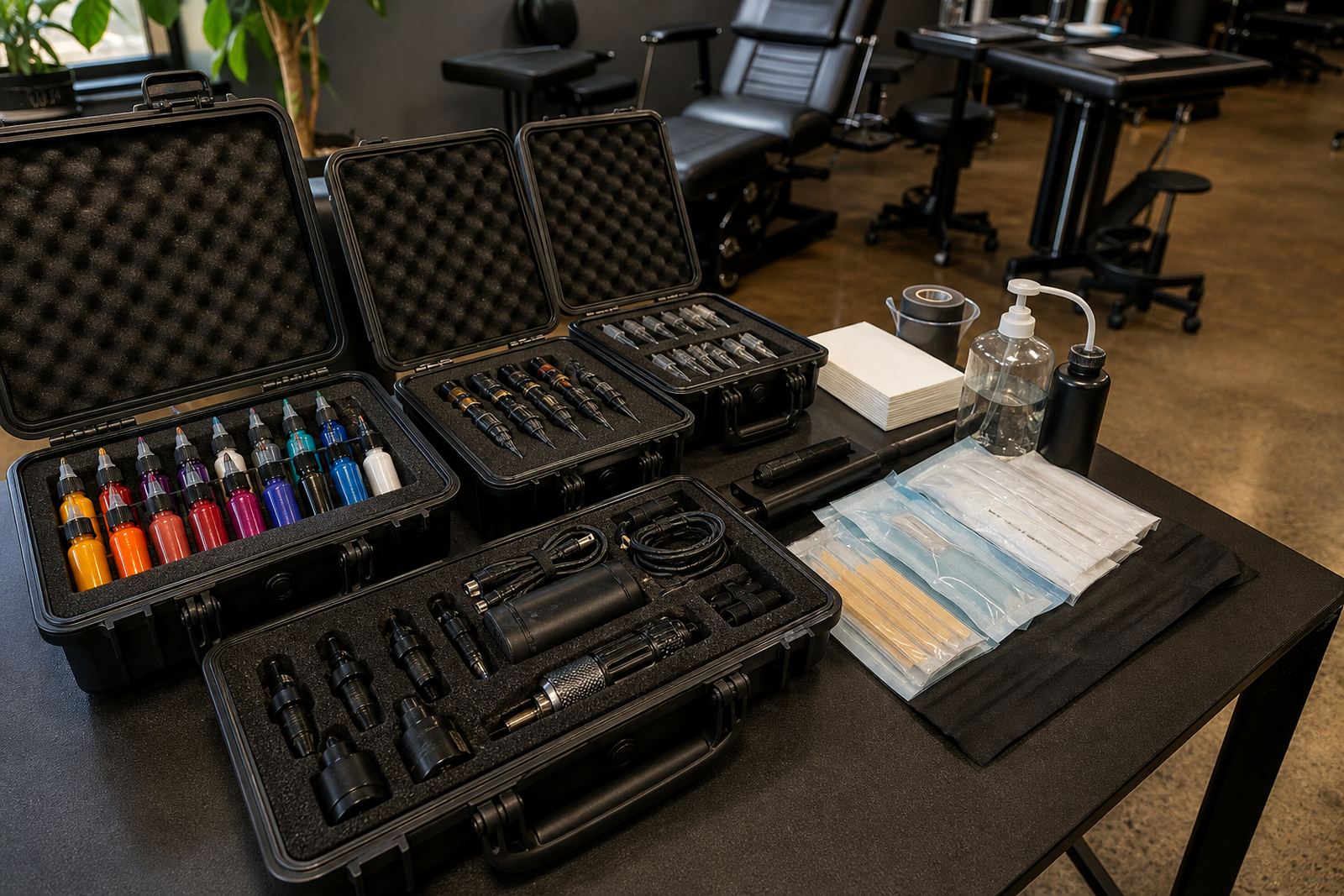
Machine cases should protect equipment from knocks, dust and movement inside a vehicle or cabinet. The inside should hold rotary or coil machines in a way that stops parts rubbing together. If you carry several machines, look for compartments that keep them apart rather than one open cavity where items shift around.
Foam cut-outs can work well for fixed kits, but they are not always ideal if you change the setup often. Adjustable dividers give more flexibility when you are matching machine groupings for different work. If you store spare parts with the machines, check that the sections are deep enough for cables, tubes, grips and small tools without forcing the lid shut.
- Choose padding that protects without crushing knobs or wires
- Check for secure divider placement
- Look at latch strength and hinge movement
- Make sure the case opens fully on a tight work surface
Ink storage needs order, shade control and a clean seal
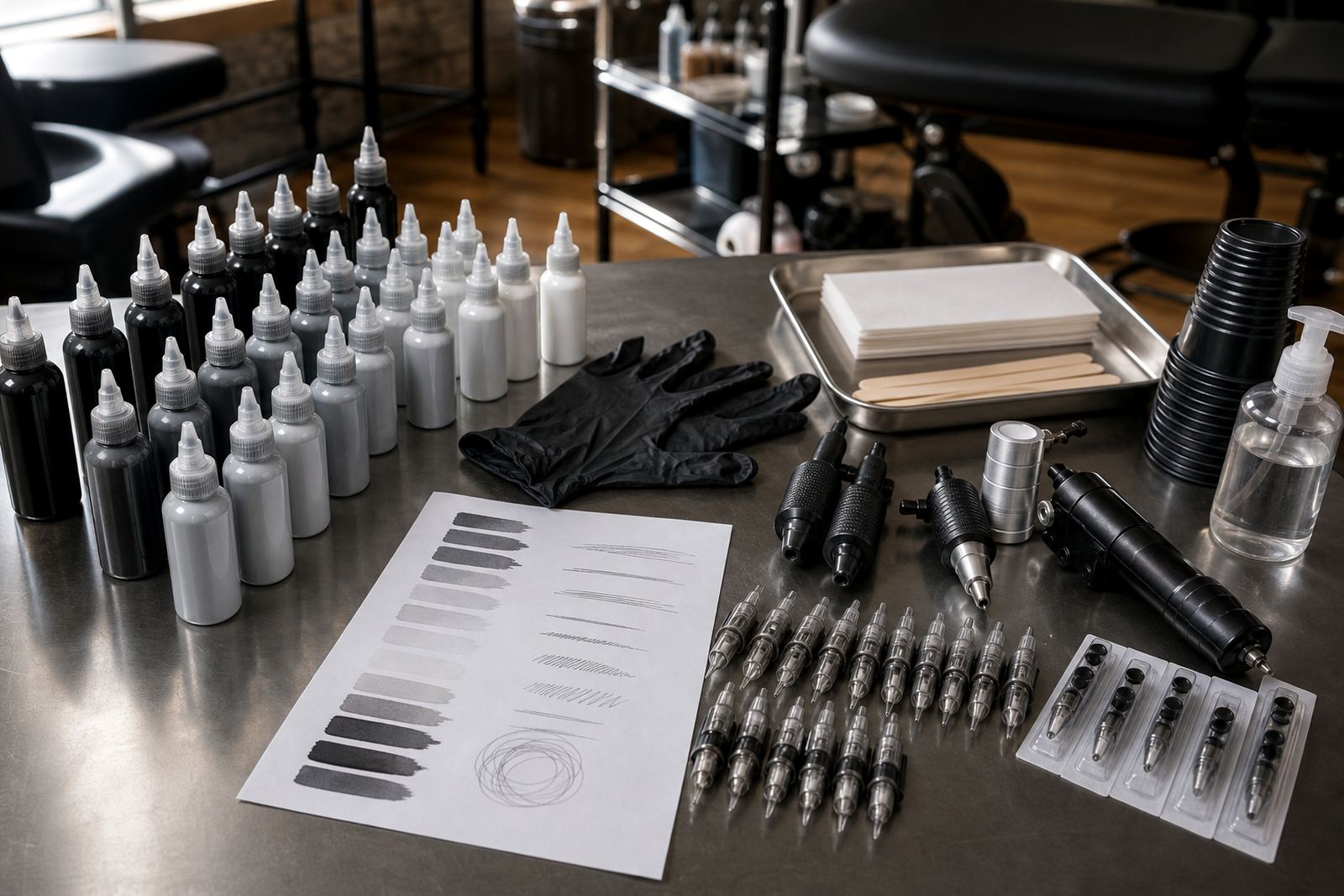
Ink bottles and caps need to stay upright and separated from sharp tools. A good storage case for inks should hold bottles snugly so they do not tip during transport. Many artists prefer a layout with upright slots or rows, especially when they use several shades for the same session. Clear labelling is also easier when the case opens flat and you can see the full set at once.
Store inks away from direct sun and heat sources. In a Cape Town or Johannesburg studio, a case that closes well helps keep dust off bottles and lids, while a clean interior makes stock checks simpler. If you move between a main studio and a mobile setup, keep ink storage separate from used items and from anything that could leak.
- Look for upright bottle support
- Check that caps and closures do not press against each other
- Use a case with a wipeable interior lining
- Keep inks apart from sharps and used disposable items
Single-use supplies should never rattle loose
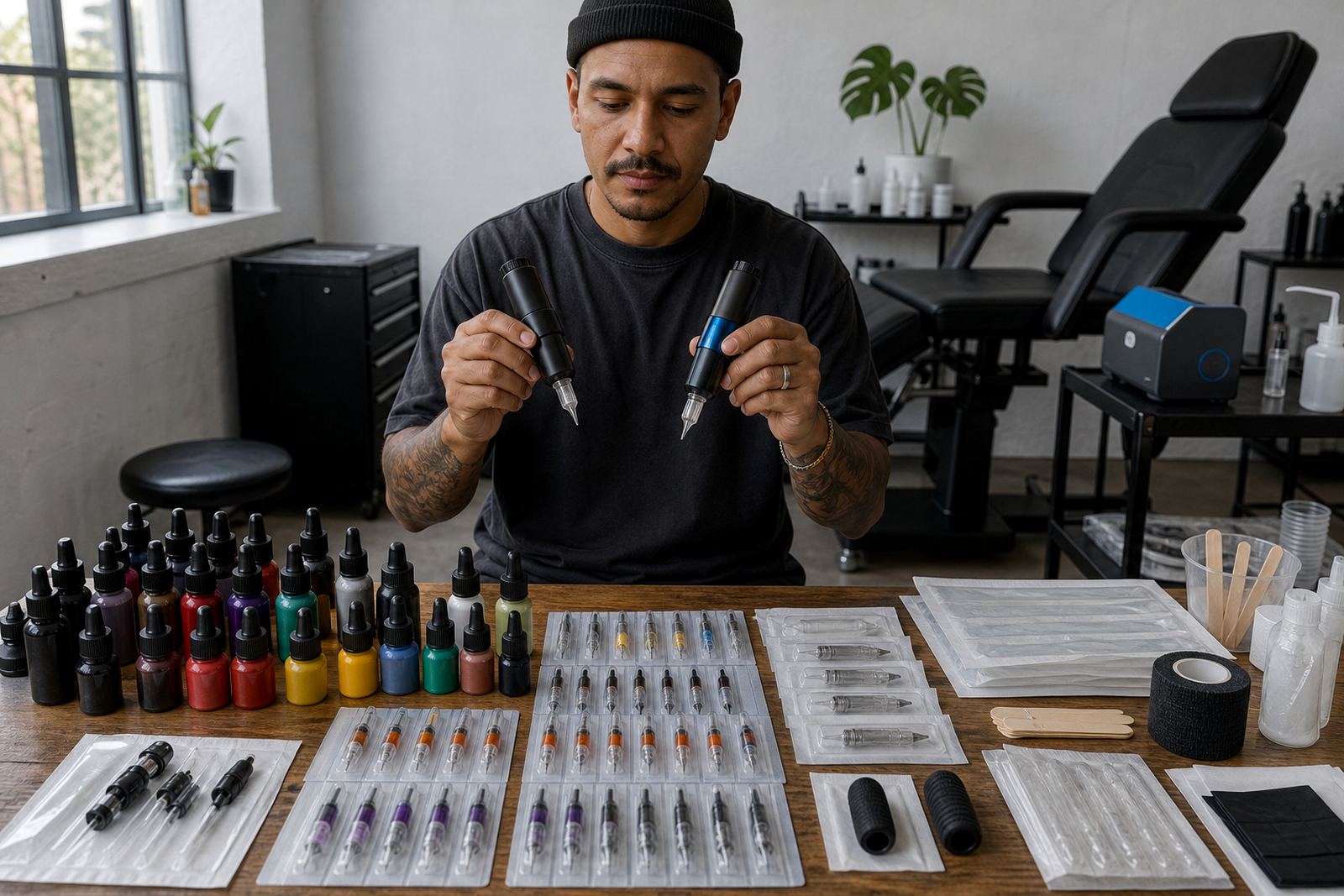
Needles, cartridges, gloves, ink caps, barrier wrap and other sterile single-use supplies are easiest to manage when each group has its own section. If these items move around loose in a case, stock counts become harder and the pack-up takes longer. For busy studios, a case with small compartments or removable boxes can save a lot of sorting time.
When comparing cases, check whether the layout supports the way you group consumables. Some teams pack by station, others by treatment type or by artist. The best case is the one that matches your routine and lets you see what is low before you leave the studio. Follow local health regulations for storage, handling and disposal of tattoo consumables.
- Separate needle and cartridge stock from bulk stationery
- Keep sealed items in clearly marked sections
- Use lids or inner boxes for small loose parts
- Make stock checks quick and straightforward
Mobile kits need hard-wearing handles and sensible weight
If you travel for guest spots, events or off-site sessions, the case must carry well when full. A strong handle, balanced weight and secure locking points matter more than a fancy finish. Check how the case feels when lifted with a real load, not when empty on a shelf. If the handle digs in or the case pulls to one side, it will become tiring fast.
For mobile work across South Africa, from Pretoria to Stellenbosch, the case also has to fit in a car boot or on a trolley without awkward stacking. Smooth outer surfaces are easier to wipe down after a long day, and a case that stands upright without wobble is better in cramped storage areas.
- Test the carry weight with a full load
- Check latch security before moving gear
- Look for surfaces that clean easily
- Make sure the case fits your vehicle and storage space
Studio hygiene starts with how the case opens and closes
Storage is part of studio hygiene. A case that opens wide, stays open, and closes without trapping dust makes day-to-day work neater. Smooth interiors are easier to wipe than textured corners, and separate sections help keep clean stock apart from used items. If a case has fabric lining, check that it can be cleaned properly and does not trap lint.
Think about where the case will sit between sessions. If it rests near the station, it should not shed debris or shed particles into the working area. If you keep several cases on the same shelf, label them clearly so the right group is reached without unnecessary handling. That helps when you are restocking during a busy day in a Johannesburg or Durban studio.
- Choose wipeable finishes where possible
- Avoid interiors that catch dust and lint
- Keep clean stock separate from open or used items
- Label cases by station, artist or supply type
A quick buying check before you place the order
Before you choose a case, compare the real contents of your kit against the internal layout. Ask whether the case will hold what you use most often, whether it closes cleanly when full, and whether it can cope with travel, shelf storage or daily opening at the counter. If you are ordering for a team, one case size may not suit every station, so compare the kit needs first.
InkX Tattoo supplies tattoo inks, needles, cartridges and studio supplies for studios across South Africa, with delivery to Cape Town, Johannesburg, Durban, Pretoria and Gqeberha. If you want help matching a case to your stock grouping, station plan or mobile kit, use the enquiry form on our contact page and include the items you want to store, the space you have, and whether the case is for studio use or travel.
- List the items that must fit inside
- Check whether you need foam, dividers or open space
- Decide if the case is for studio, travel or both
- Match the case size to the way you restock