
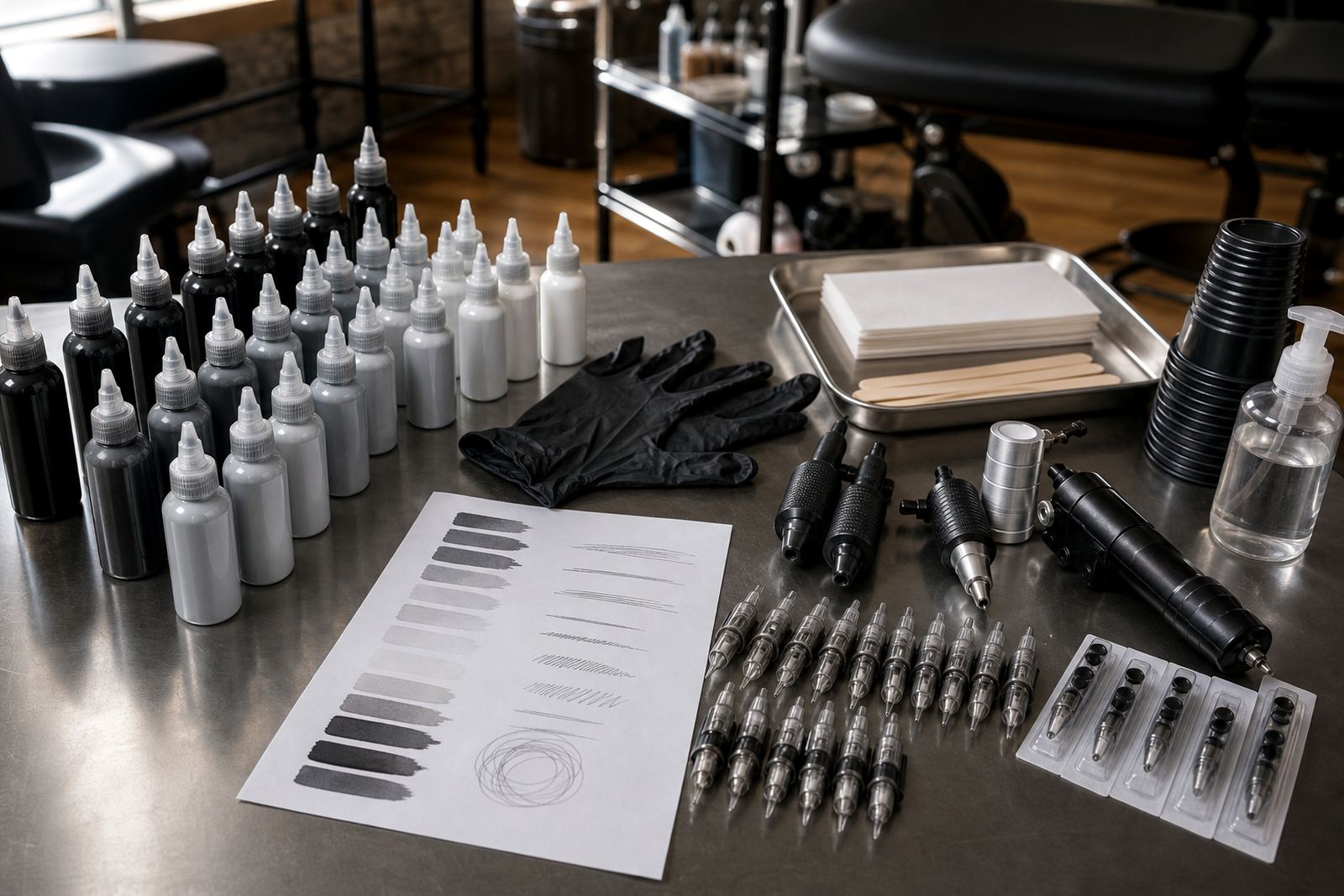
Start with the tones you actually use
Greywash sets are usually built around several steps from light to dark, and the best set is the one that matches your shading style. Some studios want a narrow spread for fine transitions, while others need a wider range for bolder contrast and faster packing.
Look at the work you do most often. If your style leans toward soft portrait shading or fine realism, a set with more gradual steps can help you move between tones without sharp jumps. If you handle script fillers, darker backgrounds or stronger contrast work, you may prefer deeper darks in the same set so the mix holds its strength through the session.
Match greywash to your needle and cartridge groupings
Greywash behaves differently depending on whether you are using liners, magnums or rounded shaders. The grouping changes how much pigment sits in the skin at once, so the same wash can read lighter or darker depending on the needle choice.
- Fine liners suit controlled detailing and small tonal passes.
- Magnums move more wash quickly for smoother gradients and larger shaded areas.
- Rounded shaders can help where you need tighter control around edges and smaller forms.
- Cartridge grouping should suit the pace of the artist, not only the size of the design.
It helps to keep the set and the needle grouping in mind together. A wash that feels ideal through a wider grouping may be too heavy when paired with a tighter tip.
Check how the set mixes into your station routine
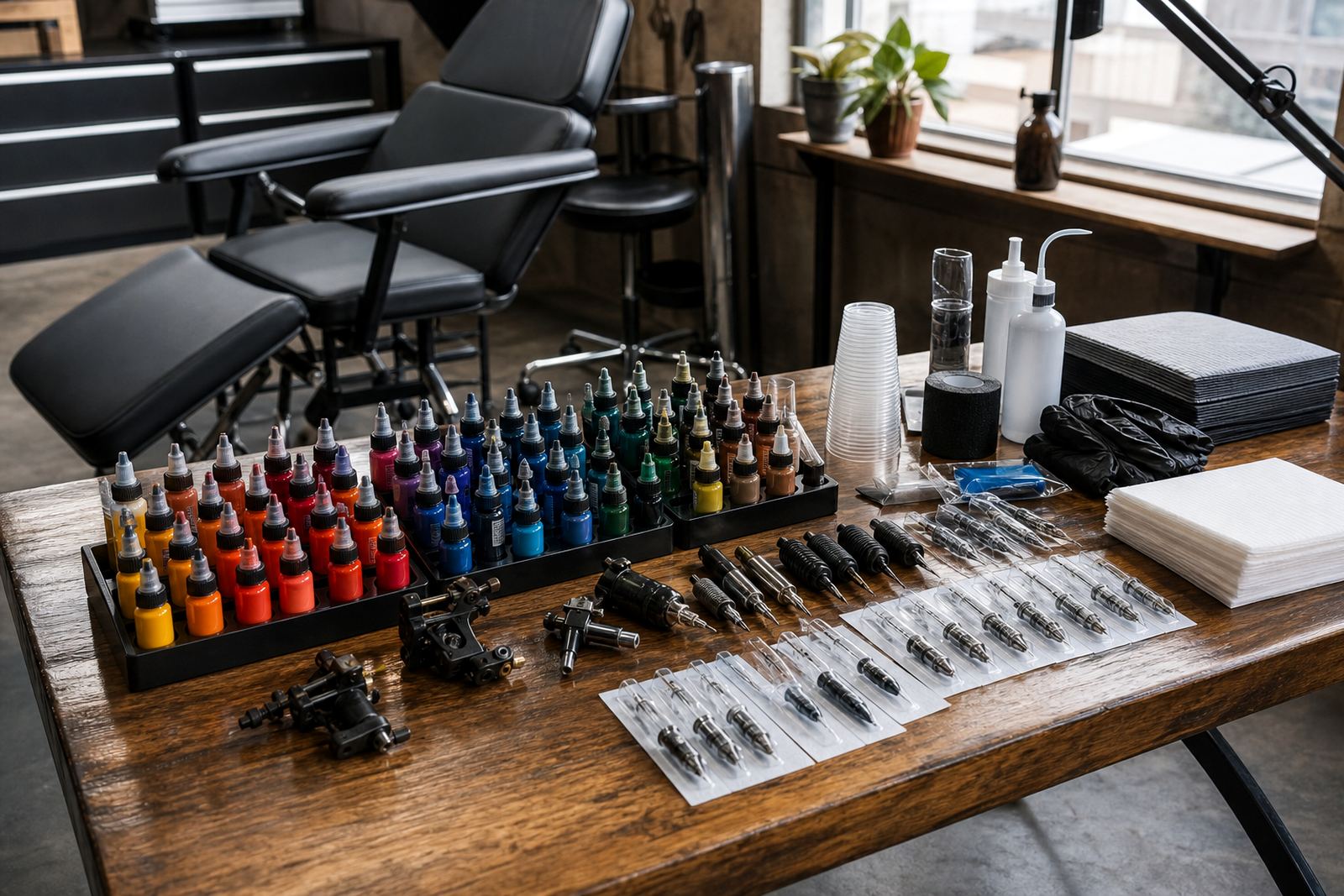
In a working studio, greywash needs to be easy to identify, pour and replace without slowing the station. Bottles or cups should be clearly marked and kept in a layout that makes the lightest to darkest order obvious. That saves time, and it reduces mix ups when the room is busy.
Think about your usual session flow. If you change tones often, a set with clearly separated steps may suit you better than a very broad range. If you prefer to build tone gradually, more intermediate shades can make the handover between passes feel cleaner. On crowded days in Cape Town, Johannesburg or Durban studios, a predictable layout matters more than fancy packaging.
Storage and studio hygiene for greywash stock
Greywash stock should be stored with the same care you give to other studio consumables. Keep bottles closed, upright and out of direct heat or strong sunlight. In coastal areas such as Cape Town, Stellenbosch and Gqeberha, damp air can affect storage areas if shelves and containers are not kept dry and clean.
- Separate opened stock from sealed stock.
- Label each tone clearly so staff do not mix them up.
- Use clean caps, cups and single-use items for each client.
- Follow local health regulations for tattoo work and studio hygiene.
Good storage makes it easier to track what is in use and what needs reordering, especially when you are running more than one station.
Building a greywash order for a busy studio
Before you place an order, look at how often each tone is used and how quickly each size of bottle moves. Many studios use the light and mid tones more frequently than the darkest one, so the order should reflect actual use rather than equal quantities of every shade.
It also helps to link greywash to your other consumables. If you are restocking needles, cartridges and sterile single-use items at the same time, you can keep the whole station aligned for the month instead of chasing missing pieces midweek. For studios in Pretoria, Bellville or Somerset West, delivery planning is easier when the stock list is grouped by category and room.
- List the tones you use most in a normal week.
- Check which tones finish first after larger sessions.
- Group greywash with needles, cartridges and barrier supplies.
- Keep one backup set for heavier booking periods.
Questions to ask before you settle on a set
The best greywash set is not only about colour depth. It should fit the artists, the machines and the pace of the studio. A set that looks good on paper may still be awkward if the spread is too wide or the tones are too close together.
Use a short checklist when comparing options:
- Are the tones spaced closely enough for smooth blends?
- Does the darkest tone give enough contrast for your usual work?
- Can the set be used comfortably with your main needle groupings?
- Is the labelling clear for quick station setup?
- Will the storage format suit your shelf space and stock rotation?
If you are unsure, it helps to compare the set against a real session pattern rather than a general description. That makes the choice practical instead of guesswork.
Keep the set aligned with the rest of the studio range
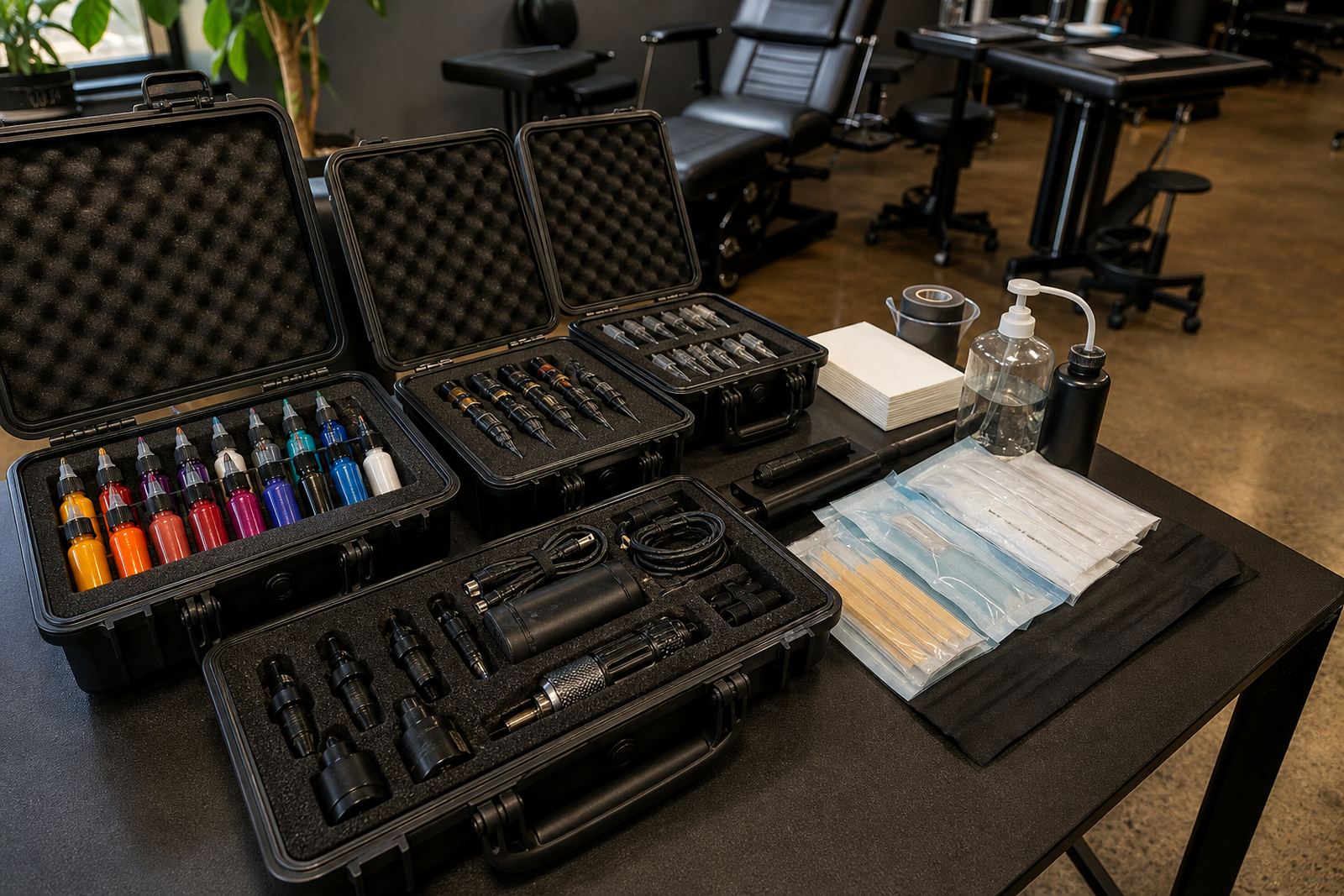
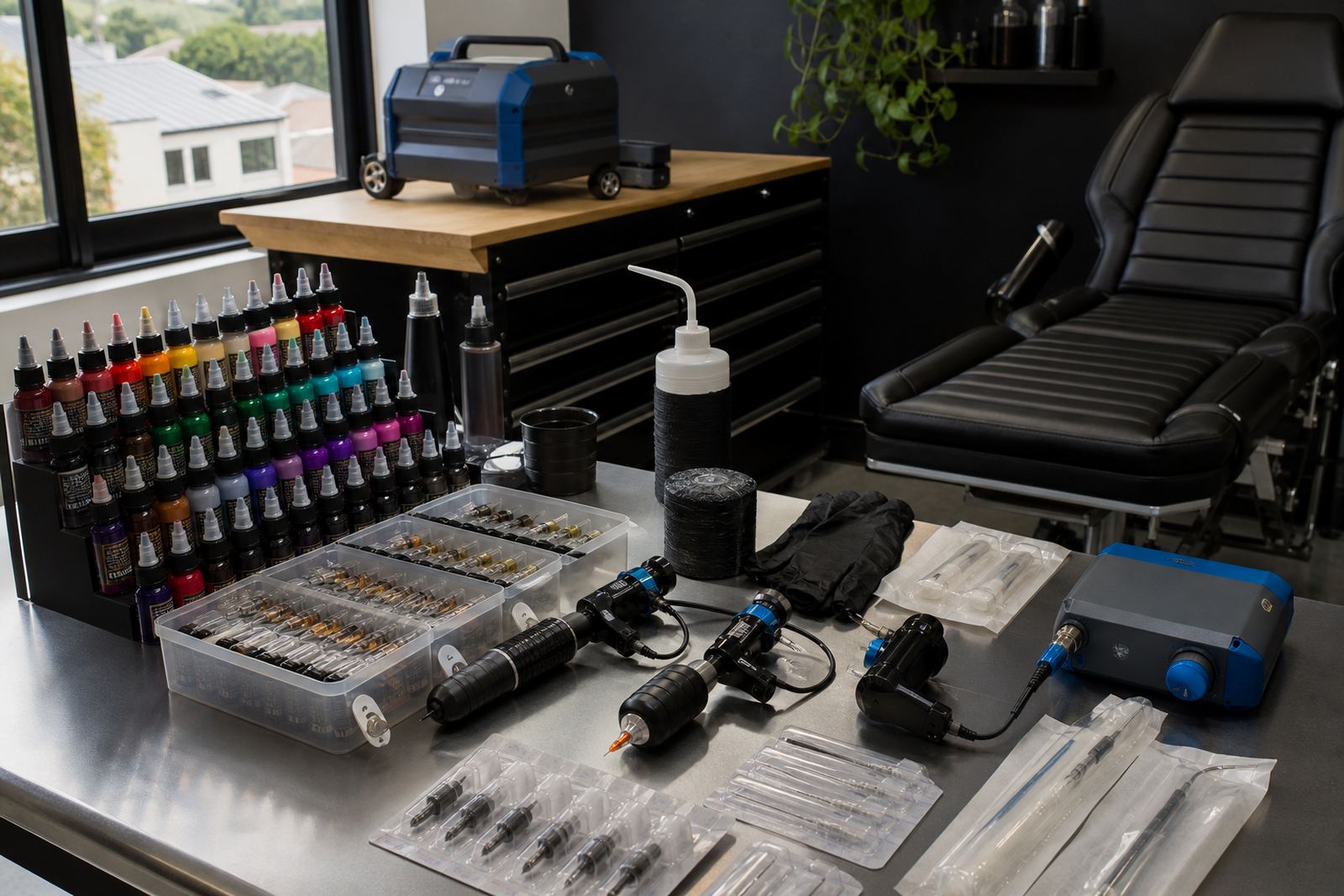
Greywash works best when it sits neatly beside the rest of your consumables and equipment. A studio that keeps its inks, needles, cartridges, machines and sterile items grouped in a sensible way will usually move faster during setup and cleanup. The same applies to restocking, because the order becomes easier to review and adjust.
InkX Tattoo supplies tattoo inks, needle and cartridge groupings, machines, sterile single-use supplies and studio consumables for studios across South Africa, with delivery to Cape Town, Johannesburg, Durban, Pretoria and Gqeberha. If you need help with stock list help, range grouping advice, station planning, consumable reorders, bulk order support, new studio kits, machine match help, cartridge match help, storage planning, dispatch updates, product substitutions or seasonal restock plans, the team can work through the range with you from Observatory, Cape Town.