
Start with the work your chair sees most
Before comparing machines, map the kinds of work your studio handles in a normal week. Fine line pieces, script, black work, colour fills and larger custom work all ask for a slightly different feel at the hand. A machine that feels light and quick for detail work may not be the one you want for heavier packing, so it helps to match the tool to the jobs you take on most often.
If you work across Cape Town, Johannesburg, Durban, Pretoria or Gqeberha, you may also be juggling different artist preferences in the same room. One artist may want a softer hit for smooth shading, while another prefers more direct feedback for crisp lining. It is worth noting these preferences before ordering, because a single machine set-up rarely suits every hand.
Stroke length and hand feel are worth comparing side by side
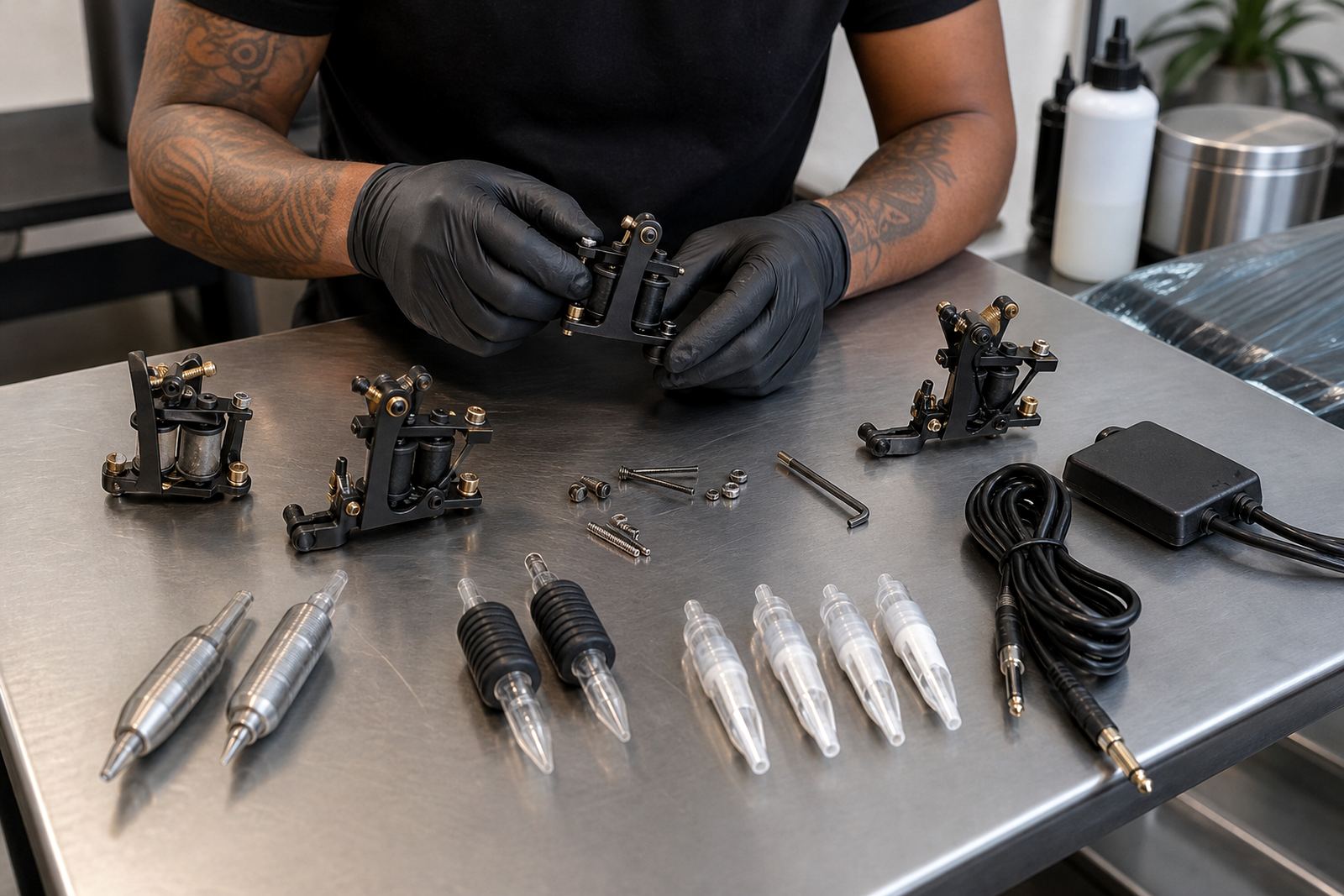
Stroke length shapes how the machine moves through the skin and how it feels during longer sessions. Shorter strokes are often chosen for softer shading and gradual work, while longer strokes are usually preferred for bolder lining and heavier colour packing. That is the basic split, but the real choice also depends on needle groupings, speed, and how much control the artist wants at the grip.
- Shorter stroke: smoother feel, often chosen for shading and softer gradients
- Mid stroke: a practical middle ground for mixed work
- Longer stroke: firmer hit, often used for lining and dense colour
- Weight balance: lighter machines reduce fatigue, but a little extra weight can steady the hand
- Grip shape: narrow, medium or wider grips change control and comfort
A machine that feels storng in the hand is not always the best choice. Sometimes the better option is the one that stays stable without pulling the wrist or forcing the artist to grip too hard.
Match the machine to needles and cartridge groupings
For most studios, the machine choice only makes sense when paired with the needle or cartridge groupings used in daily work. Tight liners, magnums, curved magnums and shaders all place different demands on the motor and stroke. A unit that runs fine with small groupings may struggle once larger cartridges are fitted, especially if the work involves heavier passes or longer sessions.
When comparing options, look at how the machine handles common groupings rather than only how it feels with a bare needle bar. If your artists use several set-ups, keep note of which machines suit which grouping so stock can be assigned properly. That saves time at the station and helps avoid last-minute swapping when the day is already full.
- Fine lining groupings need steady control and low vibration
- Medium groupings work well for mixed lining and shading
- Wider groupings ask for more consistent drive and stable voltage range
- Cartridge work benefits from a secure, comfortable grip and predictable movement
Look at machines as part of the full station set-up
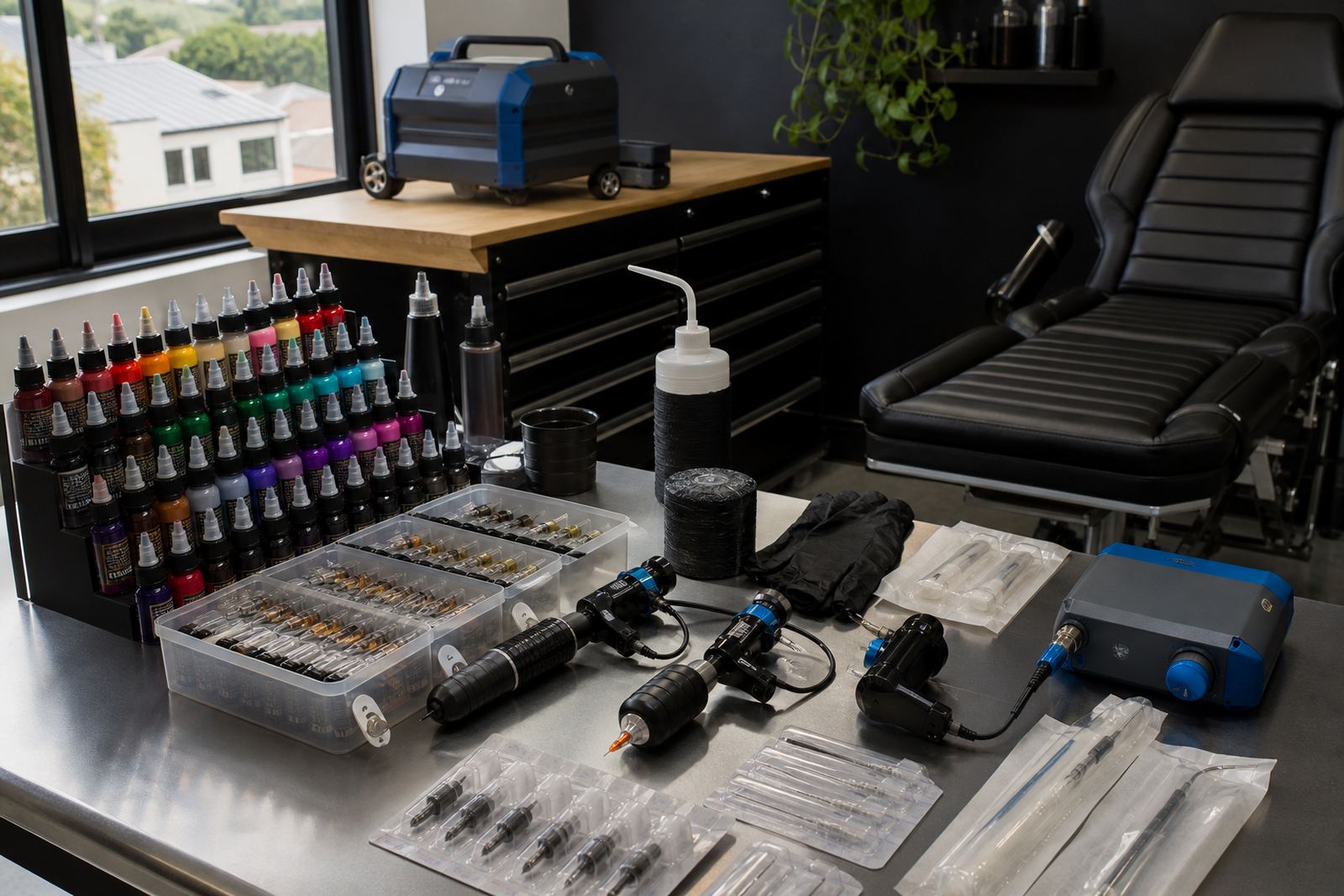
The rotary machine is only one part of the station, so it helps to compare how it sits with the rest of the working setup. Power supply quality, clip cord or wireless format, spare parts and grip compatibility all matter. A studio with multiple artists may prefer machines that are easy to rotate through a station plan, while a smaller room may value a simpler set of parts that are easy to store and replace.
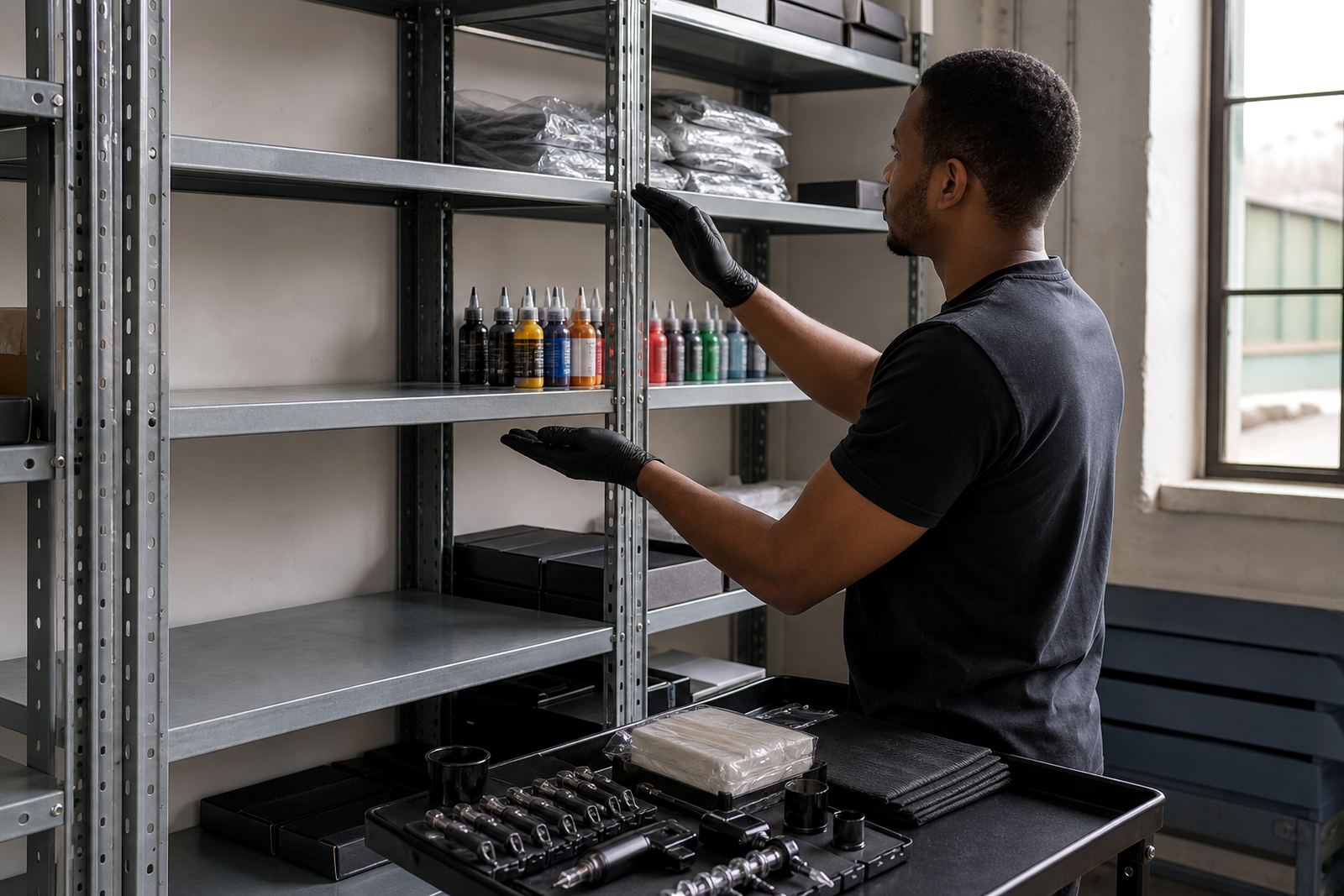
Storage is also part of the decision. Machines, grips, cartridges and sterile single-use supplies should be kept in clean, organised groupings so the right items are close at hand. In coastal towns like Cape Town and Gqeberha, humidity can affect how supplies are stored, so sealed packaging and tidy shelving make a practical difference. For studios using mains power heavy gear, it also helps to think about load-shedding planning where it affects the full work day.
A practical checklist before adding rotary machines to stock
When a studio is choosing new rotary machines, a short checklist keeps the process grounded. The goal is not to find one machine that does everything, but to choose a range that suits the artists, the work and the space. That often means starting with the jobs done most often, then adding a few variations for different hands and needle groupings.
- Check the stroke length against the studio’s main line and shade work
- Compare weight, balance and grip size in the hand
- Confirm cartridge compatibility where relevant
- Look at motor smoothness and vibration during longer use
- Plan storage for machines, needles and sterile disposables together
- Keep spare consumables grouped for fast station set-up
- Follow local health regulations for hygiene, cleaning and waste handling
A practical stock list often works better than a long list of similar items. Keep the machines that serve a clear purpose, then build around them with the right needles, cartridges and studio supplies.
How studios keep rotary machines consistent over time
Once machines are in circulation, consistency depends on simple care and clear handling. Wipe-down routines, correct storage and regular checks on grips and connections all help keep the machine ready for the next use. It is also useful to assign machines by purpose, so one unit is not being pushed into every kind of work all week.
Operations teams often find it easier to manage reorders when they split stock into working groups, such as line machines, shading machines and backup units. That approach also supports dispatch planning for studios in Johannesburg, Durban, Pretoria, Stellenbosch and Bellville that may need mixed orders for different artists. If a machine feels off, it is better to remove it from rotation and check the full set-up rather than forcing it through another full day.
Ordering for mixed studios and multi-site supply
Mixed studios often need more than one machine style, along with needles, cartridges and other consumables grouped for different artists. That is where a clear stock list helps. It makes it easier to plan bulk orders, seasonal restocks and replacement items without overbuying one type while running short on another.
InkX Tattoo supports studios across South Africa with stock list help, range grouping advice, station planning, consumable reorders, bulk order support, new studio kits, machine match help, cartridge match help, storage planning, dispatch updates, product substitutions and seasonal restock plans. Clients in Observatory, Cape Town and across the delivery areas can send an enquiry through the contact page when they need help matching machines to the way their studio actually works.