
Start with your station count and daily glove use
Begin by counting how many tattoo stations run at the same time, then work out the gloves each station burns through on a normal day. A single artist may use several pairs during one sitting, especially where surface cleaning, stencil work, machine changes and packing down happen in the same session.
If your studio handles walk-ins, guest artists or full-day bookings, add a margin for the busy hours. Storage is easier when you plan in boxes per station rather than a loose pile of mixed sizes in one cupboard.
- Count active stations, not just seats in the room.
- Allow extra pairs for fitting, prep and clean-down.
- Separate front-of-house stock from working stock.
- Keep a reserve for busy weekends and month-end rushes.
Choose sizes that fit the hands using them
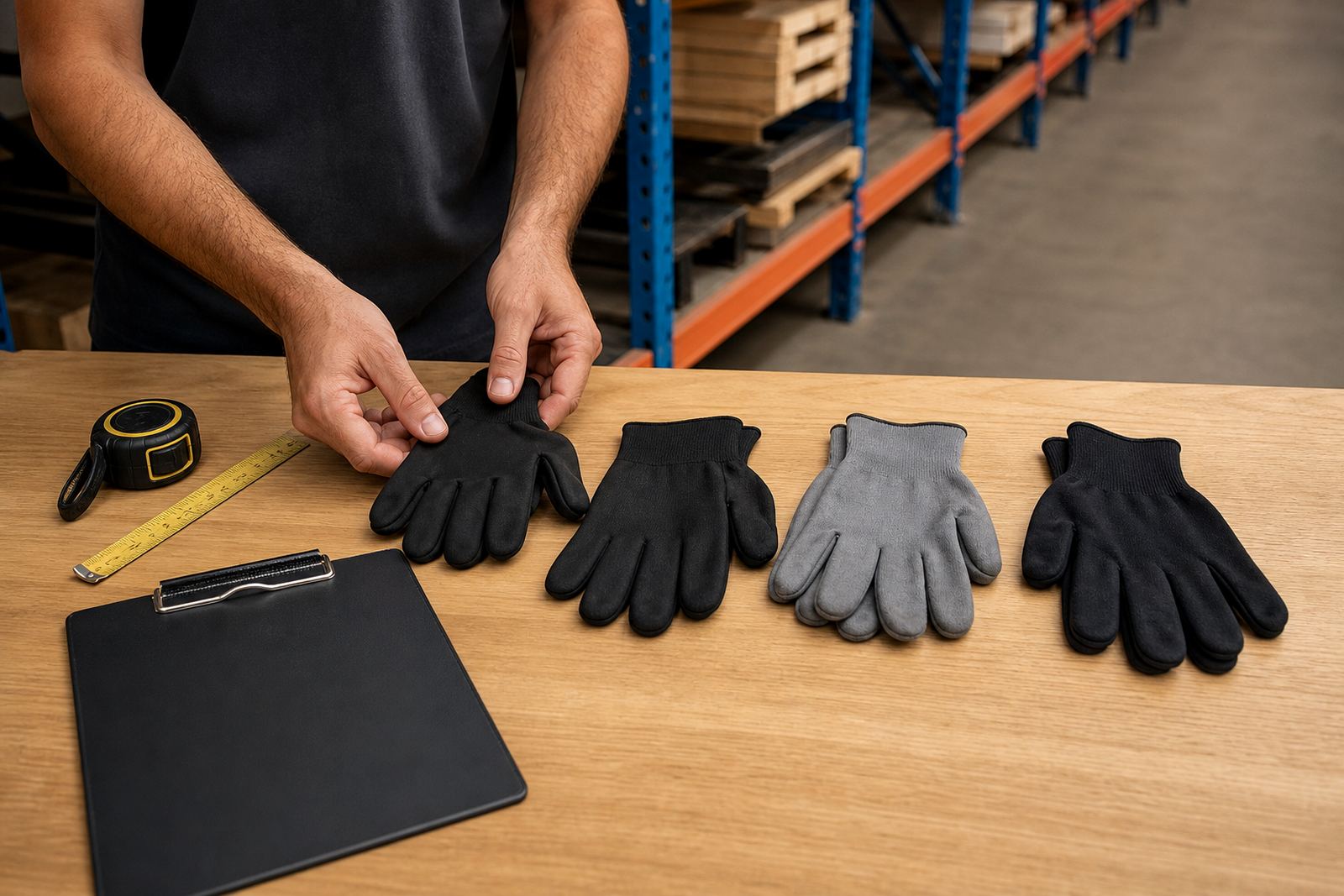
Glove fit affects comfort and control, so size planning matters as much as box volume. Most studios carry a spread of sizes from small to extra-large, with the strongest demand often sitting in the middle sizes. If a team has varied hand sizes, do not let one size dominate the whole shelf.
For better stock control, note which sizes are used fastest at each station. A mixing of sizes is common in larger teams, but the main point is to avoid shortages in the sizes that move quickest during a full day. A tidy size split also helps when a new artist joins, since you can see what needs topping up before the shelf looks empty.
- Stock the sizes used most often in deeper box counts.
- Keep smaller and larger sizes on hand, even if they move slowly.
- Label shelves clearly so size picking stays quick.
- Review size use after a few busy weeks, not just once.
Group glove boxes by task, not only by size
Glove storage works better when you split supplies by use. A studio may keep one group for daily tattooing, another for cleaning and setup, and a separate reserve for bulk restocks. This is useful in busy shops where multiple people reach for stock during the day and the wrong box can disappear fast.
Groupings also help when you order mixed cartons. If a team works in several stations, each station can hold its own working stock while the main reserve stays sealed. That keeps the cupboard cleaner and makes it easier to spot what needs replacing before the next delivery to Cape Town, Johannesburg, Durban, Pretoria or Gqeberha.
- Daily working stock for each active station.
- Clean-down and prep stock kept near wipes and barriers.
- Reserve cartons stored higher or in a separate cupboard.
- Mixed sizes split into clearly marked lanes or shelves.
Set up storage zones that stay dry and easy to count
Glove boxes should sit in a dry, dust-free storage zone with good airflow and no direct sun. In Cape Town and other coastal areas, humidity can soften cardboard if stock is left too close to open windows or damp floors, so keep boxes off the ground and away from cleaning sinks. A shelf system works well when the room is small and stock needs to be counted at a glance.
Use the front shelf for active boxes, a middle shelf for back-up cartons and a higher shelf for slower-moving sizes. If the studio runs a stock room, keep one clear line for gloves only, so boxes do not get mixed with needles, cartridges or single-use items.
- Keep boxes off the floor and away from water sources.
- Keep away from direct heat and strong sunlight.
- Use one shelf row per size where possible.
- Keep sealed reserve stock separate from open cartons.
Match glove orders to the rest of the station supply list
Gloves do not sit on their own. They work best when ordered alongside needles, cartridges, sterile single-use supplies and station consumables, so the whole setup moves at the same pace. If a studio orders gloves without checking the rest of the shelf, it can end up with overstock in one area and gaps in another.
A practical ordering list should include the core station items you reach for every week. That makes stock counts more accurate and helps with product substitutions when one item size is short. For studios with several artists, it also keeps reordering steady instead of patchy.
- Gloves by size and box count.
- Needle and cartridge groupings used at each station.
- Barrier film, clipcord covers and other single-use items.
- Waste bags, surface wrap and cleaning stock.
Use a monthly stock check that tracks real movement
A monthly stock check is usually enough for a small studio, while busier rooms may need a weekly count on fast-moving sizes. Record what is opened, what is nearly finished and what sits untouched. That gives a clearer picture than guessing from a half-empty shelf.
For studios that handle large bookings or multiple artists, it helps to keep a small log of glove use by size. That way your next order can follow actual movement rather than a rough estimate. It also makes seasonal restock planning easier before peak periods and public holidays.
- Count open boxes, sealed cartons and reserve stock.
- Note the fastest-moving sizes first.
- Mark any damaged or crushed boxes for replacement.
- Check that shelf labels still match the stock on hand.
A quick glove planning check before you place stock
Before you place a glove order, walk through the station, the store room and the packing area. Ask whether the current box volume suits the number of artists, whether the size spread matches actual use and whether the storage zone stays dry and easy to count. That small check helps keep the studio moving without clutter.
For studios across South Africa, especially where delivery timing has to line up with busy booking slots, the best glove plan is the one that fits the room and the team as they work. Follow local health regulations for storage and handling, then keep the stock system practical enough that anyone in the studio can follow it without confusion.
- Do we have enough boxes for all active stations?
- Are the most-used sizes stored closest to the work area?
- Is reserve stock dry, clean and clearly marked?
- Will the next delivery fill the gaps without crowding the shelf?