
Build your reorder list from the way your studio actually works
Start with the items that move every day, not the products that only come out for certain styles. In most studios that means black work inks, lining and shading cartridges, clip cord covers or wraps, barrier film, stencil paper, cups, wash bottles and single-use hygiene items. A small studio in Observatory will not need the same cover count as a busy shop handling walk-ins in Cape Town CBD or weekend bookings in Stellenbosch, so the first step is matching stock to use patterns.
Split your list into three groups: fast movers, regular movers and occasional items. Fast movers are the things you touch in nearly every session. Regular movers are products used weekly, such as specific needle groupings or colour sets. Occasional items are speciality cartridges, large bottle sizes or studio setup extras. That split makes ordering easier and keeps money from sitting on shelves for too long.
- Fast movers: black inks, standard cartridges, grips, clip cord covers, barrier film.
- Regular movers: colour inks, round liner and magnum groupings, stencil transfer supplies.
- Occasional items: speciality cartridges, larger bottles, studio kit extras.
Set minimum levels before the shelf goes bare
A reorder point is the amount left on hand before you buy more. Set that number by looking at how much you use in a normal week, then adding a small buffer for busy periods, supplier lead time and unexpected bulk bookings. If your Johannesburg or Durban deliveries are tied to a heavier appointment book, your buffer should be larger than a small private studio that books fewer sessions.
Keep the maths plain. If you use two boxes of a cartridge type each week and your next delivery usually lands after a few days, your minimum level should sit above that weekly use, not right on it. The same thinking applies to inks. A colour that gets used in portraits or larger pieces may need a higher safety level than a specialist shade that only leaves the shelf now and then.
- Count average weekly use for each item.
- Add a buffer for busy weeks, events or group bookings.
- Set a clear minimum and a separate top-up level.
- Review the figure when the studio grows or changes style mix.
Group needles and cartridges by real usage, not by box size
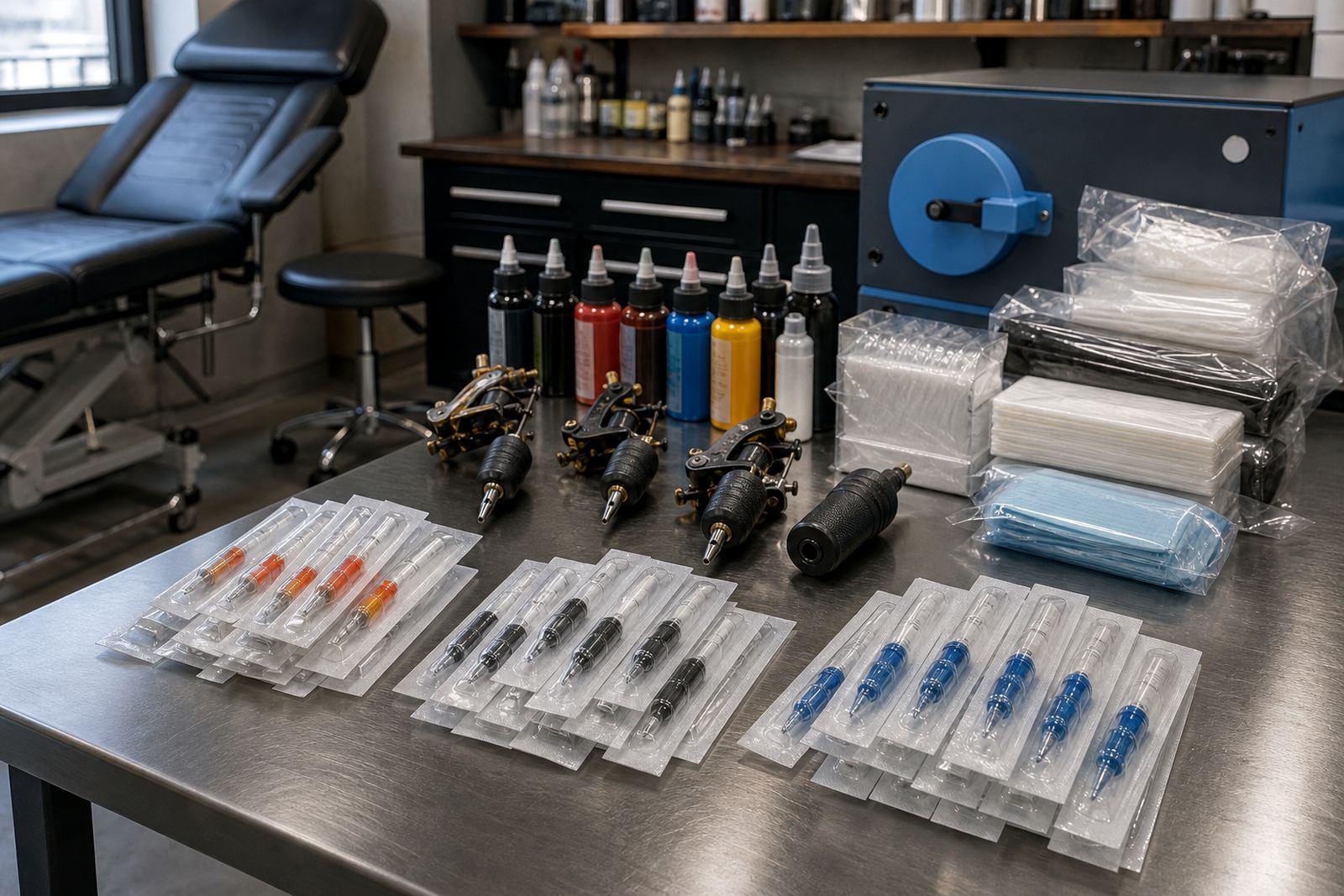
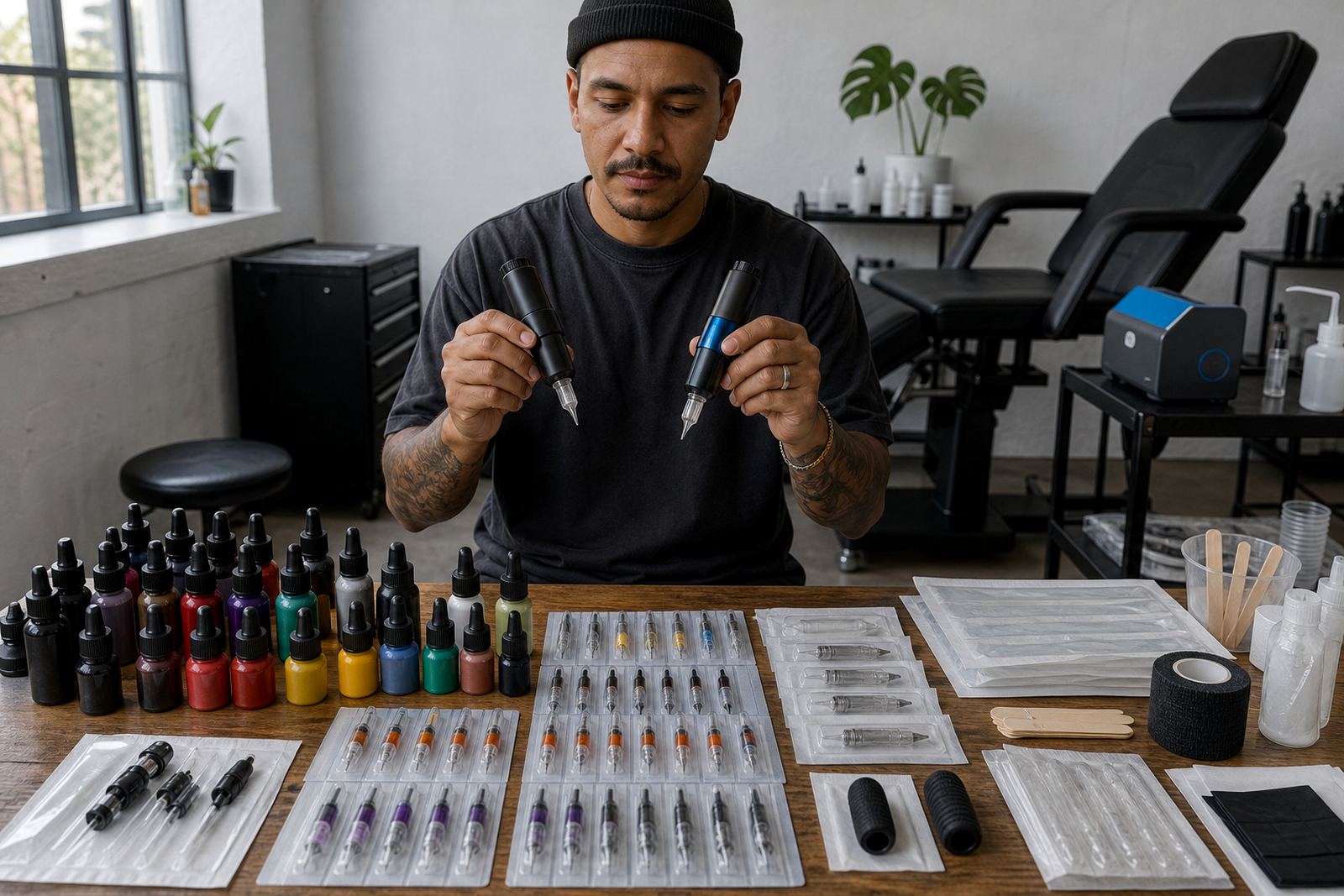
Needle and cartridge planning works better when you group items by function. Round liners, round shaders and magnum groupings should each have their own line in the stock list. That helps when an artist in Pretoria wants a particular setup for fine line work while another in Gqeberha is using wider magnums for packing and shading. A mixed pile of boxes makes counting harder and invites errors during a busy prep session.
For cartridges, keep track of which groupings move fastest and which ones tend to sit longer. If one size stays on the shelf, do not order it in the same quantity as your best sellers. Match the count to the work you do most often, then adjust after each restock cycle.
- Separate liner, shader and magnum groupings on your list.
- Track each grouping by actual use, not just by total box count.
- Mark slow movers clearly so they do not get lost in the stock room.
- Keep common sizes near the front of the shelf for faster picking.
Keep ink stock balanced across black, colour and specialty bottles
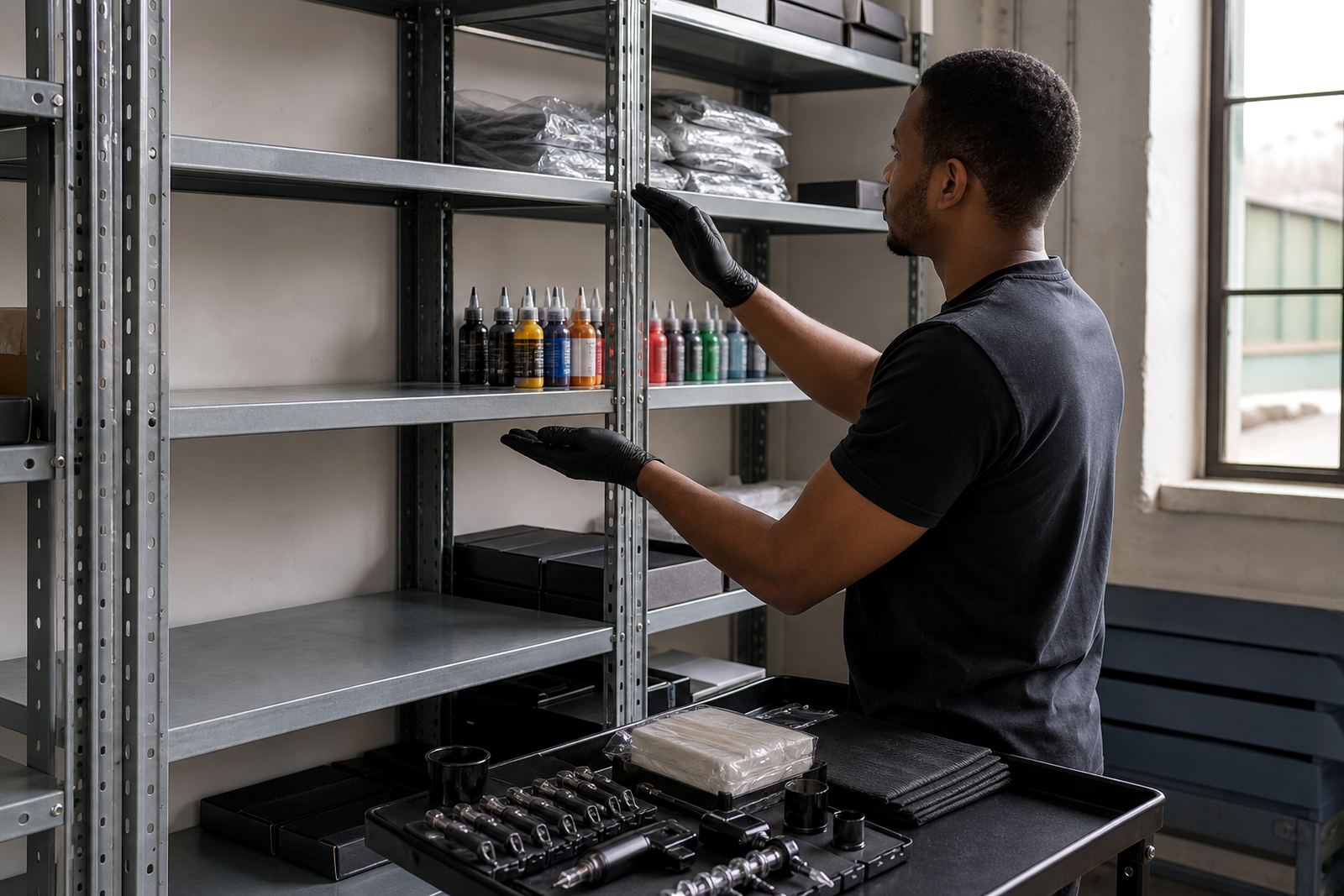
Ink planning needs a little more care because different colours move at different speeds. Black usually carries the heaviest load, while some colours are used in smaller quantities for accents or custom work. In a coastal place like Cape Town or Durban, storage conditions matter too. Keep bottles sealed, upright and away from heat, dust and direct sun so the contents stay orderly in the stock room.
Do not fill the shelf with every shade in the same quantity. Keep more of the inks that your artists use often and fewer of the slow movers. If one colour is popular for flash work or cover-ups, give it a higher reorder point. If a shade only leaves the shelf when a certain artist books in, keep it lower and replace it on a planned cycle instead of tying up too much cash in stock.
- Hold a stronger balance in black and common working colours.
- Keep specialty shades in smaller quantities.
- Store bottles upright in a dry, tidy space.
- Check lids, labels and batch notes when shelving new stock.
Daily consumables need a quicker rhythm
Consumables are the items that disappear fastest, which is why they should be checked more often than inks or machines. Barrier sleeves, wipes, prep items, cups, wraps, gloves and other single-use supplies usually need a tighter reorder cycle. A studio with several artists on the floor will feel a shortage fast, especially when a full day is booked and the prep station runs low halfway through.
Build your daily consumables list around a simple count at the end of each week. That makes it easier to spot patterns before you run short. If a product gets used in every session, set the minimum higher than you think you need. It is better to top up early than to juggle a partial setup while the day is already moving.
- Check high-use items at least weekly.
- Set higher minimums for products used in every session.
- Keep one clean reserve pack for heavier appointment days.
- Separate open stock from unopened reserve stock.
Use a simple restock board for the whole studio
A shared restock board keeps everyone on the same page, whether the team is in Observatory or handling delivery drops to Bellville, Somerset West or further inland. The board can be a paper sheet, a spreadsheet or a storage label system, as long as it records what was used, what is low and what must be ordered next. The point is to make stock visible before it becomes a problem.
Assign one person to check counts and one person to confirm the final list. That reduces double orders and helps with product substitutions when a preferred item is out of stock. It also makes seasonal planning easier, because you can spot when certain inks or cartridges move more in summer booking periods than during quieter months.
- Record stock used, low stock and items to reorder.
- Keep one person responsible for counting and one for final checking.
- Note substitutions so the team knows what was changed.
- Review the list before larger orders or holiday periods.
Use delivery timing to shape the order size
Order size should match delivery timing and storage space, not just a wish to buy in bulk. If your studio has limited shelving, large purchases can get in the way and make counting harder. If you receive regular deliveries to Cape Town, Johannesburg, Durban, Pretoria or Gqeberha, plan the order around how quickly the products move on your floor, then top up before the last box is opened.
A practical restock rhythm is to check the fast movers, confirm the cart and ink levels, then review the slow movers only after that. This keeps the focus on what truly affects the next week of work. It also helps with bulk order support for busier studios and with new studio kits when the stock room is still being set up. Follow local health regulations for storage, handling and studio hygiene, and keep your reorder plan aligned with those requirements.
- Match order size to storage space and delivery timing.
- Top up before the final box is opened.
- Check fast movers first, then slower stock.
- Keep hygiene supplies and working stock easy to reach and clearly separated.