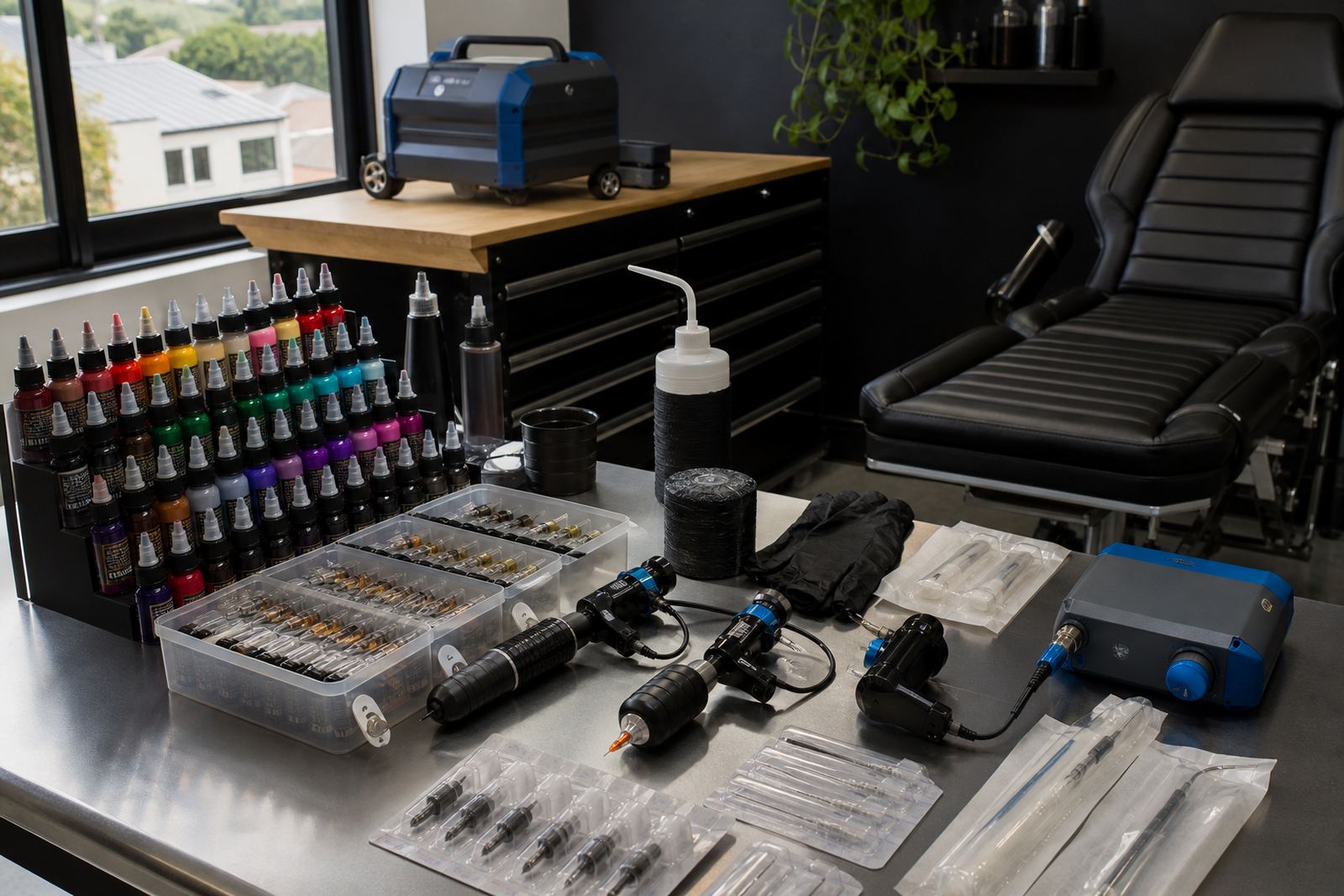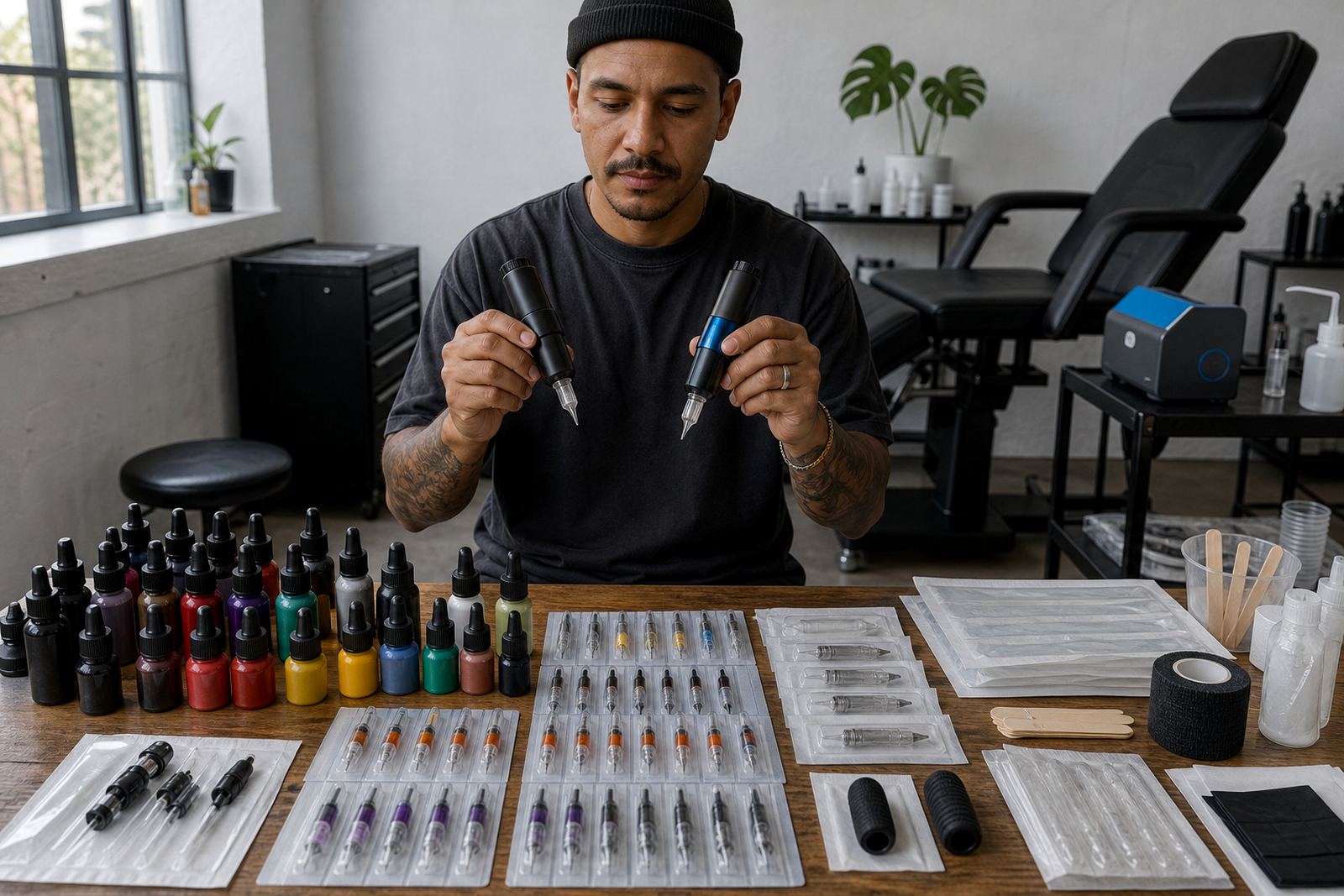

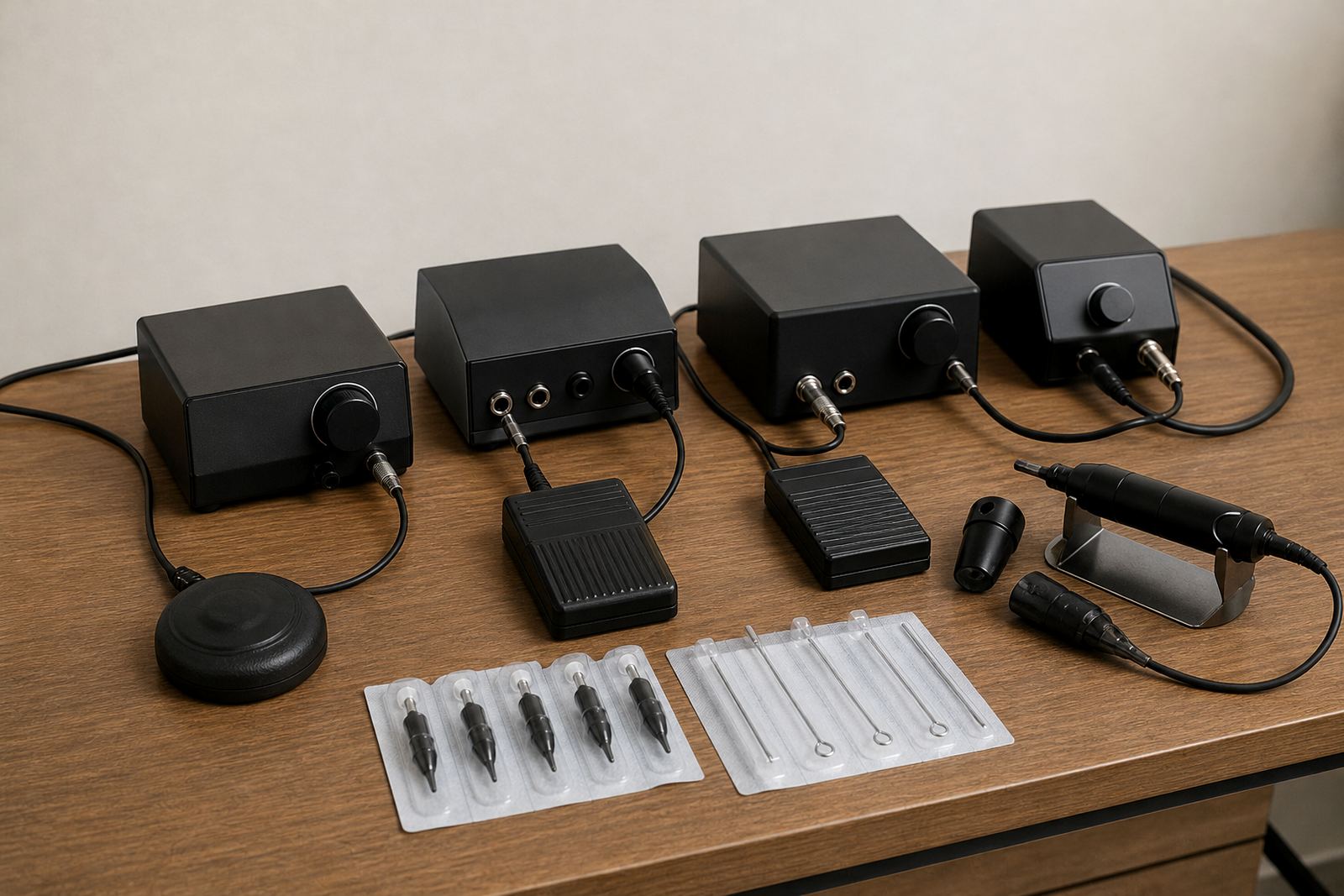
Start with the machines on the station
The first check is the type of machine in use, then how many machines may be run from the same station. Rotary machines, pen style machines and coil machines can all ask for different output behaviour, so the power unit should match the working range the artist prefers. A unit that feels steady at low speed is useful for lining and smaller work, while broader output control helps when the station handles different hand styles.
It helps to think in practical terms rather than chasing the biggest number on the front panel. Look at how the machine behaves at the voltages used most often, how the screen shows the setting and whether the controls are easy to read under studio lighting. In a busy Cape Town or Johannesburg studio, that matters when the station is moving between artists during the day.
- Check the machine type first, then the power unit range
- Look for clear voltage display and easy adjustment
- Match the unit to one machine or multiple stations if needed
Control features that earn their place
Useful control features are the ones that make the station easier to run cleanly and consistently. A stable output, quick voltage changes and an easy to read display are the basics. Foot switch response should feel immediate, not delayed or jumpy. If the unit has memory for preset outputs, that can help when the same setup is used for lining, shading or filler work.
For studios working long days in Durban or Gqeberha, reliable controls reduce interruptions. A tidy front panel with simple buttons or a clear dial is usually better than too many functions that rarely get used. If the unit will sit near other tools and cable runs, check that the ports are well spaced and the plugs sit firmly.
- Clear screen or display that is easy to read quickly
- Stable output with smooth voltage adjustment
- Foot switch input that feels firm and responsive
- Preset memory if the same settings are used often
Output range and the way it feels in use
Output range tells you how much control the station has, but the useful part is how that range behaves under load. A unit should hold the chosen setting without drifting when the machine starts up or the artist changes pace. The middle of the range is where many studios spend most of their time, so the unit should feel settled there, not only at the top end.
For a studio with several artists, it is worth checking whether the unit has enough headroom for different setups. If one artist works a lighter hand and another uses a firmer stroke, the same supply should still keep both stations within a useful range. Test the adjustment steps if possible, as smaller increments make fine control easier.
- Check the working range used most often, not just the maximum
- Look for steady output when the machine starts and stops
- Smaller adjustment steps can help with fine tuning
Station fit, footwork and cable layout
A power unit should fit the station without creating a tangle of leads. The layout matters because the artist needs space for the machine, clip cord or cable, foot switch and tray items. If the unit sits too close to the edge of the station, it can be knocked during prep or cleaning. On compact worktops, a smaller footprint often makes daily use easier.
Think through the path from the socket to the station, especially in premises where the room is shared with storage or cleaning points. In places with frequent load-shedding, some studios also check whether the power unit returns to the chosen setting cleanly after interruption. That is worth confirming before a busy day, particularly where several stations are set up in one room.
- Measure the available station space before choosing a unit
- Check cable length and where the leads will rest
- Confirm the unit holds settings well after power interruptions
Single station, multi station or mobile kit
Different studios need different setups. A single artist station may only need a compact unit with one clear output and a foot switch. Larger studios may want units that support more than one setup or allow quick changeovers between stations. Mobile artists often prefer lighter units with a smaller base so they can pack and move them more easily.
If the kit is being built for a new studio, it helps to group the power unit with the right needles, cartridges, machine type and sterile single-use items. That makes stock planning easier and keeps the station organised. For South African studios handling deliveries across Cape Town, Stellenbosch, Bellville, Somerset West, Pretoria, Durban and other areas, grouped ordering also helps with restocking.
- Single station use suits compact, consistent setups
- Multi station planning helps where several artists share stock
- Mobile kits should favour lighter, simpler units
Before ordering, check the practical details
A quick checklist helps avoid mismatches. The unit should suit the machine type, the control style and the space at the station. It should also be easy to store when not in use, especially where cabinets are already full of consumables and sterile single-use items. Where local health rules apply, follow the relevant municipal and provincial requirements for studio hygiene, waste handling and safe storage.
When you are comparing options, keep the checklist grounded in actual station use rather than features that will not be touched. If the unit is being ordered with needles, cartridges or other studio supplies, group the request so the stock plan works together. That is often the cleanest way to prepare for a restock in Observatory, Cape Town or to send supplies to studios across the country.
- Match the unit to the machine and the normal working range
- Check display, foot switch and connection layout
- Confirm the footprint suits the station and storage space
- Group power planning with needles, cartridges and hygiene stock