
Start with the core ink range
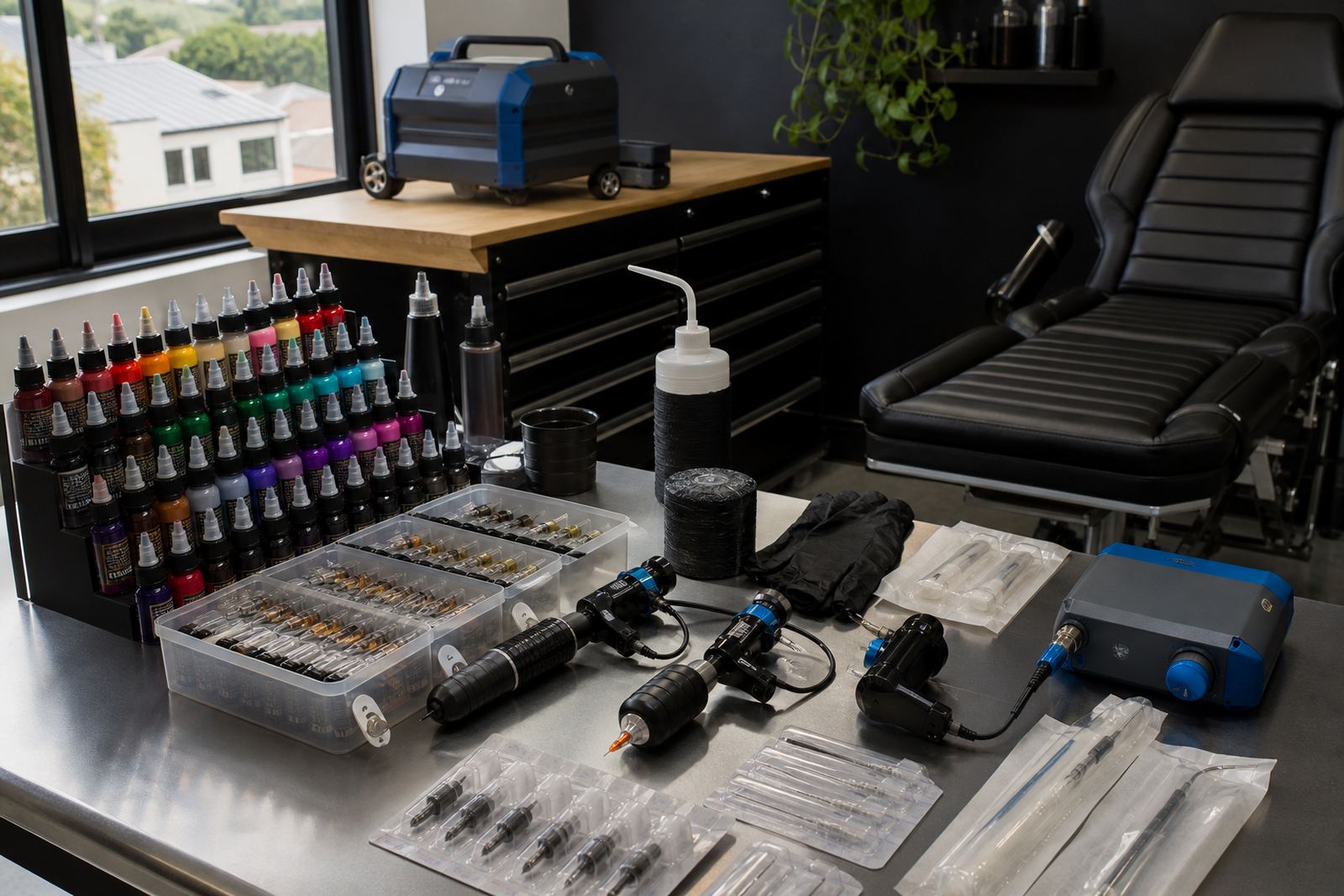
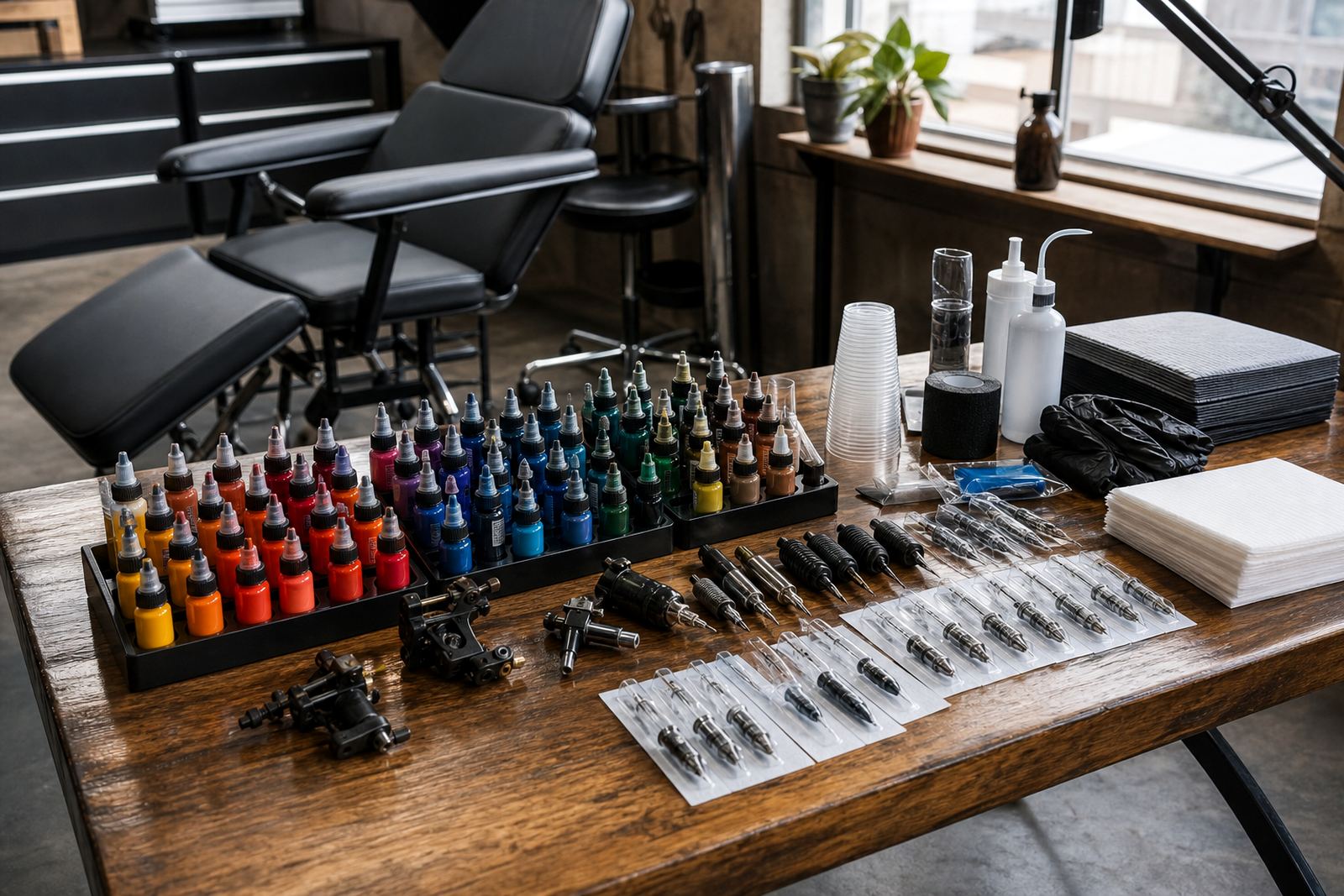
Your first ink order should cover the work you expect to do most often. In a new studio that usually means a solid black for line work and packing, a few grey wash options, and a small but workable colour range for common requests. Inks should be easy to keep organised by bottle size, shade family, and use at the station.
For Cape Town studios near the coast, storage matters because humidity can affect how neatly bottles and caps are kept on hand. Keep inks sealed, upright, and away from direct sun or heat. Label shelves clearly so artists do not waste time searching during a busy booking run.
- Black for lining and solid fills
- Grey wash set for shading and tonal work
- Basic colour selection for common pieces
- Empty caps, label space, and a tidy shelf plan
Needle groupings and cartridge choices
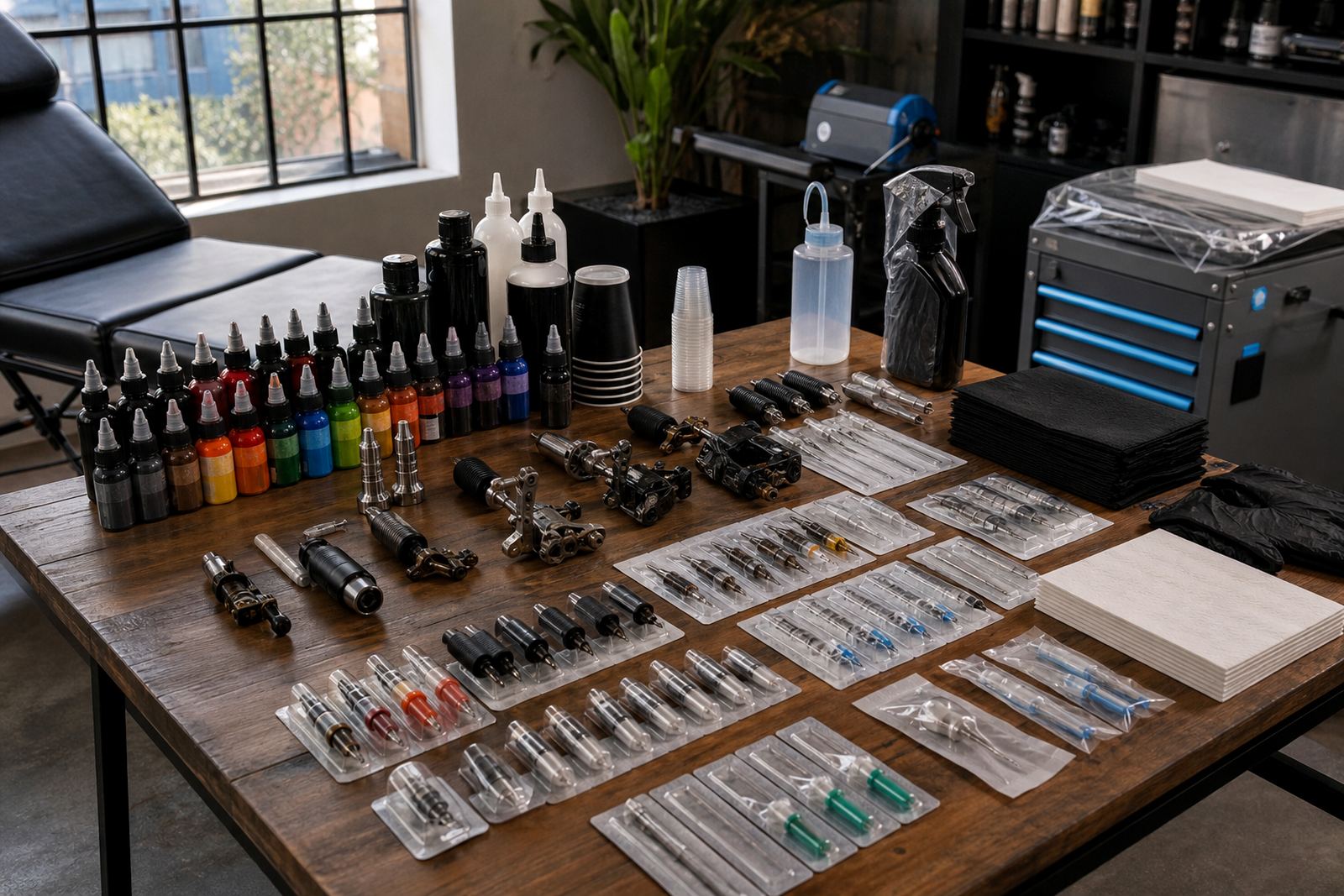
Needles and cartridges need to match the way your artists work, the machines on the bench, and the styles you plan to offer. A new room usually needs a sensible spread of liners, magnums, round shaders, and a few cartridge groupings that cover fine detail, packing, and softer shading. Keep the choices practical. Too many variations makes stock harder to manage and ties up cash.
When choosing groupings, think about the hand speed of the artist, the line weight needed, and whether the session calls for tight detail or broader coverage. Cartridge storage should be clean, dry, and clearly sorted by size and grouping. In a shared room, that saves mistakes during setup and helps keep stations moving.
- Round liners for clean line work
- Round shaders for smaller shaded areas
- Magnums for larger fills and blends
- Mixed cartridge sizes for different hand styles
Machines that fit the work you plan to do
New studios often try to cover every style with one setup, but a better approach is to match the machines to the work on your books. Some artists prefer rotary machines for general use, while others want a stronger feel for lining or shading. What matters is consistency, balance in the hand, and parts that are simple to keep in order.
Keep a small support set as well: spare grips, sleeves, clip cord or battery accessories where relevant, and a clear charging or storage spot if the machine uses power. For a studio in Johannesburg or Pretoria, where a full day of appointments may run back to back, a dependable bench setup saves time between clients and reduces clutter at the station.
- One machine choice for line work
- One machine choice for shading and colour packing
- Spare grips and basic accessories
- Organised charging or cord storage
Single-use supplies that keep stations orderly
Single-use supplies are the everyday items that keep a room moving cleanly and in order. These include glove stock, barrier wrap, clip cord covers, machine sleeves, ink caps, razors where used, wipes, and disposable items for prep and cleanup. A new studio should not treat these as an afterthought. They are part of the daily running of the room.
Order enough to cover a busy week, then adjust once you see what gets used fastest. Keep separate storage for sterile single-use items and general consumables, and do not mix opened stock with sealed boxes. Follow local health regulations, keep records where needed, and make sure each station has what it needs before the first booking starts.
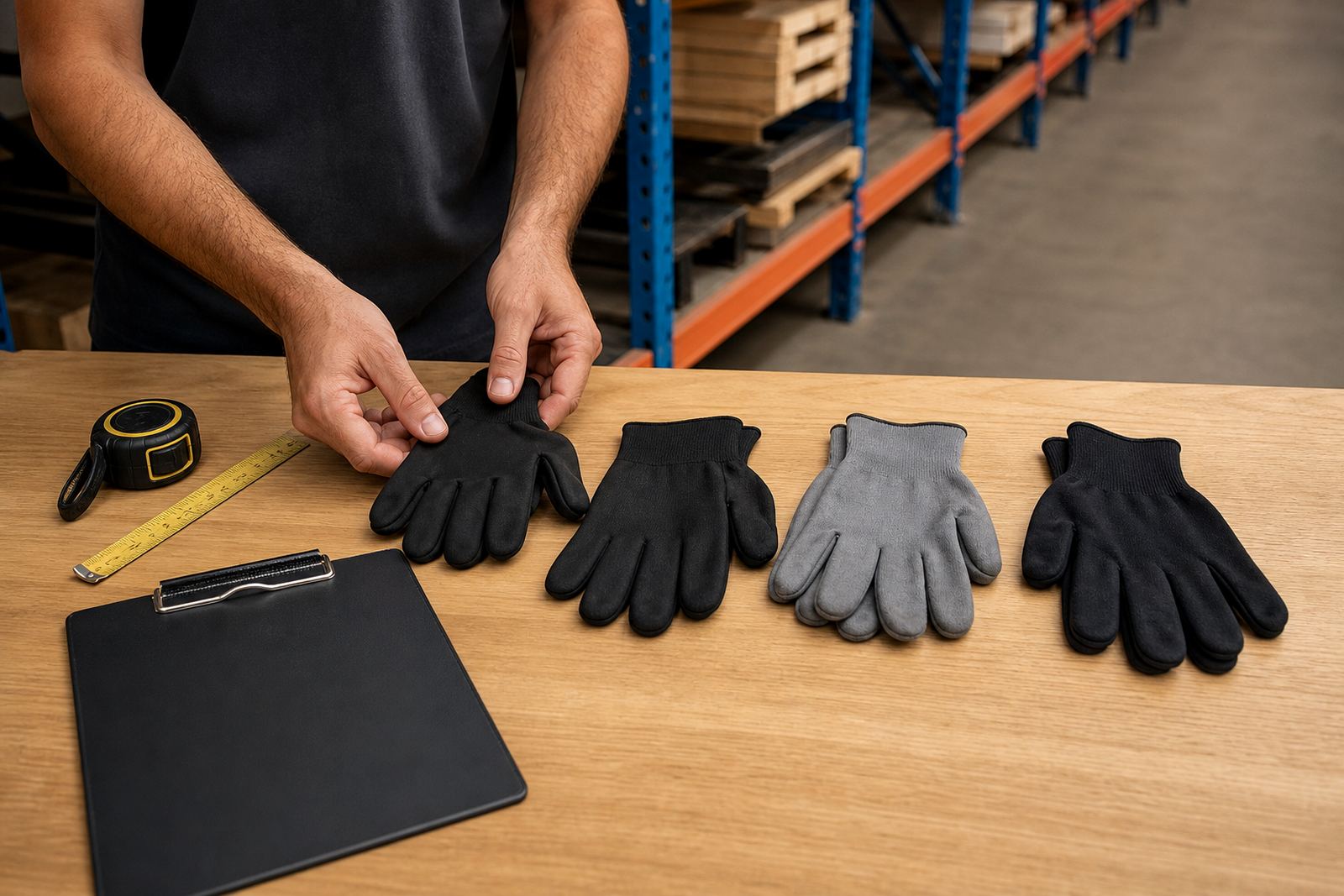
- Gloves in the sizes your team actually uses
- Barrier film and covers for high-touch points
- Ink caps and disposable prep items
- Wipe stock, razors, and cleanup consumables
Storage and hygiene planning for the room
Storage should support hygiene, not sit apart from it. Shelving needs to keep clean stock off the floor, with clear areas for sealed items, open consumables and waste. In coastal towns like Durban or Gqeberha, make sure packaging and storage spaces stay dry and are not placed beside open windows where moisture can work in. Inland, dust control matters just as much, and sealed containers help keep stock clean.
A practical studio layout uses labels, closed containers, and a set place for everything from rinse cups to backup cartridges. The aim is to cut down on handling and avoid mixing fresh stock with used items. Clean station habits should be built into the day, not left to the end of it.
- Closed shelving for sealed stock
- Marked areas for open and sealed consumables
- Waste bins placed where staff can reach them cleanly
- Surface cleaning routine between appointments
A first-order checklist for opening week
Before the first clients arrive, it helps to walk the room as if you were setting it up from scratch. Check that each station has the inks, needles, cartridges, machine accessories, single-use supplies, and storage it needs. Build a basic reorder list straight away so stock gaps do not appear halfway through the first month.
For studios serving Cape Town, Johannesburg, Durban, Pretoria and Gqeberha, delivery timing and stock grouping matter. A new room usually benefits from starting with one core order, then a smaller follow-up order once the real usage pattern becomes clear. That keeps the budget steadier and the shelf plan easier to manage.
- Core inks and grey wash
- Needle and cartridge groupings for your main styles
- Primary machine setup and accessories
- Single-use supplies for daily operation
- Storage boxes, labels, and station organisation items
- Initial reorder list for fast-moving consumables