
Map the high-touch points before you order
Start with the surfaces and tools that are touched most during a normal tattoo session. In a small room that may be clip cord sections, machine grips, power supply buttons, light switches, spray bottles and tray edges. In a busier studio, reception counters, drawing stations and wash-up points also need a plan. If you know the touch points first, it is easier to choose the right widths and pack sizes instead of buying random rolls that never quite fit.
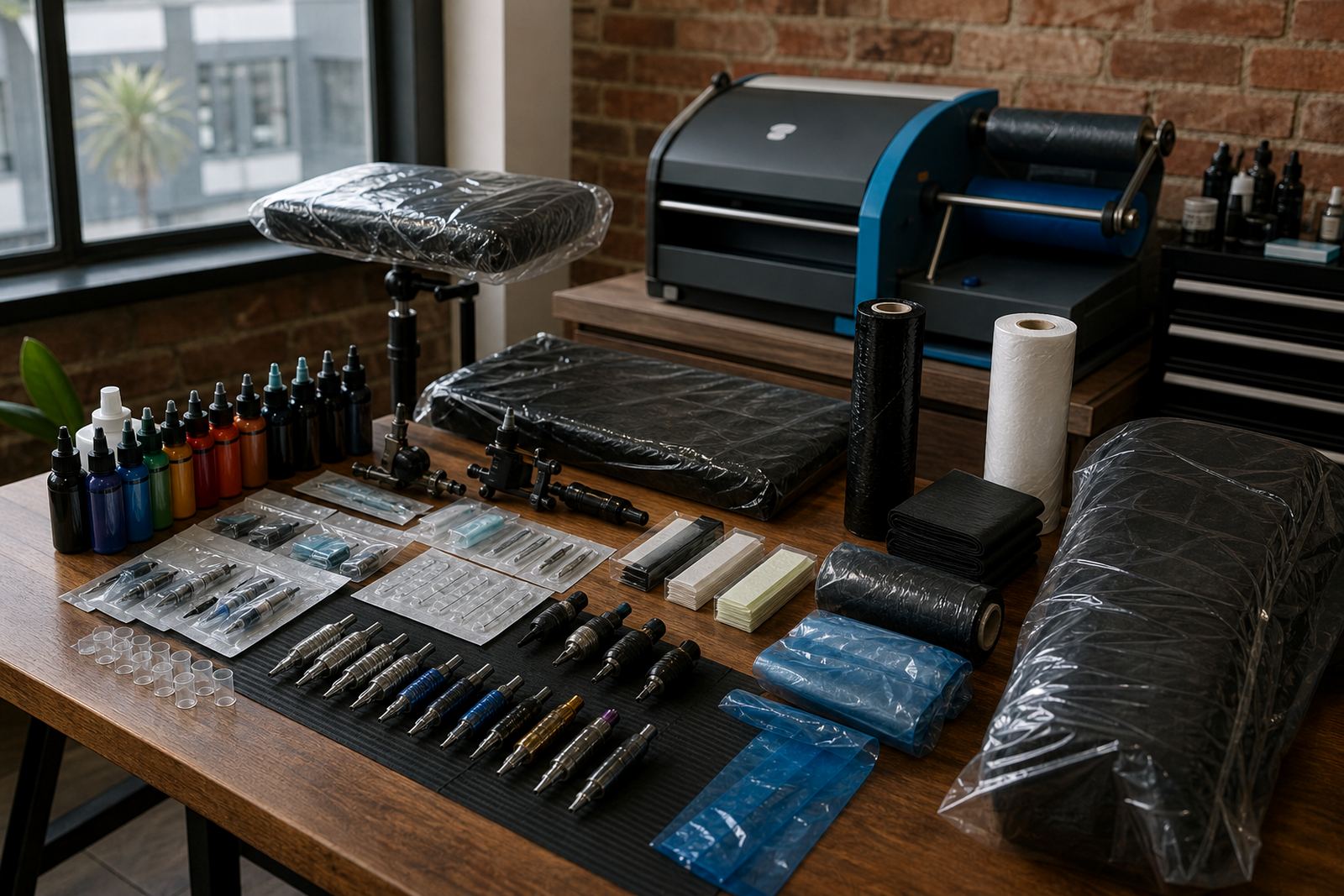
Barrier film is usually used on smooth surfaces that need a clean handover between clients. Sleeves are useful for handpieces, hoses and pen-style equipment where repeated gripping happens through the day. Covers fit larger items such as trays, clip cords, lamps and foot controls. The aim is not to wrap everything twice over, but to match the cover to the shape and the routine.
A practical check is to walk through one full setup and one full pack-down. Note which items are handled with gloved hands, which are wiped often, and which are changed between clients. That list usually shows the real stock needs better than a guess, and it helps when planning for a weekend rush or a public holiday week in Cape Town, Johannesburg or Durban.
Choose film, covers and sleeves by job, not by habit
Barrier products work best when they are grouped by task. A machine station has different needs from a prep table, and a stencil area has different needs again. For example, a narrow sleeve may be right for a grip but too tight for a thicker machine body, while a flat cover works better on a tray or bottle than a stretchy sleeve. The material should sit properly and stay in place through the session.
When comparing options, think about size, thickness, tack and how easily the product tears during use. In humid coastal areas such as Durban or Gqeberha, packaging and storage matter too because heat and moisture can make cartons soften if they are left near open windows or wash-up sinks. Keep sealed stock off the floor and away from direct sunlight where possible.
- Barrier film for buttons, switches, bottles and smooth counters
- Covers for trays, lamp handles, foot controls and clip cord sections
- Sleeves for grips, handpieces and cable runs
- Wraps or sheeting for larger work zones during set-up and cleaning
- Single-use liners for any item that is changed between clients
If you keep more than one station type on hand, use a standard pack list for each station and a separate buffer list for hectic days. It makes replenishing more predictable and lowers the risk of running short on the item that moves quickest.
Build station sets that match real appointments
A good barrier plan follows the way the room is used. A walk-in station may need faster turnover, while a custom appointment station may need more prepared covers and a wider prep area. Think through the routine from first wipe-down to final pack-down, then arrange the barrier supplies in the order they are opened. That saves time and lowers the chance of missing a cover on a contact point.
Many studios use separate sets for machine setup, prep and clean-down. This is useful when multiple artists share a room or when the same bench is used for different body placement work. A set can include film, a tray cover, sleeve pieces, gloves, sanitiser wipes and waste bags grouped together in one marked container. It also makes stock counts easier on a Monday morning when the room is being reset.
- One prep pack per station for the day
- One spare pack for spill overs or longer sessions
- One separate bin for opened but unused barrier items
- One label or shelf space for each artist or station
In larger studios, station planning also helps with procurement. If one artist uses more tray covers and another uses more sleeve material, order the split that fits the actual work instead of forcing every room onto the same mix. That keeps storage neater and cuts waste.
Set storage rules that keep supplies clean and visible
Barrier supplies are easy to store badly because they are light and compact. A few loose boxes on top of each other can crush sleeves and dent film rolls, and open cartons can collect dust. Use closed shelving where possible, keep products in their original packaging until needed, and separate sealed stock from opened stock. If you store in a Cape Town unit where the air is damp in winter, a dry cupboard or enclosed rack is better than leaving cartons near an outside wall.
Label shelves by use rather than by product name alone. For example, keep station covers together, machine sleeves together and surface film together. That makes stock checks quicker and helps during bulk order planning. If the team handles both tattoo inks and barrier supplies, keep the barrier section away from bottle storage so the flow remains clear and there is less chance of mixing up clean consumables with handled items. A tidy shelf can save a lot of rummaging, especially when the room is already busy.
Use the oldest sealed stock first and check outer cartons for damage before placing them into rotation. A simple first-in, first-out habit works well in studios with regular deliveries to Observatory, Bellville and Somerset West. It is a small routine but it keeps the stock moving in a sensible order.
Tie barrier stock into hygiene and compliance checks
Barrier supplies sit inside the wider hygiene routine, not apart from it. That means the same attention should go to waste handling, glove changes, surface cleaning and room reset. Follow local health regulations and studio procedures for cleaning schedules, disposable waste and single-use product handling. The exact requirements can vary by municipality and by the type of workspace, so your written station routine should match the rules you follow on site.
It helps to keep one checklist for opening the studio and one for closing it. The opening list can cover restocking barrier film, checking sleeves, setting out covers and confirming waste bins are lined. The closing list can cover disposal of used items, cleaning of surfaces and restocking the next session tray. That way the next artist does not inherit a half-prepared station.
- Check sealed stock before each trading day
- Keep single-use items separate from reusable tools
- Store clean supplies away from sinks and splash zones
- Follow the studio waste and cleaning routine after every session
- Record any damaged packs so they are not put back into use
For studios working in more than one city, these checks should stay the same across branches so the routine is familiar in Cape Town, Pretoria, Durban and Gqeberha. Consistency helps the team move faster without skipping steps.
Order quantities around seasons, walk-ins and guest artists
Barrier stock can move up quickly when a studio has guest artists, flash days or longer weekend sessions. Cold months may bring steadier indoor work, while summer can bring more bookings and more turnover in busy coastal areas. Plan for the week ahead, not only for the next single appointment. If you are running low on a fast-moving item like tray covers or sleeve film, add it to the reorder list before the box is empty.
Bulk order support is useful when the same items are used across several rooms or delivery points. Keep a running note of what disappears fastest, what sits on the shelf longest and which products are used only for certain station types. That makes the next order much cleaner and reduces the chance of tying up cash in boxes that hardly move. A seasonal restock plan is also handy before holidays, public events or a cluster of guest spots. If your studio changes layout during busy periods, review the barrier pack list at the same time.
The best stock plan is the one that matches your actual routine, not a generic set of quantities. Once the setup is mapped properly, barrier supplies become one less thing to chase during the day.